The Quality Standards Resource Centre helps extend understanding of the strengthened Aged Care Quality Standards, which took effect from 1 November 2025. You can search for resources by using keywords, or filtering by standard, outcome and audience. Before using the Resource Centre, please read the terms of use.
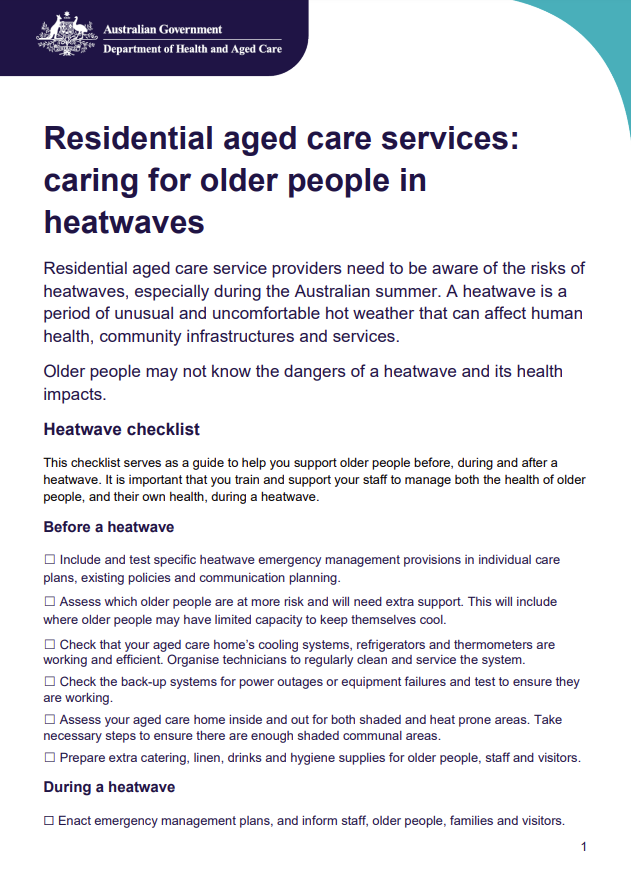
Caring for Older People in heatwaves – Residential Aged Care
This resource provides guidance to care for older people living in residential aged care services during a heatwave. The resource includes checklists to guide providers to support older people before, during and after a heatwave. It includes clinical assessment guidance and where to find more information about heatwaves.
This resource may refer to information that will be updated from 1 November 2025 to align with the new Aged Care Act and Quality Standards.
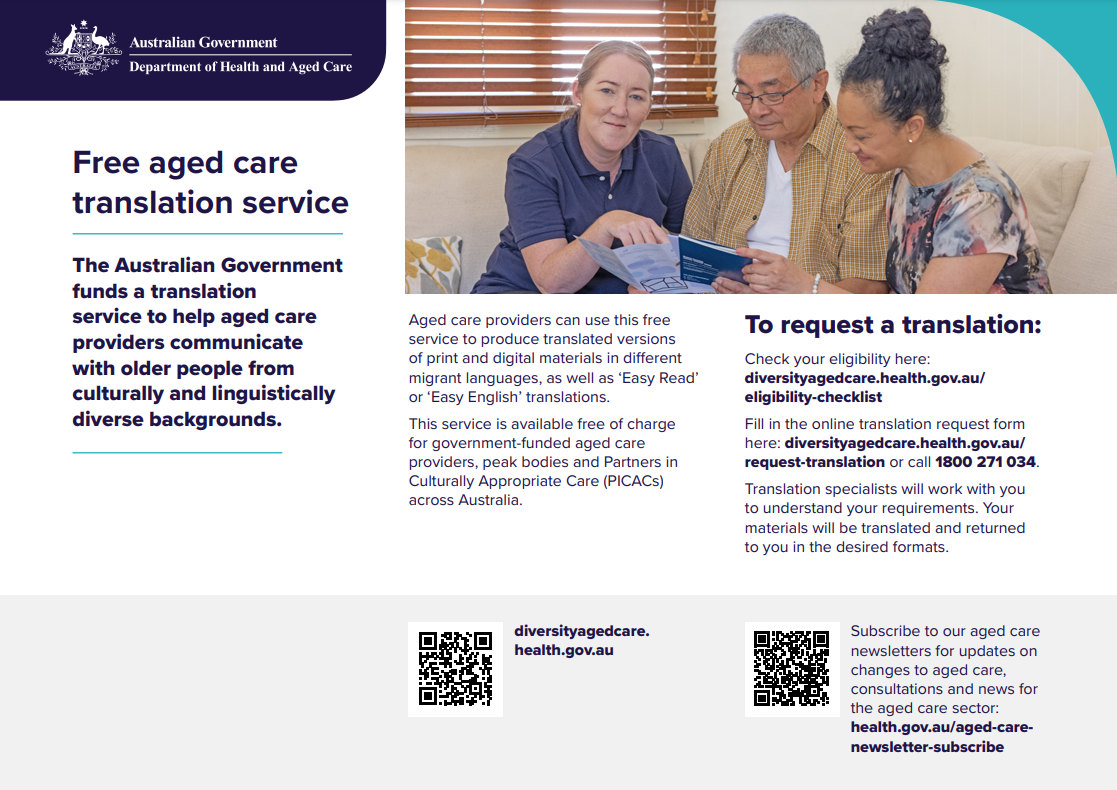
Free aged care translation service
This resource provides information on a free translation and interpreting service funded by the government for aged care providers. It supports effective communication with older people from diverse backgrounds, offering language translation, sign language, and captioning services to enhance accessibility and inclusivity in aged care.
This resource may refer to information that will be updated from 1 November 2025 to align with the new Aged Care Act and Quality Standards.
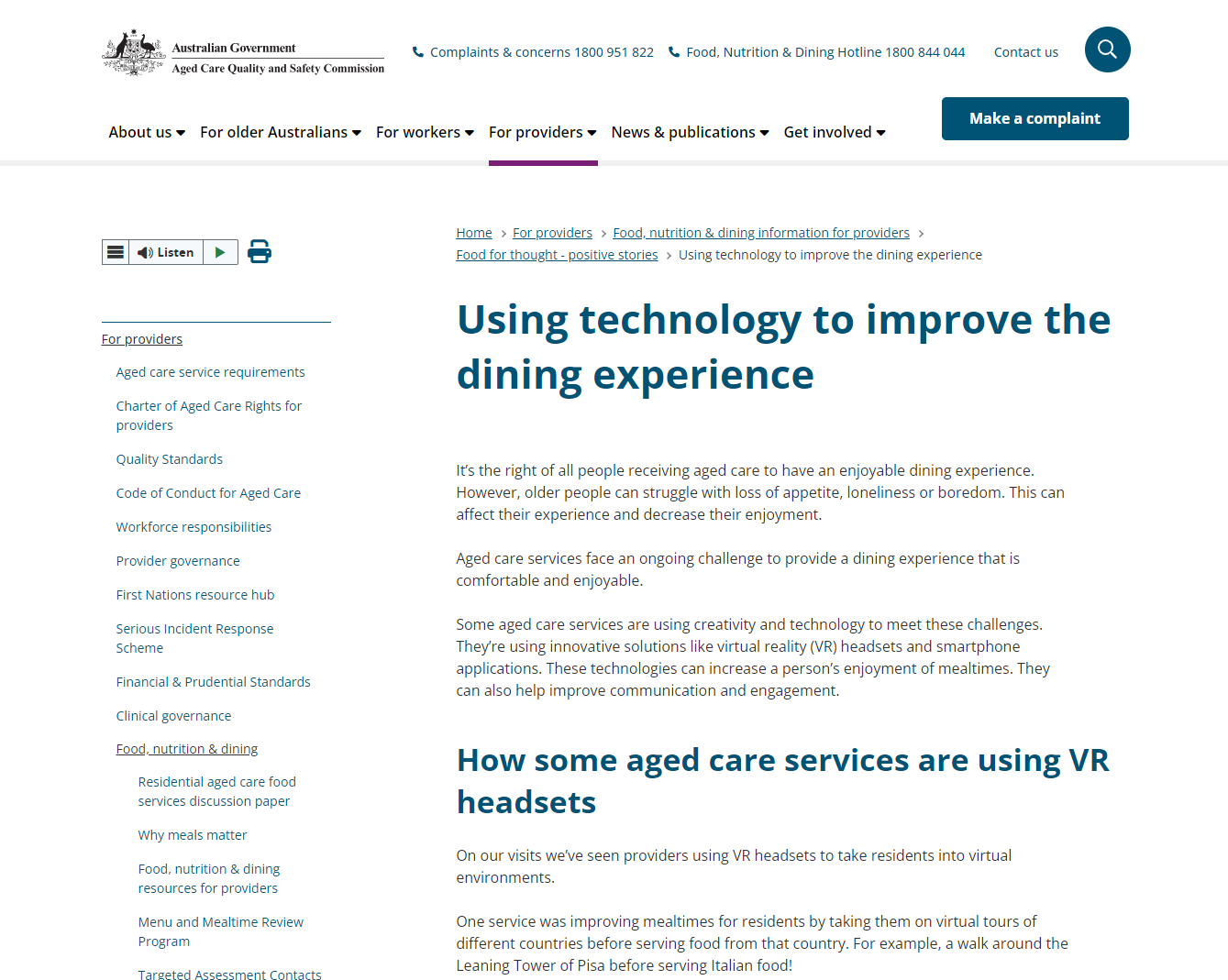
Using technology to improve the dining experience
This resource provides guidance on how technology, such as virtual reality (VR) and mobile applications, can enhance the dining experience in aged care settings. These tools are designed to increase engagement, support meal choices, improve communication with families, and contribute to overall wellbeing by making mealtimes more enjoyable.
This resource may refer to information that will be updated from 1 November 2025 to align with the new Aged Care Act and Quality Standards.
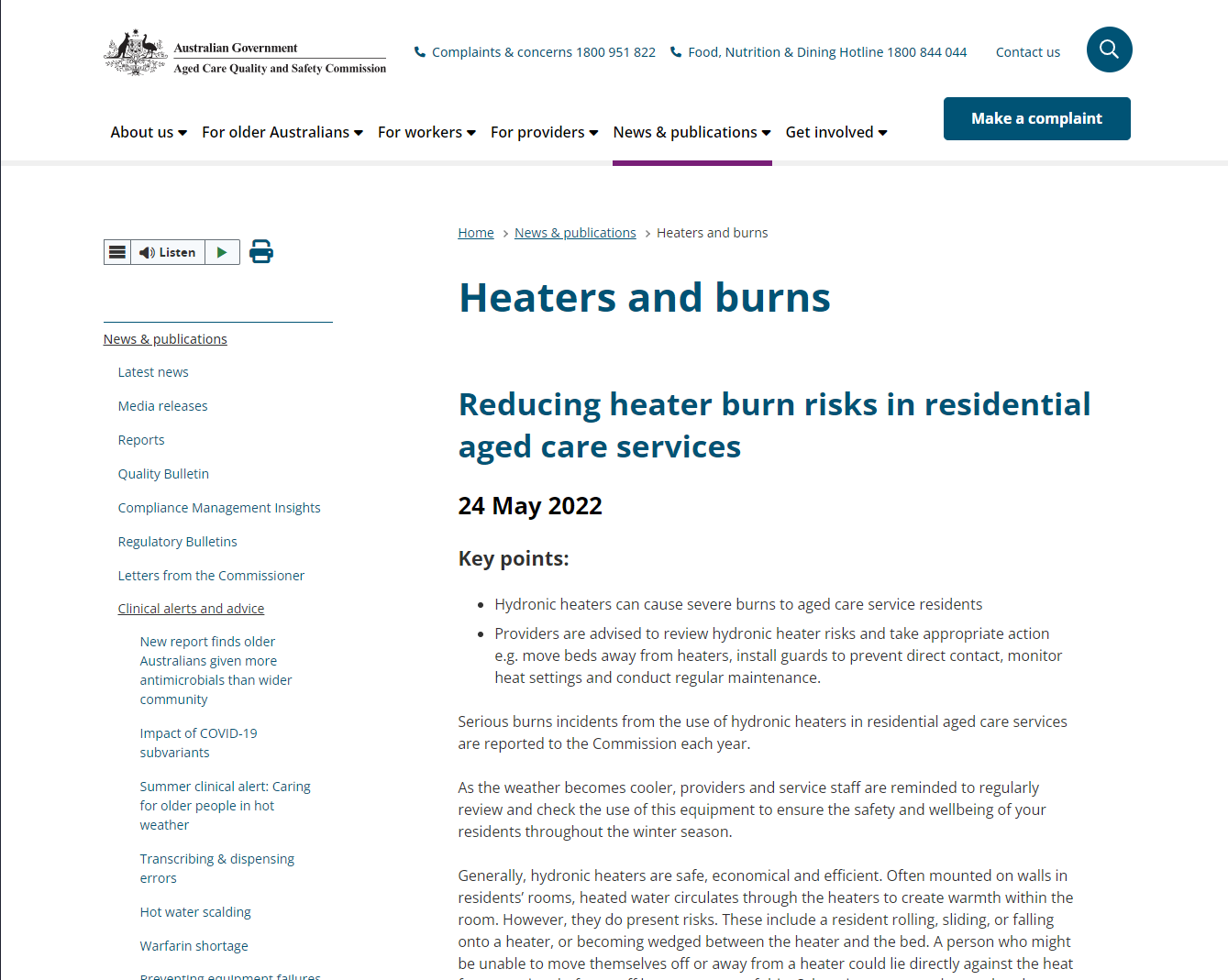
Heaters and burns - Reducing heater burn risks in residential aged care services
This resource provides guidance for aged care providers on managing risks related to hydronic heaters. It advises regular maintenance, accurate temperature checks, and positioning of beds away from heaters. Installing guards and monitoring heat settings are also recommended to prevent burns and ensure the safety of older people in cooler months.
This resource may refer to information that will be updated from 1 November 2025 to align with the new Aged Care Act and Quality Standards.
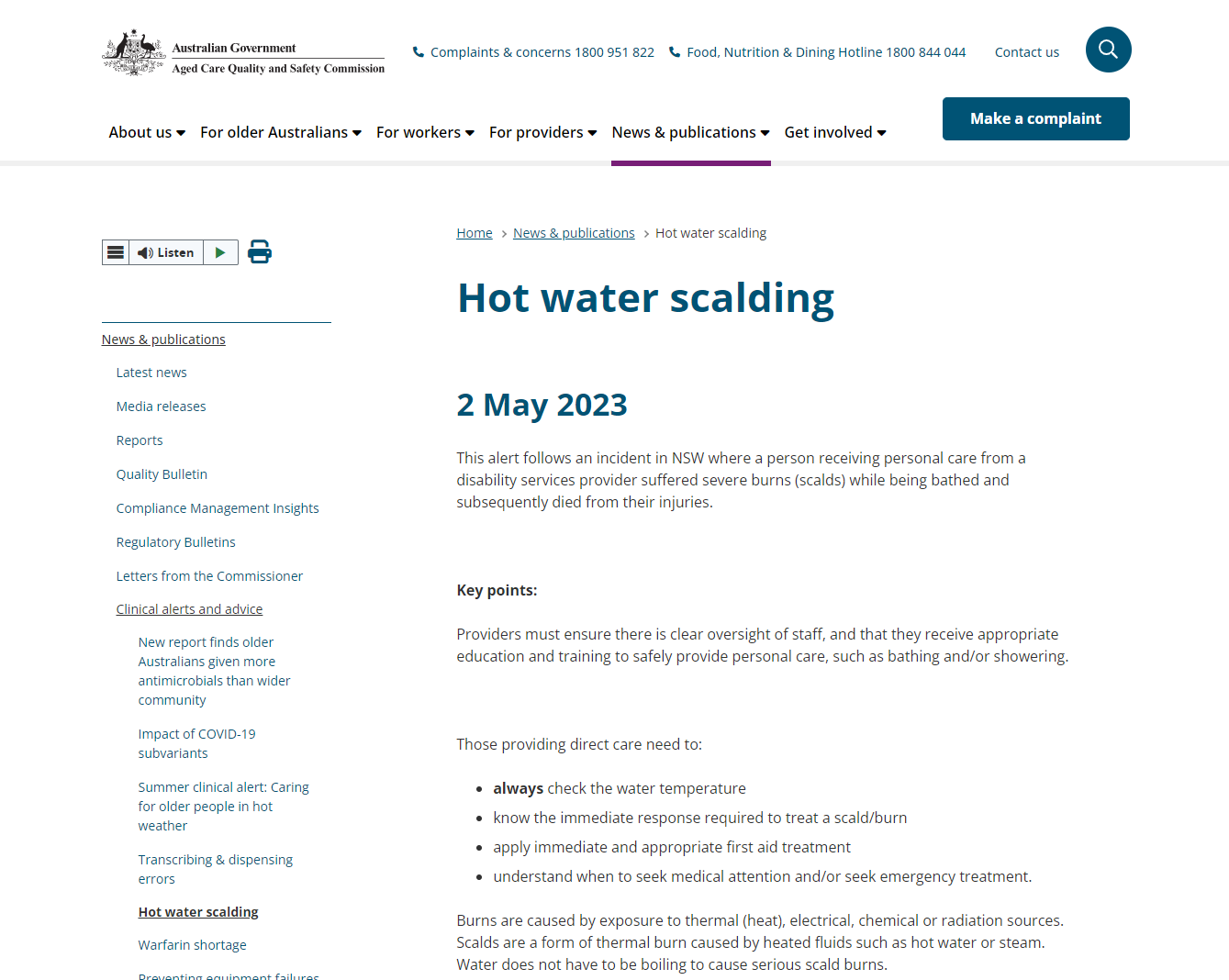
Hot water scalding
This page provides guidance for aged care providers on preventing and responding to hot water scalding incidents. It highlights the importance of staff oversight, proper training, and temperature checks when providing care. It also includes immediate first aid steps for burns, helping to reduce risks for vulnerable people, especially older people.
This resource may refer to information that will be updated from 1 November 2025 to align with the new Aged Care Act and Quality Standards.
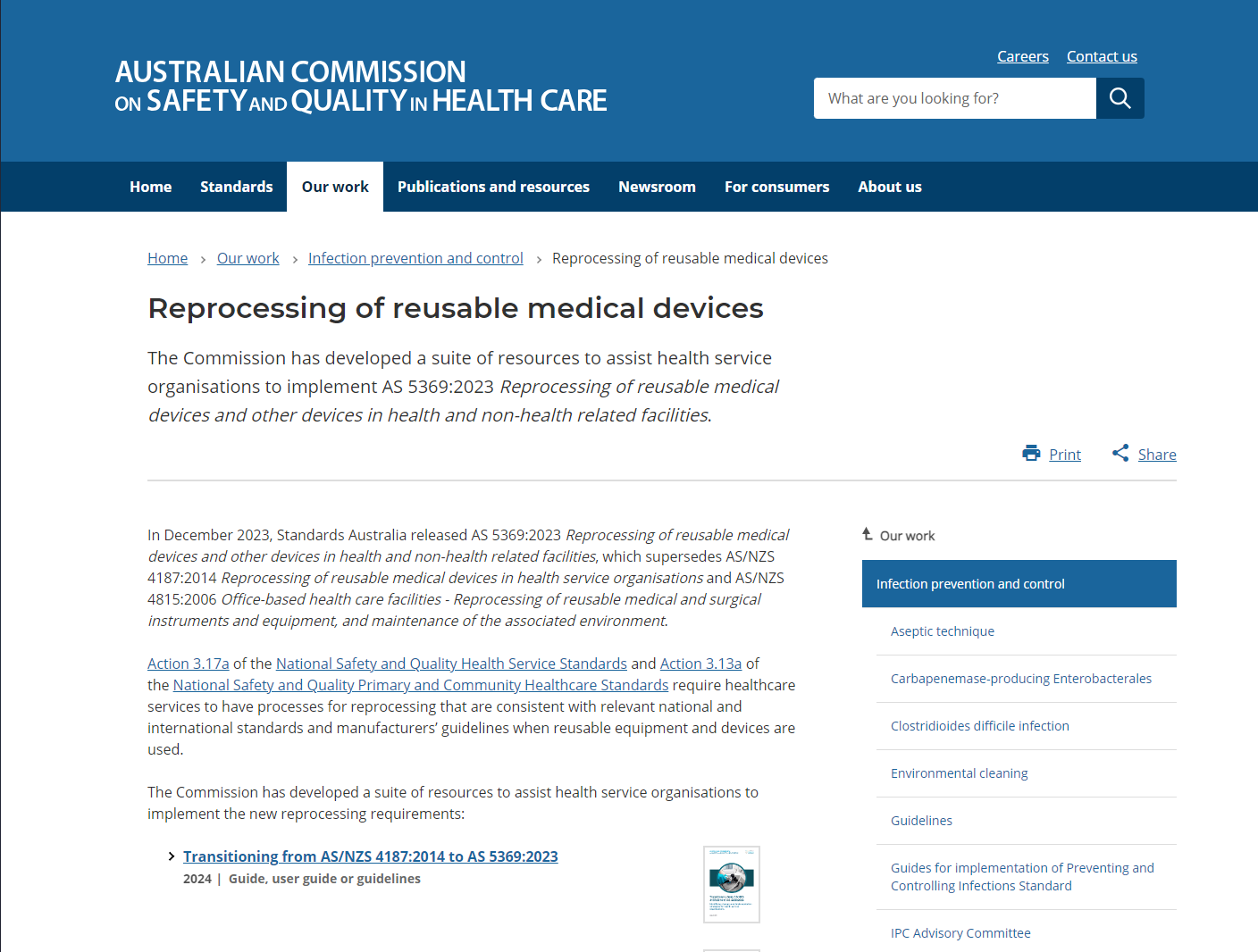
Reprocessing of reusable medical devices
This resource provides guidance on implementing updated standards for reprocessing reusable medical devices in health and non-health facilities. It supports compliance with AS 5369:2023, ensuring healthcare organisations follow national and international standards for safe equipment reprocessing to minimise infection risks and promote patient safety.
This resource may refer to information that will be updated from 1 November 2025 to align with the new Aged Care Act and Quality Standards.
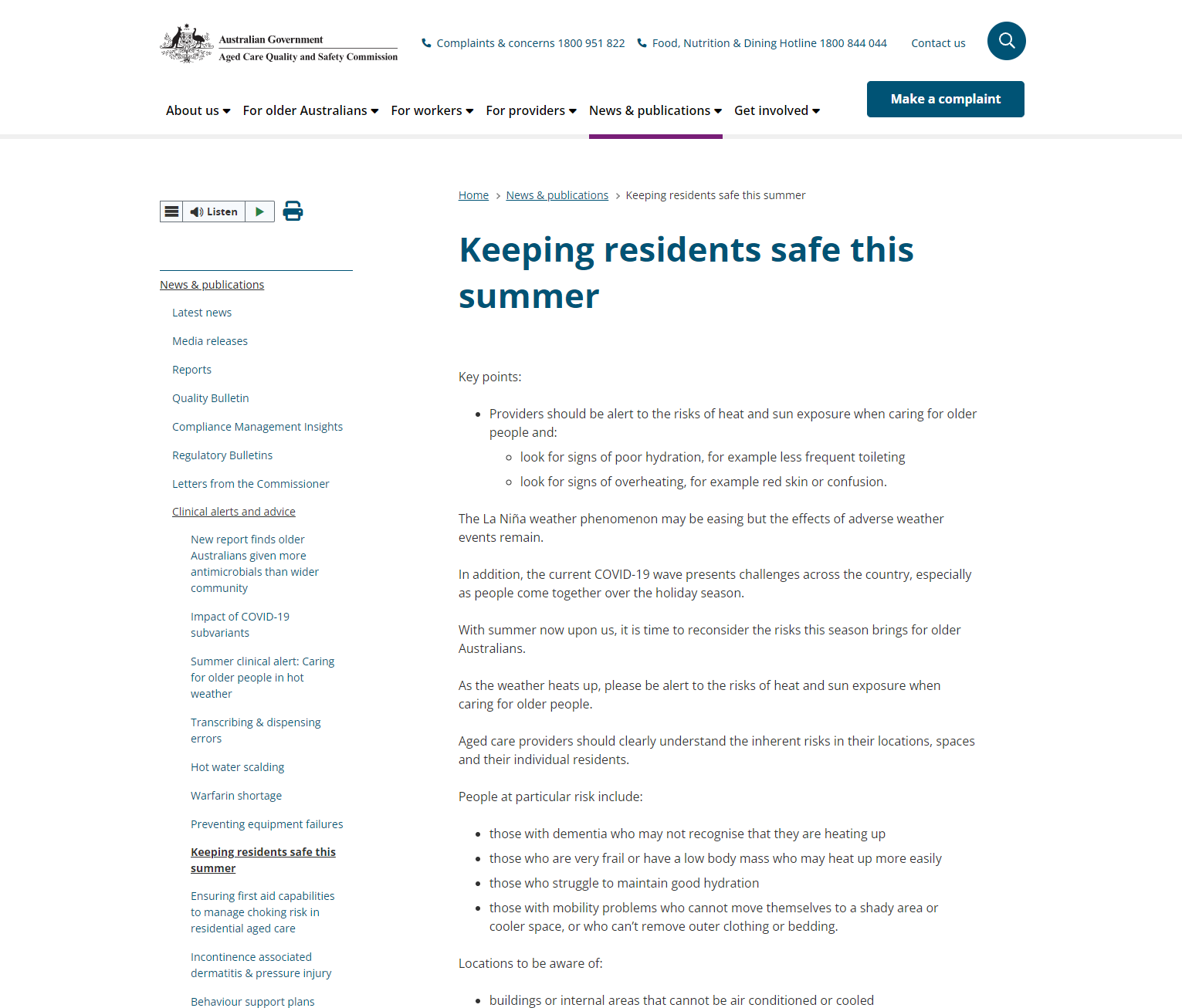
Keeping residents safe this summer
This resource offers guidance to aged care providers on keeping older people safe during summer. It includes strategies for managing heat exposure, hydration, and sun protection. It helps providers monitor vulnerable people, recognise signs of overheating, and implement preventative measures to ensure safety during hot weather.
This resource may refer to information that will be updated from 1 November 2025 to align with the new Aged Care Act and Quality Standards.
Preventing equipment failures
This resource highlights the importance of preventing equipment failures in aged care settings. It outlines the need for regular maintenance checks, adherence to manufacturer guidelines, and proper record-keeping to ensure safety. The document also provides recommendations for improving the safety and reliability of critical devices, such as mobility hoists and medical equipment.
This resource may refer to information that will be updated from 1 November 2025 to align with the new Aged Care Act and Quality Standards.
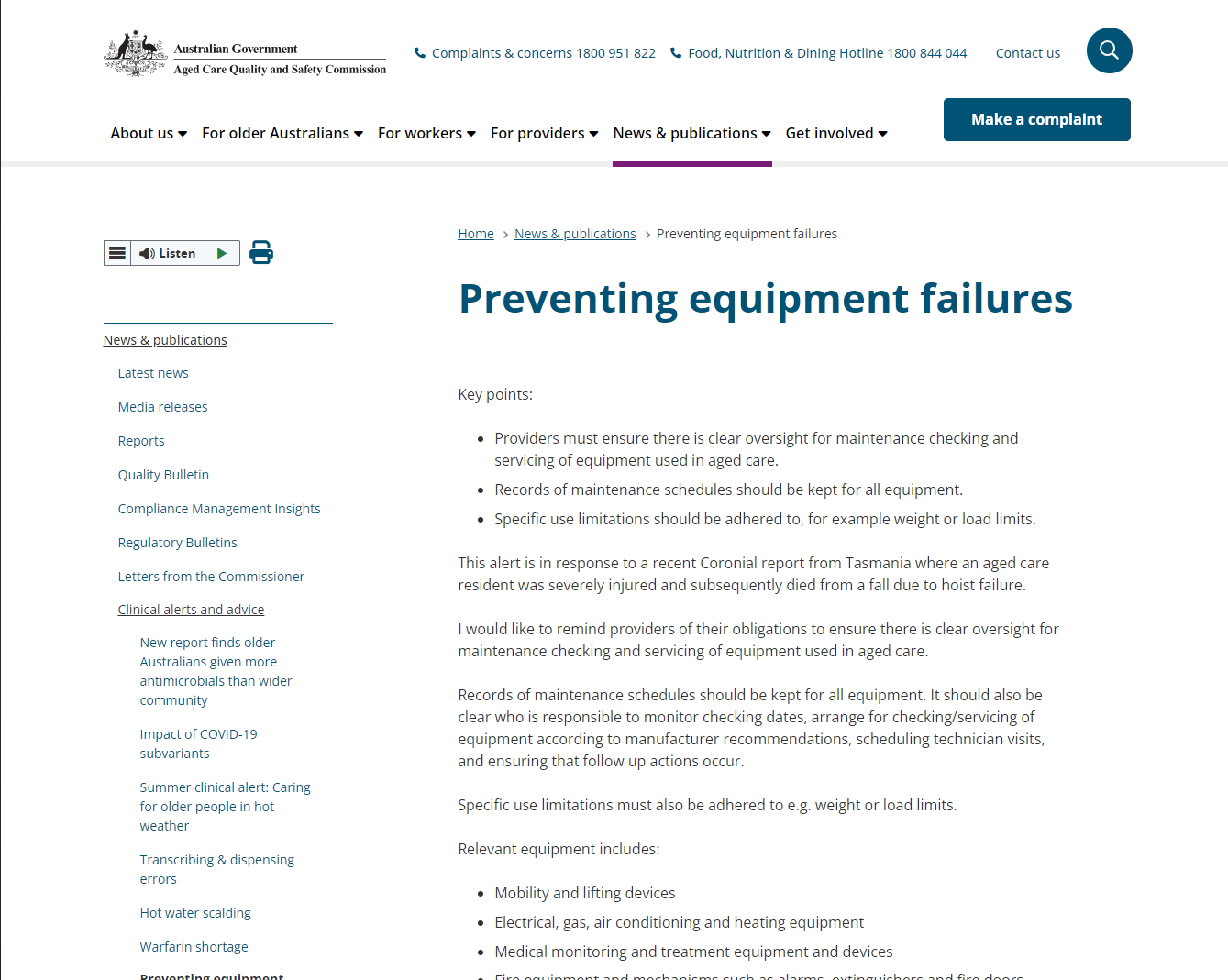
Governing for Reform in Aged Care Program
This resource outlines the Governing for Reform in Aged Care Program, designed to strengthen corporate and clinical governance capabilities for aged care leaders. It provides tools, online learning modules, webinars, and podcasts to support governance improvement and help leaders engage in reform efforts.
This resource may refer to information that will be updated from 1 November 2025 to align with the new Aged Care Act and Quality Standards.
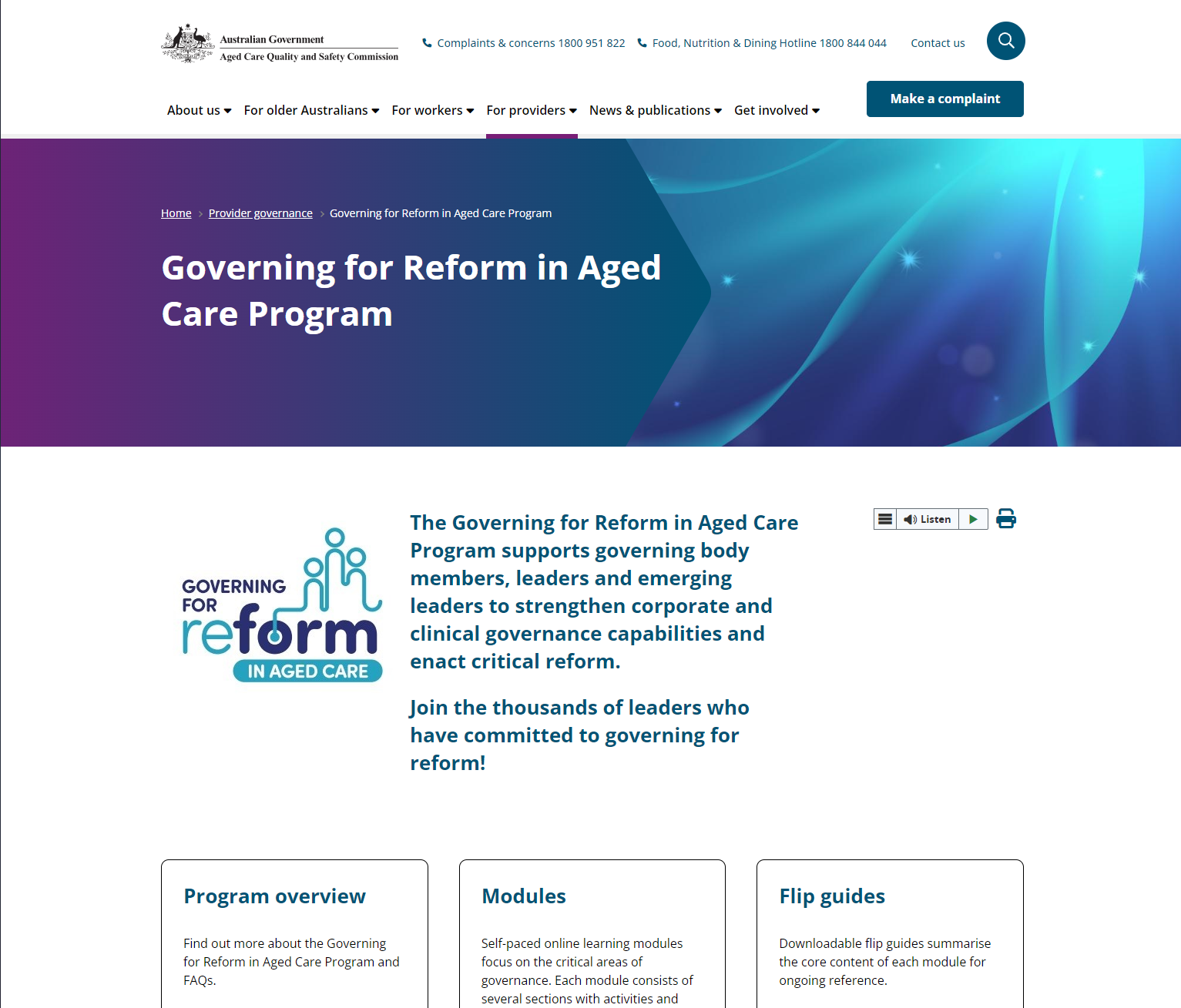
Food focus group resources
This resource is a collection of resources about food focus groups. It includes a fact sheet about setting up a food focus group and a checklist for an effective food focus group. It also contains associated templates, including agenda, minutes, terms of reference and feedback form.
This resource may refer to information that will be updated from 1 November 2025 to align with the new Aged Care Act and Quality Standards.
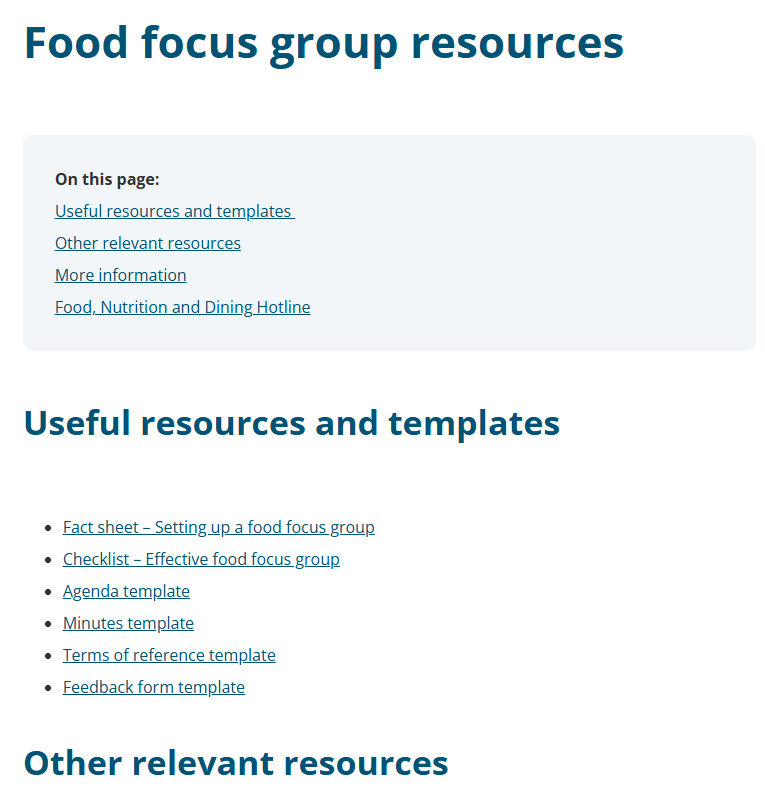
Half the story: A guide to meaningful consultation with people living with dementia, families and carers
This resource is a guide for meaningful consultation with people living with dementia, their families, and carers. It covers planning, ethical considerations, communication methods, and ways to improve accessibility. The guide offers strategies to ensure the voices of those living with dementia are respected, valued, and effectively integrated into decision-making processes.
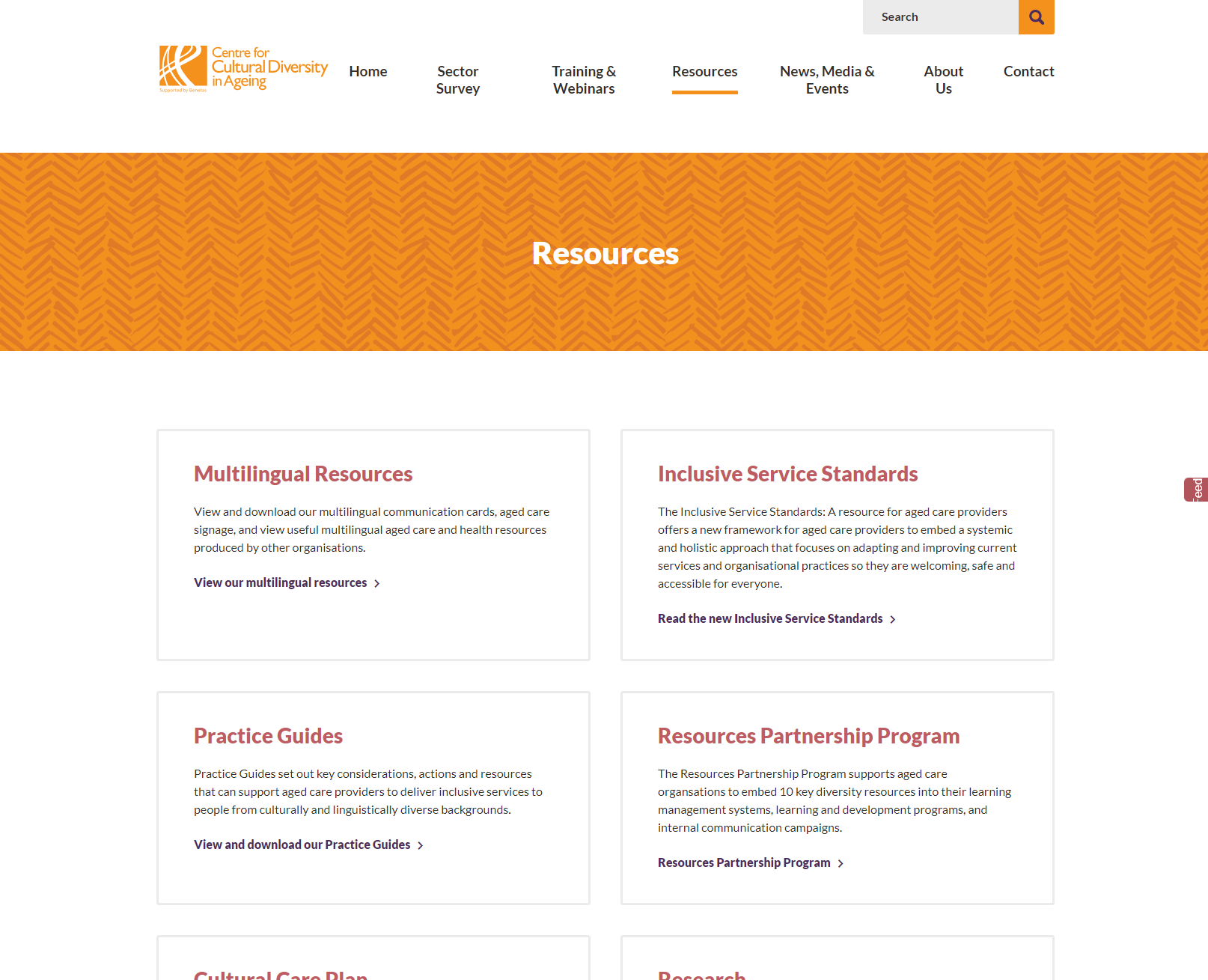
Centre for Cultural Diversity in Ageing - Resources
This page offers a wide range of resources aimed at helping aged care providers deliver culturally inclusive services. It includes multilingual communication cards, cultural care plans, and practice guides that help address the cultural, linguistic, and spiritual needs of people in care. The resources make sure aged care services are accessible, safe, and appropriate for culturally and linguistically diverse populations.
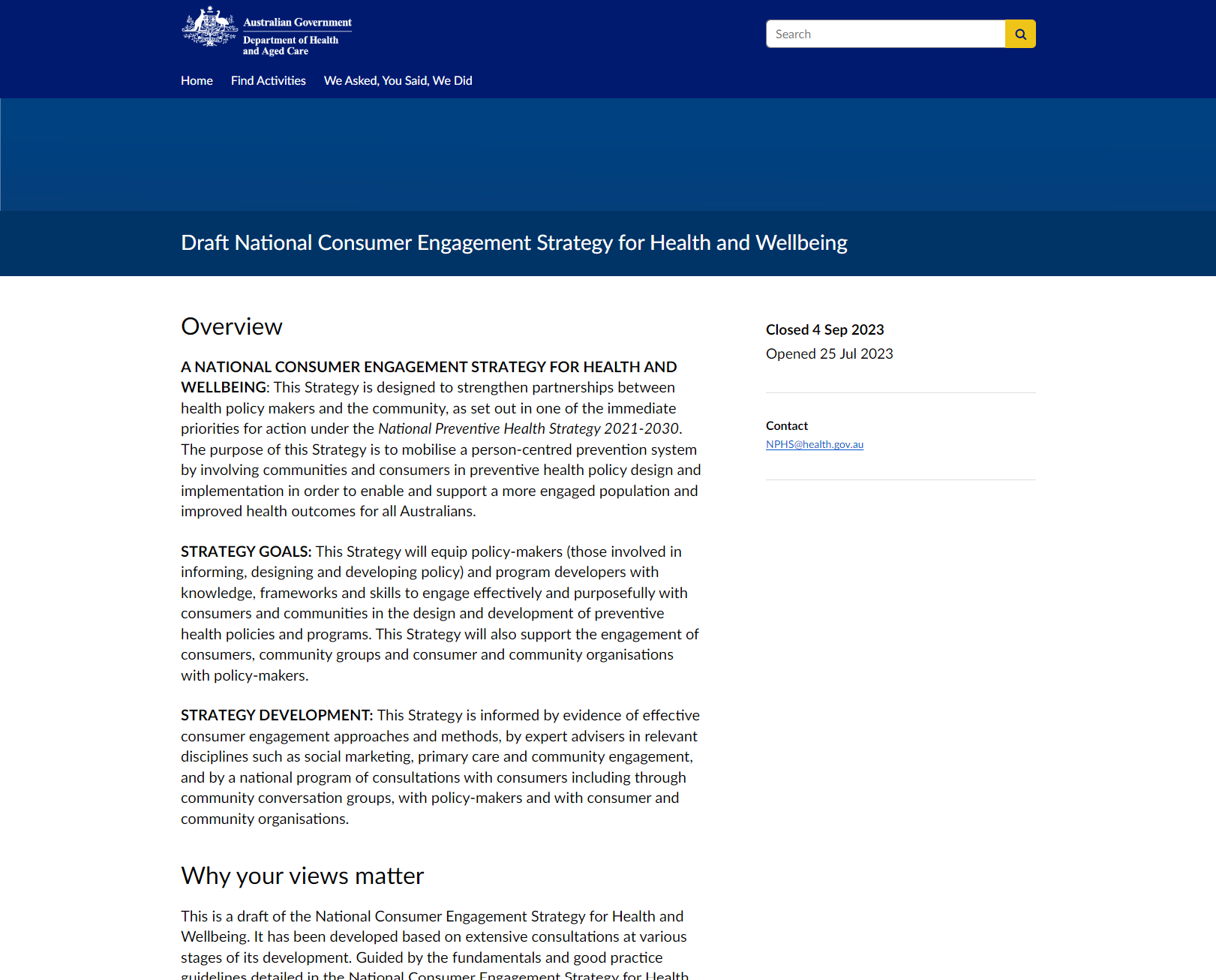
Draft National Consumer Engagement Strategy for Health and Wellbeing
This resource presents the Draft National Consumer Engagement Strategy for Health and Wellbeing, which aims to foster partnerships between health policymakers and communities. It is designed to involve people and communities in the development and implementation of preventive health policies. The strategy supports policymakers and program developers in engaging effectively with consumers to achieve improved health outcomes across Australia.
Consumer and carer engagement: A practical guide
This resource provides a guide for engaging consumers and carers in mental health services. It outlines steps for involving people in decision-making, service design, and evaluation. The guide emphasises co-design, leadership, and dedicated resources to create a person-centred approach that improves care and service outcomes.
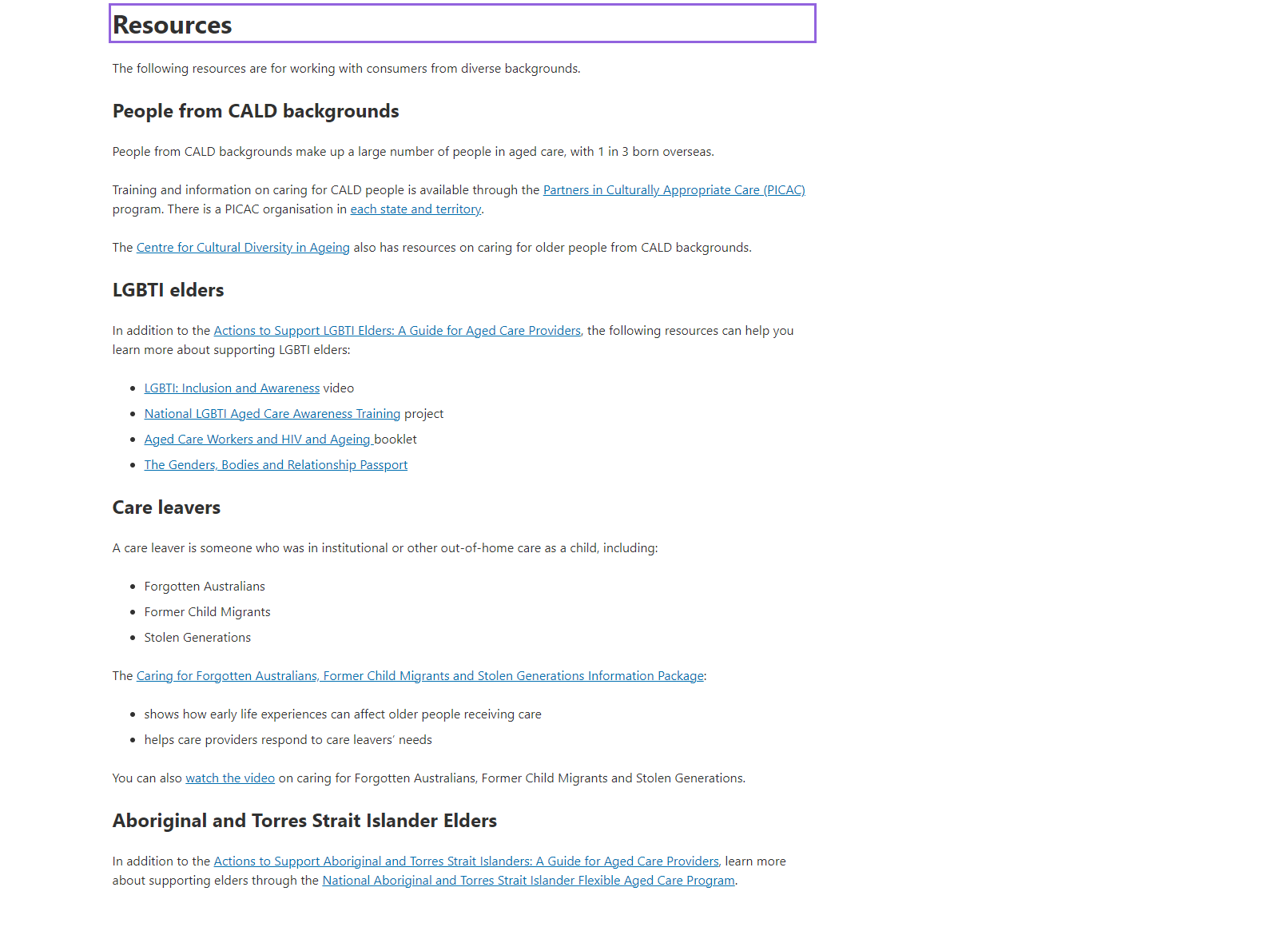
Working with diverse groups in aged care - Resources
This resource provides guidance for aged care providers on working with people from diverse backgrounds. It includes information on caring for people from culturally and linguistically diverse (CALD) backgrounds, LGBTI elders, care leavers, and Aboriginal and Torres Strait Islander Elders. Training programs and resources are available to support culturally appropriate care. This resource may refer to information that will be updated from 1 November 2025 to align with the new Aged Care Act and Quality Standards.
Disability, Ageing and Carers, Australia: Summary of Findings
This resource provides key statistics and findings on disability, ageing, and carers in Australia. It offers insights into the prevalence of disability, living arrangements, health conditions, and the needs for assistance among older adults. It also includes data on informal and formal care providers, highlighting the importance of support services for those aged 65 years and over in aged care settings.
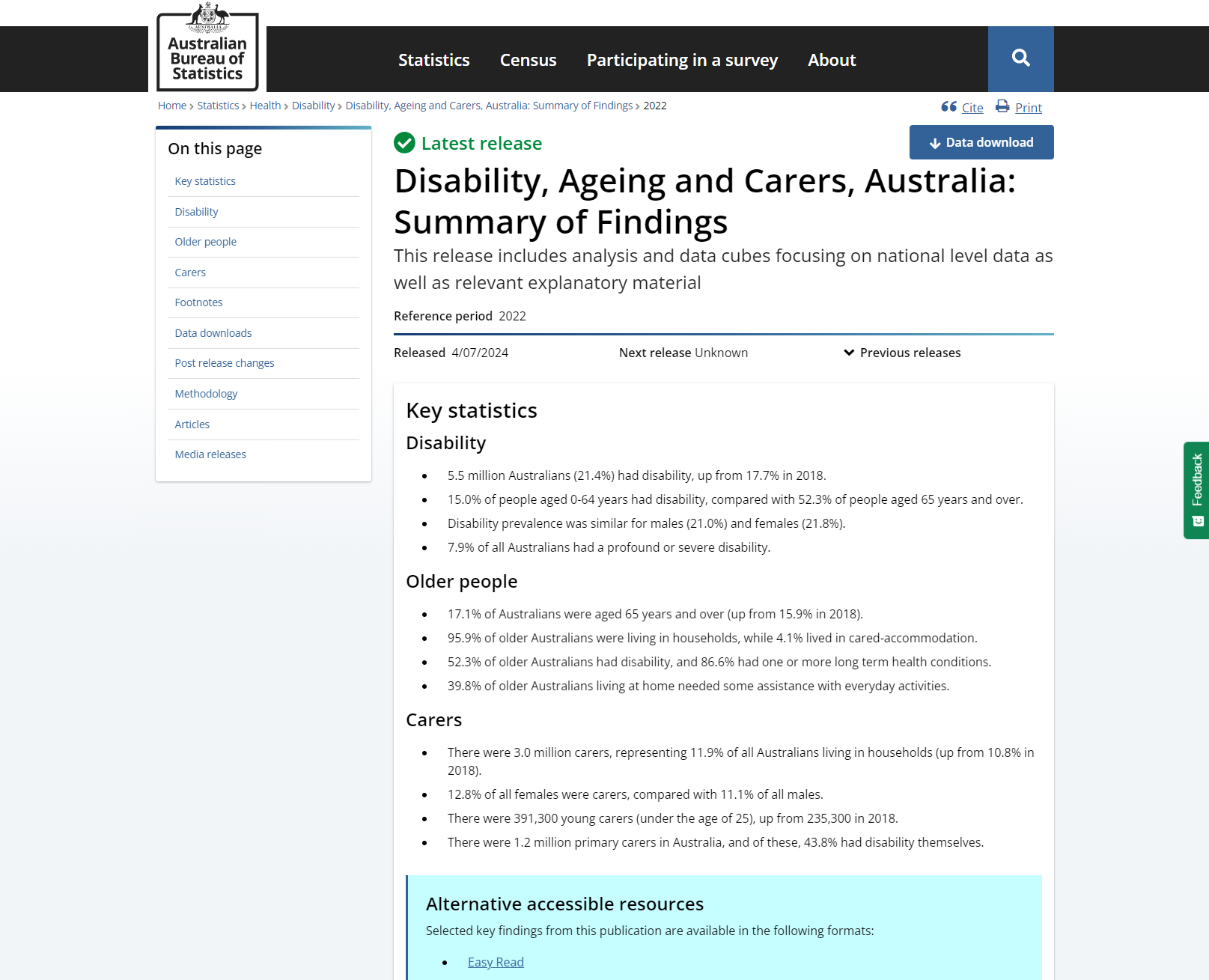
Improving accommodation in residential aged care
This resource provides information on improving accommodation in residential aged care through the National Aged Care Design Principles and Guidelines, effective from July 2024. It covers areas such as creating dementia-friendly environments, improving access to outdoor spaces, fostering community connections, and ensuring privacy. The guidelines aim to promote independence and a home-like atmosphere.
This resource may refer to information that will be updated from 1 November 2025 to align with the new Aged Care Act and Quality Standards.
Dementia-friendly environments - Dining areas, kitchens and eating
This resource provides guidelines for creating dementia-friendly dining and kitchen spaces, emphasising sensory engagement, personalised meal experiences, and a home-like environment. It includes practical adjustments for lighting, noise, seating, and social interaction to enhance dining enjoyment.
This resource was developed by a state/territory government or organisation and therefore its applicability and usefulness may be limited.
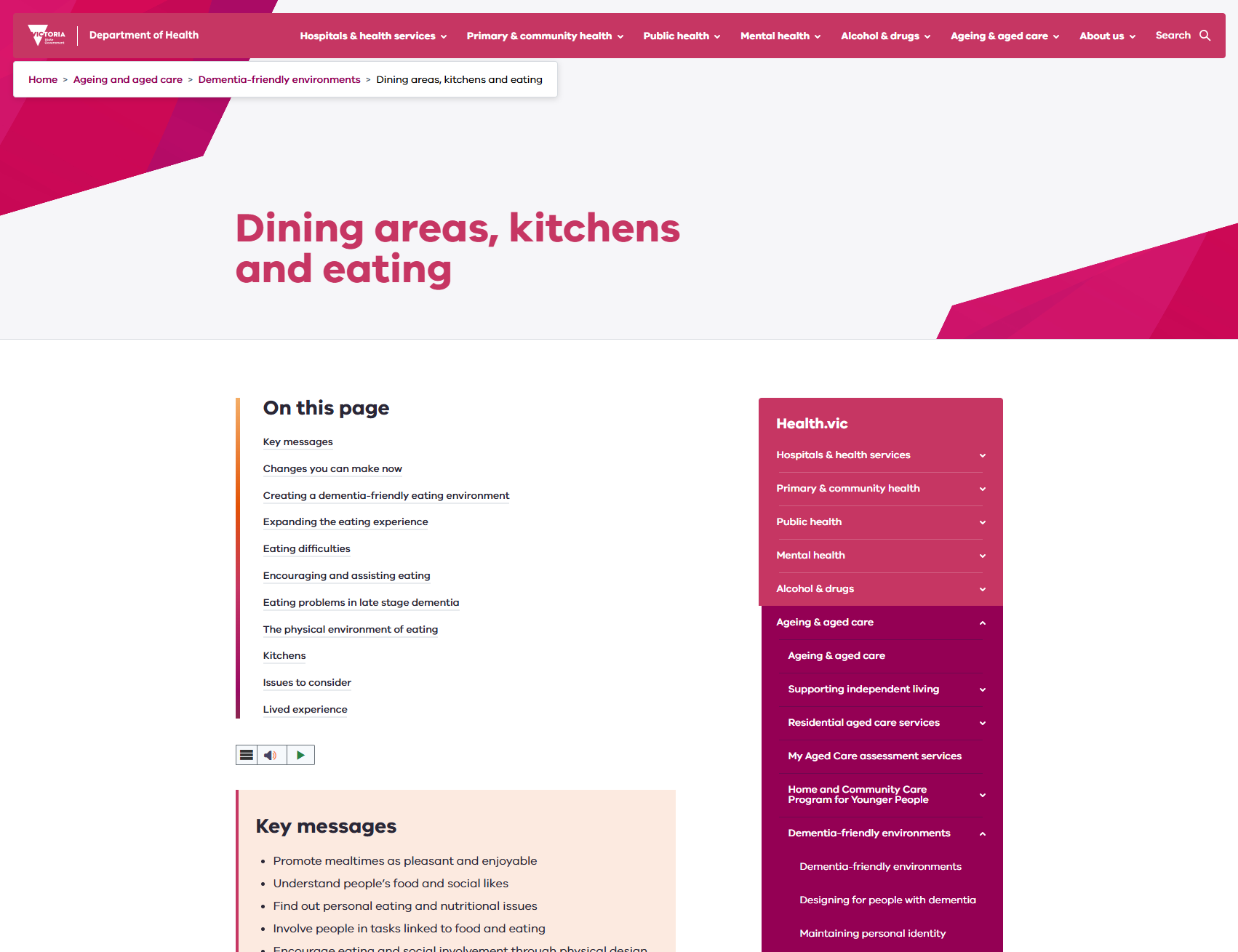
Dementia enabling environments
The Dementia Enabling Environments website, developed by Alzheimer's WA, provides guidance and resources to help create enabling environments for a person living with dementia. It includes design principles for different environment types, include home and residential aged care facilities.
This resource was developed by a state/territory government or organisation and therefore its applicability and usefulness may be limited.
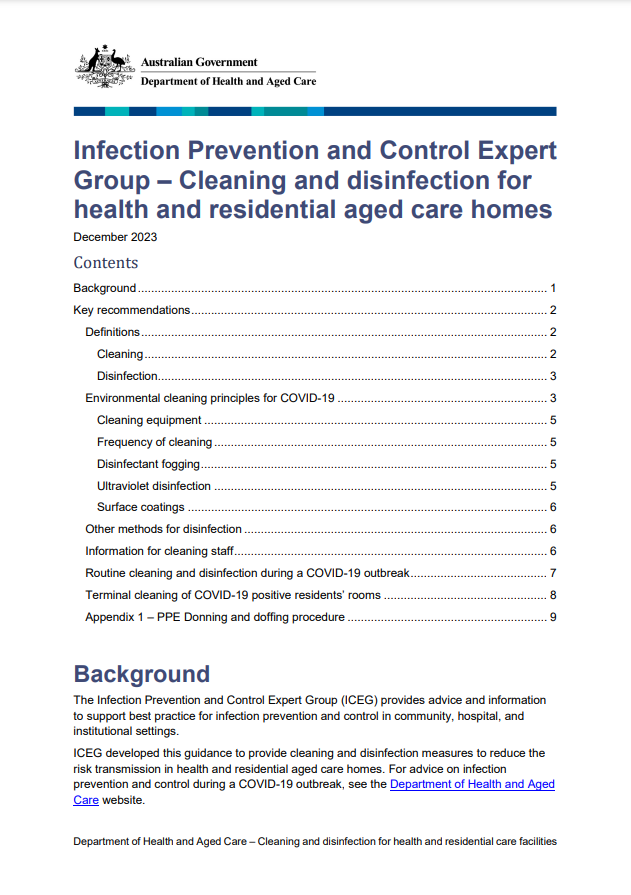
Coronavirus (COVID-19) cleaning and disinfection for health and residential aged care homes
This resource provides cleaning and disinfection guidance for health and residential aged care homes to reduce the transmission of COVID-19. It outlines cleaning protocols, frequency, and the use of appropriate disinfectants, ensuring safety for staff and residents. The document also covers procedures for cleaning after suspected or confirmed COVID-19 cases.
This resource may refer to information that will be updated from 1 November 2025 to align with the new Aged Care Act and Quality Standards.