The Quality Standards Resource Centre helps extend understanding of the strengthened Aged Care Quality Standards, which took effect from 1 November 2025. You can search for resources by using keywords, or filtering by standard, outcome and audience. Before using the Resource Centre, please read the terms of use.
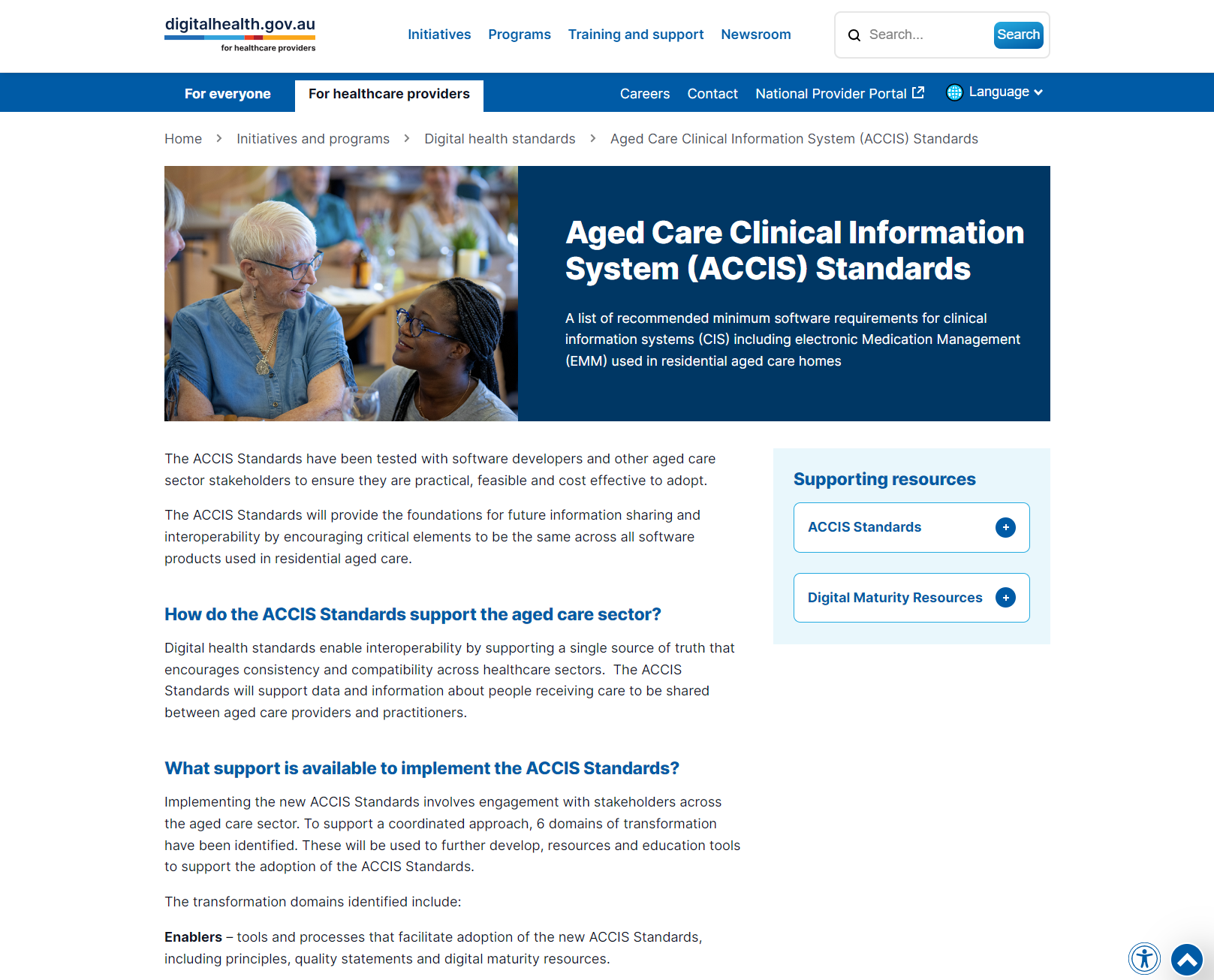
Aged Care Clinical Information System (ACCIS) Standards
This resource outlines the Aged Care Clinical Information System (ACCIS) Standards, providing minimum software requirements for clinical information systems used in aged care. It supports interoperability, data sharing, and safe clinical decision-making. The standards aim to enhance care coordination, improve data accuracy, and ensure compliance with privacy and security protocols within residential aged care settings.
Electronic prescriptions
This resource provides an overview of electronic prescriptions, which offer a digital alternative to paper prescriptions. It explains how electronic prescriptions can be issued by healthcare providers and stored on digital devices for convenience. The resource also details the benefits of the Active Script List (ASL) for managing multiple prescriptions, enhancing efficiency and medicine safety.

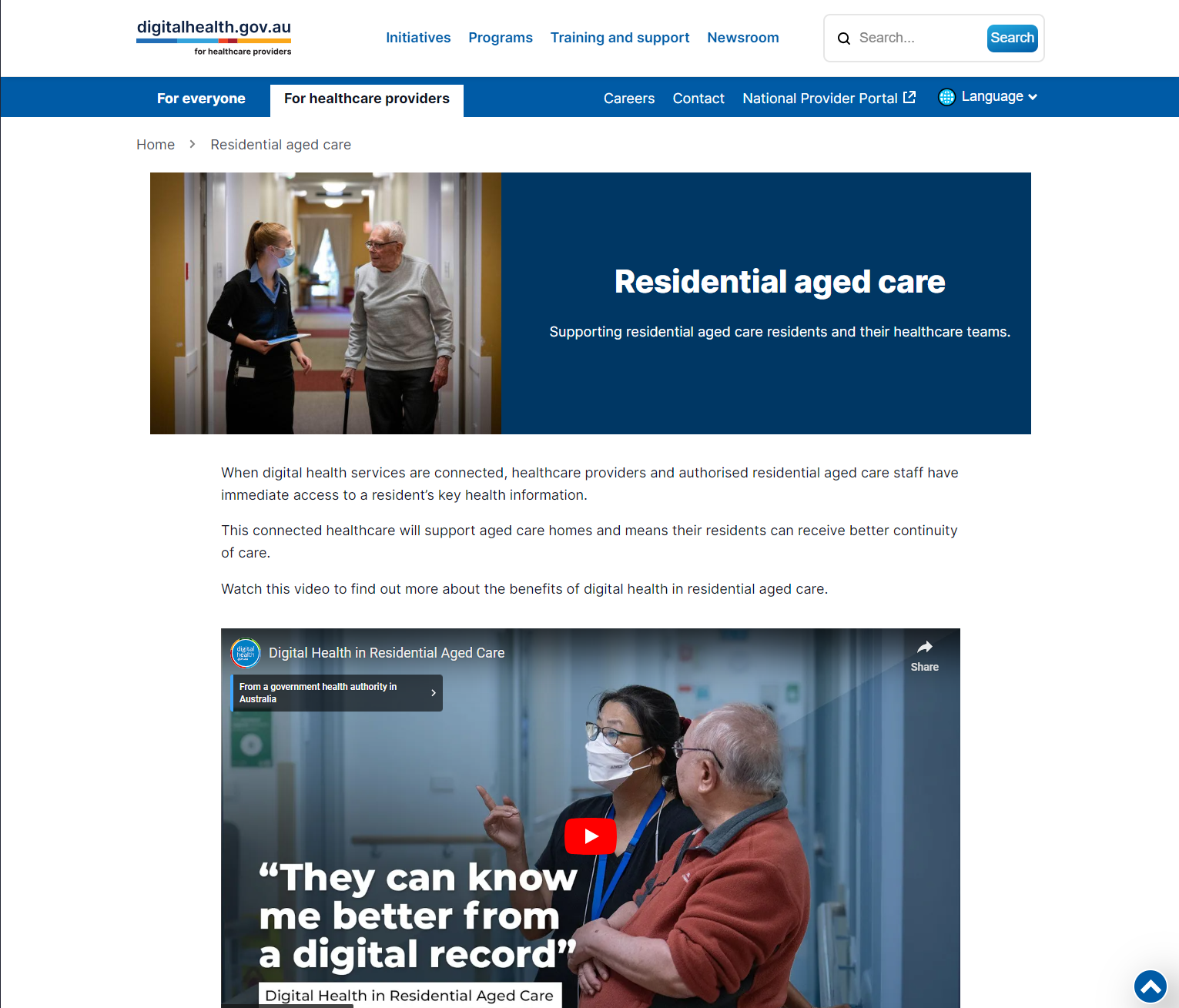
Residential aged care - Supporting residential aged care residents and their healthcare teams
This resource provides information on digital health tools available for residential aged care providers. It covers how these tools, including My Health Record, support care coordination, improve health outcomes, and enable secure information sharing between healthcare providers to enhance the quality of aged care services.
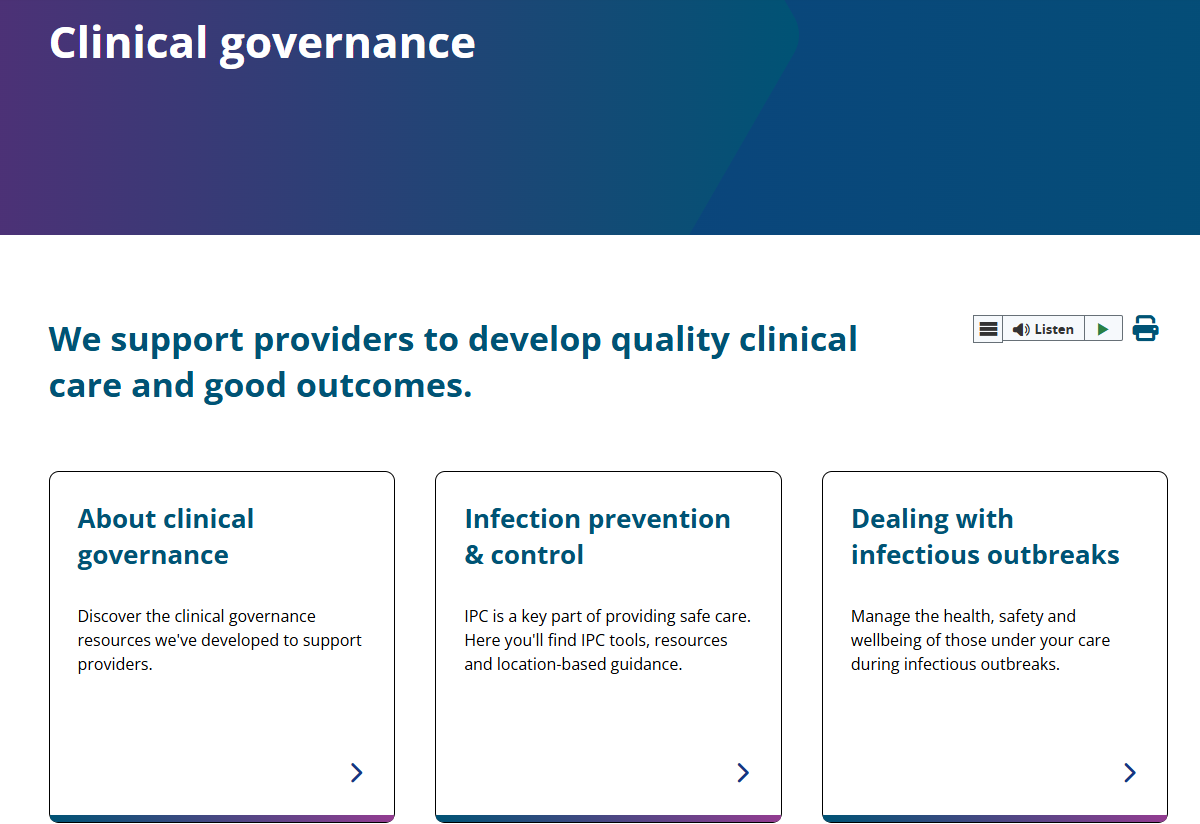
Clinical governance
This page provides information about clinical governance. It includes links to topics including infection and prevention control, dealing with infectious outbreaks, medication management, wound care and restrictive practices. This resource may refer to information that will be updated from 1 November 2025 to align with the new Aged Care Act and Quality Standards.
Managing worker risk policy
Our Managing Worker Risk Policy explains our approach in detecting, assessing and responding to risks arising from the actions, inactions and behaviours of workers.
This policy includes information about:
 Managing worker risk policy (PDF 386.18 KB)
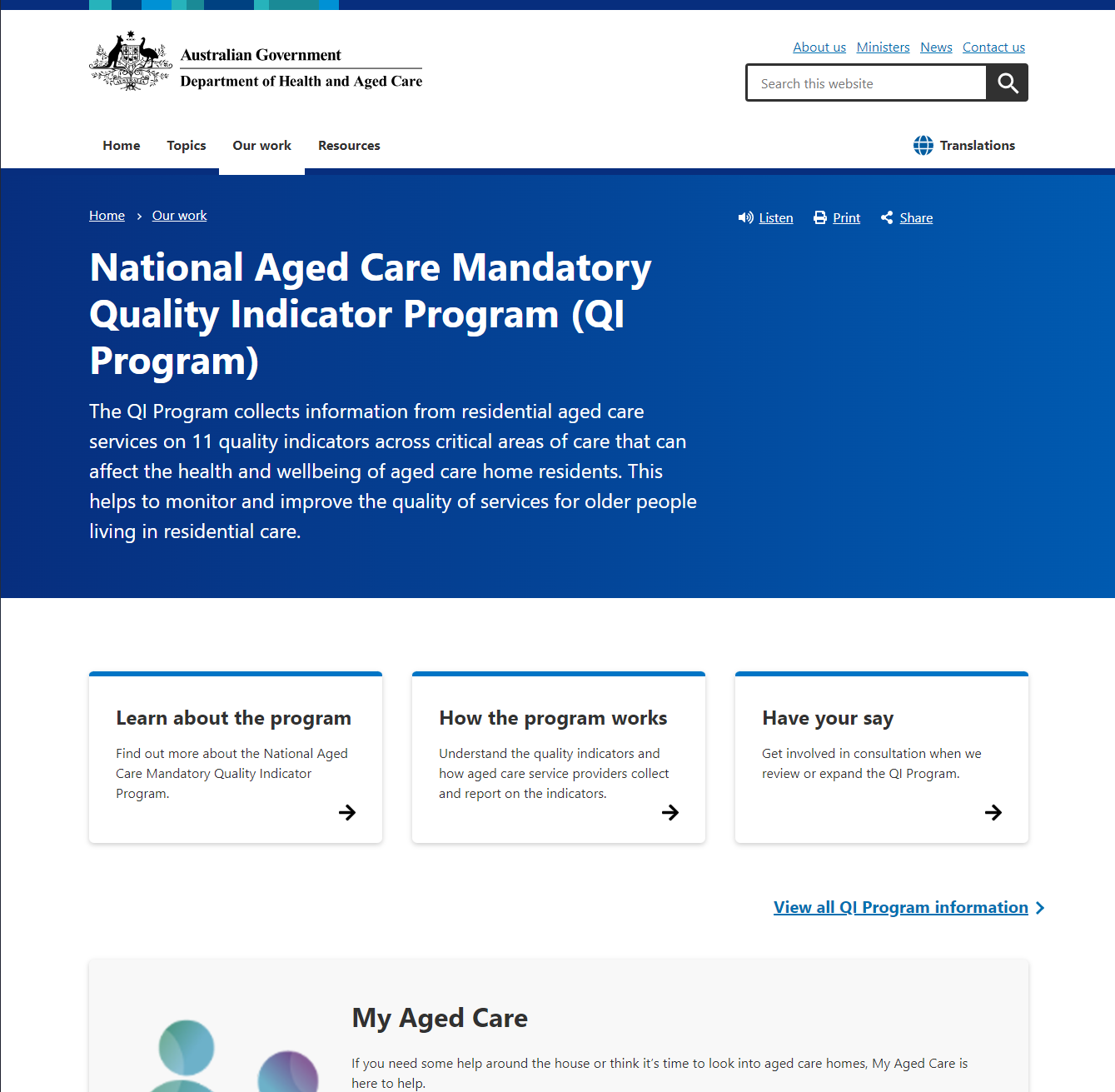
National Aged Care Mandatory Quality Indicator Program (QI Program)
This resource provides information on the National Aged Care Mandatory Quality Indicator Program (QI Program). The program gathers data on 11 quality indicators from residential aged care services to enhance care standards and outcomes for residents. It includes resources, quick guides, consultation papers, and surveys for improving quality indicators in both residential and in-home aged care services.
This resource may refer to information that will be updated from 1 November 2025 to align with the new Aged Care Act and Quality Standards.
Knowledge and Implementation Hub - Clinical governance
This resource discusses clinical governance in aged care, highlighting its importance in delivering safe, high-quality care. It includes evidence-based resources, themes on governance like leadership, culture, consumer partnerships, and workforce strategies, and provides access to research projects, reviews, and practical guidance to support care quality improvements.

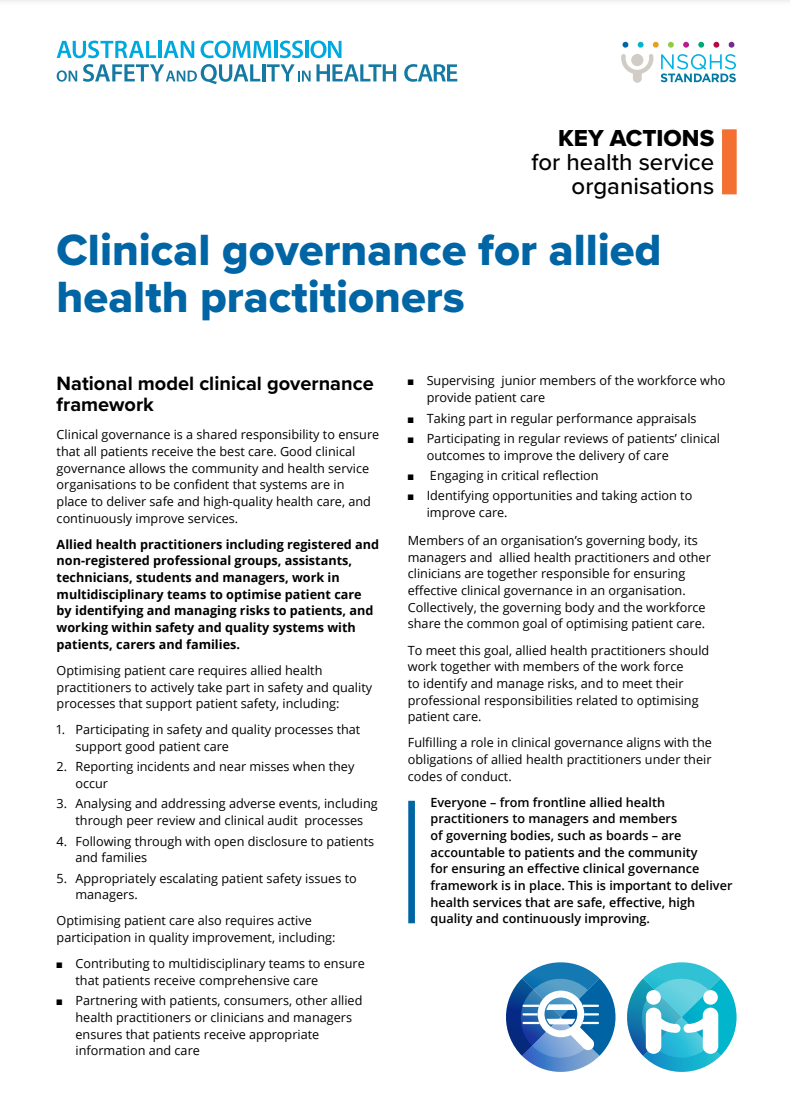
Clinical governance for allied health practitioners
This fact sheet identifies the clinical governance and roles and responsibilities of allied health practitioners. It provides information on the National Model Clinical Governance Framework and lists the roles and responsibilities across Governance, leadership and culture, patient safety and quality systems, clinical performance and effectiveness and safe environment for the delivery of care.
This resource may refer to information that will be updated from 1 November 2025 to align with the new Aged Care Act and Quality Standards.