The Quality Standards Resource Centre helps extend understanding of the strengthened Aged Care Quality Standards, which took effect from 1 November 2025. You can search for resources by using keywords, or filtering by standard, outcome and audience. Before using the Resource Centre, please read the terms of use.
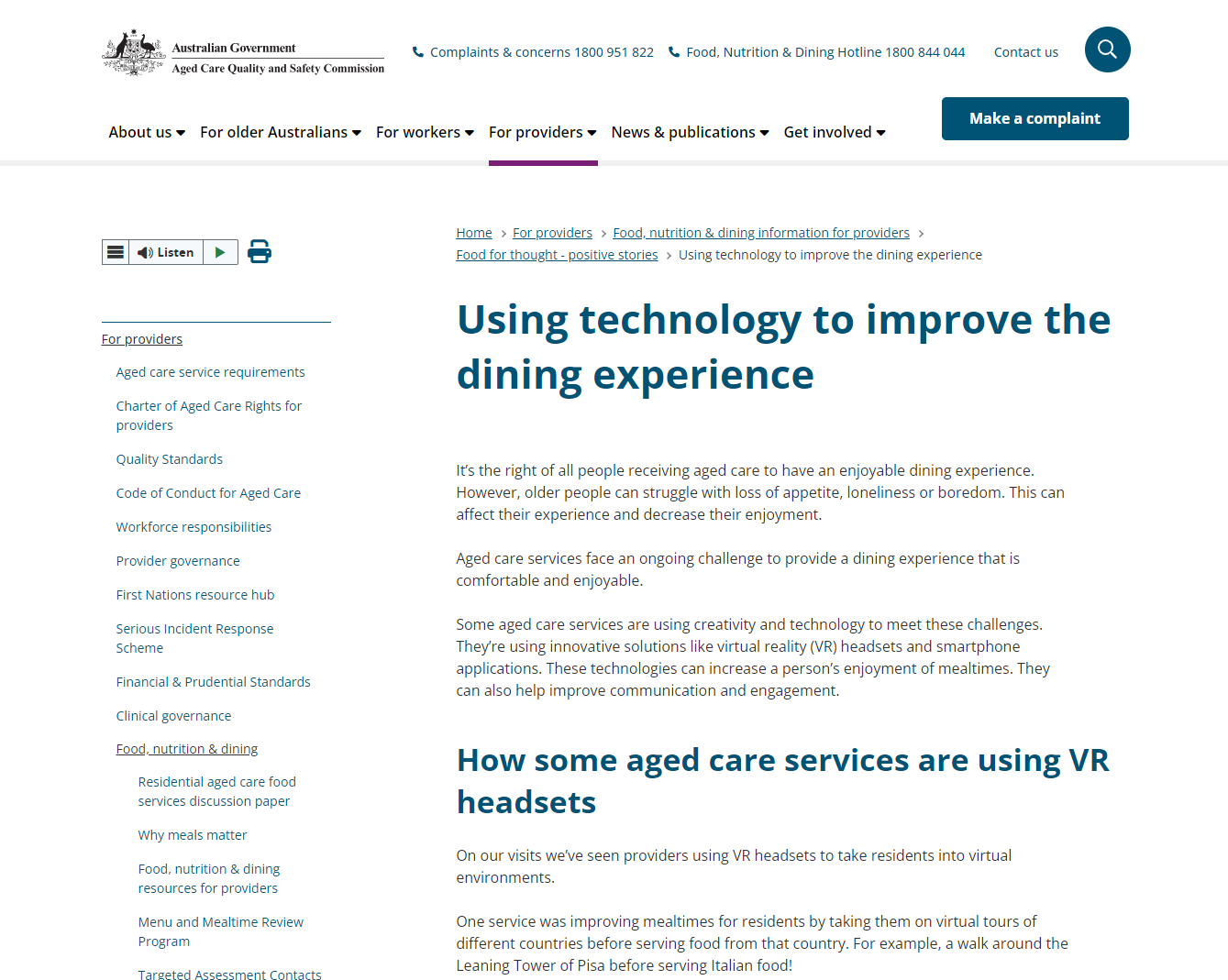
Using technology to improve the dining experience
This resource provides guidance on how technology, such as virtual reality (VR) and mobile applications, can enhance the dining experience in aged care settings. These tools are designed to increase engagement, support meal choices, improve communication with families, and contribute to overall wellbeing by making mealtimes more enjoyable.
This resource may refer to information that will be updated from 1 November 2025 to align with the new Aged Care Act and Quality Standards.
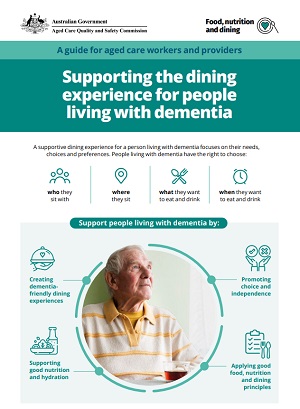
Supporting the dining experience for people living with dementia – Providers and workers guide
This guide is about how to support people living with dementia to maintain good nutrition and enjoy positive dining experiences.
This resource may refer to information that will be updated from 1 November 2025 to align with the new Aged Care Act and Quality Standards.

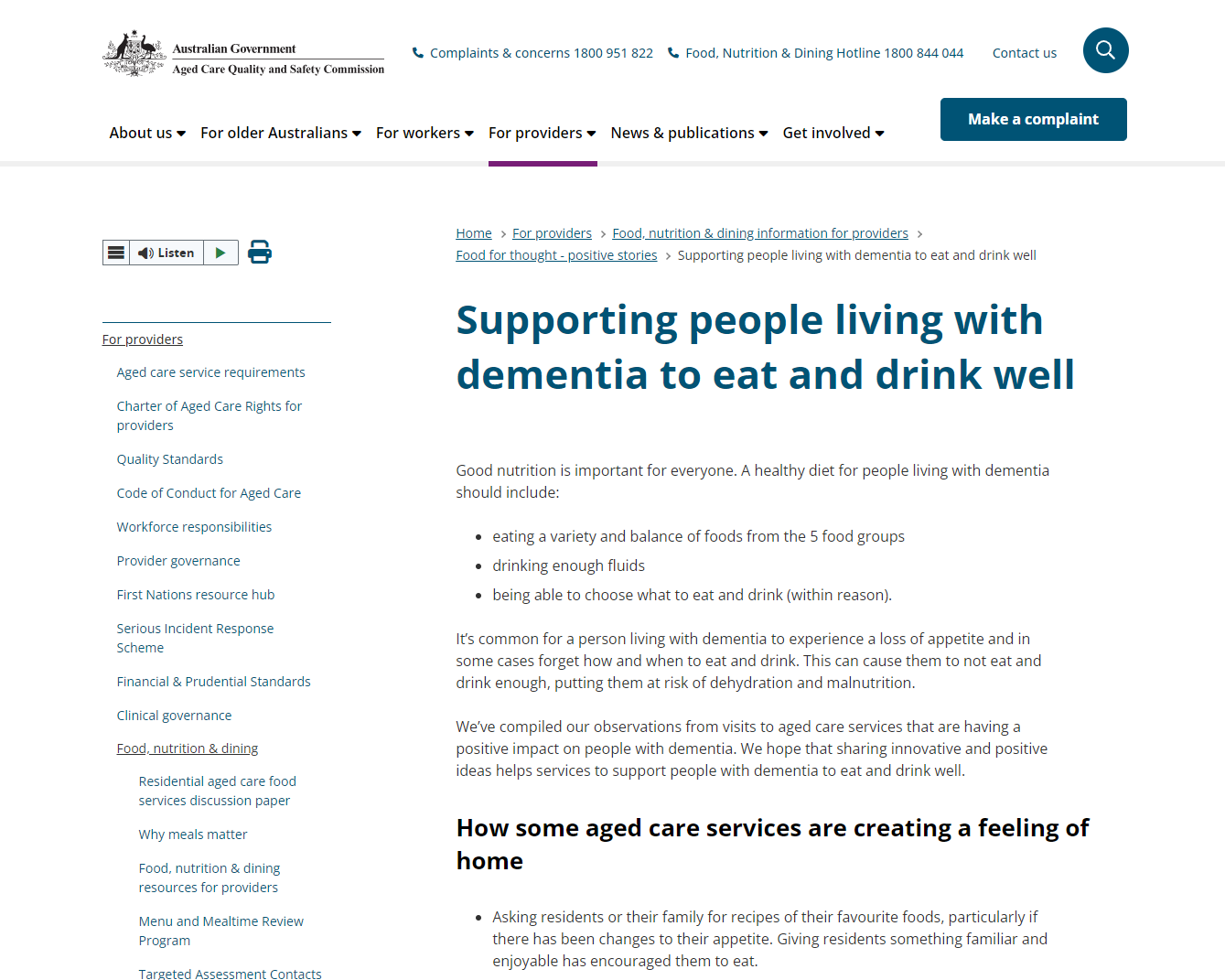
Supporting people living with dementia to eat and drink well
This resource provides guidance for aged care services on how to support people living with dementia to eat and drink well. It highlights innovative approaches such as creating familiar, enjoyable meals, reducing mealtime interruptions, and offering 24-hour access to nutritious foods. These strategies help address challenges like malnutrition and dehydration.
This resource may refer to information that will be updated from 1 November 2025 to align with the new Aged Care Act and Quality Standards.
Set up access to My Aged Care
This resource provides guidance for aged care assessors and service providers on accessing and using the My Aged Care portals. It outlines steps for setting up secure access through authentication methods, managing organisation information, and creating staff accounts, supporting efficient service delivery and assessment processes.
This resource may refer to information that will be updated from 1 November 2025 to align with the new Aged Care Act and Quality Standards.
Respecting the privacy and dignity of clients
This resource provides guidance about respecting the privacy and dignity of clients. It includes information about personal privacy, the Privacy Act, what classifies as health information, consent and privacy of information. It also includes information about person-centred care and client dignity.
This resource may refer to information that will be updated from 1 November 2025 to align with the new Aged Care Act and Quality Standards.
Provider Operations Collection Form
This resource outlines the Provider Operations Collection Form, which aged care providers must complete annually to report their operations. It includes data on governance, diversity, complaints, and service improvements. This information is published to increase transparency, helping older people, families, and carers make informed decisions about aged care services. This resource may refer to information that will be updated from 1 November 2025 to align with the new Aged Care Act and Quality Standards.
Nourishing connections: The vital role of social dining in aged care
This resource explains how social dining in aged care can enhance nutrition and wellbeing by fostering social connections. It encourages creating positive dining environments that promote engagement and respect personal preferences during mealtimes.
This resource may refer to information that will be updated from 1 November 2025 to align with the new Aged Care Act and Quality Standards.
Governing for Reform in Aged Care Program
This resource outlines the Governing for Reform in Aged Care Program, designed to strengthen corporate and clinical governance capabilities for aged care leaders. It provides tools, online learning modules, webinars, and podcasts to support governance improvement and help leaders engage in reform efforts.
This resource may refer to information that will be updated from 1 November 2025 to align with the new Aged Care Act and Quality Standards.
Digital health - For healthcare providers
This resource provides guidance for aged care assessors and service providers on accessing and using the My Aged Care portals. It outlines steps for setting up secure access through authentication methods, managing organisation information, and creating staff accounts, supporting efficient service delivery and assessment processes.
This resource may refer to information that will be updated from 1 July 2025 to align with the new Aged Care Act and Quality Standards.
Security and access policies - Rule 42 guidance
This resource provides guidance for healthcare provider organisations to meet Rule 42 of the My Health Records Rule 2016. It covers creating, communicating, and enforcing a written Security and Access policy to access the My Health Record system, addressing authorisation, training, security measures, and risk mitigation.
National Clinical Terminology Service
This resource provides information for healthcare providers on digital health tools and initiatives. It covers services such as My Health Record, secure messaging, electronic prescriptions, and telehealth. It supports providers in using digital technologies to enhance healthcare delivery and improve patient outcomes.
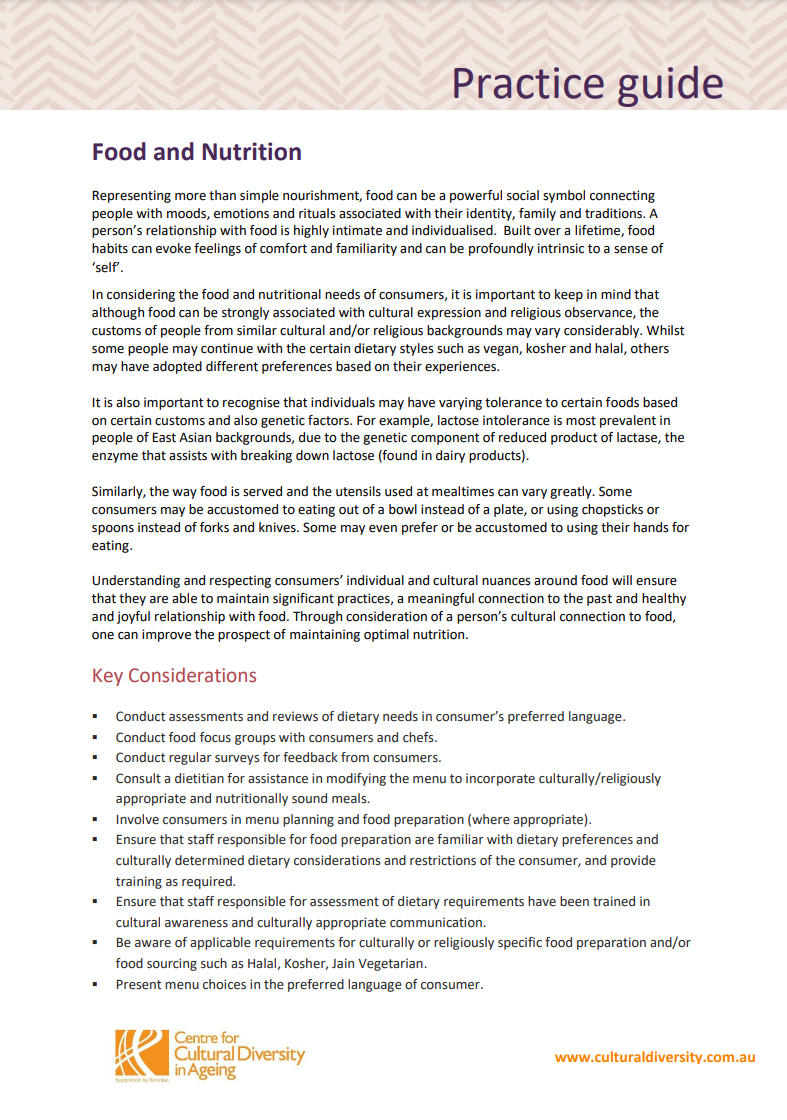
Food and nutrition - Practice guide
This resource focuses on culturally inclusive food and nutrition practices in aged care settings. It outlines the importance of considering cultural, religious, and personal food preferences when preparing meals. The guide suggests involving people in menu planning, conducting regular dietary assessments, and providing culturally appropriate meals and utensils. The resource also highlights the value of celebrating cultural events and ensuring meals meet both nutritional needs and cultural expectations.
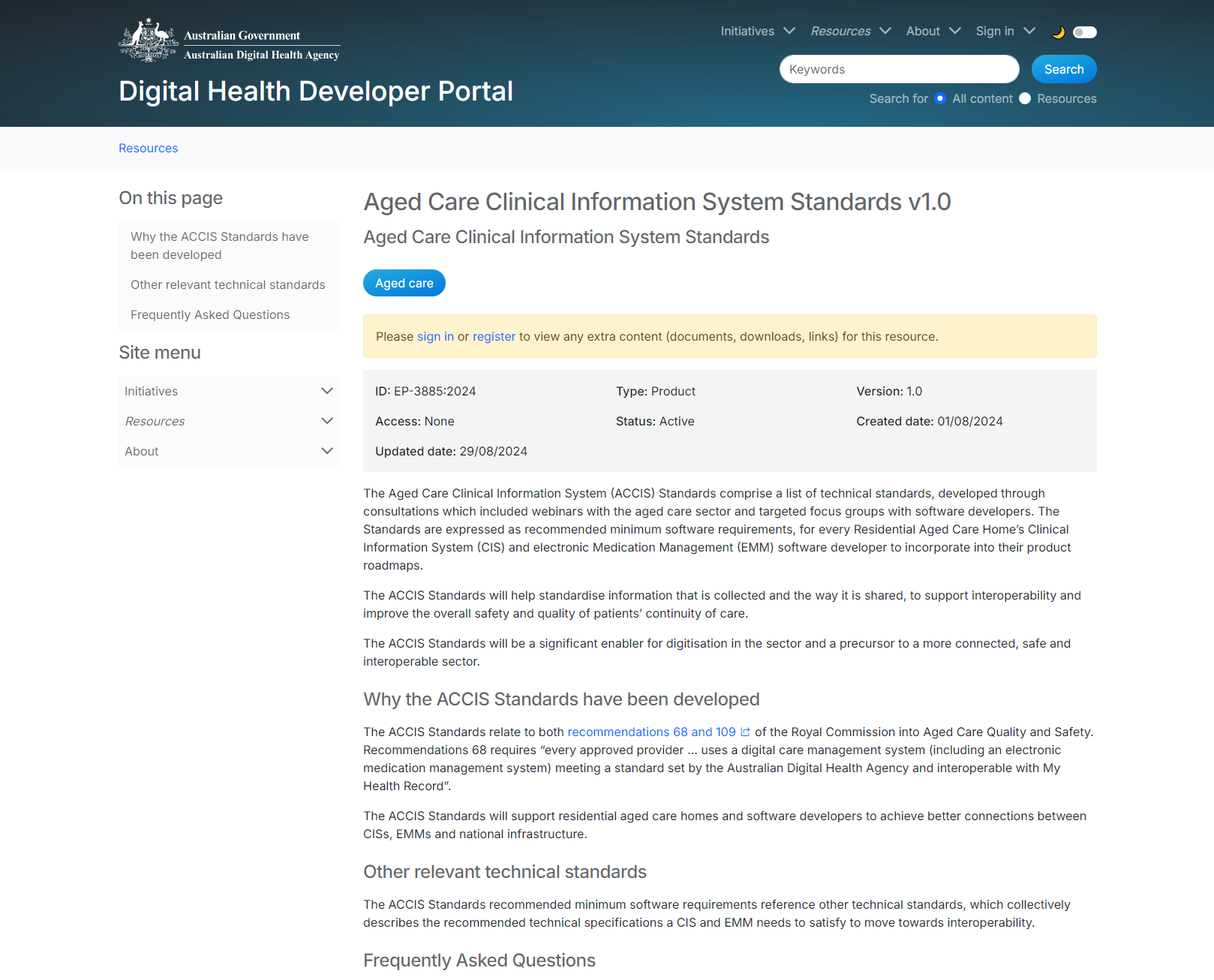
Digital Health Developer Portal - Aged Care Clinical Information System Standards v1.0
This resource outlines the Aged Care Clinical Information System (ACCIS) Standards version 1.0, which sets minimum software requirements for clinical information and electronic medication management systems in aged care. The standards support interoperability, data sharing, and improved care quality by enabling safe and efficient clinical decision-making and information exchange between care providers.
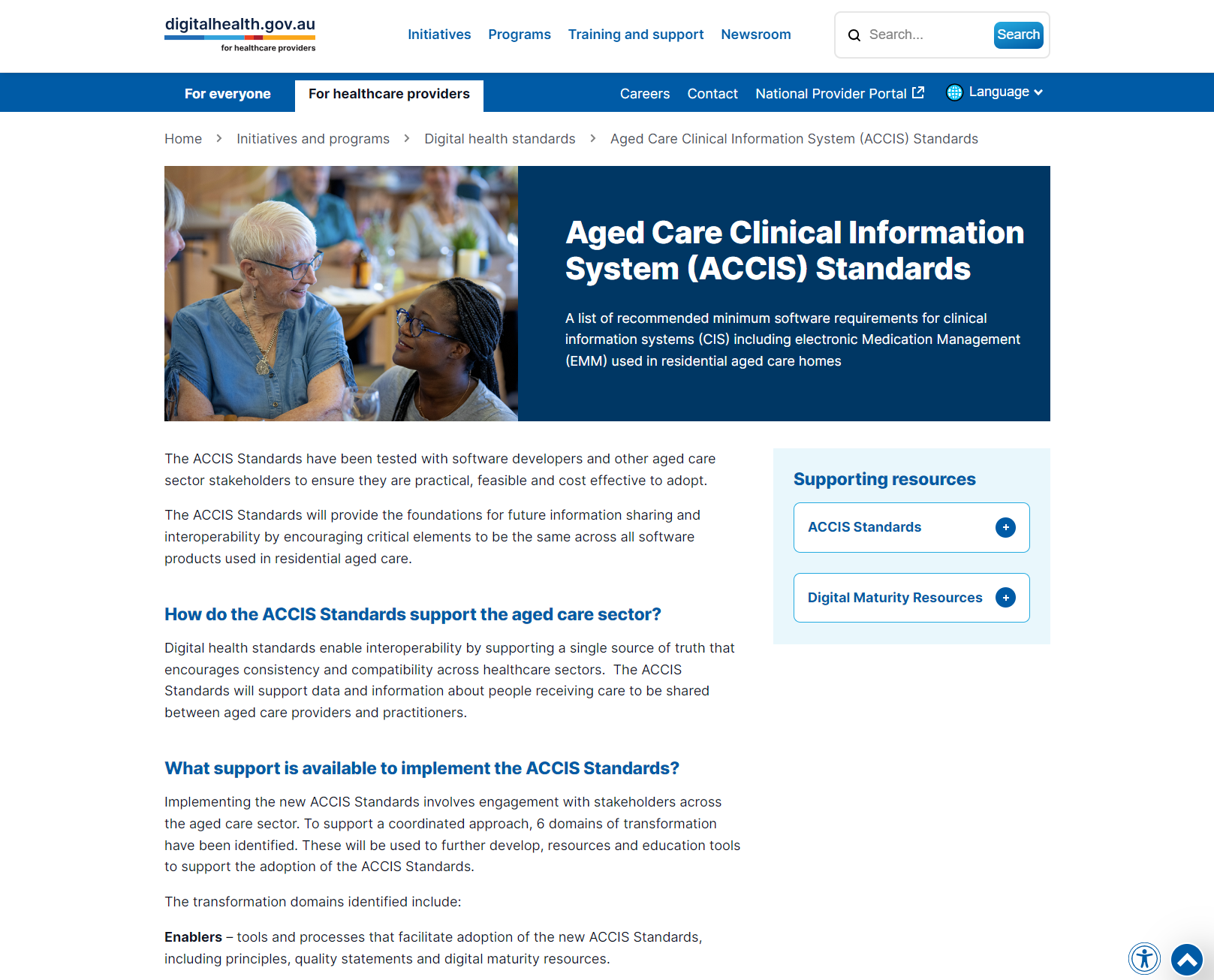
Aged Care Clinical Information System (ACCIS) Standards
This resource outlines the Aged Care Clinical Information System (ACCIS) Standards, providing minimum software requirements for clinical information systems used in aged care. It supports interoperability, data sharing, and safe clinical decision-making. The standards aim to enhance care coordination, improve data accuracy, and ensure compliance with privacy and security protocols within residential aged care settings.
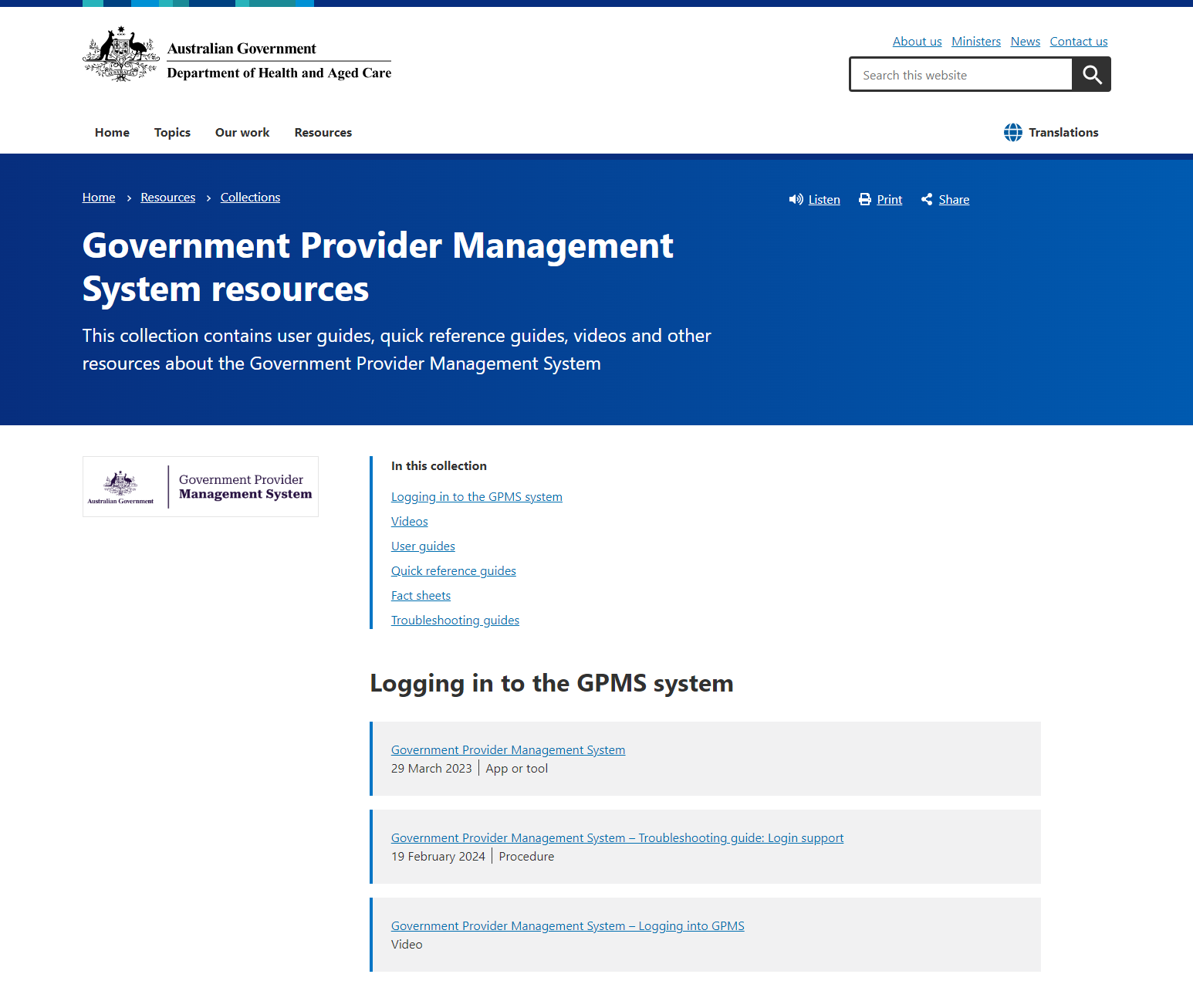
Government Provider Management System resources
This resource provides user guides, quick reference materials, and videos to support aged care providers in using the Government Provider Management System (GPMS). It covers essential tasks such as managing user details, financial reporting, and service information. The GPMS ensures accurate and efficient data management for regulatory compliance and operational oversight in aged care services.
This resource may refer to information that will be updated from 1 November 2025 to align with the new Aged Care Act and Quality Standards.
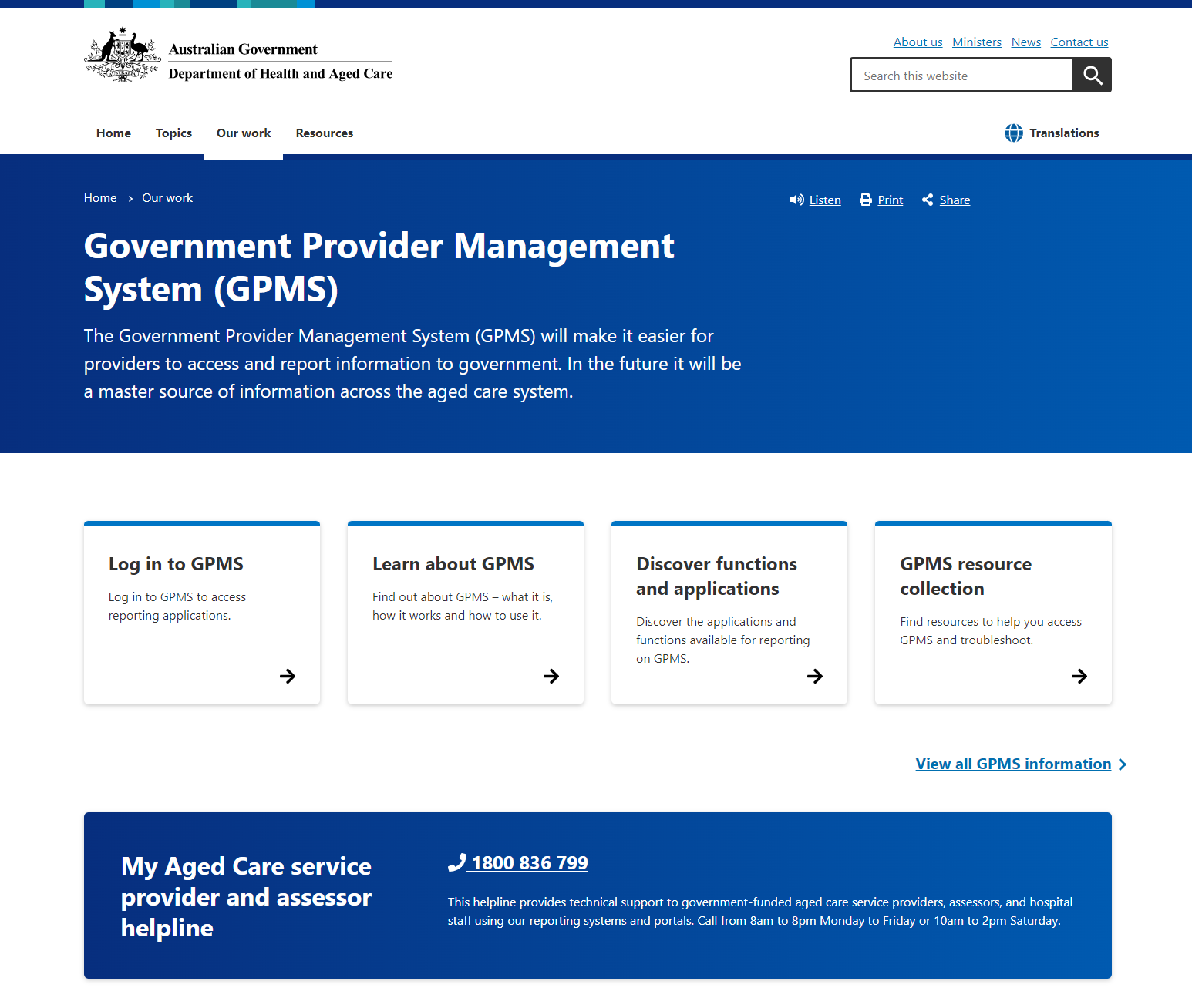
Government Provider Management System (GPMS)
This resource provides an overview of the Government Provider Management System (GPMS), designed to simplify access to and reporting of information by aged care providers to the government. It includes user guides, fact sheets, and troubleshooting support for managing organisational details, notifications, and financial reporting in compliance with aged care requirements.
This resource may refer to information that will be updated from 1 November 2025 to align with the new Aged Care Act and Quality Standards.
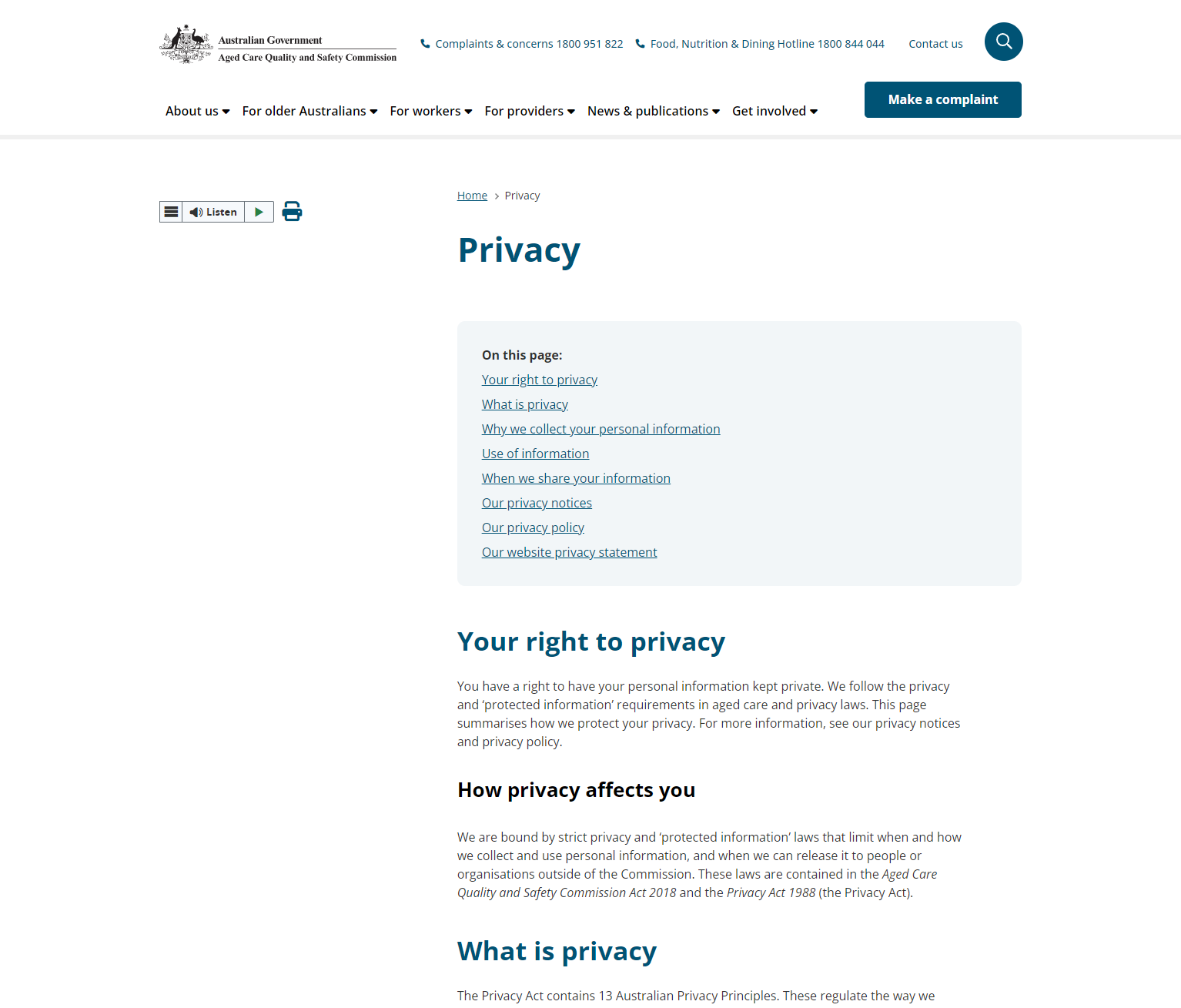
Privacy
This resource provides information about privacy rights in aged care, explaining how personal information is collected, used, and protected. It outlines privacy laws and principles governing the handling of personal data, including when information can be shared. The resource also links to privacy notices and policies for further details.
This resource may refer to information that will be updated from 1 November 2025 to align with the new Aged Care Act and Quality Standards.
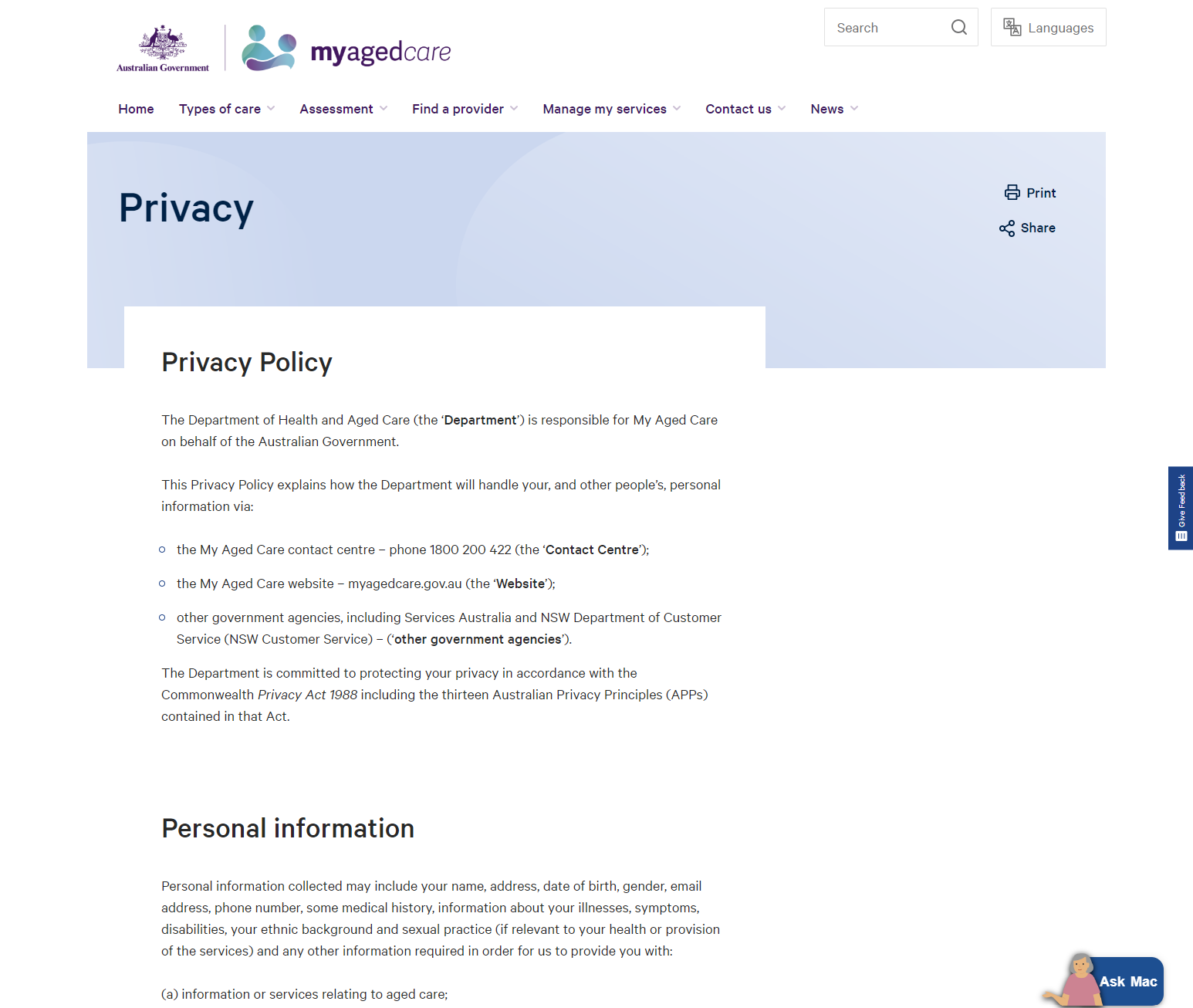
Privacy
This resource outlines the privacy policy for handling personal information through My Aged Care services. It explains how personal data is collected, used, and shared, ensuring compliance with the Privacy Act 1988. The document provides details on consent, data protection measures, and rights to access or correct personal information.
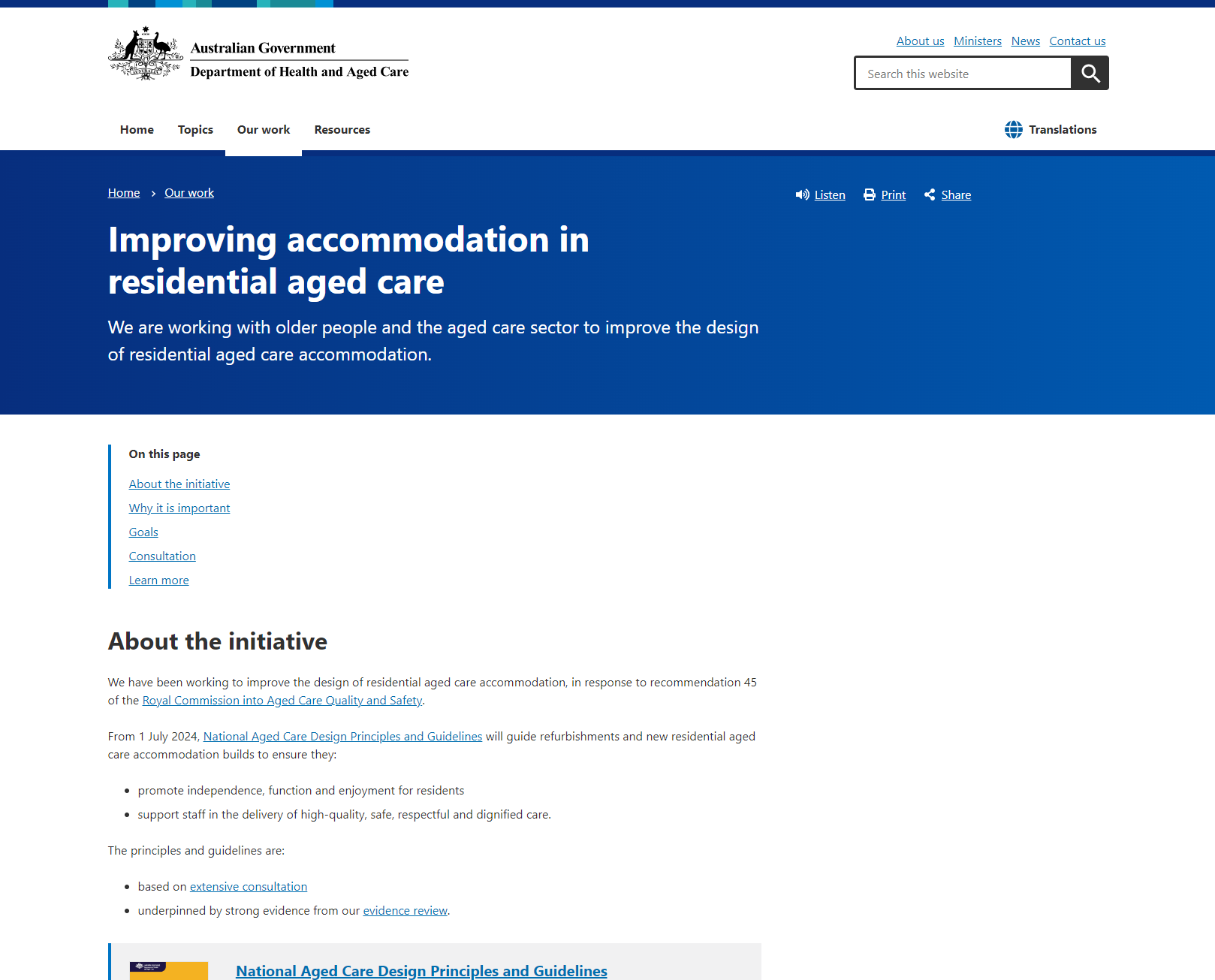
Improving accommodation in residential aged care
This resource provides information on improving accommodation in residential aged care through the National Aged Care Design Principles and Guidelines, effective from July 2024. It covers areas such as creating dementia-friendly environments, improving access to outdoor spaces, fostering community connections, and ensuring privacy. The guidelines aim to promote independence and a home-like atmosphere.
This resource may refer to information that will be updated from 1 November 2025 to align with the new Aged Care Act and Quality Standards.
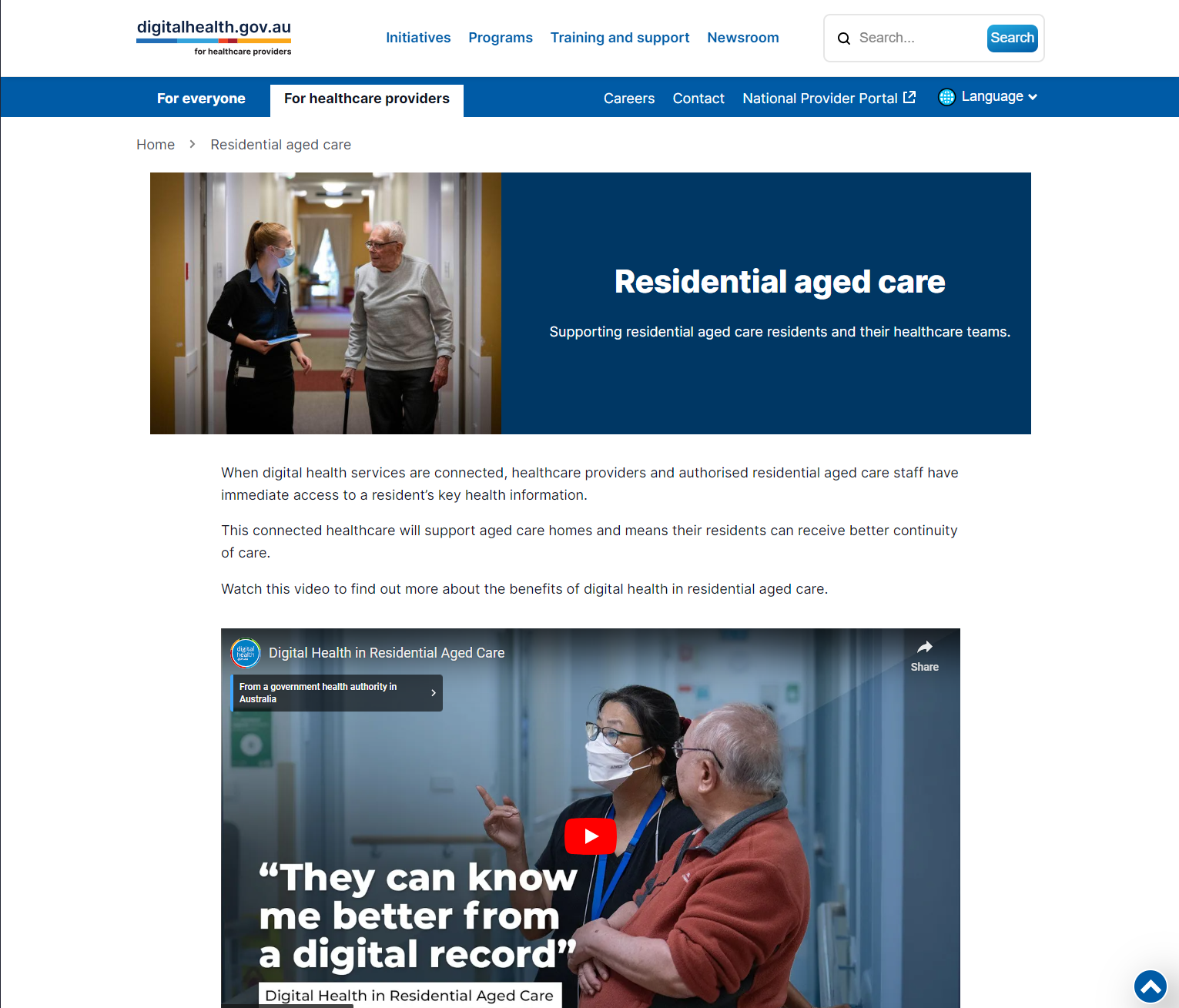
Residential aged care - Supporting residential aged care residents and their healthcare teams
This resource provides information on digital health tools available for residential aged care providers. It covers how these tools, including My Health Record, support care coordination, improve health outcomes, and enable secure information sharing between healthcare providers to enhance the quality of aged care services.