The Quality Standards Resource Centre helps extend understanding of the strengthened Aged Care Quality Standards, which took effect from 1 November 2025. You can search for resources by using keywords, or filtering by standard, outcome and audience. Before using the Resource Centre, please read the terms of use.
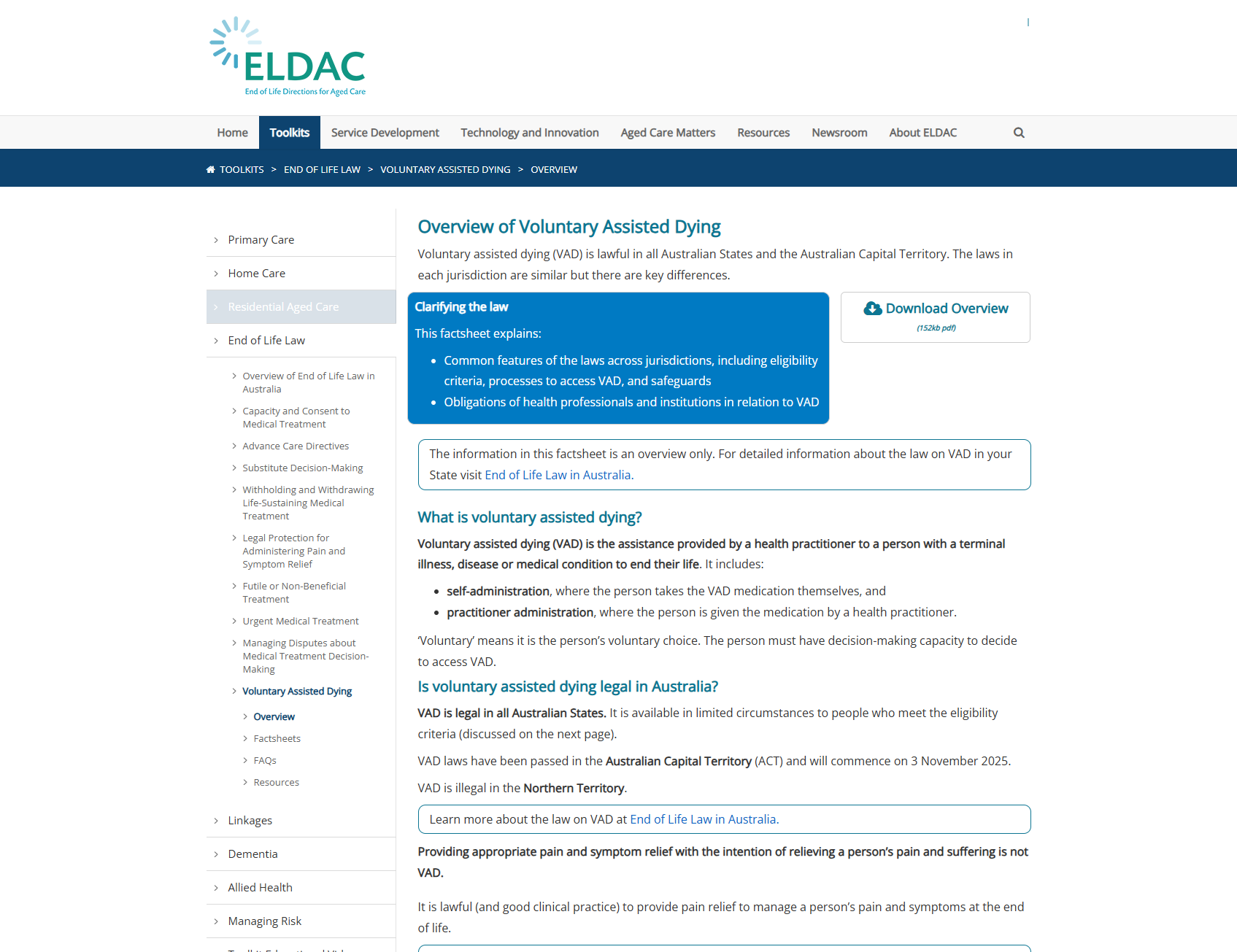
Overview of Voluntary Assisted Dying
This resource provides an overview of voluntary assisted dying (VAD) in Australia, detailing eligibility criteria, procedures, and legal requirements. It covers how VAD laws vary across jurisdictions, safeguards in place, and responsibilities for health professionals and institutions. Health professionals can conscientiously object but may still have legal responsibilities.
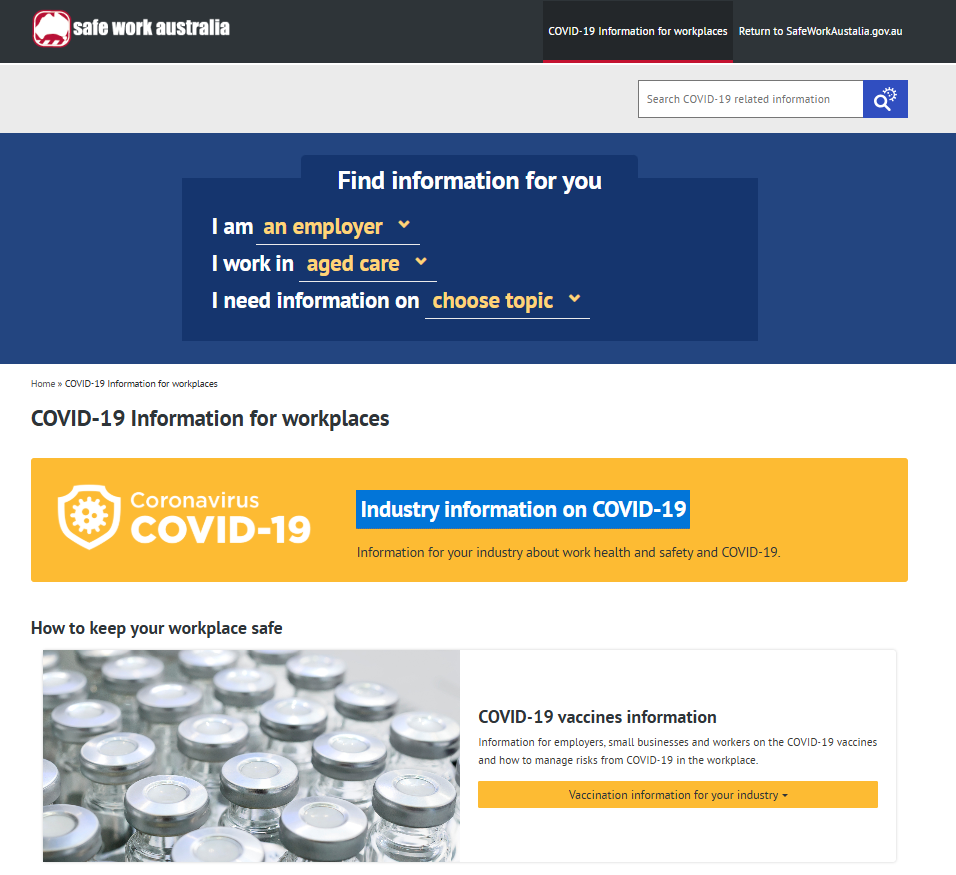
COVID-19 Information for workplaces - General
This resource provides guidance on minimising the spread of COVID-19, including aged care settings. It outlines vaccine information, risk assessments, physical distancing, hygiene and rapid antigen testing in the workplace. It also contains key resources such as signage, posters and translated information.
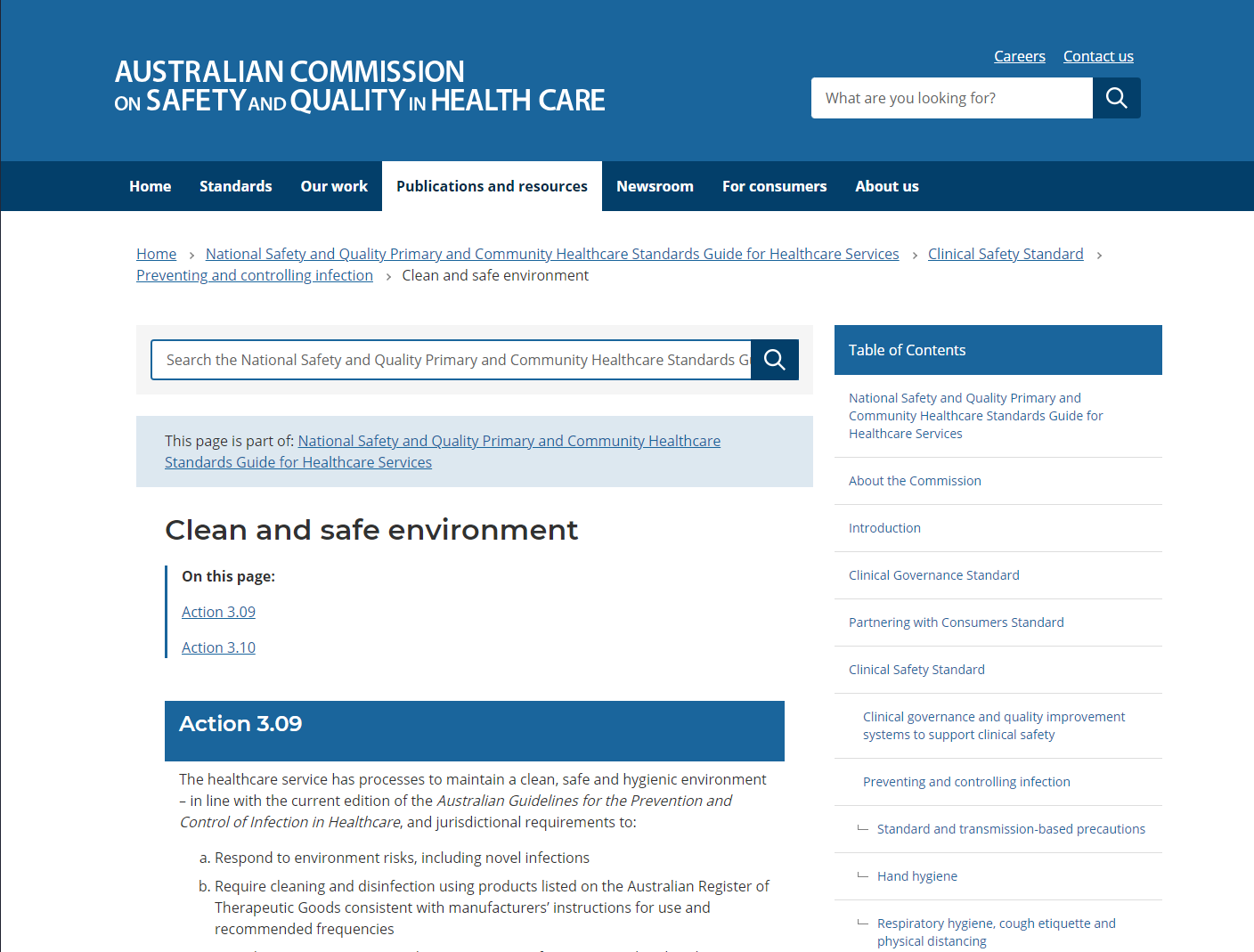
Clean and safe environment
This resource outlines processes to maintain a clean, safe, and hygienic environment in healthcare, including aged care. It provides guidance on infection control, environmental cleaning, and staff training to reduce risks and make sure high-quality care. The document also covers responding to environmental risks, maintaining equipment, and infection prevention practices.
Action 3.17 - Reprocessing of reusable equipment and devices
This resource outlines procedures for reprocessing reusable medical equipment and devices to minimise infection risks. It covers processes for ensuring compliance with national and international standards, maintaining traceability, and managing reprocessing for novel infections. It also highlights the importance of proper storage, transport, and workforce training to support safe reprocessing. This resource may apply to healthcare contexts outside of aged care.
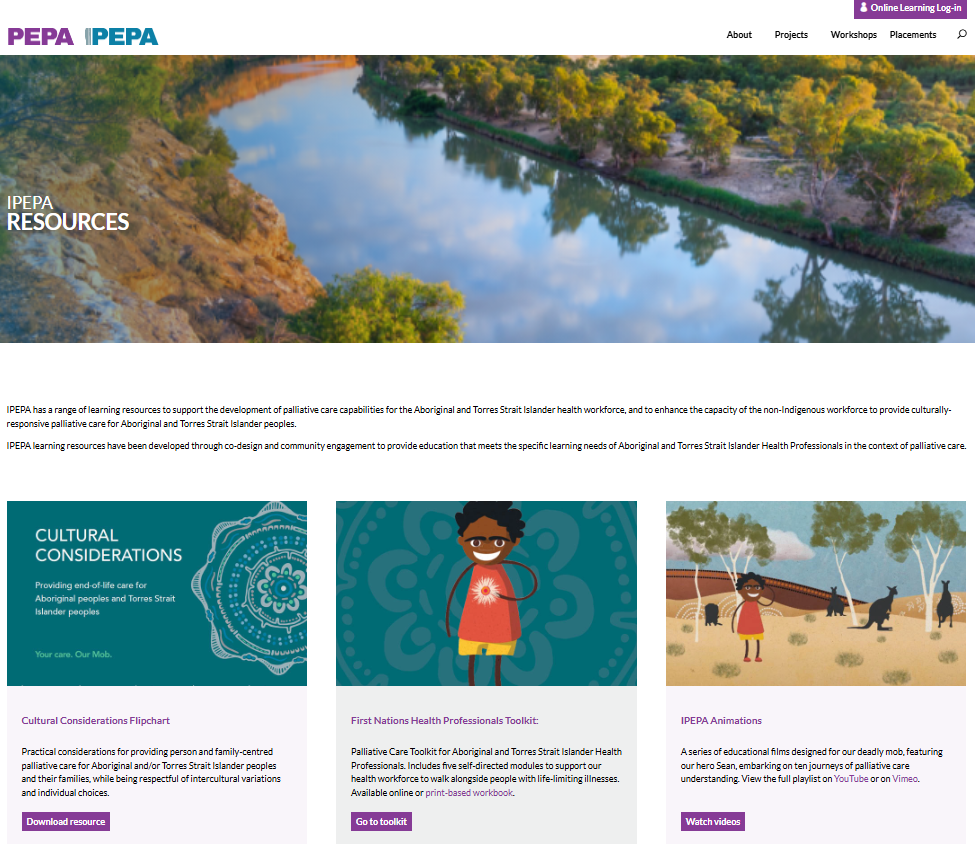
Indigenous Program of Experience in the Palliative Approach
This page provides resources about palliative care for Aboriginal and Torres Strait Islander health workers, and resources to support the non-Indigenous workforce provide culturally-responsive palliative care for Aboriginal and Torres Strait Islander peoples.
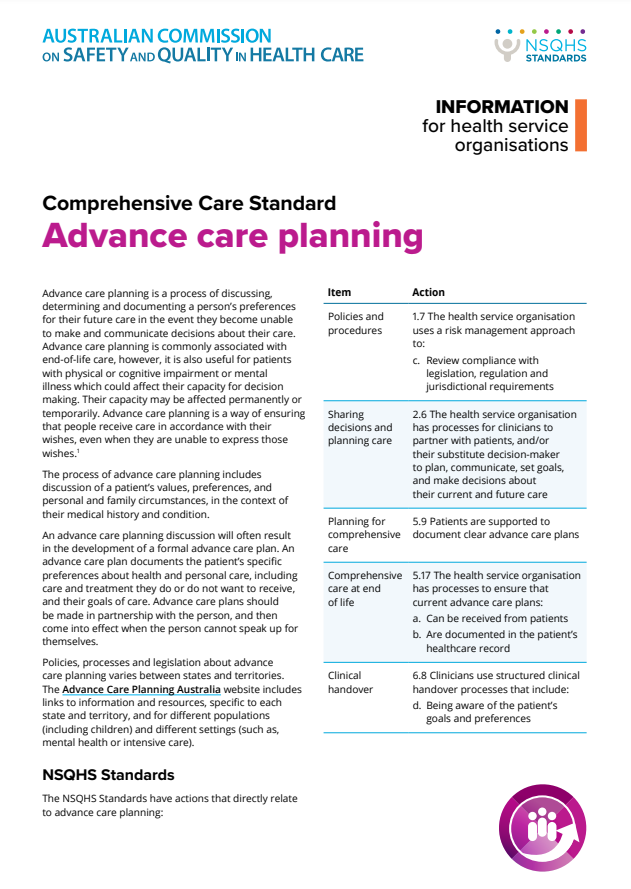
Advance care planning - Information for health service organisations
This resource outlines how health service organisations can support advance care planning within the Comprehensive Care Standard (National Safety and Quality Health Service Standards). It highlights the importance of documenting a patient’s preferences for future care and ensuring systems are in place to act on these plans. It also provides actions related to policies, sharing decisions, comprehensive care, and clinical handover.
How to clean and disinfect your workplace - COVID-19
This resource provides detailed guidelines on cleaning and disinfecting workplaces, including aged care settings, to minimise the spread of COVID-19. It outlines cleaning procedures for different surfaces and items, the proper use of disinfectants, and disposal of materials. It supports workplace hygiene by ensuring routine and post-exposure cleaning protocols.
Action 1.33: Welcoming environments
This resource provides guidance on creating welcoming environments in healthcare services, including aged care, to make sure Aboriginal and Torres Strait Islander people feel safe, respected, and supported. It outlines strategies for cultural safety, collaboration with communities, and improving access to care through inclusive design, training, and environmental changes.
Tools and aids to help at home
This resource outlines tools, aids, and technology to help people with dementia live safely and independently at home. It includes medication reminders, safety devices, communication tools, and sensory aids. The document provides guidance on selecting appropriate tools to support daily tasks, reduce stress, and maintain quality of life at home.
National Palliative Care Standards for All Health Professionals and Aged Care Services
The National Palliative Care Standards provide guidance for all health professionals and aged care services to deliver high-quality generalist palliative care. They support improved experiences and outcomes for people receiving care, and are intended for use across diverse care settings. Resources like audit tools and fact sheets are available to aid self-assessment and adherence to these standards.
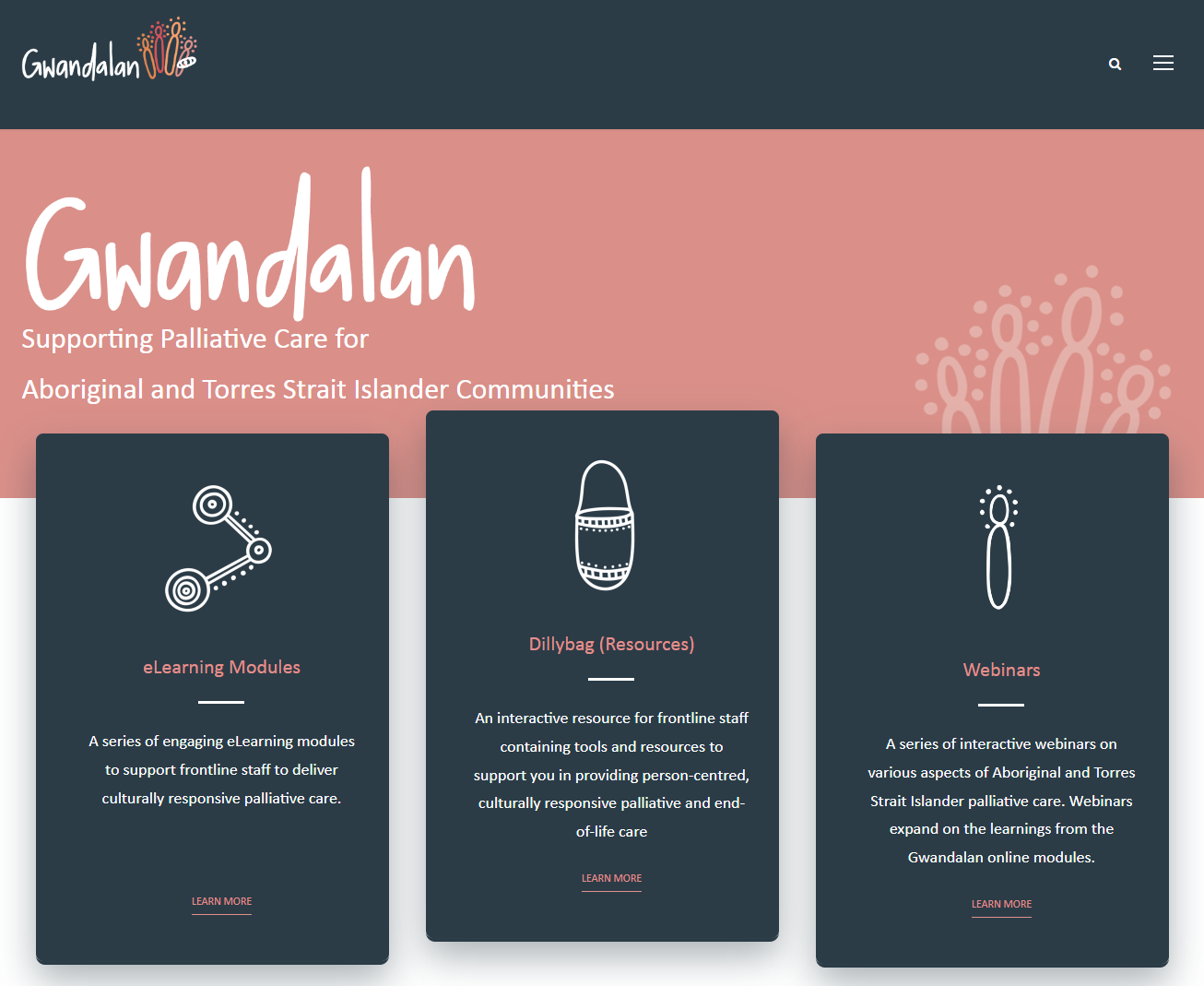
Gwandalan – Supporting Palliative Care for Aboriginal and Torres Strait Islander Communities
This resource provides culturally appropriate palliative care education and support for Aboriginal and Torres Strait Islander communities. It includes resources, videos, and training materials aimed at improving understanding, communication, and care practices in end-of-life care, integrating cultural beliefs and values to enhance quality care for Indigenous Australians.
Palliative care knowledge network
This resource provides evidence-based information and resources on palliative care for health professionals, patients and carers. It covers clinical practice, education, research, and service delivery. The platform aims to improve understanding, decision-making, and quality of care for people with life-limiting illnesses and their families.
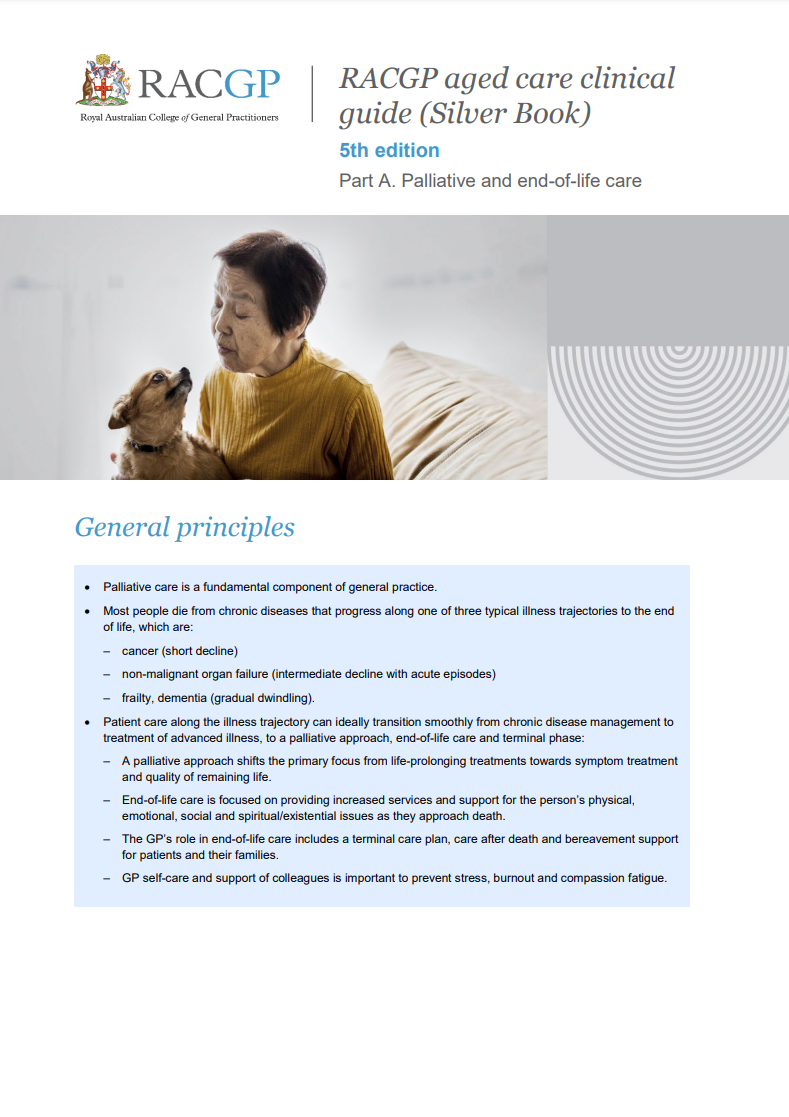
RACGP aged care clinical guide (Silver Book) - Part A - Palliative and end-of-life care
This guide focuses on palliative and end-of-life care, detailing general principles, illness trajectories, the role of general practitioners, and practical recommendations for patient-cantered care. It provides consensus-based guidelines for initiating advance care planning, symptom management, team-based end-of-life care, medication use, and supporting both patients and their families. It includes information on the transition from chronic disease treatment to a palliative approach and includes tools for clinical decision-making.
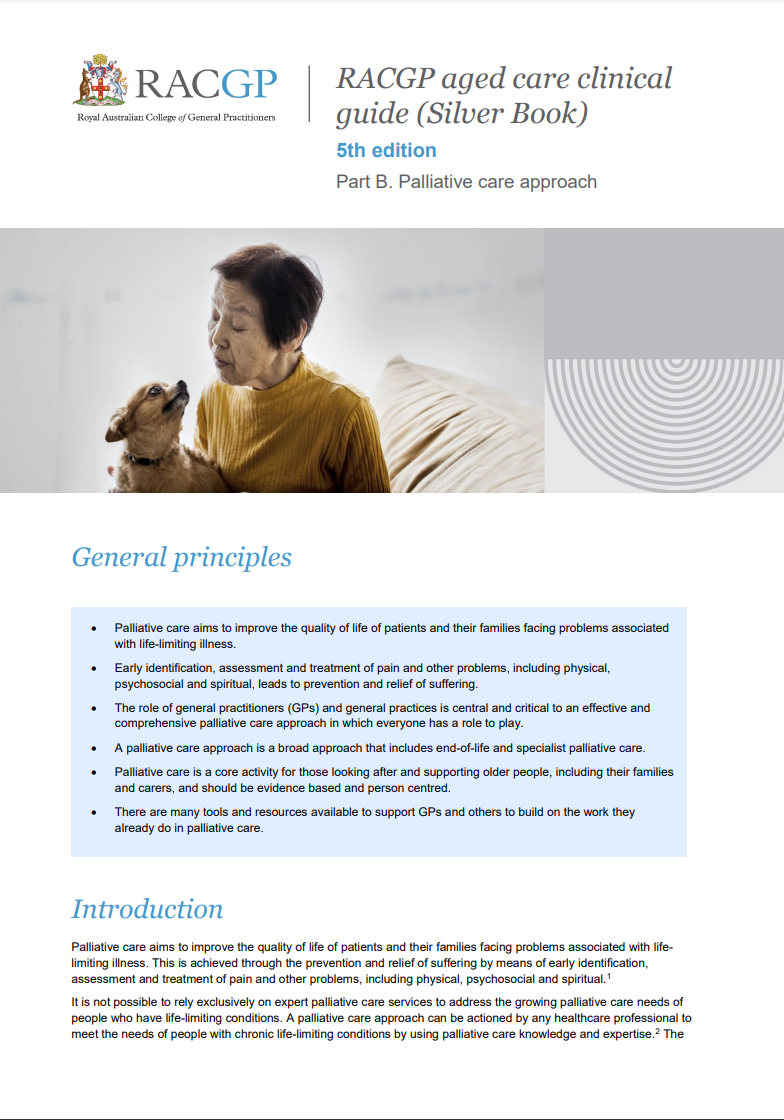
RACGP aged care clinical guide (Silver Book) - Part B - Palliative care approach
This guide outlines a palliative care approach for patients with life-limiting conditions, focusing on improving quality of life through early assessment, pain relief, and addressing psychosocial and spiritual needs. It describes the role of general practitioners in delivering person-centred care, engaging families, and ensuring collaborative, holistic support in both residential aged care and community settings.
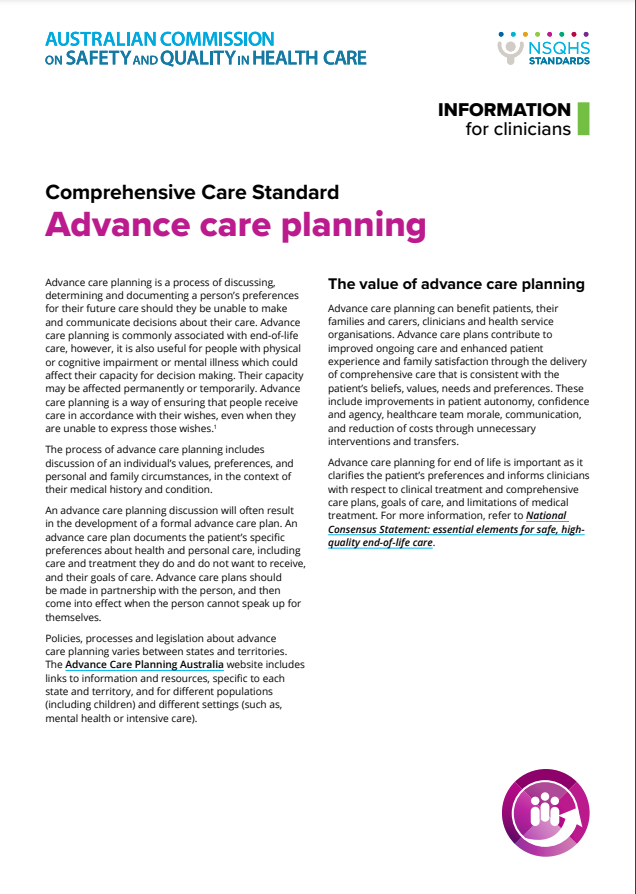
Advance care planning - Information for clinicians
This resource guides clinicians on the importance of advance care planning, particularly for those with life-limiting illnesses, chronic conditions, or cognitive impairment. It outlines the need for early conversations about patient preferences and comprehensive care, ensuring decisions are documented, shared, and align with clinical handover processes to respect patient autonomy and improve care outcomes.
This resource may refer to information that will be updated from 1 November 2025 to align with the new Aged Care Act and Quality Standards.
The Aged Care Infection Prevention and Control Guide
This resource outlines the basic principles of infection prevention and control and explains how to apply these principles using a risk-based approach. The guide supports implementation of the strengthened Aged Care Quality Standards. It is a supplementary resource for the Australian Guidelines for the Prevention and Control of Infection in Healthcare for aged care settings.
This resource may refer to information that will be updated from 1 November 2025.
End-of-life care - Last days of life
This resource provides guidance on end-of-life care during the last days of life, relevant for aged care settings. It focuses on maintaining comfort, managing symptoms, and reducing unnecessary interventions. Clinicians are supported in offering compassionate care, addressing potential emergencies, and involving family members while ensuring that older people are treated with dignity during their final days.
This resource may refer to information that will be updated from 1 November 2025 to align with the new Aged Care Act and Quality Standards.
End-of-life care - clinical basics
This resource provides key actions for clinicians delivering end-of-life care. It highlights the shift from curative to palliative approaches, emphasising communication, patient dignity, symptom management, medication review, and decision-making. It includes strategies for managing common symptoms and minimising risks to ensure safe, high-quality care in the last days of life.
This resource may refer to information that will be updated from 1 November 2025 to align with the new Aged Care Act and Quality Standards.
Environmental cleaning and infection prevention and control resources
This resource offers a range of environmental cleaning and infection prevention tools for healthcare settings, including guidelines for small organisations, cleaning audits, product selection, and emerging cleaning technologies. It supports aged care providers in maintaining clean, hygienic environments, helping them comply with infection control standards and ensure safety.
This resource may refer to information that will be updated from 1 November 2025 to align with the new Aged Care Act and Quality Standards.
Environmental design resources handbook
This resource supports improvements to environments for people living with dementia. The resource includes information and background on the key design principles and environmental assessment tools. It also includes the Indigenous Aged Care Design Guide. The handbook can be accessed in full, or individually as 7 separate resources.
This resource may refer to information that will be updated from 1 November 2025 to align with the new Aged Care Act and Quality Standards.