The Quality Standards Resource Centre helps extend understanding of the strengthened Aged Care Quality Standards, which took effect from 1 November 2025. You can search for resources by using keywords, or filtering by standard, outcome and audience. Before using the Resource Centre, please read the terms of use.
Why meals matter
This resource highlights the importance of meals in aged care settings, focusing on nutritional needs, dining experience, and personal preferences. It addresses issues like malnutrition, dehydration, and food choice, linking them to resident wellbeing, autonomy, and satisfaction. It also suggests strategies such as person-centred dining, meal service innovations, and improved environmental factors to enhance mealtime experiences in residential aged care.
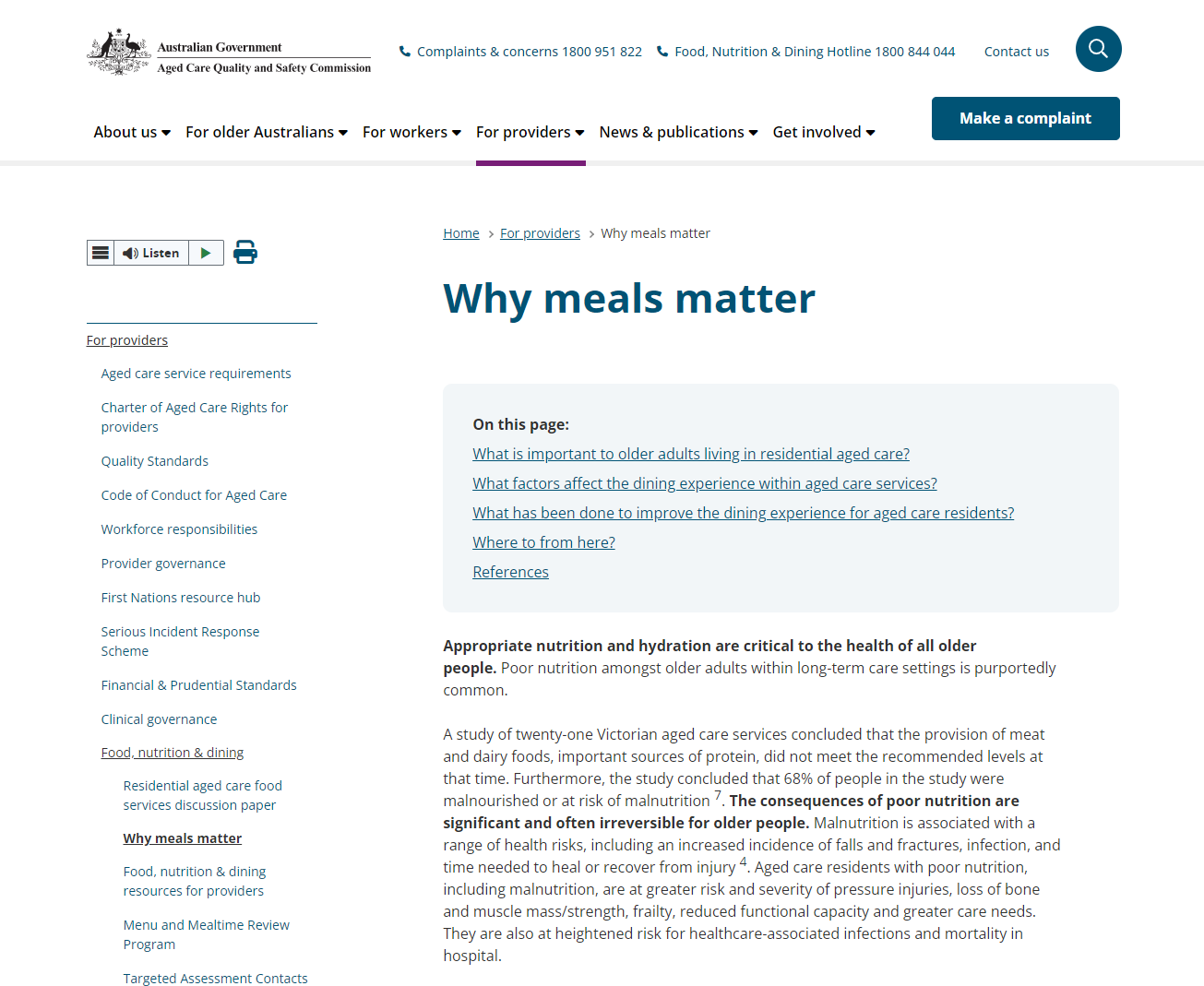
Analysis of a survey of food and dining experiences in residential aged care services - Final report
This resource provides insights into food, dining, and nutrition in residential aged care services. It is based on a survey conducted to understand residents’ dining experiences, preferences, and the quality of food and service provided. The findings highlight the importance of fresh, familiar meals, flexible mealtimes, and a homelike dining environment to enhance the quality of life for older people. This resource may refer to information that will be updated from 1 November 2025 to align with the new Aged Care Act and Quality Standards.
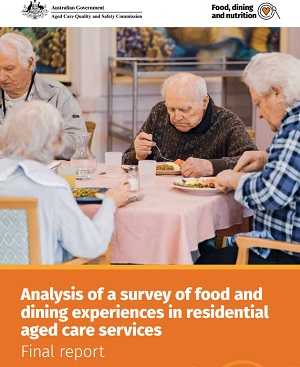
Residential aged care food services discussion paper
This paper presents a high-level overview of contemporary evidence regarding food services in residential aged care settings.
 Residential aged care food services discussion paper (PDF 536.47 KB)
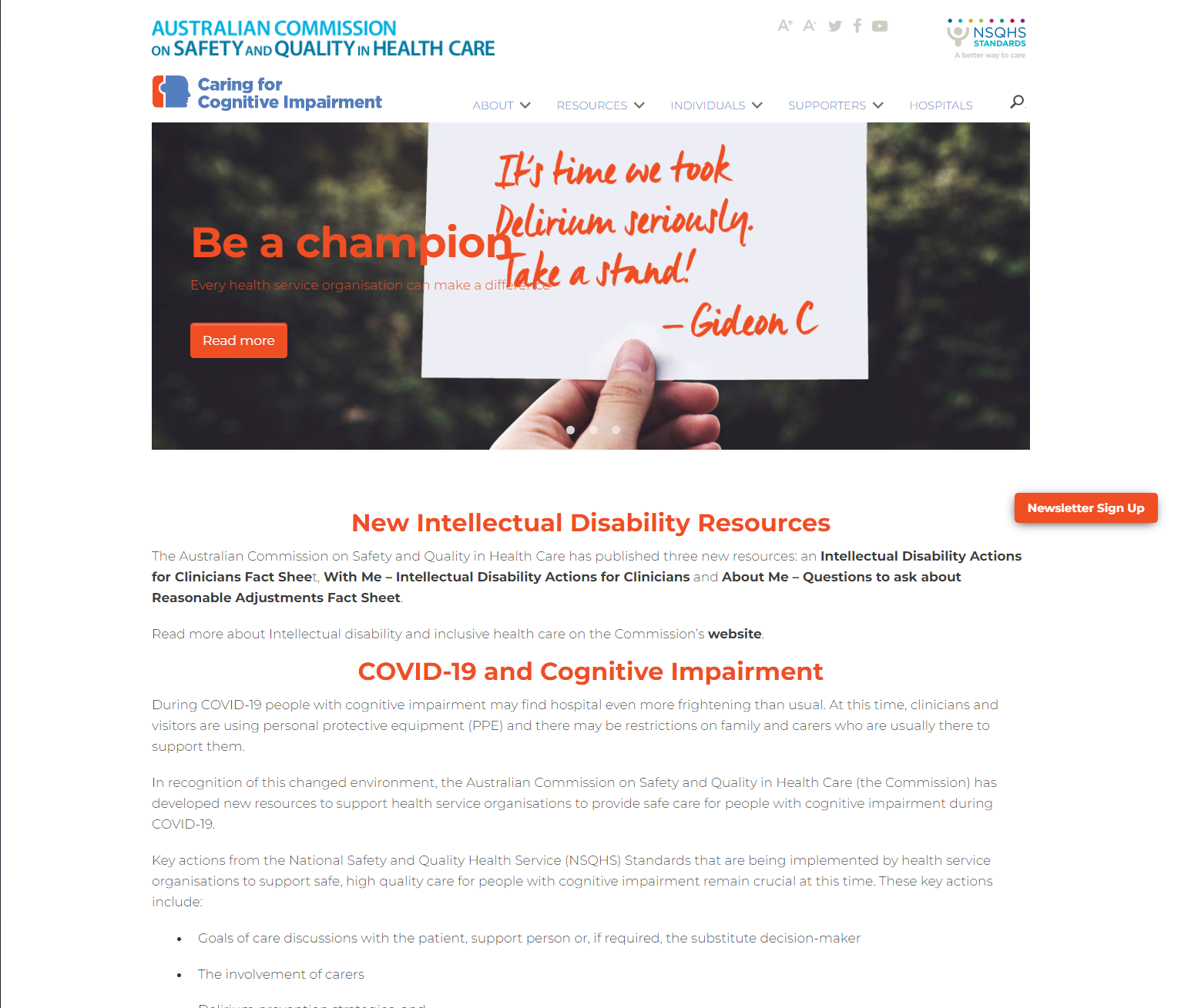
Caring for Cognitive Impairment
This resource outlines support for health service organisations to provide safe, high-quality care for people with cognitive impairment, especially during COVID-19. It includes new intellectual disability resources, fact sheets, posters, and guidance aligned with the National Safety and Quality Health Service (NSQHS) Standards to improve patient outcomes and care experiences.
This resource may refer to information that will be updated from 1 November 2025 to align with the new Aged Care Act and Quality Standards.
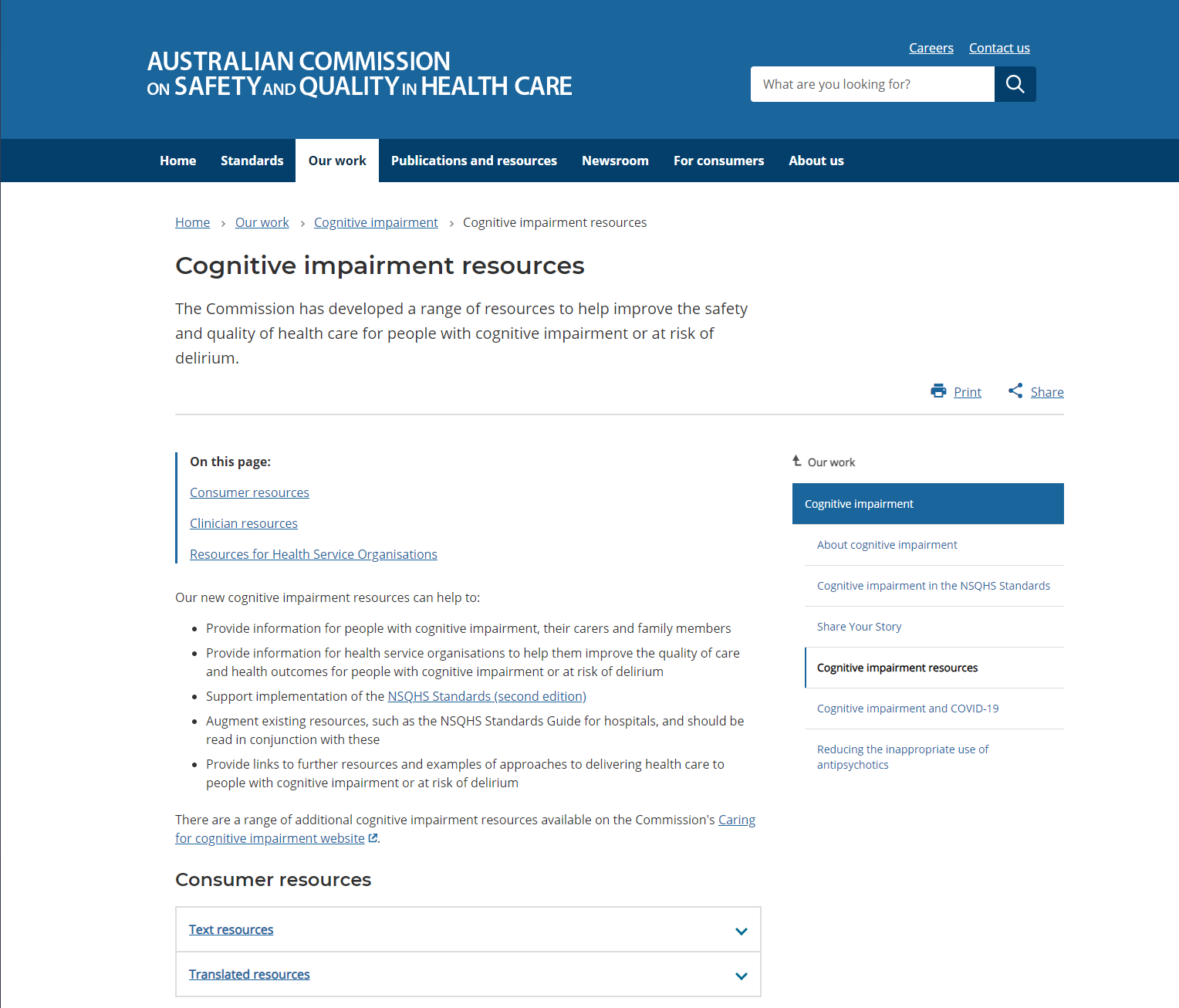
Cognitive impairment resources
This resource provides a range of materials developed to improve the safety and quality of healthcare for people with cognitive impairment or at risk of delirium. It includes guides, fact sheets, and standards for consumers, clinicians, and health service organisations, supporting the implementation of best practice and quality care.
This resource may refer to information that will be updated from 1 November 2025 to align with the new Aged Care Act and Quality Standards.
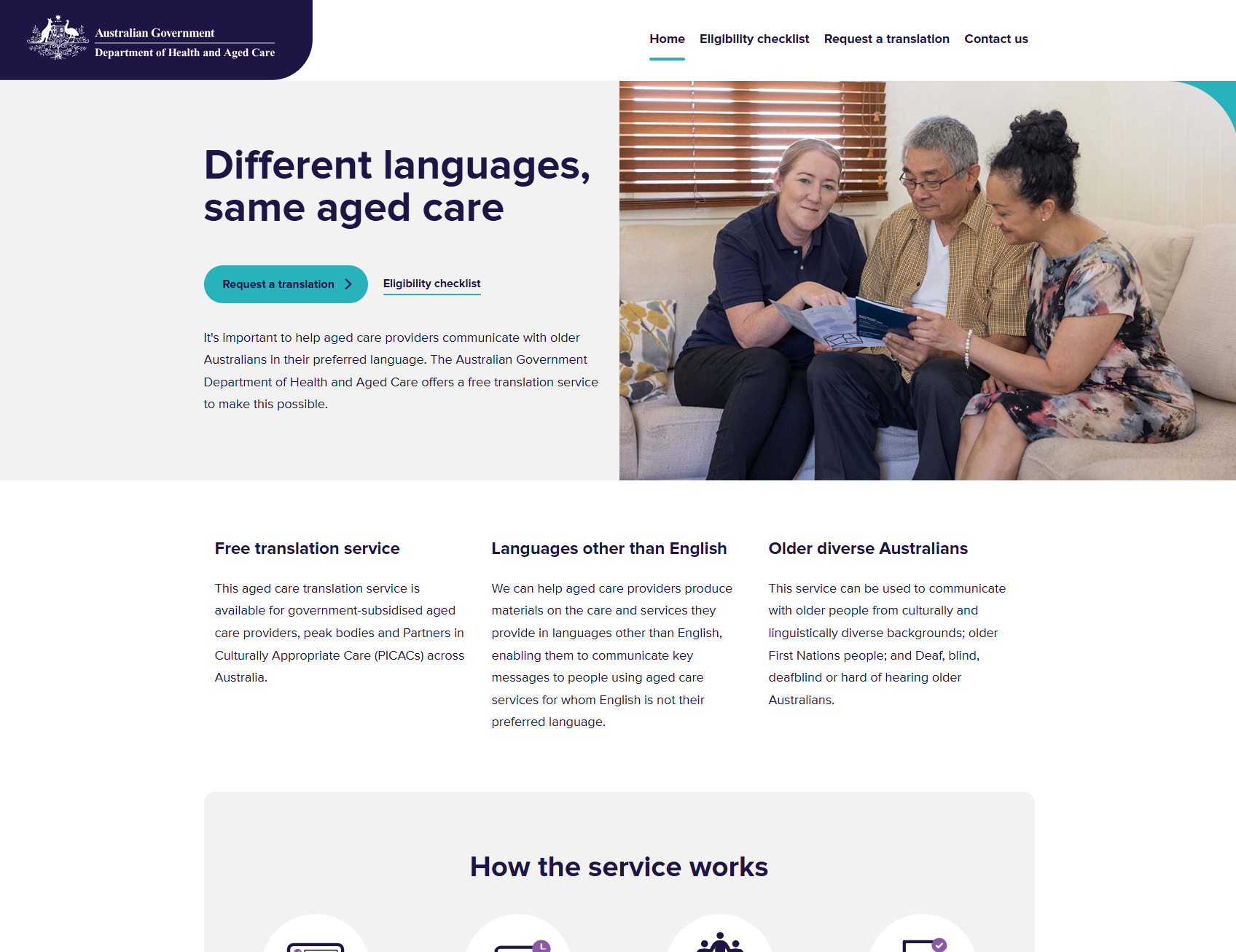
Different languages, same aged care
This resource provides information on a free translation service for government-subsidised aged care providers, enabling communication in languages other than English. It helps aged care providers reach diverse communities, including culturally and linguistically diverse individuals, First Nations people, and those who are Deaf or hard of hearing, supporting culturally inclusive care.
This resource may refer to information that will be updated from 1 November 2025 to align with the new Aged Care Act and Quality Standards.
Dementia Training Program
This resource outlines the Dementia Training Program, which offers accredited education and professional development for aged care workers and health professionals. The program provides free training, tailored onsite services, and an online portal, focusing on advanced dementia care, behavioural management, and reducing restrictive practices. It aims to enhance care quality for people living with dementia.
This resource may refer to information that will be updated from 1 November 2025 to align with the new Aged Care Act and Quality Standards.
Food for thought - positive stories
This resource shares positive stories about food, nutrition, and dining improvements in aged care facilities. It highlights initiatives that enhance the dining experience, including resident involvement in meal planning, use of fresh and seasonal ingredients, and creating more social and enjoyable mealtime environments. These stories demonstrate best practices and innovative approaches to improve resident satisfaction and wellbeing.
Food, nutrition & dining: resources for workers
This resource provides aged care workers with tools to enhance food, nutrition, and dining experiences for people in their care. It includes practical guides on offering choice, managing swallowing difficulties, promoting oral health, and creating an enjoyable dining environment, all while ensuring adherence to aged care standards.
This resource may refer to information that will be updated from 1 November 2025 to align with the new Aged Care Act and Quality Standards.
Food, nutrition & dining: resources for providers
This resource provides tools and guidance for aged care providers to ensure quality food, nutrition, and dining experiences. It includes hotlines, resources for dining, choice, swallowing, and oral health, as well as webinars, research findings, and practical tips to support older adults' wellbeing and meet care standards.
This resource may refer to information that will be updated from 1 November 2025 to align with the new Aged Care Act and Quality Standards.
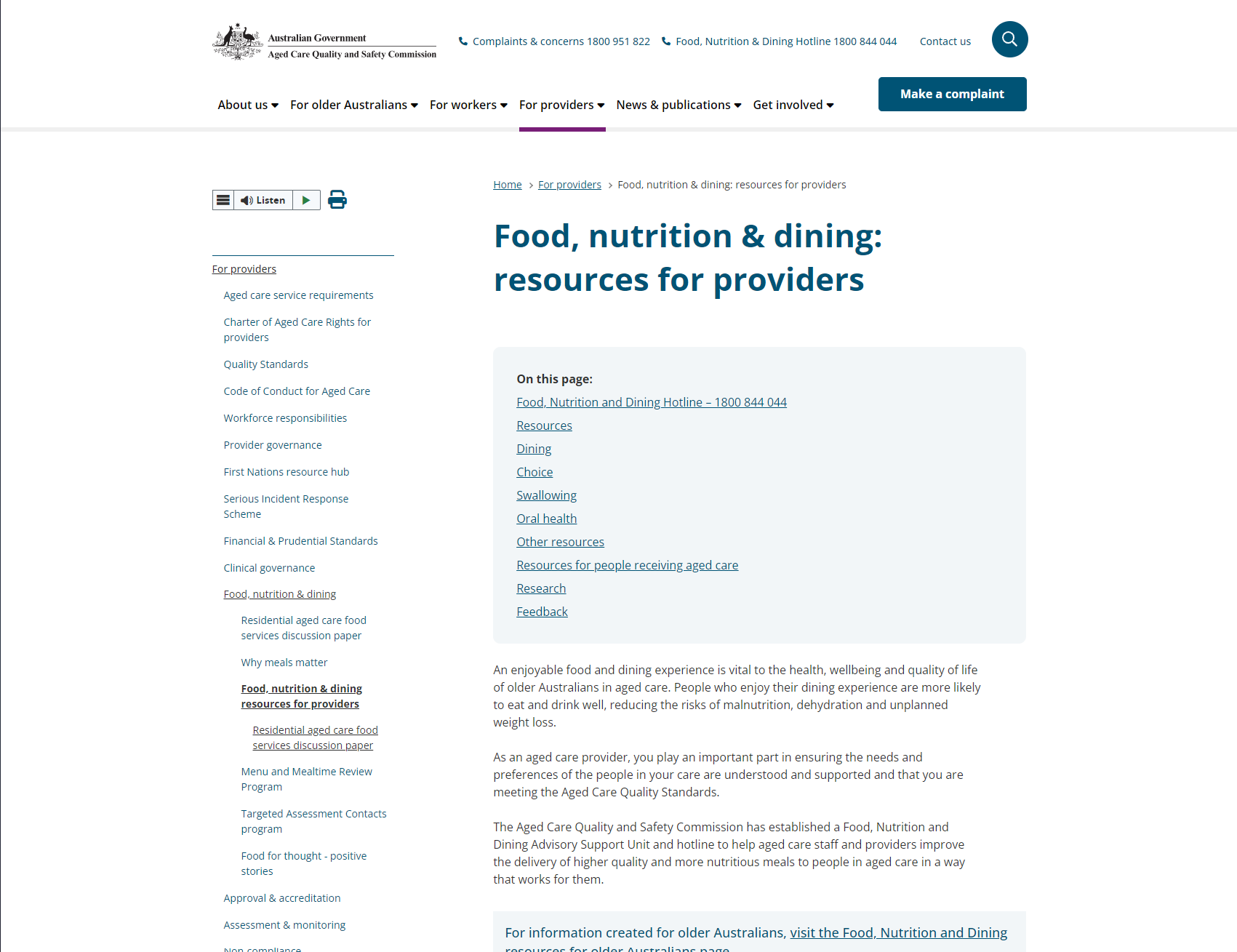
Guide for consumers - Psychotropic Medicines in Cognitive Disability or Impairment Clinical Care Standard
This resource is a guide for consumers about the Australian Commission on Safety and Quality in Health Care's Psychotropic Medicines in Cognitive Disability or Impairment Clinical Care Standard. The resource includes 8 quality statements about the health care consumers should receive to support the correct use of psychotropic medicines.
This resource may refer to information that will be updated from 1 November 2025 to align with the new Aged Care Act and Quality Standards.
Using technology to improve the dining experience
This resource provides guidance on how technology, such as virtual reality (VR) and mobile applications, can enhance the dining experience in aged care settings. These tools are designed to increase engagement, support meal choices, improve communication with families, and contribute to overall wellbeing by making mealtimes more enjoyable.
This resource may refer to information that will be updated from 1 November 2025 to align with the new Aged Care Act and Quality Standards.
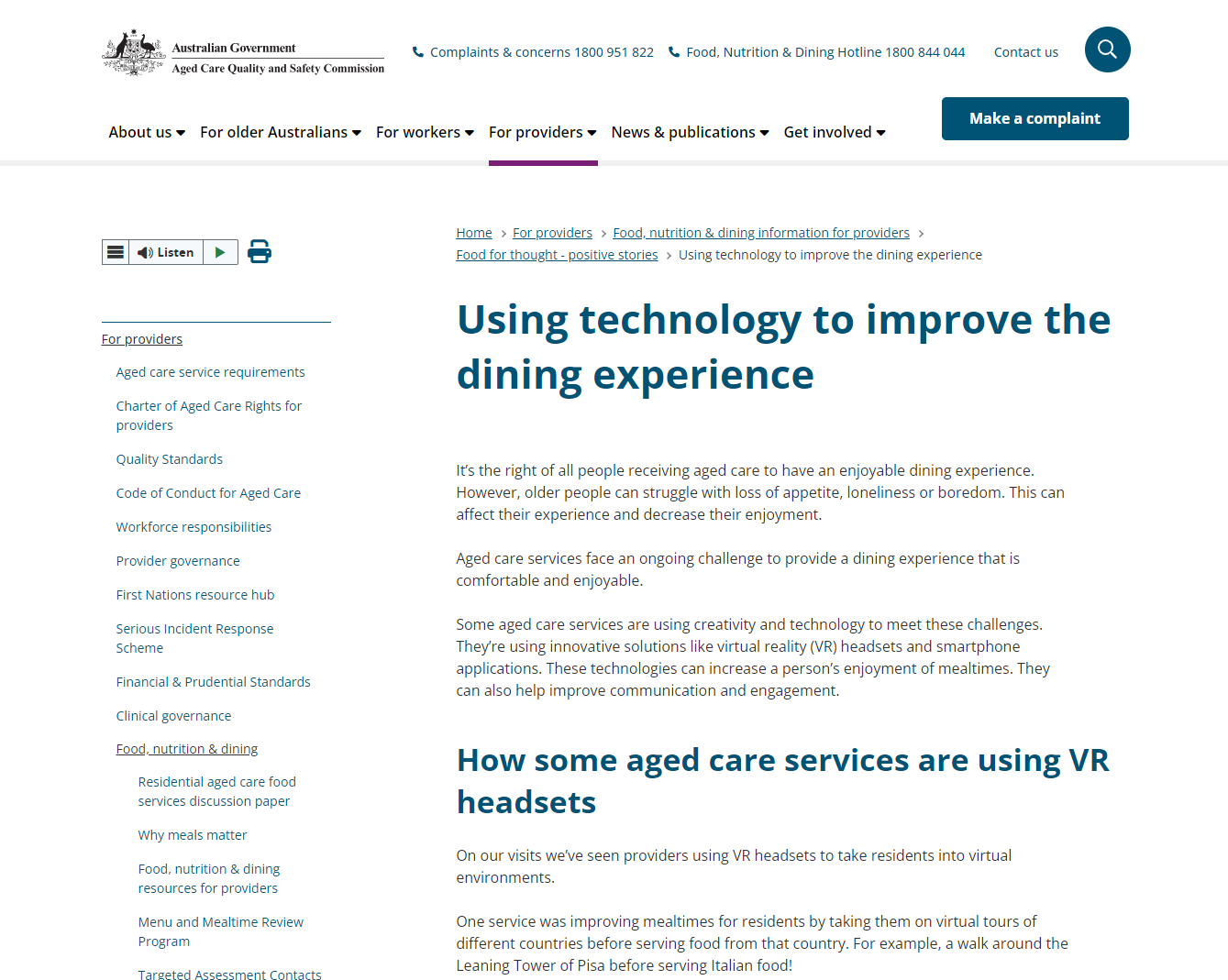
Supporting the dining experience for people living with dementia – Providers and workers guide
This guide is about how to support people living with dementia to maintain good nutrition and enjoy positive dining experiences.
This resource may refer to information that will be updated from 1 November 2025 to align with the new Aged Care Act and Quality Standards.
Supporting people living with dementia to eat and drink well
This resource provides guidance for aged care services on how to support people living with dementia to eat and drink well. It highlights innovative approaches such as creating familiar, enjoyable meals, reducing mealtime interruptions, and offering 24-hour access to nutritious foods. These strategies help address challenges like malnutrition and dehydration.
This resource may refer to information that will be updated from 1 November 2025 to align with the new Aged Care Act and Quality Standards.
NSQHS Standards user guide for health service organisations providing care for patients with cognitive impairment or at risk of delirium
This user guide provides key actions from the NSQHS Standards for delivering safe care to people with cognitive impairment or at risk of delirium. It includes strategies for risk mitigation, evidence-based care, and clinical governance, applicable to aged care settings to ensure comprehensive, dignified, and high-quality care.
This resource may refer to information that will be updated from 1 November 2025 to align with the new Aged Care Act and Quality Standards.
NSQHS Standards User Guide for the Health Care of People with Intellectual Disability
This resource provides guidance for the health care of people with intellectual disability. The user guide is part of the Australian Commission on Safety and Quality in Health Care's National Safety and Quality Health Service (NSQHS) Standards. The resource was developed in response to significant evidence of poor health outcomes for people with intellectual disability in Australia’s health system.
This resource may refer to information that will be updated from 1 November 2025 to align with the new Aged Care Act and Quality Standards.
Nourishing connections: The vital role of social dining in aged care
This resource explains how social dining in aged care can enhance nutrition and wellbeing by fostering social connections. It encourages creating positive dining environments that promote engagement and respect personal preferences during mealtimes.
This resource may refer to information that will be updated from 1 November 2025 to align with the new Aged Care Act and Quality Standards.
Case study - Safe and Appropriate use of Psychotropic Medicines - Residential Aged Care
This resource is a fictional scenario that follows an older person’s care pathway with a residential aged care provider. The resource focuses on the systems and processes to support high-quality care of older people living with cognitive impairment. It includes 4 key priority areas: person-centred care, medication management, managing changed behaviours and transitions of care.
This resource may refer to information that will be updated from 1 November 2025 to align with the new Aged Care Act and Quality Standards.
Case study - Safe and Appropriate use of Psychotropic Medicines - In-home Aged Care
This resource is a fictional scenario that follows an older person’s care pathway with an in-home aged care provider. The resource focuses on the systems and processes to support high-quality care of older people living with dementia. It includes 4 key priority areas: person-centred care, medication management, managing changed behaviours and transitions of care.
This resource may refer to information that will be updated from 1 November 2025 to align with the new Aged Care Act and Quality Standards.
Safe and appropriate use of psychotropic medicines for aged care - Fact sheet
This fact sheet is informed by the Psychotropic Medicines in Cognitive Disability or Impairment Clinical Care Standard (CCS), developed by the Australian Commission on Safety and Quality in Health Care. The CCS describes the safe and appropriate use of psychotropic medicines for people with cognitive disability or impairment, in a way that upholds their rights, dignity, health and quality of life.
This resource may refer to information that will be updated from 1 November 2025 to align with the new Aged Care Act and Quality Standards.