The Quality Standards Resource Centre helps extend understanding of the strengthened Aged Care Quality Standards, which took effect from 1 November 2025. You can search for resources by using keywords, or filtering by standard, outcome and audience. Before using the Resource Centre, please read the terms of use.
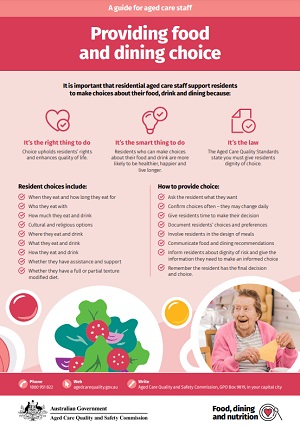
Providing food and dining choice - aged care staff poster
This guide supports aged care staff in providing food and dining choices for residents. It outlines the importance of upholding residents' rights to choose, enhancing their health and quality of life. The guide recommends confirming preferences regularly, involving residents in meal planning, and respecting individual choices regarding when, where, and what they eat or drink. This resource may refer to information that will be updated from 1 November 2025 to align with the new Aged Care Act and Quality Standards.
 Providing food and dining choice - aged care staff poster (PDF 445.57 KB)
Measurement tools for assessing quality of life, consumer satisfaction and consumer experience across residential and in-home aged care: Summary Report
This report reviews validated tools for measuring quality of life, consumer satisfaction, and experience in aged care, assessing their suitability for residential and home care. It provides an evidence-based ranking of tools to support aged care providers in quality improvement, accountability, and aligning with the National Aged Care Quality Indicator Program.
This resource may refer to information that will be updated from 1 November 2025 to align with the new Aged Care Act and Quality Standards.
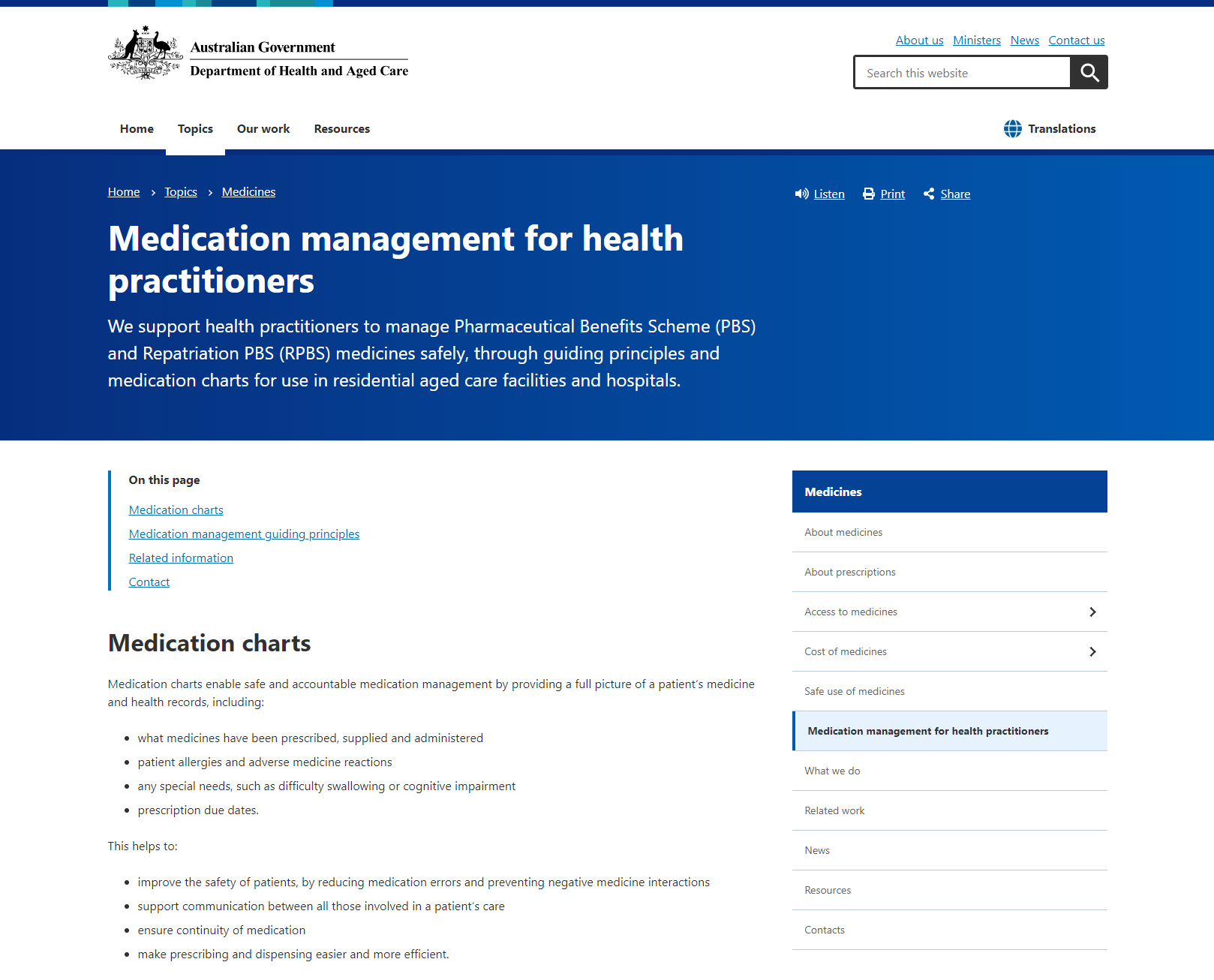
Medication management for health practitioners
This resource supports health practitioners in managing medicines through the use of medication charts in aged care facilities and hospitals. It provides guidelines for safe prescribing, administration, and communication. The resource includes both paper-based and electronic medication chart systems to reduce errors, improve patient safety, and streamline medication management processes in aged care settings.
This resource may refer to information that will be updated from 1 November 2025 to align with the new Aged Care Act and Quality Standards.
Privacy and confidentiality – Introduction to aged care video
This resource is a training video guiding aged care staff on the importance of maintaining privacy and confidentiality for people receiving care. It covers protecting personal information, proper handling of sensitive data, and safe sharing practices, aiming to make sure clients feel secure in sharing information.
This resource may refer to information that will be updated from 1 November 2025 to align with the new Aged Care Act and Quality Standards.
Medication: it's your choice
This resource informs older Australians about their rights and choices regarding medication, including potential side effects, the importance of informed decision-making, and reducing unnecessary antibiotic and psychotropic use. It offers brochures, videos, and fact sheets to support understanding and provide guidance on alternative treatments and safe medication practices.
This resource may refer to information that will be updated from 1 November 2025 to align with the new Aged Care Act and Quality Standards.
Medication management
This resource provides information on medication management in aged care, focusing on psychotropics and antimicrobials. It includes tools for reducing inappropriate use, antimicrobial stewardship guidance, self-assessment resources, and quality bulletins. It aims to improve medication safety, prevent inappropriate prescribing, and support care providers in ensuring safe clinical practices.
This resource may refer to information that will be updated from 1 November 2025 to align with the new Aged Care Act and Quality Standards.
Principles of aseptic technique: Information for healthcare workers
This fact sheet provides principles of aseptic technique to support healthcare workers performing procedures requiring aseptic practices. It covers key concepts, differences between aseptic and sterile techniques, and application in clinical, pharmacy, and laboratory settings, emphasising infection prevention, standard precautions, and proper handling of equipment.
This resource may refer to information that will be updated from 1 November 2025 to align with the new Aged Care Act and Quality Standards.
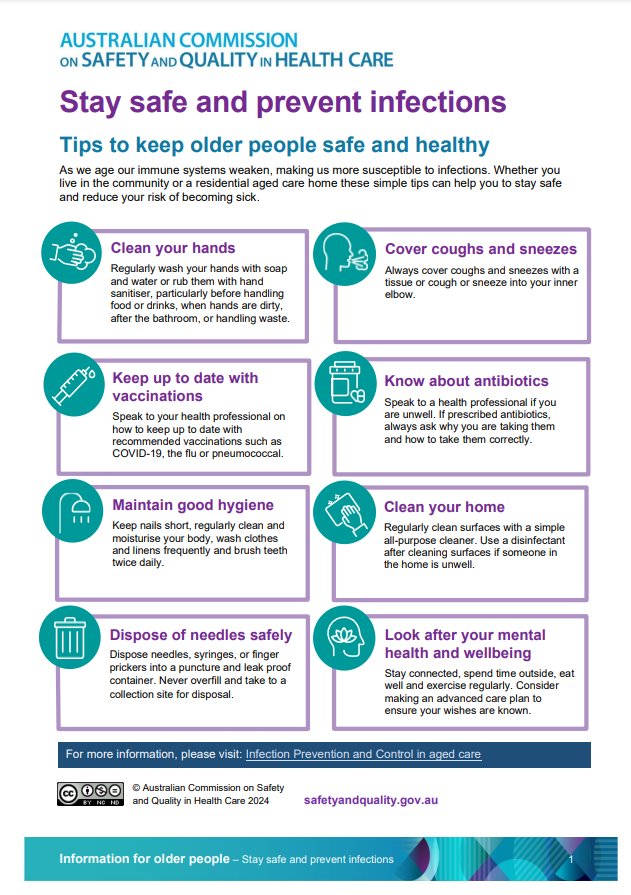
Preventing infections – aged care consumer fact sheet
This fact sheet provides essential tips for older people on how to prevent infections. It covers hand hygiene, vaccinations, home cleaning, proper disposal of needles, and mental health care. The resource is designed to support infection prevention practices in both community and aged care settings.
This resource may refer to information that will be updated from 1 November 2025 to align with the new Aged Care Act and Quality Standards.
Polypharmacy Consumer Perspective - National Medicines Symposium 2024
This is a presentation on Polypharmacy Consumer Perspective. It includes details of a case example, resolution and care management, and key principles related to medicines and goal of care. This resource may refer to information that will be updated from 1 November 2025 to align with the new Aged Care Act and Quality Standards.
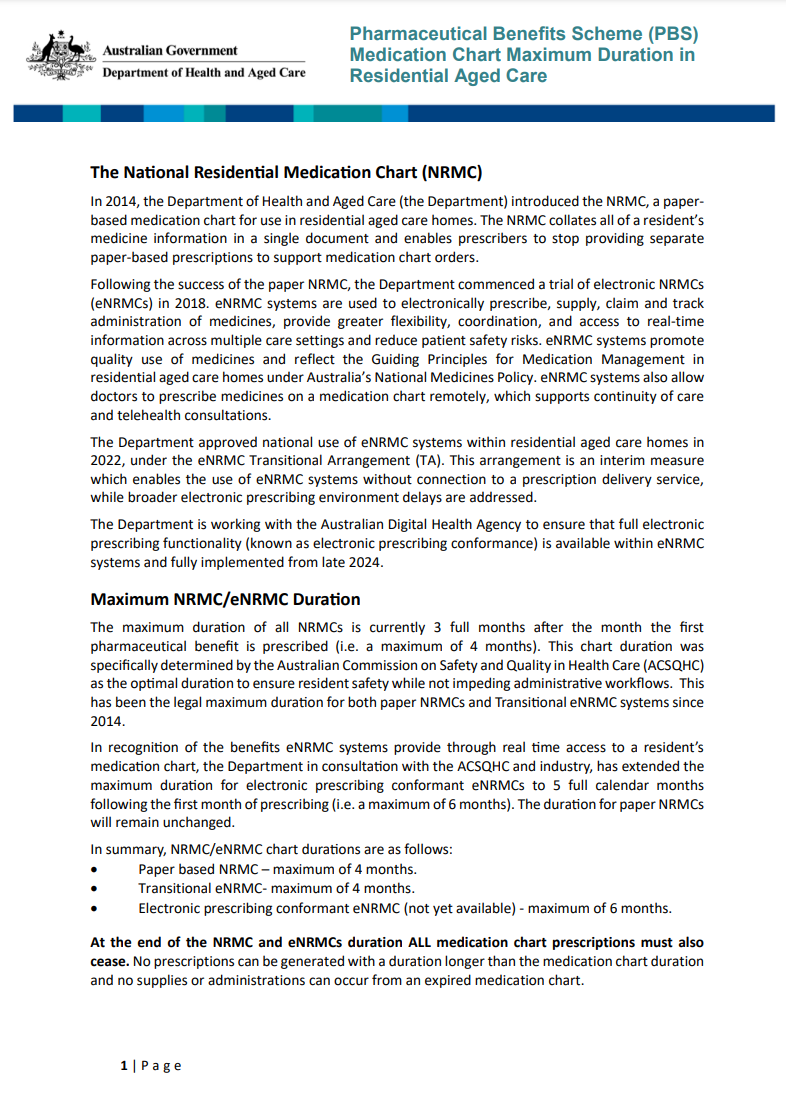
Pharmaceutical Benefits Scheme (PBS) medication chart maximum duration in residential aged care
This resource outlines the Pharmaceutical Benefits Scheme (PBS) medication chart's maximum duration in residential aged care. It explains the use of both paper-based and electronic National Residential Medication Charts (NRMC), highlighting their role in managing prescriptions, medication supply, and administration. The document provides guidance on compliance, chart expiry, and medication safety within aged care facilities. This resource may refer to information that will be updated from 1 November 2025 to align with the new Aged Care Act and Quality Standards.
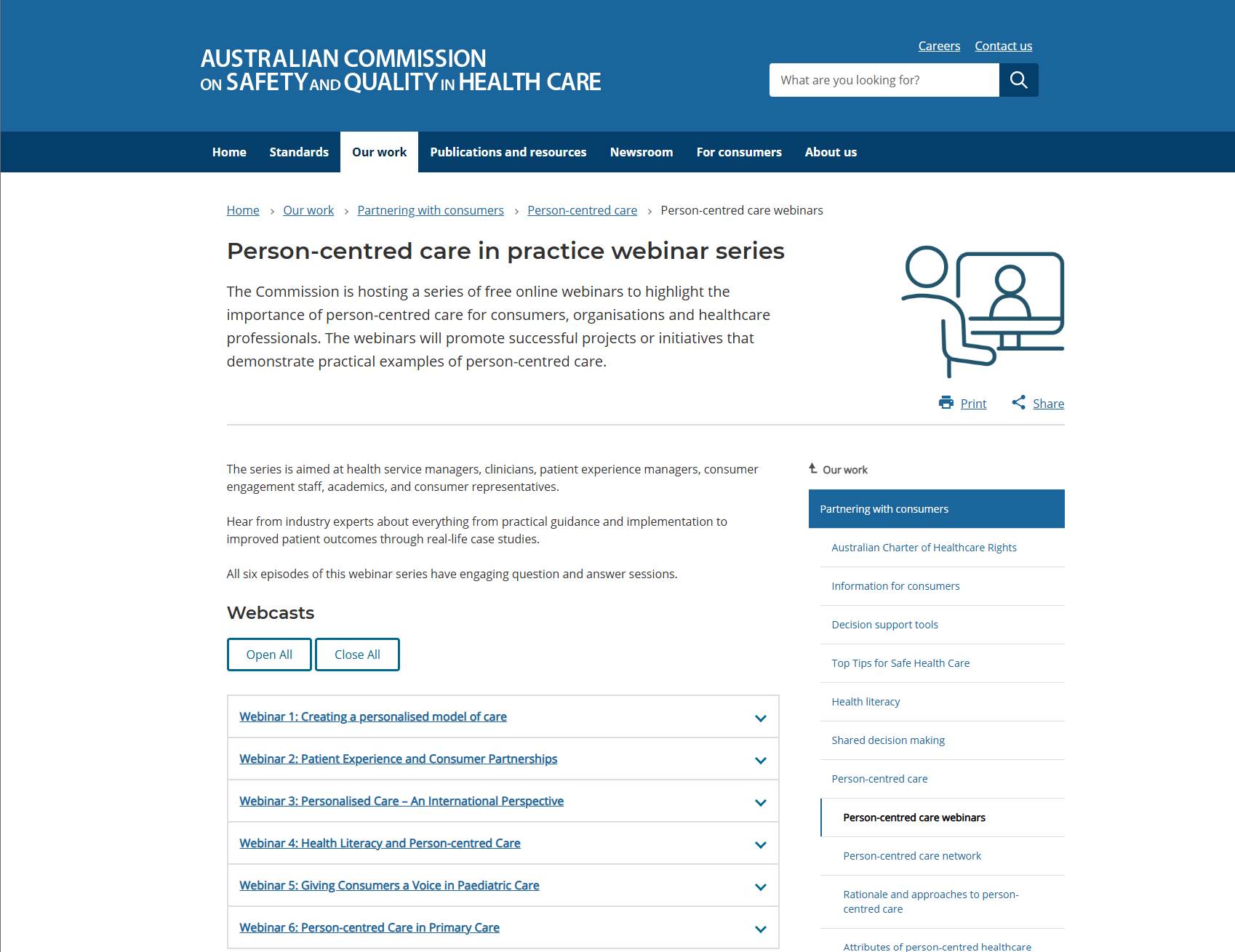
Person-centred care in practice webinar series
This resource offers a series of webinars on person-centred care, providing practical examples from Australian healthcare settings. It is designed for health service managers, clinicians, and consumer engagement staff, promoting strategies and tools to enhance person-centred practices. This resource may apply to healthcare contexts outside of aged care. Please consider the applicability of this resource to your care setting.
This resource may refer to information that will be updated from 1 November 2025 to align with the new Aged Care Act and Quality Standards.
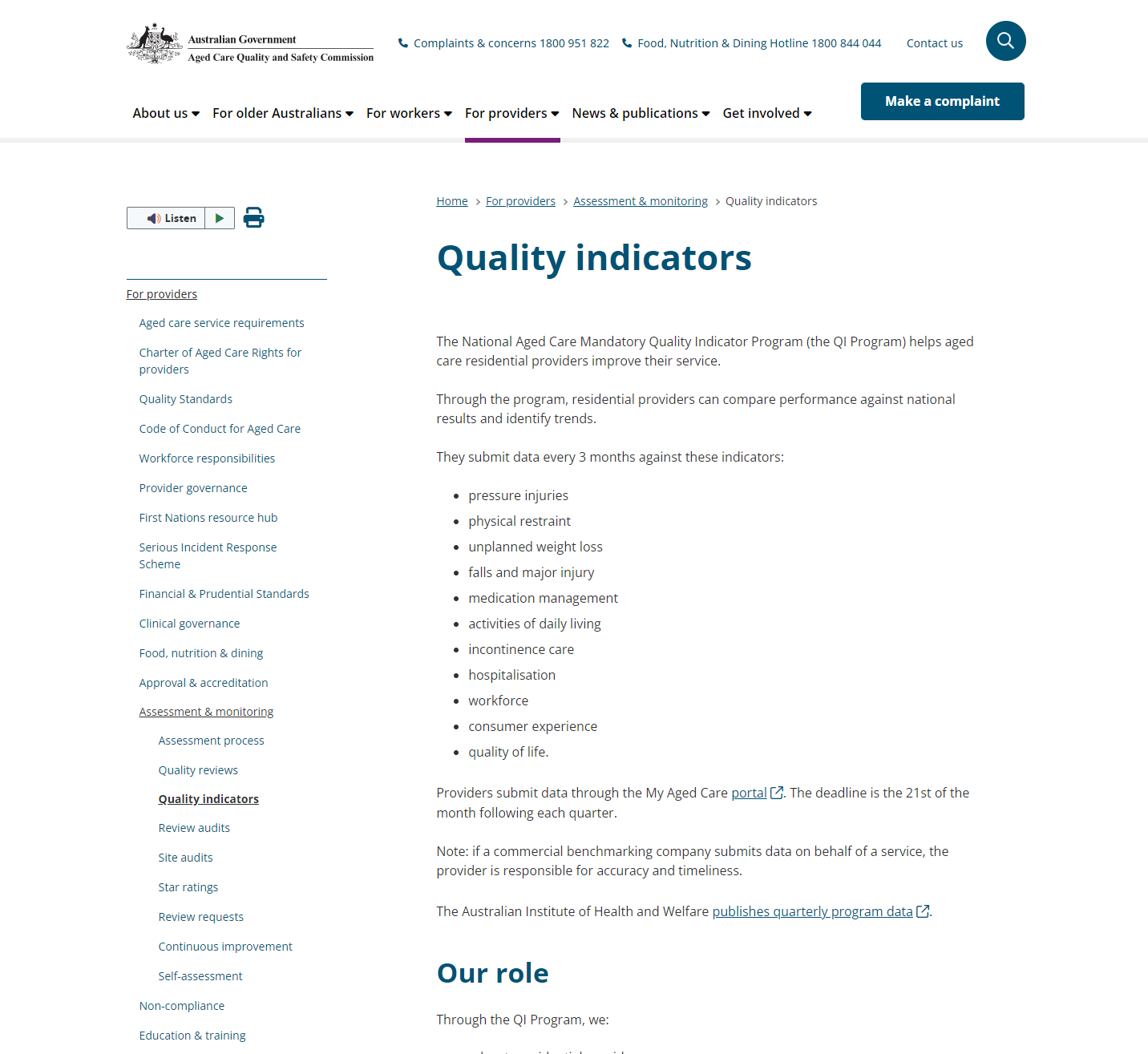
National Aged Care Mandatory Quality Indicator Program
The National Aged Care Mandatory Quality Indicator Program aids residential aged care providers in enhancing their services by allowing them to benchmark their performance against national outcomes. The program resource provides guidance on data submission frequency, explains the program's role, and provides more information on open hours and contact details.
This resource may refer to information that will be updated from 1 November 2025 to align with the new Aged Care Act and Quality Standards.
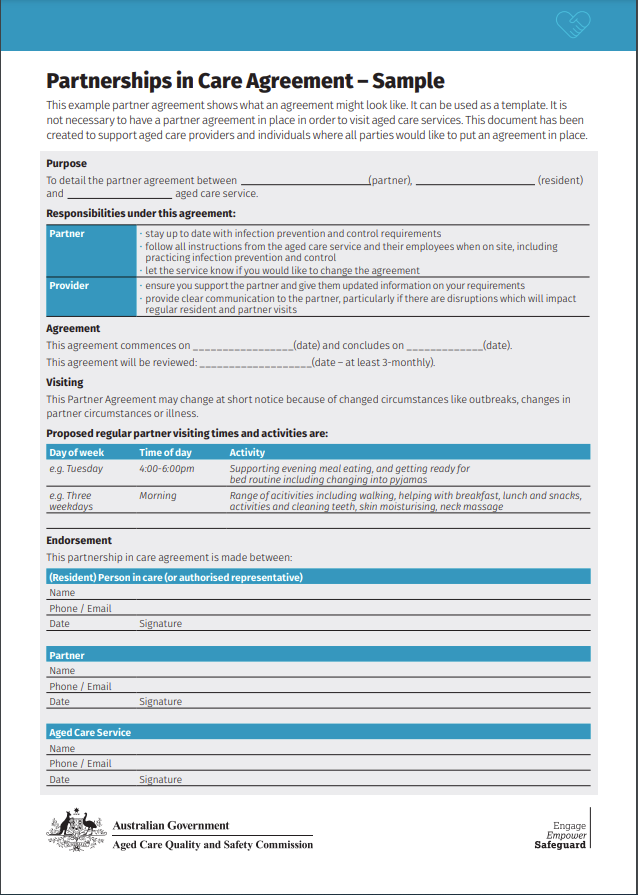
Partnerships in Care Agreement – Sample
This resource is a sample of what a partner agreement might look like. It can be used as a template. This document has been created to support aged care providers and individuals where all parties would like to put an agreement in place.
This resource may refer to information that will be updated from 1 November 2025 to align with the new Aged Care Act and Quality Standards.
Partnerships in Care Agreement – Sample (PDF 108.45 KB)
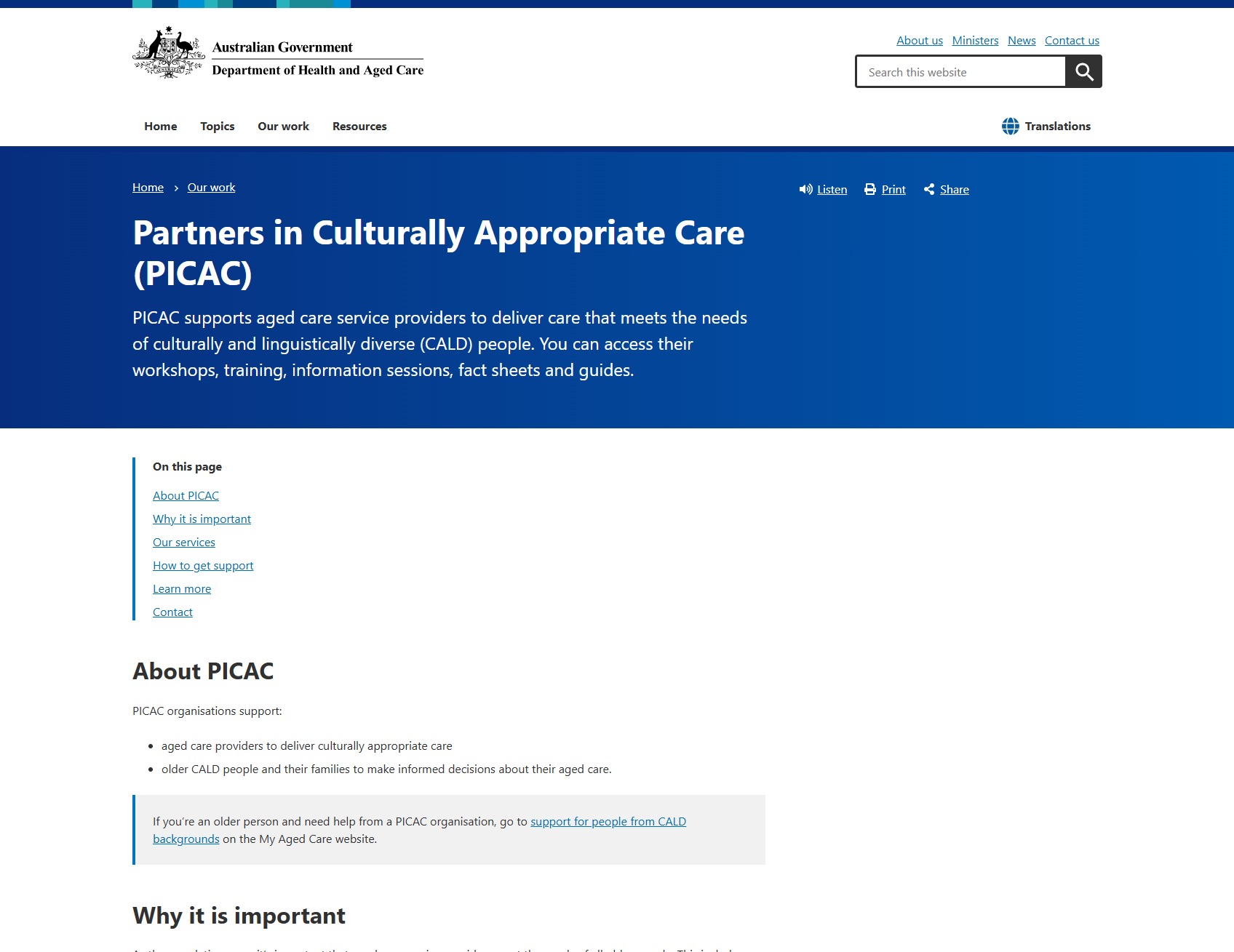
Partners in Culturally Appropriate Care (PICAC)
This resource supports aged care providers in delivering culturally appropriate care for people from culturally and linguistically diverse (CALD) backgrounds. It offers free training, workshops, and resources, helping providers understand and respect diverse needs, ensuring safe, inclusive, and culturally responsive care across all settings.
This resource may refer to information that will be updated from 1 November 2025 to align with the new Aged Care Act and Quality Standards.
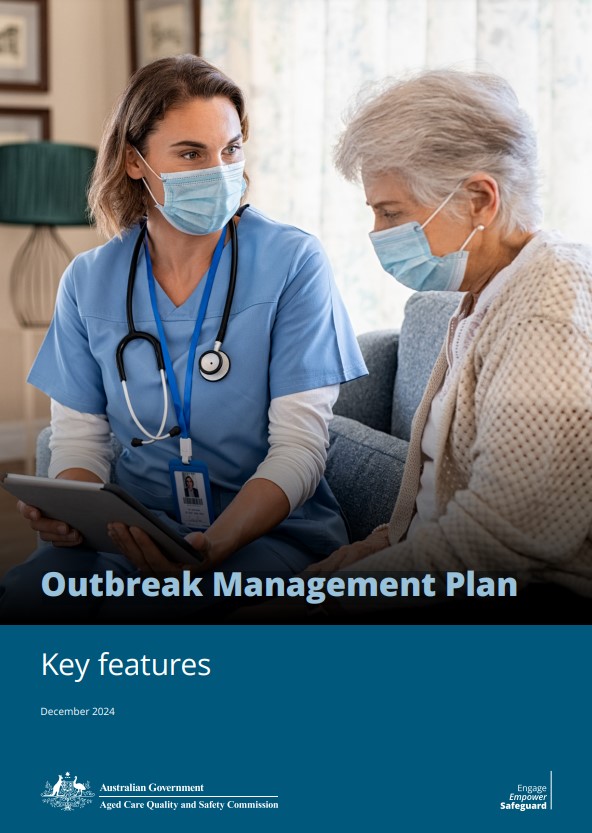
Outbreak Management Plan - key features
Outbreak management planning is a key part of infection prevention and control. This document supports both the development of a new outbreak management plan (OMP) and the quality assurance of existing plans. It details common OMP sections to get you started as you tailor your OMP to your service.
This resource may refer to information that will be updated from 1 November 2025 to align with the new Aged Care Act and Quality Standards.
Outbreak Management Plan - Key features (PDF 839.81 KB)
Oral health care for adult patients - Recommendations
This resource provides recommendations for oral health care in adult inpatients, focusing on preventing issues like aspiration pneumonia, infections, and malnutrition. It emphasises regular oral assessments and evidence-based care practices. Its principles are applicable in aged care settings to enhance overall care.
Please consider the applicability of this resource to your care setting. This resource may refer to information that will be updated from 1 November 2025 to align with the new Aged Care Act and Quality Standards.
Palliative care education and training
This resource provides information on free palliative care education programs available for health and aged care workers. It includes details about various training opportunities, such as online courses and in-person sessions, designed to enhance skills in delivering high-quality palliative care. The programs cover key topics like symptom management, communication, and multidisciplinary care. This resource may refer to information that will be updated from 1 November 2025 to align with the new Aged Care Act and Quality Standards.

National Immunisation Program Schedule
This resource provides the National Immunisation Program (NIP) Schedule, outlining the recommended immunisations for people at specific stages of life, from birth through to adulthood. It includes information about free vaccines under the NIP and guidance for catch-up immunisations, ensuring the best possible protection through timely vaccinations.
This resource may refer to information that will be updated from 1 November 2025 to align with the new Aged Care Act and Quality Standards.
National framework for advance care planning documents
This resource provides a nationally consistent framework for advance care planning documents in Australia. It outlines principles, ethical considerations, and best practices for creating, implementing, and accessing advance care plans, including Advance Care Directives. It aims to guide policymakers, administrators, and healthcare providers in recognising people’s values, preferences, and rights regarding future care.
This resource may refer to information that will be updated from 1 November 2025 to align with the new Aged Care Act and Quality Standards.
NSQHS Standards user guide for health service organisations providing care for patients with cognitive impairment or at risk of delirium
This user guide provides key actions from the NSQHS Standards for delivering safe care to people with cognitive impairment or at risk of delirium. It includes strategies for risk mitigation, evidence-based care, and clinical governance, applicable to aged care settings to ensure comprehensive, dignified, and high-quality care.
This resource may refer to information that will be updated from 1 November 2025 to align with the new Aged Care Act and Quality Standards.