The Quality Standards Resource Centre helps extend understanding of the strengthened Aged Care Quality Standards, which took effect from 1 November 2025. You can search for resources by using keywords, or filtering by standard, outcome and audience. Before using the Resource Centre, please read the terms of use.
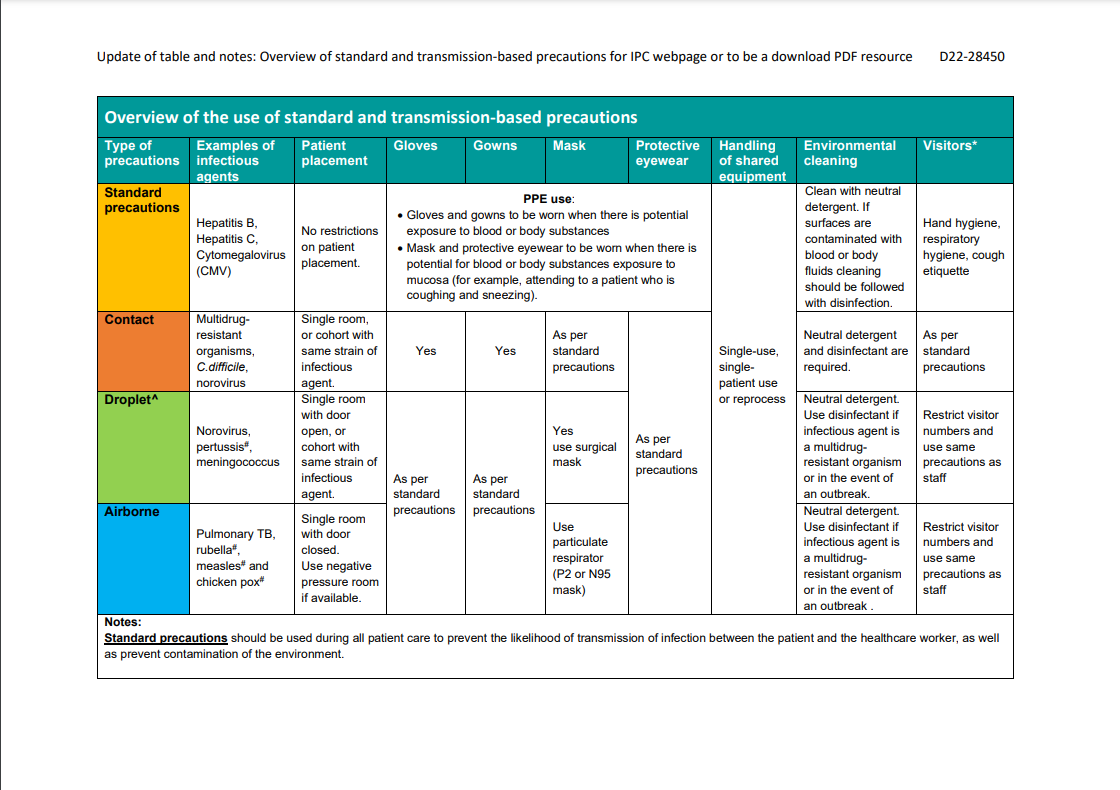
Use of standard and transmission-based precautions
This resource provides an overview of standard and transmission-based precautions, including personal protective equipment (PPE) use and patient placement requirements. It helps healthcare providers minimise infection risks by guiding appropriate PPE selection and patient placement based on local risk assessments, ensuring safe and effective infection prevention practices in aged care settings.
This resource may refer to information that will be updated from 1 November 2025 to align with the new Aged Care Act and Quality Standards.
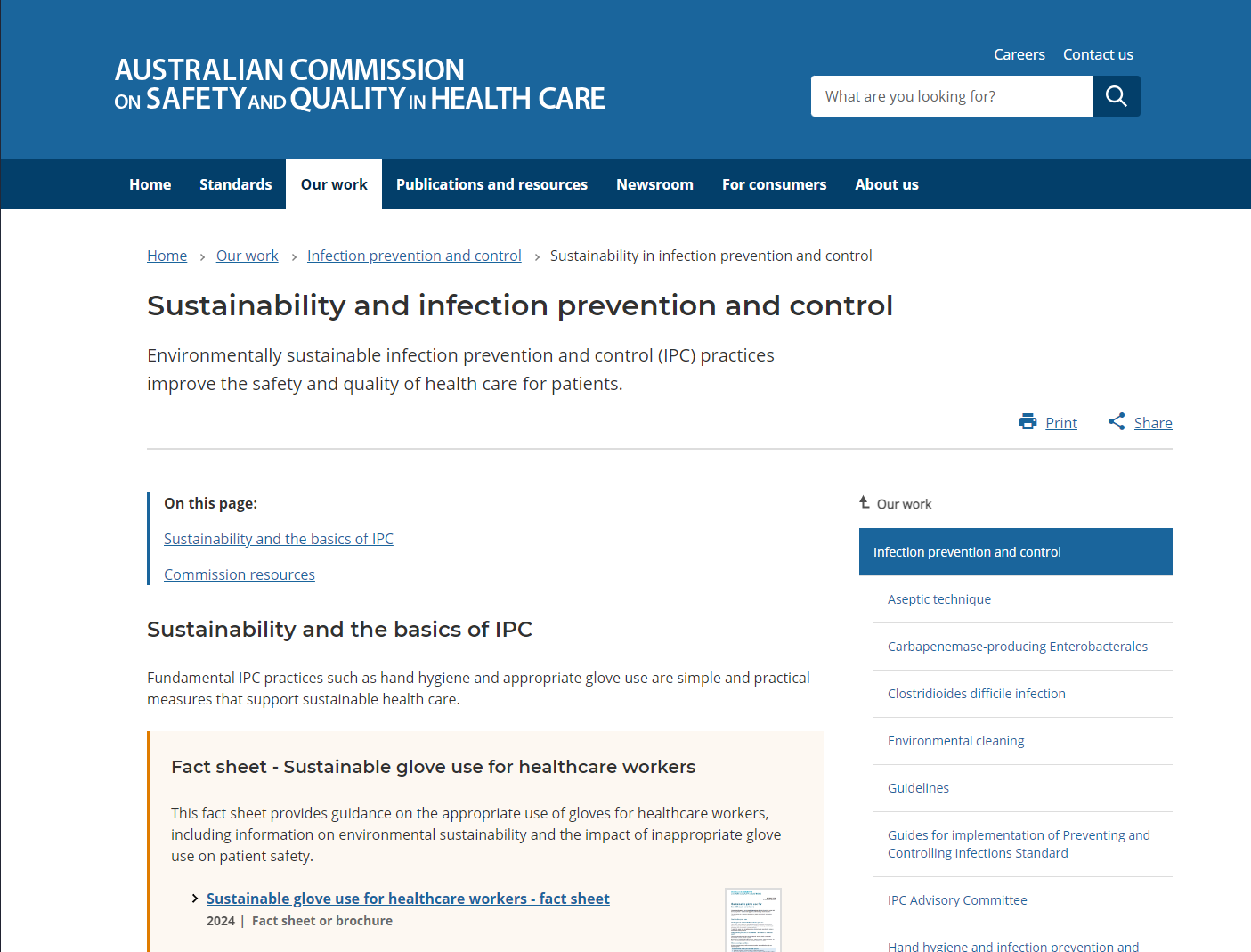
Sustainability and infection prevention and control
This resource highlights the importance of environmentally sustainable infection prevention and control (IPC) practices in healthcare. It covers fundamental practices such as hand hygiene and sustainable glove use, providing guidance on reducing environmental impact while maintaining safety and quality. It also links to relevant IPC guidelines for aged care settings.
This resource may refer to information that will be updated from 1 November 2025 to align with the new Aged Care Act and Quality Standards.
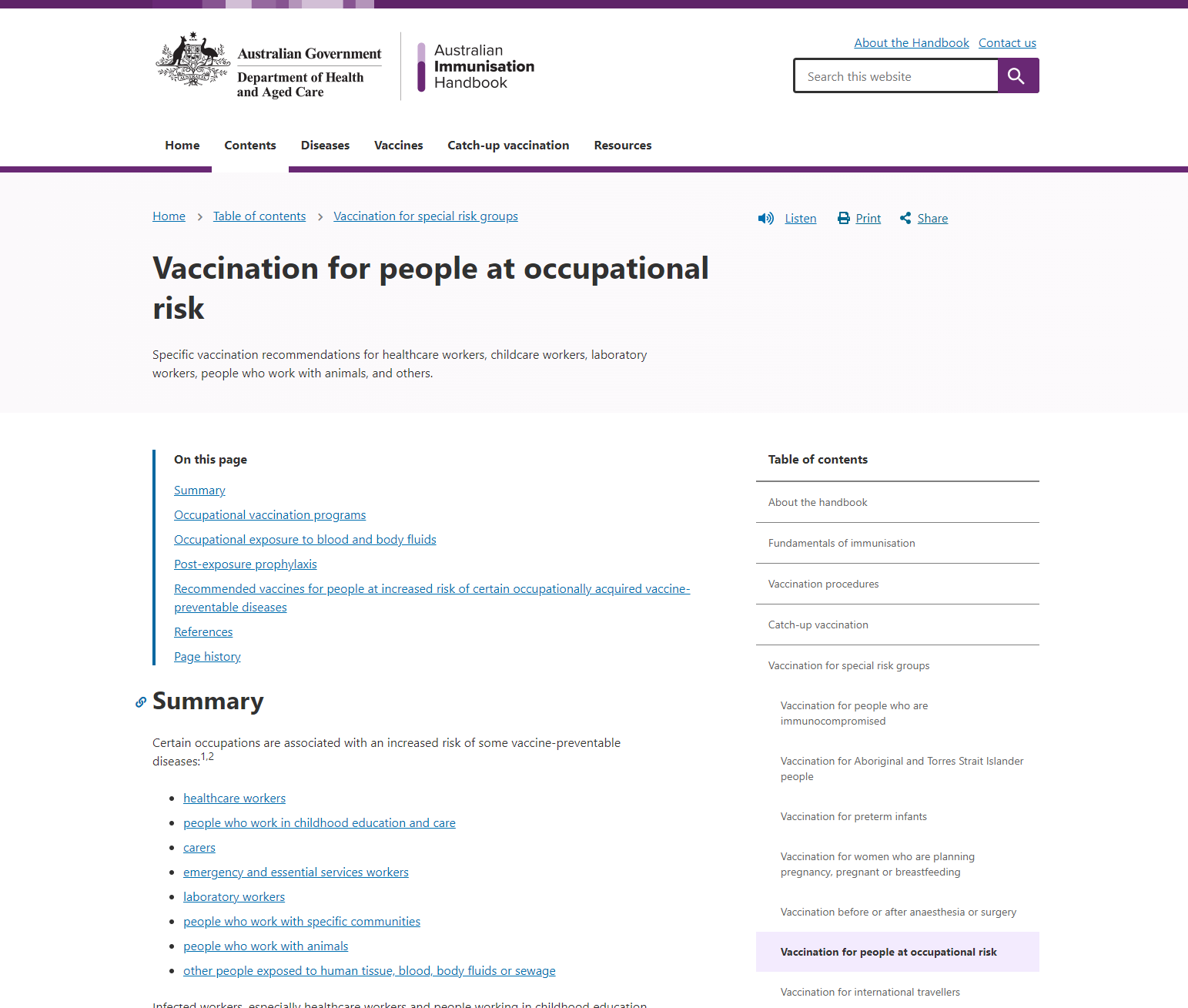
Vaccination for people at occupational risk
This resource provides vaccination guidelines for people in occupations with increased risk of exposure to vaccine-preventable diseases. It outlines recommended vaccinations for healthcare workers, carers, emergency services, and others in high-risk environments. The document supports the development of vaccination policies and programs to protect workers and the people they serve.
This resource may refer to information that will be updated from 1 November 2025 to align with the new Aged Care Act and Quality Standards.
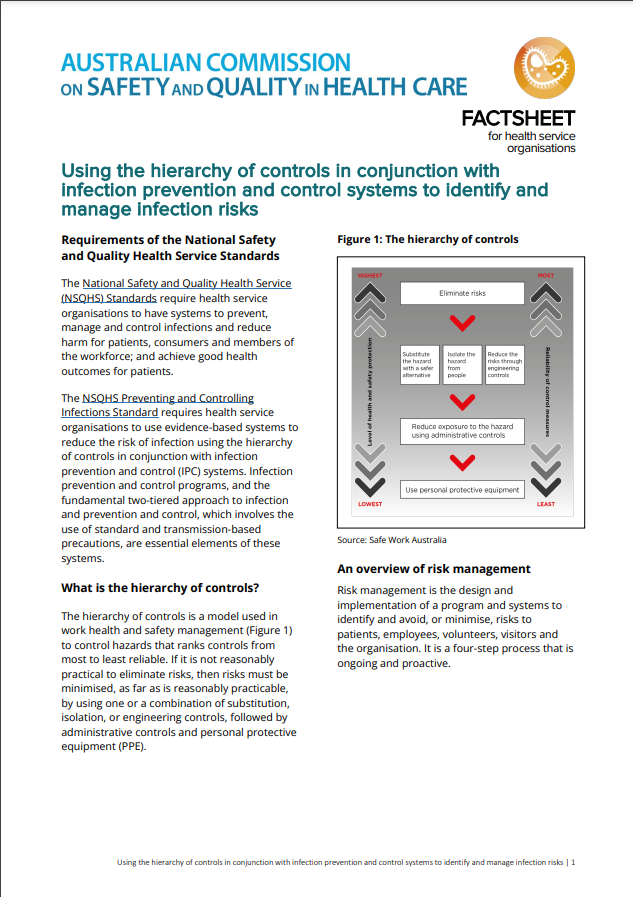
Use of the hierarchy of controls in infection prevention and control
This fact sheet provides guidance on using the hierarchy of controls with infection prevention systems to manage infection risks. It outlines strategies such as elimination, isolation, engineering controls, and personal protective equipment (PPE) to help aged care providers maintain infection control and ensure safe care environments.
This resource may refer to information that will be updated from 1 November 2025 to align with the new Aged Care Act and Quality Standards.
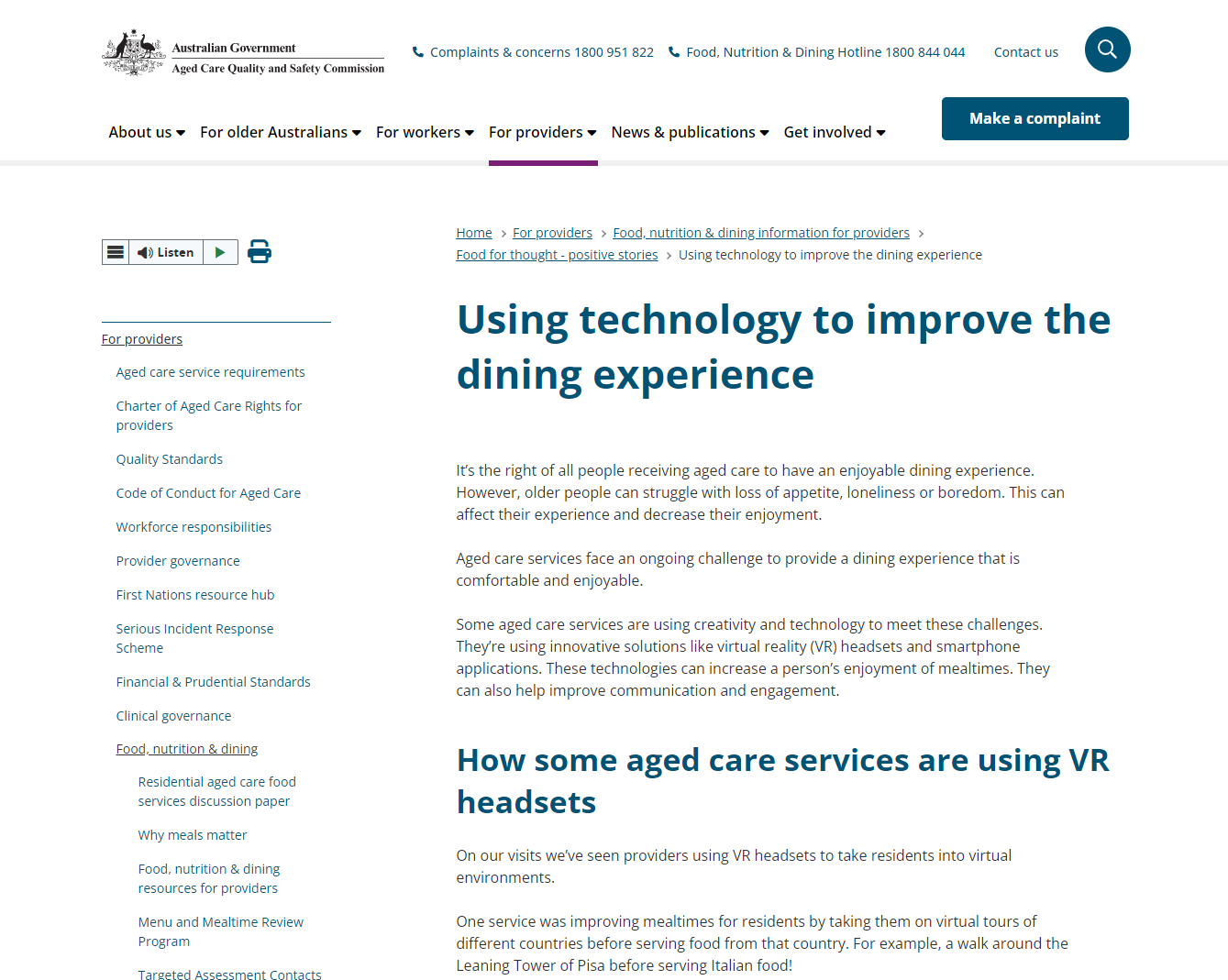
Using technology to improve the dining experience
This resource provides guidance on how technology, such as virtual reality (VR) and mobile applications, can enhance the dining experience in aged care settings. These tools are designed to increase engagement, support meal choices, improve communication with families, and contribute to overall wellbeing by making mealtimes more enjoyable.
This resource may refer to information that will be updated from 1 November 2025 to align with the new Aged Care Act and Quality Standards.
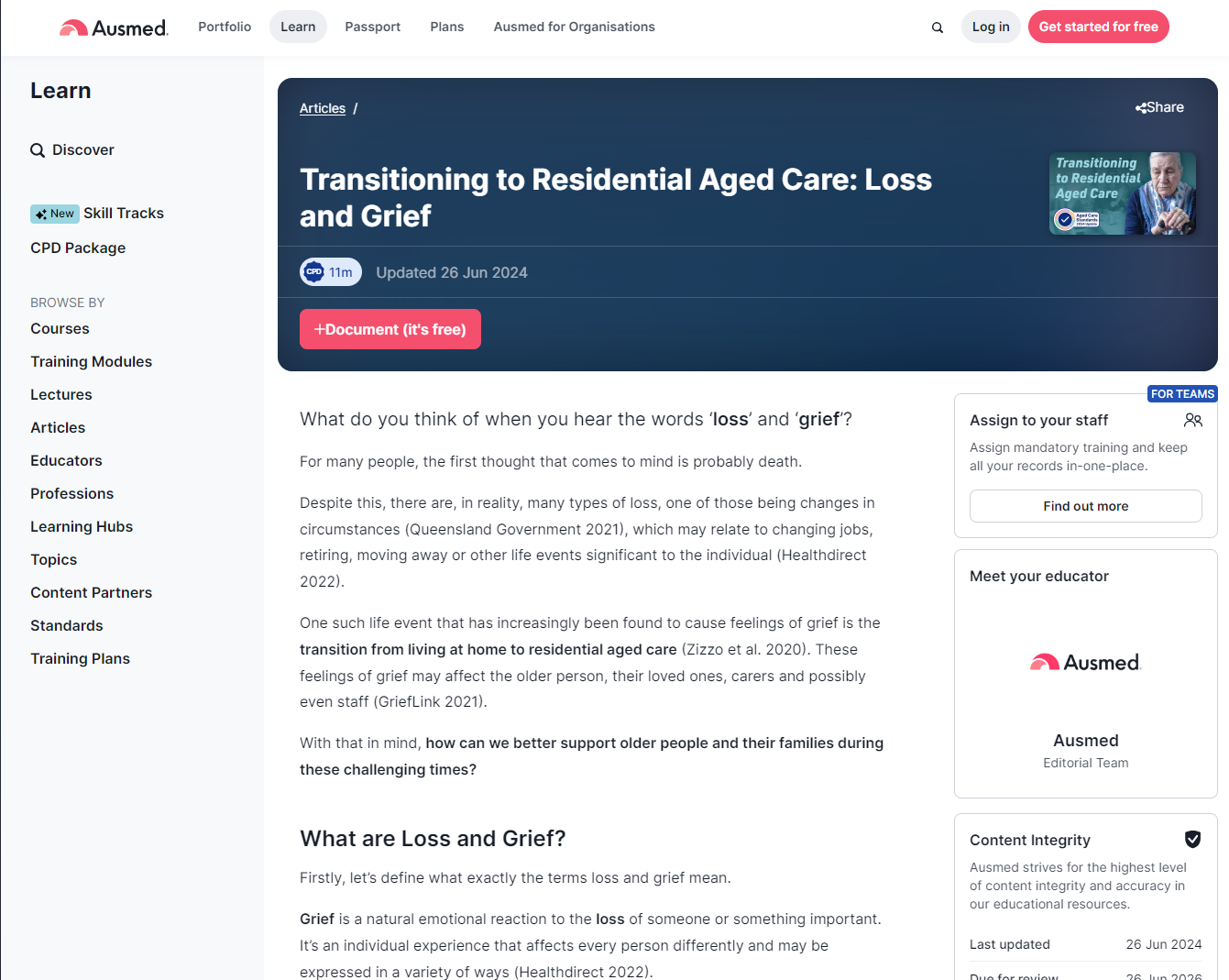
Transitioning to Residential Aged Care: Loss and Grief
This resource explores the emotional impact of transitioning into residential aged care, focusing on loss and grief experienced by older people and their families. It highlights the common emotional challenges, such as fear, loss of independence, and guilt, and provides strategies to support emotional well-being during this difficult transition.
This resource may refer to information that will be updated from 1 November 2025 to align with the new Aged Care Act and Quality Standards.
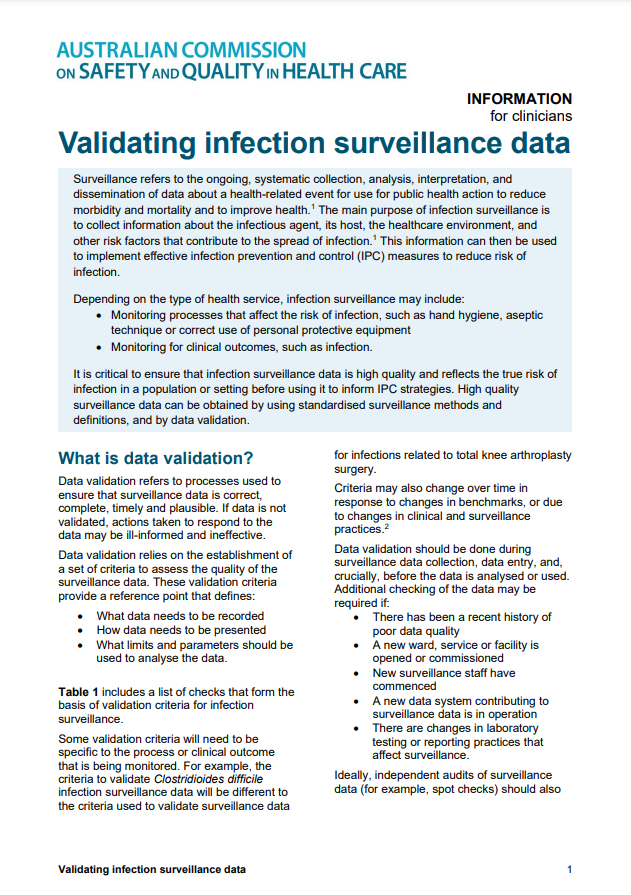
Validating infection surveillance data
This fact sheet provides guidance on validating infection surveillance data. It supports infection control teams in ensuring data accuracy and completeness, essential for effective infection control strategies. The resource outlines steps for both manual and automated validation methods and includes a checklist for common practices.
This resource may refer to information that will be updated from 1 November 2025 to align with the new Aged Care Act and Quality Standards.
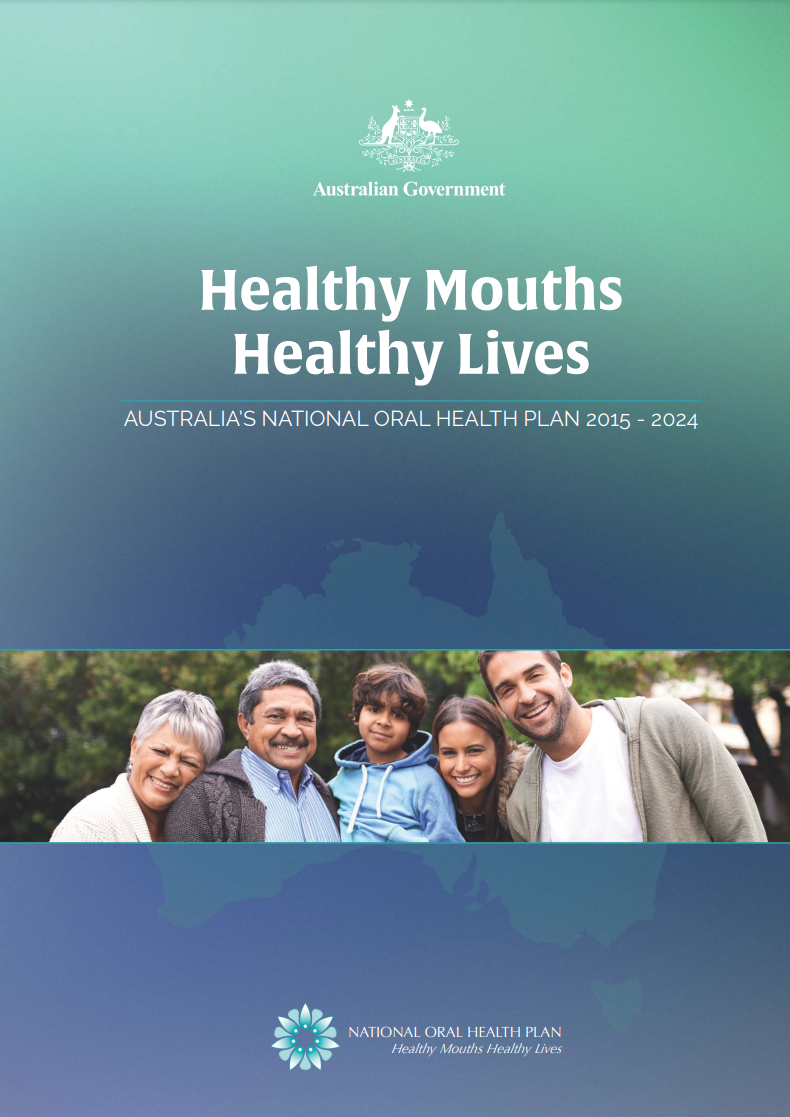
Healthy mouths, healthy lives - Australia's National Oral Health Plan 2015-2024
This resource outlines Australia’s National Oral Health Plan 2015-2024, aiming to improve oral health and reduce inequalities. It includes strategic directions, guiding principles, foundation areas for action, and focus on priority populations. It addresses access to services, workforce development, safety, quality, promotion, and integrated health systems to enhance overall wellbeing.
This resource may refer to information that will be updated from 1 November 2025 to align with the new Aged Care Act and Quality Standards.
Healthcare Identifiers and the Healthcare Identifier Service
This document explains the Healthcare Identifier Service, a national system for assigning unique healthcare identifiers to individuals, providers, and healthcare organisations. The service aims to improve patient safety, ensure accurate records, and facilitate secure data sharing across health, aged care, and allied health services. It includes privacy measures and public consultation outcomes for potential legislative improvements.
This resource may refer to information that will be updated from 1 November 2025 to align with the new Aged Care Act and Quality Standards.
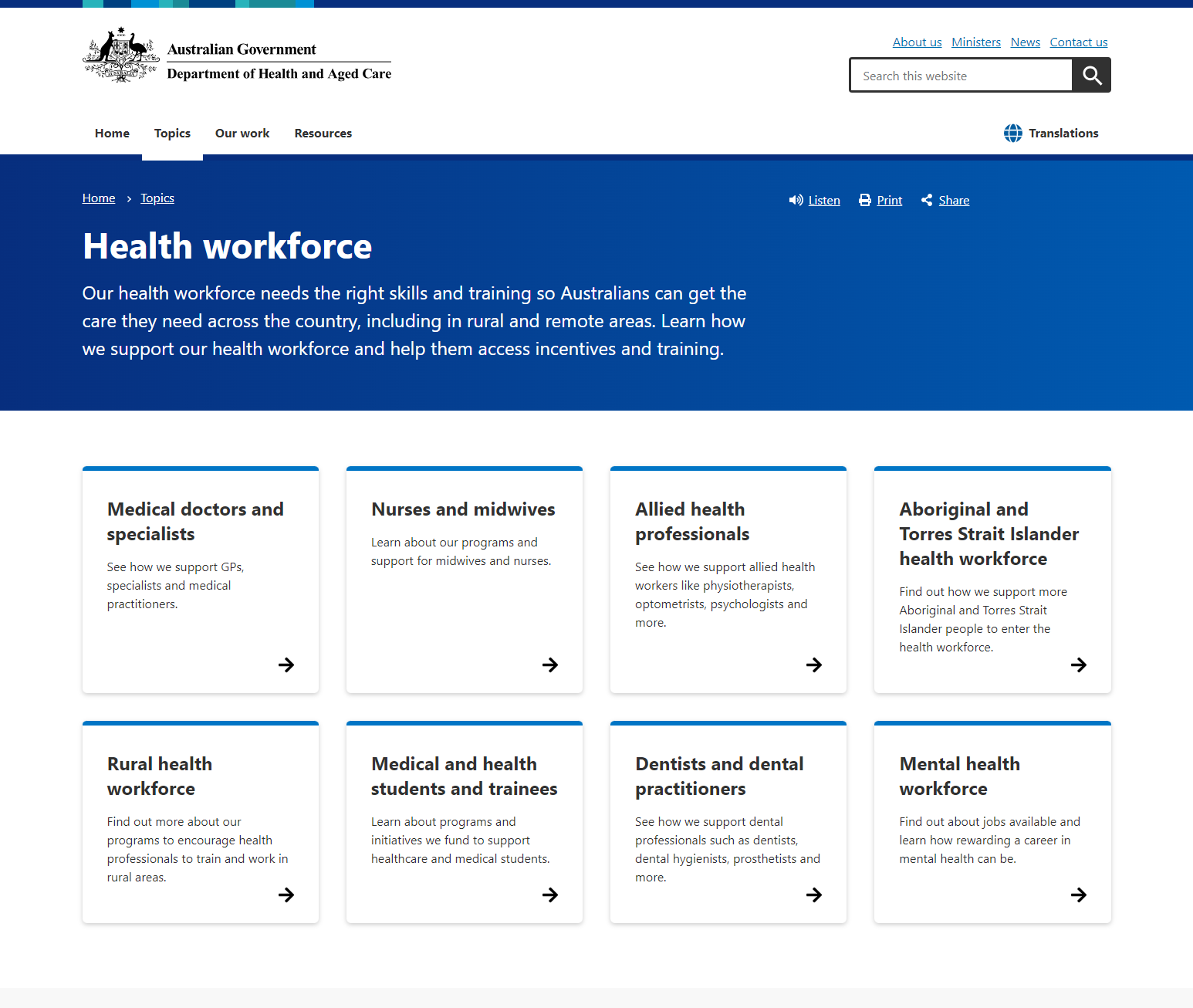
Health workforce
This resource provides an overview of the support and programs available for Australia's health workforce, including doctors, nurses, allied health professionals, and mental health workers. It highlights incentives, training, and initiatives to address workforce shortages, particularly in rural and remote areas, ensuring Australians receive the care they need across the country.
This resource may refer to information that will be updated from 1 November 2025 to align with the new Aged Care Act and Quality Standards.
Supporting visitors and partners in care with IPC
This resource offers guidance for aged care providers on supporting visitors and partners in care through infection prevention and control (IPC) measures. It includes training resources to help visitors follow IPC protocols and maintain safe care, especially during infectious outbreaks, through the 'Partnerships in Care' program.
This resource may refer to information that will be updated from 1 November 2025 to align with the new Aged Care Act and Quality Standards.
Transitions of Care
This resource explains transitions of care, when responsibility for a person’s health care is transferred between providers. It covers the risks involved, such as medication errors and readmissions, and offers principles for safe and high-quality transitions across care settings, including aged care, to reduce harm and improve outcomes. This resource may refer to information that will be updated from 1 November 2025 to align with the new Aged Care Act and Quality Standards.
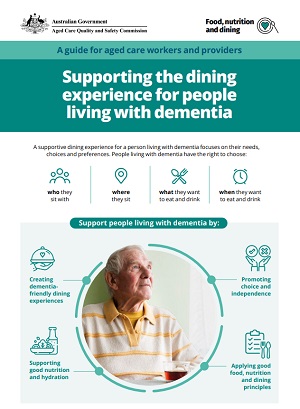
Supporting the dining experience for people living with dementia – Providers and workers guide
This guide is about how to support people living with dementia to maintain good nutrition and enjoy positive dining experiences.
This resource may refer to information that will be updated from 1 November 2025 to align with the new Aged Care Act and Quality Standards.

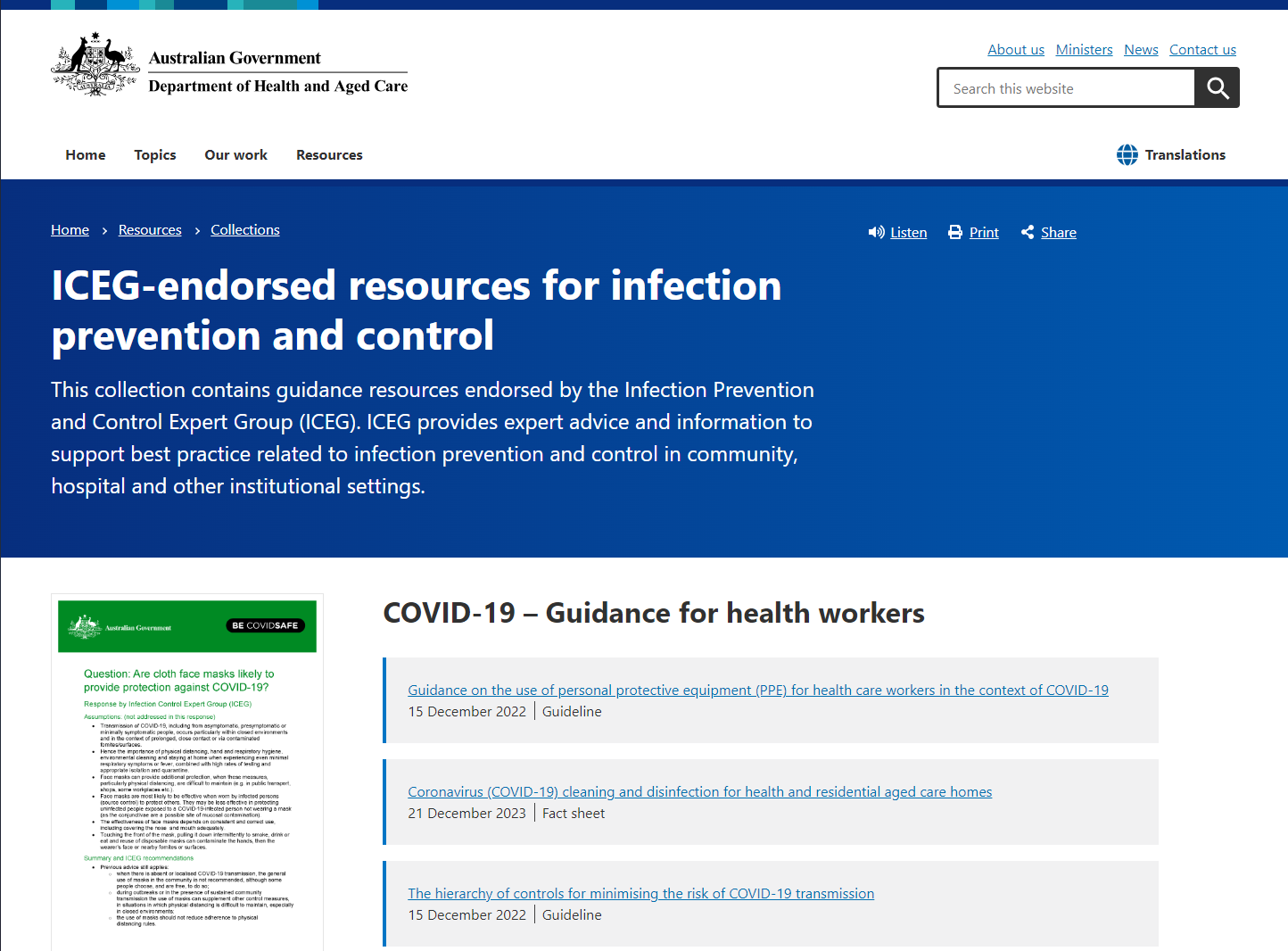
ICEG-endorsed resources for infection prevention and control
This resource collection includes guidance on infection prevention and control practices endorsed by the Infection Prevention and Control Expert Group (ICEG). It supports health and aged care providers with best practices related to COVID-19, personal protective equipment (PPE), cleaning, disinfection, and minimising transmission risks in institutional and community settings.
This resource may refer to information that will be updated from 1 November 2025 to align with the new Aged Care Act and Quality Standards.
Supporting people living with dementia to eat and drink well
This resource provides guidance for aged care services on how to support people living with dementia to eat and drink well. It highlights innovative approaches such as creating familiar, enjoyable meals, reducing mealtime interruptions, and offering 24-hour access to nutritious foods. These strategies help address challenges like malnutrition and dehydration.
This resource may refer to information that will be updated from 1 November 2025 to align with the new Aged Care Act and Quality Standards.
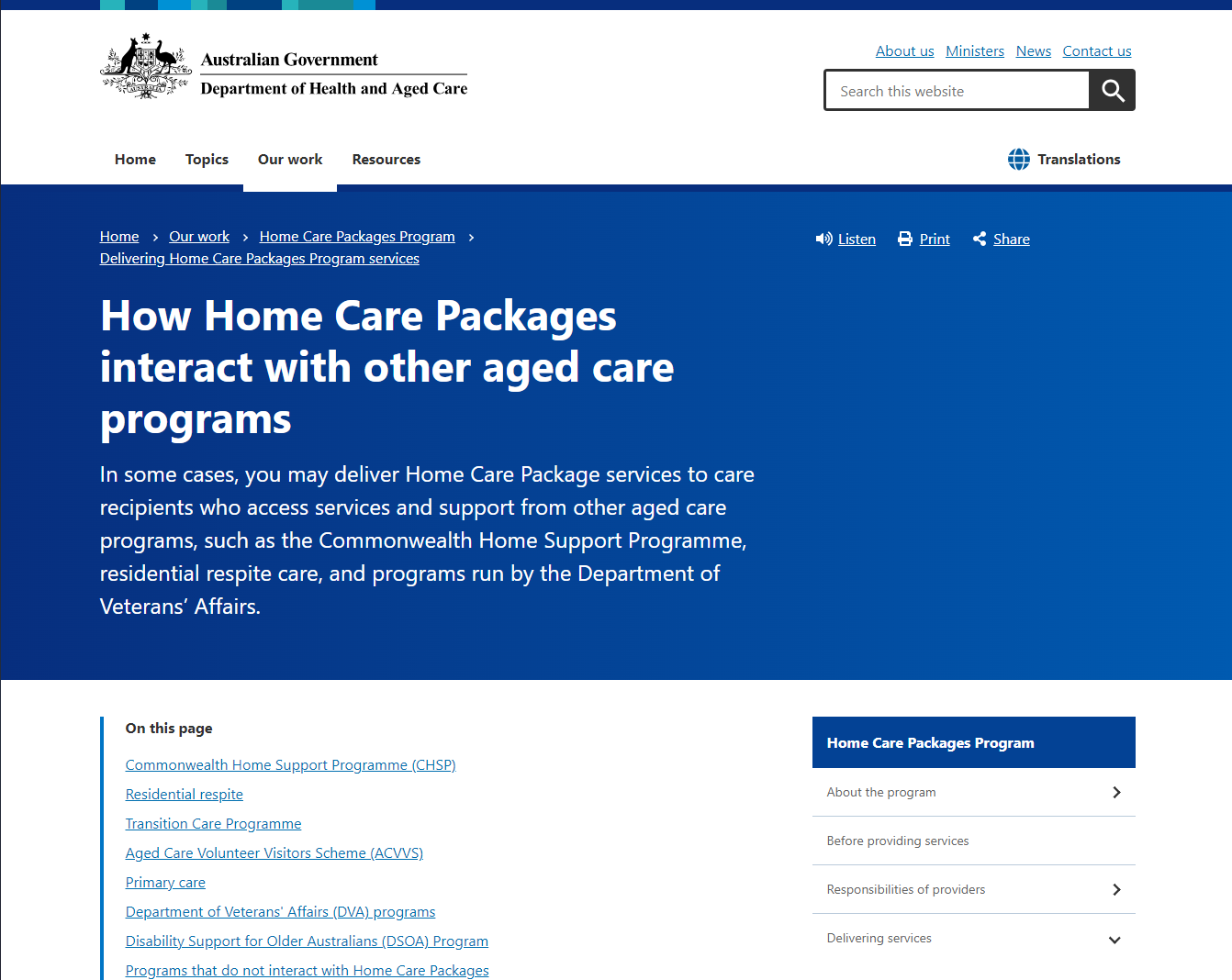
How Home Care Packages interact with other aged care programs
This resource explains how Home Care Packages interact with other aged care programs, such as the Commonwealth Home Support Programme, residential respite care, and the Transition Care Programme. It outlines how to coordinate services to avoid overlaps and provides guidance for accessing multiple programs without service duplication.
This resource may refer to information that will be updated from 1 November 2025 to align with the new Aged Care Act and Quality Standards.
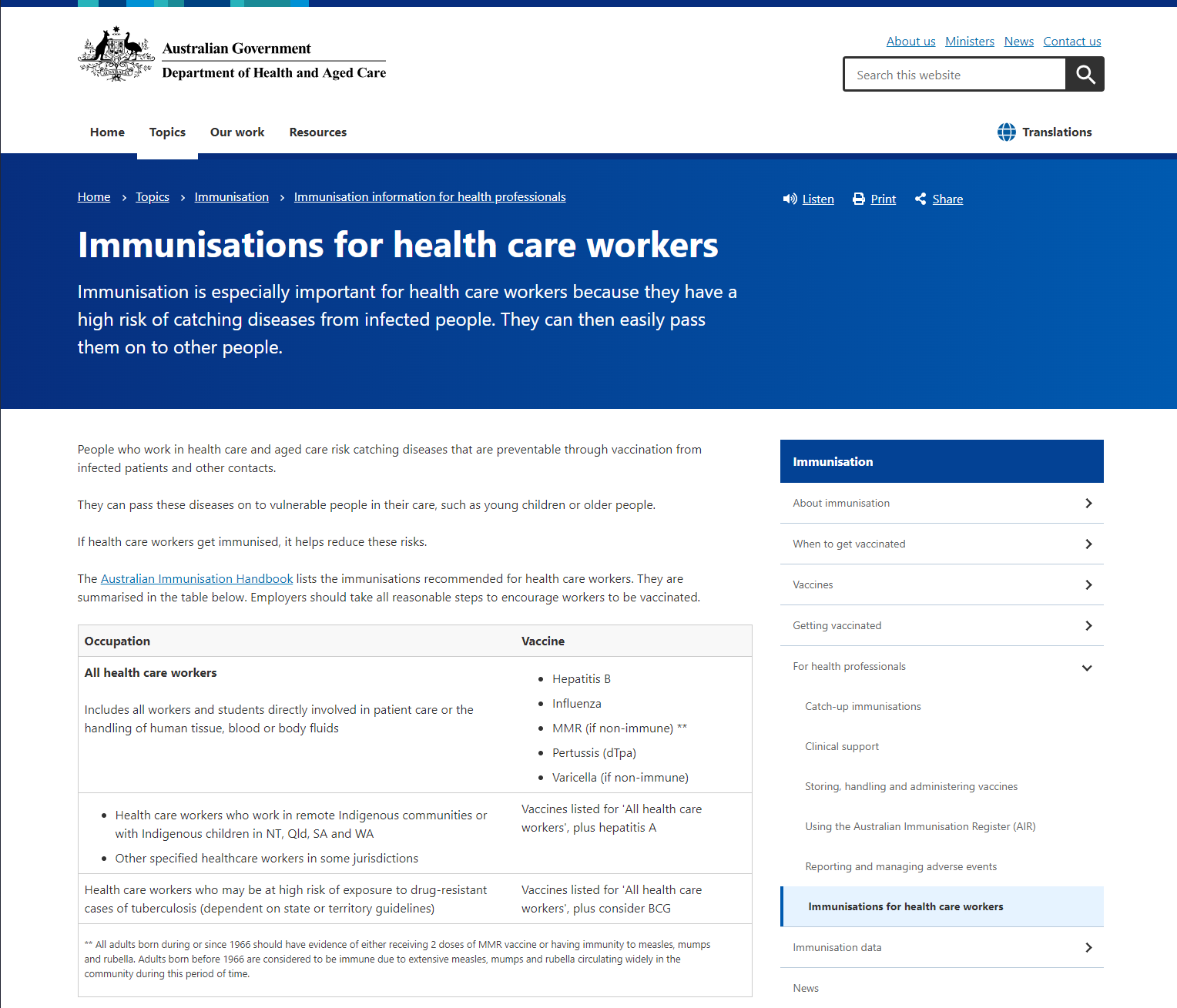
Immunisations for health care workers
This resource outlines recommended immunisations for healthcare workers, emphasising the importance of vaccination to prevent disease transmission to vulnerable populations. It lists vaccines such as Hepatitis B, Influenza, MMR, Pertussis, and Varicella, and highlights more requirements for workers in specific settings or with higher risks of exposure.
This resource may refer to information that will be updated from 1 November 2025 to align with the new Aged Care Act and Quality Standards.
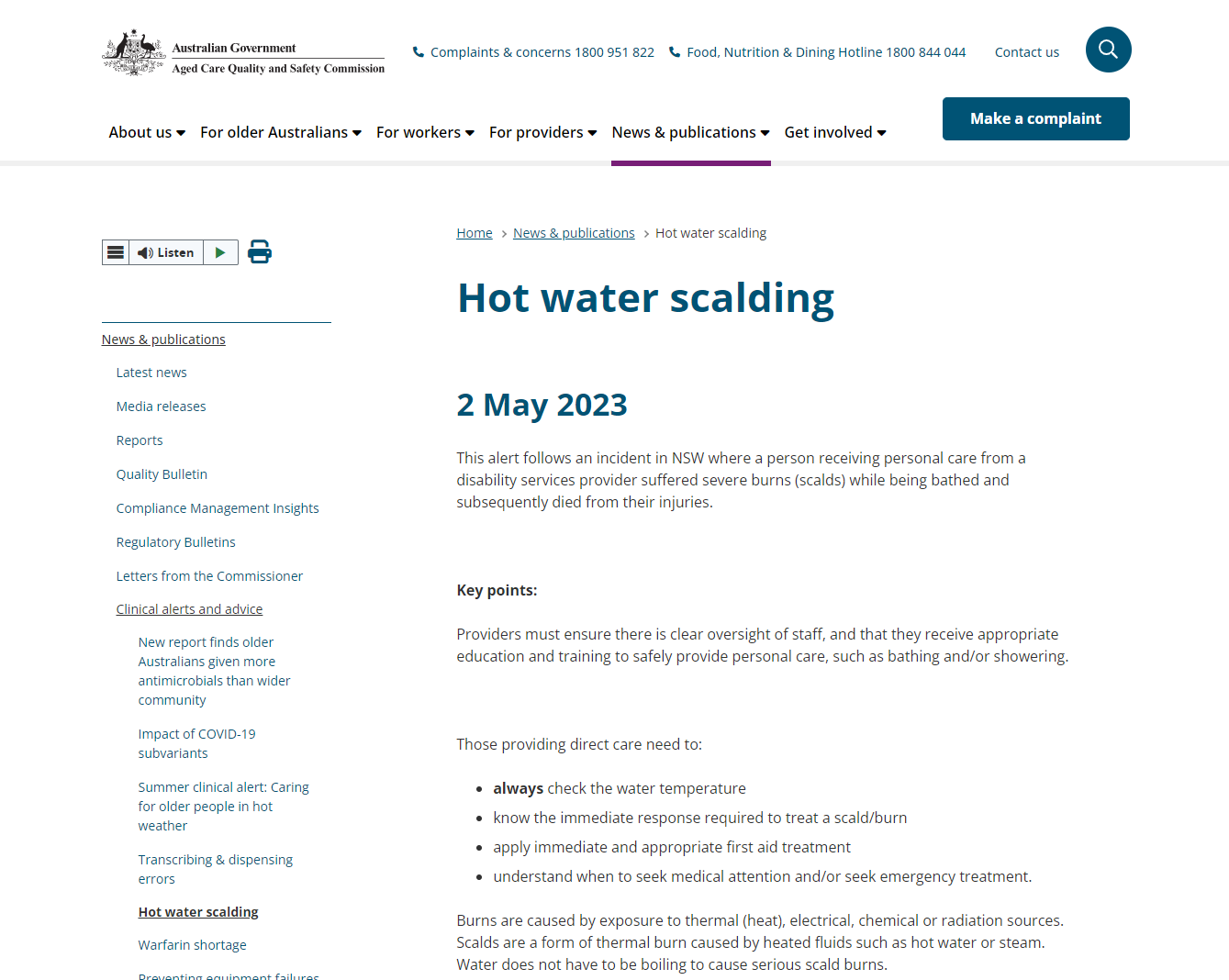
Hot water scalding
This page provides guidance for aged care providers on preventing and responding to hot water scalding incidents. It highlights the importance of staff oversight, proper training, and temperature checks when providing care. It also includes immediate first aid steps for burns, helping to reduce risks for vulnerable people, especially older people.
This resource may refer to information that will be updated from 1 November 2025 to align with the new Aged Care Act and Quality Standards.
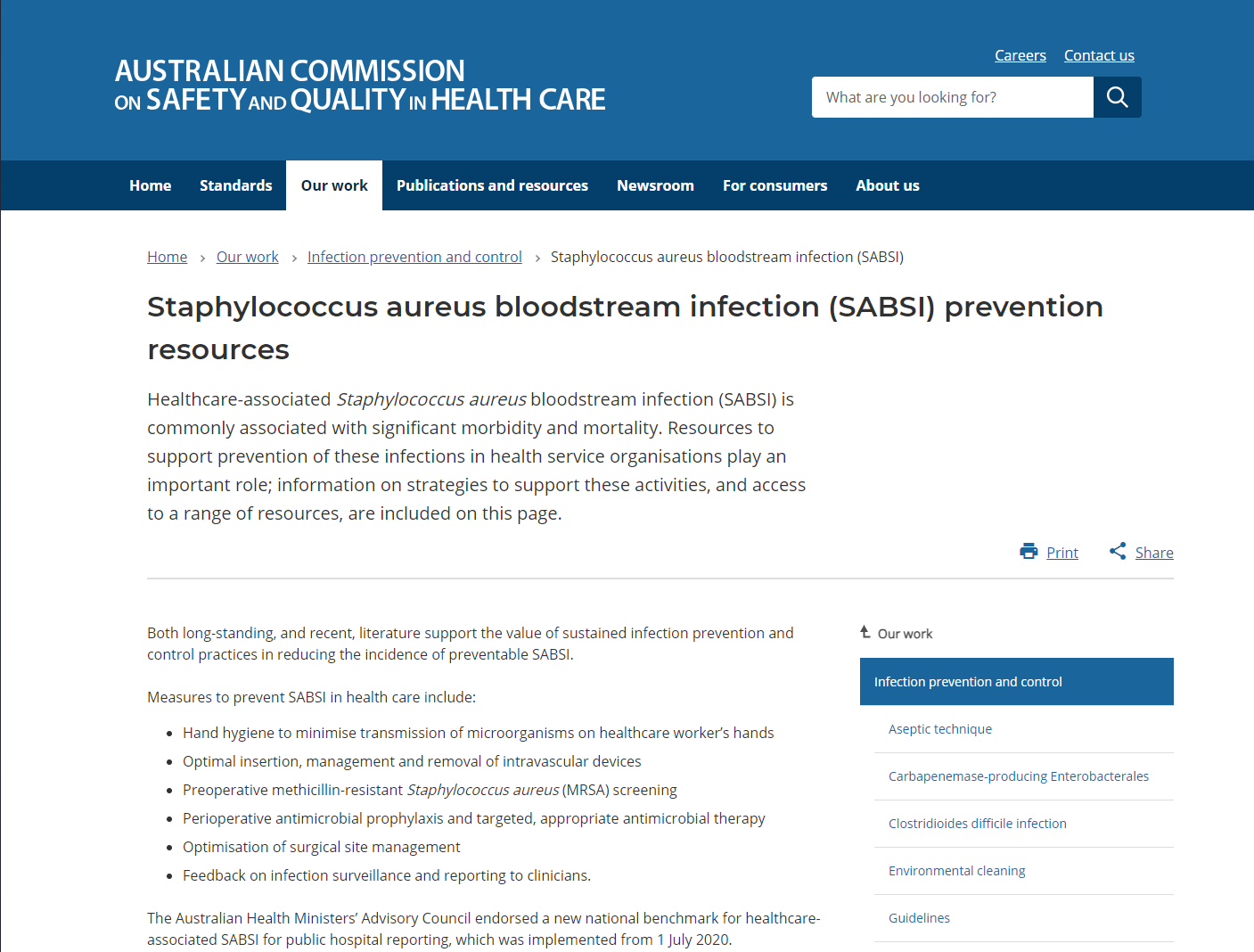
Staphylococcus aureus bloodstream infection (SABSI) prevention resources
This resource offers guidelines for preventing Staphylococcus aureus bloodstream infections (SABSI) in healthcare settings. It covers infection control strategies, including hand hygiene, device management, and surgical site care, helping organisations reduce infection risks and comply with national SABSI prevention standards.
This resource may refer to information that will be updated from 1 November 2025 to align with the new Aged Care Act and Quality Standards.
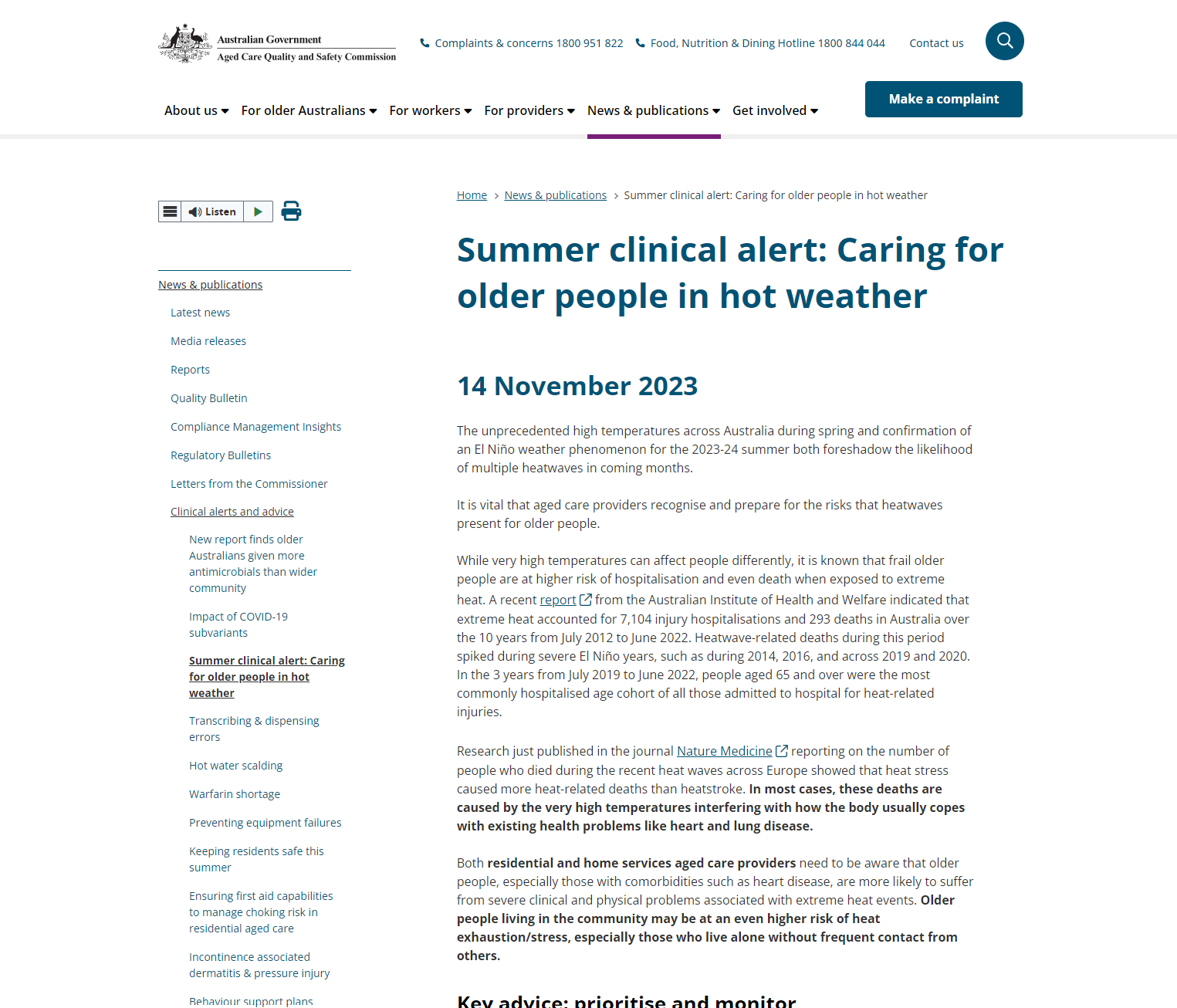
Summer clinical alert: Caring for older people in hot weather
This resource provides a summer clinical alert for aged care providers, focusing on safeguarding older people during extreme heat. It includes guidance on identifying vulnerable people, creating action plans, monitoring hydration, and recognising heat-related illnesses. It helps providers prepare for heatwaves and protect those in care.
This resource may refer to information that will be updated from 1 November 2025 to align with the new Aged Care Act and Quality Standards.