The Quality Standards Resource Centre helps extend understanding of the strengthened Aged Care Quality Standards, which took effect from 1 November 2025. You can search for resources by using keywords, or filtering by standard, outcome and audience. Before using the Resource Centre, please read the terms of use.
QI Program Module 7 – Activities of daily living
This resource explains the importance of measuring activities of daily living (ADLs) for older people in residential aged care. It guides providers on using the Barthel Index to assess ADLs quarterly, helping identify risks of functional decline and implement strategies to maintain independence and improve quality of life. This resource may refer to information that will be updated from 1 November 2025 to align with the new Aged Care Act and Quality Standards.
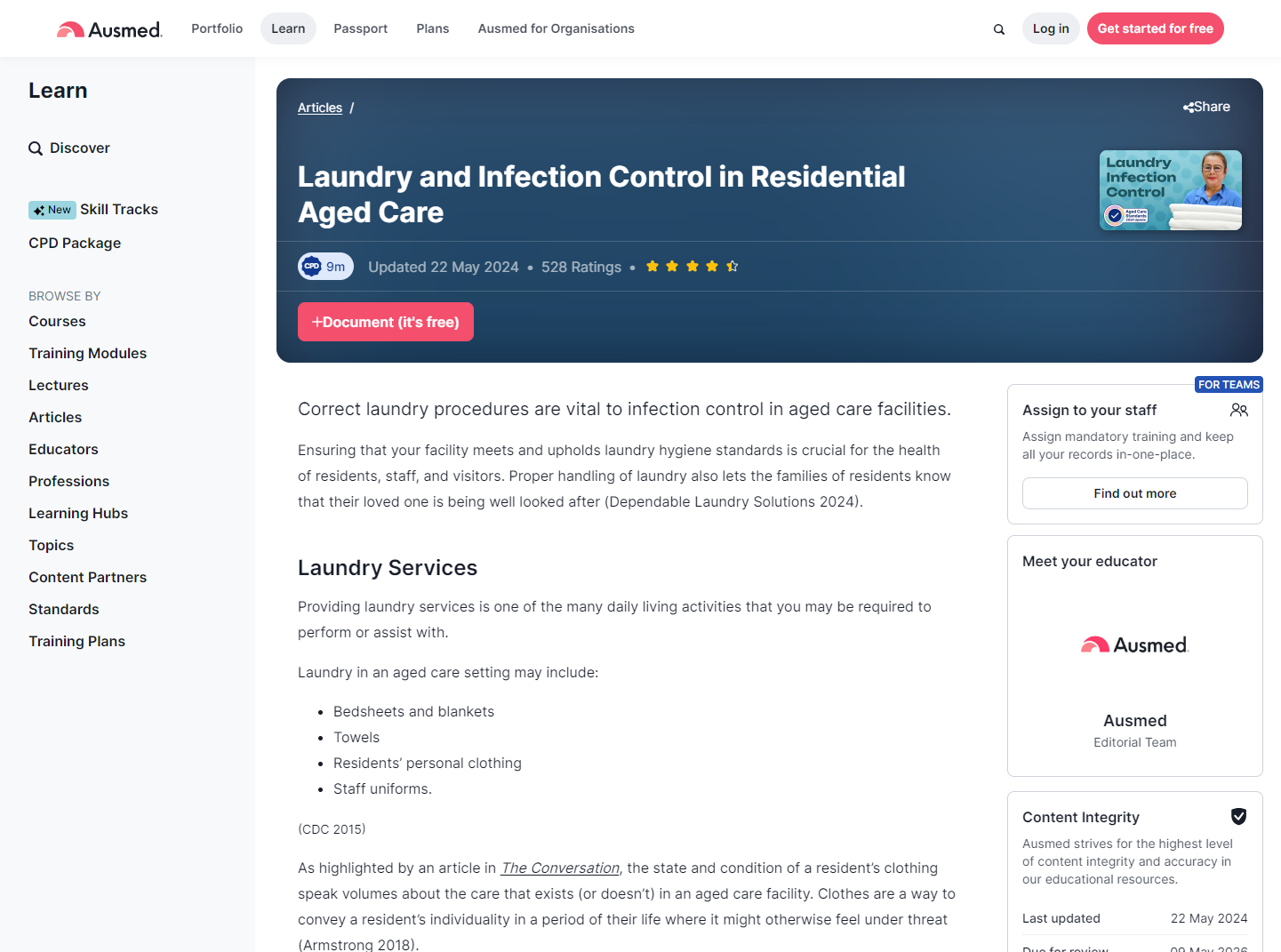
Laundry and Infection Control in Residential Aged Care
This resource provides guidance on proper laundry procedures in residential aged care to support infection control. It explains how to handle soiled linen, manage laundry services, and prevent contamination. The resource aligns with infection control standards, helping aged care providers meet hygiene requirements and reduce the risk of pathogen transmission.
This resource may refer to information that will be updated from 1 November 2025 to align with the new Aged Care Act and Quality Standards.
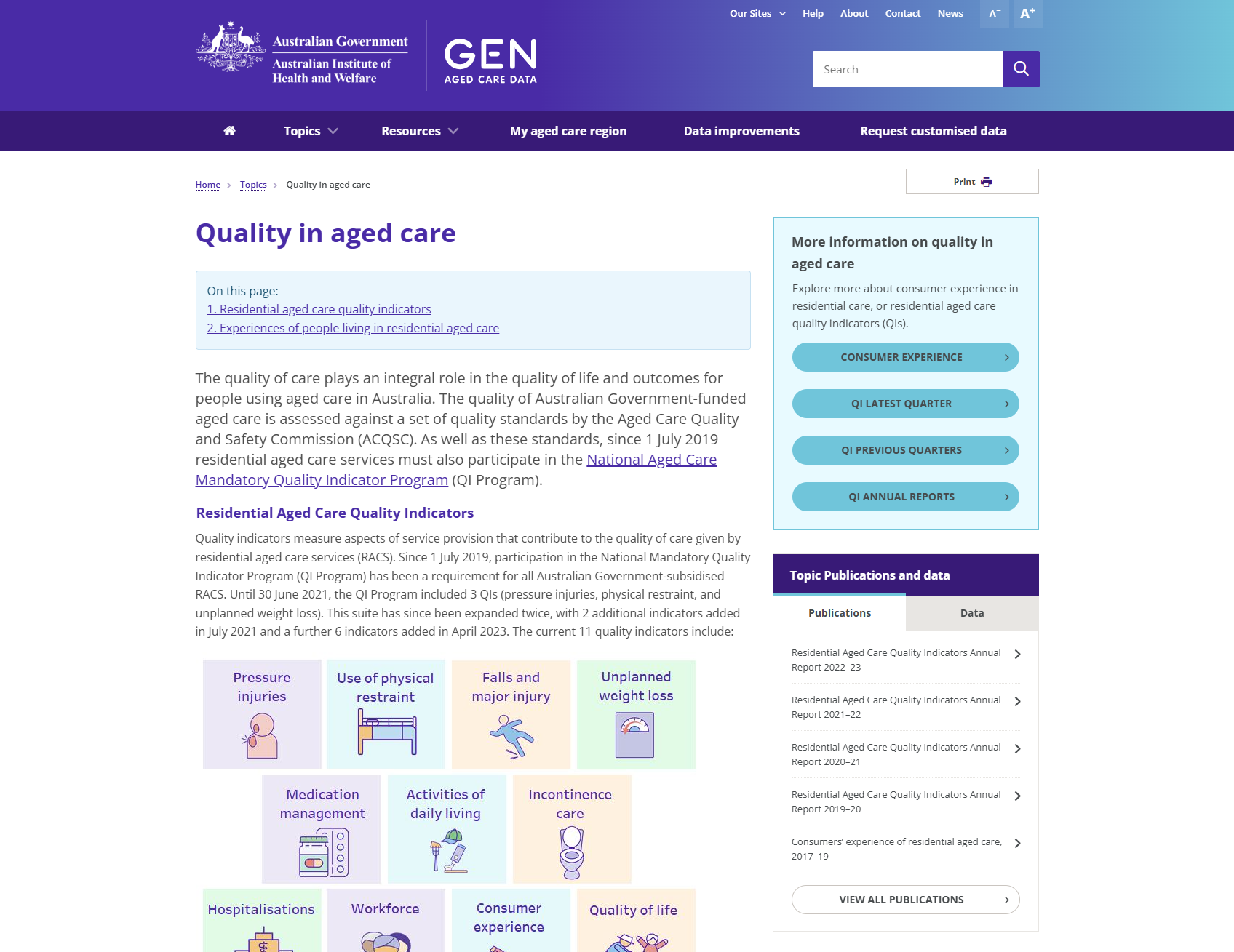
Quality in aged care - Gen Data Page
This resource provides an overview of quality indicators and consumer experience surveys in aged care. It details mandatory quality metrics, including physical and clinical indicators, and feedback from people in aged care, offering insights into service performance and supporting informed choices in aged care settings.
This resource may refer to information that will be updated from 1 November 2025 to align with the new Aged Care Act and Quality Standards.
Medication management for health practitioners
This resource supports health practitioners in managing medicines through the use of medication charts in aged care facilities and hospitals. It provides guidelines for safe prescribing, administration, and communication. The resource includes both paper-based and electronic medication chart systems to reduce errors, improve patient safety, and streamline medication management processes in aged care settings.
This resource may refer to information that will be updated from 1 November 2025 to align with the new Aged Care Act and Quality Standards.
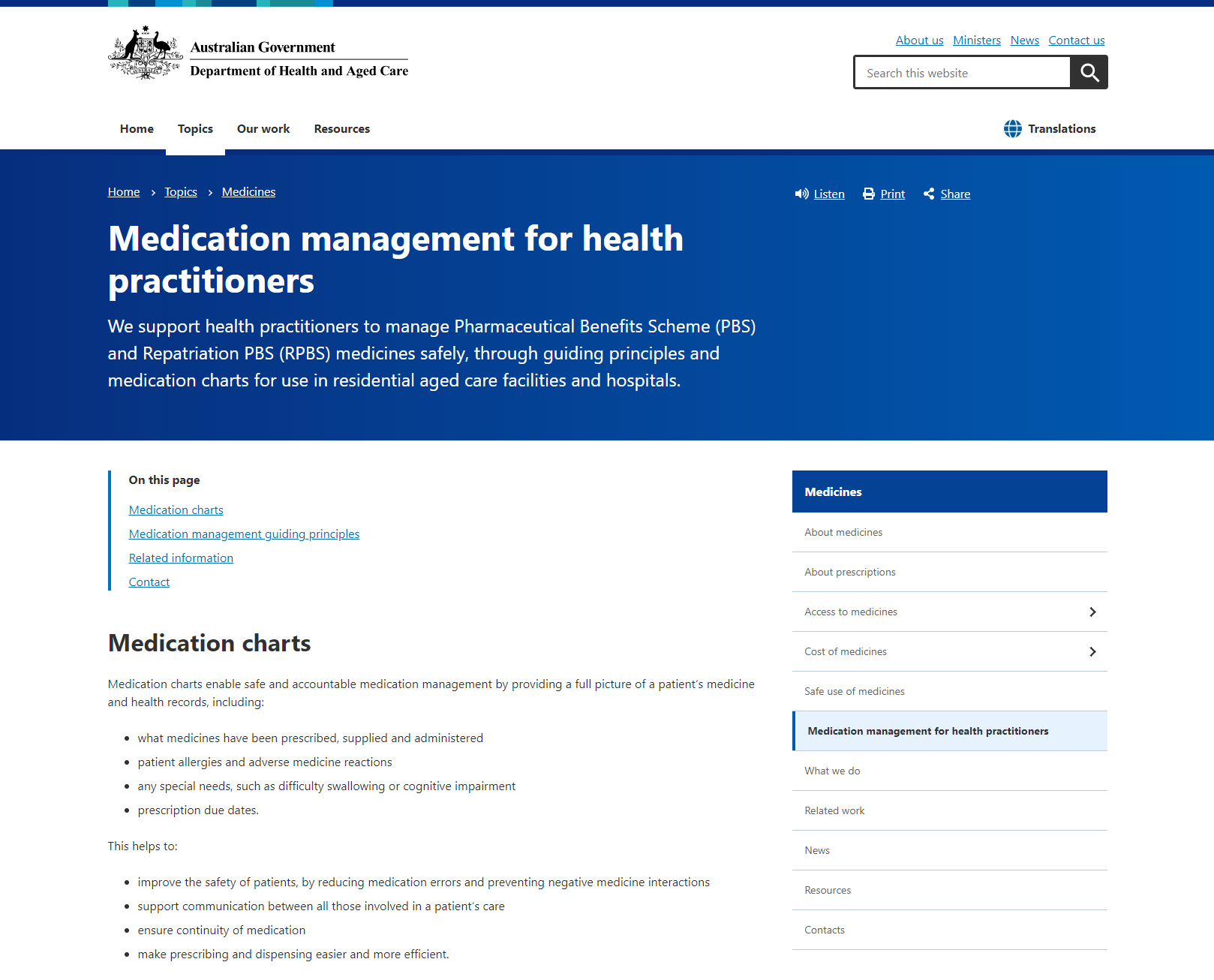
Provider Operations Collection Form
This resource outlines the Provider Operations Collection Form, which aged care providers must complete annually to report their operations. It includes data on governance, diversity, complaints, and service improvements. This information is published to increase transparency, helping older people, families, and carers make informed decisions about aged care services. This resource may refer to information that will be updated from 1 November 2025 to align with the new Aged Care Act and Quality Standards.
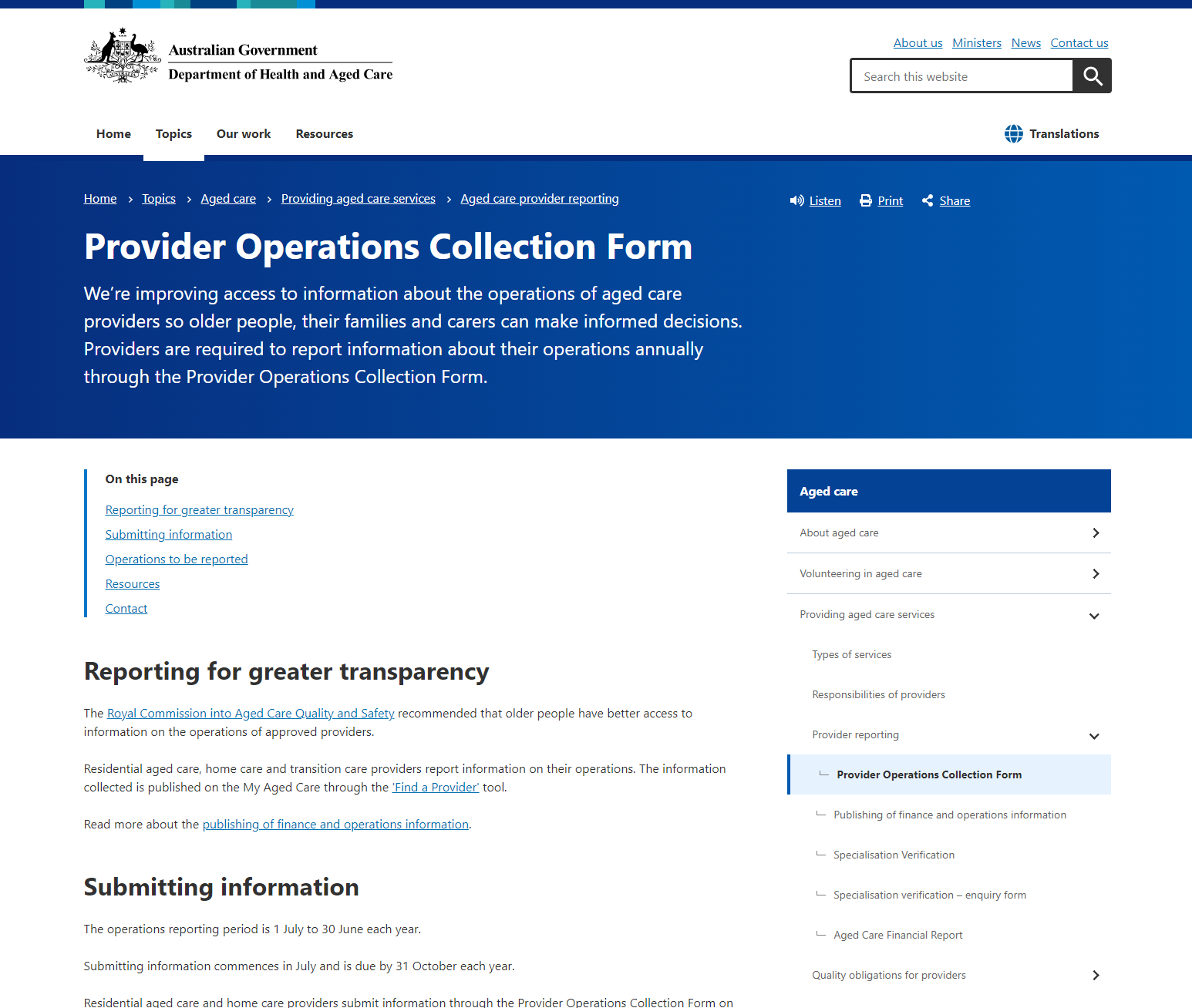
Provision of Equipment by Aged Care Organisations
This resource provides guidance for aged care organisations on supplying and managing equipment and aids for care recipients. It outlines the responsibilities for ensuring that all equipment is safe, clean, and fit for purpose. The document also covers subcontractor equipment and highlights the importance of regular maintenance and risk assessments.
This resource may refer to information that will be updated from 1 November 2025 to align with the new Aged Care Act and Quality Standards.
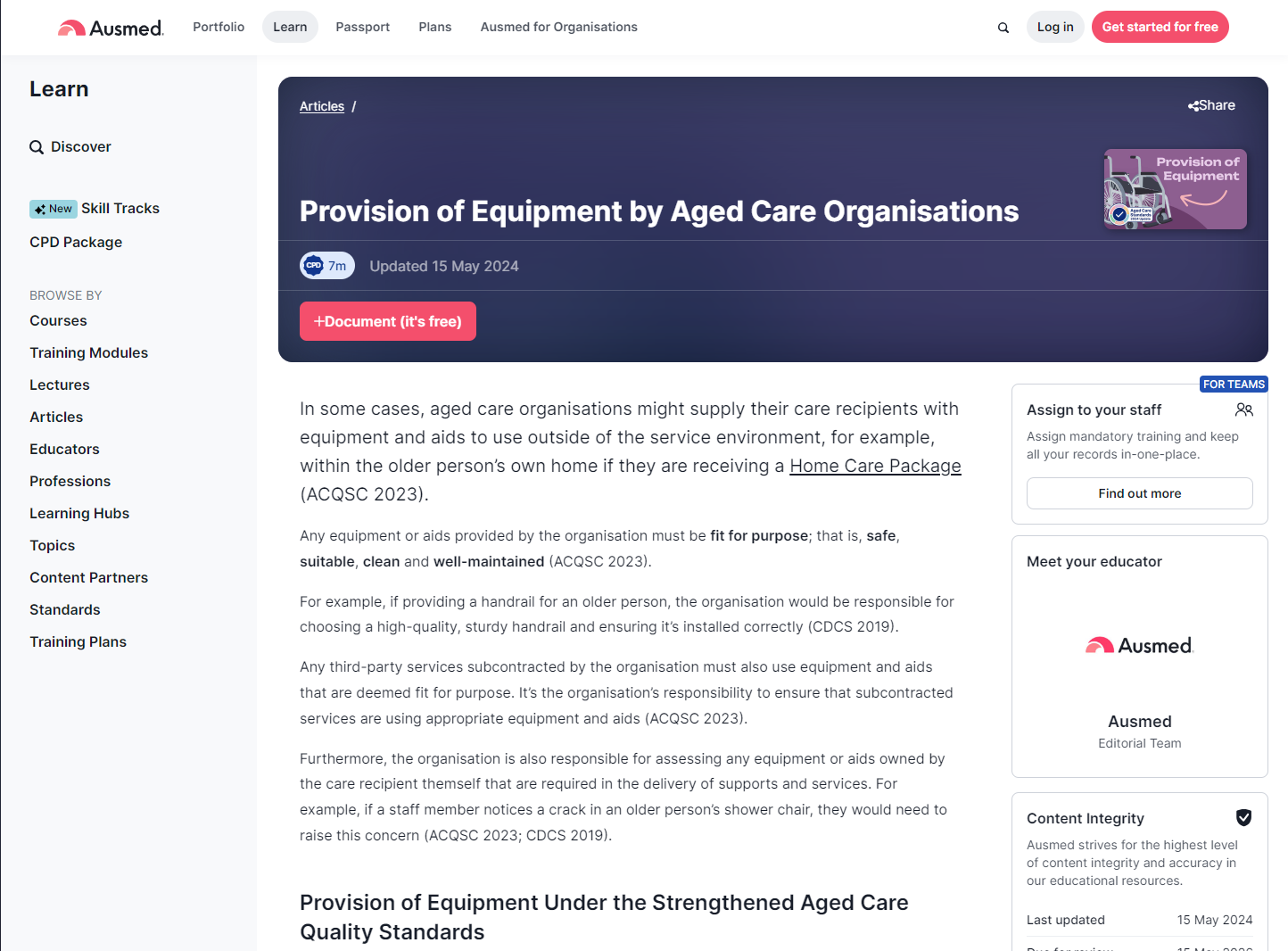
Medication: it's your choice
This resource informs older Australians about their rights and choices regarding medication, including potential side effects, the importance of informed decision-making, and reducing unnecessary antibiotic and psychotropic use. It offers brochures, videos, and fact sheets to support understanding and provide guidance on alternative treatments and safe medication practices.
This resource may refer to information that will be updated from 1 November 2025 to align with the new Aged Care Act and Quality Standards.
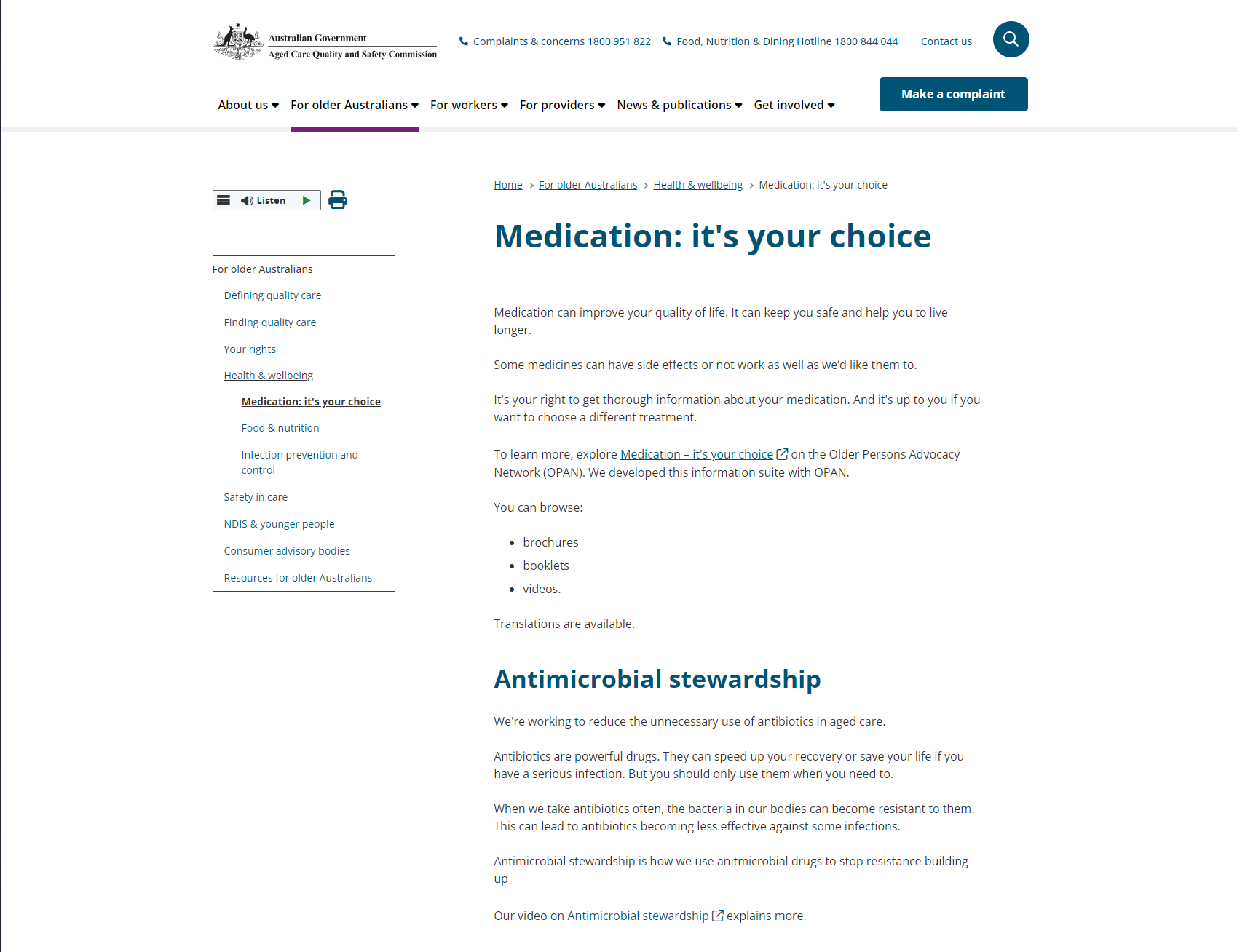
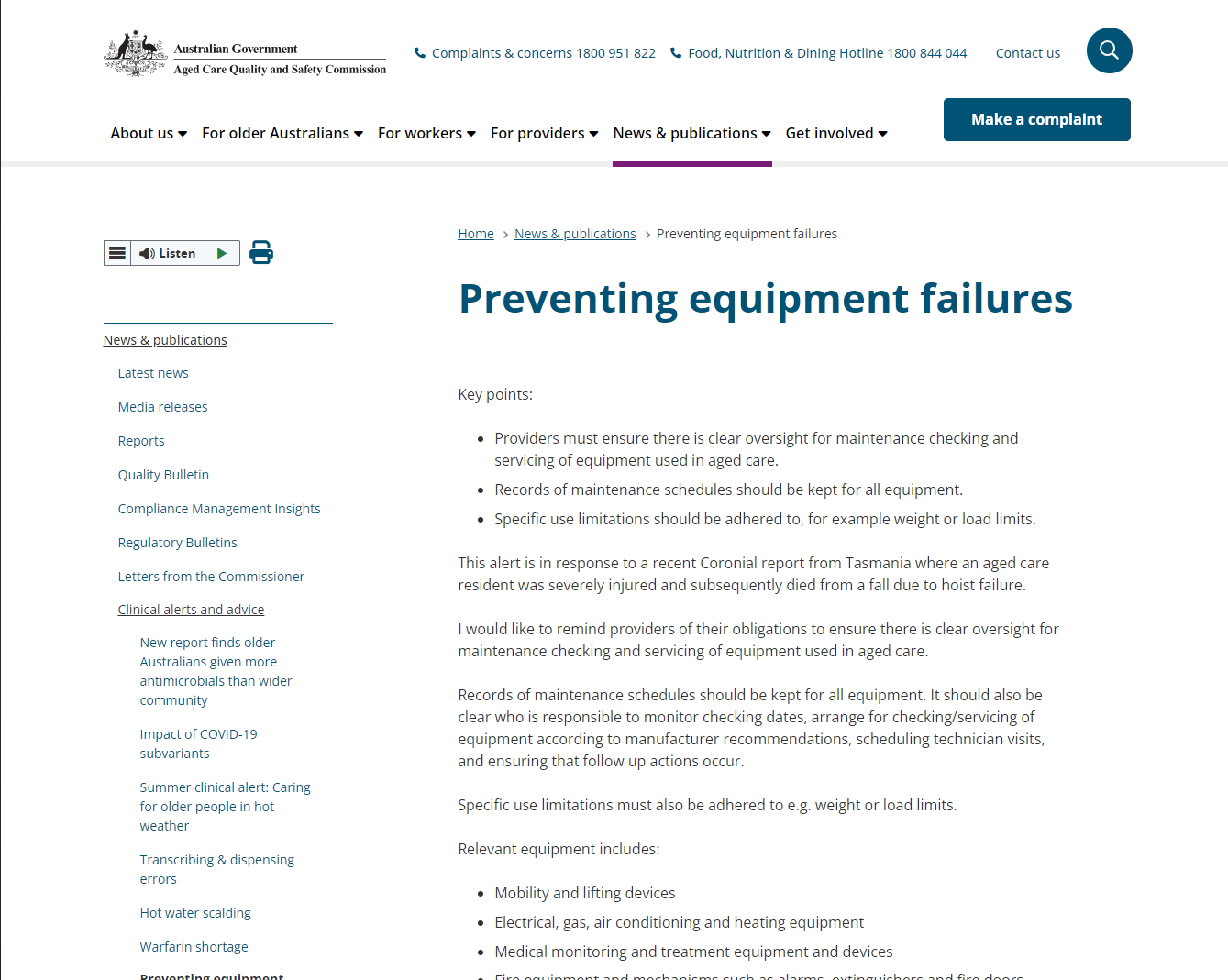
Medication management
This resource provides information on medication management in aged care, focusing on psychotropics and antimicrobials. It includes tools for reducing inappropriate use, antimicrobial stewardship guidance, self-assessment resources, and quality bulletins. It aims to improve medication safety, prevent inappropriate prescribing, and support care providers in ensuring safe clinical practices.
This resource may refer to information that will be updated from 1 November 2025 to align with the new Aged Care Act and Quality Standards.
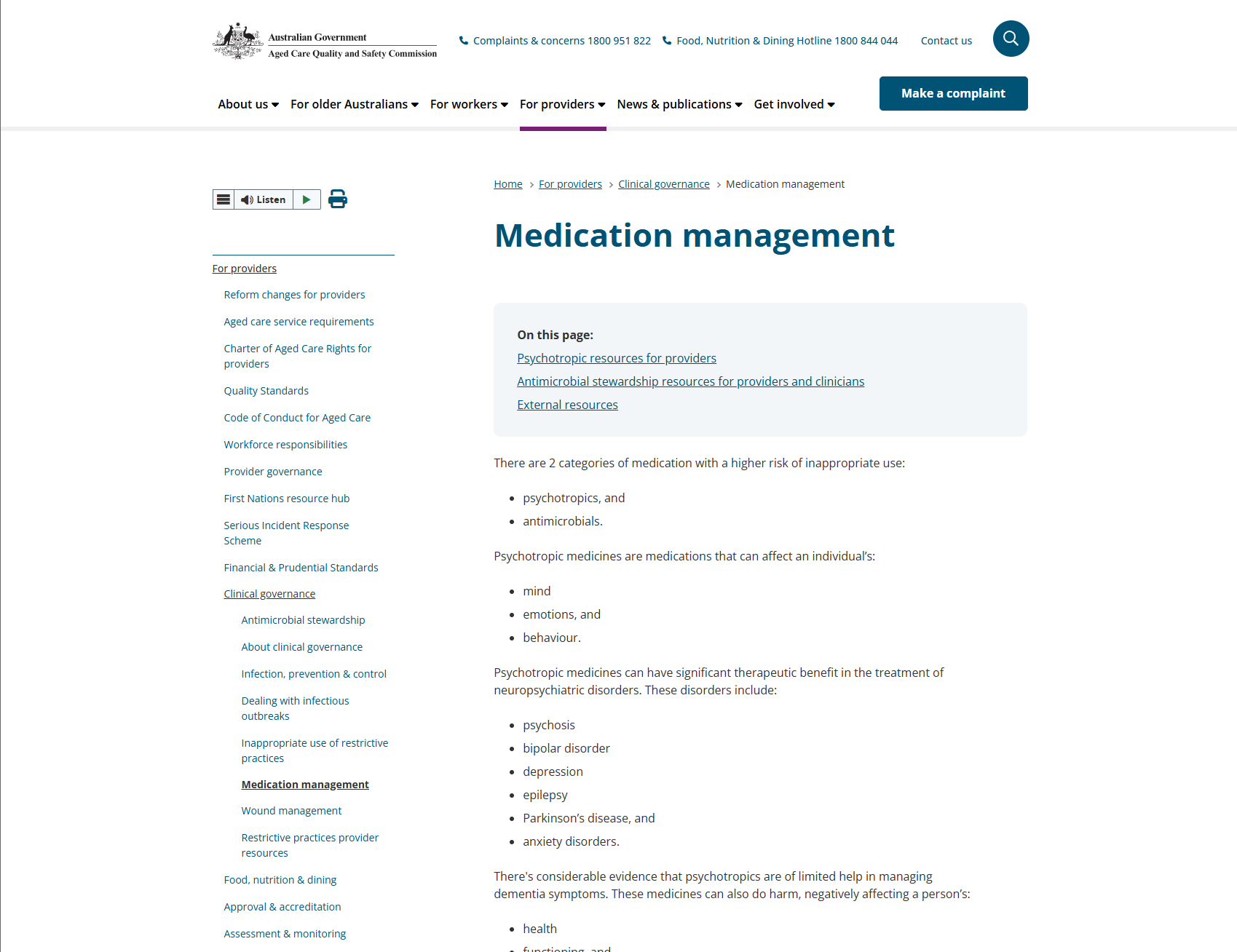
Principles of aseptic technique: Information for healthcare workers
This fact sheet provides principles of aseptic technique to support healthcare workers performing procedures requiring aseptic practices. It covers key concepts, differences between aseptic and sterile techniques, and application in clinical, pharmacy, and laboratory settings, emphasising infection prevention, standard precautions, and proper handling of equipment.
This resource may refer to information that will be updated from 1 November 2025 to align with the new Aged Care Act and Quality Standards.
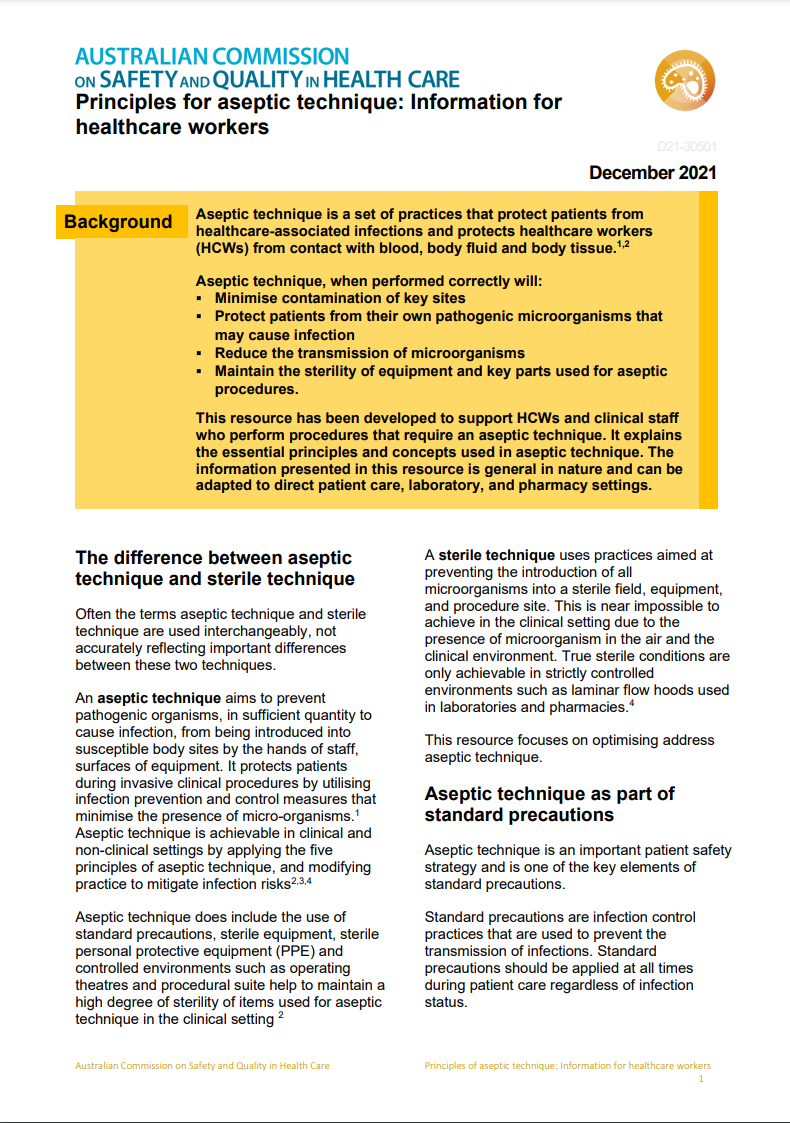
Principles for safe and high-quality transitions of care
This resource outlines essential principles to support safe and high-quality transitions of care for people across healthcare settings, including aged care. It emphasises person-centred approaches, multidisciplinary collaboration, secure record systems, and continuity of care, aiming to minimise risks during care transitions for vulnerable populations.
This resource may refer to information that will be updated from 1 November 2025 to align with the new Aged Care Act and Quality Standards.
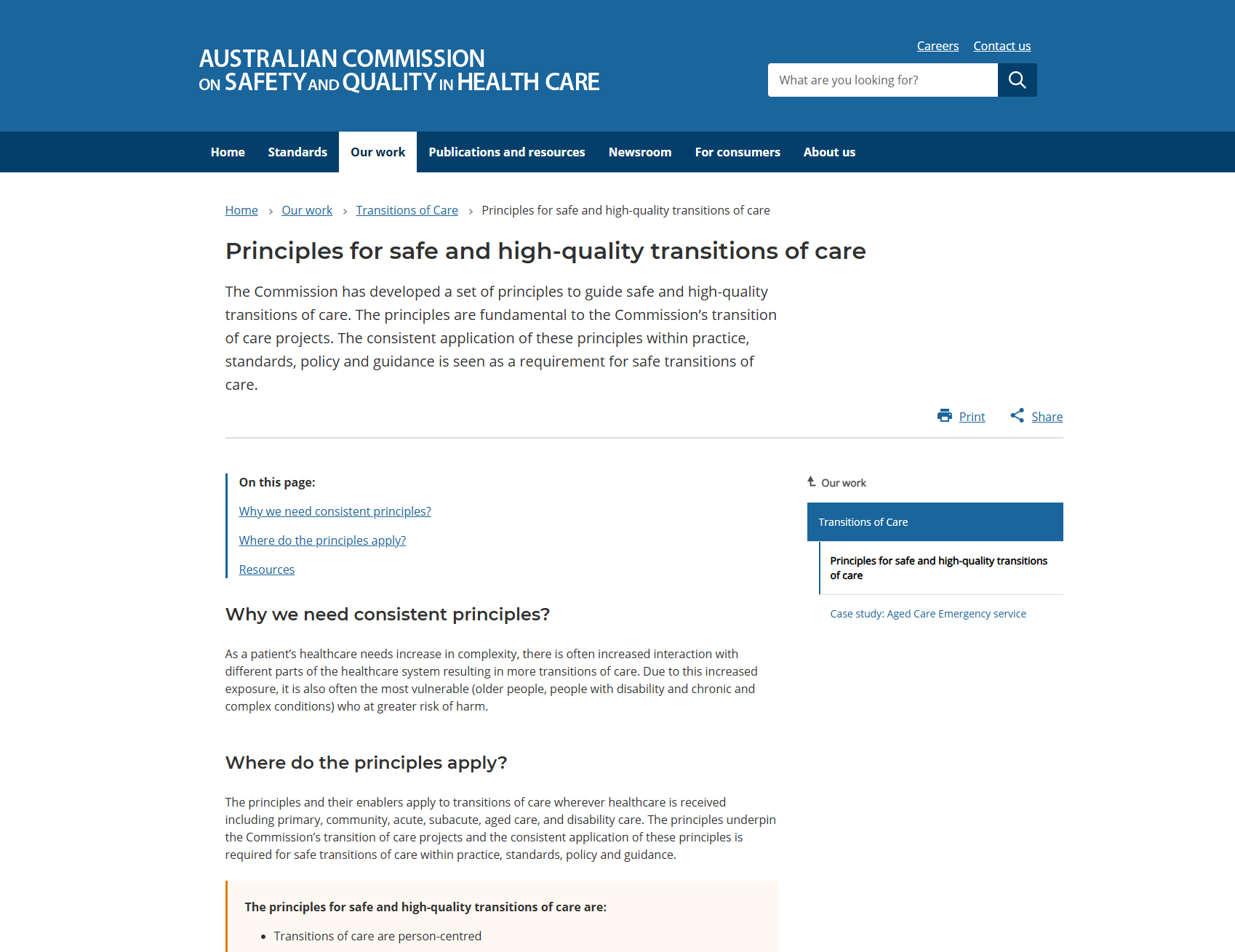
Preventing equipment failures
This resource highlights the importance of preventing equipment failures in aged care settings. It outlines the need for regular maintenance checks, adherence to manufacturer guidelines, and proper record-keeping to ensure safety. The document also provides recommendations for improving the safety and reliability of critical devices, such as mobility hoists and medical equipment.
This resource may refer to information that will be updated from 1 November 2025 to align with the new Aged Care Act and Quality Standards.
Positive ageing
This resource focuses on positive ageing, encouraging older people to maintain their health, independence, and connection to community. It covers planning for healthy ageing, staying physically active, and accessing aged care services when needed. The resource promotes ageing as a positive experience, offering practical guidance to support older people in living well. This resource may refer to information that will be updated from 1 November 2025 to align with the new Aged Care Act and Quality Standards.
Monthly Care Statements for residential aged care
This resource provides information about Monthly Care Statements, including why they are important, who can give them, and the benefits for residents and providers.
This resource may refer to information that will be updated from 1 November 2025 to align with the new Aged Care Act and Quality Standards.
National Aboriginal and Torres Strait Islander Health Workforce Strategic Framework and Implementation Plan 2021–2031
This resource is separated into 2 parts: the vision, objectives and target; and the strategic framework and implementation plan. This plan has 6 overarching strategic directions. These directions support the ongoing development of the size, capability and capacity of the Aboriginal and Torres Strait Islander health workforce.
This resource may refer to information that will be updated from 1 November 2025 to align with the new Aged Care Act and Quality Standards.

Physical activity and exercise guidelines - For older Australians (65 years and over)
This resource provides Australia’s physical activity and sedentary behaviour guidelines for older adults. It outlines how much physical activity is recommended, the importance of reducing sitting time, and the benefits of staying active. The guidelines help promote better physical and mental health across the lifespan.
This resource may refer to information that will be updated from 1 November 2025 to align with the new Aged Care Act and Quality Standards.
National Allied Health Workforce Strategy
The National Allied Health Workforce Strategy outlines a plan to address workforce challenges, including the shortage of allied health professionals in Australia. It focuses on aligning the supply of professionals with current and future needs, ensuring workforce safety and quality, and enhancing sector-specific data collection. The strategy aims to support workforce planning and development.
This resource may refer to information that will be updated from 1 November 2025 to align with the new Aged Care Act and Quality Standards.
National Aged Care Mandatory Quality Indicator Program
The National Aged Care Mandatory Quality Indicator Program aids residential aged care providers in enhancing their services by allowing them to benchmark their performance against national outcomes. The program resource provides guidance on data submission frequency, explains the program's role, and provides more information on open hours and contact details.
This resource may refer to information that will be updated from 1 November 2025 to align with the new Aged Care Act and Quality Standards.
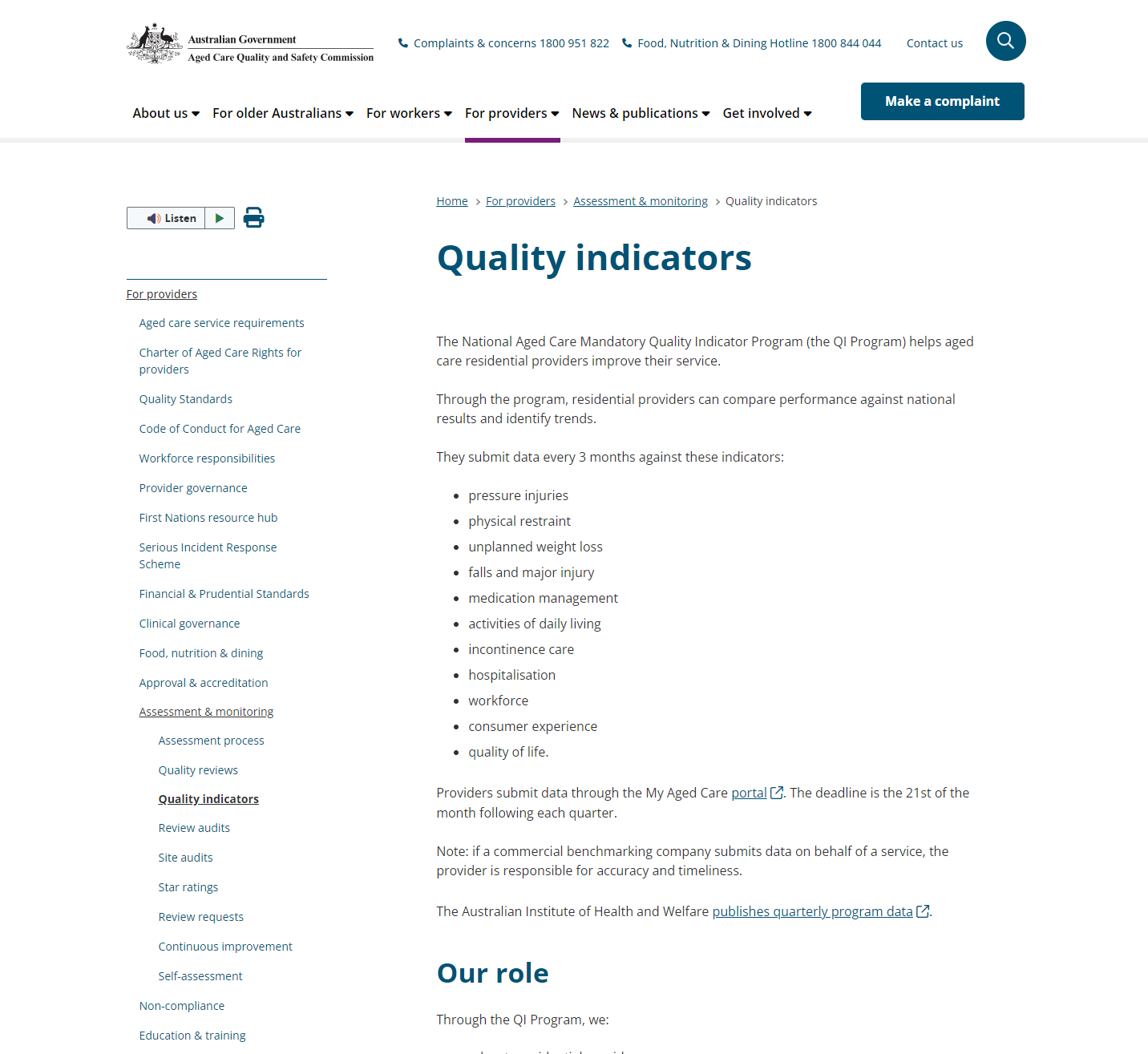
Partners in Culturally Appropriate Care (PICAC)
This resource supports aged care providers in delivering culturally appropriate care for people from culturally and linguistically diverse (CALD) backgrounds. It offers free training, workshops, and resources, helping providers understand and respect diverse needs, ensuring safe, inclusive, and culturally responsive care across all settings.
This resource may refer to information that will be updated from 1 November 2025 to align with the new Aged Care Act and Quality Standards.
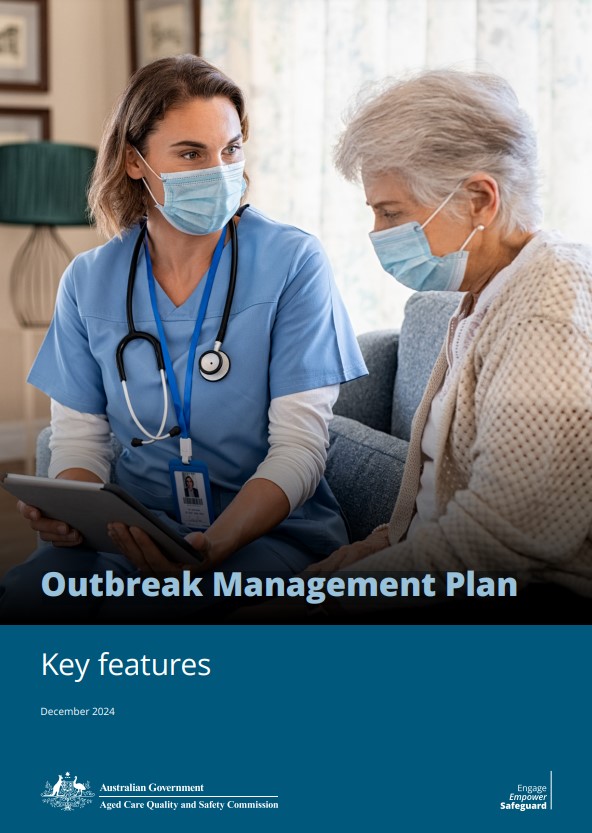
Outbreak Management Plan - key features
Outbreak management planning is a key part of infection prevention and control. This document supports both the development of a new outbreak management plan (OMP) and the quality assurance of existing plans. It details common OMP sections to get you started as you tailor your OMP to your service.
This resource may refer to information that will be updated from 1 November 2025 to align with the new Aged Care Act and Quality Standards.
 Outbreak Management Plan - Key features (PDF 839.81 KB)
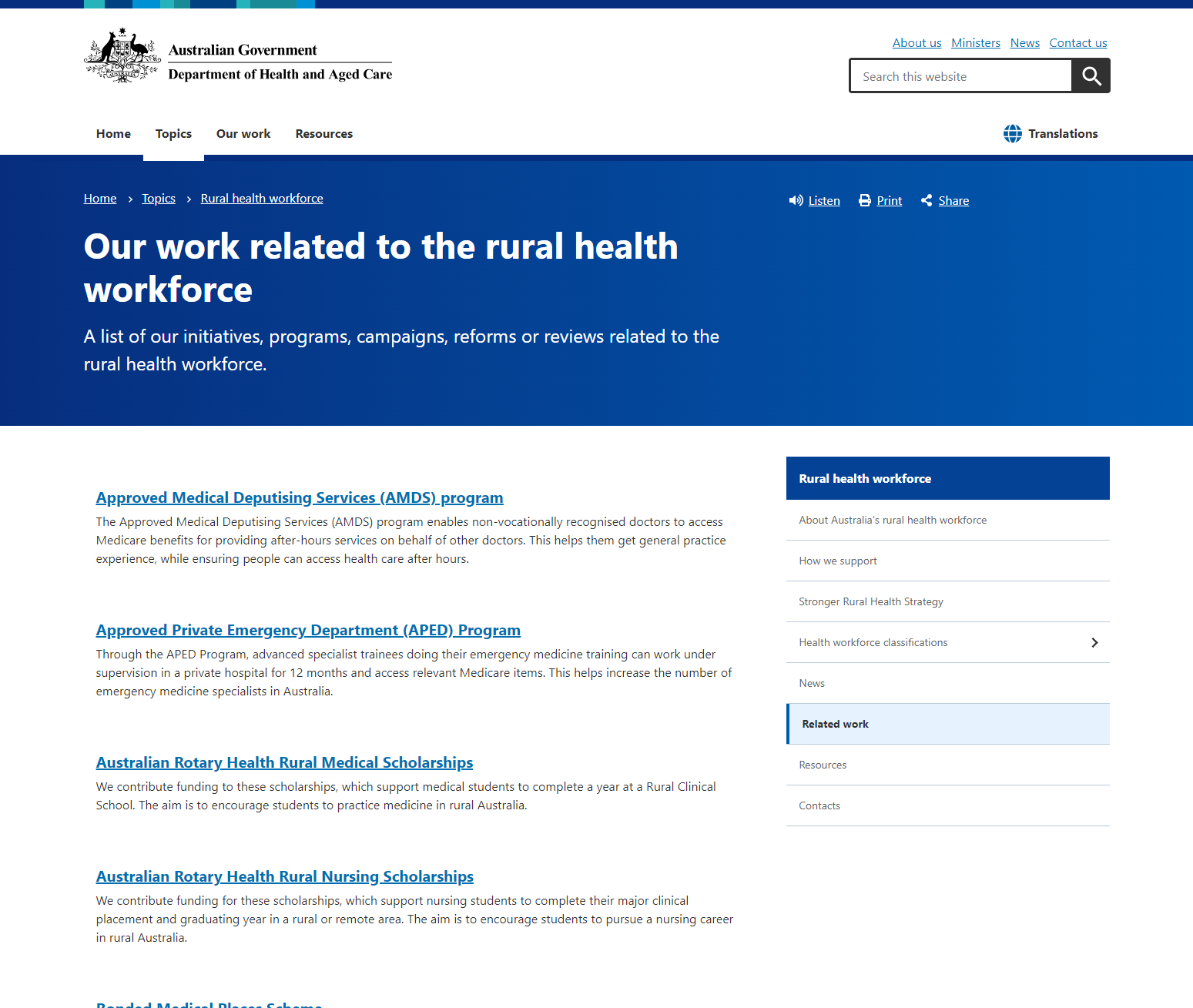
Our work related to the rural health workforce
This resource provides an overview of various initiatives and programs supporting the rural health workforce in Australia. It includes training programs, scholarships, and recruitment schemes aimed at addressing workforce shortages in rural and remote areas. The resource outlines efforts to improve healthcare access and quality through targeted support for medical and nursing professionals. This resource may refer to information that will be updated from 1 November 2025 to align with the new Aged Care Act and Quality Standards.