The Quality Standards Resource Centre helps extend understanding of the strengthened Aged Care Quality Standards, which took effect from 1 November 2025. You can search for resources by using keywords, or filtering by standard, outcome and audience. Before using the Resource Centre, please read the terms of use.
RACGP aged care clinical guide (Silver Book) - Part A - Multimorbidity
This resource provides guidelines for managing patients with multimorbidity in aged care settings. It includes frameworks for assessing treatment burden, identifying patients at risk, and developing individualised care plans. It recommends validated tools for screening, a focus on quality of life, and strategies for medication review and care coordination.
RACGP aged care clinical guide (Silver Book) - Part B - Physiology of ageing
This guide reviews the physiological changes associated with ageing across multiple body systems, including cardiovascular, nervous, renal, respiratory, gastrointestinal, immune, skin, haematological, endocrine, and musculoskeletal systems. It also discusses clinical manifestations of these changes, implications for care, and provides recommendations for adjusting clinical practice to meet the needs of older adults, including medication reviews, hydration, mobility support, and preventive health strategies.
RACGP aged care clinical guide (Silver Book) - Part B - Geriatric syndromes
This guide outlines the challenges of diagnosing and managing geriatric syndromes, describing clusters like immobility, instability, incontinence, frailty, sarcopenia, and cognitive impairment. It introduces the 'Geriatric 5Ms' framework: Mind, Mobility, Medications, Mult complexity, and Matters Most, which assists in comprehensive assessment and care planning for older adults, focusing on mental health, physical function, medication review, complex health needs, and care goals.
RACGP aged care clinical guide (Silver Book) - Part A - Behavioural and psychological symptoms of dementia
This guide offers principles and practice points for assessing and managing behavioural and psychological symptoms of dementia (BPSD) in aged care. It includes frameworks for comprehensive patient assessment, non-pharmacological and pharmacological interventions, medication review, and personalised care plans to improve care outcomes for dementia patients.
RACGP aged care clinical guide (Silver Book) - Part A - Dementia
This resource offers guidance on diagnosing and managing dementia, covering its impact on cognitive and physical functions, screening methods, and differential diagnoses. It discusses appropriate use of medications, non-pharmacological approaches, and ongoing care plans for supporting those with dementia. It includes practical recommendations on cognitive assessments, functional reviews, and medication management.
RACGP aged care clinical guide (Silver Book) - Part B - Provision of after-hours aged care services
This guide details the provision of after-hours care for older adults in residential aged care facilities (RACFs) and the community. It covers collaborative agreements between GPs and RACFs, processes to reduce emergency department visits, hospital avoidance strategies, and the importance of coordinating multidisciplinary care. It also addresses infrastructure needs, support staff availability, and funding arrangements to ensure quality care during after-hours periods.
RACGP aged care clinical guide (Silver Book) - Part B - Multiculturalism in aged care
This guide discusses multiculturalism in aged care, addressing the diverse needs of culturally and linguistically diverse (CALD) older adults. It covers healthcare principles, communication strategies, clinical considerations, and culturally tailored approaches for areas like medication management, dementia, mental health, nutrition, and substance use. It also provides practical advice for general practitioners, carers, and aged care facilities to deliver culturally safe and effective care.
RACGP aged care clinical guide (Silver Book) - Part B - Older Aboriginal and Torres Strait Islander people
This guide addresses barriers faced by Aboriginal and Torres Strait Islander peoples in accessing aged care, such as cultural safety, geographic challenges, and geriatric syndromes experienced at younger ages. It discusses the importance of culturally appropriate care, the use of specific assessment tools, and the unique needs of the Stolen Generation within residential and community settings.
RACGP aged care clinical guide (Silver Book) - Part B - Supporting independent living in older people
This guide discusses strategies for supporting independent living in older adults, covering concepts of healthy ageing, using aged care services, respite care, and re-aligning function. It highlights the role of general practitioners in promoting autonomy, addressing individual needs, and avoiding ageist language while facilitating access to community or residential care services.
RACGP aged care clinical guide (Silver Book) - Part B - Disability in aged care
This guide addresses the management of disabilities in older adults, including mobility, cognitive impairments, developmental disabilities, hearing and visual impairment, psychiatric conditions, and neurodegenerative disorders. It outlines approaches for general practitioners to provide holistic care, monitor health risks, adapt support systems, and coordinate with allied health professionals in residential aged care settings.
RACGP aged care clinical guide (Silver Book) - Part B - Care of older LGBTI people
This guide addresses the healthcare needs of older LGBTI people, covering areas such as mental health, substance use, chronic disease risks, and the importance of inclusive care. It provides strategies for culturally safe practices, promoting wellbeing, recognising abuse, and details standards for LGBTI-inclusive services, such as organisational capability and consumer participation.
RACGP aged care clinical guide (Silver Book) - Part B - Principles of multimorbidity
This guide discusses managing multimorbidity, which involves the presence of multiple chronic diseases and their impact on older adults' quality of life and independence. It outlines the role of general practitioners in care coordination, shared decision-making, and holistic care approaches, considering the benefits and risks of interventions across residential and community care settings.
RACGP aged care clinical guide (Silver Book) - Part B - Advance care planning
This guide covers advance care planning for older adults, detailing the process of discussing patients' values, appointing a decision-maker, and documenting preferences for future care. It outlines the general practitioner’s role, steps for initiating discussions, assessing decision-making capacity, storing care plans, and ensuring patients' wishes are respected during their illness trajectory.
RACGP aged care clinical guide (Silver Book) - Part B - General approaches to aged care
This resource, part of the RACGP Silver Book, provides guidance for general practitioners on delivering healthcare to older people in both residential aged care facilities and the community. It addresses challenges of ageing, healthcare delivery, and principles of medical care, offering practical advice to ensure appropriate and effective management of older patients.
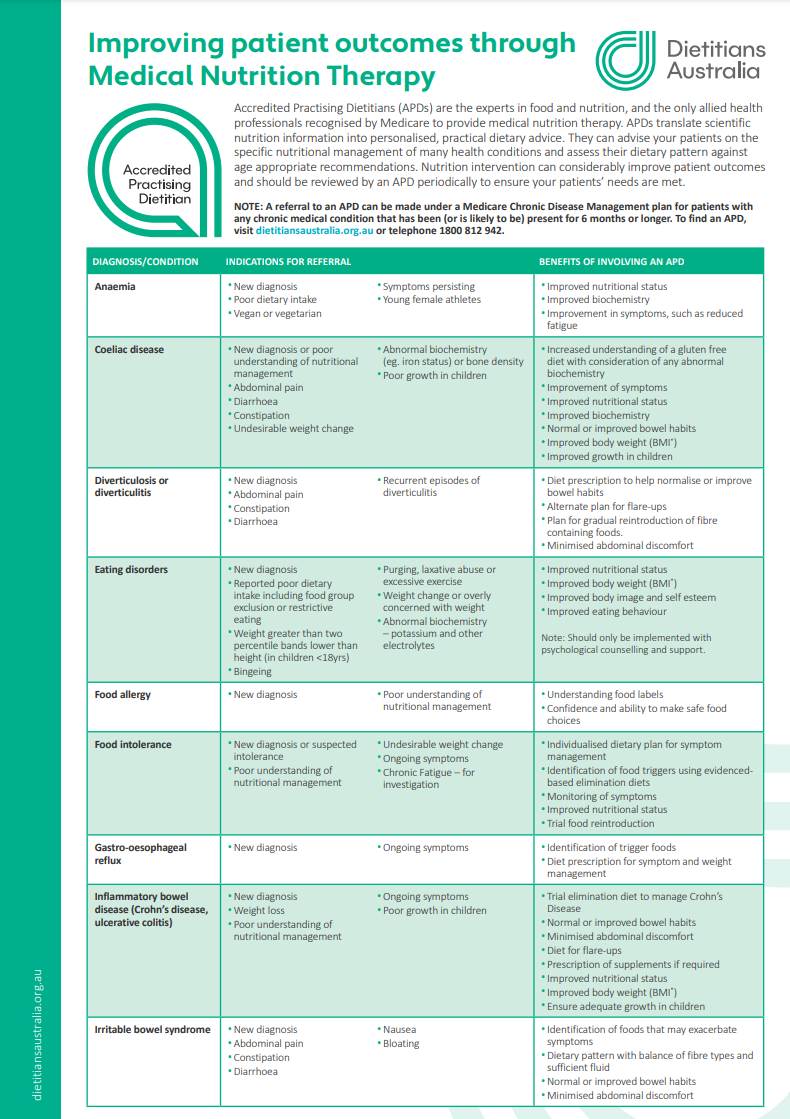
Improving patient outcomes through Medical Nutrition Therapy
This resource outlines the role of Accredited Practising Dietitians (APDs) in medical nutrition therapy across various health conditions, including those common in aged care. It includes indications for referral to an APD and highlights benefits such as improved nutritional status, symptom management, and enhanced health outcomes. This resource may apply to healthcare contexts outside of aged care. Please consider the applicability of this resource to your care setting.
Digital health - For healthcare providers
This resource provides guidance for aged care assessors and service providers on accessing and using the My Aged Care portals. It outlines steps for setting up secure access through authentication methods, managing organisation information, and creating staff accounts, supporting efficient service delivery and assessment processes.
This resource may refer to information that will be updated from 1 July 2025 to align with the new Aged Care Act and Quality Standards.
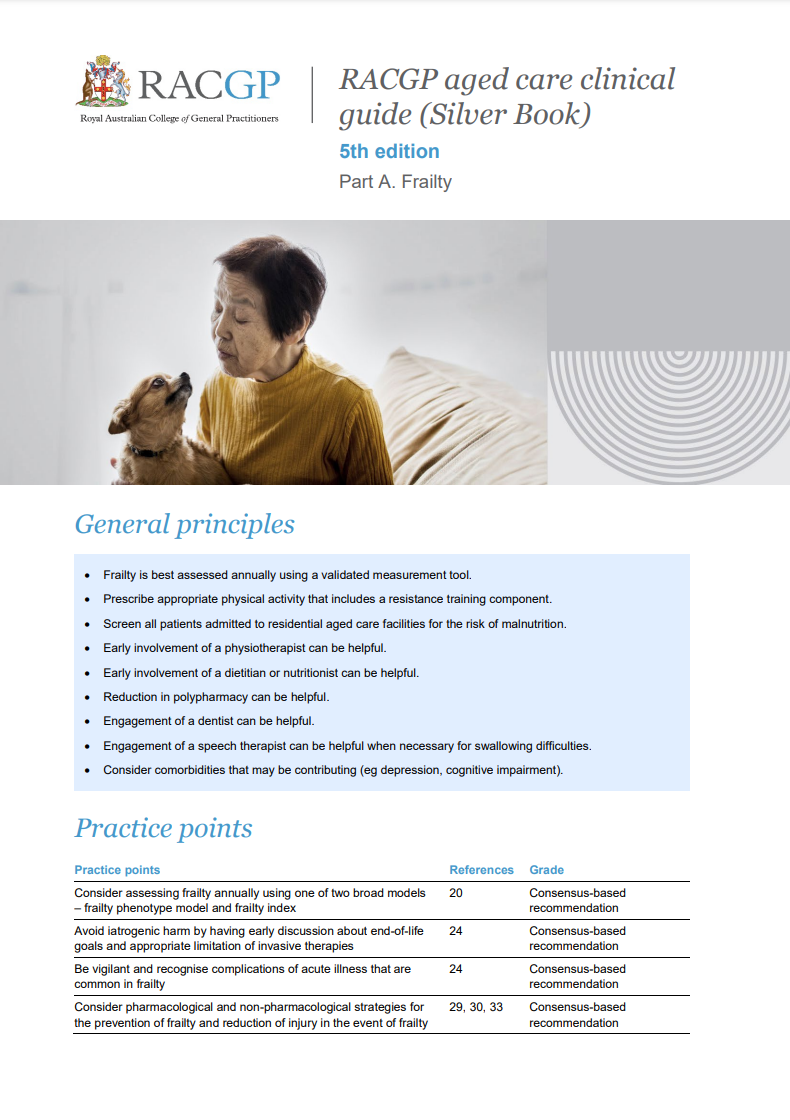
RACGP aged care clinical guide (Silver Book) - Part A - Frailty
This guide discusses frailty in older adults, detailing assessment methods, risk factors, and management strategies. It includes annual frailty assessments, involvement of multidisciplinary teams (physiotherapists, dietitians), recommendations for physical activity, nutrition support, vitamin D supplementation, medication review, and interventions to reduce complications such as falls and malnutrition in aged care.
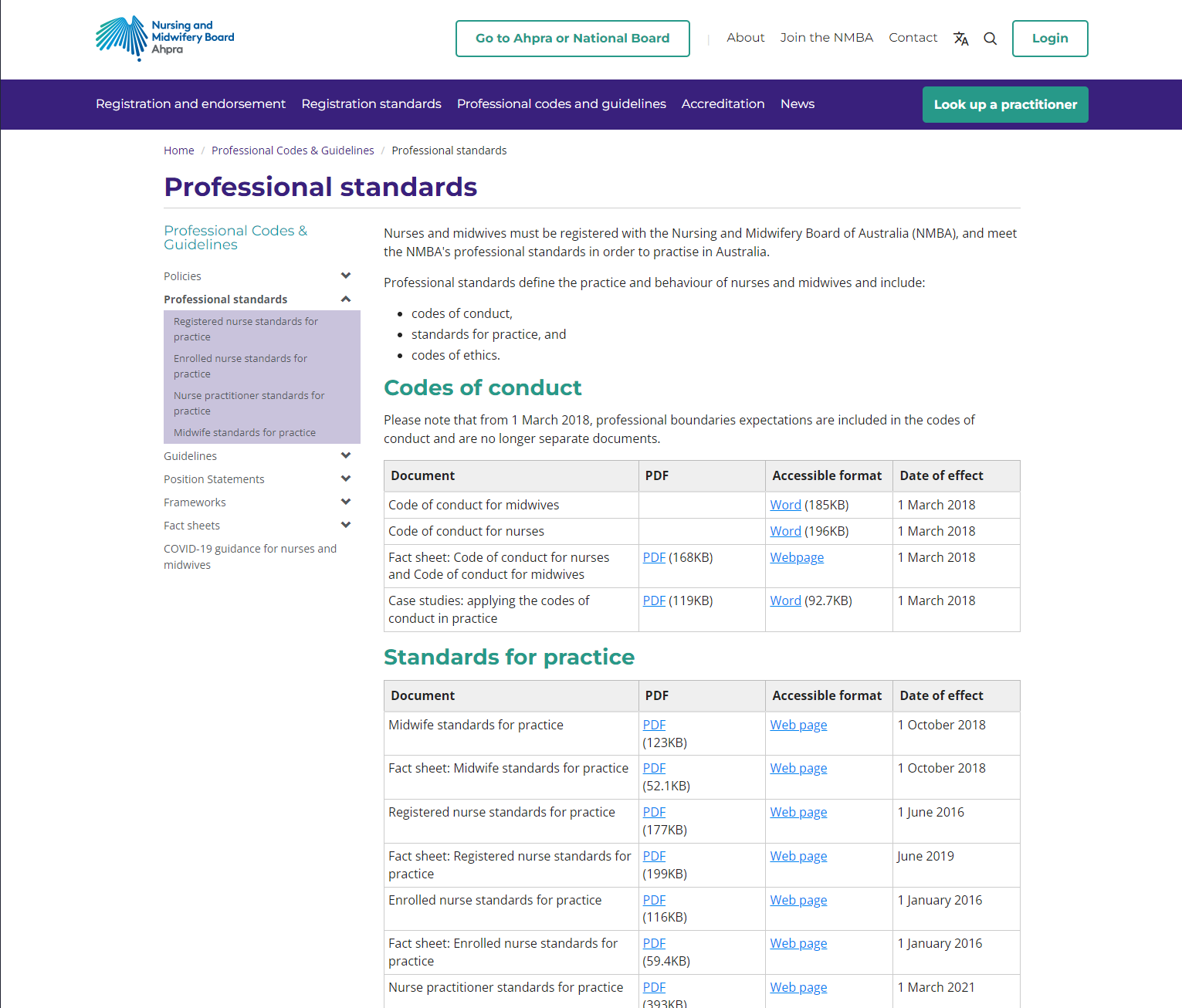
Nursing and Midwifery Board - Professional standards
This resource outlines the professional standards required for nurses and midwives to practise in Australia, including codes of conduct, standards for practice, and codes of ethics. It provides access to various documents, fact sheets, and guidelines that define the expected practice and behaviour for different nursing roles.
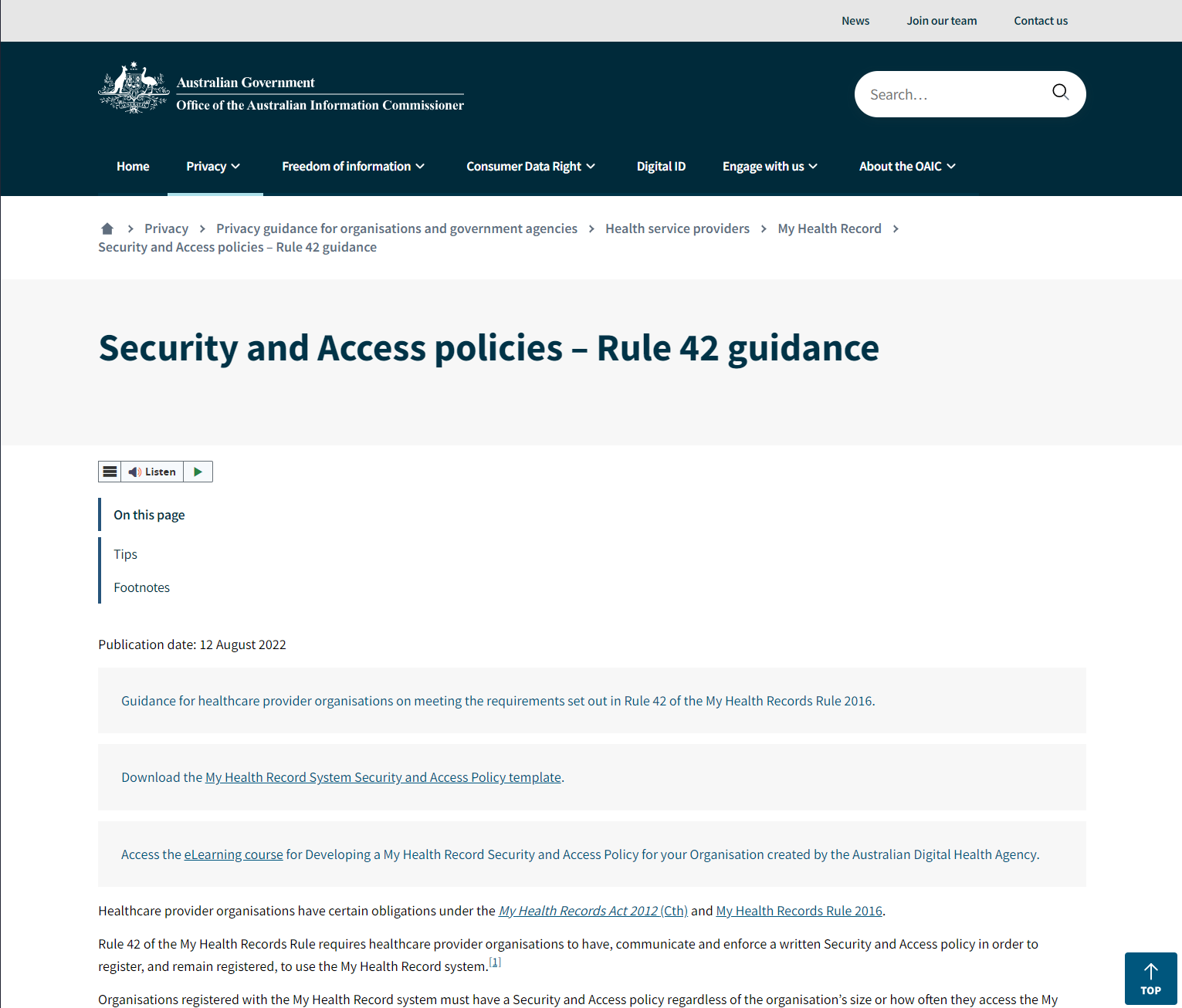
Security and access policies - Rule 42 guidance
This resource provides guidance for healthcare provider organisations to meet Rule 42 of the My Health Records Rule 2016. It covers creating, communicating, and enforcing a written Security and Access policy to access the My Health Record system, addressing authorisation, training, security measures, and risk mitigation.
National Clinical Terminology Service
This resource provides information for healthcare providers on digital health tools and initiatives. It covers services such as My Health Record, secure messaging, electronic prescriptions, and telehealth. It supports providers in using digital technologies to enhance healthcare delivery and improve patient outcomes.