The Quality Standards Resource Centre helps extend understanding of the strengthened Aged Care Quality Standards, which took effect from 1 November 2025. You can search for resources by using keywords, or filtering by standard, outcome and audience. Before using the Resource Centre, please read the terms of use.
Code of conduct
This resource provides the National Boards' Code of Conduct, outlining the expected professional behaviour and ethical standards for registered health practitioners. It serves as a regulatory framework to ensure safe, ethical care, helping practitioners understand their responsibilities. The document is important for all registered practitioners to ensure they comply with these standards across healthcare settings.
Improving accommodation in residential aged care
This resource provides information on improving accommodation in residential aged care through the National Aged Care Design Principles and Guidelines, effective from July 2024. It covers areas such as creating dementia-friendly environments, improving access to outdoor spaces, fostering community connections, and ensuring privacy. The guidelines aim to promote independence and a home-like atmosphere.
This resource may refer to information that will be updated from 1 November 2025 to align with the new Aged Care Act and Quality Standards.
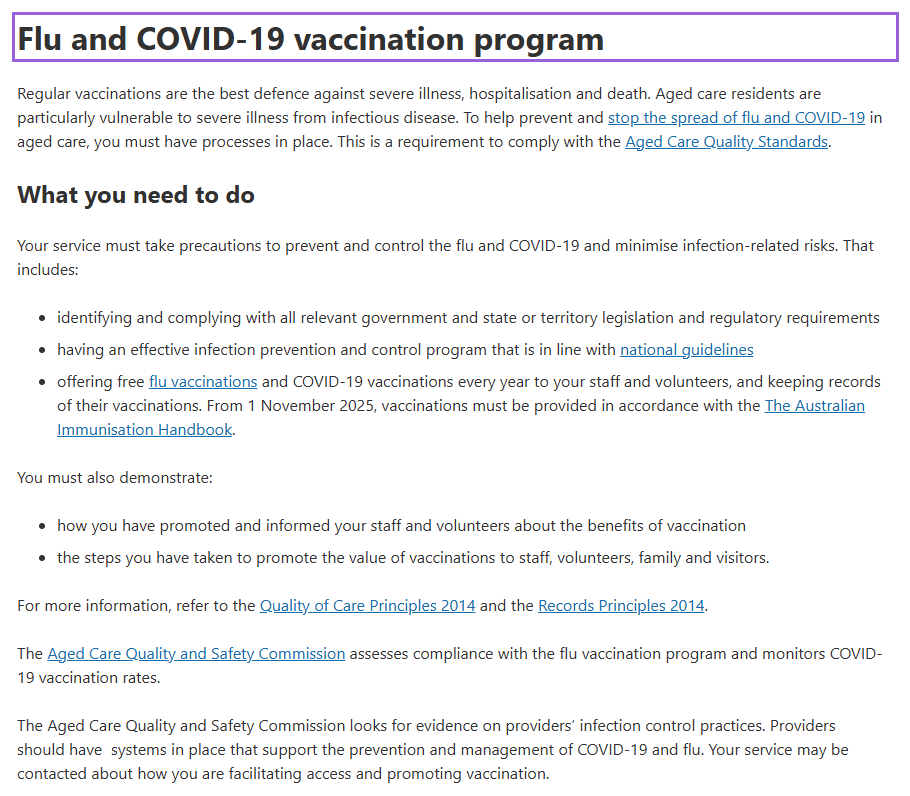
Flu and COVID-19 vaccination program
This resource outlines the flu and COVID-19 vaccination program for residential aged care providers. It includes information about what services must do to take precautions to prevent and control the flu and COVID-19 and minimise infection-related risks. This resource may refer to information that will be updated from 1 November 2025 to align with the new Aged Care Act and Quality Standards.
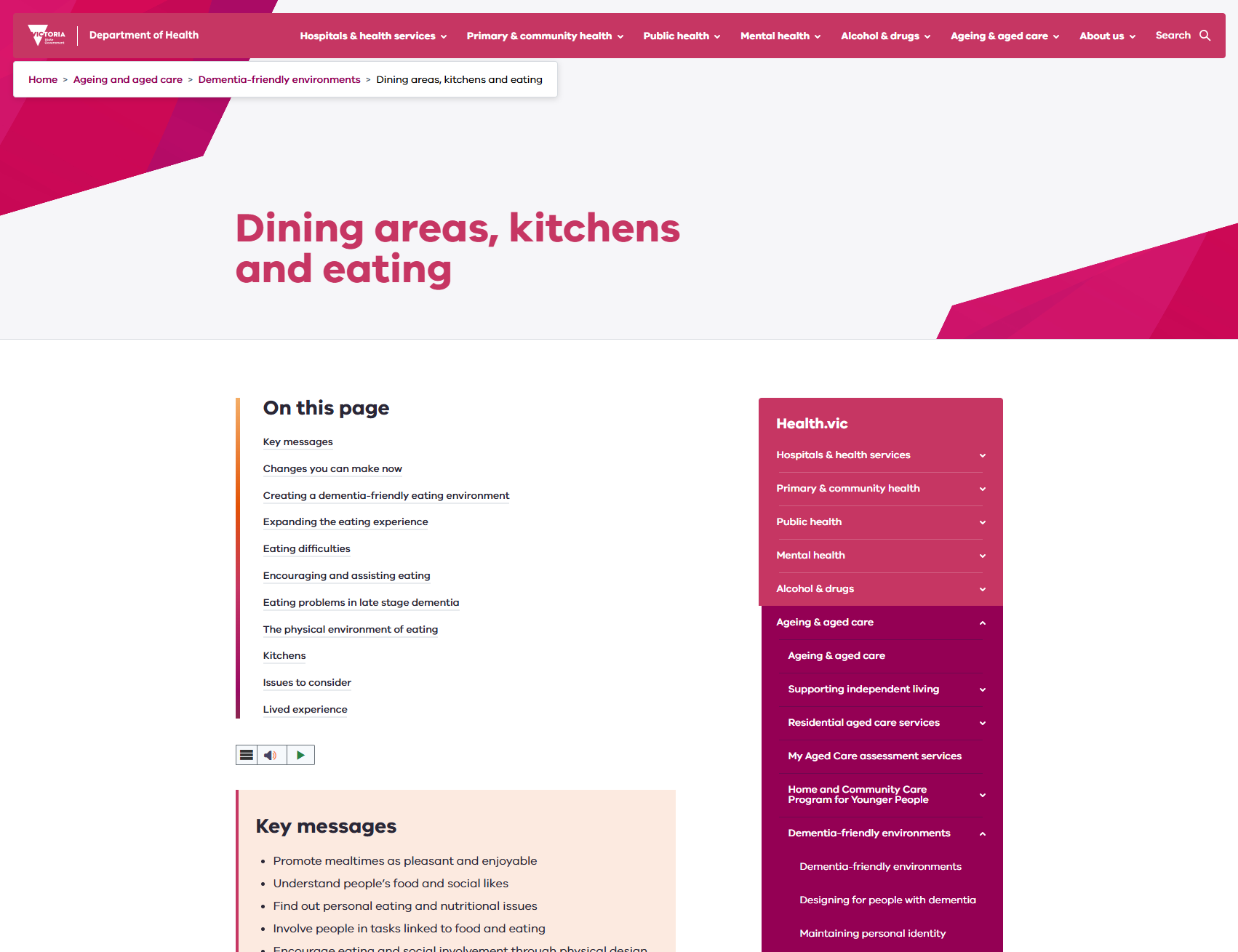
Dementia-friendly environments - Dining areas, kitchens and eating
This resource provides guidelines for creating dementia-friendly dining and kitchen spaces, emphasising sensory engagement, personalised meal experiences, and a home-like environment. It includes practical adjustments for lighting, noise, seating, and social interaction to enhance dining enjoyment.
This resource was developed by a state/territory government or organisation and therefore its applicability and usefulness may be limited.
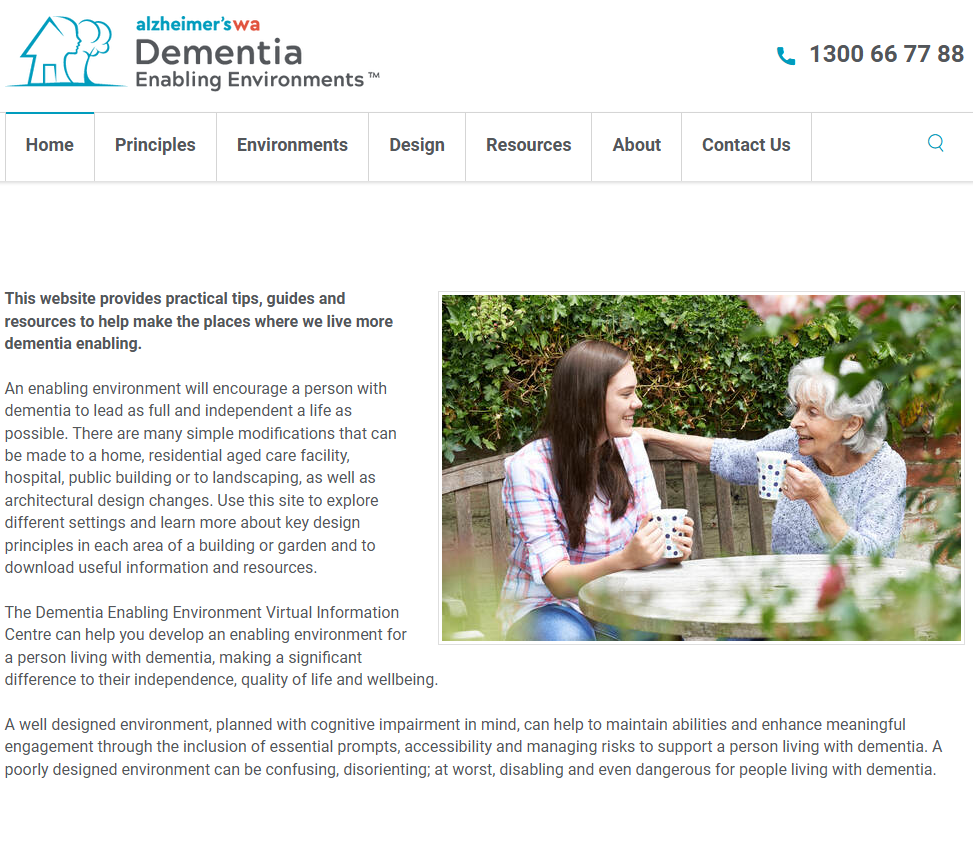
Dementia enabling environments
The Dementia Enabling Environments website, developed by Alzheimer's WA, provides guidance and resources to help create enabling environments for a person living with dementia. It includes design principles for different environment types, include home and residential aged care facilities.
This resource was developed by a state/territory government or organisation and therefore its applicability and usefulness may be limited.
Coronavirus (COVID-19) cleaning and disinfection for health and residential aged care homes
This resource provides cleaning and disinfection guidance for health and residential aged care homes to reduce the transmission of COVID-19. It outlines cleaning protocols, frequency, and the use of appropriate disinfectants, ensuring safety for staff and residents. The document also covers procedures for cleaning after suspected or confirmed COVID-19 cases.
This resource may refer to information that will be updated from 1 November 2025 to align with the new Aged Care Act and Quality Standards.
Managing worker risk policy
Our Managing Worker Risk Policy explains our approach in detecting, assessing and responding to risks arising from the actions, inactions and behaviours of workers.
This policy includes information about:
 Managing worker risk policy (PDF 386.18 KB)
National Aged Care Design Principles and Guidelines
This guide provides guidance on different systems and tools that can be used in residential aged care and community settings. It includes topics such as clinical handover and continuity of care (medication management), information technology systems, My Aged Care, quality improvement, and more. This resource complements Part A: Common clinical conditions in aged care and Part B: General approaches to aged care of the RACGP aged care clinical guide (Silver Book).
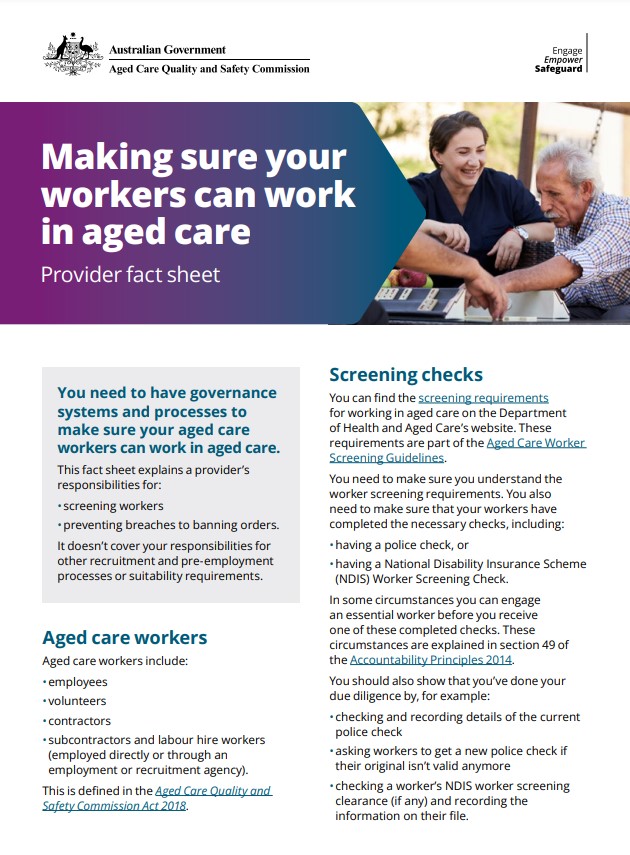
Making sure your workers can work in aged care
Registered providers need to have governance systems and processes to make sure their aged care workers can work in aged care. This fact sheet explains providers’ obligations to:
- screen aged care workers
- make sure aged care workers don’t have banning orders against them that restrict or ban them from being involved in aged care.
Making sure your workers can work in aged care (PDF 469.26 KB)
Allied health regulation
This resource provides information about the regulation of allied health professions in Australia. It includes those registered under the National Registration and Accreditation Scheme (NRAS) and self-regulating professions managed by professional peak bodies. It also provides links to further information about allied health professions currently registered with AHPRA and information for overseas-qualified practitioners.