The Quality Standards Resource Centre helps extend understanding of the strengthened Aged Care Quality Standards, which took effect from 1 November 2025. You can search for resources by using keywords, or filtering by standard, outcome and audience. Before using the Resource Centre, please read the terms of use.
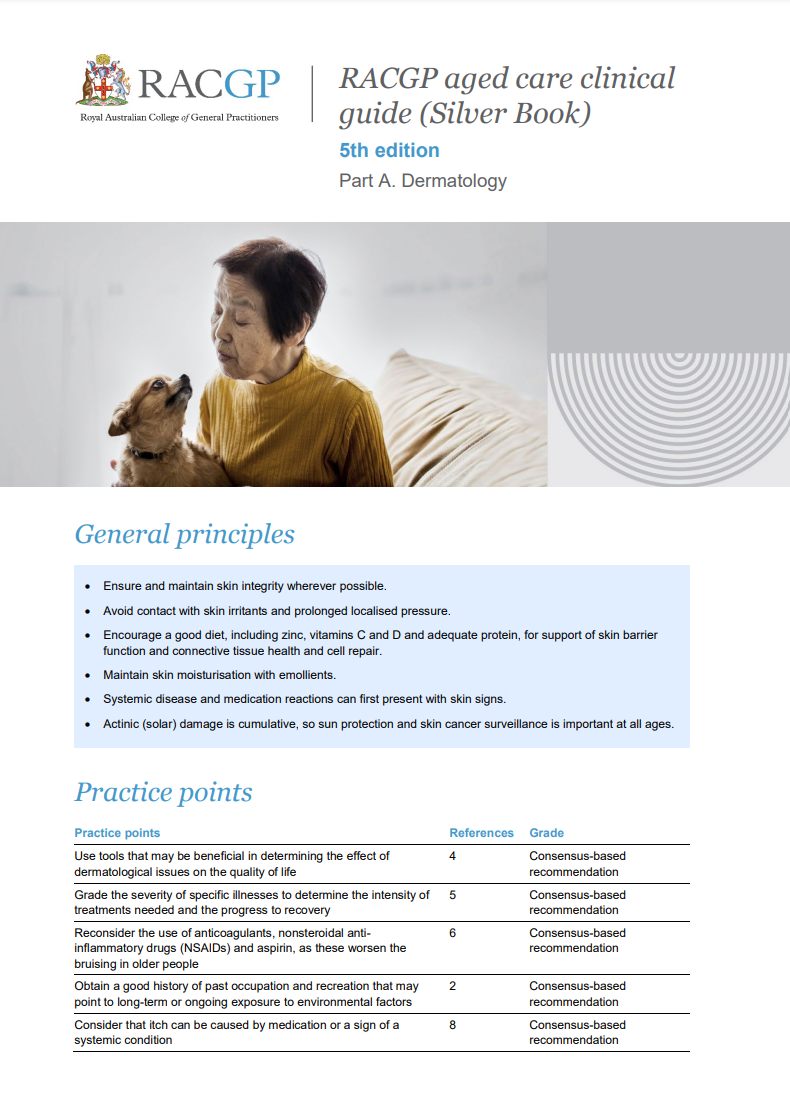
RACGP aged care clinical guide (Silver Book) - Part A - Dermatology
This guide provides recommendations for dermatological care in older adults, addressing skin integrity, sun damage, bruising, and wound management. It highlights factors affecting skin health, like systemic disease, medication, and environmental exposure. It recommends regular skin assessments, non-pharmacological interventions, moisturisation, and tailored approaches for managing conditions like ulcers, pruritus, and skin cancer in aged care settings.
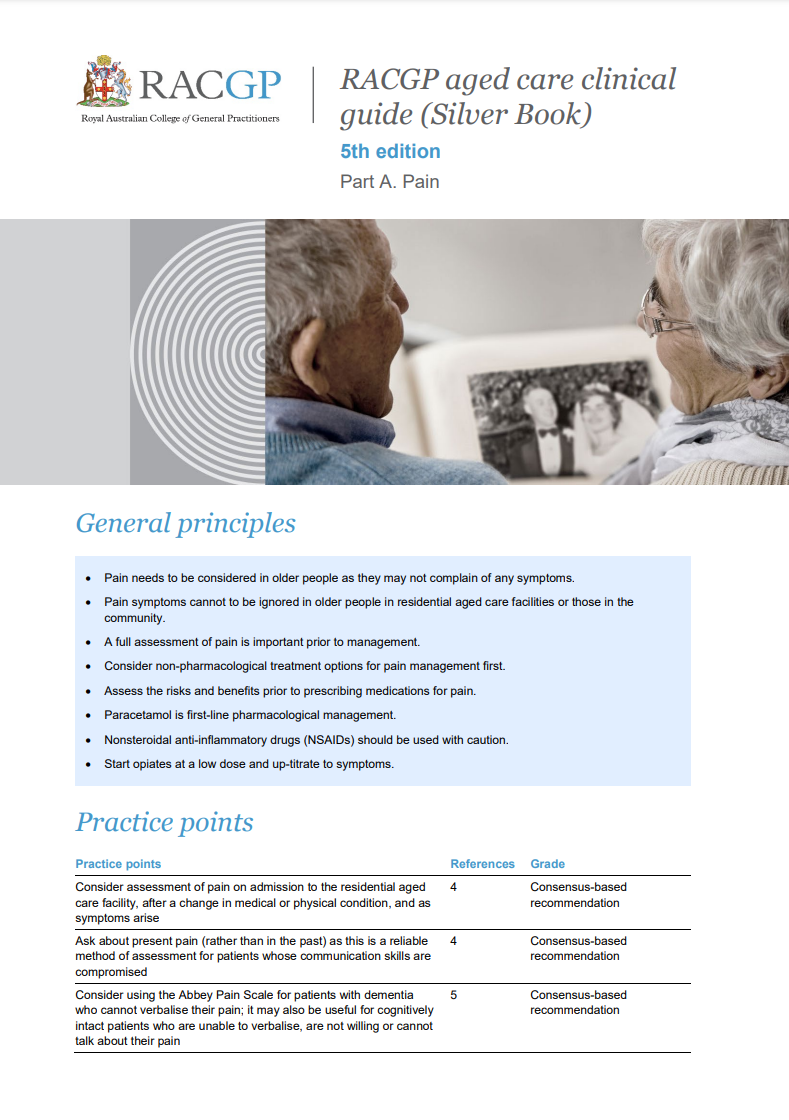
RACGP aged care clinical guide (Silver Book) - Part A - Pain
This guide provides strategies for managing pain in older adults in aged care, focusing on assessment, non-pharmacological treatments, and pharmacological interventions. It includes practice points on appropriate medication use, considerations for pain assessment tools, and recommendations for safe management, including tailored care and treatment monitoring to improve quality of life.
Falls prevention
This resource provides guidance for preventing falls and harm from falls in older people in healthcare settings. This resource may refer to information that will be updated from 1 November 2025 to align with the new Aged Care Act and Quality Standards.
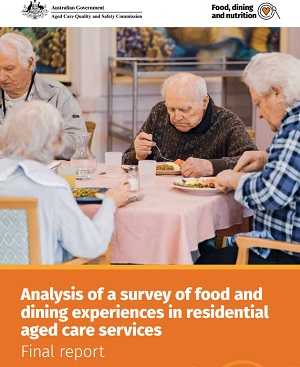
Analysis of a survey of food and dining experiences in residential aged care services - Final report
This resource provides insights into food, dining, and nutrition in residential aged care services. It is based on a survey conducted to understand residents’ dining experiences, preferences, and the quality of food and service provided. The findings highlight the importance of fresh, familiar meals, flexible mealtimes, and a homelike dining environment to enhance the quality of life for older people. This resource may refer to information that will be updated from 1 November 2025 to align with the new Aged Care Act and Quality Standards.
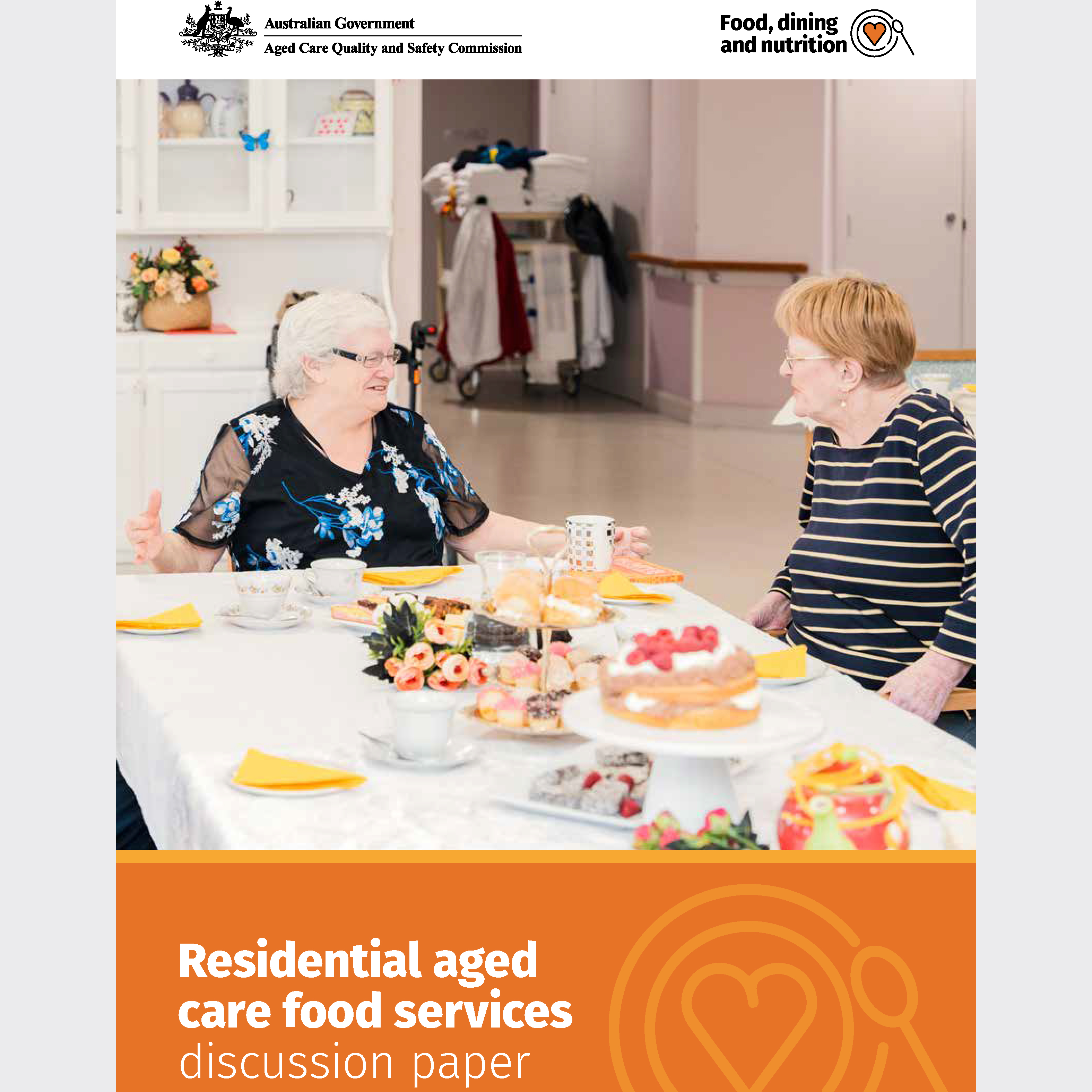
Residential aged care food services discussion paper
This paper presents a high-level overview of contemporary evidence regarding food services in residential aged care settings.
 Residential aged care food services discussion paper (PDF 536.47 KB)
Food for thought - positive stories
This resource shares positive stories about food, nutrition, and dining improvements in aged care facilities. It highlights initiatives that enhance the dining experience, including resident involvement in meal planning, use of fresh and seasonal ingredients, and creating more social and enjoyable mealtime environments. These stories demonstrate best practices and innovative approaches to improve resident satisfaction and wellbeing.
Food, nutrition & dining: resources for workers
This resource provides aged care workers with tools to enhance food, nutrition, and dining experiences for people in their care. It includes practical guides on offering choice, managing swallowing difficulties, promoting oral health, and creating an enjoyable dining environment, all while ensuring adherence to aged care standards.
This resource may refer to information that will be updated from 1 November 2025 to align with the new Aged Care Act and Quality Standards.
Food, nutrition & dining: resources for providers
This resource provides tools and guidance for aged care providers to ensure quality food, nutrition, and dining experiences. It includes hotlines, resources for dining, choice, swallowing, and oral health, as well as webinars, research findings, and practical tips to support older adults' wellbeing and meet care standards.
This resource may refer to information that will be updated from 1 November 2025 to align with the new Aged Care Act and Quality Standards.
Using technology to improve the dining experience
This resource provides guidance on how technology, such as virtual reality (VR) and mobile applications, can enhance the dining experience in aged care settings. These tools are designed to increase engagement, support meal choices, improve communication with families, and contribute to overall wellbeing by making mealtimes more enjoyable.
This resource may refer to information that will be updated from 1 November 2025 to align with the new Aged Care Act and Quality Standards.
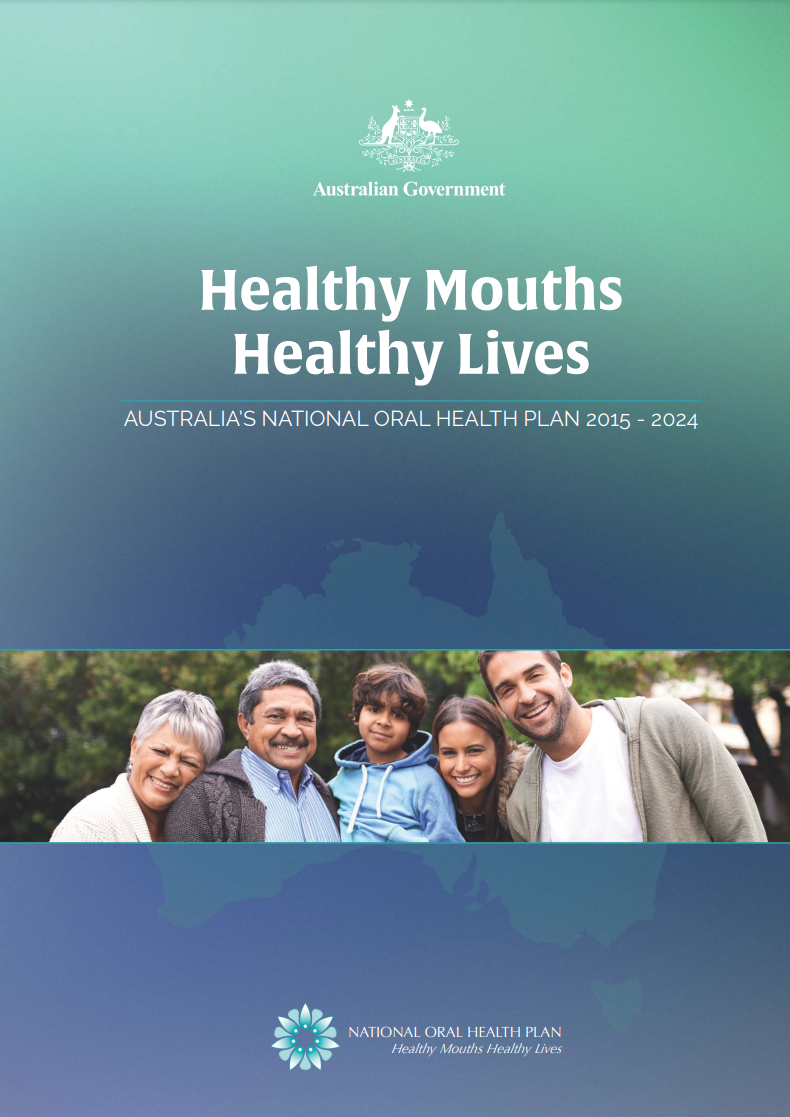
Healthy mouths, healthy lives - Australia's National Oral Health Plan 2015-2024
This resource outlines Australia’s National Oral Health Plan 2015-2024, aiming to improve oral health and reduce inequalities. It includes strategic directions, guiding principles, foundation areas for action, and focus on priority populations. It addresses access to services, workforce development, safety, quality, promotion, and integrated health systems to enhance overall wellbeing.
This resource may refer to information that will be updated from 1 November 2025 to align with the new Aged Care Act and Quality Standards.
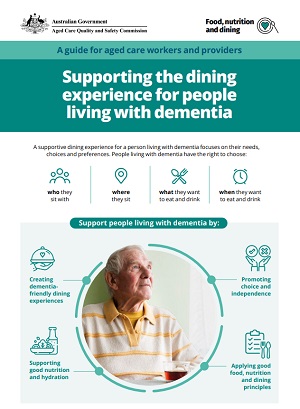
Supporting the dining experience for people living with dementia – Providers and workers guide
This guide is about how to support people living with dementia to maintain good nutrition and enjoy positive dining experiences.
This resource may refer to information that will be updated from 1 November 2025 to align with the new Aged Care Act and Quality Standards.
Supporting people living with dementia to eat and drink well
This resource provides guidance for aged care services on how to support people living with dementia to eat and drink well. It highlights innovative approaches such as creating familiar, enjoyable meals, reducing mealtime interruptions, and offering 24-hour access to nutritious foods. These strategies help address challenges like malnutrition and dehydration.
This resource may refer to information that will be updated from 1 November 2025 to align with the new Aged Care Act and Quality Standards.
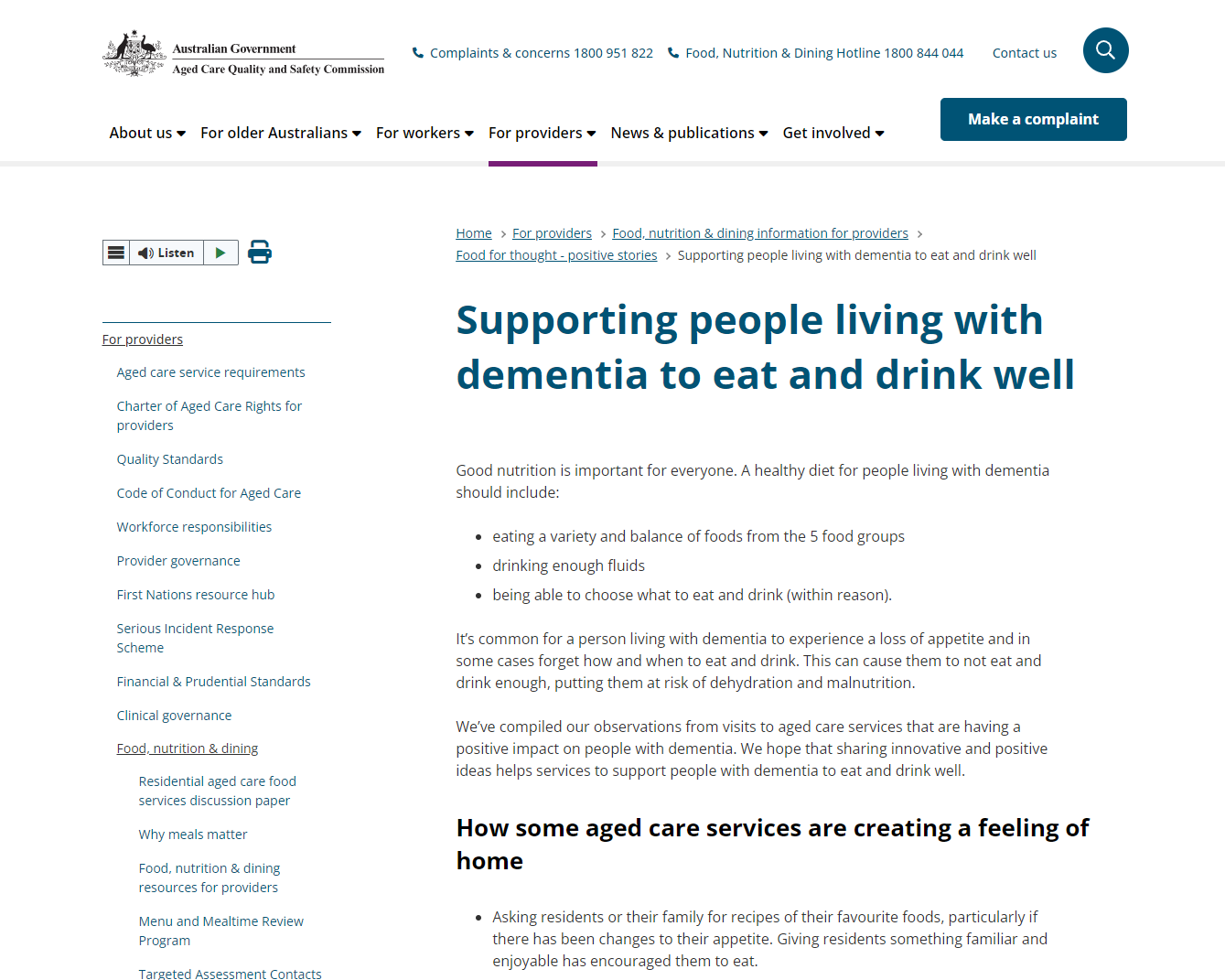
Oral health care for adult patients - Recommendations
This resource provides recommendations for oral health care in adult inpatients, focusing on preventing issues like aspiration pneumonia, infections, and malnutrition. It emphasises regular oral assessments and evidence-based care practices. Its principles are applicable in aged care settings to enhance overall care.
Please consider the applicability of this resource to your care setting. This resource may refer to information that will be updated from 1 November 2025 to align with the new Aged Care Act and Quality Standards.
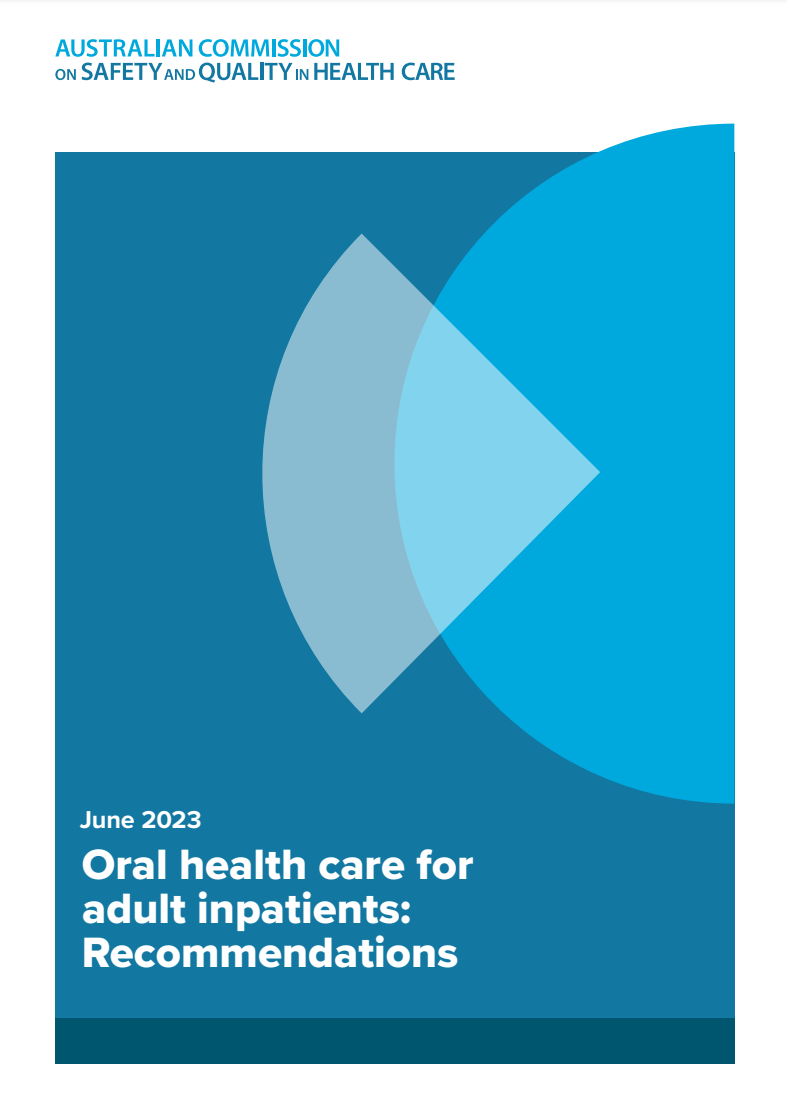
Nourishing connections: The vital role of social dining in aged care
This resource explains how social dining in aged care can enhance nutrition and wellbeing by fostering social connections. It encourages creating positive dining environments that promote engagement and respect personal preferences during mealtimes.
This resource may refer to information that will be updated from 1 November 2025 to align with the new Aged Care Act and Quality Standards.
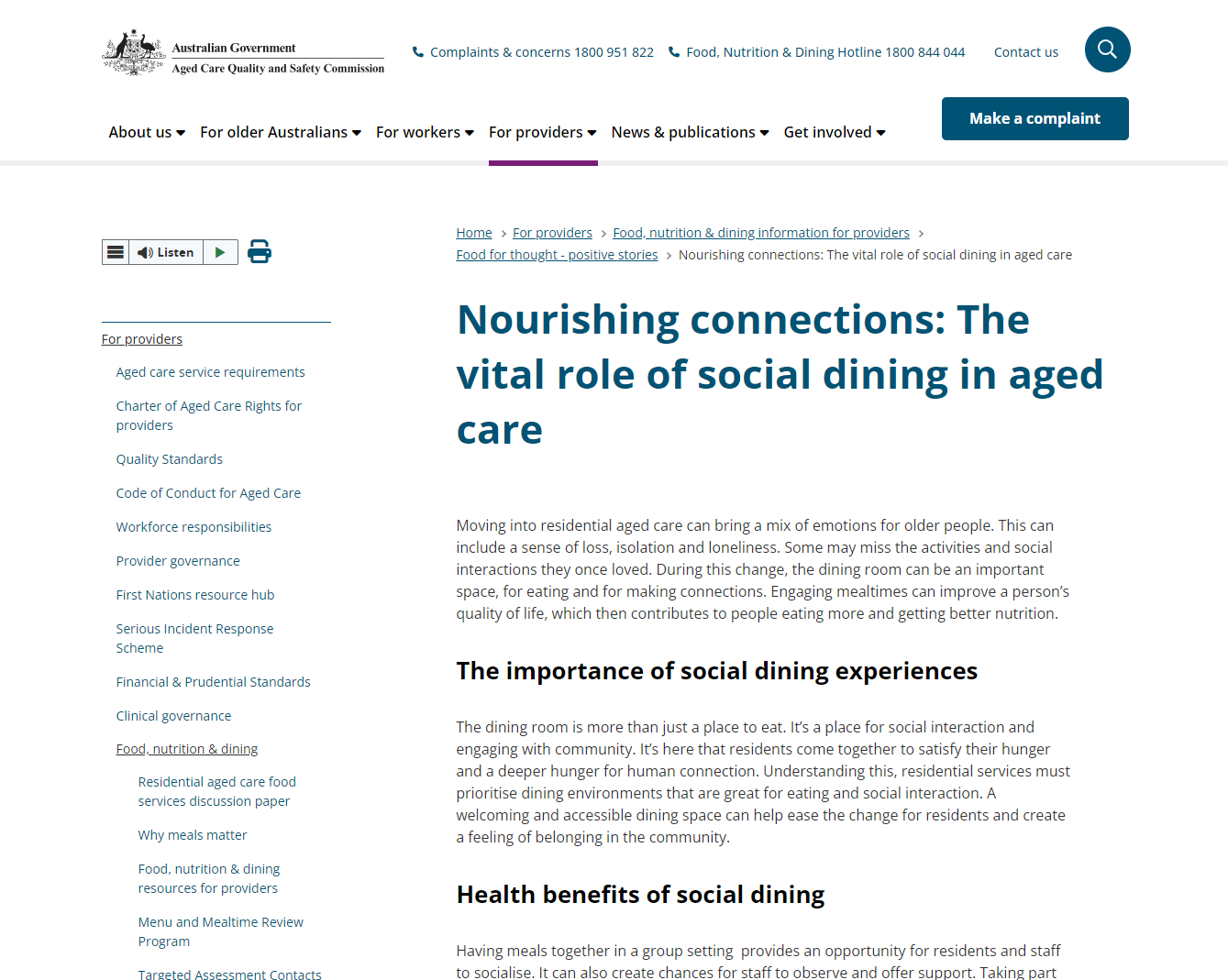
About dentists and dental practitioners
This resource outlines the roles and qualifications of dental professionals, including dentists, hygienists, and prosthetists, and their responsibilities in patient care. It emphasises the importance of registration, adherence to standards, and compliance monitoring to prevent fraud in Medicare billing and prescribing practices.

Supporting Better Communication & Care
This webpage provides resources to help improve communication, care and support for people who are deaf, Deaf, hard of hearing, or who experience hearing loss. It includes 3 tools: Everyday Communication, Inclusive Healthcare, and Building Competency. There are also links to other relevant resources.
Healthy Ageing
This resource is a collection of resources on the Tasmanian Government Department of Health webpage about healthy ageing. It includes resources about malnutrition screening, being physically active, and eating well.
This resource was developed by a state/territory government or organisation and therefore its applicability and usefulness may be limited.
Falls Guidelines for Community Care
The Preventing Falls and Harm from Falls in Older People: Best Practice Guidelines for Community Care in Australia (Falls Guidelines for Community Care) has been developed for use by health professionals, primary care providers, the aged care workforce and other community care staff.
This resource may refer to information that will be updated from 1 November 2025 to align with the new Aged Care Act and Quality Standards.
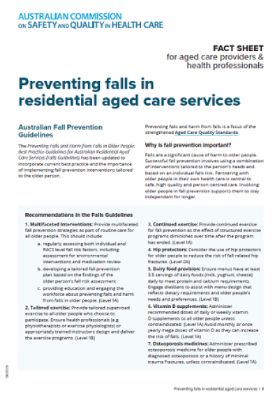
Preventing falls in residential aged care services - Fact sheet
This fact sheet supports the Falls Guidelines for Australian Residential Aged Care Services. It includes recommendations from the falls guidelines about multifaceted interventions, exercise, hip protectors, dairy food provision, vitamin D supplements, and osteoporosis medicines.
This resource may refer to information that will be updated from 1 November 2025 to align with the new Aged Care Act and Quality Standards.
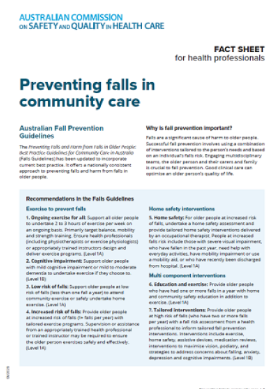
Preventing falls in community care - Fact sheet
This fact sheet supports the Falls Guidelines for Community Care. It includes recommendations from the falls guidelines including exercise to prevent falls, home safety interventions, multi component interventions, and single interventions for specific risk factors.
This resource may refer to information that will be updated from 1 November 2025 to align with the new Aged Care Act and Quality Standards.