The Quality Standards Resource Centre helps extend understanding of the strengthened Aged Care Quality Standards, which took effect from 1 November 2025. You can search for resources by using keywords, or filtering by standard, outcome and audience. Before using the Resource Centre, please read the terms of use.
Diet and nutrition health advice
This resource provides evidence-based diet and nutrition advice to support healthy communities. It includes articles on various diets, managing health conditions, and guidelines for healthy eating across different life stages. The resource also offers guidance on when to consult a dietitian for personalised nutrition planning and support.
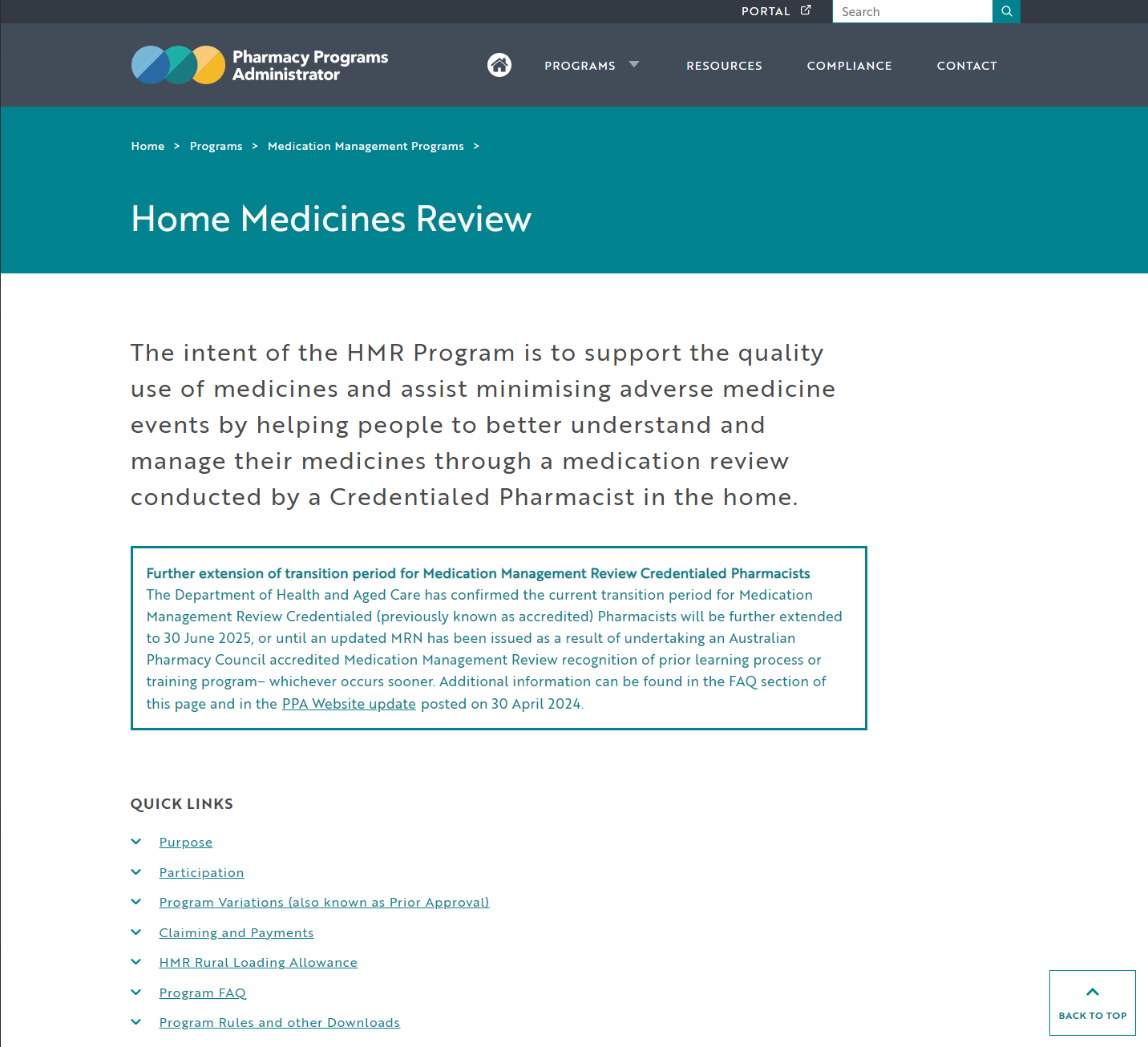
Home Medicines Review
This resource provides information on the Home Medicines Review (HMR) program, designed to support the safe and effective use of medicines for patients at home. It outlines the process, eligibility criteria, program variations, claiming and payments, rural loading allowance, and guidance for pharmacists and healthcare providers involved in medication reviews
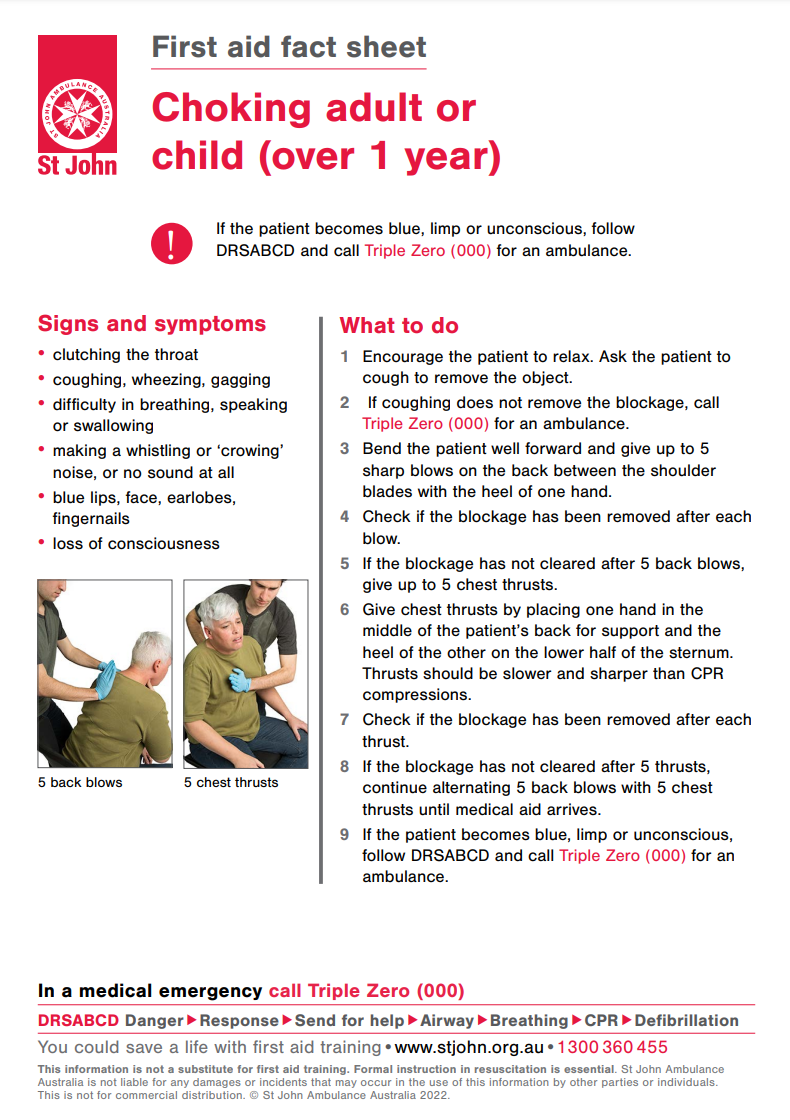
First aid fact sheet - Choking adult or child (over 1 year)
This fact sheet provides first aid instructions for choking in adults or children over one year. It details recognising choking symptoms and steps for emergency care and guidance to call emergency services if necessary.
Working with older people with diabetes
This resource provides materials for health professionals supporting older people with diabetes. Resources cover diabetes symptoms and management, blood glucose monitoring, diabetes medication, healthy eating, and more, aiming to improve quality care.
Mental health and wellbeing - Suicidal thoughts and self-harm
This resource examines suicidal thoughts and self-harm in older adults, particularly in residential aged care. It discusses associated risk factors, the prevalence of mental health conditions, what organisations and individuals can do and gaps in understanding suicide risk. It also reviews interventions, highlighting the need for mental health assessments and training to improve detection and care.
Mental health and wellbeing - Screening tools
This resource covers screening tools for detecting anxiety and depression in older adults, especially in residential aged care. It discusses the importance of mental health screening, steps individuals and organisations can take, choosing appropriate tools, and highlights tools such as the Geriatric Depression Scale and Cornell Scale for Depression in Dementia. It emphasises early detection and routine mental health screening in aged care.
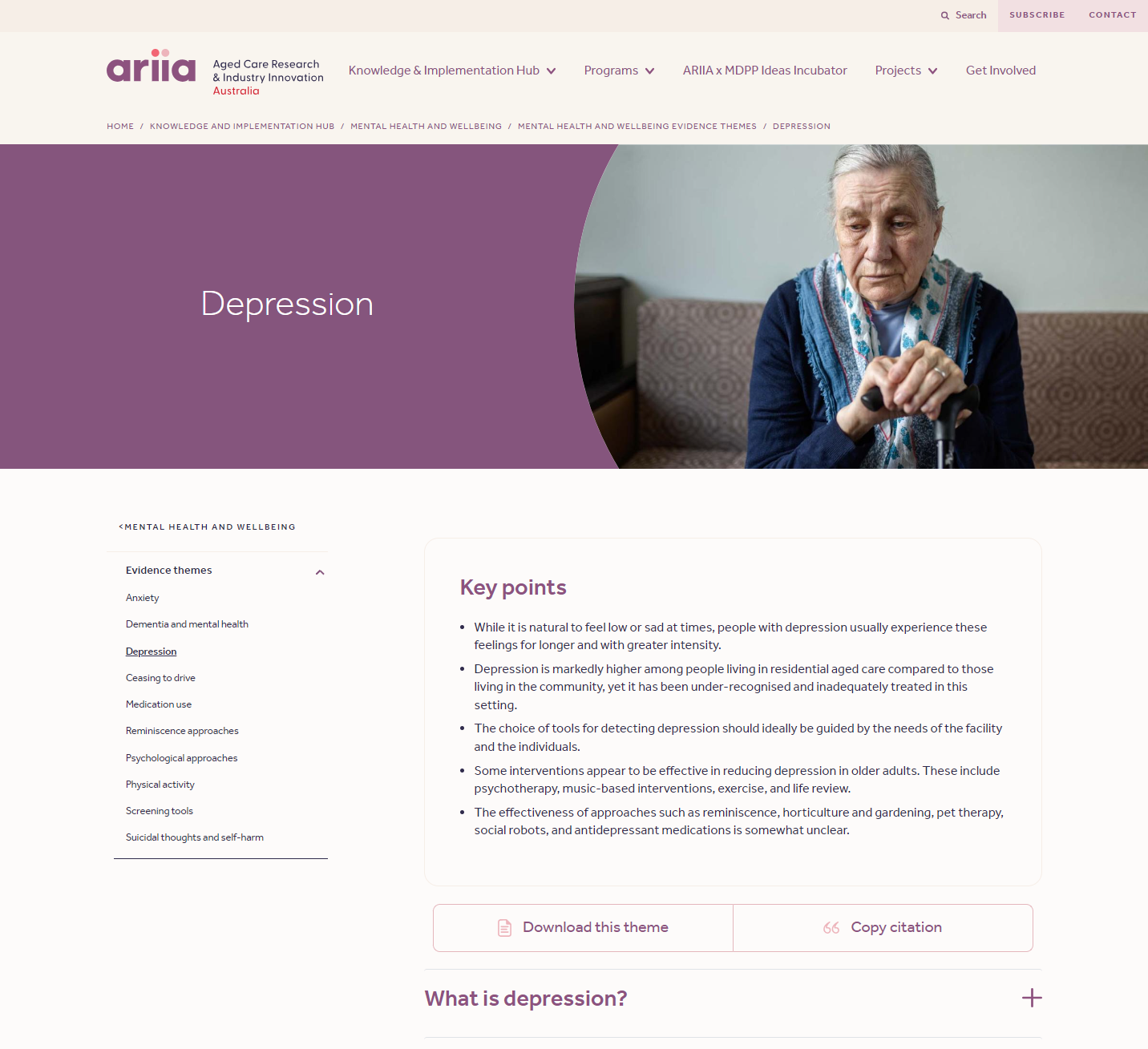
Mental health and wellbeing - Depression
This resource provides information on depression in older adults, particularly in residential aged care. It discusses risk factors, detection tools, and treatment approaches, including psychotherapy, music-based interventions, and exercise. It also provides guidance on what both individuals and organisations can do to prevent and manage depression effectively.