The Quality Standards Resource Centre helps extend understanding of the strengthened Aged Care Quality Standards, which took effect from 1 November 2025. You can search for resources by using keywords, or filtering by standard, outcome and audience. Before using the Resource Centre, please read the terms of use.
National Aged Care Design Principles and Guidelines
This guide provides guidance on different systems and tools that can be used in residential aged care and community settings. It includes topics such as clinical handover and continuity of care (medication management), information technology systems, My Aged Care, quality improvement, and more. This resource complements Part A: Common clinical conditions in aged care and Part B: General approaches to aged care of the RACGP aged care clinical guide (Silver Book).
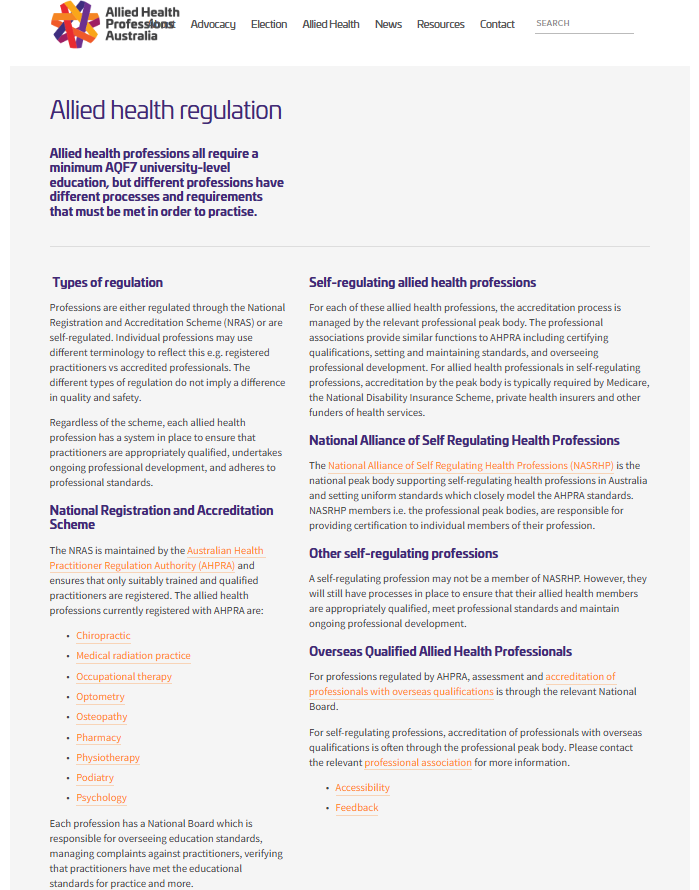
Allied health regulation
This resource provides information about the regulation of allied health professions in Australia. It includes those registered under the National Registration and Accreditation Scheme (NRAS) and self-regulating professions managed by professional peak bodies. It also provides links to further information about allied health professions currently registered with AHPRA and information for overseas-qualified practitioners.
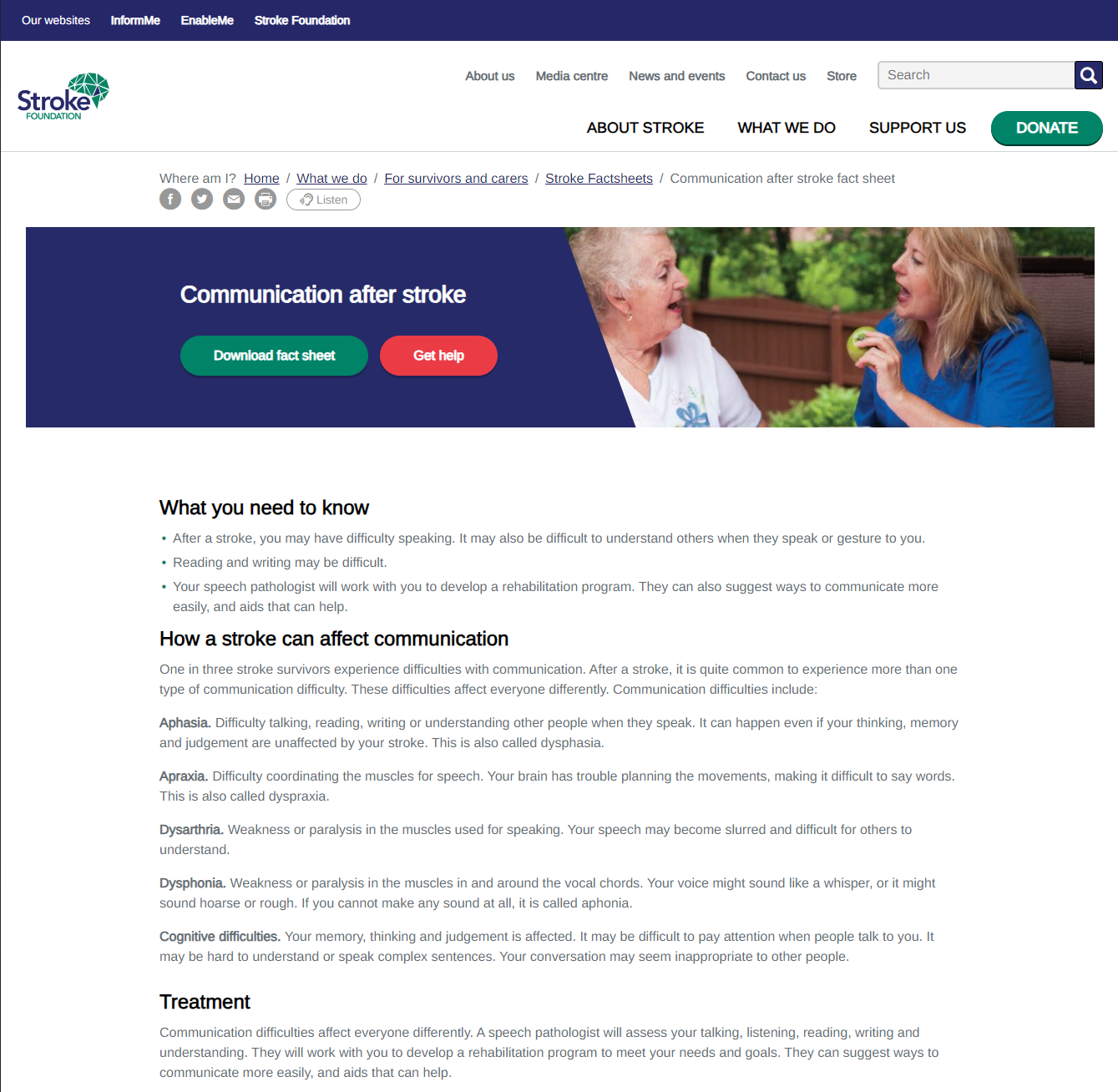
Communication after stroke
This resource provides information on communication difficulties an person may encounter after experiencing a stroke. It discusses how strokes can affect communication, treatment to assist with communication, information on recovery, communication tips for family and friends and help resources for individuals.
National Consensus Statement - Essential elements for recognising and responding to acute physical deterioration
This consensus statement outlines essential elements for recognising and responding to acute physiological deterioration in healthcare settings. It covers clinical processes like vital signs monitoring, diagnosis, and rapid response systems, as well as organisational aspects such as leadership, education, and evaluation. It provides generic information that can be applied to the aged care setting.
This resource may refer to information that will be updated from 1 November 2025 to align with the new Aged Care Act and Quality Standards.
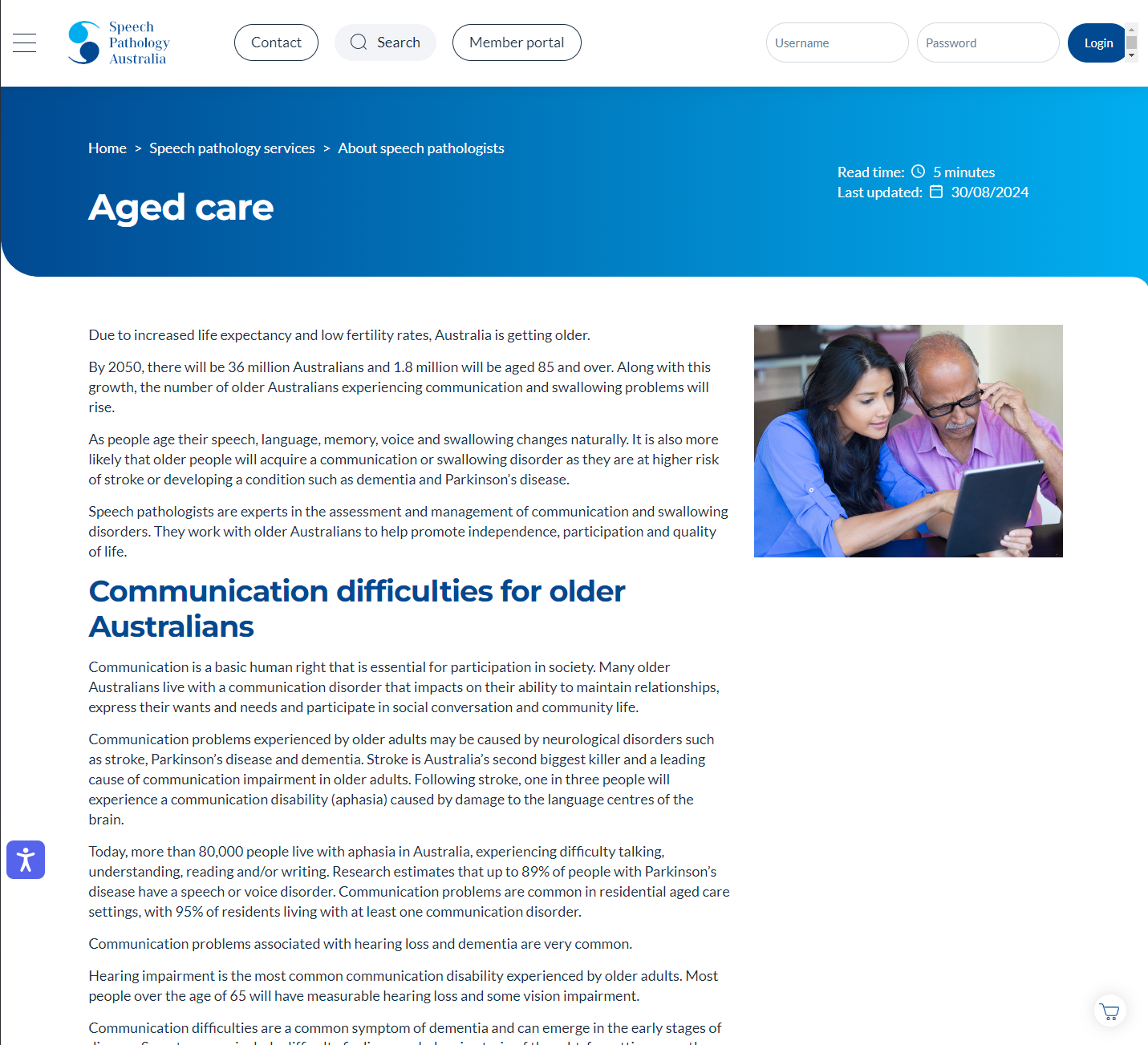
About speech pathologists - Aged care
This resource discusses the role of speech pathologists in supporting older people with communication and swallowing disorders caused by ageing, neurological conditions, and other health factors. It highlights the prevalence of communication and swallowing difficulties in aged care, their impacts, and how speech pathology services promote independence, participation, and quality of life through assessment, therapy, and tailored interventions.