The Quality Standards Resource Centre helps extend understanding of the strengthened Aged Care Quality Standards, which took effect from 1 November 2025. You can search for resources by using keywords, or filtering by standard, outcome and audience. Before using the Resource Centre, please read the terms of use.
Optimising ventilation for infection prevention and control in healthcare settings
This resource provides guidance on optimising ventilation in healthcare settings to prevent and control infections. It outlines actions that organisations can take to improve ventilation systems, reduce infection transmission risks, and enhance the safety of both patients and staff. It should be used alongside relevant health authority notices.
This resource may refer to information that will be updated from 1 November 2025 to align with the new Aged Care Act and Quality Standards.
National Nursing Workforce Strategy
The resource provides information on the National Nursing Workforce Strategy, which outlines long-term plans for workforce sustainability, diversity, and development. It supports collaboration among stakeholders, promotes evidence-based care, and addresses challenges in regional and remote areas to ensure quality nursing care across the healthcare system.
This resource may refer to information that will be updated from 1 November 2025 to align with the new Aged Care Act and Quality Standards.
Governing for Reform in Aged Care Program
This resource outlines the Governing for Reform in Aged Care Program, designed to strengthen corporate and clinical governance capabilities for aged care leaders. It provides tools, online learning modules, webinars, and podcasts to support governance improvement and help leaders engage in reform efforts.
This resource may refer to information that will be updated from 1 November 2025 to align with the new Aged Care Act and Quality Standards.
5 Moments for Hand Hygiene
This resource explains the 5 Moments for Hand Hygiene, a framework designed to minimise the risk of infection transmission in healthcare. It outlines key moments when hand hygiene should be performed, including before and after patient contact or procedures, and after touching a patient’s surroundings.
This resource may refer to information that will be updated from 1 November 2025 to align with the new Aged Care Act and Quality Standards.
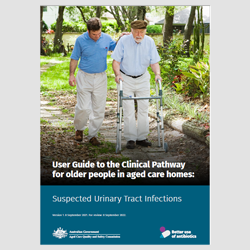
User guide to the Clinical Pathway for older people in aged care homes: suspected urinary tract infections
This user guide relates to the 'Clinical Pathway for older people in aged care homes: suspected urinary tract infections (UTIs)'.

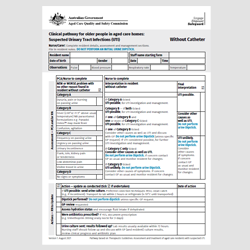
Clinical pathways for suspected UTIs forms
These clinical forms are part of the 'Clinical Pathway for older people in aged care homes: suspected urinary tract infections (UTIs)'.
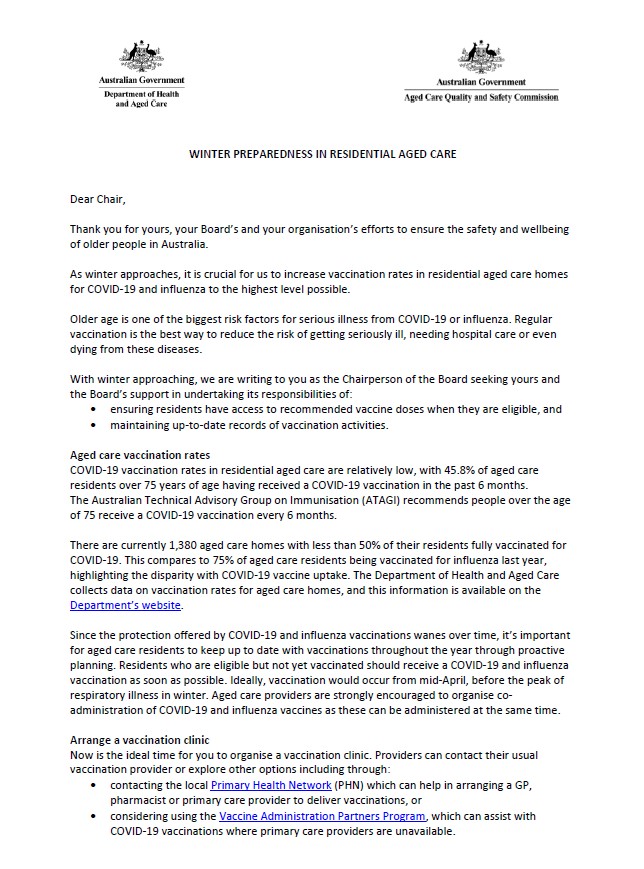
Joint letter from CMO and Commissioner to Board Chairs on winter preparedness 2025
Joint letter from the Chief Medical Officer Professor Anthony Lawler and Commissioner Liz Hefren-Webb to Board Chairs, Residential Aged Care Providers on winter preparedness in residential aged care.
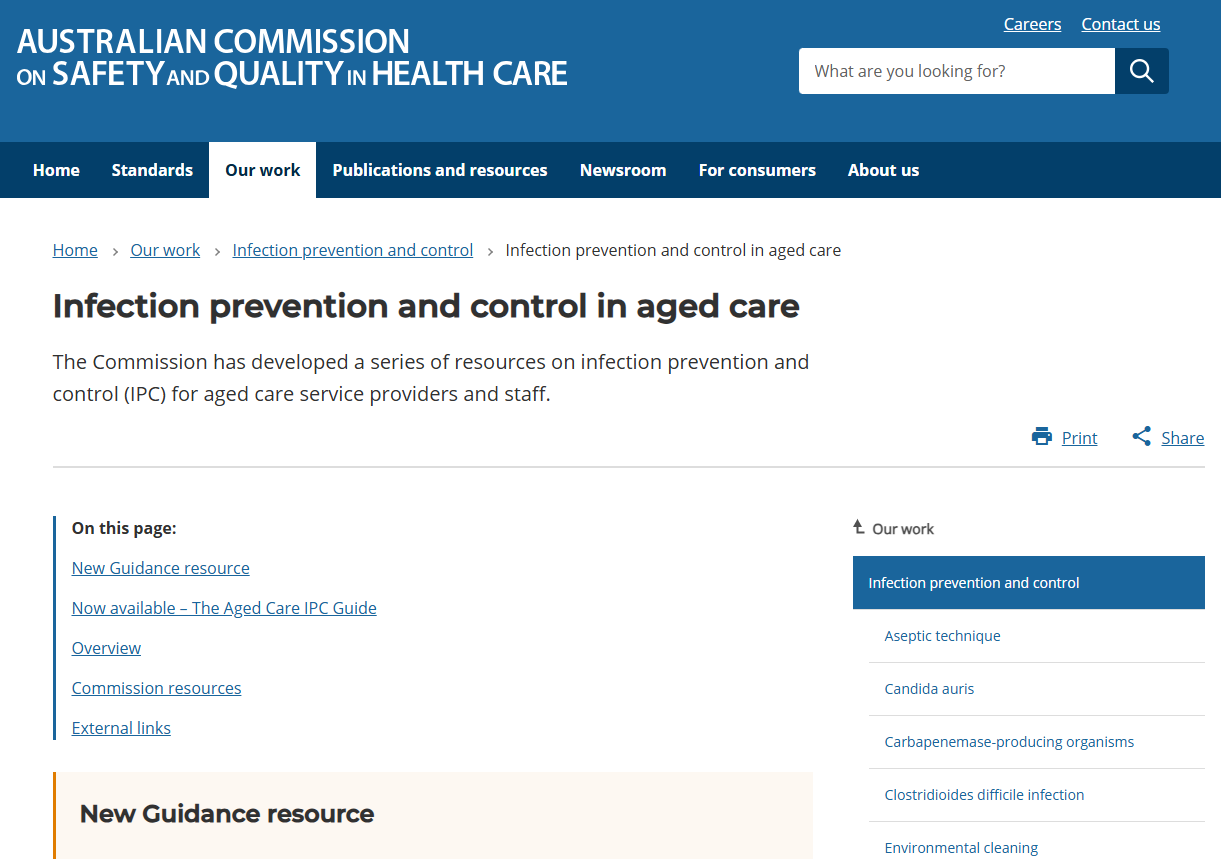
Infection prevention and control in aged care
This resource is a collection of resources on infection prevention and control (IPC) for aged care service providers and staff. It includes guidelines, IPC posters and antimicrobial stewardship (AMS) fact sheets.
This resource may refer to information that will be updated from 1 November 2025 to align with the new Aged Care Act and Quality Standards.
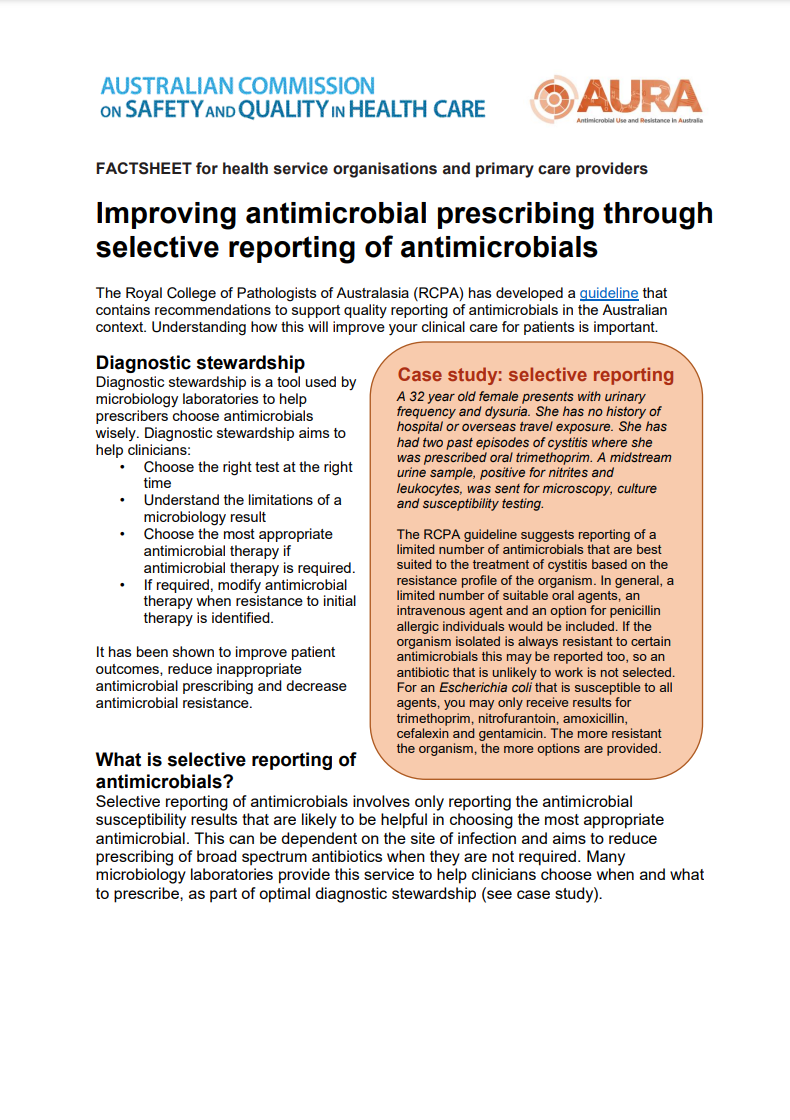
Fact sheet - Improving antimicrobial prescribing through selective reporting of antimicrobials
This fact sheet provides guidance on improving antimicrobial prescribing through selective reporting of antimicrobials for health service organisations and primary care providers. It includes information on diagnostic stewardship, definitions and the importance of selective reporting and other relevant information to support organisations and providers.
This resource may refer to information that will be updated from 1 November 2025 to align with the new Aged Care Act and Quality Standards.
Infection prevention & control resources
This resource provides guidance on infection prevention and control for aged care providers, outlining responsibilities to make sure safety and minimise infection risks. It covers the development of infection control programs, training requirements, governance, and compliance with national standards, supporting the delivery of safe, high-quality care in residential aged care settings.
This resource may refer to information that will be updated from 1 July 2025 to align with the new Aged Care Act and Quality Standards.
Care and Support Mental Health Resources
This resource offers mental health and trauma-informed care materials to support aged care, home care, and disability support workers. Developed with industry consultation, it provides strategies to improve worker wellbeing, manage workplace stress, and integrate trauma-informed practices, addressing common challenges like burnout and occupational stress.
Self-Care Matters Aged Care
This resource supports aged care workers in managing stress and maintaining mental and physical wellbeing. It includes videos and tools focused on self-care strategies, such as mindfulness, relaxation, and personalised self-care planning. The resource is designed to help prevent burnout and promote resilience in delivering high-quality care in aged care settings.
Aged care workforce
This resource provides information about the aged care workforce, highlighting opportunities for those interested in joining the sector. It details available programs such as scholarships, training, and clinical placements for nurses and aged care workers. It also includes initiatives to support the growth, training, and development of the aged care workforce to ensure quality care for older adults.
This resource may refer to information that will be updated from 1 July 2025 to align with the new Aged Care Act and Quality Standards.
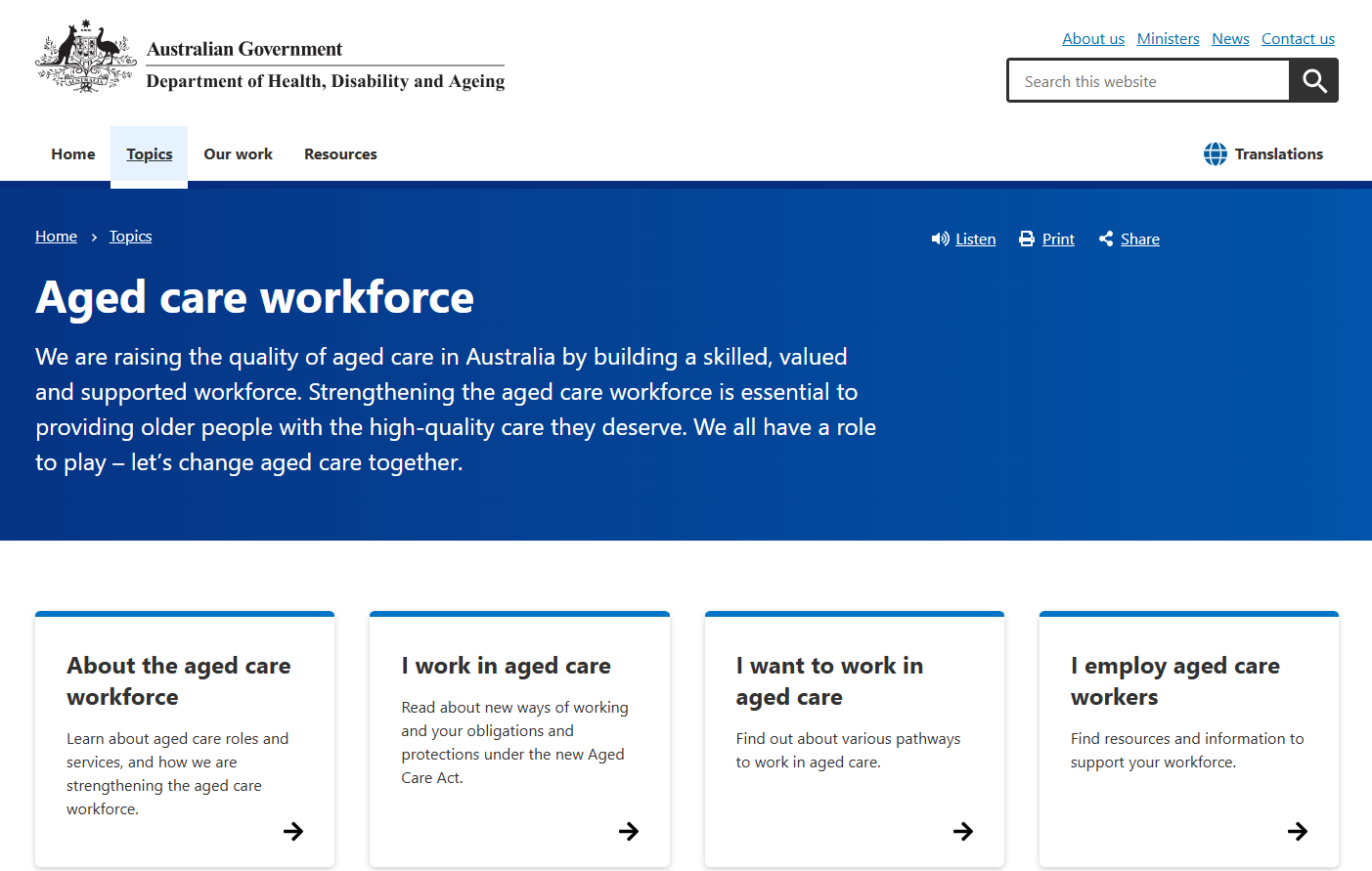
Code of conduct
This resource provides the National Boards' Code of Conduct, outlining the expected professional behaviour and ethical standards for registered health practitioners. It serves as a regulatory framework to ensure safe, ethical care, helping practitioners understand their responsibilities. The document is important for all registered practitioners to ensure they comply with these standards across healthcare settings.
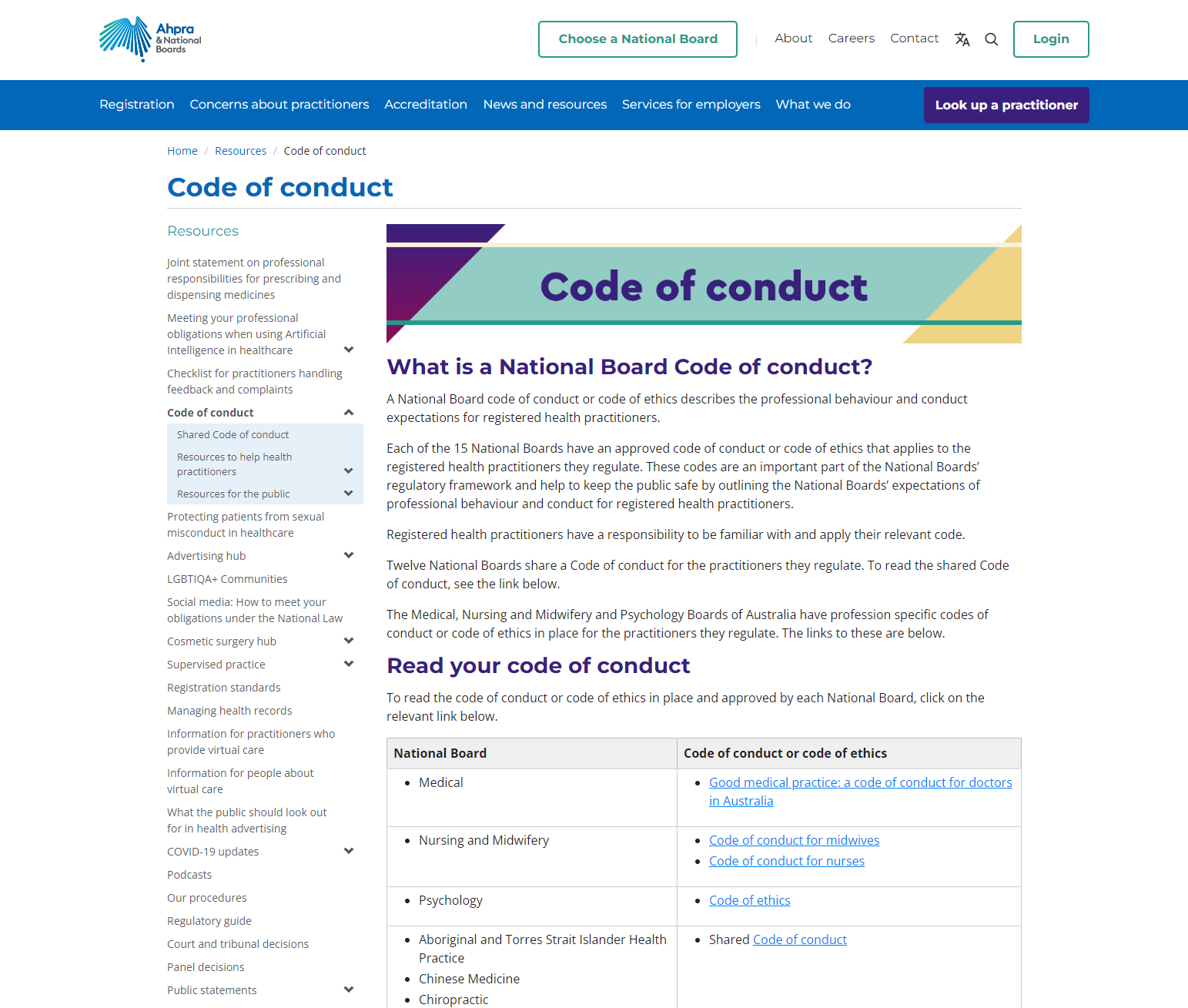
RACGP aged care clinical guide (Silver Book) - Part B - Older people in rural and remote communities
This guide discusses providing aged care in rural and remote communities, focusing on the unique needs of older residents, the role of GPs in care coordination, and overcoming challenges like limited services and workforce shortages. It covers building telehealth connections, establishing collaborative care models, and offers a checklist for newly arrived GPs to support quality care for older adults.
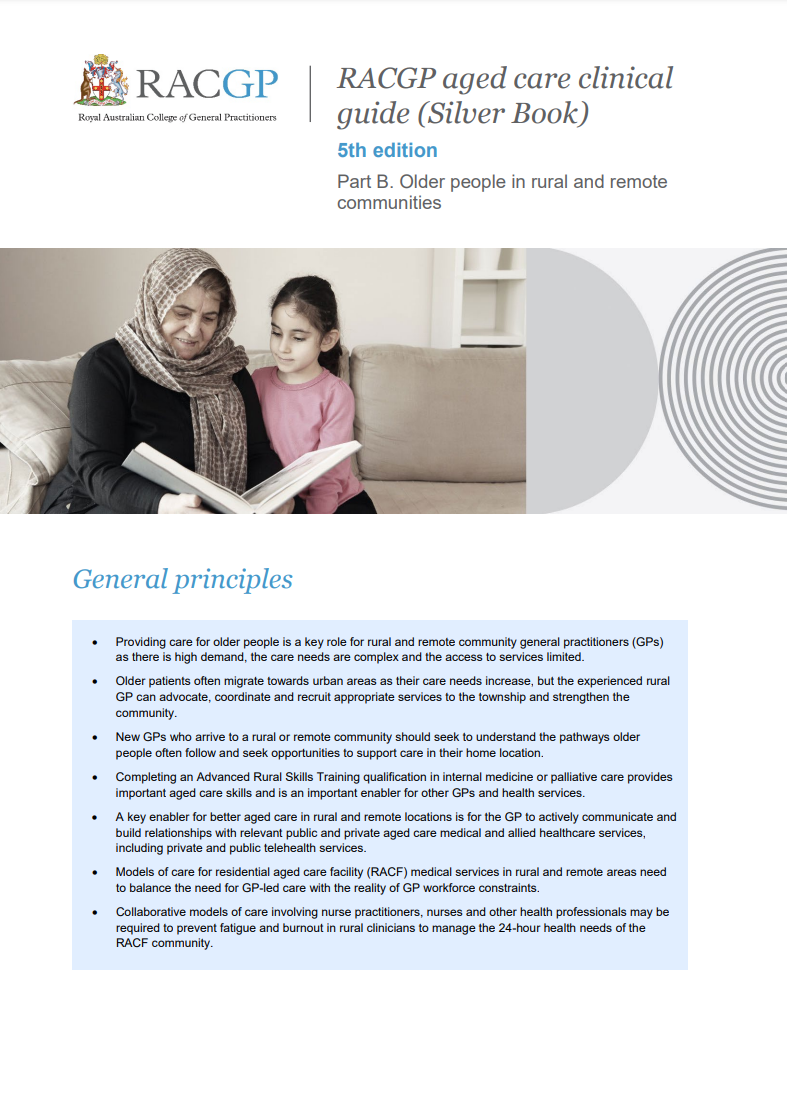
RACGP aged care clinical guide (Silver Book) - Part A - Infection and sepsis
This guide provides information on preventing and managing infections and sepsis in aged care settings. It includes recommendations on vaccination, antibiotic stewardship, recognising symptoms, and managing conditions such as respiratory, urinary tract, skin, and gastrointestinal infections. It also covers risk assessment, treatment considerations, and the role of general practitioners in infection control.
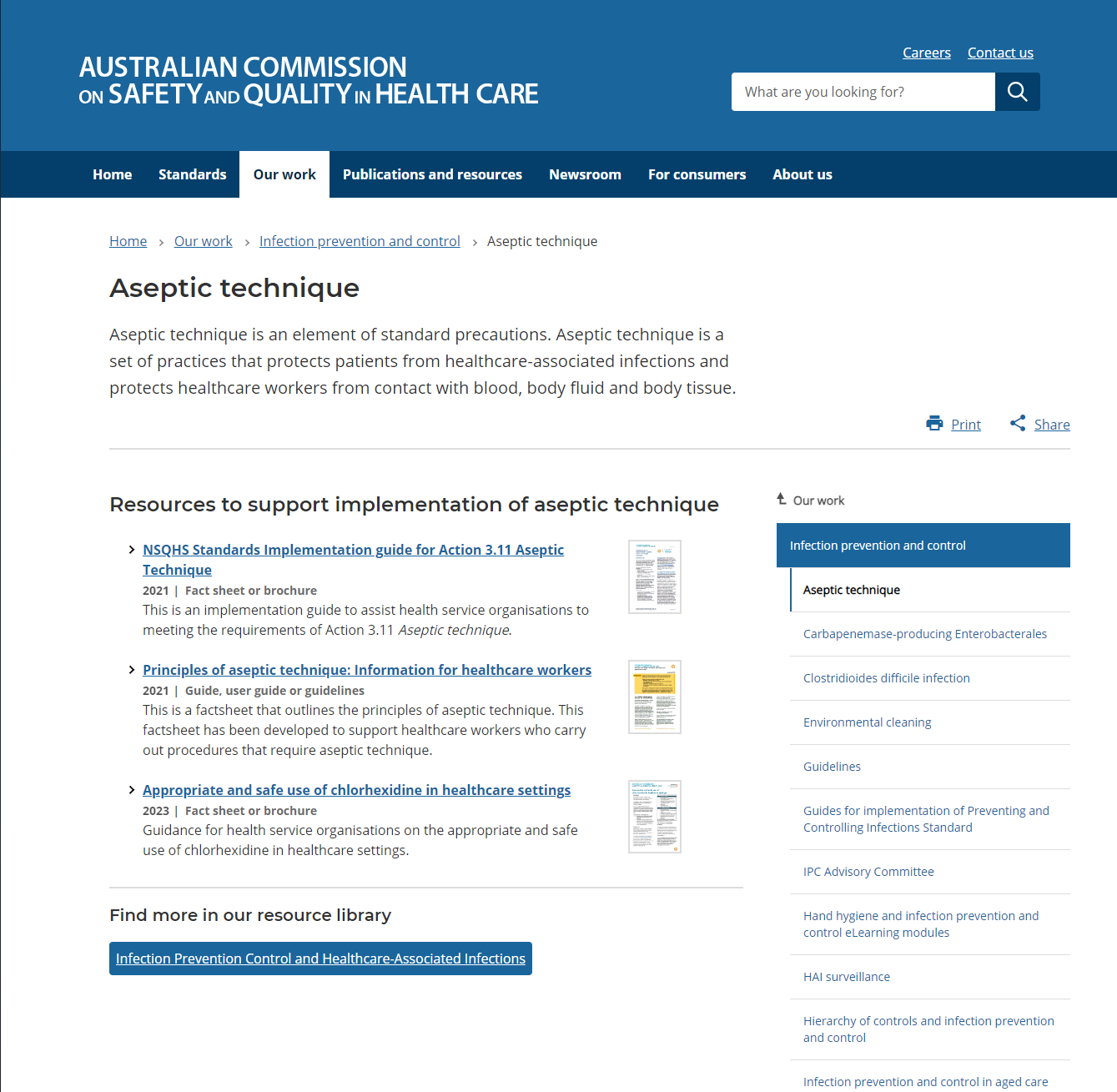
Aseptic technique
This resource provides information on aseptic techniques to support service provides adapt practices to protect patients from healthcare-associated infections and healthcare workers from contact with blood, body fluid and body tissue. It provides guides for implementation, principles of aseptic technique and safe use of chlorhexidine.
This resource may refer to information that will be updated from 1 July 2025 to align with the new Aged Care Act and Quality Standards.
AMR - Antimicrobial resistance
The AMR provides information on antimicrobial resistance and it's threats to human and animal health. It contains information on how to reduce it's spread, news, AMR resources and other resources on antimicrobial resistance.

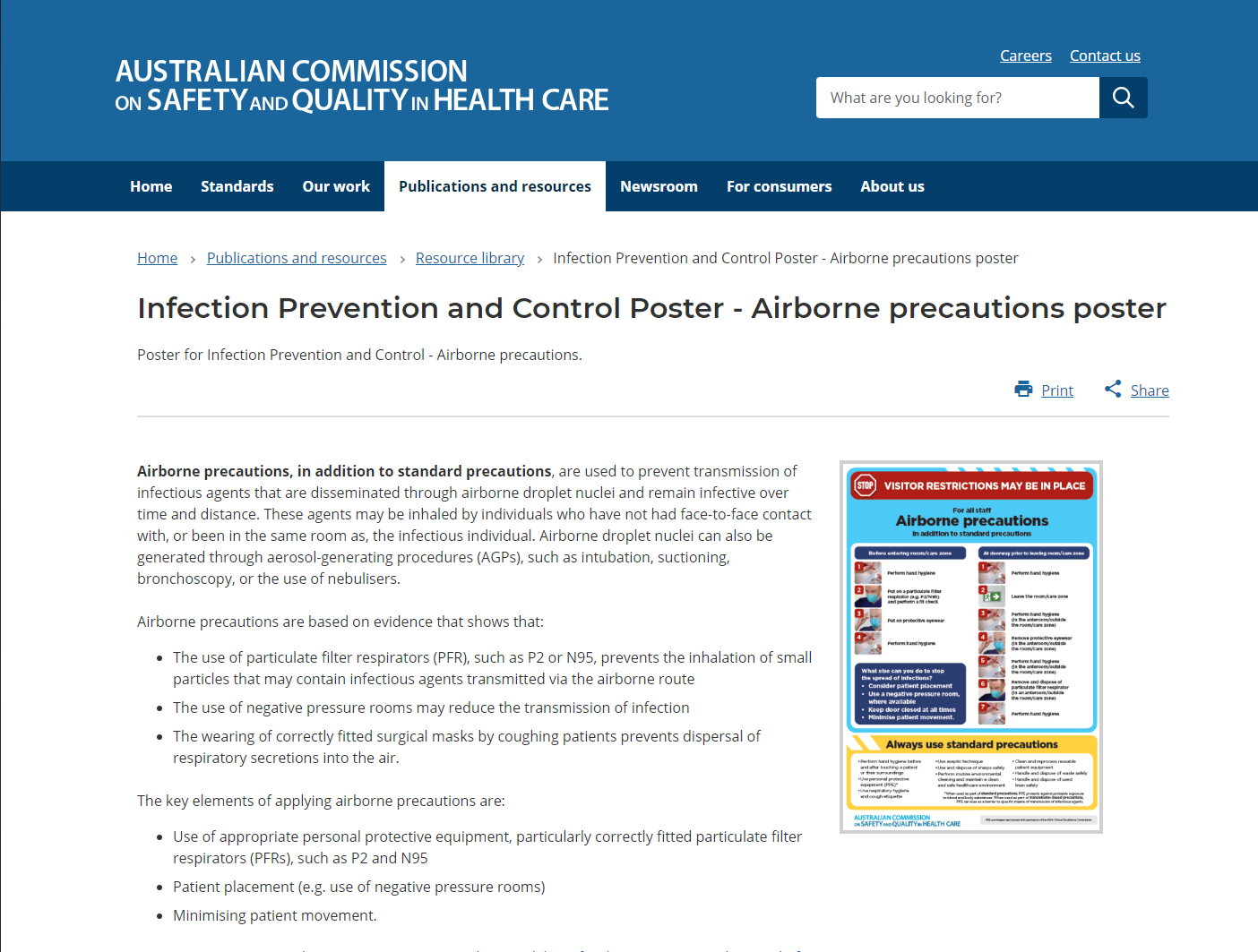
Infection Prevention and Control Poster - Airborne precautions poster
This poster outlines airborne precautions, in addition to standard precautions, for infection prevention and control. It provides guidance on preventing transmission of infectious agents through airborne droplet nuclei using personal protective equipment (PPE), negative pressure rooms, and limiting patient movement to reduce infection risks.
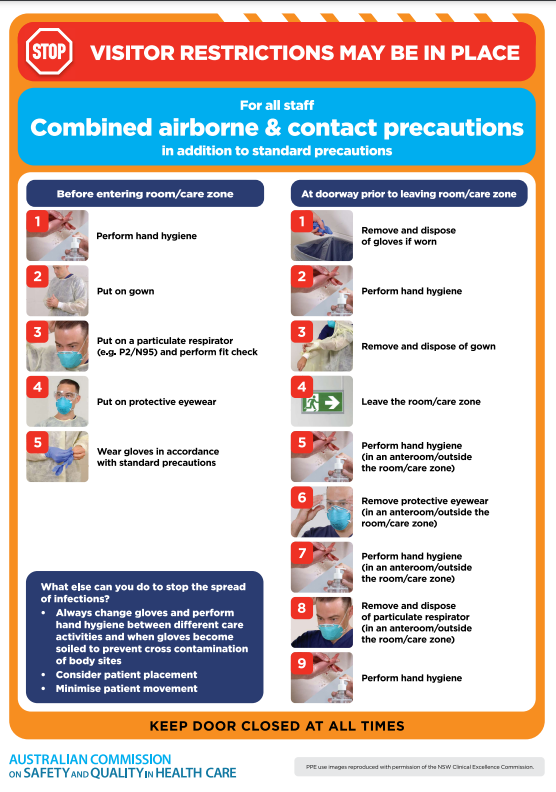
Infection Prevention and Control Poster – Combined airborne and contact precautions
This poster provides guidance on combined airborne and contact precautions for infection prevention and control. It includes information on using personal protective equipment (PPE) and other measures to minimise the spread of infectious agents transmitted through both airborne particles and direct contact.