The Quality Standards Resource Centre helps extend understanding of the strengthened Aged Care Quality Standards, which took effect from 1 November 2025. You can search for resources by using keywords, or filtering by standard, outcome and audience. Before using the Resource Centre, please read the terms of use.
Chronic Obstructive Pulmonary Disease Clinical Care Standard
This Australian Commission on Safety and Quality in Health Care clinical care standards provides guidelines for managing chronic obstructive pulmonary disease (COPD) to reduce hospitalisations and improve outcomes. It includes quality statements, care indicators, and palliative care considerations to support best practices and enhance the quality of life for people with COPD. This resource may apply to healthcare contexts outside of aged care.
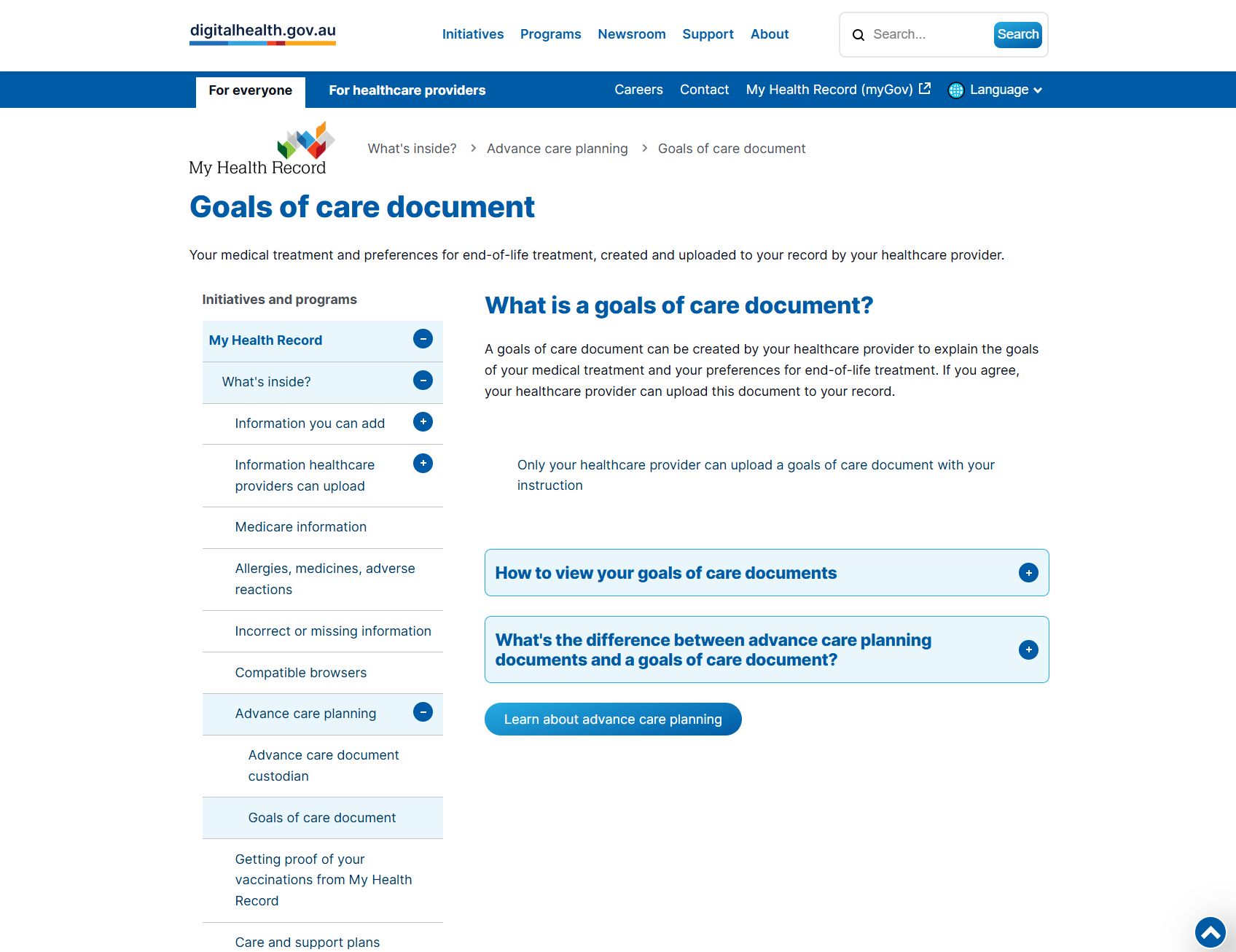
Goals of care document
This resource explains the purpose of a goals of care document, which outlines a person’s medical treatment goals and end of life care preferences. It describes how healthcare providers create and upload these documents to health records, supporting informed decision-making and access to care preferences.
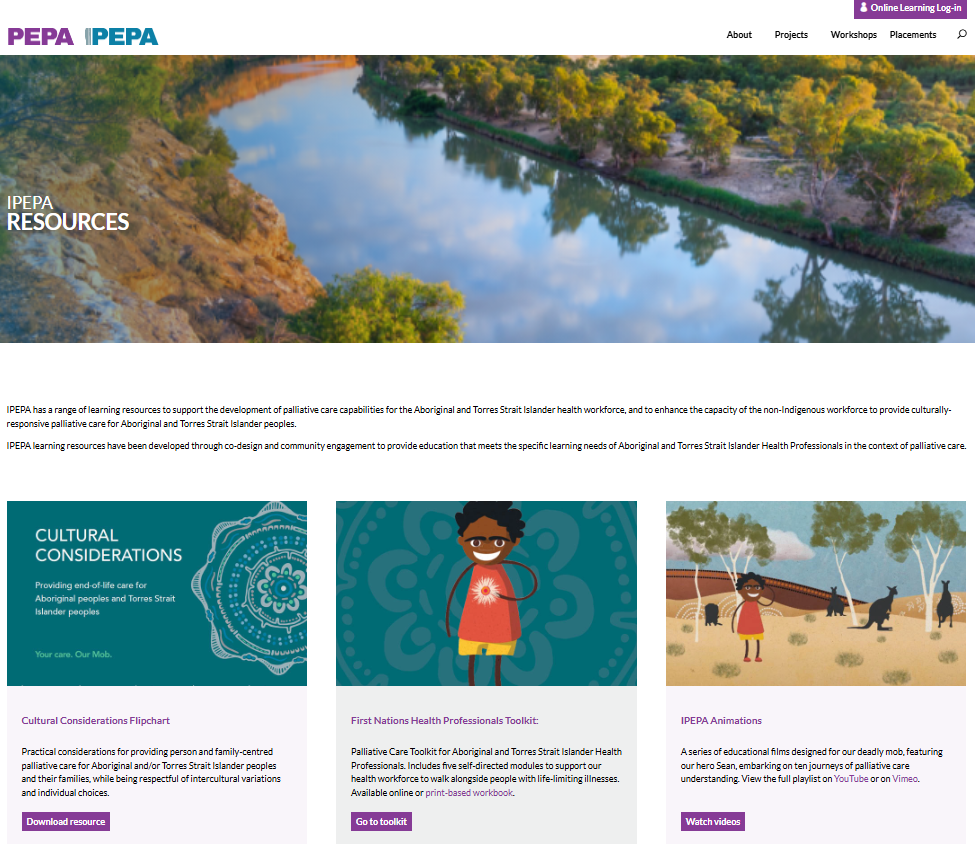
Indigenous Program of Experience in the Palliative Approach
This page provides resources about palliative care for Aboriginal and Torres Strait Islander health workers, and resources to support the non-Indigenous workforce provide culturally-responsive palliative care for Aboriginal and Torres Strait Islander peoples.
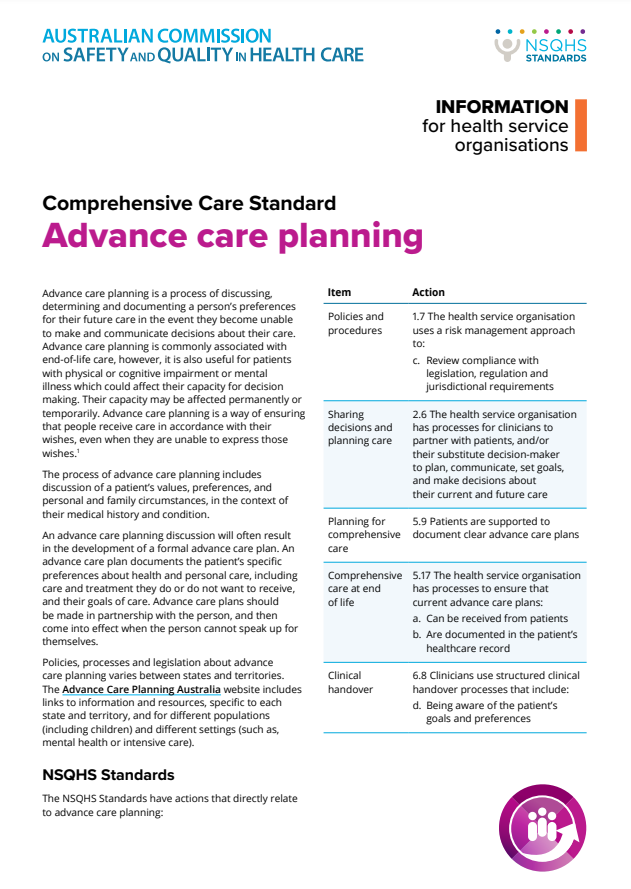
Advance care planning - Information for health service organisations
This resource outlines how health service organisations can support advance care planning within the Comprehensive Care Standard (National Safety and Quality Health Service Standards). It highlights the importance of documenting a patient’s preferences for future care and ensuring systems are in place to act on these plans. It also provides actions related to policies, sharing decisions, comprehensive care, and clinical handover.
Documentation of patient information
This resource outlines best practices for documenting patient information related to medication history and adverse drug reactions. It provides guidance on obtaining the best possible medication history (BPMH), reconciling medications at care transitions, and recording known allergies. The resource helps aged care providers ensure accurate medication management, reduce errors, and prevent harm from adverse drug events.
This resource may apply to healthcare contexts outside of aged care. Please consider the applicability of this resource to your care setting.
Ensuring appropriate patient placement
This resource provides guidance on ensuring appropriate patient placement in healthcare settings to prevent the spread of infections. It supports healthcare workers in assessing and allocating beds based on infection risks, promoting effective use of PPE, dedicated equipment, and environmental cleaning as part of transmission-based precautions.
How to clean and disinfect your workplace - COVID-19
This resource provides detailed guidelines on cleaning and disinfecting workplaces, including aged care settings, to minimise the spread of COVID-19. It outlines cleaning procedures for different surfaces and items, the proper use of disinfectants, and disposal of materials. It supports workplace hygiene by ensuring routine and post-exposure cleaning protocols.
Action 1.33: Welcoming environments
This resource provides guidance on creating welcoming environments in healthcare services, including aged care, to make sure Aboriginal and Torres Strait Islander people feel safe, respected, and supported. It outlines strategies for cultural safety, collaboration with communities, and improving access to care through inclusive design, training, and environmental changes.
Aids to stay independent
This resource provides information on aids to help people stay safe and independent at home. It includes equipment such as walking aids, bed rails, and pressure-relieving mattresses. These services are available through the Commonwealth Home Support Programme or Home Care Packages, depending on eligibility, following an assessment.
Mobility aids
This resource provides an overview of mobility aids, including walkers, wheelchairs, lifting aids, and electric beds, to help people move safely and independently. It explains how these devices can help with daily tasks, manage pain, and reduce injury risks. The document also includes information on accessing aids through government programs or health professionals.
Aids, equipment and modifications through the Rehabilitation Appliances Program (RAP)
This resource provides information about the Rehabilitation Appliances Program (RAP), which offers aids, equipment, and home or vehicle modifications to help veterans stay independent. It explains the types of items available, such as mobility devices, personal care aids, and home accessibility modifications, and outlines the process for accessing these services through clinical assessments.
Tools and aids to help at home
This resource outlines tools, aids, and technology to help people with dementia live safely and independently at home. It includes medication reminders, safety devices, communication tools, and sensory aids. The document provides guidance on selecting appropriate tools to support daily tasks, reduce stress, and maintain quality of life at home.
National Antimicrobial Prescribing Survey (NAPS)
This survey resource provides a framework for assessing antimicrobial prescribing practices in aged care and other health settings. It supports health facilities in evaluating the appropriateness of antimicrobial use through audit tools and data collection, contributing to antimicrobial stewardship and improved patient care quality.
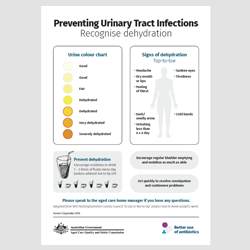
Preventing urinary tract infections: recognise dehydration poster
This provider poster is an educational tool is part of the Commission’s resource bundle to improve antibiotic use for urinary tract infections in aged care services.
 Preventing urinary tract infections (English) (PDF 268.48 KB)
Arabic - الوقاية من التهابات المسالك البولية (PDF 247.14 KB)
Chinese Simplified - 预防尿路感染 (PDF 379.59 KB)
Chinese Traditional - 預防尿路感染 (PDF 214.94 KB)
Croatian - Sprječavanje infekcija mokraćnog sustava (PDF 216.87 KB)
Dari - جلوگیری از عفونتهای مجاری ادراری (PDF 226.51 KB)
Dinka - Pɛ̈n Tuany ë lɛc (PDF 200.17 KB)
Farsi - پیشگیری از عفونت های مجاری ادرار (PDF 224.74 KB)
French - Prévention des infections urinaires (PDF 202.22 KB)
Greek - Πρόληψη Ουρολοιμώξεων (PDF 190.09 KB)
Indonesian - Mencegah Infeksi Saluran Kemih (PDF 200.34 KB)
Italian - Prevenzione delle infezioni del tratto urinario (PDF 200.45 KB)
Khmer - Preventing Urinary Tract Infections (PDF 208.03 KB)
Korean - 요로 감염 예방 (PDF 205.57 KB)
Pashto - د ادرارو د الرې د انتاناتو مخنیوی (PDF 225.71 KB)
Punjabi - ਪਿਸ਼਼ਾਬ ਨਾਲੀ ਦੀਆਂ ਲਾਗਾਂ ਦੀ ਰੋਕਥਾਮ ਕਰਨਾ (PDF 195.34 KB)
Somali - Ka hortaga Caabuqa Goobta Kaadi mareenka (PDF 211.32 KB)
Spanish - Prevención de las Infecciones del Tracto Urinario (PDF 201.38 KB)
Thai - การป้้องกัันโรคติิดเชื้้อในทางเดิินปััสสาวะ (PDF 202.81 KB)
Tamil - சிறுநீர்ப் பாதைத் தொொற்றுகளைத் தடுத்்தல (PDF 208.2 KB)
Turkish - İdrar Yolu Enfeksiyonlarının Önlenmesi (PDF 204.55 KB)
Urdu - پیشاب کے نظام میں انفیکشنوں کی روک تھام (PDF 228.26 KB)
Vietnamese - Đề phòng Nhiễm trùng đường Tiết niệu (PDF 193.49 KB)
Preventing urinary tract infections (English) (PDF 268.48 KB)
Arabic - الوقاية من التهابات المسالك البولية (PDF 247.14 KB)
Chinese Simplified - 预防尿路感染 (PDF 379.59 KB)
Chinese Traditional - 預防尿路感染 (PDF 214.94 KB)
Croatian - Sprječavanje infekcija mokraćnog sustava (PDF 216.87 KB)
Dari - جلوگیری از عفونتهای مجاری ادراری (PDF 226.51 KB)
Dinka - Pɛ̈n Tuany ë lɛc (PDF 200.17 KB)
Farsi - پیشگیری از عفونت های مجاری ادرار (PDF 224.74 KB)
French - Prévention des infections urinaires (PDF 202.22 KB)
Greek - Πρόληψη Ουρολοιμώξεων (PDF 190.09 KB)
Indonesian - Mencegah Infeksi Saluran Kemih (PDF 200.34 KB)
Italian - Prevenzione delle infezioni del tratto urinario (PDF 200.45 KB)
Khmer - Preventing Urinary Tract Infections (PDF 208.03 KB)
Korean - 요로 감염 예방 (PDF 205.57 KB)
Pashto - د ادرارو د الرې د انتاناتو مخنیوی (PDF 225.71 KB)
Punjabi - ਪਿਸ਼਼ਾਬ ਨਾਲੀ ਦੀਆਂ ਲਾਗਾਂ ਦੀ ਰੋਕਥਾਮ ਕਰਨਾ (PDF 195.34 KB)
Somali - Ka hortaga Caabuqa Goobta Kaadi mareenka (PDF 211.32 KB)
Spanish - Prevención de las Infecciones del Tracto Urinario (PDF 201.38 KB)
Thai - การป้้องกัันโรคติิดเชื้้อในทางเดิินปััสสาวะ (PDF 202.81 KB)
Tamil - சிறுநீர்ப் பாதைத் தொொற்றுகளைத் தடுத்்தல (PDF 208.2 KB)
Turkish - İdrar Yolu Enfeksiyonlarının Önlenmesi (PDF 204.55 KB)
Urdu - پیشاب کے نظام میں انفیکشنوں کی روک تھام (PDF 228.26 KB)
Vietnamese - Đề phòng Nhiễm trùng đường Tiết niệu (PDF 193.49 KB)
National Palliative Care Standards for All Health Professionals and Aged Care Services
The National Palliative Care Standards provide guidance for all health professionals and aged care services to deliver high-quality generalist palliative care. They support improved experiences and outcomes for people receiving care, and are intended for use across diverse care settings. Resources like audit tools and fact sheets are available to aid self-assessment and adherence to these standards.
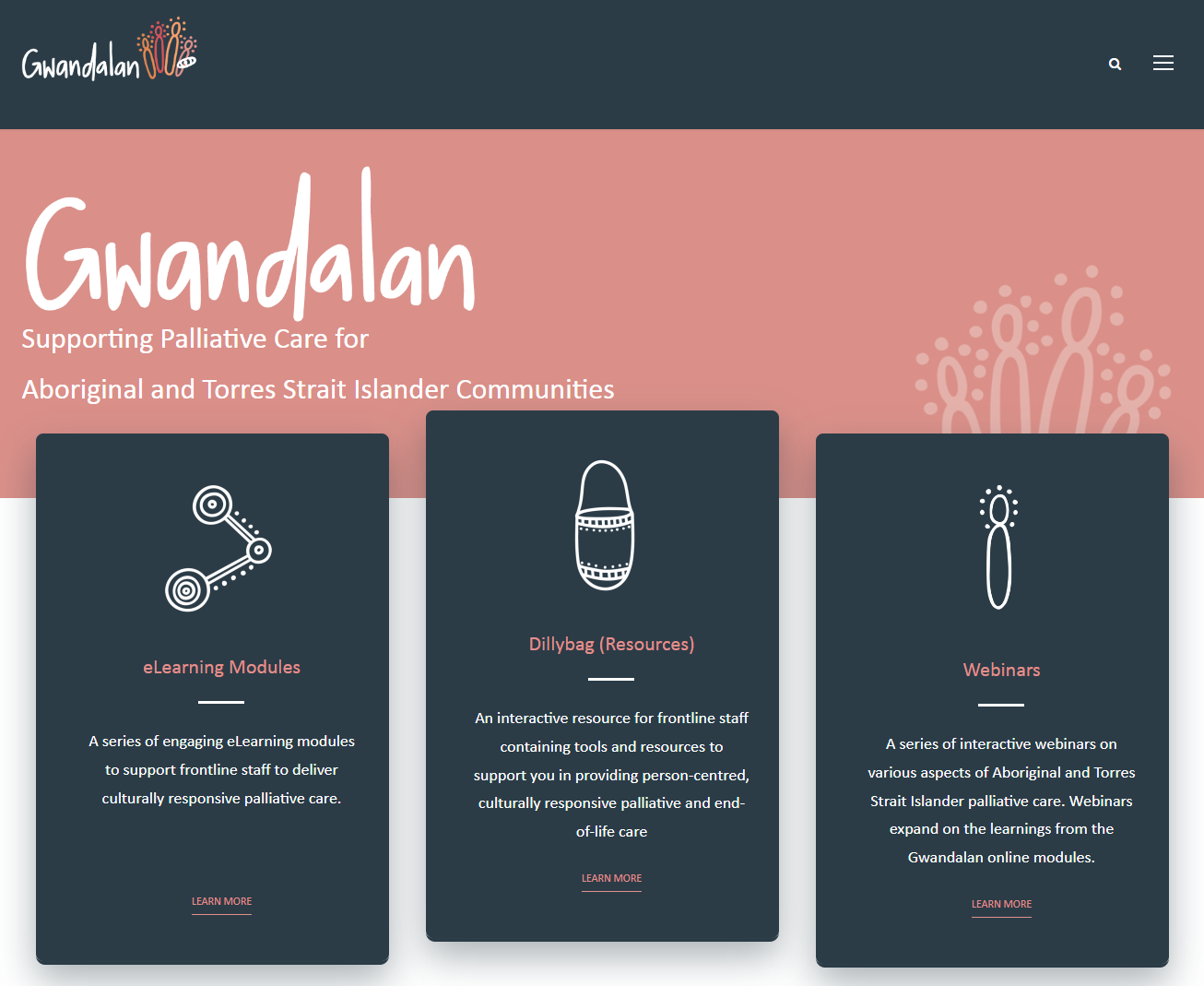
Gwandalan – Supporting Palliative Care for Aboriginal and Torres Strait Islander Communities
This resource provides culturally appropriate palliative care education and support for Aboriginal and Torres Strait Islander communities. It includes resources, videos, and training materials aimed at improving understanding, communication, and care practices in end-of-life care, integrating cultural beliefs and values to enhance quality care for Indigenous Australians.
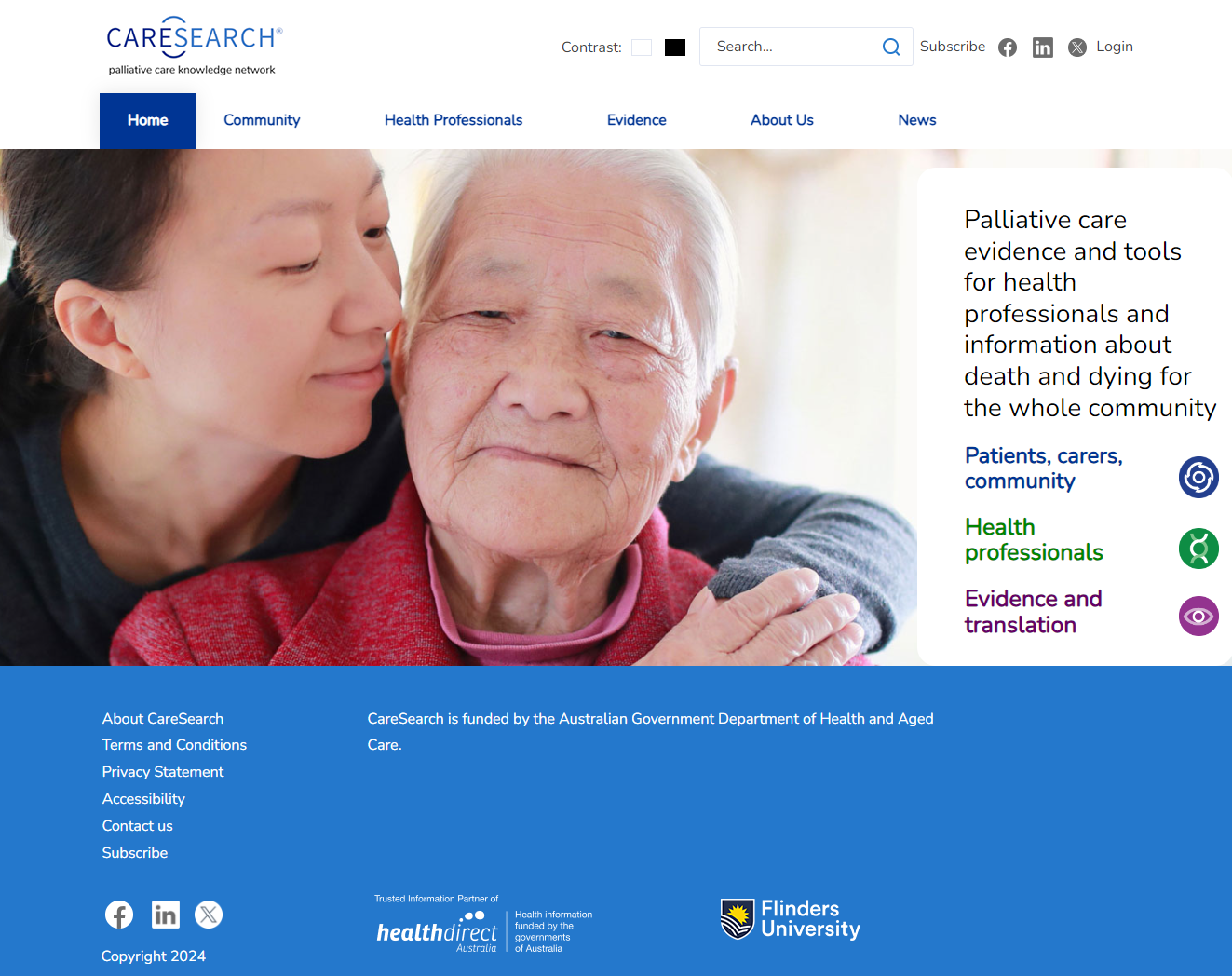
Palliative care knowledge network
This resource provides evidence-based information and resources on palliative care for health professionals, patients and carers. It covers clinical practice, education, research, and service delivery. The platform aims to improve understanding, decision-making, and quality of care for people with life-limiting illnesses and their families.
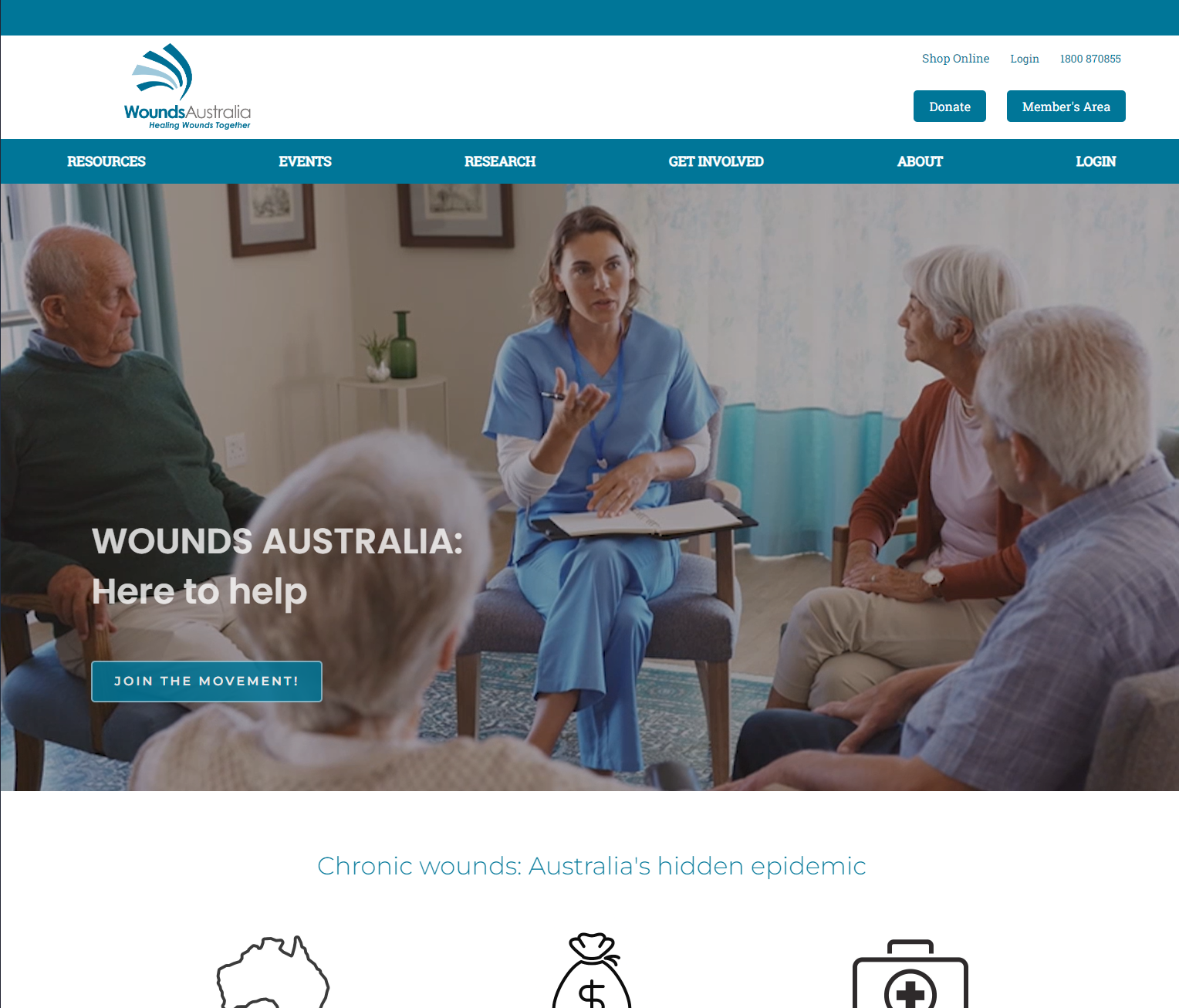
Wounds Australia
This resource provides information and resources on wound prevention and management. It offers clinical guidelines, educational materials, and support for health professionals, caregivers, and people affected by wounds. The focus is on best practices, evidence-based care, and promoting awareness to improve wound healing outcomes across various settings.
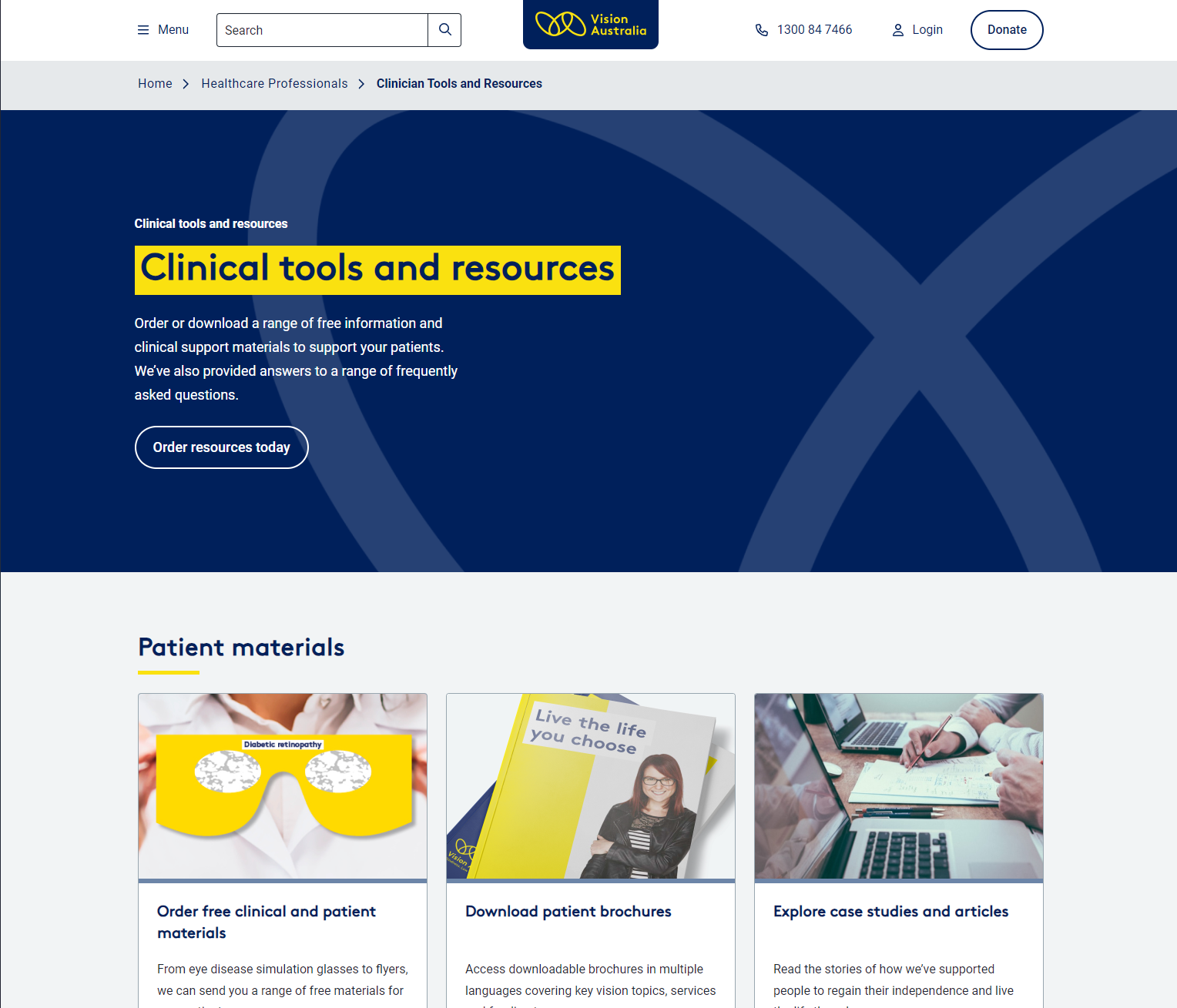
Vision Australia - Clinical tools and resources
This resource offers tools and information for clinicians supporting people with blindness or low vision across a range of settings including aged care. It includes free patient materials, brochures in multiple languages, fact sheets on eye conditions, case studies, tips on communication, assistive technology recommendations, and professional development webinars to enhance patient care and referral processes. This resource may apply to healthcare contexts outside of aged care. Please consider the applicability of this resource to your care setting.”
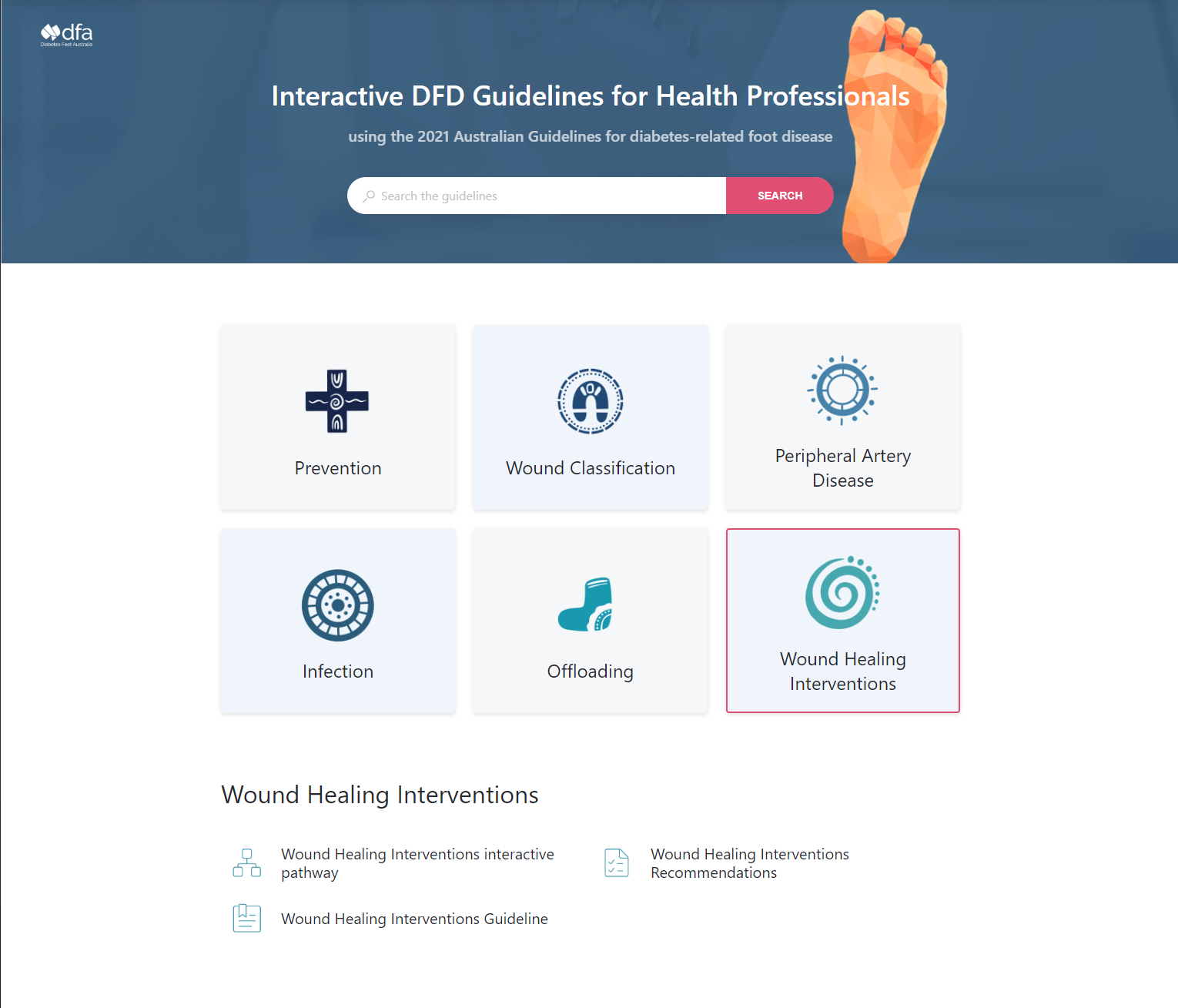
Wound Healing Interventions
This resource provides the 2021 Australian guidelines on wound healing interventions for diabetic foot disease (DFD) and foot ulcers (DFU). It includes evidence-based recommendations for healthcare professionals on appropriate practices, such as sharp debridement, exudate control, adjunctive treatments, and decision-making pathways to enhance wound healing and improve patient outcomes.