The Quality Standards Resource Centre helps extend understanding of the strengthened Aged Care Quality Standards, which took effect from 1 November 2025. You can search for resources by using keywords, or filtering by standard, outcome and audience. Before using the Resource Centre, please read the terms of use.
Respecting the privacy and dignity of clients
This resource provides guidance about respecting the privacy and dignity of clients. It includes information about personal privacy, the Privacy Act, what classifies as health information, consent and privacy of information. It also includes information about person-centred care and client dignity.
This resource may refer to information that will be updated from 1 November 2025 to align with the new Aged Care Act and Quality Standards.
Laundry and Infection Control in Residential Aged Care
This resource provides guidance on proper laundry procedures in residential aged care to support infection control. It explains how to handle soiled linen, manage laundry services, and prevent contamination. The resource aligns with infection control standards, helping aged care providers meet hygiene requirements and reduce the risk of pathogen transmission.
This resource may refer to information that will be updated from 1 November 2025 to align with the new Aged Care Act and Quality Standards.
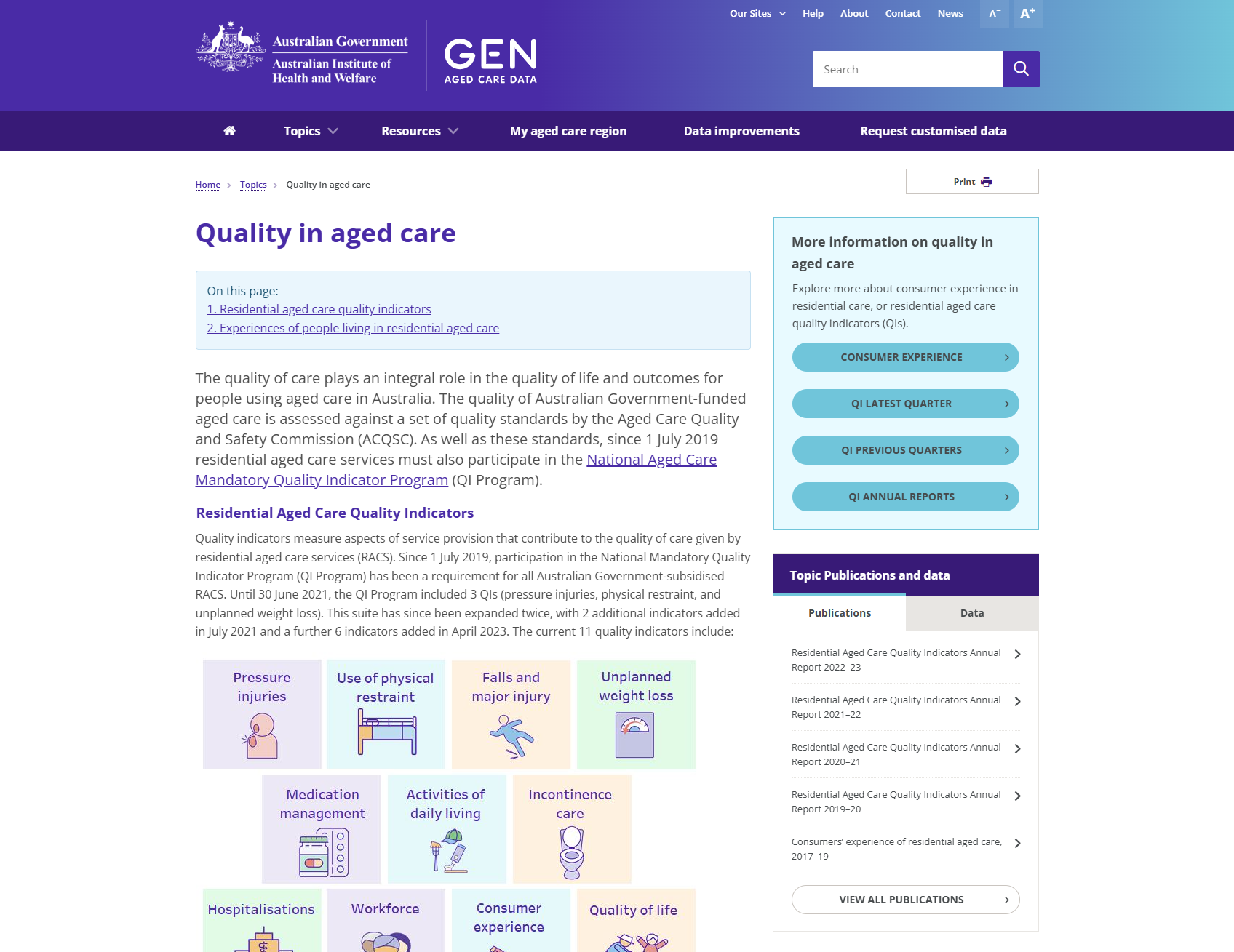
Quality in aged care - Gen Data Page
This resource provides an overview of quality indicators and consumer experience surveys in aged care. It details mandatory quality metrics, including physical and clinical indicators, and feedback from people in aged care, offering insights into service performance and supporting informed choices in aged care settings.
This resource may refer to information that will be updated from 1 November 2025 to align with the new Aged Care Act and Quality Standards.
Measurement tools for assessing quality of life, consumer satisfaction and consumer experience across residential and in-home aged care: Summary Report
This report reviews validated tools for measuring quality of life, consumer satisfaction, and experience in aged care, assessing their suitability for residential and home care. It provides an evidence-based ranking of tools to support aged care providers in quality improvement, accountability, and aligning with the National Aged Care Quality Indicator Program.
This resource may refer to information that will be updated from 1 November 2025 to align with the new Aged Care Act and Quality Standards.
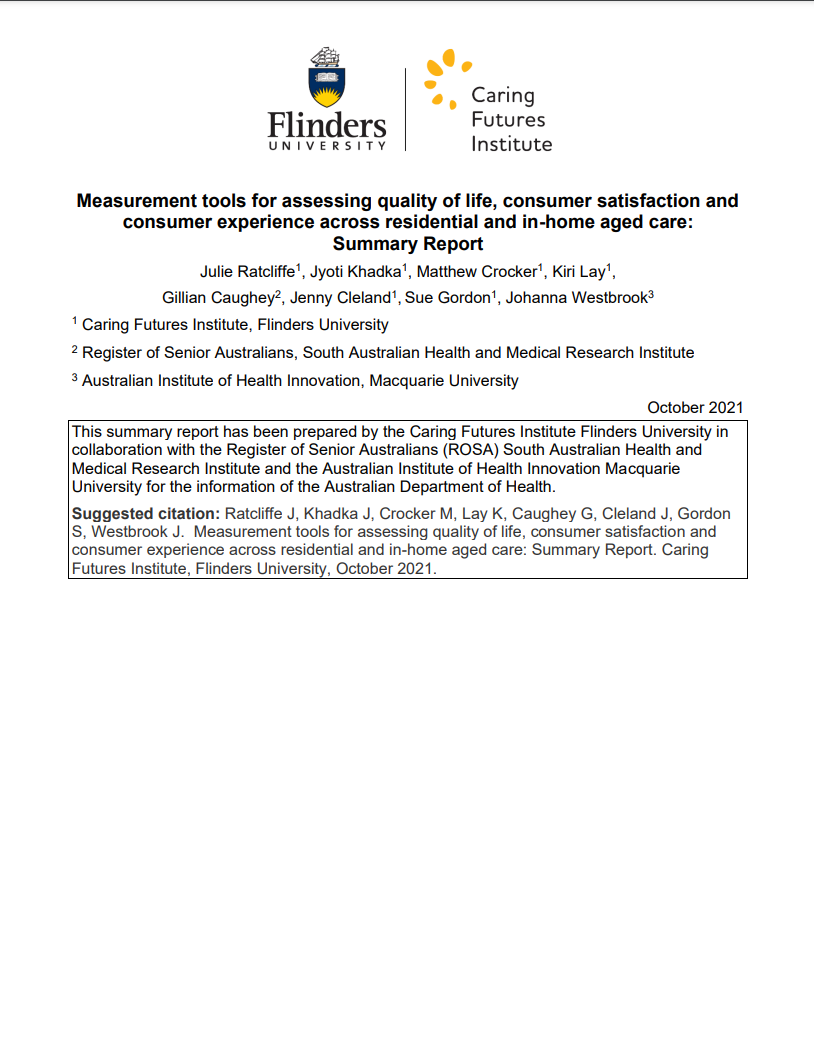
Provision of Equipment by Aged Care Organisations
This resource provides guidance for aged care organisations on supplying and managing equipment and aids for care recipients. It outlines the responsibilities for ensuring that all equipment is safe, clean, and fit for purpose. The document also covers subcontractor equipment and highlights the importance of regular maintenance and risk assessments.
This resource may refer to information that will be updated from 1 November 2025 to align with the new Aged Care Act and Quality Standards.
Raising concerns and making an effective complaint
This resource provides guidance on how to raise concerns and make an effective complaint in aged care. It offers practical tips, a checklist, and tools to help people clearly communicate their issues with service providers. It also explains how to escalate complaints to the Aged Care Quality and Safety Commission if necessary. This resource may refer to information that will be updated from 1 November 2025 to align with the new Aged Care Act and Quality Standards.
Older Persons Advocacy Network
This resource provides information on aged care advocacy services, offering free and confidential support to older people receiving government-funded aged care. It includes resources to help people understand their rights, navigate the aged care system, and access advocacy for issues such as care quality, decision-making, and protection from harm.
This resource may refer to information that will be updated from 1 November 2025 to align with the new Aged Care Act and Quality Standards.
Managing emergency situations
This resource outlines strategies for managing emergency situations, focusing on risk mitigation, preparedness, response, and recovery. It includes guidelines on emergency planning, crisis leadership, and community engagement, emphasising coordinated efforts across various sectors to handle natural or human-caused disasters.
Guidance and requirements may differ across states and territories. Users are responsible for considering their individual circumstances and specific state-based regulations and legislation.
Supporting Better Communication & Care
This webpage provides resources to help improve communication, care and support for people who are deaf, Deaf, hard of hearing, or who experience hearing loss. It includes 3 tools: Everyday Communication, Inclusive Healthcare, and Building Competency. There are also links to other relevant resources.
Healthy Ageing
This resource is a collection of resources on the Tasmanian Government Department of Health webpage about healthy ageing. It includes resources about malnutrition screening, being physically active, and eating well.
This resource was developed by a state/territory government or organisation and therefore its applicability and usefulness may be limited.
Preventing falls at home
This resource provides information on preventing falls at home for older people. It explains common causes of falls, such as poor lighting and slippery surfaces, and offers practical solutions like home modifications, exercise, and footwear adjustments. The document emphasises maintaining safety in and around the home to reduce the risk of falls.
This resource was developed by a state/territory government or organisation and therefore its applicability and usefulness may be limited.
Care and Support Mental Health Resources
This resource offers mental health and trauma-informed care materials to support aged care, home care, and disability support workers. Developed with industry consultation, it provides strategies to improve worker wellbeing, manage workplace stress, and integrate trauma-informed practices, addressing common challenges like burnout and occupational stress.
Self-Care Matters Aged Care
This resource supports aged care workers in managing stress and maintaining mental and physical wellbeing. It includes videos and tools focused on self-care strategies, such as mindfulness, relaxation, and personalised self-care planning. The resource is designed to help prevent burnout and promote resilience in delivering high-quality care in aged care settings.
COTA - Council on the Ageing
This resource provides information on the Council on the Ageing (COTA) Australia's work, including advocacy, policy priorities, and resources for older adults. It highlights key areas such as dental care affordability, aged care reform, and independence for seniors. The site offers publications, submissions to inquiries, and the Aged Care Visitors Code, relevant for aged care providers and consumers.
Privacy
This resource outlines the privacy policy for handling personal information through My Aged Care services. It explains how personal data is collected, used, and shared, ensuring compliance with the Privacy Act 1988. The document provides details on consent, data protection measures, and rights to access or correct personal information.
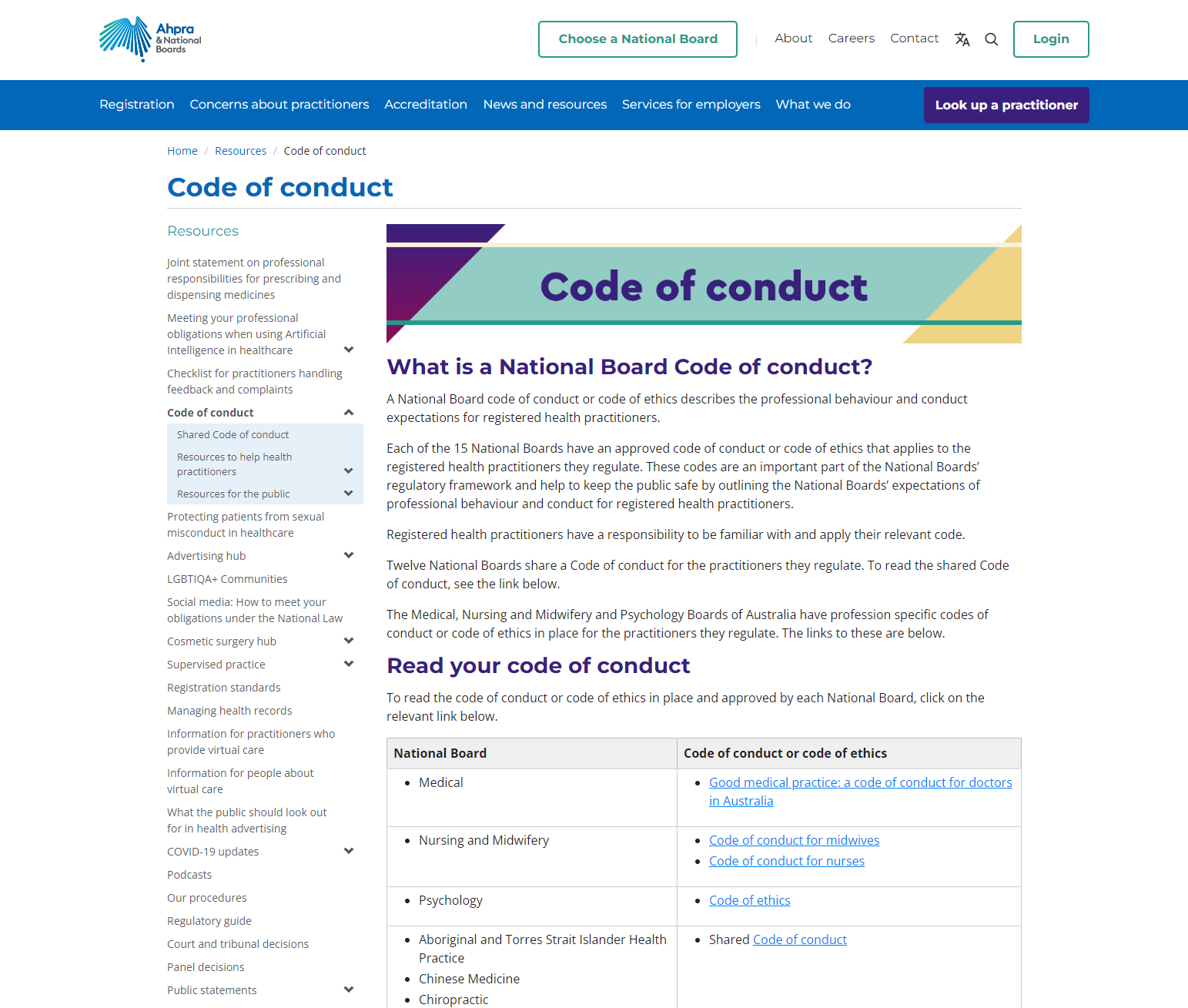
Code of conduct
This resource provides the National Boards' Code of Conduct, outlining the expected professional behaviour and ethical standards for registered health practitioners. It serves as a regulatory framework to ensure safe, ethical care, helping practitioners understand their responsibilities. The document is important for all registered practitioners to ensure they comply with these standards across healthcare settings.
RACGP aged care clinical guide (Silver Book) - Part B - Anticipatory care
This guide outlines anticipatory care planning for older adults, focusing on proactive and person-centred approaches. It details triggers for care planning, identifying vulnerability, medication management, and the use of 'as needed' (PRN) medicines for various conditions like allergic reactions, asthma, diabetes, falls, and palliative care. It includes specific recommendations for developing individualised care plans and appropriate interventions for maintaining health and quality of life.
RACGP aged care clinical guide (Silver Book) - Part B - Older people in rural and remote communities
This guide discusses providing aged care in rural and remote communities, focusing on the unique needs of older residents, the role of GPs in care coordination, and overcoming challenges like limited services and workforce shortages. It covers building telehealth connections, establishing collaborative care models, and offers a checklist for newly arrived GPs to support quality care for older adults.
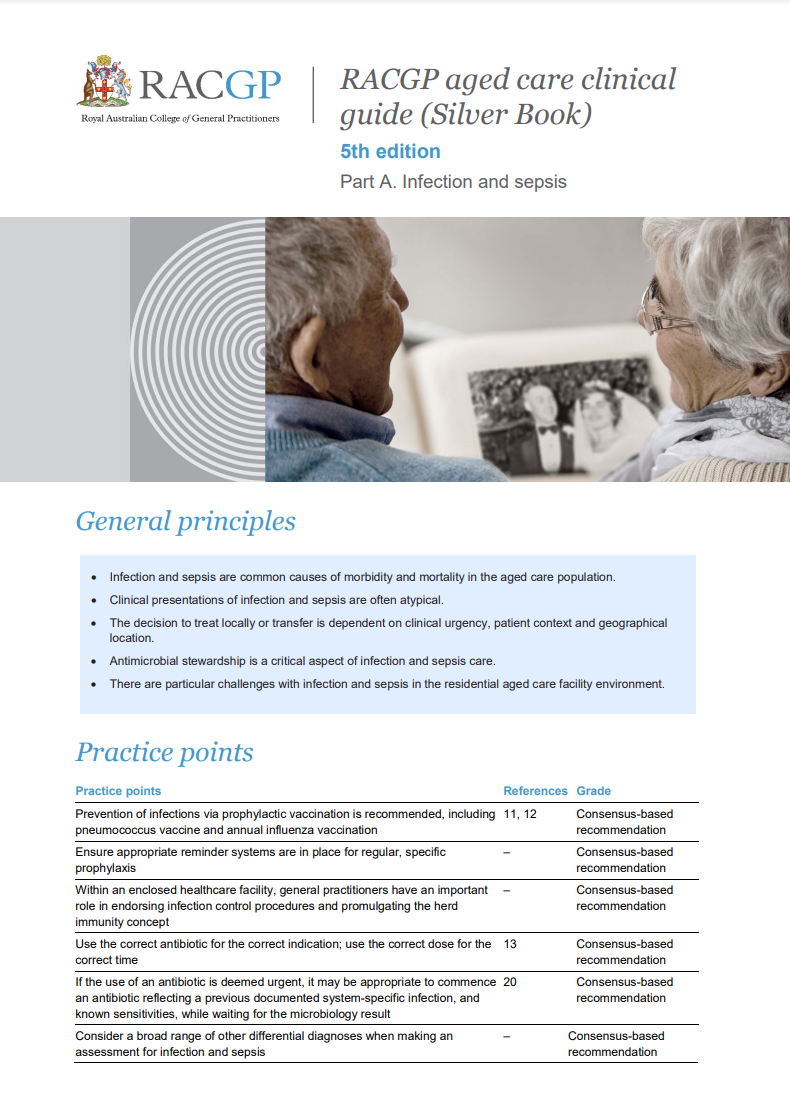
RACGP aged care clinical guide (Silver Book) - Part A - Infection and sepsis
This guide provides information on preventing and managing infections and sepsis in aged care settings. It includes recommendations on vaccination, antibiotic stewardship, recognising symptoms, and managing conditions such as respiratory, urinary tract, skin, and gastrointestinal infections. It also covers risk assessment, treatment considerations, and the role of general practitioners in infection control.
Residential aged care - Supporting residential aged care residents and their healthcare teams
This resource provides information on digital health tools available for residential aged care providers. It covers how these tools, including My Health Record, support care coordination, improve health outcomes, and enable secure information sharing between healthcare providers to enhance the quality of aged care services.