The Quality Standards Resource Centre helps extend understanding of the strengthened Aged Care Quality Standards, which took effect from 1 November 2025. You can search for resources by using keywords, or filtering by standard, outcome and audience. Before using the Resource Centre, please read the terms of use.
ARIIA Knowledge and Implementation Hub - Resources
The ARIIA Resources Hub is an evidence-based guide that supports innovation across the aged care sector. It provides a comprehensive collection of tools, guidelines, and frameworks for aged care providers, focusing on technology adoption, clinical standards, and care improvement strategies. The hub offers resources to enhance service quality and support the digital transformation of aged care.
This resource may refer to information that will be updated from 1 November 2025 to align with the new Aged Care Act and Quality Standards.
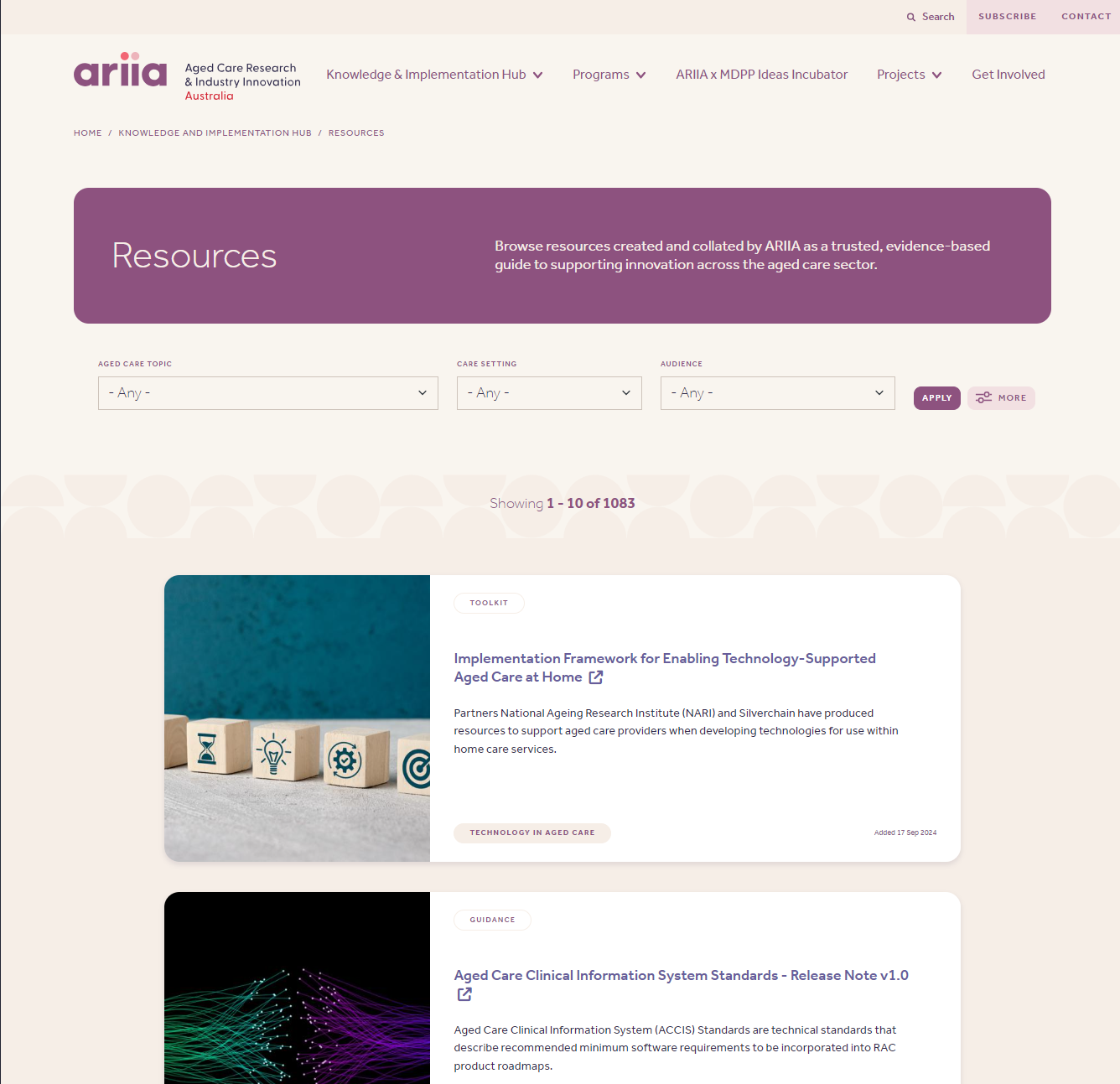
Dignity of Risk
This resource provides guidance on the concept of dignity of risk. It includes information about how to reframe thinking and ways you can support dignity of risk. The resource highlights the importance of choice and independence, and supporting someone to do what they want safely.
This resource may refer to information that will be updated from 1 November 2025 to align with the new Aged Care Act and Quality Standards.
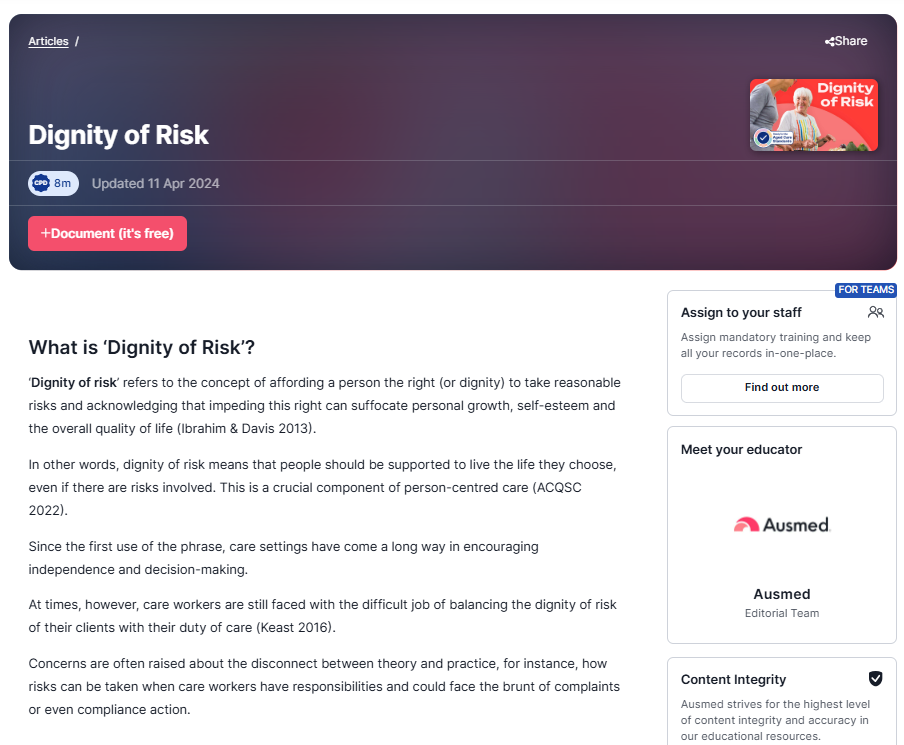
Environmental design resources handbook
This resource supports improvements to environments for people living with dementia. The resource includes information and background on the key design principles and environmental assessment tools. It also includes the Indigenous Aged Care Design Guide. The handbook can be accessed in full, or individually as 7 separate resources.
This resource may refer to information that will be updated from 1 November 2025 to align with the new Aged Care Act and Quality Standards.
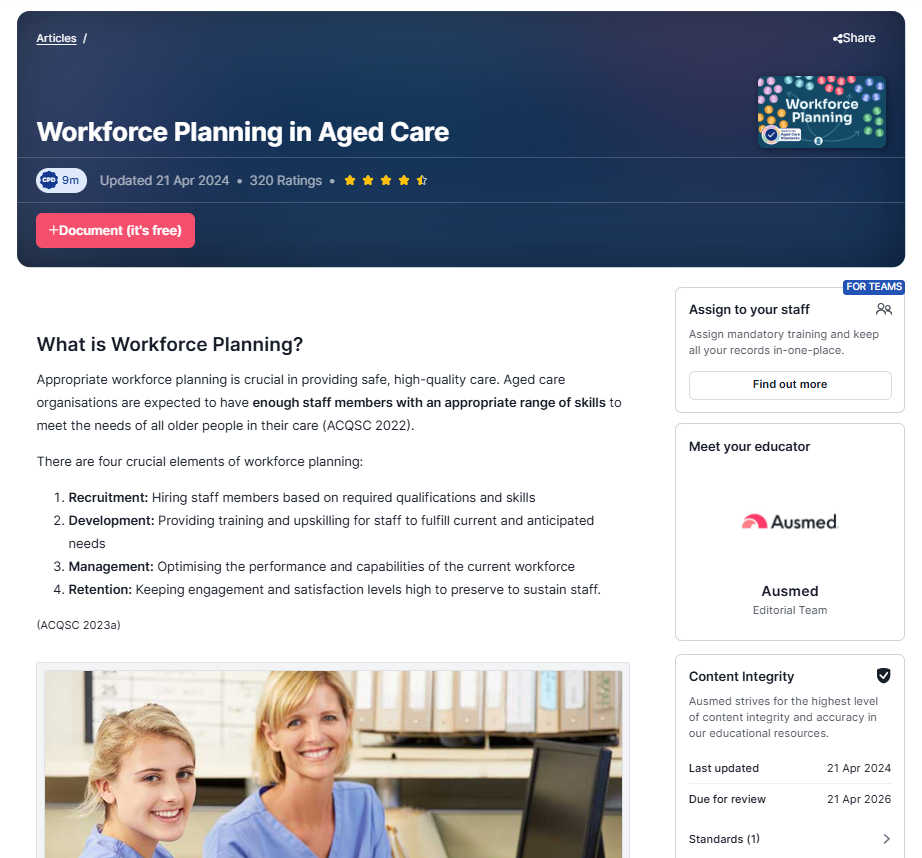
Workforce planning in aged care
This resource provides guidance about workforce planning in aged care. It includes information about workforce composition, current requirements and why it's important. It highlights the importance of the care experience, including continuity of care. This resource may refer to information that will be updated from 1 November 2025 to align with the new Aged Care Act and Quality Standards.
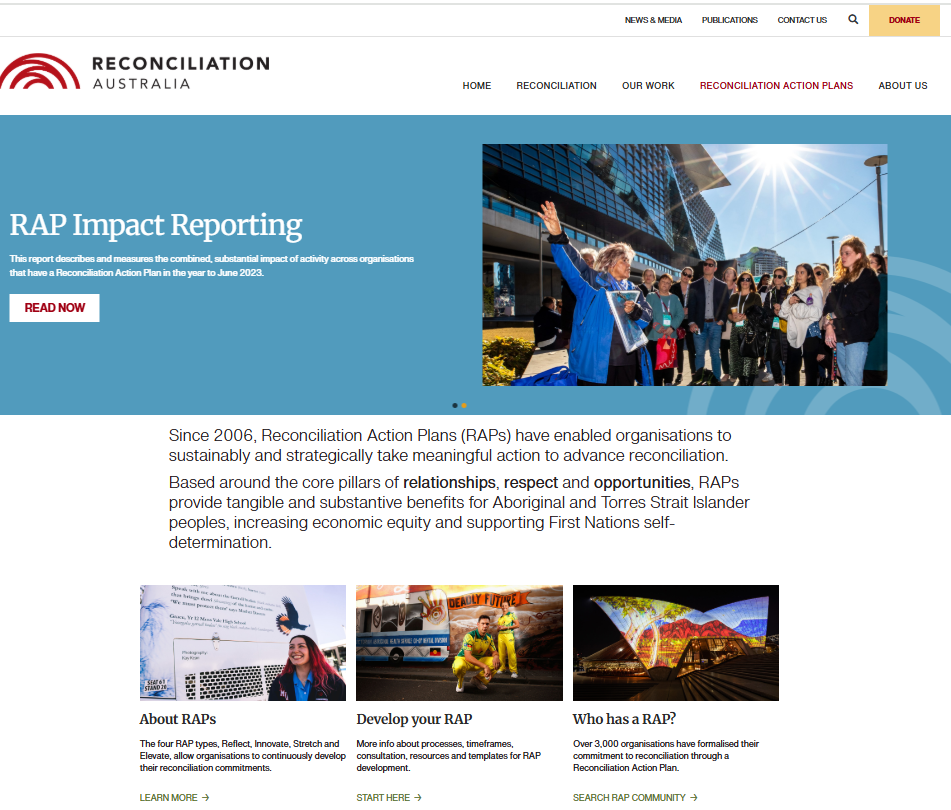
Reconciliation Action Plans
This resource provides information about Reconciliation Action Plans (RAPs), including what they are, how to develop a RAP for your organisation, and who has one. RAPs support organisations to strategically take meaningful action to advance reconciliation.
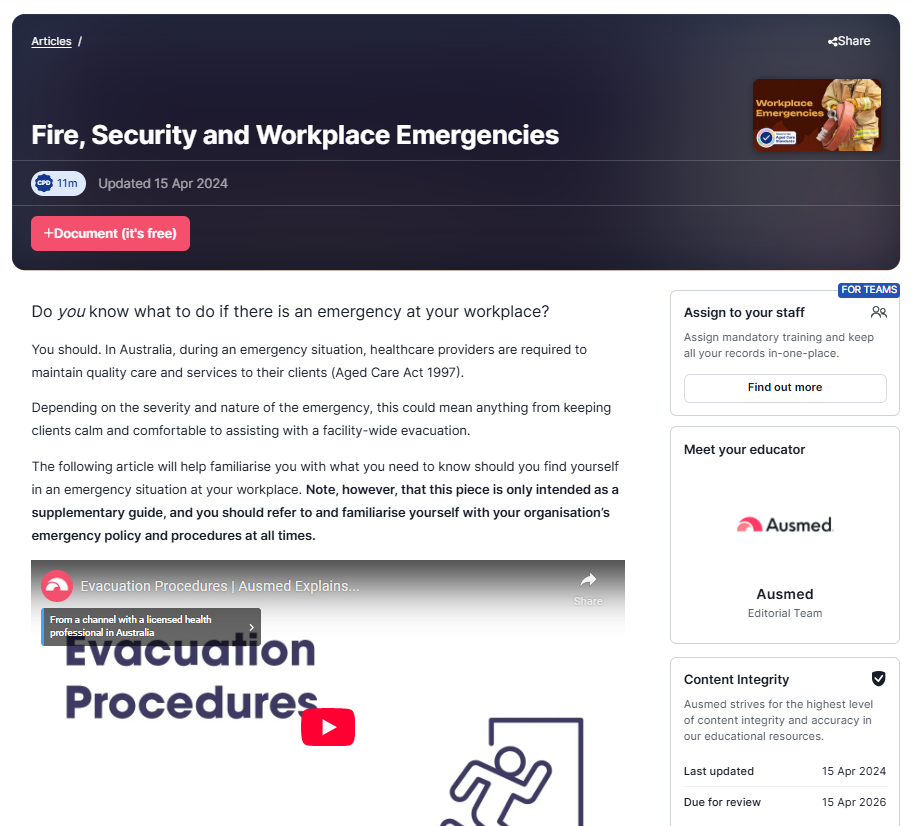
Fire, Security and Workplace Emergencies
This resource provides guidance on workplace emergencies. It includes information about what to do if there's an emergency at your workplace, types of emergencies, evacuation procedures and more. It highlights the importance of being aware of people's needs in an emergency situation and considering vulnerable people when developing an evacuation plan.
This resource may refer to information that will be updated from 1 November 2025 to align with the new Aged Care Act and Quality Standards.
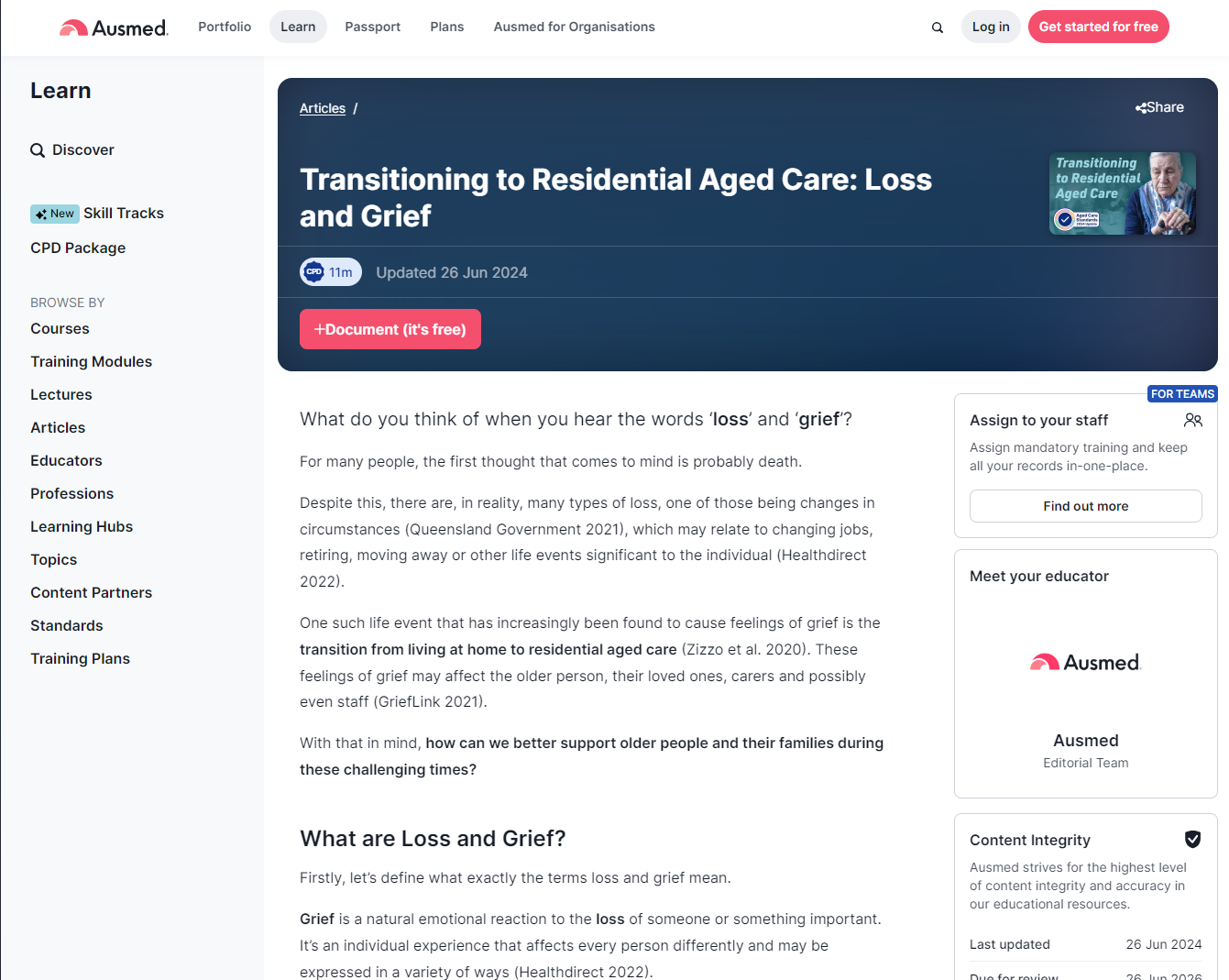
Transitioning to Residential Aged Care: Loss and Grief
This resource explores the emotional impact of transitioning into residential aged care, focusing on loss and grief experienced by older people and their families. It highlights the common emotional challenges, such as fear, loss of independence, and guilt, and provides strategies to support emotional well-being during this difficult transition.
This resource may refer to information that will be updated from 1 November 2025 to align with the new Aged Care Act and Quality Standards.
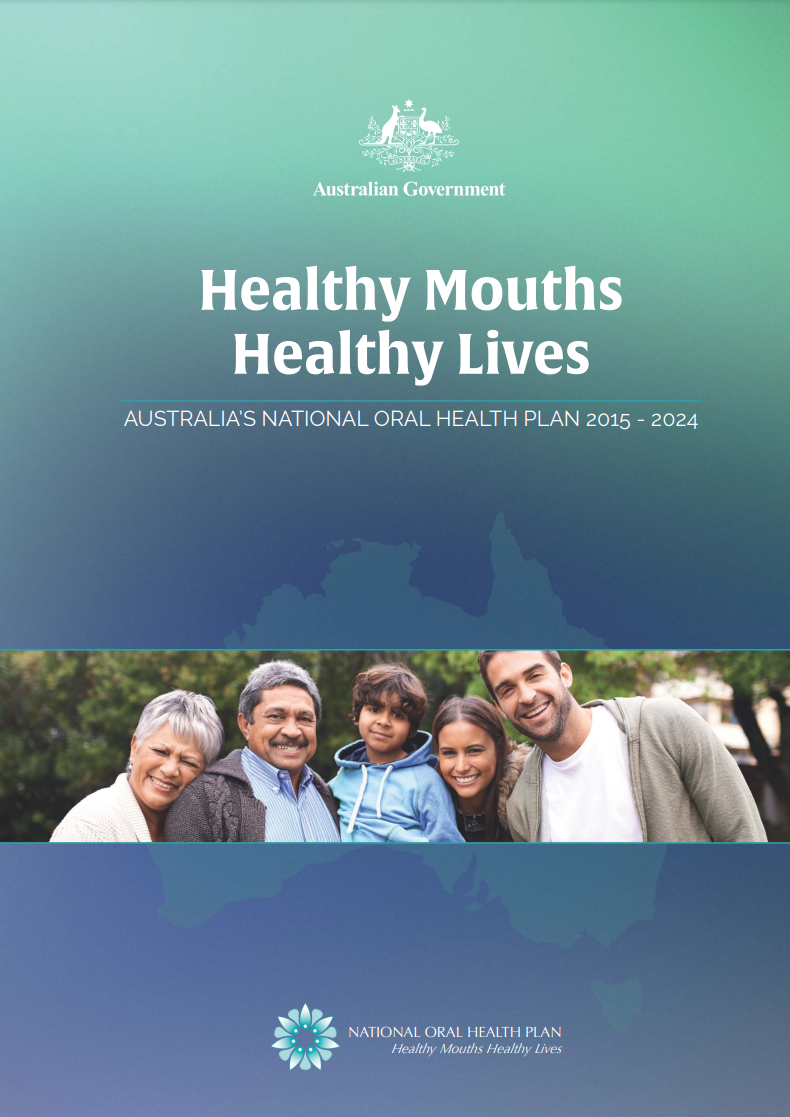
Healthy mouths, healthy lives - Australia's National Oral Health Plan 2015-2024
This resource outlines Australia’s National Oral Health Plan 2015-2024, aiming to improve oral health and reduce inequalities. It includes strategic directions, guiding principles, foundation areas for action, and focus on priority populations. It addresses access to services, workforce development, safety, quality, promotion, and integrated health systems to enhance overall wellbeing.
This resource may refer to information that will be updated from 1 November 2025 to align with the new Aged Care Act and Quality Standards.
Serious incidents
This resource provides information on how aged care providers should respond to serious incidents, ensuring the safety, health, and wellbeing of people in care. It outlines mandatory reporting requirements for incidents such as abuse, neglect, or financial coercion under the Serious Incident Response Scheme (SIRS), aiming to promote transparency and accountability in aged care settings. This resource may refer to information that will be updated from 1 November 2025 to align with the new Aged Care Act and Quality Standards.
Infection Prevention in the Home
This resource provides guidance on infection prevention in home care settings, highlighting challenges such as the unpredictability of home environments and lack of basic hygiene resources. It explains how to apply standard and transmission-based precautions, manage infection hazards, and involve clients in maintaining infection control practices to ensure safety.
This resource may refer to information that will be updated from 1 November 2025 to align with the new Aged Care Act and Quality Standards.
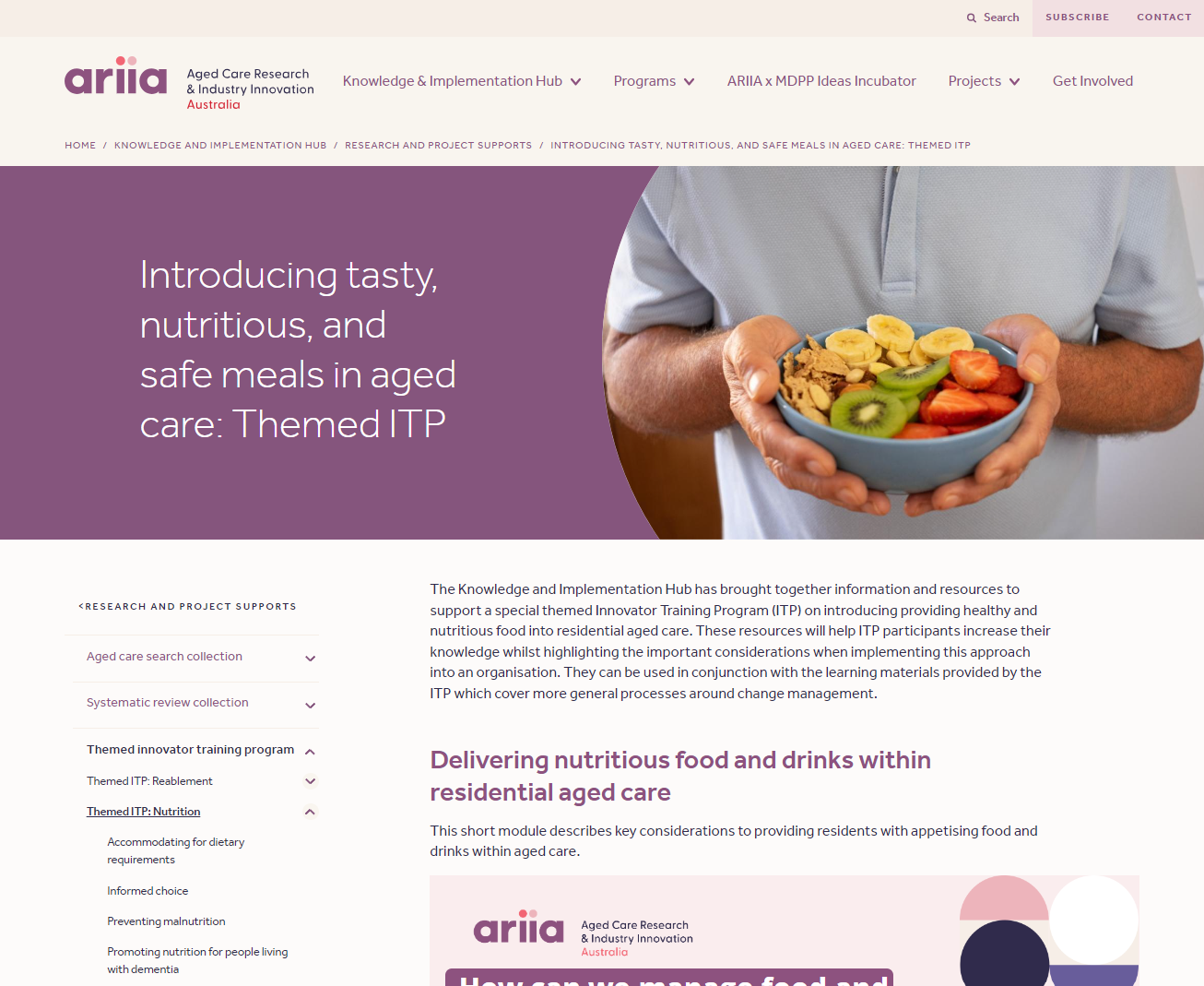
Introducing tasty, nutritious, and safe meals in aged care - Themed Innovator Training Program
This resource provides guidance on implementing safe, nutritious, and appealing meals in aged care. It emphasises informed choice, accommodating dietary needs, and preventing malnutrition. It highlights the importance of culturally appropriate meal planning, supporting residents' autonomy, and ensuring that nutritious food enhances social interaction, mental health, and overall quality of life.
This resource may refer to information that will be updated from 1 November 2025 to align with the new Aged Care Act and Quality Standards.
An Introduction to Activities of Daily Living (ADLs)
This resource explains Activities of Daily Living (ADLs), which are essential tasks that people must perform to care for themselves. It covers basic ADLs like mobility, dressing, and feeding, as well as instrumental ADLs such as managing finances and medication. The document highlights the clinical importance of assessing and supporting ADLs in aged care.
This resource may refer to information that will be updated from 1 November 2025 to align with the new Aged Care Act and Quality Standards.
Risk Assessment and Management in the Home
This resource provides guidance on risk assessment and management in home care settings under the strengthened Aged Care Quality Standards. It explains how to identify and assess risks, implement control measures, and review safety protocols to minimise hazards and ensure the safety of older people and care workers in home environments.
This resource may refer to information that will be updated from 1 November 2025 to align with the new Aged Care Act and Quality Standards.
Respecting the privacy and dignity of clients
This resource provides guidance about respecting the privacy and dignity of clients. It includes information about personal privacy, the Privacy Act, what classifies as health information, consent and privacy of information. It also includes information about person-centred care and client dignity.
This resource may refer to information that will be updated from 1 November 2025 to align with the new Aged Care Act and Quality Standards.
Laundry and Infection Control in Residential Aged Care
This resource provides guidance on proper laundry procedures in residential aged care to support infection control. It explains how to handle soiled linen, manage laundry services, and prevent contamination. The resource aligns with infection control standards, helping aged care providers meet hygiene requirements and reduce the risk of pathogen transmission.
This resource may refer to information that will be updated from 1 November 2025 to align with the new Aged Care Act and Quality Standards.
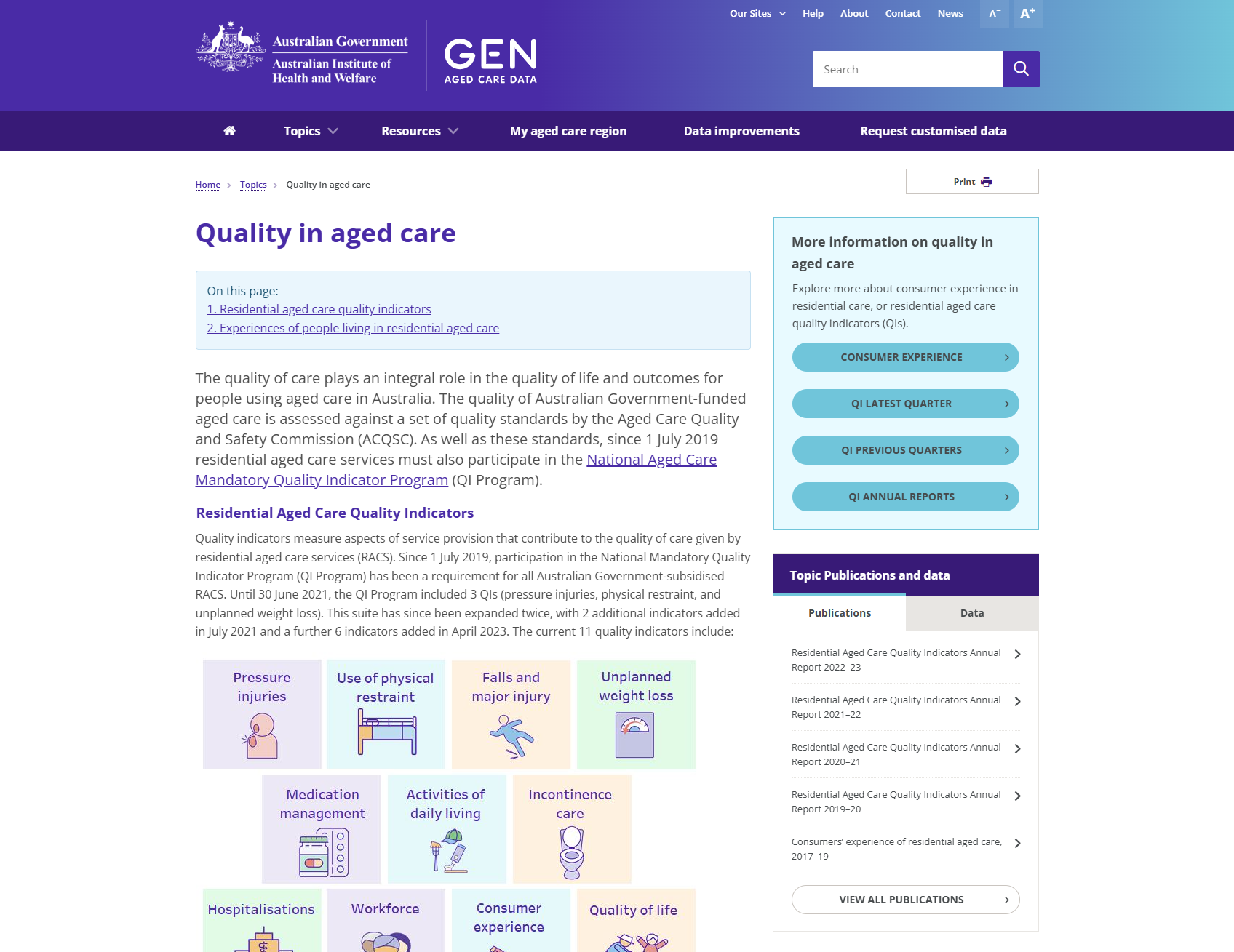
Quality in aged care - Gen Data Page
This resource provides an overview of quality indicators and consumer experience surveys in aged care. It details mandatory quality metrics, including physical and clinical indicators, and feedback from people in aged care, offering insights into service performance and supporting informed choices in aged care settings.
This resource may refer to information that will be updated from 1 November 2025 to align with the new Aged Care Act and Quality Standards.
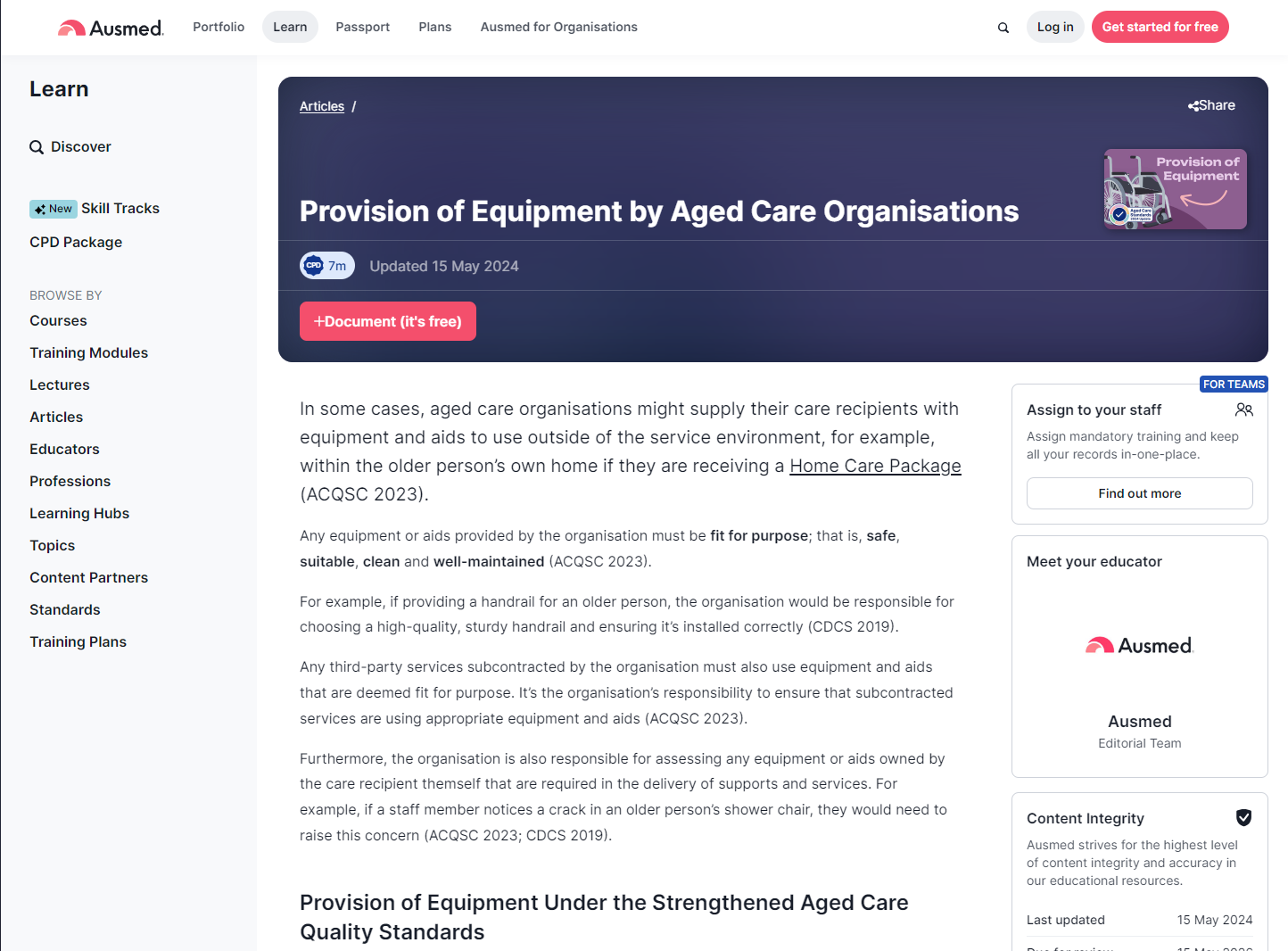
Provision of Equipment by Aged Care Organisations
This resource provides guidance for aged care organisations on supplying and managing equipment and aids for care recipients. It outlines the responsibilities for ensuring that all equipment is safe, clean, and fit for purpose. The document also covers subcontractor equipment and highlights the importance of regular maintenance and risk assessments.
This resource may refer to information that will be updated from 1 November 2025 to align with the new Aged Care Act and Quality Standards.
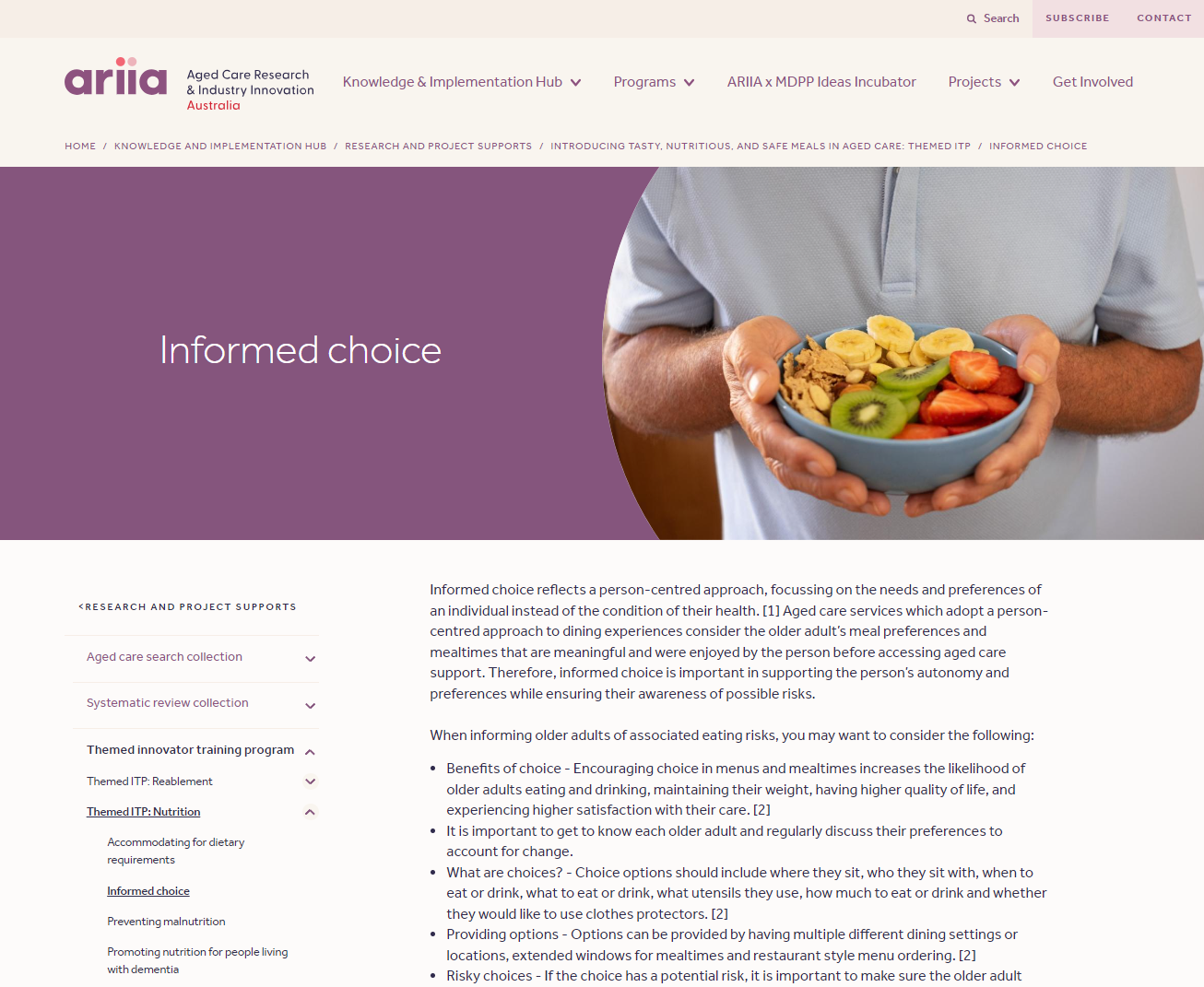
Nutrition - Informed choice
This resource discusses the importance of informed choice in aged care dining, emphasising a person-centred approach. It highlights the benefits of offering choice in meals and mealtimes, outlines how to manage decisions that involve risk, and provides tools for aged care workers to support resident autonomy while ensuring safety and satisfaction.
This resource may refer to information that will be updated from 1 November 2025 to align with the new Aged Care Act and Quality Standards.
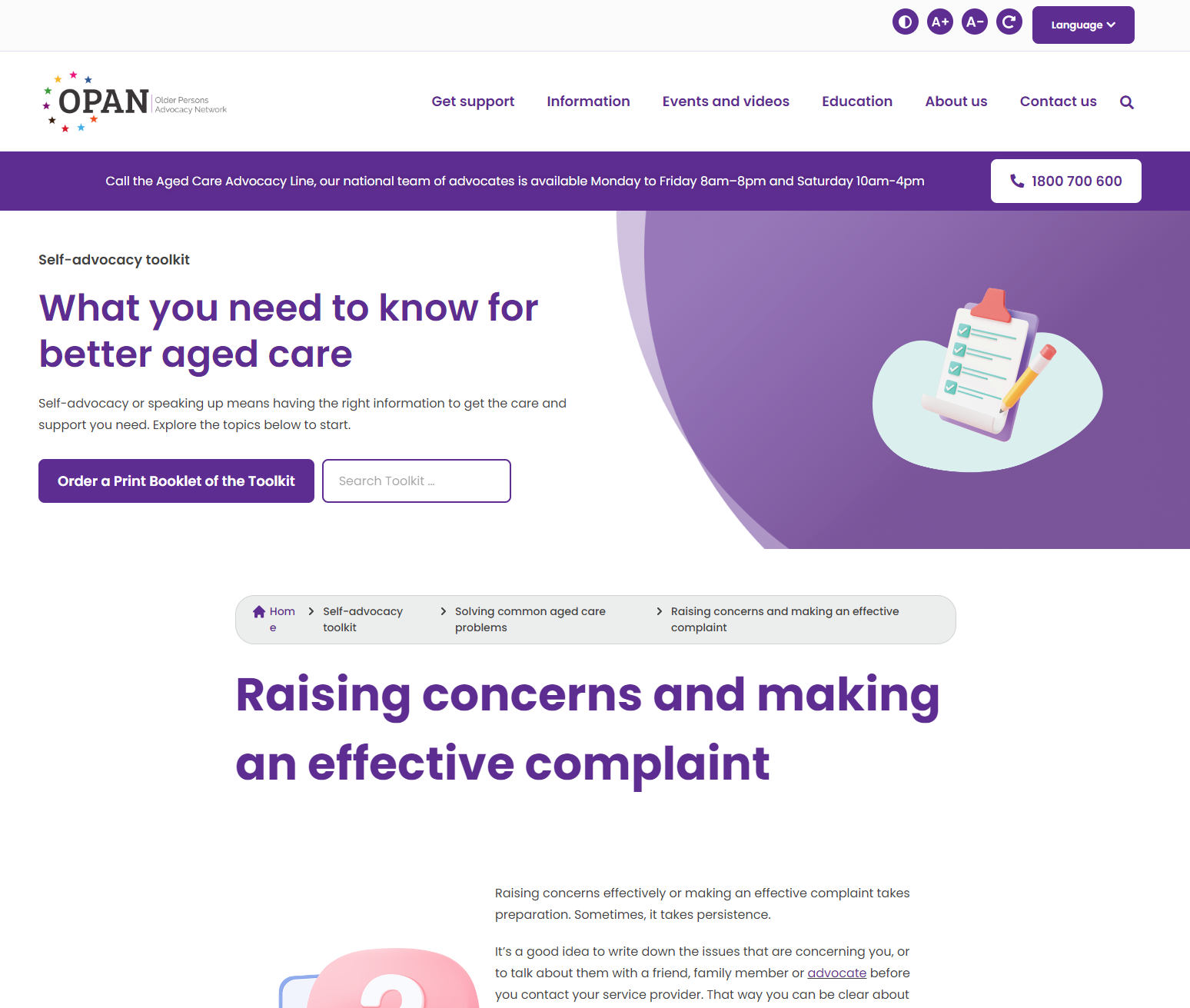
Raising concerns and making an effective complaint
This resource provides guidance on how to raise concerns and make an effective complaint in aged care. It offers practical tips, a checklist, and tools to help people clearly communicate their issues with service providers. It also explains how to escalate complaints to the Aged Care Quality and Safety Commission if necessary. This resource may refer to information that will be updated from 1 November 2025 to align with the new Aged Care Act and Quality Standards.
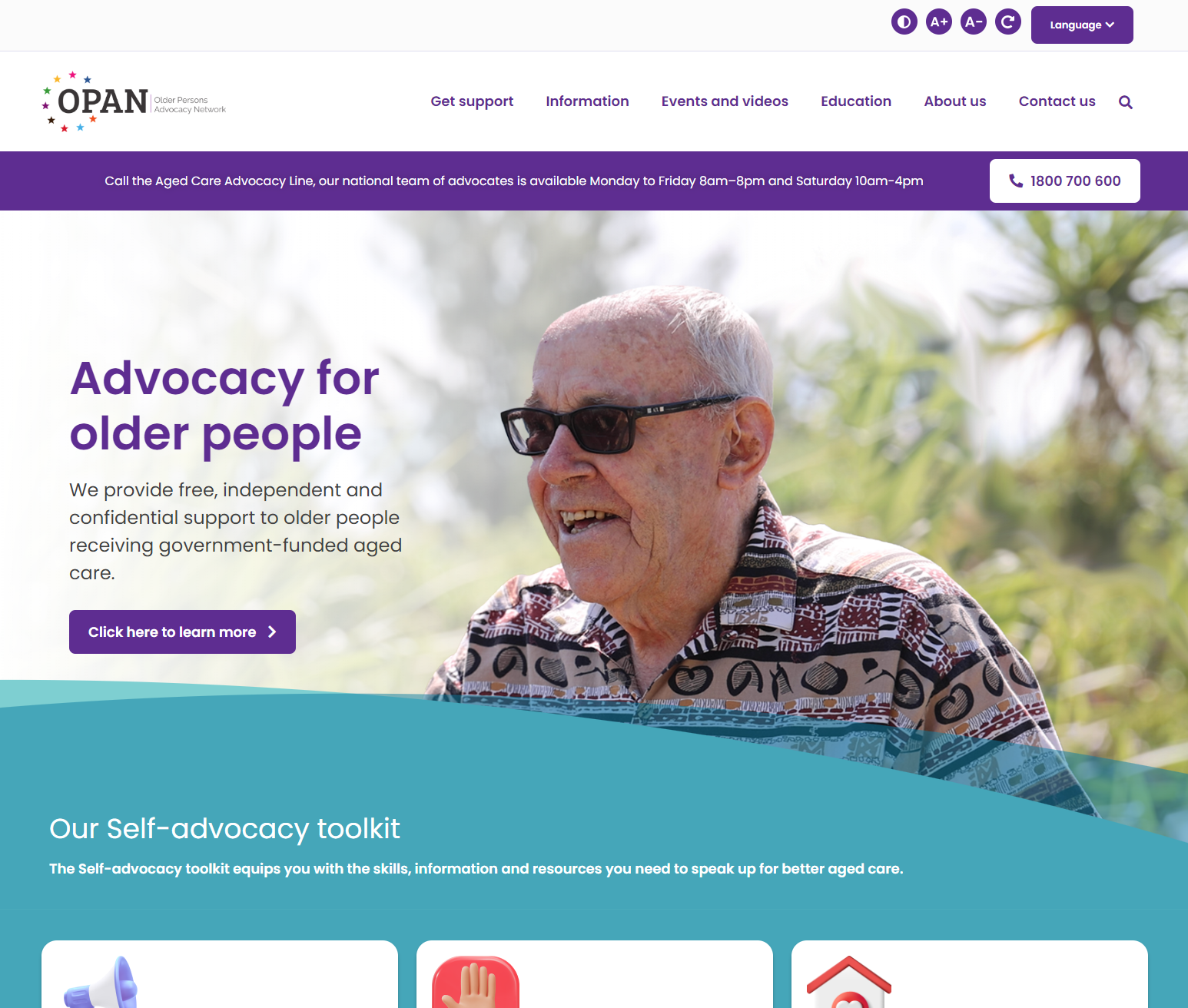
Older Persons Advocacy Network
This resource provides information on aged care advocacy services, offering free and confidential support to older people receiving government-funded aged care. It includes resources to help people understand their rights, navigate the aged care system, and access advocacy for issues such as care quality, decision-making, and protection from harm.
This resource may refer to information that will be updated from 1 November 2025 to align with the new Aged Care Act and Quality Standards.