The Quality Standards Resource Centre helps extend understanding of the strengthened Aged Care Quality Standards, which took effect from 1 November 2025. You can search for resources by using keywords, or filtering by standard, outcome and audience. Before using the Resource Centre, please read the terms of use.
National Strategic Framework for Rural and Remote Health
This framework addresses health service challenges in rural and remote areas, aiming to improve access, workforce sustainability, and care models through coordinated strategies. It guides policymakers and providers on adapting health services for rural contexts, fostering collaboration, and enhancing infrastructure, with a focus on equitable and culturally relevant care.
This resource may apply to healthcare contexts outside of aged care.
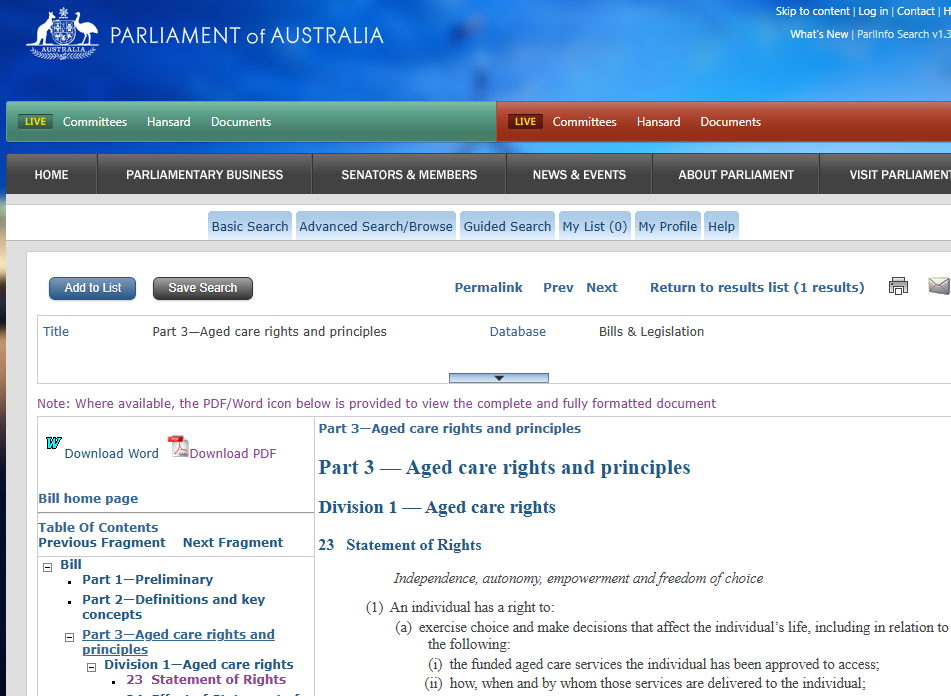
Part 3 - Aged care rights and principles
This resource is available on the Parliament of Australia website. It includes information about aged care rights and principles, including the Statement of Rights. The Statement of Rights outlines the rights that older people will have when accessing aged care services.
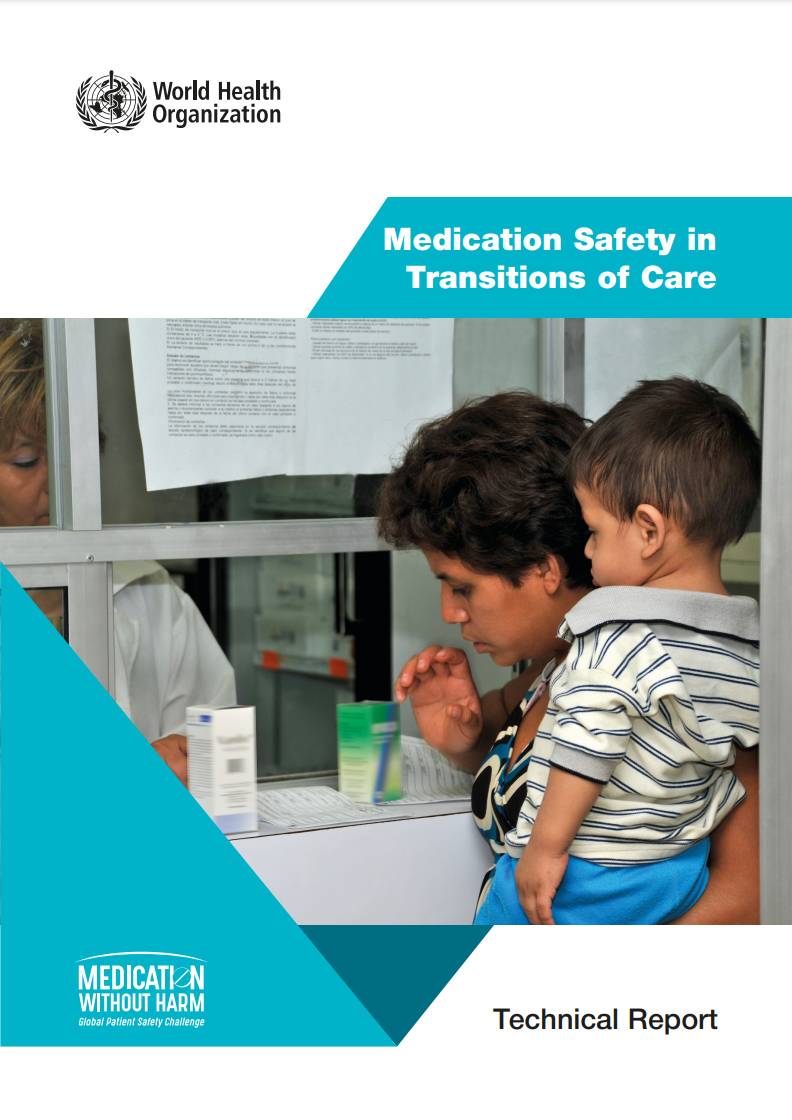
Medication safety in transitions of care: technical report
This resource outlines key actions to improve medication safety during transitions of care, focusing on reducing medication discrepancies and patient harm. It emphasises structured reconciliation, workforce training, patient engagement, and enhanced information systems.
This resource was developed internationally and therefore its applicability and usefulness may be limited.
Medication safety in polypharmacy: technical report
This resource provides guidance on safe medication management in polypharmacy, focusing on patient-centred approaches, team collaboration, and systematic reviews for people with long-term conditions. It includes tools and case studies to support health professionals.
This resource was developed internationally and therefore its applicability and usefulness may be limited.
Global strategy on infection prevention and control
This resource provides a global framework for infection prevention and control (IPC) in healthcare settings, aiming to reduce healthcare-associated infections and antimicrobial resistance. It offers strategic directions for achieving measurable improvements by 2030, supporting patient safety, healthcare worker protection, and sustainable health outcomes worldwide.
This resource was developed internationally and therefore its applicability and usefulness may be limited.
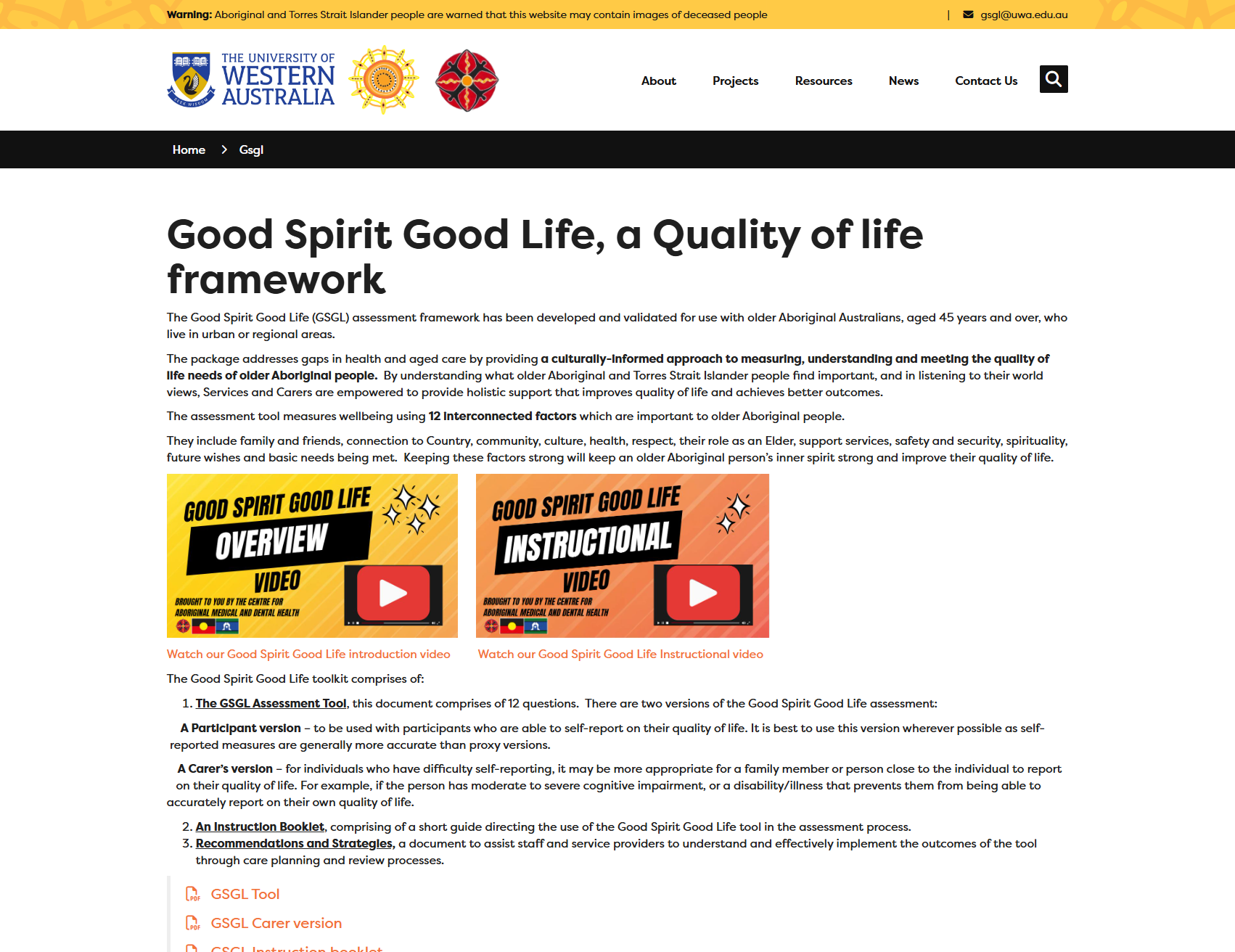
Good Spirit Good Life - a Quality of life framework
This resource describes the Good Spirit Good Life (GSGL) framework for assessing the quality of life of older Aboriginal people, focusing on culturally important factors such as connection to Country, family, and spirituality. It includes tools for both self-reporting and carer-assisted reporting.
This resource was developed by a state/territory government or organisation and therefore its applicability and usefulness may be limited.
Better Together: A practical guide to effective engagement with older people
This resource offers practical guidance on effective engagement with older people, highlighting diverse communication methods, cultural sensitivity, and inclusive strategies to capture meaningful input. It supports collaborative relationships and respectful dialogue with older people in decision-making processes.
This resource was developed by a state/territory government or organisation and therefore its applicability and usefulness may be limited.
Emergency plans and procedures
This resource outlines the requirement for all workplaces, including aged care facilities, to have an emergency plan under the model WHS laws. The plan must inform workers and visitors about what to do in emergencies, be easily accessible, and be regularly reviewed and updated to ensure effectiveness.
Guidance and requirements may differ across states and territories. Users are responsible for considering their individual circumstances and specific state-based regulations and legislation.
Digital Health
This resource outlines how digital health technologies, including telehealth, electronic medication management, and My Health Record, can improve healthcare delivery. It focuses on enhancing communication, reducing readmissions, and providing better access to care, especially in remote areas.
Not-for-Profit Governance Principles
This resource outlines the Not-for-Profit Governance Principles, a framework designed to help not-for-profit organisations, including aged care providers, achieve good governance. It covers key areas such as board roles, stakeholder engagement, risk management, and organisational culture. The principles provide practical guidance to improve governance practices, ensuring accountability and sustainability in the sector.
Translating and Interpreting Service (TIS National)
The Translating and Interpreting Service (TIS National) provides interpreting support for people with limited English proficiency and agencies requiring assistance to communicate with non-English-speaking clients. Services include telephone, on-site, and video interpreting, with options for both government and fee-paying clients across Australia.
Overview of Voluntary Assisted Dying
This resource provides an overview of voluntary assisted dying (VAD) in Australia, detailing eligibility criteria, procedures, and legal requirements. It covers how VAD laws vary across jurisdictions, safeguards in place, and responsibilities for health professionals and institutions. Health professionals can conscientiously object but may still have legal responsibilities.
Conformant clinical software products
This resource provides a register of conformant clinical software products that meet national digital health requirements, enabling functions like My Health Record access, health summary uploads, and prescription management. Organisations using the register should verify entries’ currency and accuracy as updates depend on software developers.
Infection prevention and control systems
This resource provides a detailed overview of infection prevention and control systems in healthcare settings. It highlights the use of standard and transmission-based precautions, hand hygiene, aseptic techniques, and workforce immunisation. The document outlines strategies to reduce infection risks and maintain clean, safe environments, ensuring comprehensive infection control management.
Infection Prevention and Control Advisory Committee
This resource outlines the role of the Infection Prevention and Control (IPC) Advisory Committee. The committee provides strategic advice to support national initiatives related to infection prevention and control, focusing on compliance with safety standards, infection surveillance, and improving engagement with clinicians and consumers to enhance IPC practices.
COVID-19 Information for workplaces - General
This resource provides guidance on minimising the spread of COVID-19, including aged care settings. It outlines vaccine information, risk assessments, physical distancing, hygiene and rapid antigen testing in the workplace. It also contains key resources such as signage, posters and translated information.
Clean and safe environment
This resource outlines processes to maintain a clean, safe, and hygienic environment in healthcare, including aged care. It provides guidance on infection control, environmental cleaning, and staff training to reduce risks and make sure high-quality care. The document also covers responding to environmental risks, maintaining equipment, and infection prevention practices.
Action 3.17 - Reprocessing of reusable equipment and devices
This resource outlines procedures for reprocessing reusable medical equipment and devices to minimise infection risks. It covers processes for ensuring compliance with national and international standards, maintaining traceability, and managing reprocessing for novel infections. It also highlights the importance of proper storage, transport, and workforce training to support safe reprocessing. This resource may apply to healthcare contexts outside of aged care.
Action 1.33: Welcoming environments
This resource provides guidance on creating welcoming environments in healthcare services, including aged care, to make sure Aboriginal and Torres Strait Islander people feel safe, respected, and supported. It outlines strategies for cultural safety, collaboration with communities, and improving access to care through inclusive design, training, and environmental changes.
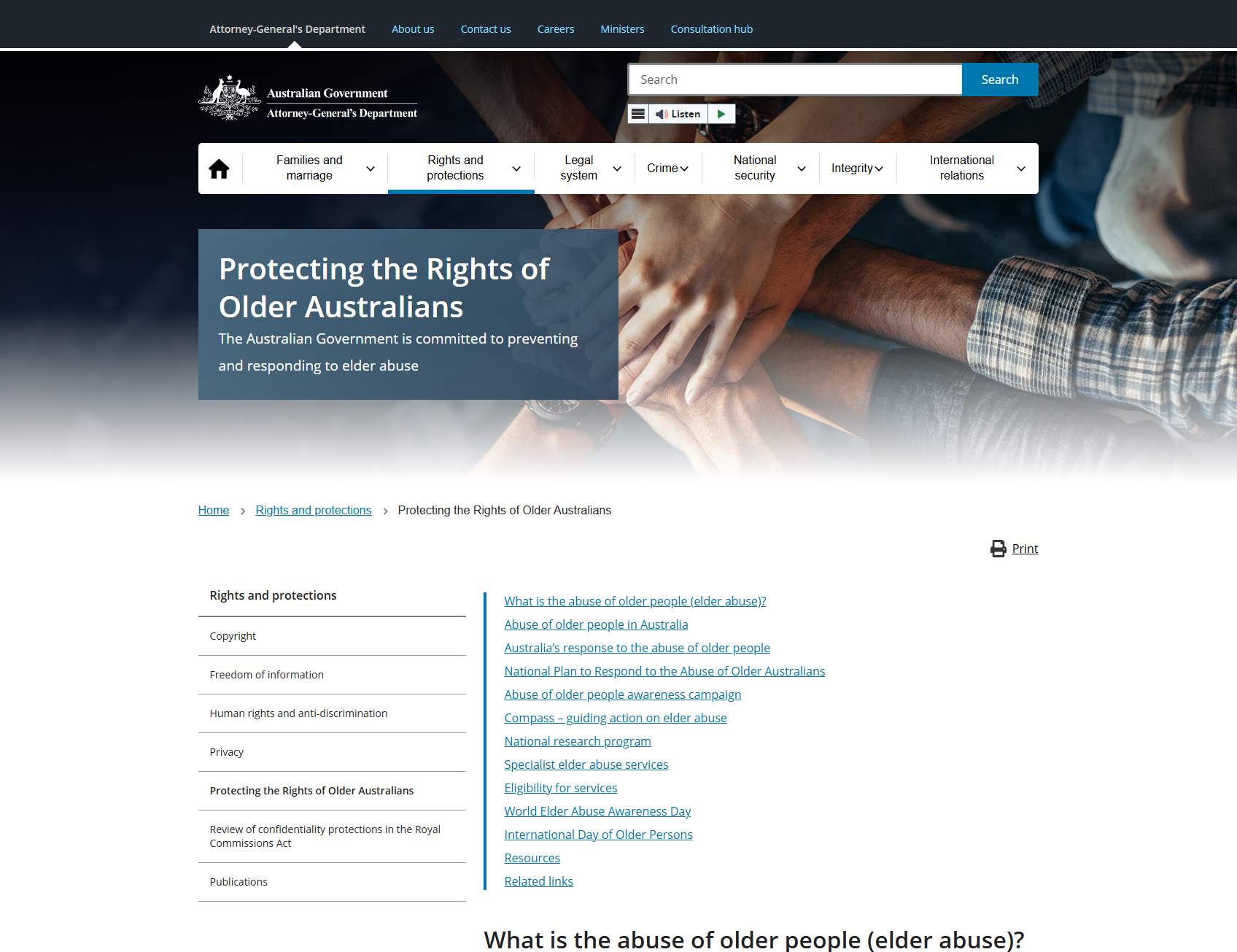
Protecting the Rights of Older Australians
This resource provides an overview of Australia’s approach to addressing the abuse of older people, including the National Plan, specialist services, awareness campaigns, and legal reforms. It aims to increase awareness, support prevention efforts, and offer accessible resources for those experiencing or at risk of abuse.