Aged care laws in Australia have now changed. The new Aged Care Act 2024 and Aged Care Rules 2025 now apply. While we complete updating of our website, including draft guidance and other materials, to align with the new laws, providers are advised to refer to the new Act and Rules for any required clarification of their obligations and legal responsibilities. Thank you for your patience.

Quality Standards Resource Centre

The Quality Standards Resource Centre helps extend understanding of the strengthened Aged Care Quality Standards, which take effect from 1 November 2025. The Resource Centre will be updated to reflect key changes made to the draft strengthened Standards. You can search for resources by using keywords, or filtering by standard, outcome, audience and theme. Before using the Resource Centre, please read the terms of use.

Displaying 1 to 20 of 32 result(s)
/quality-standards/palliaged-practice-centre

palliAGED - Practice Centre

Guidance

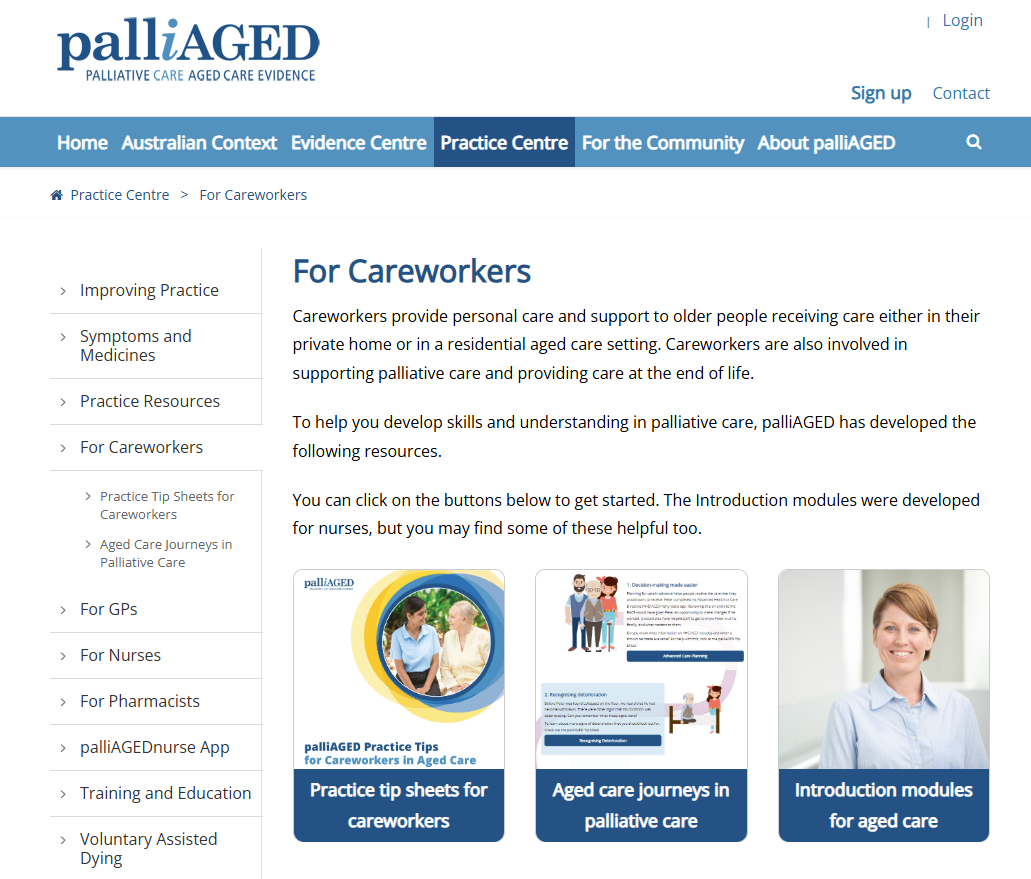
This resource provides information for care workers about palliative care. The Practice Centre provides links to, and information about, tools and resources to use in practice and improve care and outcomes in palliative care. It includes sections on improving practice, symptoms, medicines and tipsheets.
Author
External resource
Key Theme
Assessment and planning, Palliative and end of life care, Food and nutrition
Standard
3: The Care and Services, 5: Clinical Care, 6: Food and Nutrition
Outcomes
3.1 Assessment and planning, 5.7: Palliative care and end-of-life care, 6.2: Assessment of nutritional needs and preferences
palliAGED - Practice Centre
/quality-standards/palliaged-evidence-centre

palliAGED - Evidence Centre

Guidance

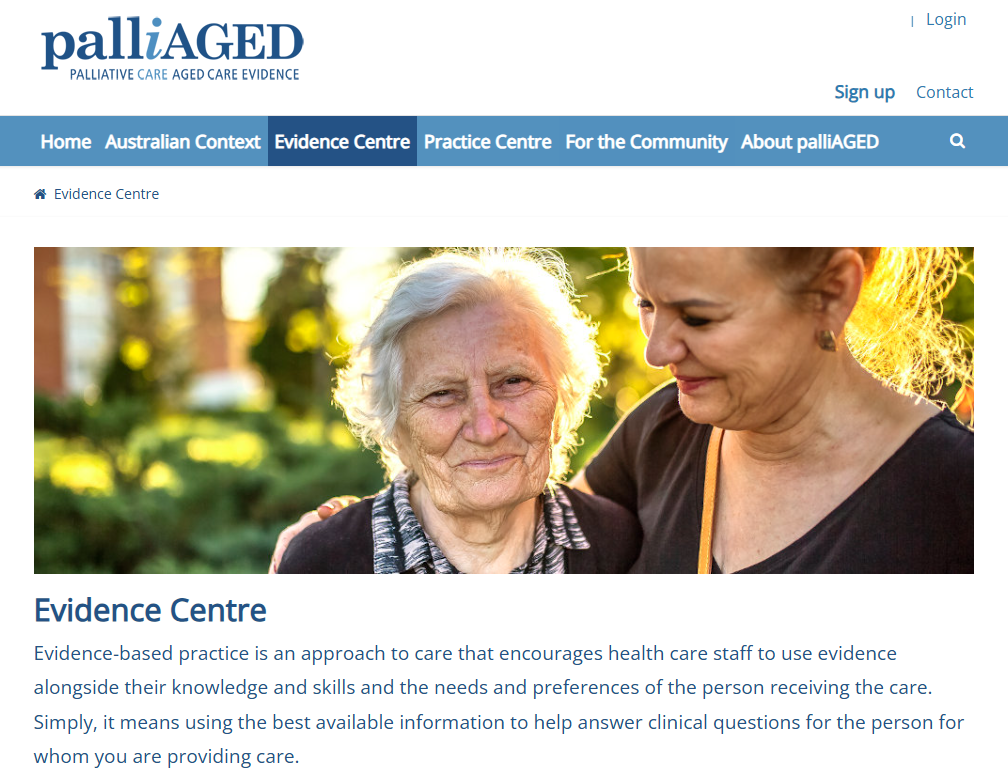
This resource provides evidence-based information for the healthcare sector about palliative care. It includes evidence summaries on topics related to palliative care, such as advance care planning, advocacy, care coordination, goals of care, nutrition and needs assessment.
Author
External resource
Key Theme
Assessment and planning, Palliative and end of life care, Food and nutrition
Standard
3: The Care and Services, 5: Clinical Care, 6: Food and Nutrition
Outcomes
3.1 Assessment and planning, 5.7: Palliative care and end-of-life care, 6.2: Assessment of nutritional needs and preferences
palliAGED - Evidence Centre
/quality-standards/malnutrition-universal-screening-tool

Malnutrition Universal Screening Tool

Tool

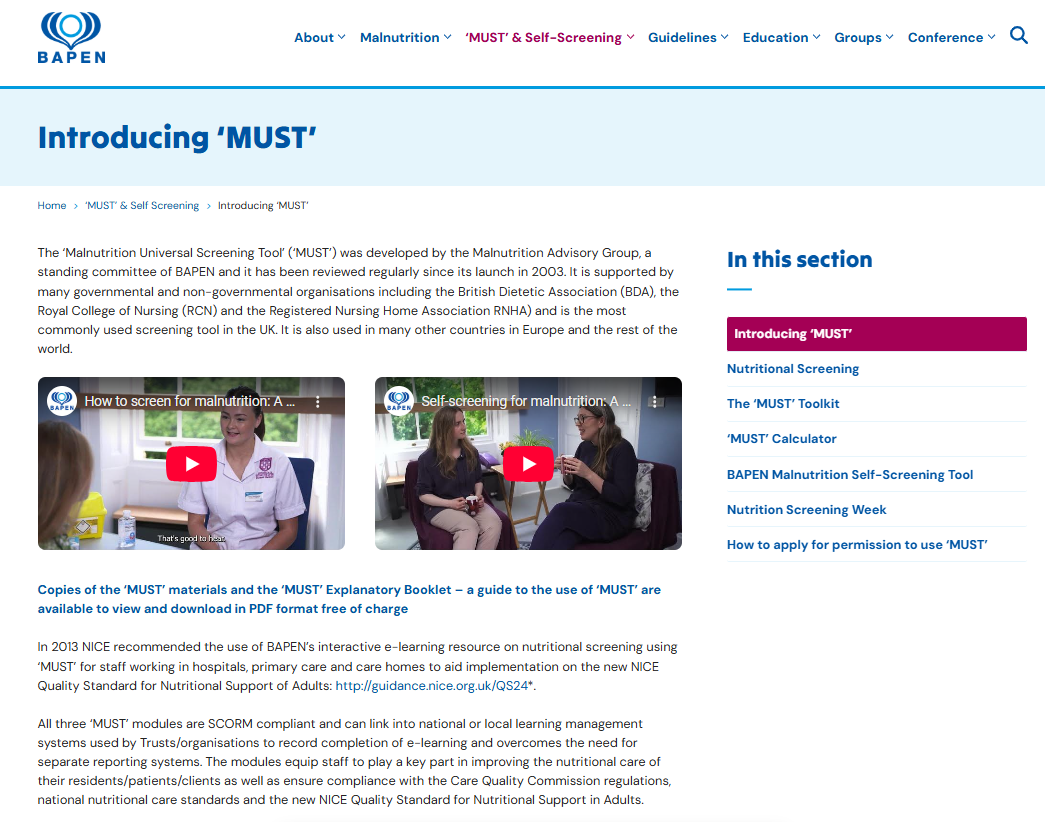
The ‘Malnutrition Universal Screening Tool’ (‘MUST’) is a widely used tool for identifying malnutrition risk in adults across various settings. It includes interactive e-learning modules with case studies and assessments, helping staff improve nutritional care and meet quality standards.

This resource was developed internationally and therefore its applicability and usefulness may be limited.
Author
External resource
Key Theme
Assessment and planning, Clinical safety, Food and nutrition
Standard
3: The Care and Services, 5: Clinical Care, 6: Food and Nutrition
Outcomes
3.1 Assessment and planning, 5.5: Safety of clinical care services, 6.2: Assessment of nutritional needs and preferences
Malnutrition Universal Screening Tool
/quality-standards/better-together-practical-guide-effective-engagement-older-people

Better Together: A practical guide to effective engagement with older people

Guidance

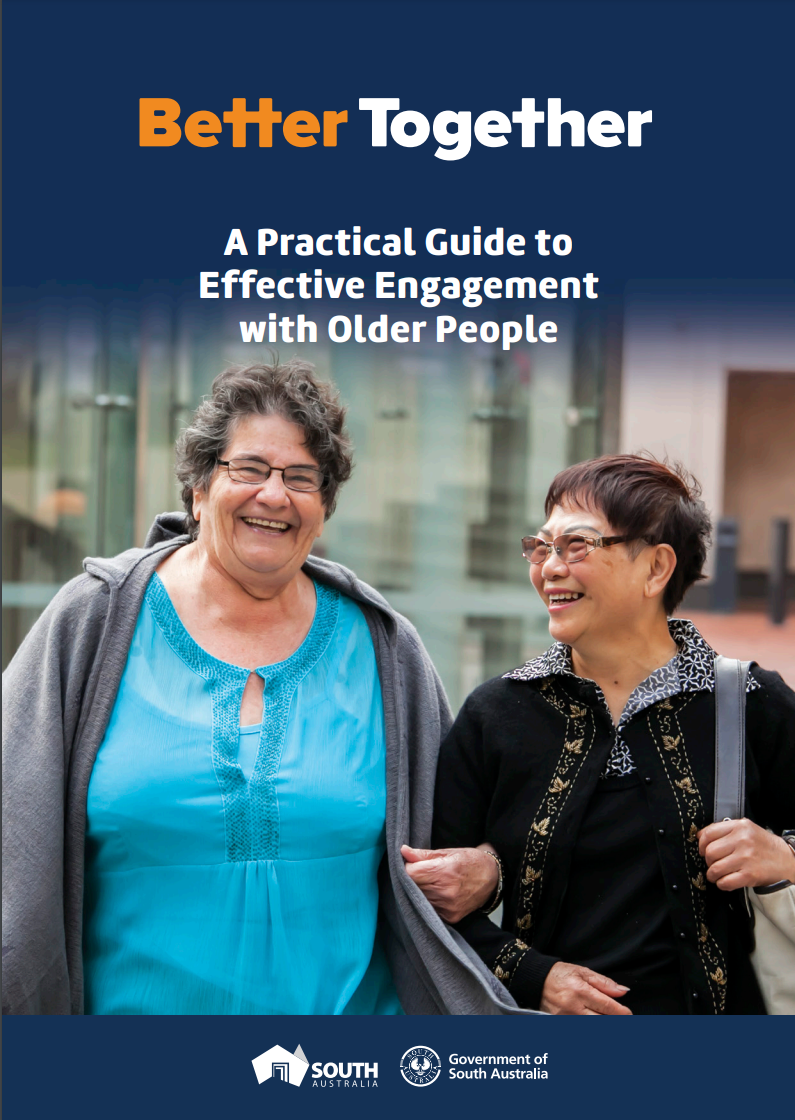
This resource offers practical guidance on effective engagement with older people, highlighting diverse communication methods, cultural sensitivity, and inclusive strategies to capture meaningful input. It supports collaborative relationships and respectful dialogue with older people in decision-making processes.

This resource was developed by a state/territory government or organisation and therefore its applicability and usefulness may be limited.
Author
External resource
Key Theme
Person-centred care, Corporate and clinical governance, Assessment and planning
Standard
1: The Individual, 2: The Organisation, 3: The Care and Services
Outcomes
1.1: Person-centred care, 2.1: Partnering with individuals, 3.1 Assessment and planning
Better Together: A practical guide to effective engagement with older people
/quality-standards/best-practice-food-and-nutrition-manual-aged-care

Best Practice Food and Nutrition Manual for Aged Care

Guidance
Published date

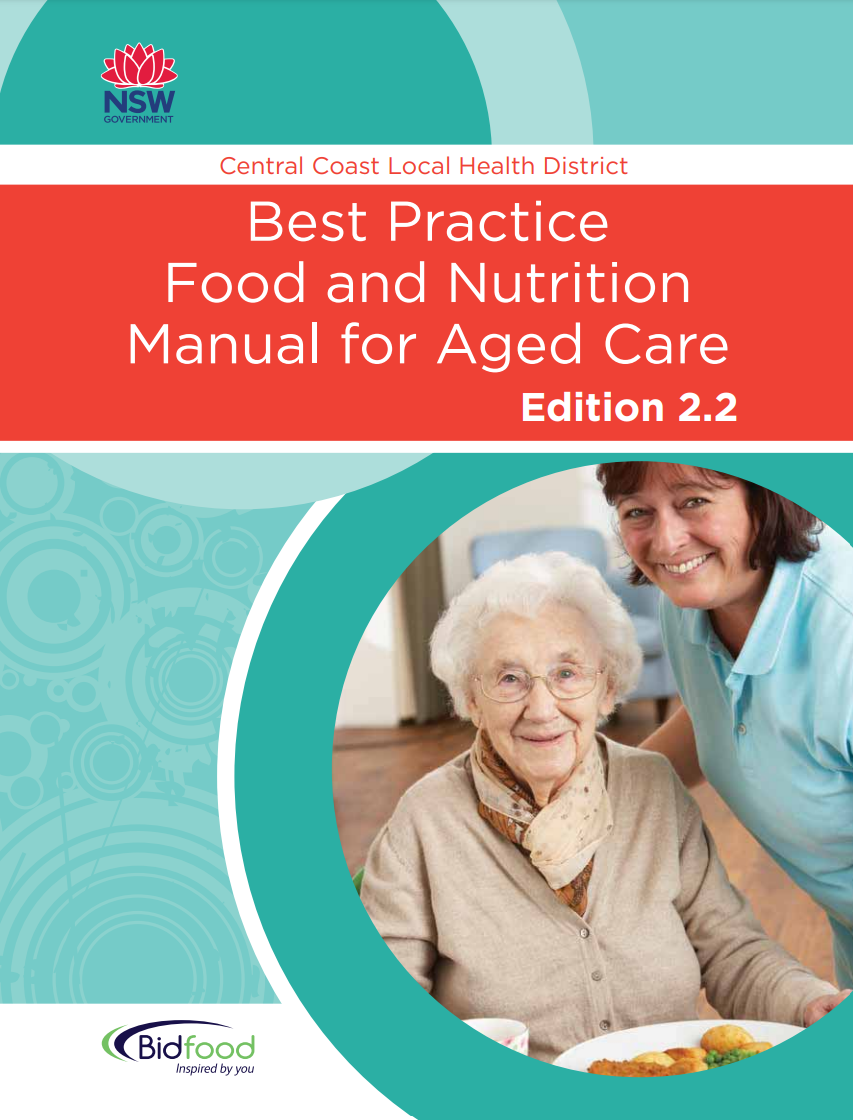
This manual offers practical guidelines on food and nutrition best practices in aged care homes, covering menu planning, meal enjoyment, hydration, and malnutrition prevention. It includes checklists, screening tools, and dietary considerations tailored to the needs of older people.

This resource was developed by a state/territory government or organisation and therefore its applicability and usefulness may be limited.
Author
External resource
Key Theme
Clinical safety, Food and nutrition
Standard
5: Clinical Care, 6: Food and Nutrition
Outcomes
5.5: Safety of clinical care services, 6.2: Assessment of nutritional needs and preferences, 6.3: Provision of food and drinks, 6.4: Dining experience
Best Practice Food and Nutrition Manual for Aged Care
/quality-standards/standardised-care-processes

Standardised care processes

Guidance
Last Updated

This resource offers evidence-based standardised care processes for aged care providers, covering high-risk clinical areas such as falls, pain, incontinence, and dehydration. It provides structured guidelines to support best practices, ensuring consistent and safe care for older people in residential settings.

This resource was developed by a state/territory government or organisation and therefore its applicability and usefulness may be limited.
Author
External resource
Key Theme
Medication management, Clinical safety, Delivering comprehensive care and services, Palliative and end of life care, Food and nutrition
Standard
5: Clinical Care, 6: Food and Nutrition
Outcomes
5.3: Safe and quality use of medicines, 5.5: Safety of clinical care services, 5.6 Cognitive impairment  , 5.7: Palliative care and end-of-life care, 6.2: Assessment of nutritional needs and preferences, 6.3: Provision of food and drinks
Standardised care processes
/quality-standards/tips-engaging-elders

Tips for engaging with Elders

Guidance

This resource provides tips for engaging with Elders from Aboriginal communities. It includes practical advice for communicating and engaging in a respectful way, with a focus on awareness and understanding of the person and their community.
Author
External resource
Key Theme
Person-centred care, Corporate and clinical governance
Standard
1: The Individual, 2: The Organisation
Outcomes
1.1: Person-centred care, 2.1: Partnering with individuals
Tips for engaging with Elders
/quality-standards/residential-aged-care-food-services-discussion-paper

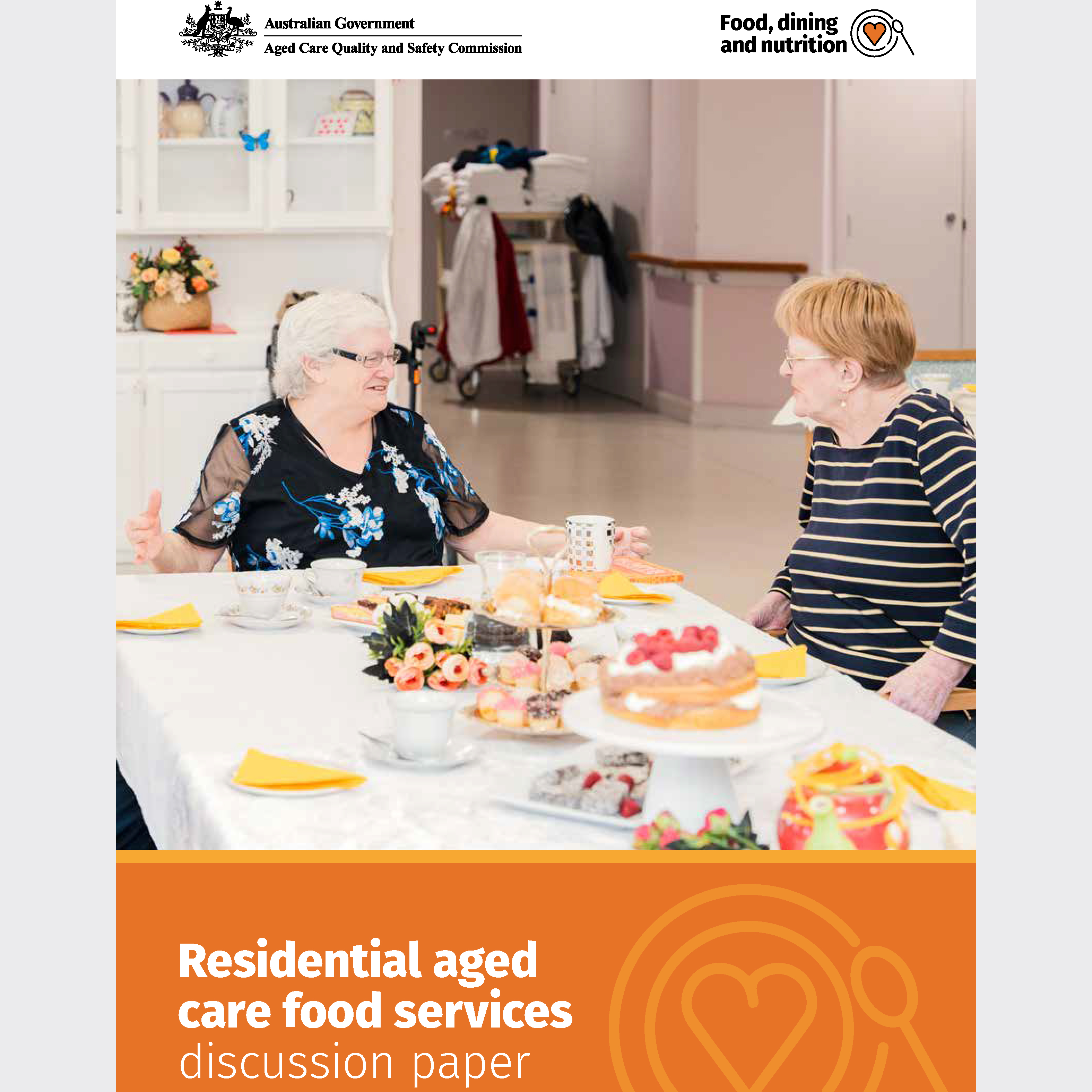
Residential aged care food services discussion paper

Discussion paper
Published date

This paper presents a high-level overview of contemporary evidence regarding food services in residential aged care settings.

Author
Aged Care Quality & Safety Commission
Key Theme
Food and nutrition
Standard
6: Food and Nutrition
Outcomes
6.1: Partnering with individuals on food and drinks, 6.2: Assessment of nutritional needs and preferences, 6.3: Provision of food and drinks, 6.4: Dining experience
Cover page - Residential aged care food services discussion paper with two women at a table enjoying a meal
/quality-standards/cultural-considerations-food-nutrition-and-dining

Cultural considerations in Food, Nutrition and Dining

Guidance

This resource provides guidance on incorporating cultural considerations into food, nutrition, and dining in aged care settings. It highlights the importance of understanding diverse dietary preferences, religious practices, and family dynamics to support person-centred care, improve wellbeing, and promote inclusivity within the aged care environment. 

This resource may refer to information that will be updated from 1 November 2025 to align with the new Aged Care Act and Quality Standards.
Author
Aged Care Quality & Safety Commission
Key Theme
Food and nutrition, Person-centred care, Delivering comprehensive care and services
Standard
6: Food and Nutrition, 1: The Individual, 7: The Residential Community
Outcomes
6.1: Partnering with individuals on food and drinks, 6.2: Assessment of nutritional needs and preferences, 1.1: Person-centred care, 7.1: Daily living
Cultural considerations in Food, Nutrition and Dining
/quality-standards/food-thought-positive-stories

Food for thought - positive stories

Guidance

This resource shares positive stories about food, nutrition, and dining improvements in aged care facilities. It highlights initiatives that enhance the dining experience, including resident involvement in meal planning, use of fresh and seasonal ingredients, and creating more social and enjoyable mealtime environments. These stories demonstrate best practices and innovative approaches to improve resident satisfaction and wellbeing. 
Author
Aged Care Quality & Safety Commission
Key Theme
Food and nutrition
Standard
6: Food and Nutrition
Outcomes
6.1: Partnering with individuals on food and drinks, 6.2: Assessment of nutritional needs and preferences, 6.3: Provision of food and drinks, 6.4: Dining experience
Food for thought - positive stories
/quality-standards/free-aged-care-translation-service

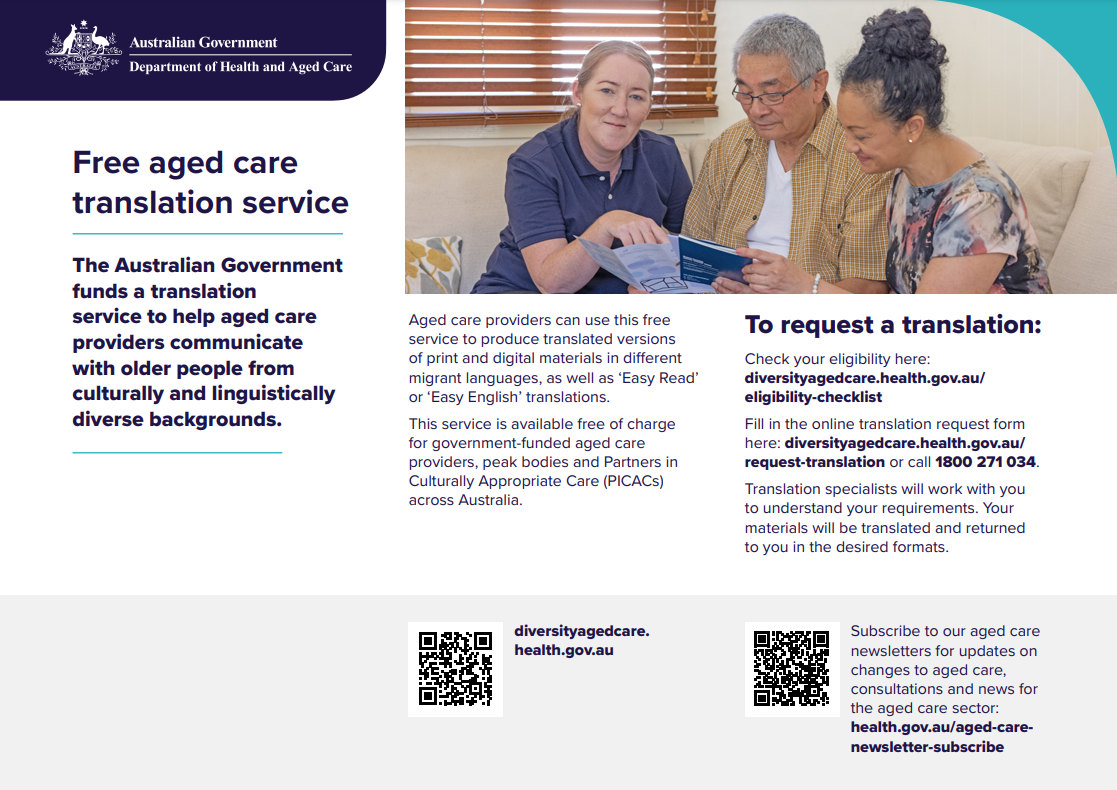
Free aged care translation service

Brochure
Published date

This resource provides information on a free translation and interpreting service funded by the government for aged care providers. It supports effective communication with older people from diverse backgrounds, offering language translation, sign language, and captioning services to enhance accessibility and inclusivity in aged care. 

This resource may refer to information that will be updated from 1 November 2025 to align with the new Aged Care Act and Quality Standards.
Author
Department of Health, Disability and Ageing
Key Theme
Person-centred care, Corporate and clinical governance, Delivering comprehensive care and services
Standard
1: The Individual, 2: The Organisation, 3: The Care and Services
Outcomes
1.1: Person-centred care, 2.1: Partnering with individuals, 3.3: Communicating for safety and quality
Free aged care translation service
/quality-standards/food-nutrition-dining-resources-providers

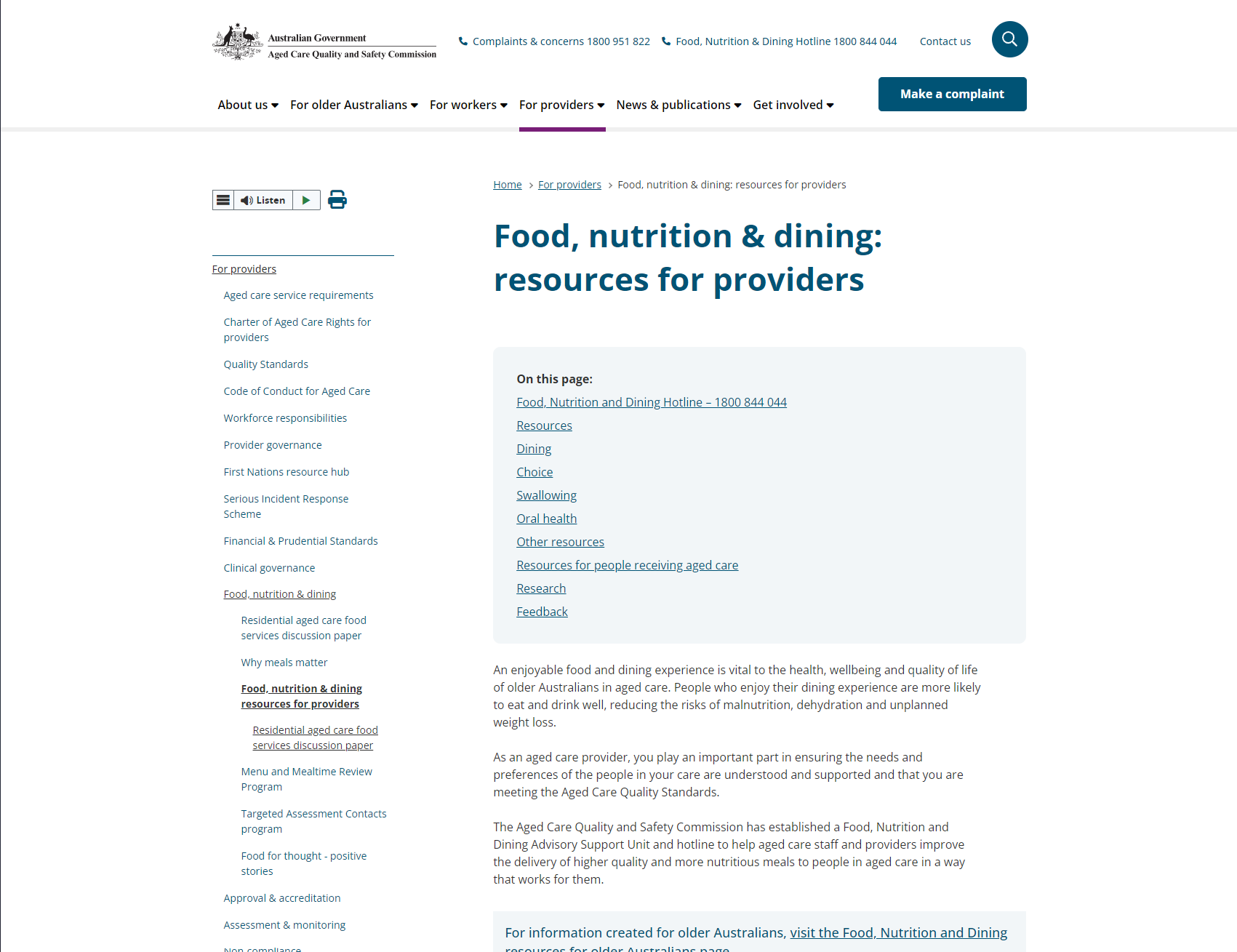
Food, nutrition & dining: resources for providers

Guidance

This resource provides tools and guidance for aged care providers to ensure quality food, nutrition, and dining experiences. It includes hotlines, resources for dining, choice, swallowing, and oral health, as well as webinars, research findings, and practical tips to support older adults' wellbeing and meet care standards. 

This resource may refer to information that will be updated from 1 November 2025 to align with the new Aged Care Act and Quality Standards.
Author
Aged Care Quality & Safety Commission
Key Theme
Clinical safety, Food and nutrition, Delivering comprehensive care and services
Standard
5: Clinical Care, 6: Food and Nutrition, 7: The Residential Community
Outcomes
5.5: Safety of clinical care services, 6.1: Partnering with individuals on food and drinks, 6.2: Assessment of nutritional needs and preferences, 6.3: Provision of food and drinks, 6.4: Dining experience, 7.1: Daily living
Food, nutrition & dining: resources for providers
/quality-standards/improving-aged-care-speech-pathology-why-it-matters-and-how-it-helps

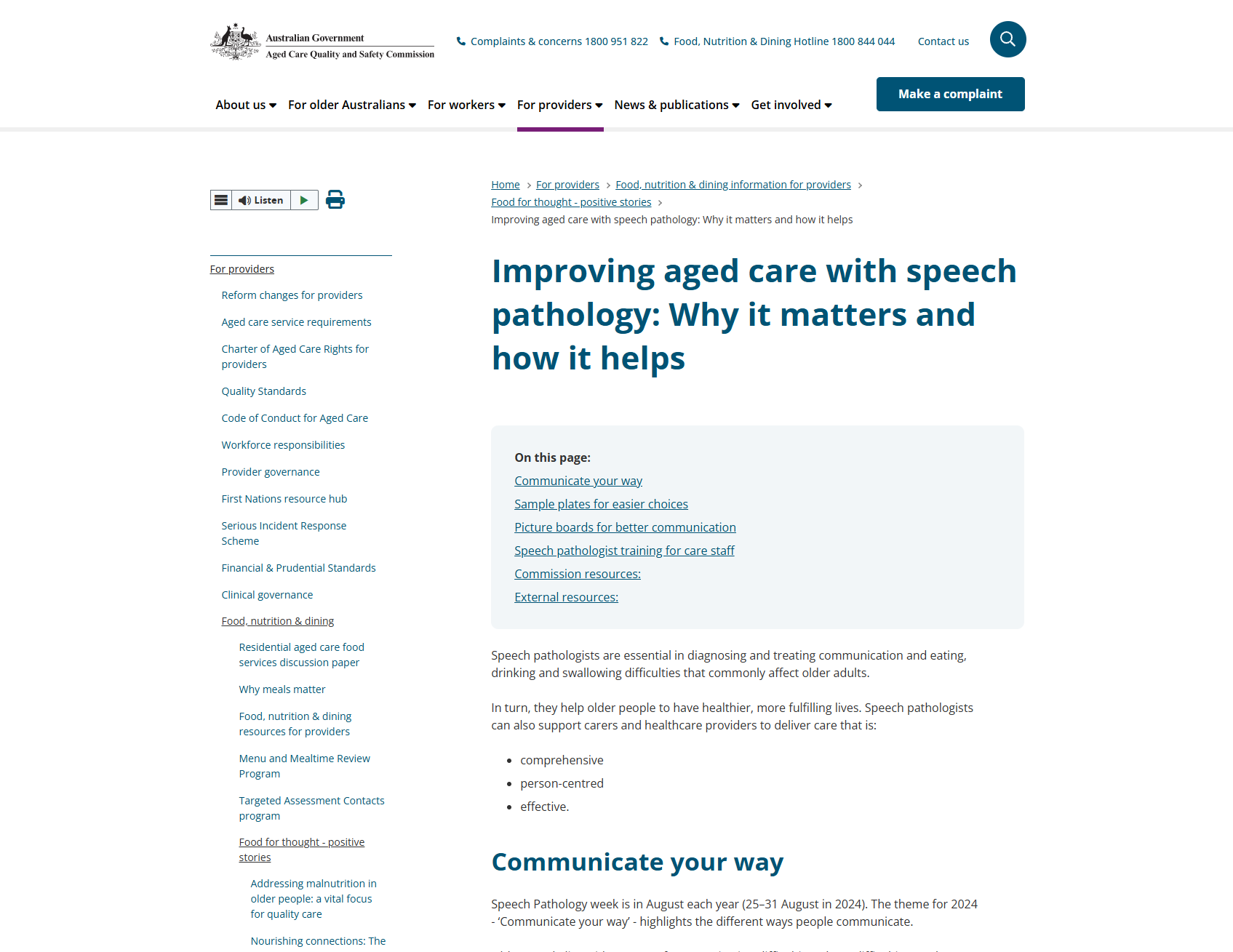
Improving aged care with speech pathology: Why it matters and how it helps

Guidance

This page highlights the role of speech pathologists in supporting older people with communication, eating, drinking, and swallowing difficulties. It provides resources for aged care providers on how to improve care quality through effective communication tools and tailored strategies. This resource includes practical examples, like sample plates and picture boards, for enhancing dining experiences and supporting individual choice. 

This resource may refer to information that will be updated from 1 November 2025 to align with the new Aged Care Act and Quality Standards.
Author
Aged Care Quality & Safety Commission
Key Theme
Assessment and planning, Delivering comprehensive care and services, Food and nutrition
Standard
3: The Care and Services, 5: Clinical Care, 6: Food and Nutrition
Outcomes
3.1 Assessment and planning, 5.4: Comprehensive care, 6.2: Assessment of nutritional needs and preferences
Improving aged care with speech pathology: Why it matters and how it helps
/quality-standards/governing-reform-aged-care-program

Governing for Reform in Aged Care Program

Guidance

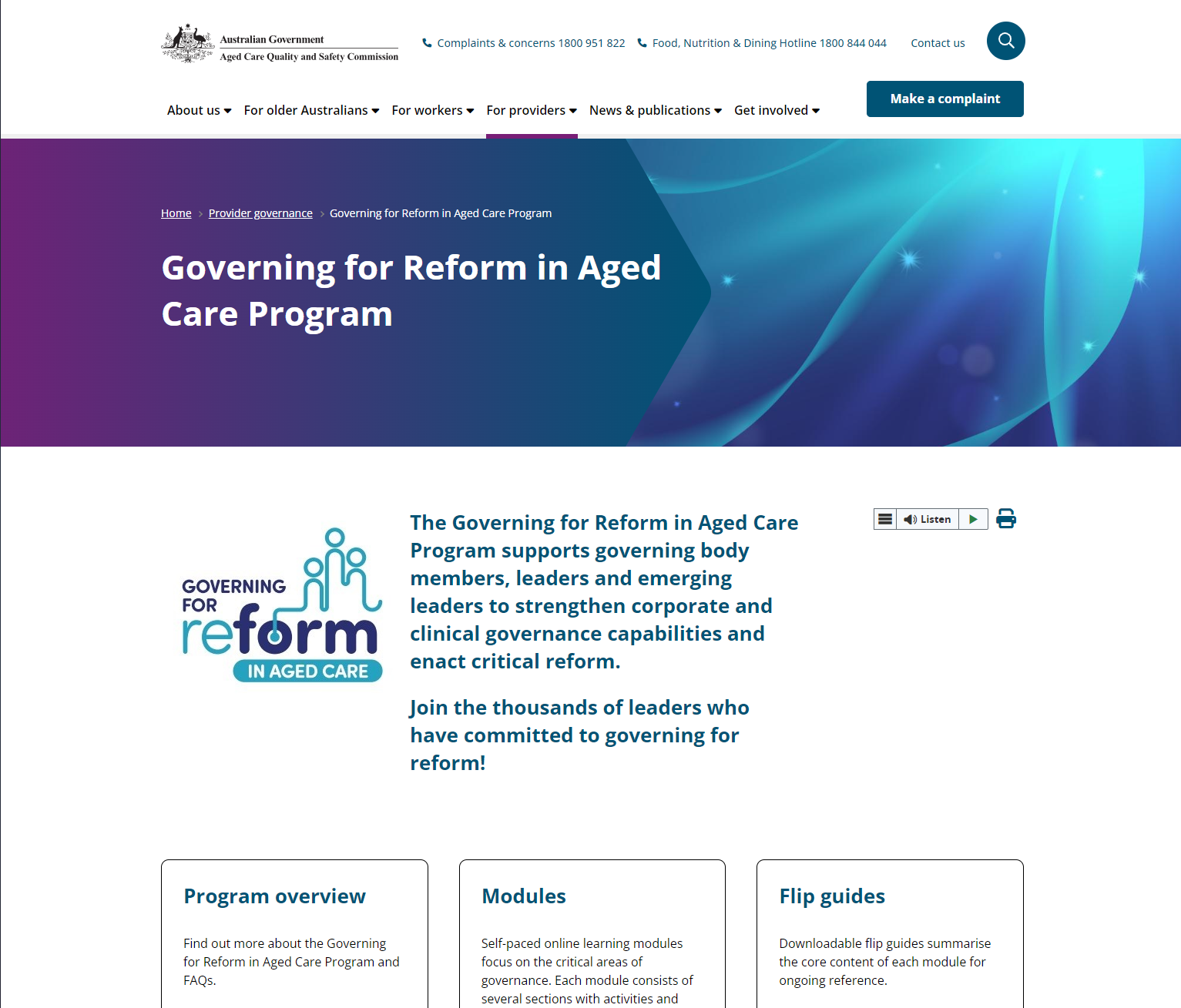
This resource outlines the Governing for Reform in Aged Care Program, designed to strengthen corporate and clinical governance capabilities for aged care leaders. It provides tools, online learning modules, webinars, and podcasts to support governance improvement and help leaders engage in reform efforts. 

This resource may refer to information that will be updated from 1 November 2025 to align with the new Aged Care Act and Quality Standards. 

Author
Aged Care Quality & Safety Commission
Key Theme
Corporate and clinical governance, Accountability and quality system, Risk management system, Incident management system, Feedback and complaints management system, Information management system, Workforce and human resources management, Emergency and disaster management
Standard
2: The Organisation
Outcomes
2.1: Partnering with individuals, 2.2a: Quality, safety and inclusion culture to support aged care workers to deliver quality care, 2.3: Accountability, quality system and policies and procedures, 2.4: Risk management, 2.5: Incident management, 2.6a: Complaints and feedback management for aged care workers, 2.6b: Complaints and feedback management for individuals, 2.7: Information management, 2.8: Workforce planning, 2.9: Human resource management, 2.10: Emergency and disaster management
Governing for Reform in Aged Care Program
/quality-standards/food-focus-group-resources

Food focus group resources

Guidance
Published date

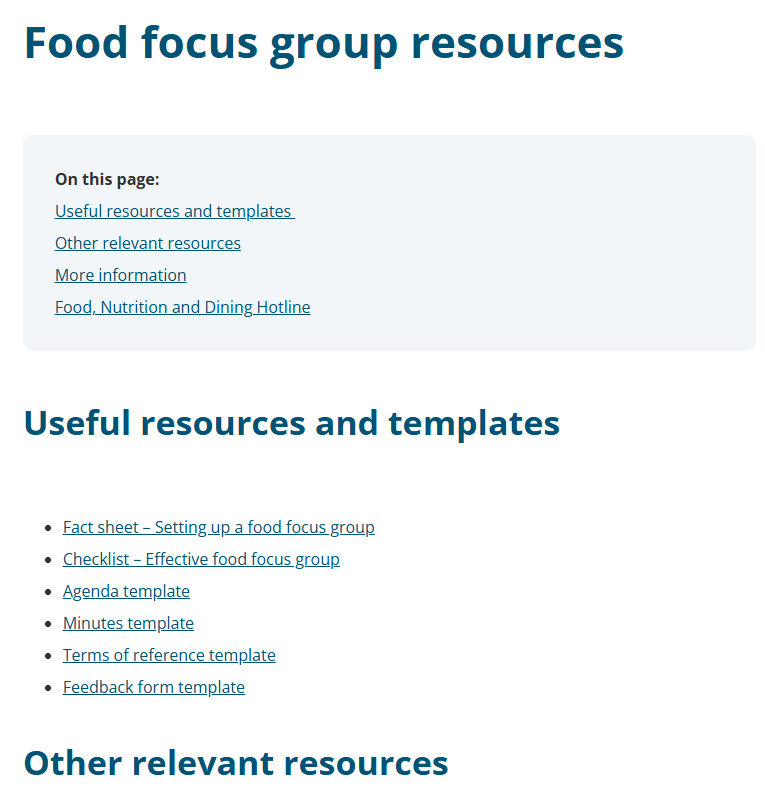
This resource is a collection of resources about food focus groups. It includes a fact sheet about setting up a food focus group and a checklist for an effective food focus group. It also contains associated templates, including agenda, minutes, terms of reference and feedback form. 

This resource may refer to information that will be updated from 1 November 2025 to align with the new Aged Care Act and Quality Standards.
Author
Aged Care Quality & Safety Commission
Key Theme
Person-centred care, Corporate and clinical governance, Food and nutrition
Standard
1: The Individual, 2: The Organisation, 6: Food and Nutrition
Outcomes
1.1: Person-centred care, 2.1: Partnering with individuals, 6.1: Partnering with individuals on food and drinks
Food focus group resources
/quality-standards/half-story-guide-meaningful-consultation-people-living-dementia-families-and-carers

Half the story: A guide to meaningful consultation with people living with dementia, families and carers

Guidance
Published date

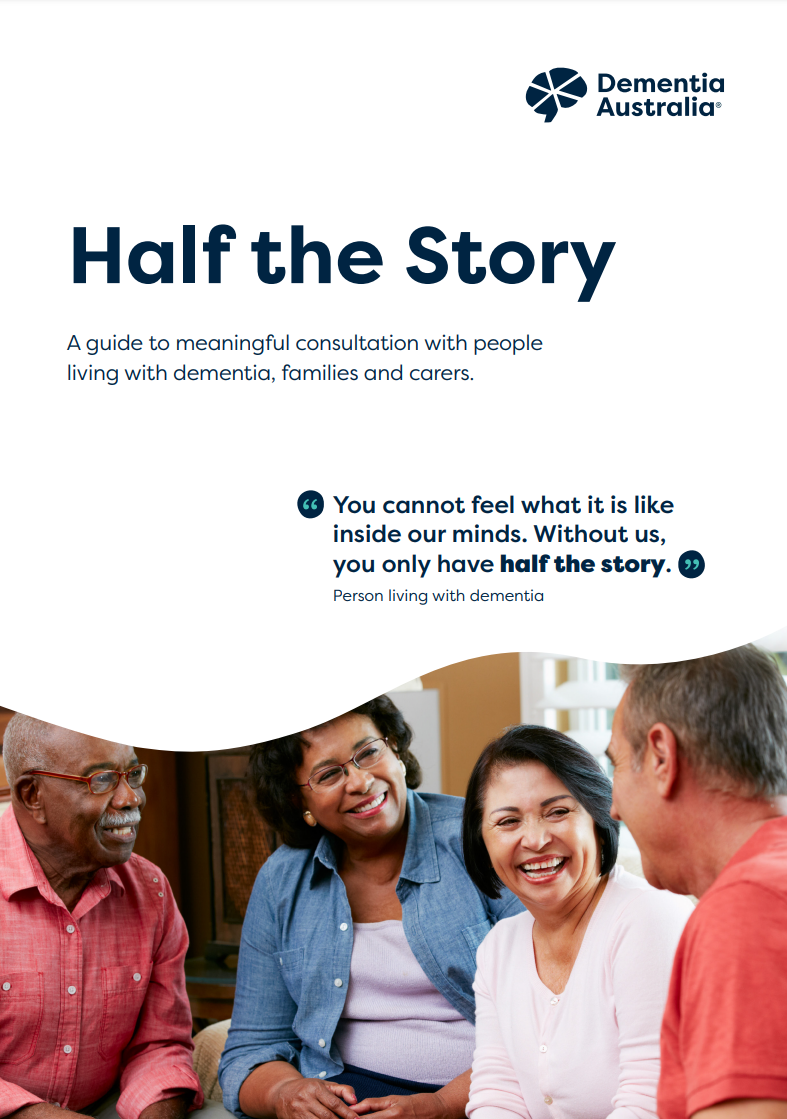
This resource is a guide for meaningful consultation with people living with dementia, their families, and carers. It covers planning, ethical considerations, communication methods, and ways to improve accessibility. The guide offers strategies to ensure the voices of those living with dementia are respected, valued, and effectively integrated into decision-making processes.
Author
External resource
Key Theme
Choice, independence and quality of life, Corporate and clinical governance, Assessment and planning
Standard
1: The Individual, 2: The Organisation, 3: The Care and Services
Outcomes
1.3: Choice, independence and quality of life, 2.1: Partnering with individuals, 3.1 Assessment and planning
Half the story: A guide to meaningful consultation with people living with dementia, families and carers
/quality-standards/centre-cultural-diversity-ageing-resources

Centre for Cultural Diversity in Ageing - Resources

Guidance

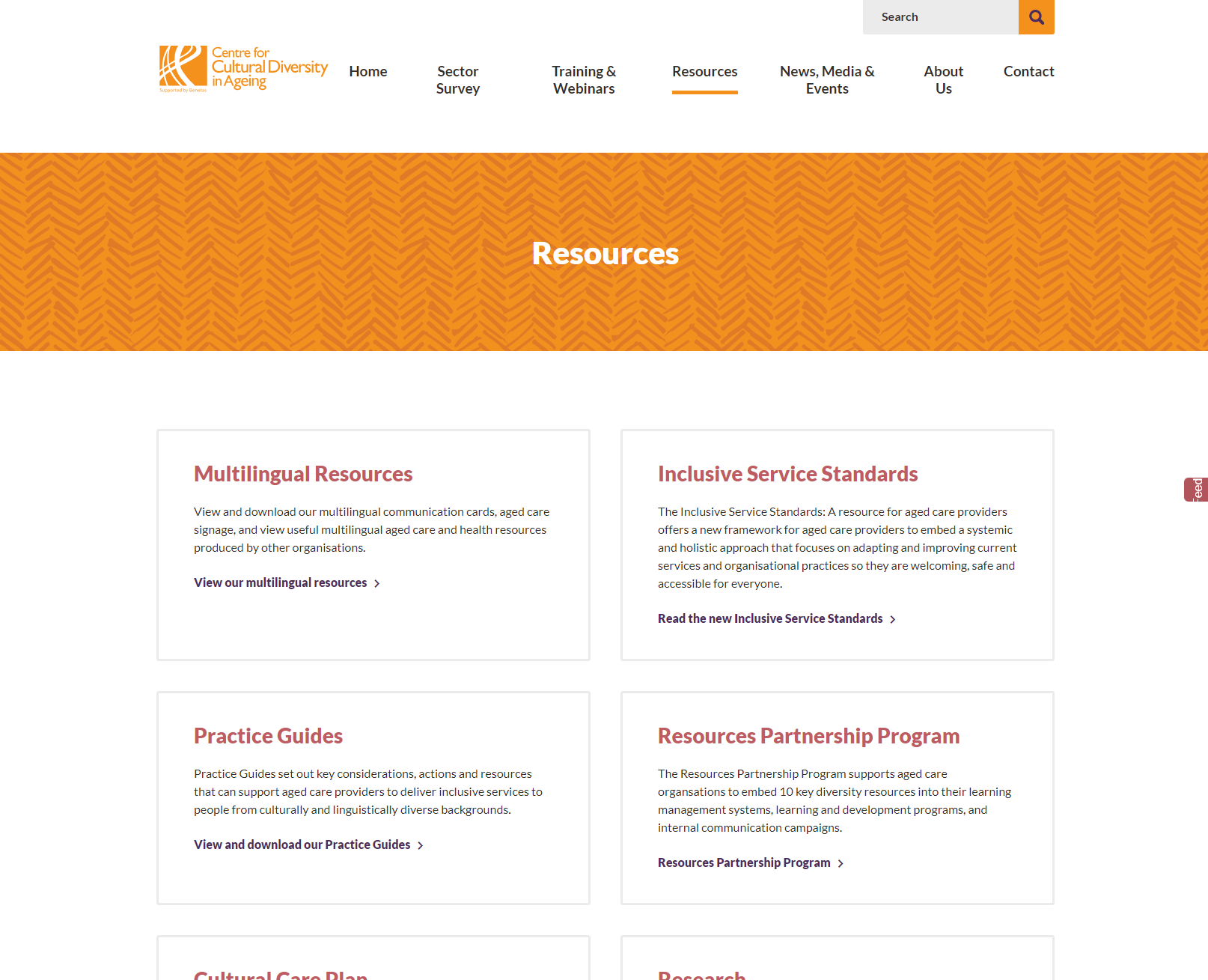
This page offers a wide range of resources aimed at helping aged care providers deliver culturally inclusive services. It includes multilingual communication cards, cultural care plans, and practice guides that help address the cultural, linguistic, and spiritual needs of people in care. The resources make sure aged care services are accessible, safe, and appropriate for culturally and linguistically diverse populations​.

Author
External resource
Key Theme
Person-centred care, Corporate and clinical governance, Care coordination and transitions, Food and nutrition
Standard
1: The Individual, 2: The Organisation, 3: The Care and Services, 6: Food and Nutrition
Outcomes
1.1: Person-centred care, 2.1: Partnering with individuals, 3.2: Delivery of funded aged care services, 3.4: Planning and coordination of funded aged care services, 6.1: Partnering with individuals on food and drinks, 6.2: Assessment of nutritional needs and preferences
Centre for Cultural Diversity in Ageing - Resources
/quality-standards/eat-health-australian-dietary-guidelines

Eat for health: Australian dietary guidelines

Guidance

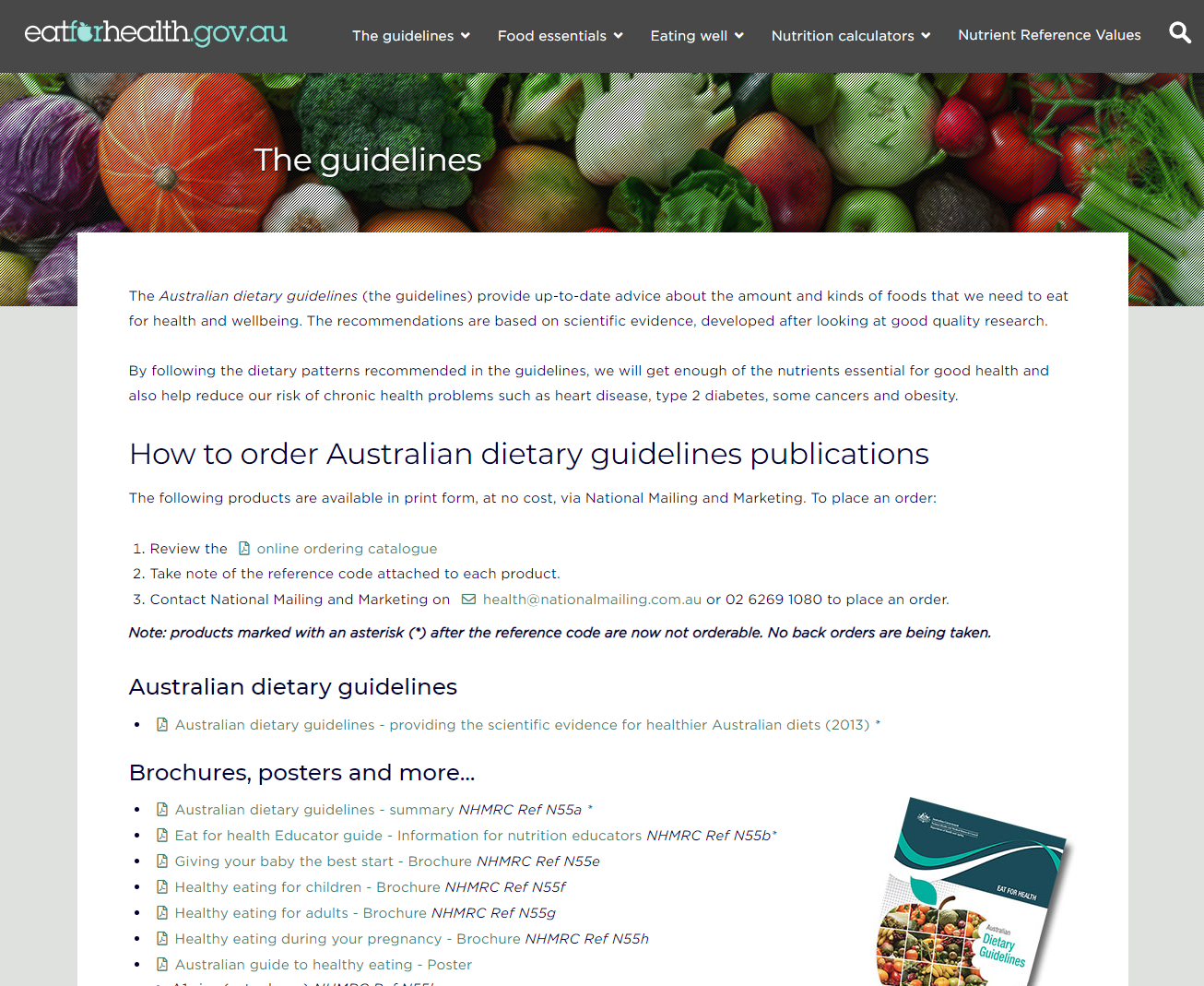
This resource provides up-to-date advice on the types and amounts of food needed for health and wellbeing, based on the Australian dietary guidelines. It includes recommendations for balanced eating patterns, addressing chronic disease risk, and offers resources such as brochures, posters, and guides for different population groups, including children and Aboriginal and Torres Strait Islander peoples.
Author
External resource
Key Theme
Food and nutrition
Standard
6: Food and Nutrition
Outcomes
6.3: Provision of food and drinks, 6.2: Assessment of nutritional needs and preferences
Eat for health: Australian dietary guidelines
/quality-standards/embracing-food-diverse-cultures

Embracing food from diverse cultures

Guidance

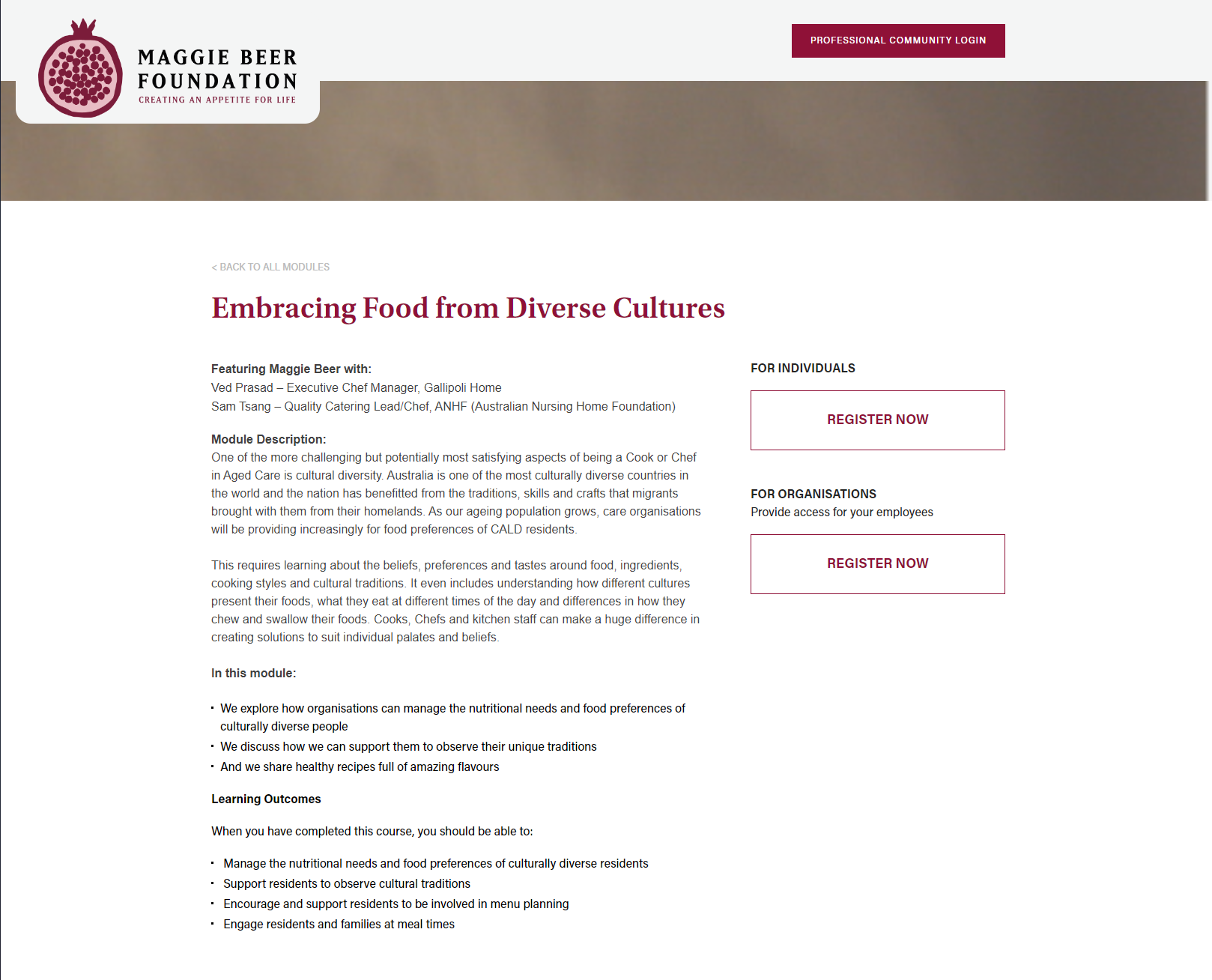
This resource provides a module designed to help aged care chefs and cooks manage the nutritional needs and food preferences of culturally diverse populations. It focuses on supporting cultural traditions, involving people in menu planning, and enhancing engagement during meals. The module offers practical skills, recipes, and continuous access to resources, promoting inclusivity in aged care dining service.
Author
External resource
Key Theme
Person-centred care, Food and nutrition
Standard
1: The Individual, 6: Food and Nutrition
Outcomes
1.1: Person-centred care, 6.2: Assessment of nutritional needs and preferences
Embracing food from diverse cultures
/quality-standards/nutrition

Nutrition

Guidance
Last Updated

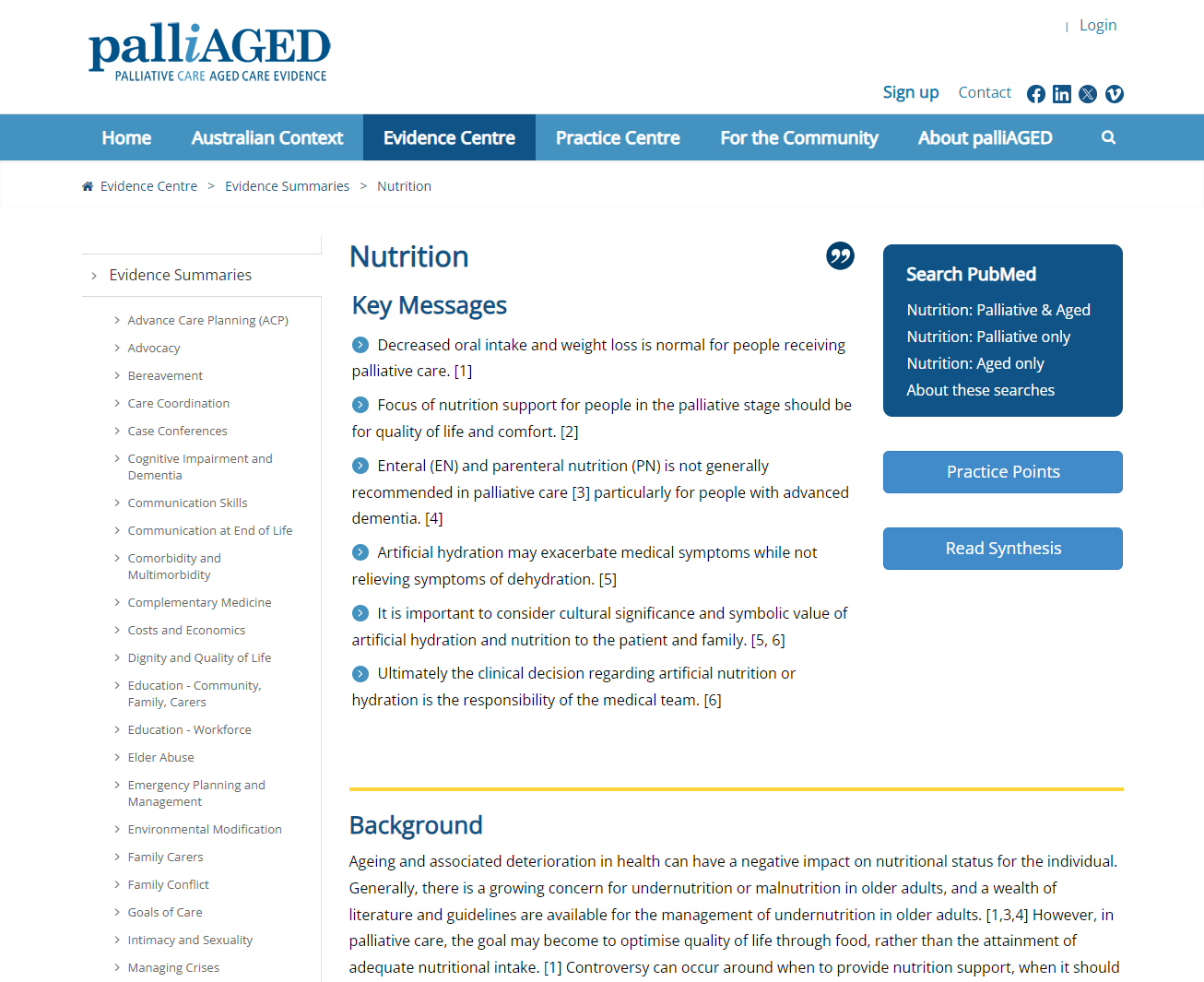
This resource provides guidance on nutrition for people in palliative care. It highlights the importance of prioritising comfort and quality of life over nutritional intake. It discusses oral intake, artificial hydration, and medically assisted nutrition, emphasising communication with families and cultural considerations when managing nutrition and hydration at the end of life.

Author
External resource
Key Theme
Clinical safety, Food and nutrition
Standard
6: Food and Nutrition, 5: Clinical Care
Outcomes
6.2: Assessment of nutritional needs and preferences, 5.5: Safety of clinical care services
Nutrition