The Quality Standards Resource Centre helps extend understanding of the strengthened Aged Care Quality Standards, which took effect from 1 November 2025. You can search for resources by using keywords, or filtering by standard, outcome and audience. Before using the Resource Centre, please read the terms of use.
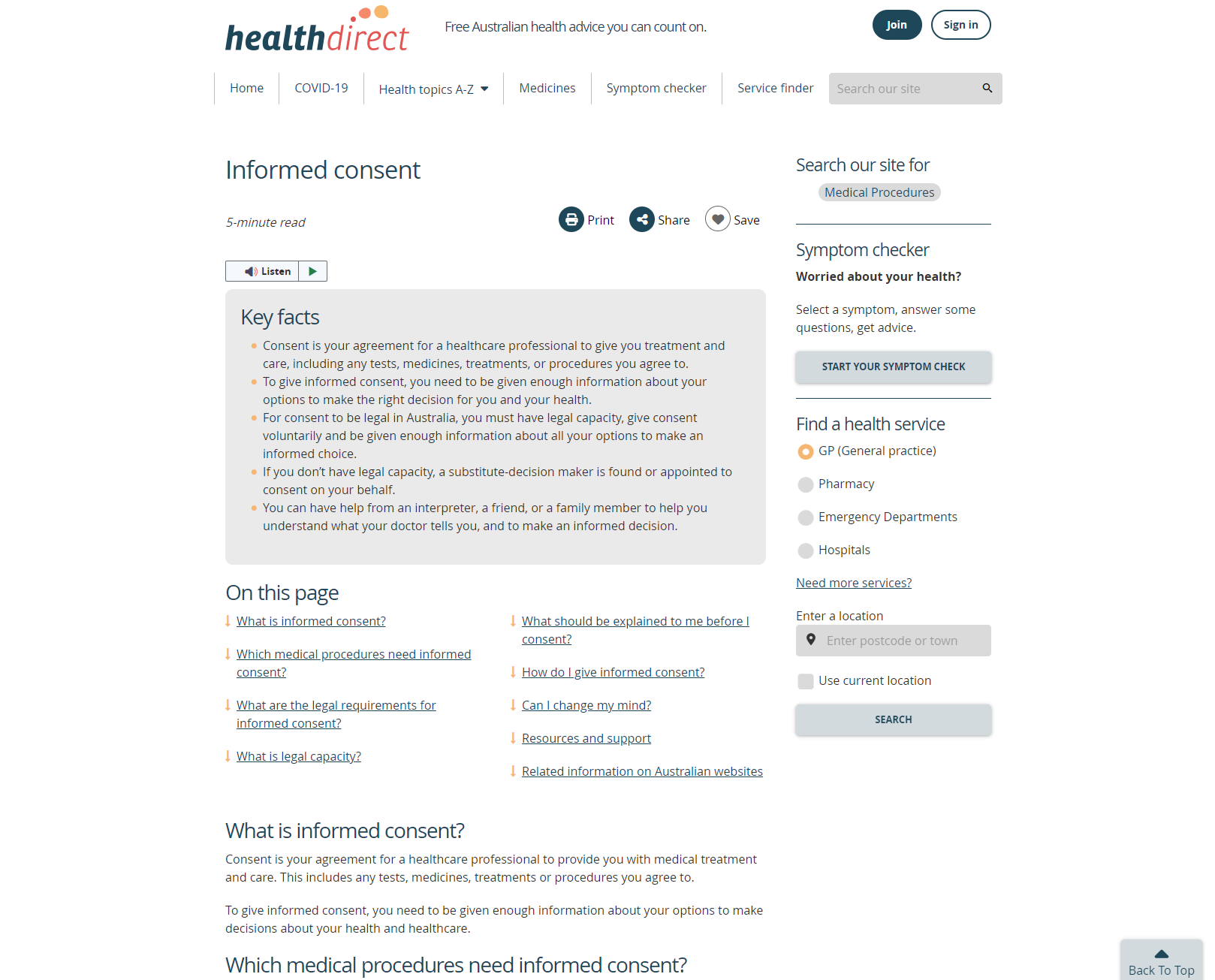
Informed consent - Health Direct
This resource explains the legal requirements and processes for obtaining informed consent for medical treatments, procedures, and care. It is relevant to aged care by ensuring that people understand their healthcare options, risks, and benefits, supporting their ability to make informed decisions about their health and wellbeing.
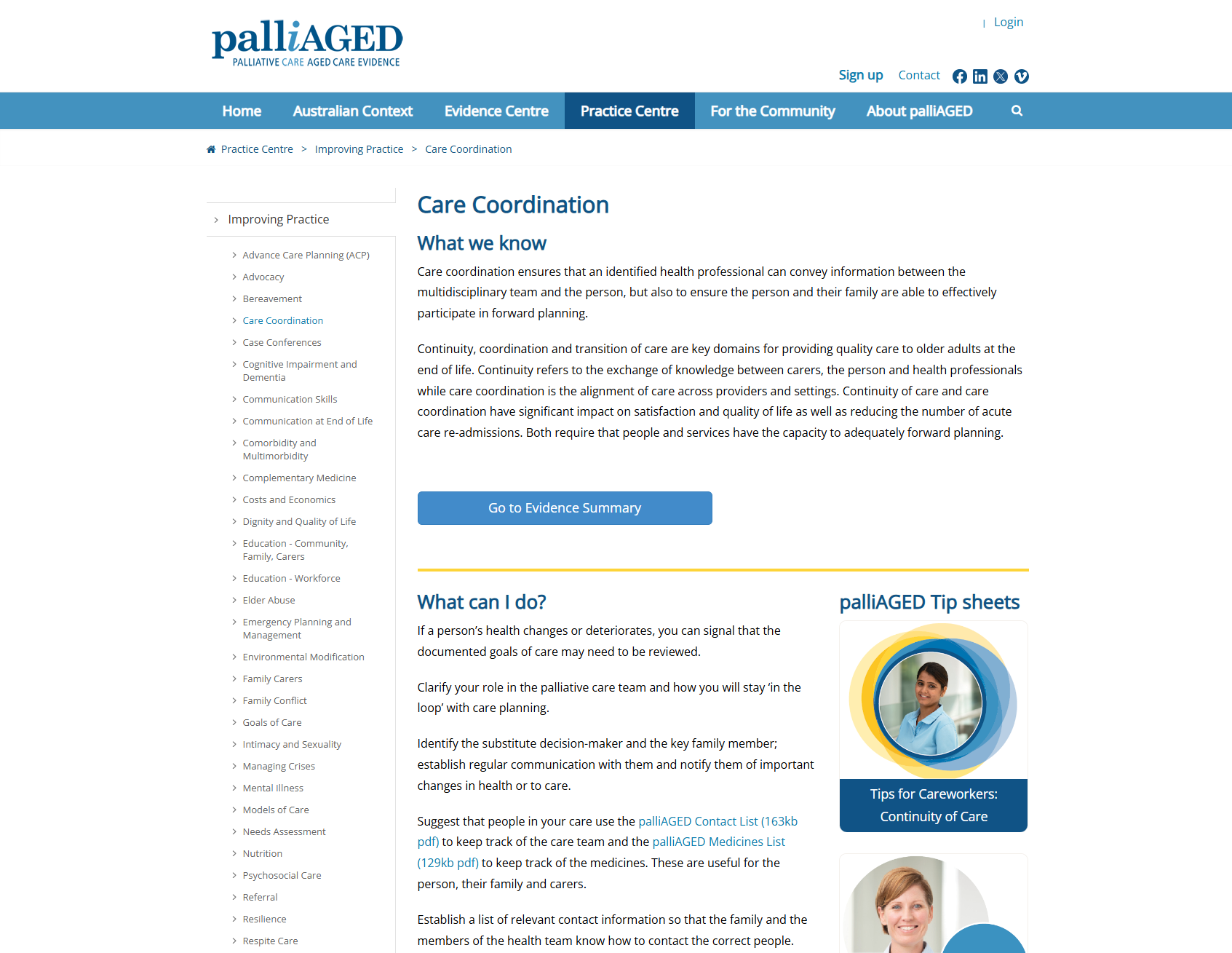
Care Coordination
This resource offers practical guidance on effective care coordination, focusing on communication within multidisciplinary teams, continuity of care, and transition management. It provides tools for involving families in care planning and supports strategies for optimising palliative care and improving outcomes for people in aged care settings.
RACGP aged care clinical guide (Silver Book) - Part B - Collaboration and multidisciplinary team-based care
This guide focuses on collaboration and multidisciplinary care for older adults, particularly in residential aged care. It outlines the benefits of team-based care, effective team structures, shared goals, defined roles, building trust, communication, and measurable processes to improve health outcomes. It provides practical tips for effective teamwork and highlights the importance of coordinating care among various healthcare professionals.
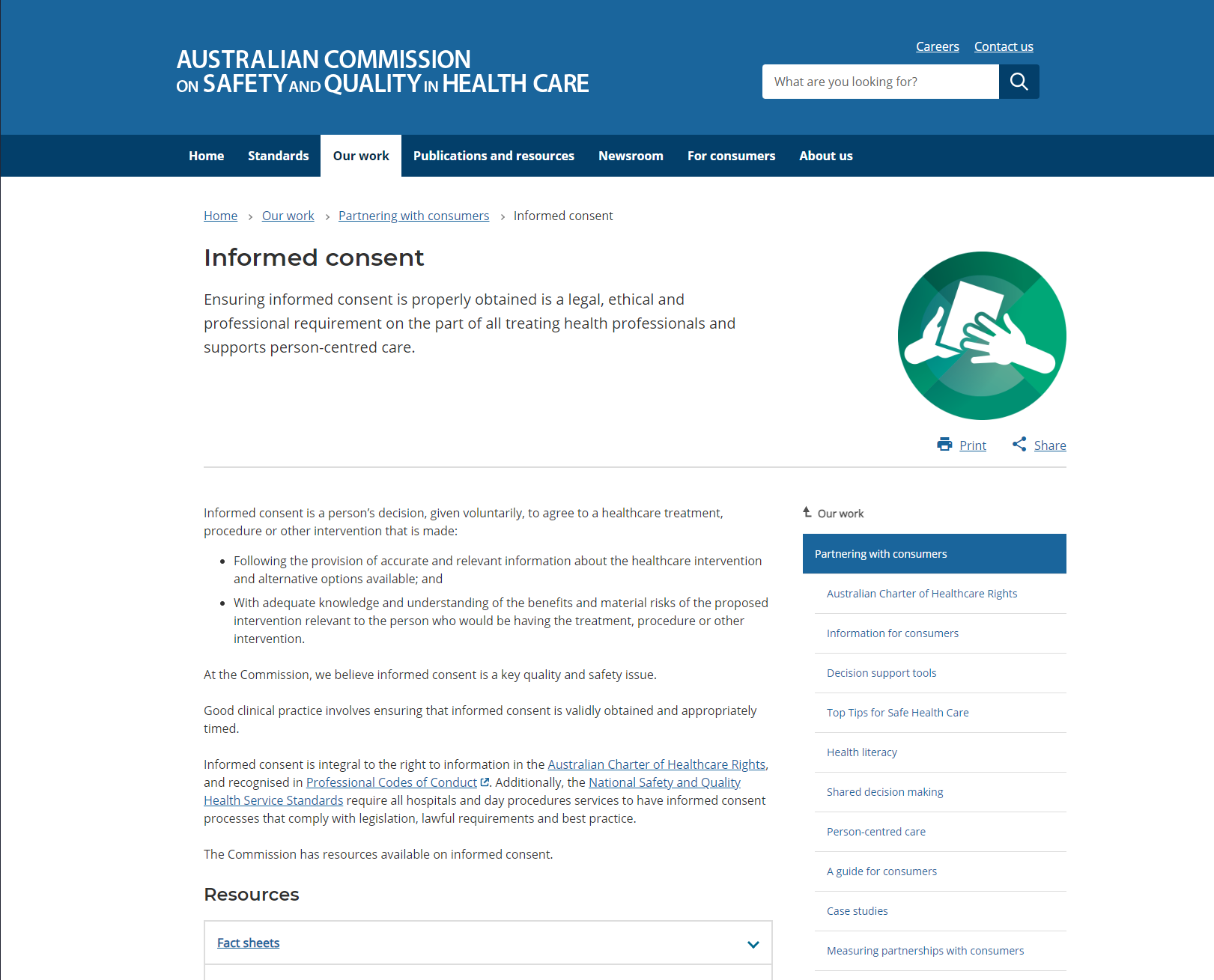
Informed consent
This resource provides guidance on ensuring informed consent in healthcare settings. It outlines legal, ethical, and professional requirements for obtaining consent, supports person-centred care, and ensures compliance with Australian healthcare standards. It highlights the importance of providing accurate information about interventions and alternatives, ensuring people have sufficient knowledge of potential risks and benefits.
RACGP aged care clinical guide (Silver Book) - Part B - Families and carers
This guide focuses on the role of families and carers in supporting older adults, covering topics like consent, communication, self-care, and bereavement support. It includes practical advice on involving carers in healthcare planning, respecting patient confidentiality, and resources for additional support, ensuring comprehensive care for both patients and carers.
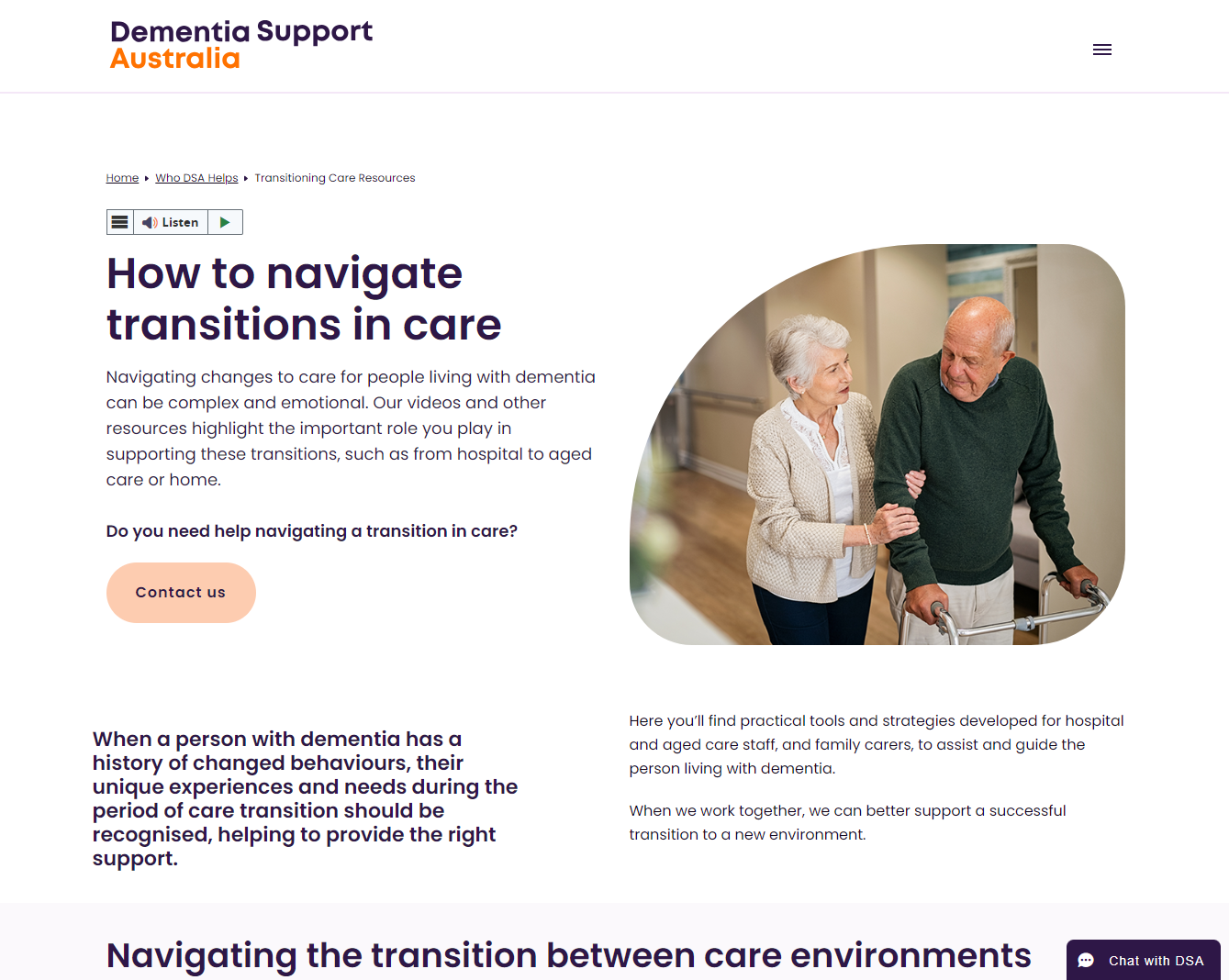
How to navigate transitions in care
This resource offers tools and strategies for navigating care transitions for people living with dementia. It provides support to hospital, aged care staff, and family carers, ensuring that the unique needs of those with dementia are met during transitions, such as moving from hospital to aged care or home.
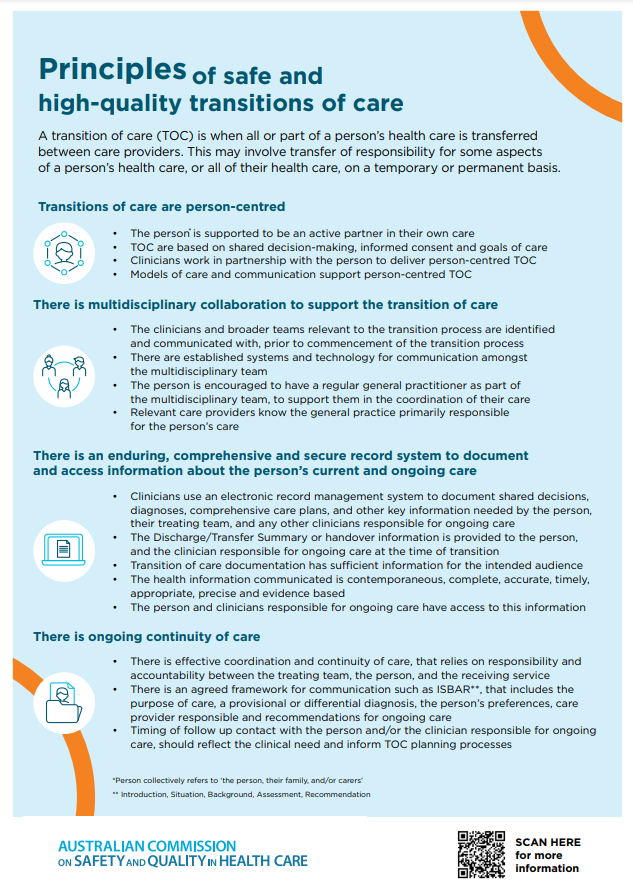
Fact sheet - Principles of safe and high-quality transitions of care
This resource outlines the principles for safe and high-quality transitions of care, emphasising person-centred care, multidisciplinary collaboration, and effective communication. It highlights the need for secure documentation, continuity of care, and coordination among healthcare teams to make sure smooth transitions and minimise risks during transfers between care providers.
This resource may refer to information that will be updated from 1 November 2025 to align with the new Aged Care Act and Quality Standards.
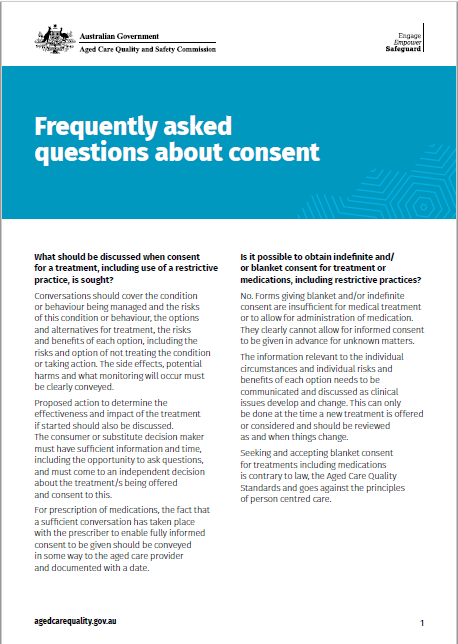
Frequently asked questions about consent
This fact sheet covers the frequently asked questions about consent in aged care.
 Frequently asked questions about consent (PDF 433.26 KB)
Communication at clinical handover
This resource focuses on structured clinical handover processes to improve communication during patient care transitions. It highlights the importance of standardising handover procedures to make sure relevant information is effectively communicated, reducing errors and enhancing patient safety, especially during care transfers in healthcare settings, including aged care.
This resource may refer to information that will be updated from 1 November 2025 to align with the new Aged Care Act and Quality Standards.
Communicating for Safety
This resource provides tools and guidance on improving clinical communication to enhance patient safety. It focuses on key communication touchpoints, such as handovers, decision-making, and care transitions. Designed to support healthcare providers, it offers practical strategies to reduce errors and improve outcomes in aged care and other healthcare settings.
This resource may refer to information that will be updated from 1 November 2025 to align with the new Aged Care Act and Quality Standards.
Transitioning to Residential Aged Care: Loss and Grief
This resource explores the emotional impact of transitioning into residential aged care, focusing on loss and grief experienced by older people and their families. It highlights the common emotional challenges, such as fear, loss of independence, and guilt, and provides strategies to support emotional well-being during this difficult transition.
This resource may refer to information that will be updated from 1 November 2025 to align with the new Aged Care Act and Quality Standards.
Transitions of Care
This resource explains transitions of care, when responsibility for a person’s health care is transferred between providers. It covers the risks involved, such as medication errors and readmissions, and offers principles for safe and high-quality transitions across care settings, including aged care, to reduce harm and improve outcomes. This resource may refer to information that will be updated from 1 November 2025 to align with the new Aged Care Act and Quality Standards.
How Home Care Packages interact with other aged care programs
This resource explains how Home Care Packages interact with other aged care programs, such as the Commonwealth Home Support Programme, residential respite care, and the Transition Care Programme. It outlines how to coordinate services to avoid overlaps and provides guidance for accessing multiple programs without service duplication.
This resource may refer to information that will be updated from 1 November 2025 to align with the new Aged Care Act and Quality Standards.
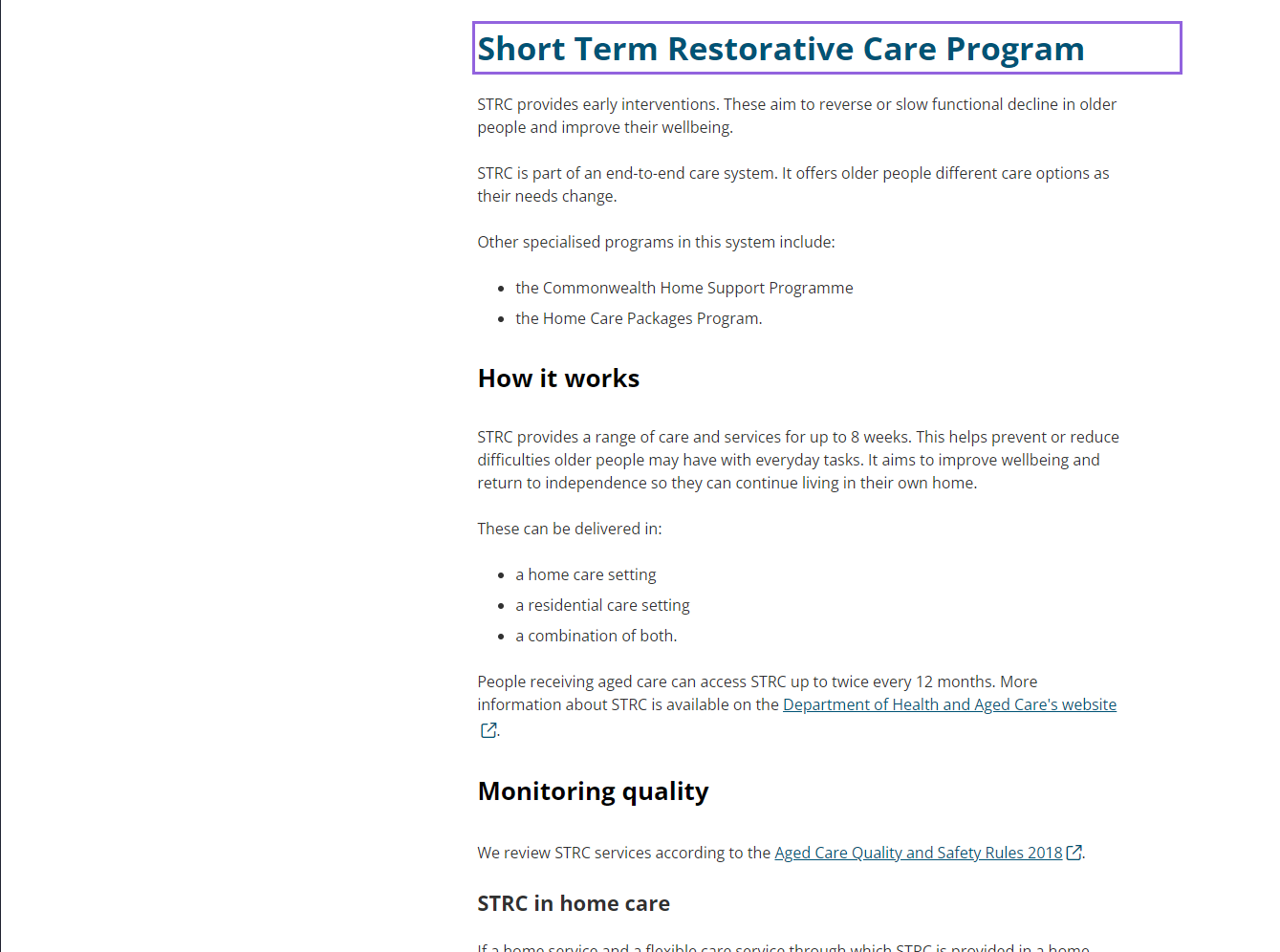
Short Term Restorative Care Program
This resource outlines the Short Term Restorative Care (STRC) Program which offers early interventions aimed at reversing or slowing functional decline in older people to enhance their wellbeing. It provides care for up to 8 weeks in home or residential settings, helping people regain independence. STRC is part of a broader care system, alongside other aged care services.
This resource may refer to information that will be updated from 1 November 2025 to align with the new Aged Care Act and Quality Standards.
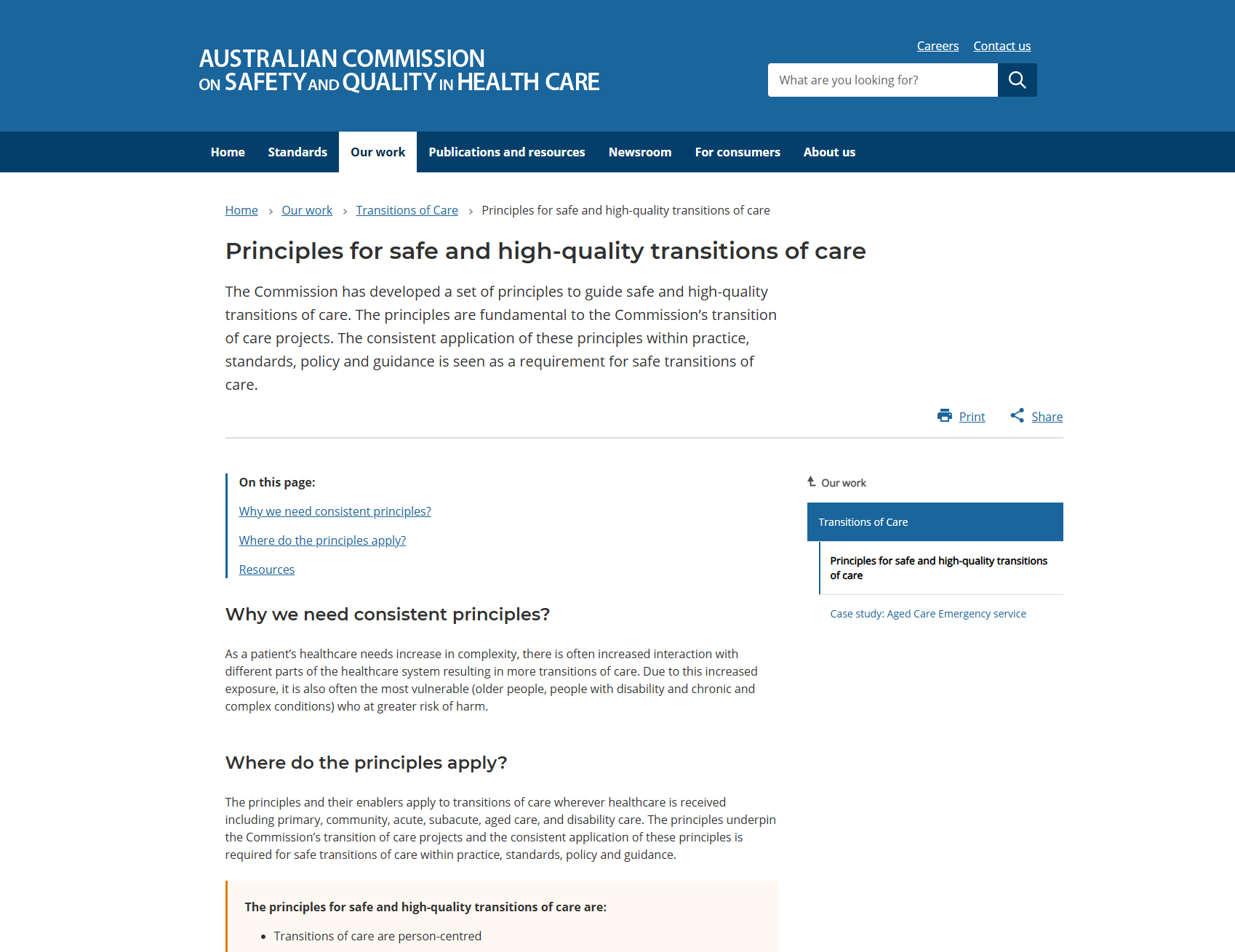
Principles for safe and high-quality transitions of care
This resource outlines essential principles to support safe and high-quality transitions of care for people across healthcare settings, including aged care. It emphasises person-centred approaches, multidisciplinary collaboration, secure record systems, and continuity of care, aiming to minimise risks during care transitions for vulnerable populations.
This resource may refer to information that will be updated from 1 November 2025 to align with the new Aged Care Act and Quality Standards.
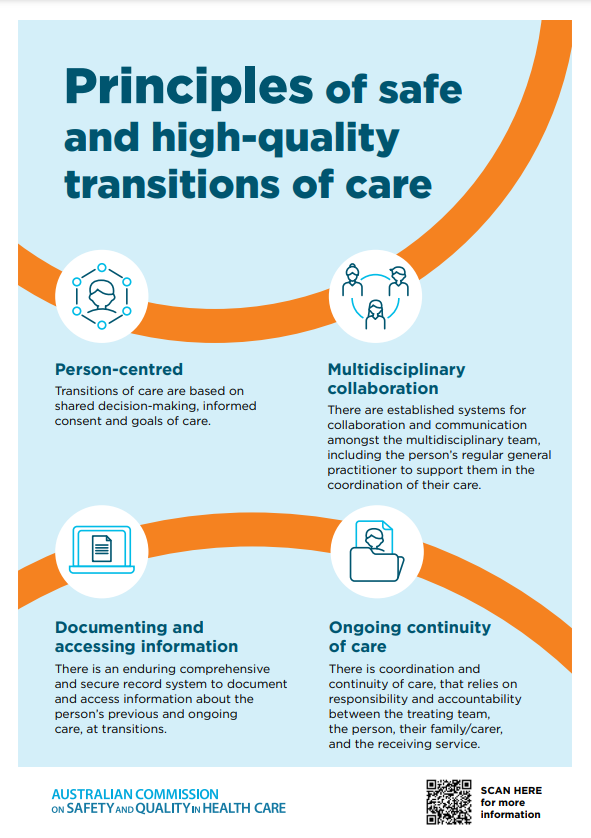
Poster - Principles of safe and high-quality transitions of care
This resource outlines the principles of safe and high-quality transitions of care. It highlights the importance of person-centred care, multidisciplinary collaboration, and clear communication between providers. It ensures coordination, accountability, and secure documentation to support continuity of care when transferring people between care settings. This resource may refer to information that will be updated from 1 November 2025 to align with the new Aged Care Act and Quality Standards.
Support at Home program handbook
This resource outlines the design and key components of the Support at Home program, effective from 1 November 2025. It provides guidance for aged care providers on service delivery, budgeting, and assessment processes, helping older people remain independent at home. It also details regulatory requirements and transition from existing programs.
This resource may refer to information that will be updated from 1 November 2025 to align with the new Aged Care Act and Quality Standards.
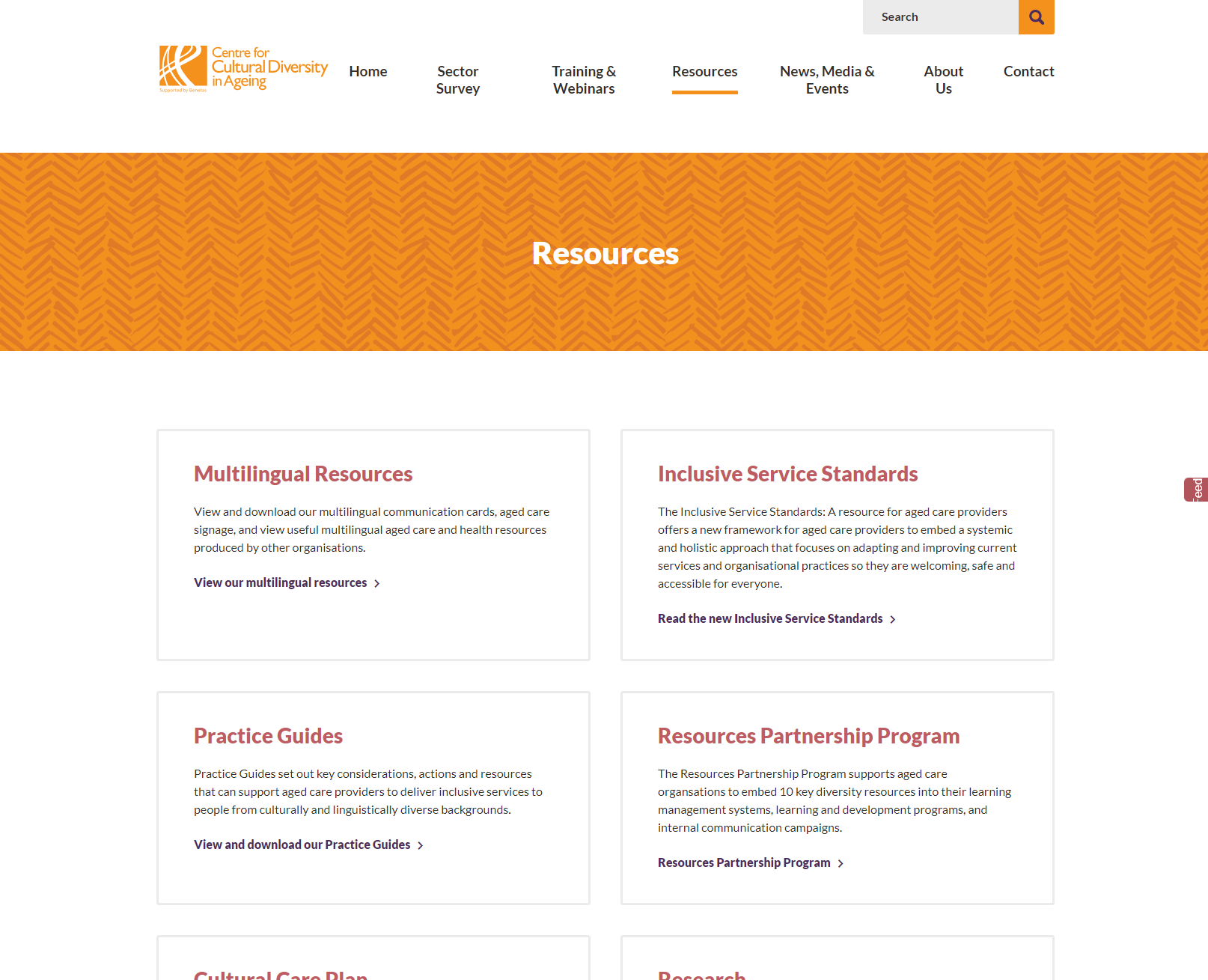
Centre for Cultural Diversity in Ageing - Resources
This page offers a wide range of resources aimed at helping aged care providers deliver culturally inclusive services. It includes multilingual communication cards, cultural care plans, and practice guides that help address the cultural, linguistic, and spiritual needs of people in care. The resources make sure aged care services are accessible, safe, and appropriate for culturally and linguistically diverse populations.
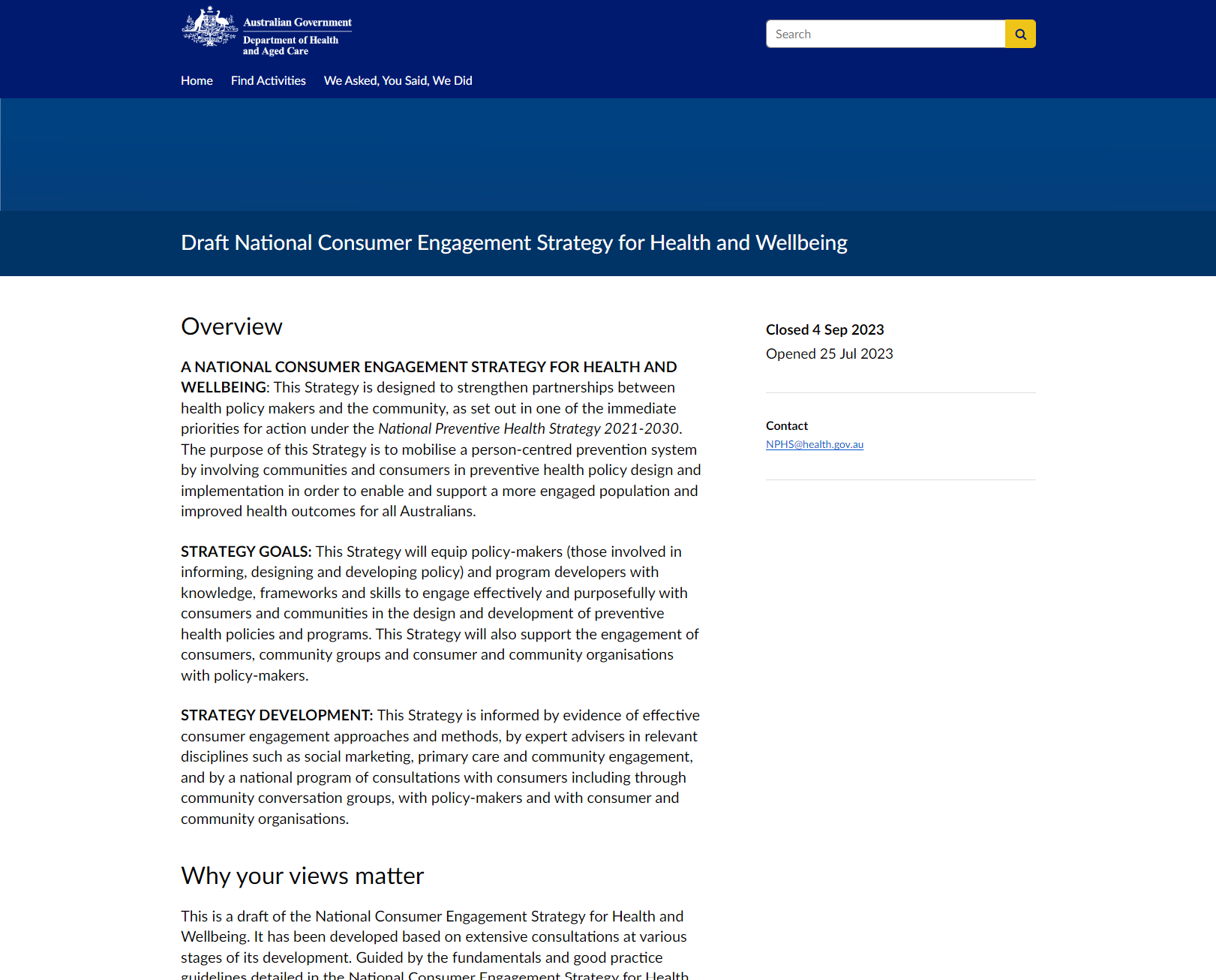
Draft National Consumer Engagement Strategy for Health and Wellbeing
This resource presents the Draft National Consumer Engagement Strategy for Health and Wellbeing, which aims to foster partnerships between health policymakers and communities. It is designed to involve people and communities in the development and implementation of preventive health policies. The strategy supports policymakers and program developers in engaging effectively with consumers to achieve improved health outcomes across Australia.
Consumer and carer engagement: A practical guide
This resource provides a guide for engaging consumers and carers in mental health services. It outlines steps for involving people in decision-making, service design, and evaluation. The guide emphasises co-design, leadership, and dedicated resources to create a person-centred approach that improves care and service outcomes.