The Quality Standards Resource Centre helps extend understanding of the strengthened Aged Care Quality Standards, which took effect from 1 November 2025. You can search for resources by using keywords, or filtering by standard, outcome and audience. Before using the Resource Centre, please read the terms of use.
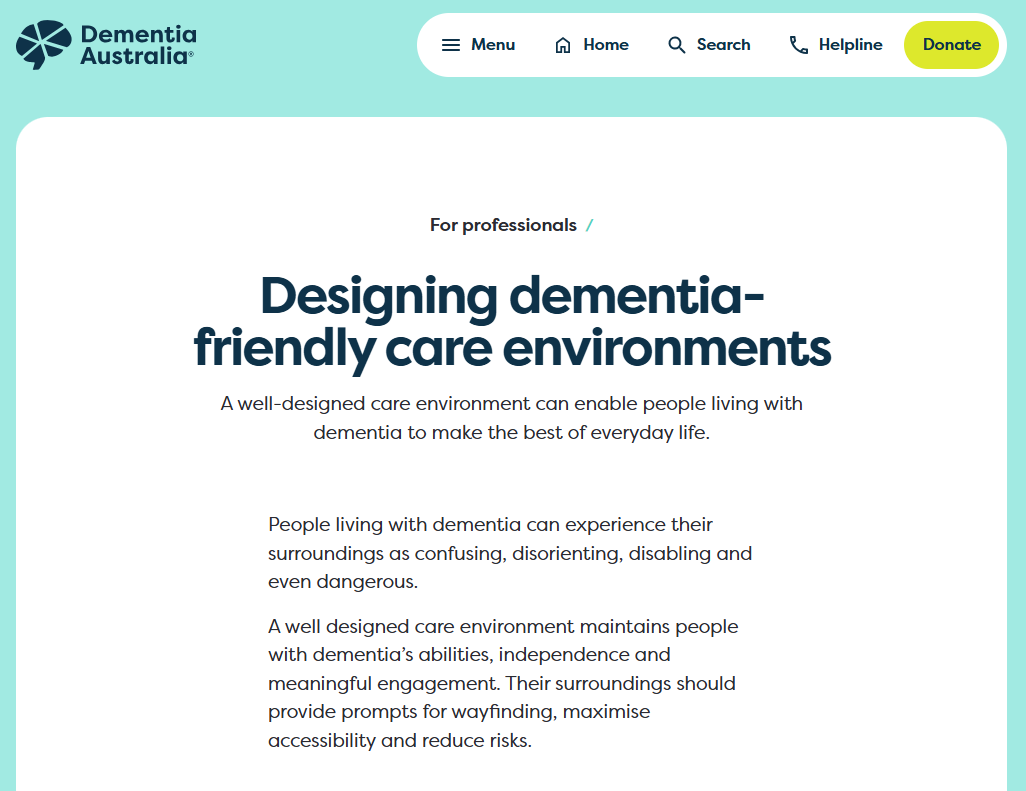
Designing dementia-friendly care environments
This resource provides guidance for professionals on designing dementia-friendly care environments to help people living with dementia to make the best of everyday life. It includes dementia enabling environment principles and an example of how to design a space using the principles. The resource also includes links to other Dementia Australia resources about developing a dementia-friendly environment.
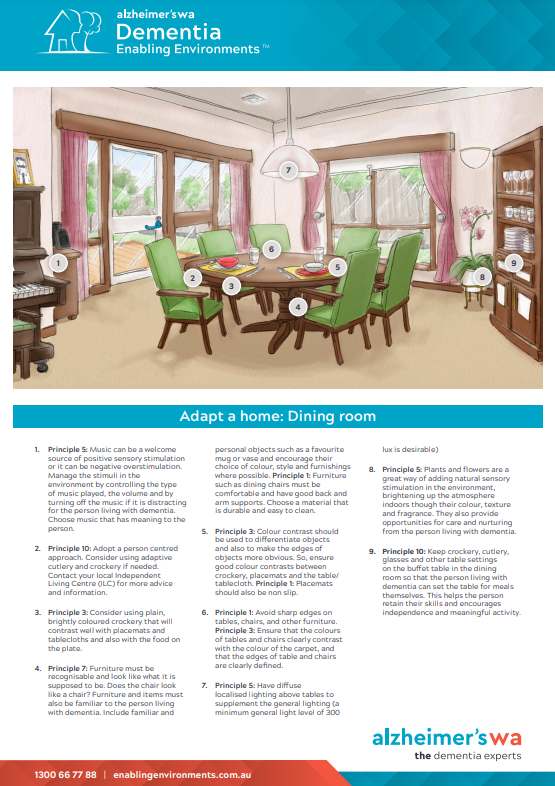
Dementia enabling environments - Adapt a home: Dining room
This resource, developed by Alzheimer's WA, is a Dementia Enabling Environments illustration information sheet about adapting a home, focusing on the dining room. It includes principles to integrate enabling design and make changes within the physical environment to maximise enablement and wellbeing for people living with dementia.
This resource was developed by a state/territory government or organisation and therefore its applicability and usefulness may be limited.
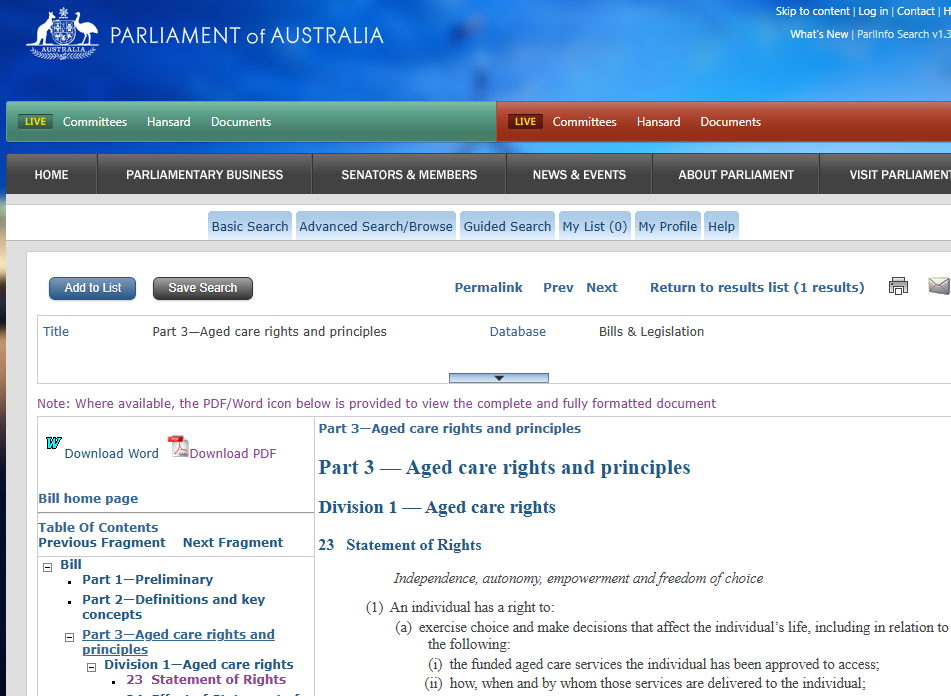
Part 3 - Aged care rights and principles
This resource is available on the Parliament of Australia website. It includes information about aged care rights and principles, including the Statement of Rights. The Statement of Rights outlines the rights that older people will have when accessing aged care services.
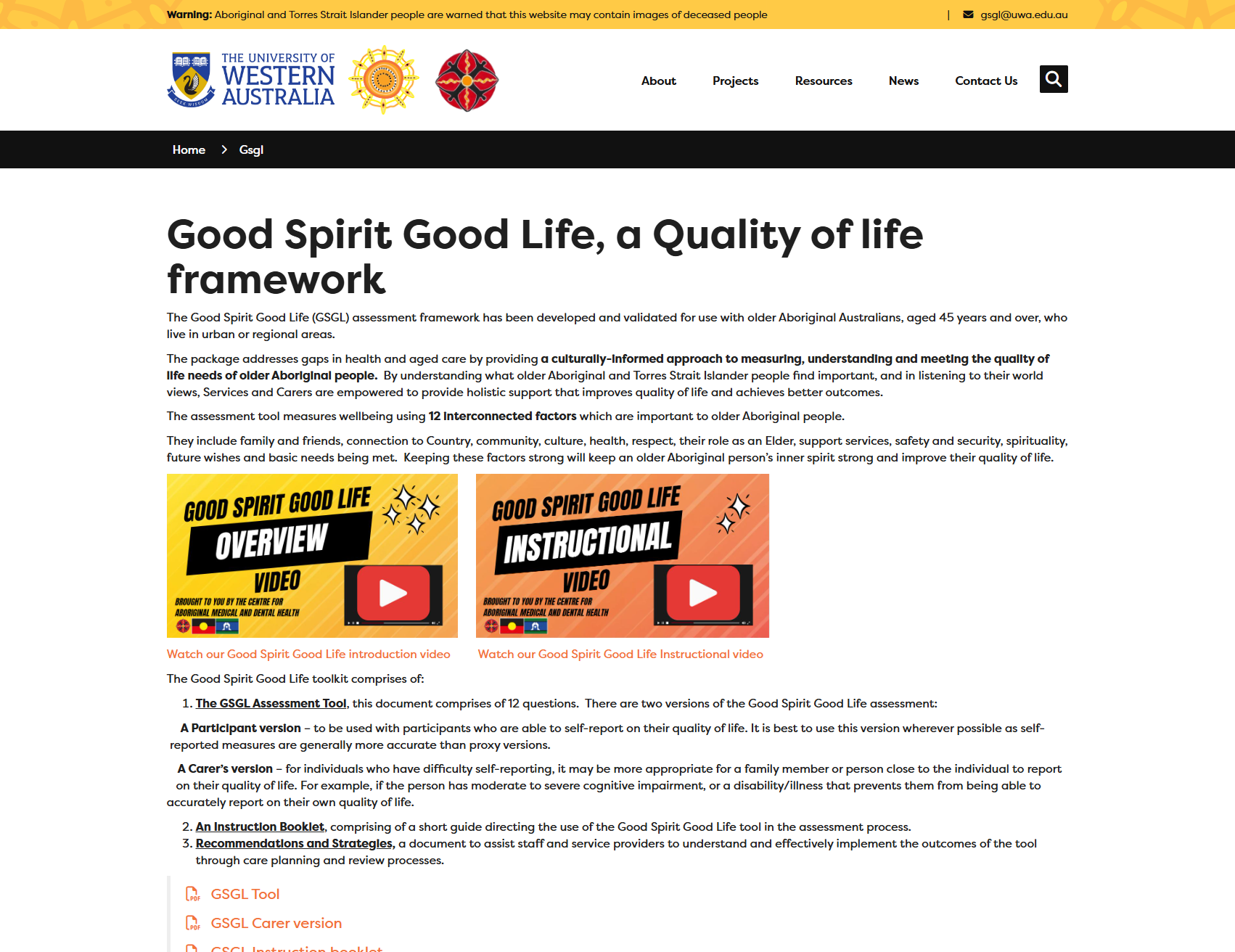
Good Spirit Good Life - a Quality of life framework
This resource describes the Good Spirit Good Life (GSGL) framework for assessing the quality of life of older Aboriginal people, focusing on culturally important factors such as connection to Country, family, and spirituality. It includes tools for both self-reporting and carer-assisted reporting.
This resource was developed by a state/territory government or organisation and therefore its applicability and usefulness may be limited.
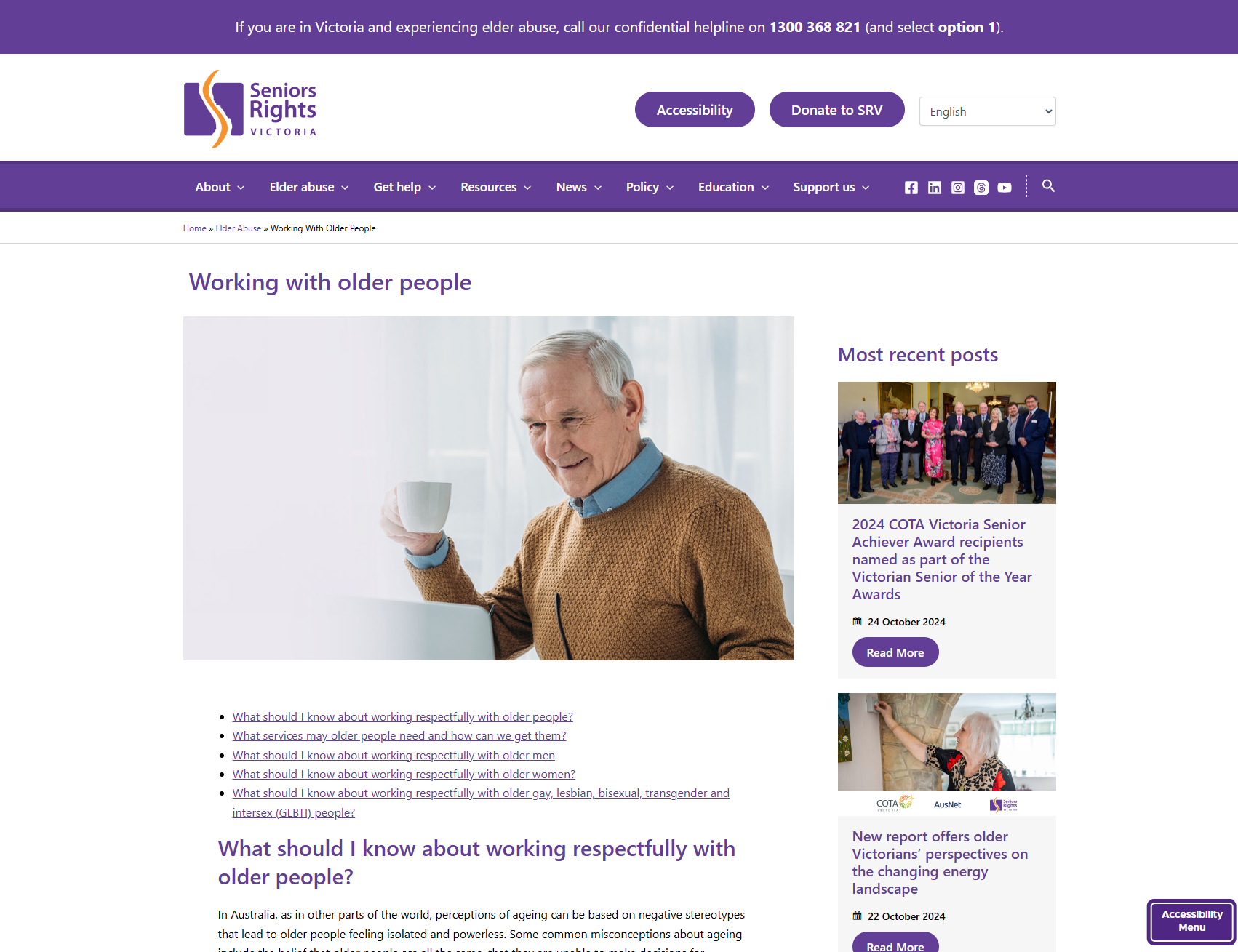
Working with older people
This resource offers guidance for working respectfully with older people, challenging stereotypes and promoting their rights to independence, dignity, and fair access to services. It emphasises communication strategies, recognising decision-making capacity, and understanding diverse needs across different groups.
This resource was developed by a state/territory government or organisation and therefore its applicability and usefulness may be limited.
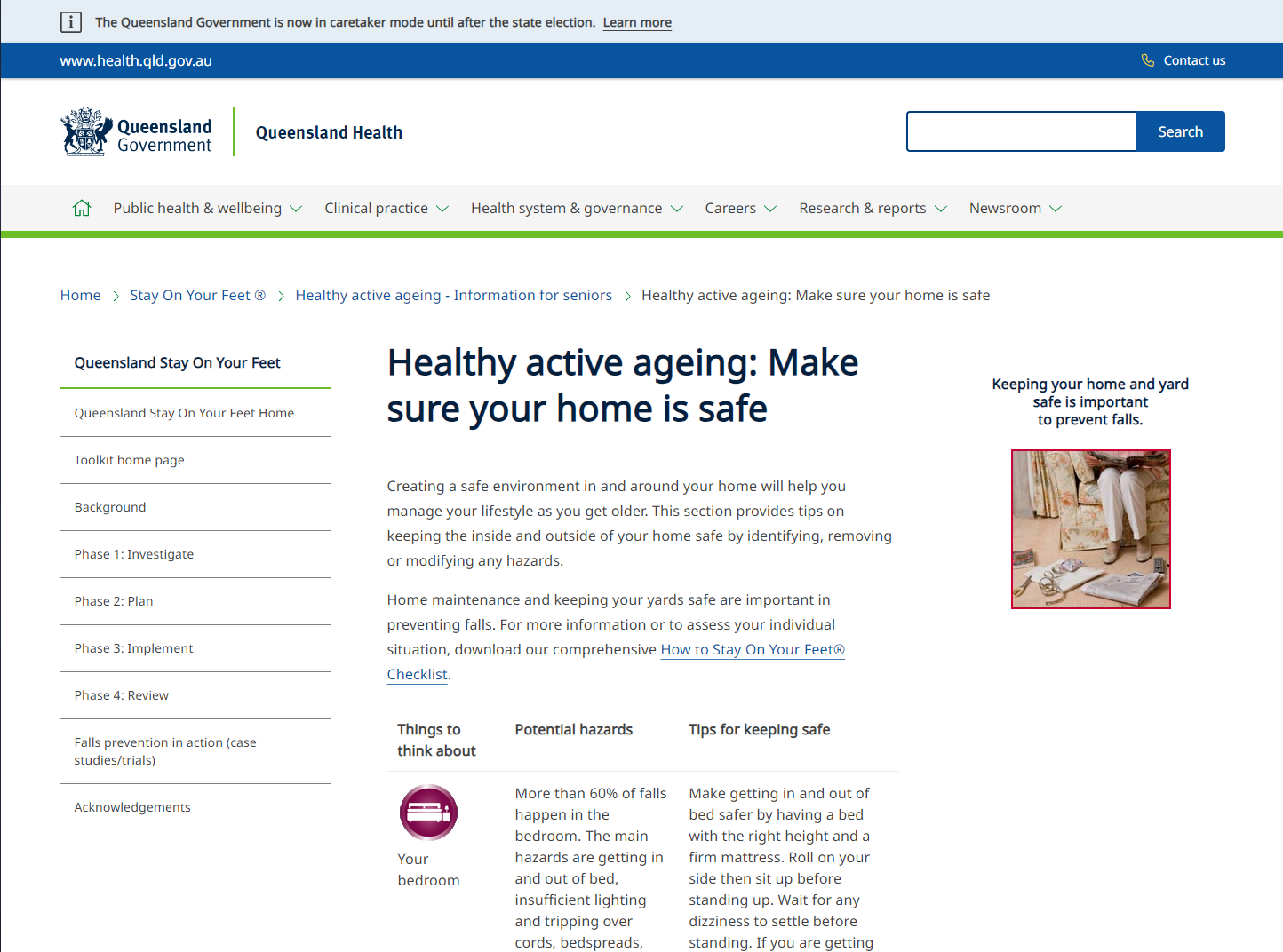
Healthy active ageing: Make sure your home is safe
This resource, developed by the Queensland Government, provides guidance on maintaining a safe home environment for healthy, active ageing. It offers practical tips for identifying and removing hazards in various areas of the home to prevent falls.
This resource was developed by a state/territory government or organisation and therefore its applicability and usefulness may be limited.
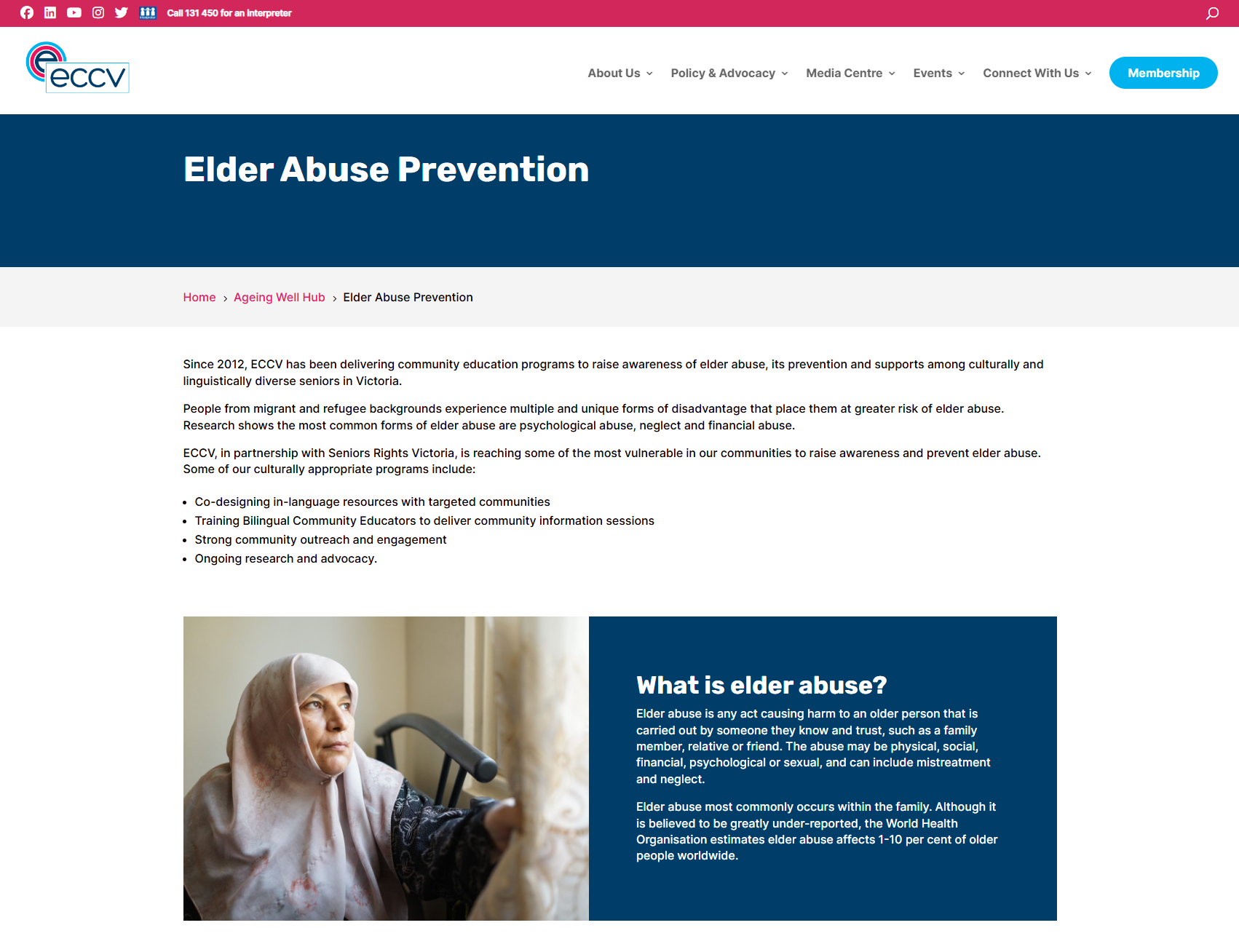
Elder Abuse Prevention
This resource provides community education and awareness programmes to prevent elder abuse, particularly for culturally and linguistically diverse seniors. It includes bilingual training for community educators, in-language resources, and guidance for recognising and addressing elder abuse through culturally appropriate methods.
This resource was developed by a state/territory government or organisation and therefore its applicability and usefulness may be limited.
Assistive technology
This resource outlines standard infection control precautions, developed for VIC, including practices like hand hygiene, PPE use, and safe disposal of sharps. It is applicable across healthcare settings.
This resource was developed by a state/territory government or organisation, and therefore its applicability and usefulness may be limited.
Maintaining personal identity
This resource offers guidance on maintaining personal identity for people with dementia by fostering respect, independence, and communication. It suggests environmental and social modifications to enhance dignity, such as personalising spaces, supporting mobility, and addressing unmet needs.
This resource was developed by a state/territory government or organisation, and therefore its applicability and usefulness may be limited.
My healthy home: home health factsheet series
This resource offers accessible health information for Aboriginal and Torres Strait Islander people on preventing illness in the home. It includes room-based fact sheets with actions to improve environmental health, available as individual sheets or a workbook. This resource includes state-specific information and therefore its applicability and usefulness may be limited.
Bedrooms and privacy
This resource offers guidance on maintaining personal identity for people with dementia by fostering respect, independence, and communication. It suggests environmental and social modifications to enhance dignity, such as personalising spaces, supporting mobility, and addressing unmet needs.
This resource was developed by a state/territory government or organisation, and therefore its applicability and usefulness may be limited.
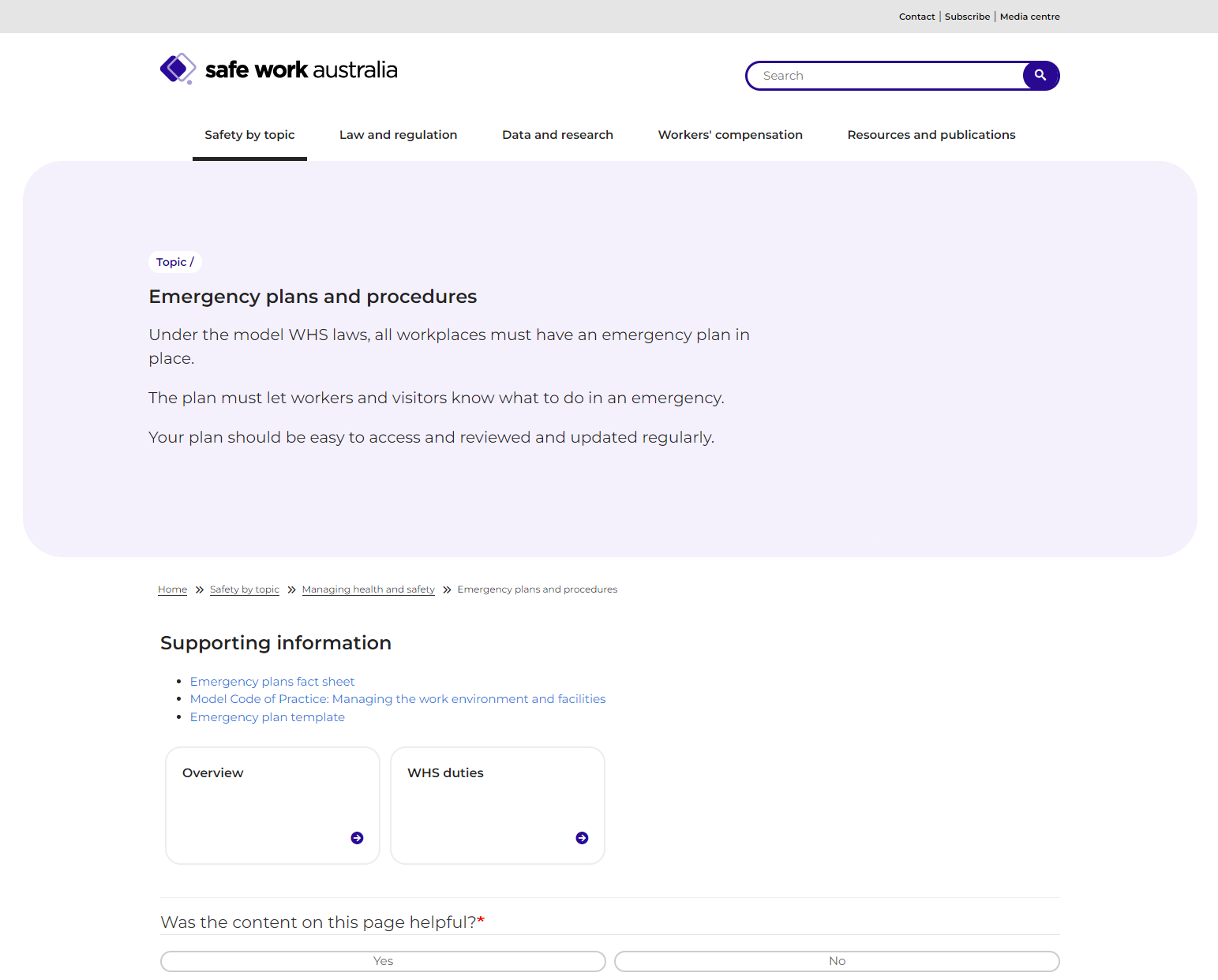
Emergency plans and procedures
This resource outlines the requirement for all workplaces, including aged care facilities, to have an emergency plan under the model WHS laws. The plan must inform workers and visitors about what to do in emergencies, be easily accessible, and be regularly reviewed and updated to ensure effectiveness.
Guidance and requirements may differ across states and territories. Users are responsible for considering their individual circumstances and specific state-based regulations and legislation.
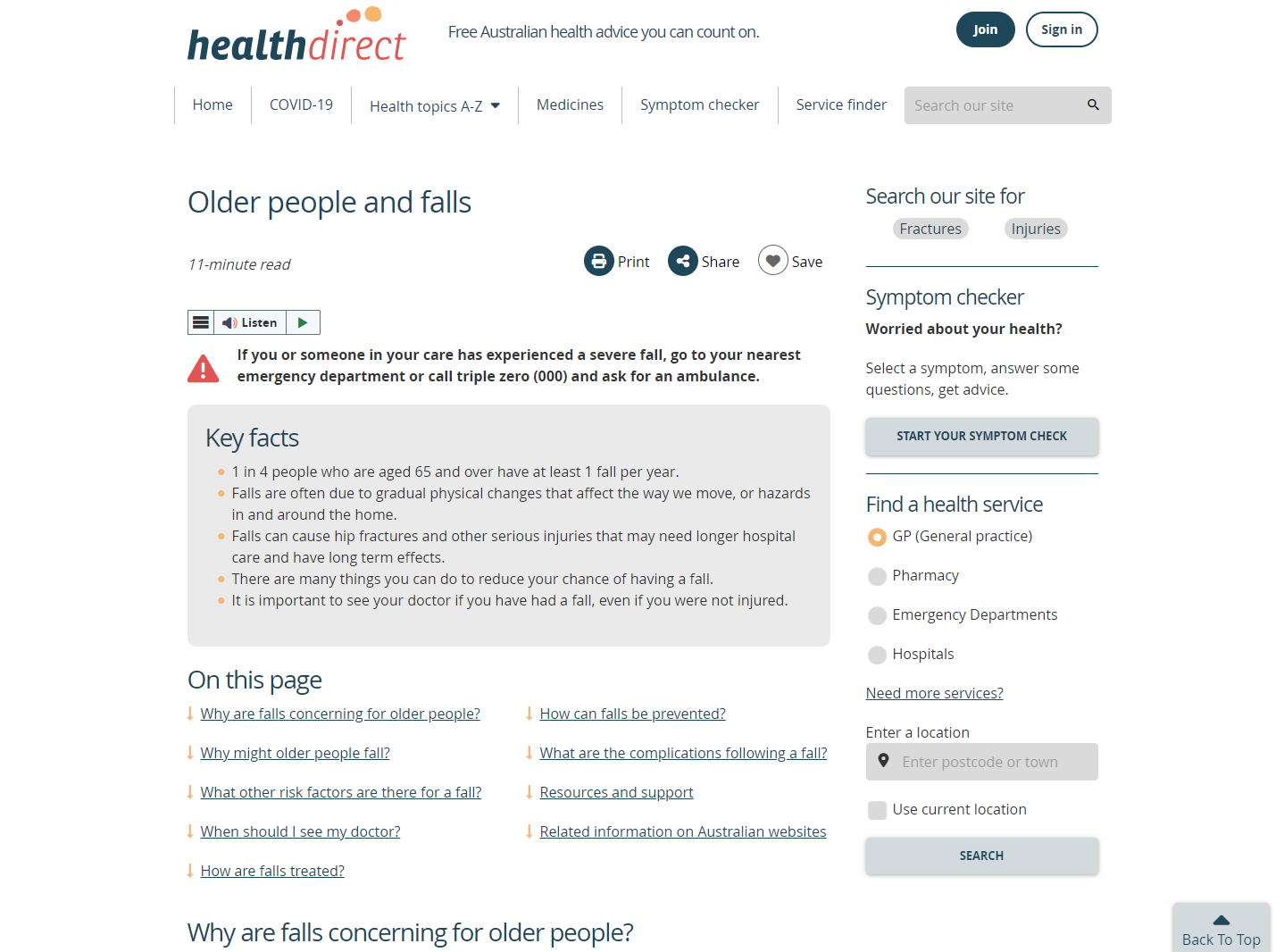
Older people and falls
This resource provides information on the causes, treatments, and prevention of falls in older people. It outlines risk factors, such as home hazards and health conditions, and offers practical tips for reducing falls, including lifestyle changes, home modifications, and medical assessments. The document emphasises the importance of fall prevention in aged care settings.
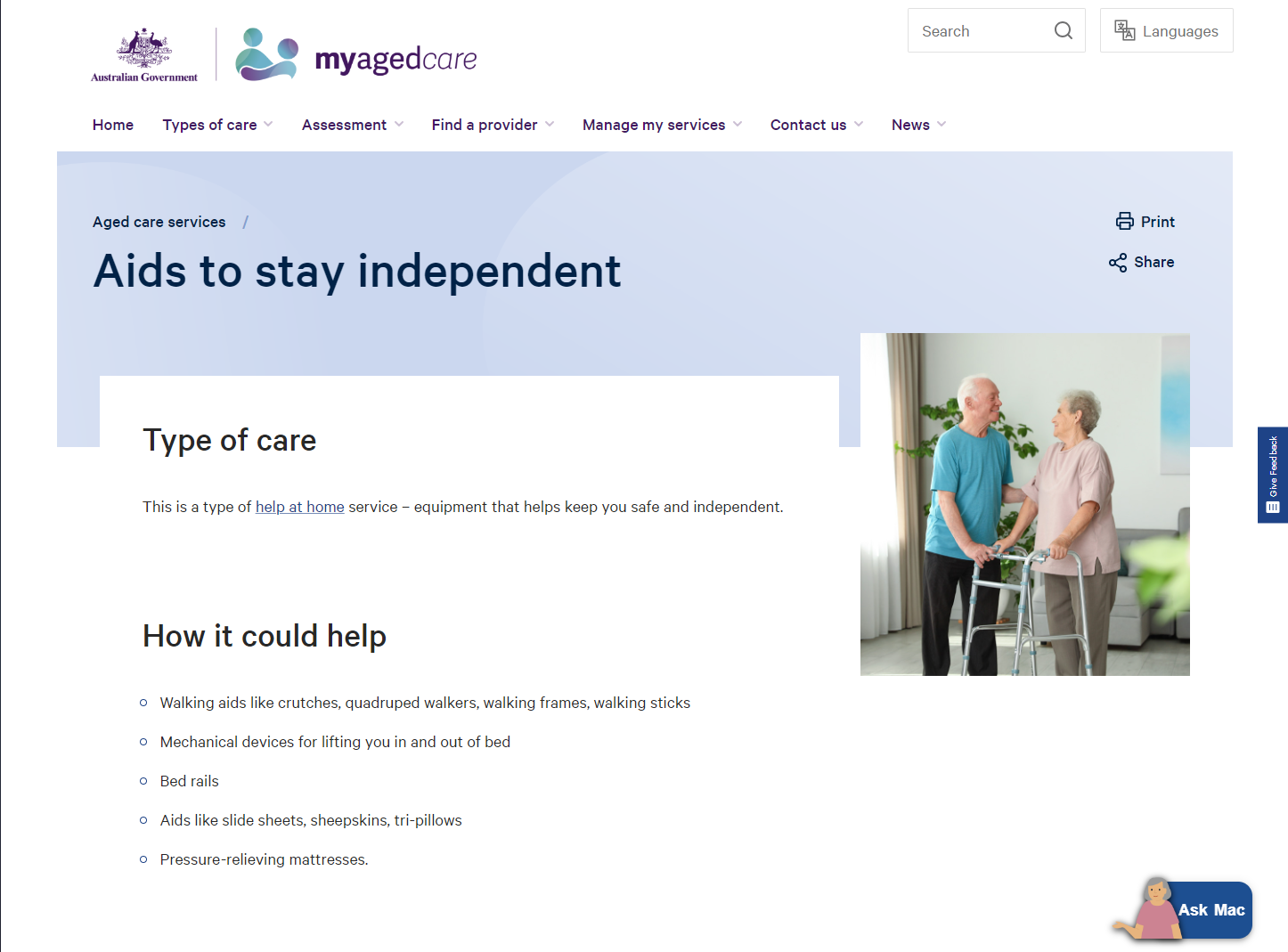
Aids to stay independent
This resource provides information on aids to help people stay safe and independent at home. It includes equipment such as walking aids, bed rails, and pressure-relieving mattresses. These services are available through the Commonwealth Home Support Programme or Home Care Packages, depending on eligibility, following an assessment.
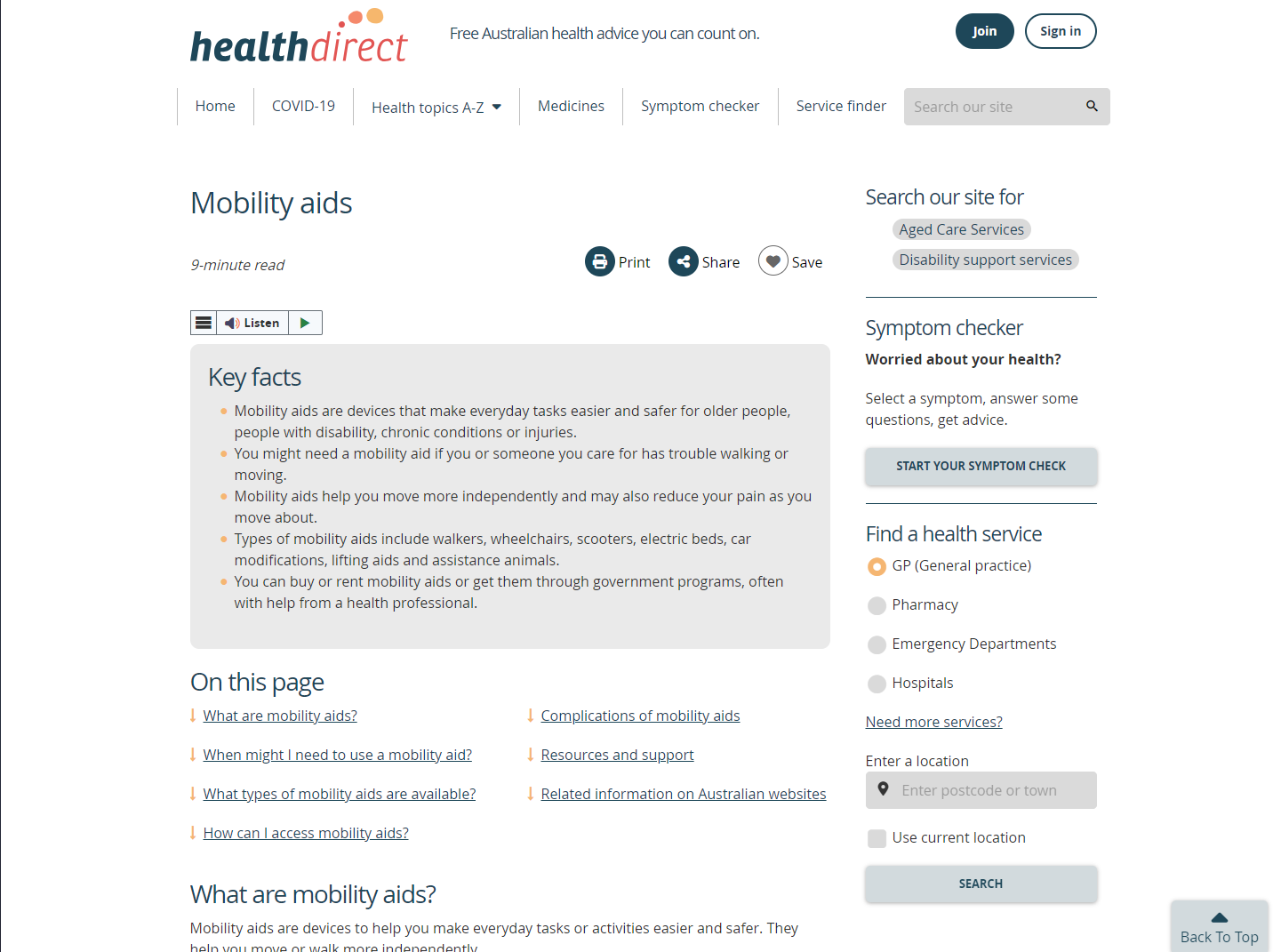
Mobility aids
This resource provides an overview of mobility aids, including walkers, wheelchairs, lifting aids, and electric beds, to help people move safely and independently. It explains how these devices can help with daily tasks, manage pain, and reduce injury risks. The document also includes information on accessing aids through government programs or health professionals.
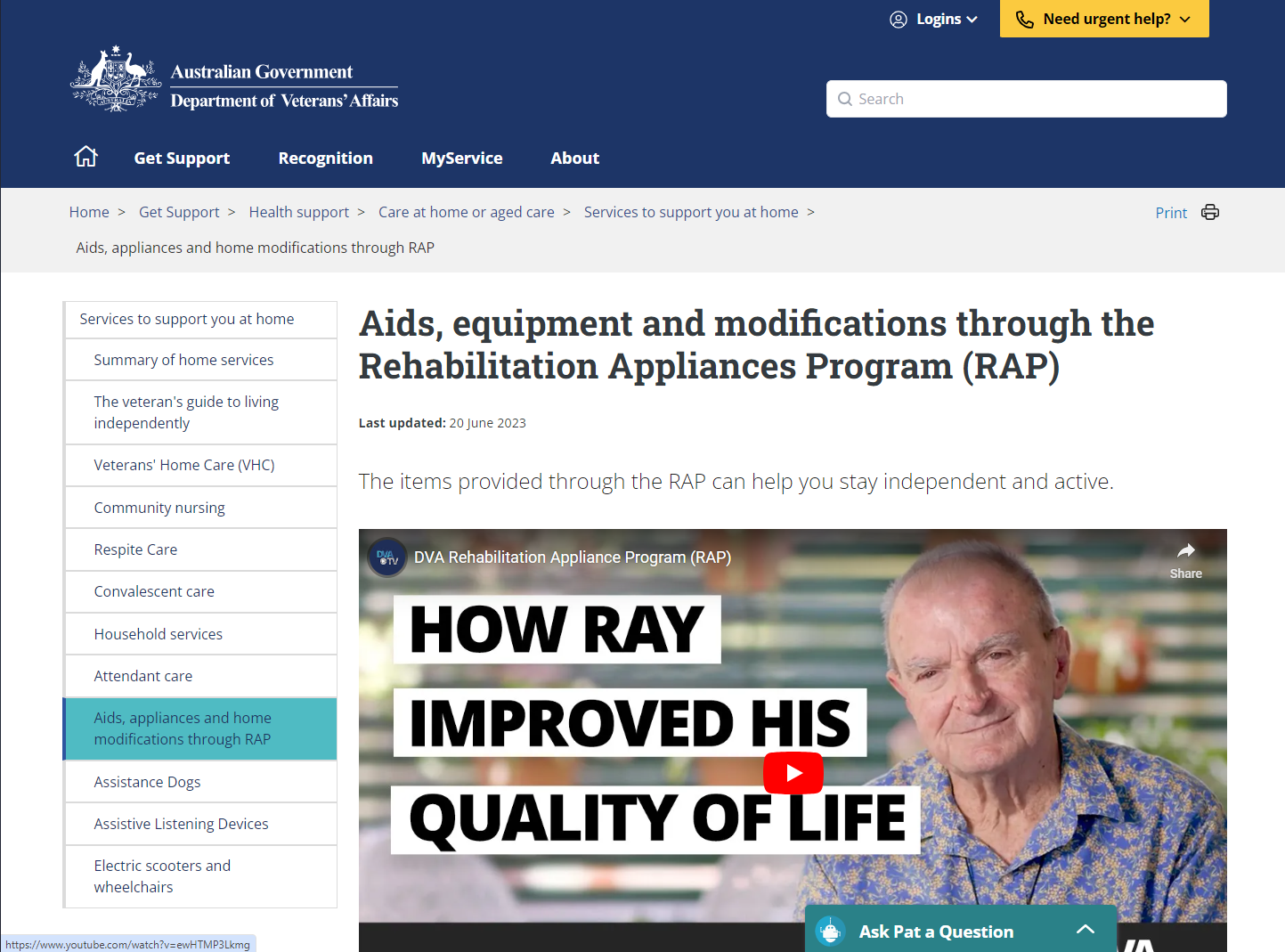
Aids, equipment and modifications through the Rehabilitation Appliances Program (RAP)
This resource provides information about the Rehabilitation Appliances Program (RAP), which offers aids, equipment, and home or vehicle modifications to help veterans stay independent. It explains the types of items available, such as mobility devices, personal care aids, and home accessibility modifications, and outlines the process for accessing these services through clinical assessments.
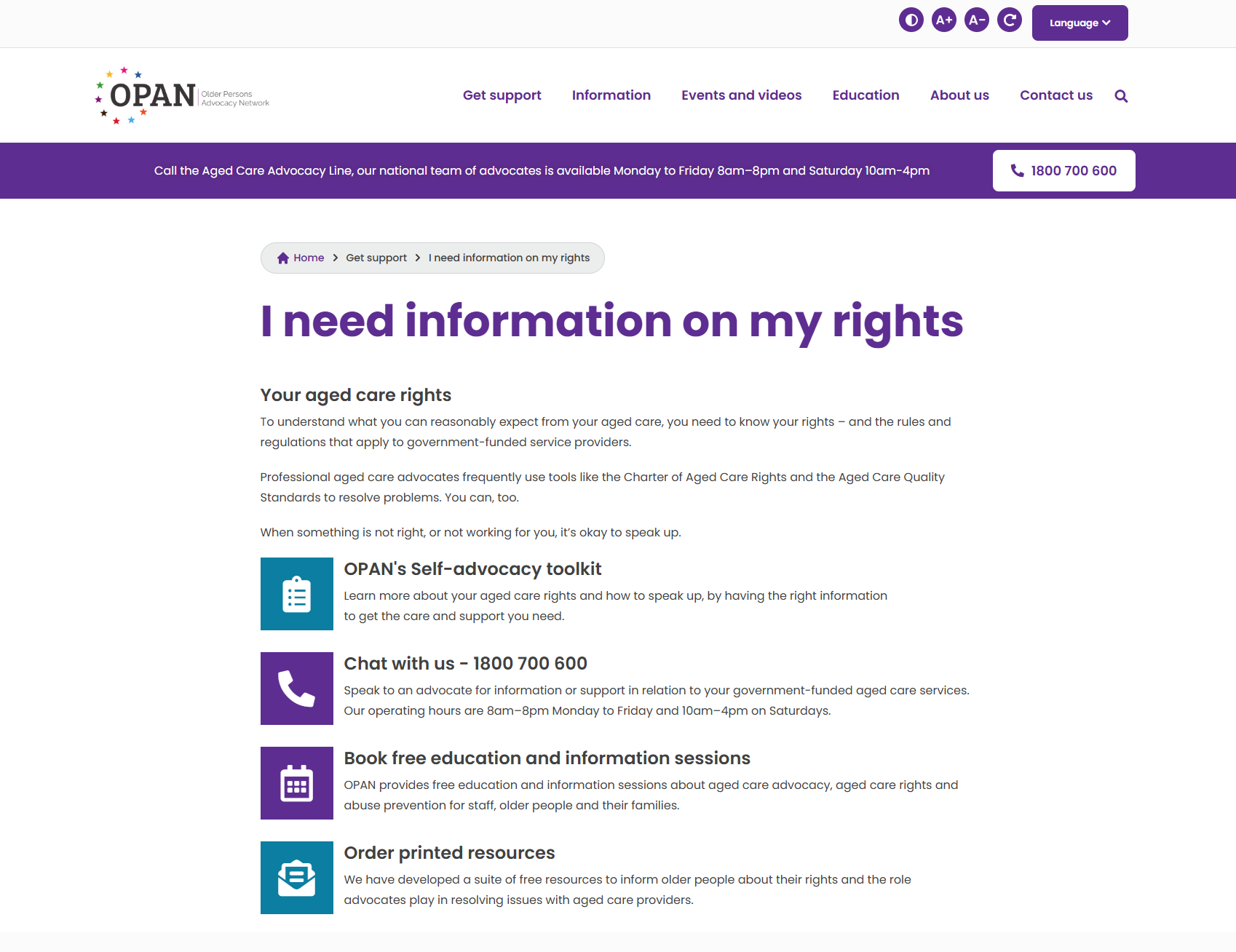
I need information on my rights
This resource provides information on aged care rights, including guidance on self-advocacy and accessing support. It offers resources, free educational sessions, and access to advocates for assistance with government-funded aged care services, empowering people to address concerns and understand their entitlements.
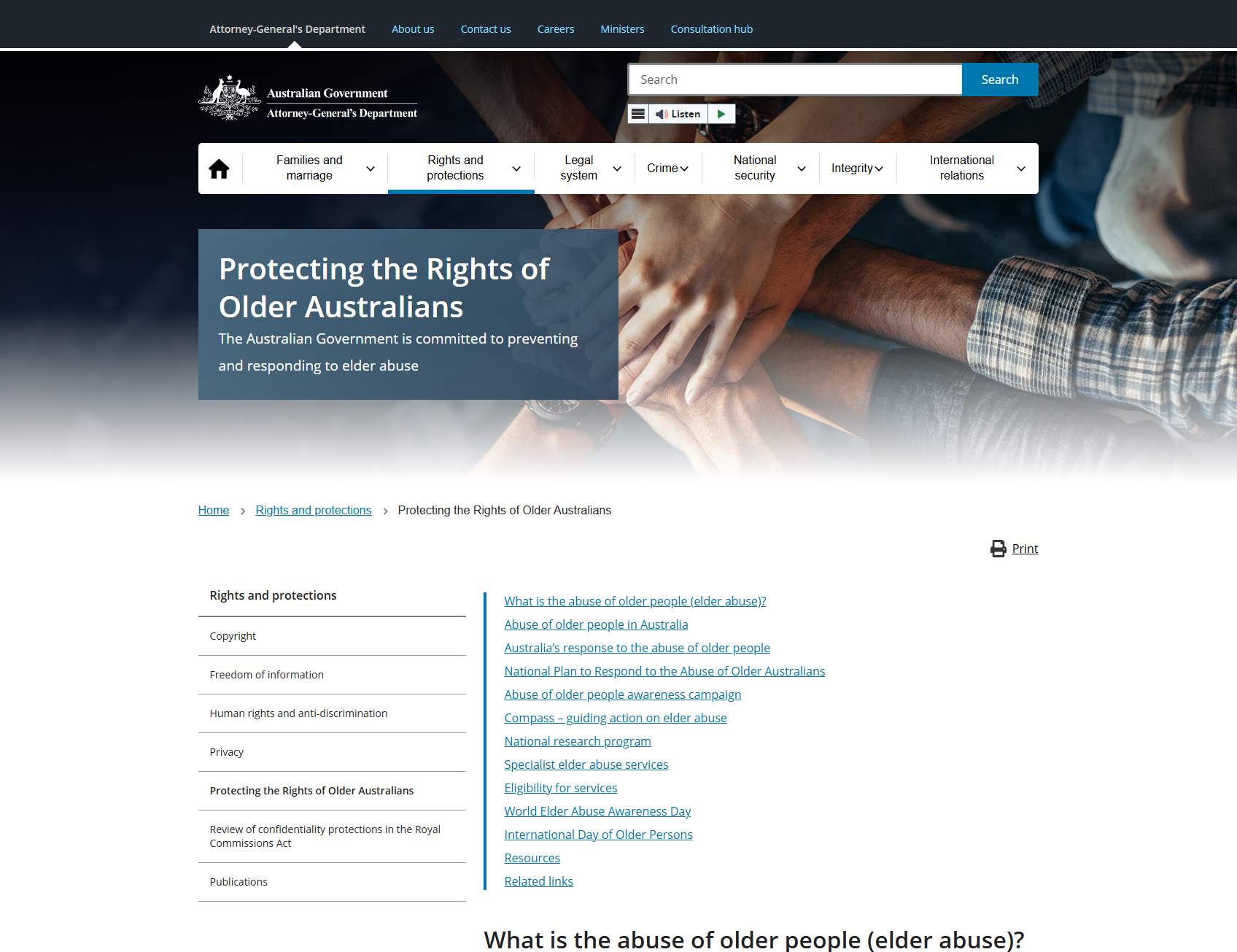
Protecting the Rights of Older Australians
This resource provides an overview of Australia’s approach to addressing the abuse of older people, including the National Plan, specialist services, awareness campaigns, and legal reforms. It aims to increase awareness, support prevention efforts, and offer accessible resources for those experiencing or at risk of abuse.
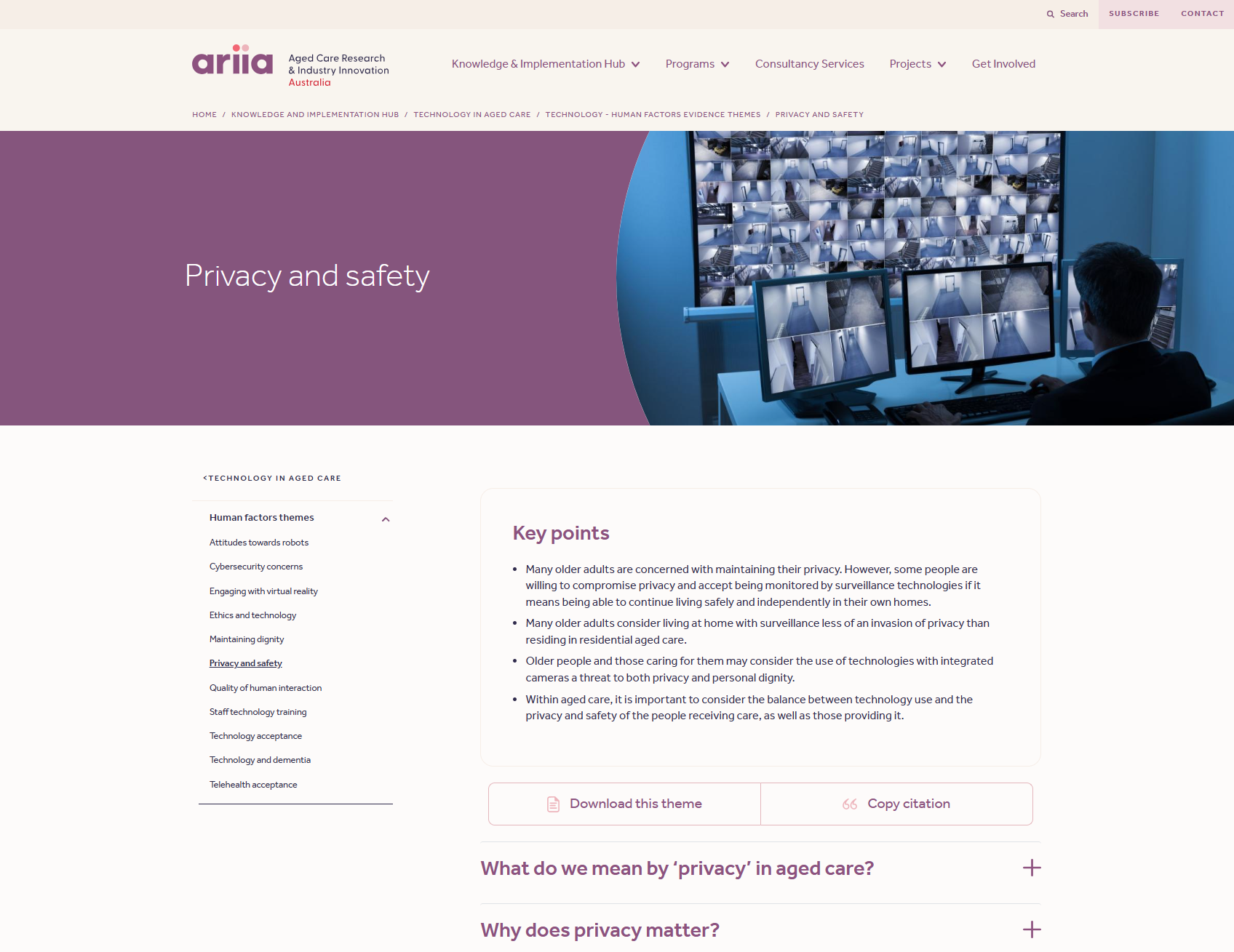
Privacy and safety
This resource addresses balancing privacy and safety for older people using technology in aged care. It highlights the importance of making sure surveillance technology supports independent living while respecting personal dignity, and it explores considerations for safety and privacy in care settings.
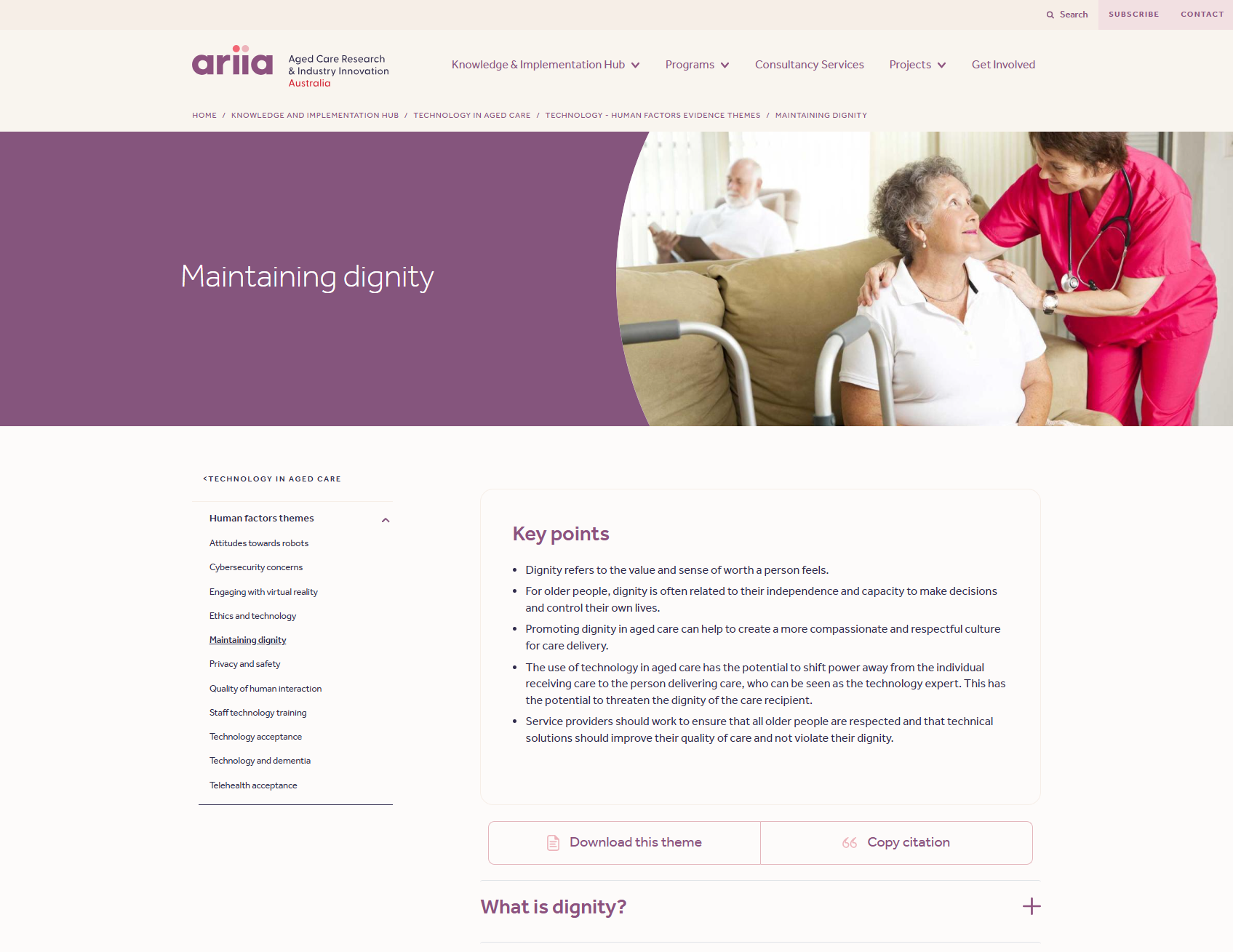
Maintaining dignity
This resource highlights the importance of maintaining dignity for older people in aged care, focusing on how technology use can impact their sense of autonomy and respect. It advises service providers to make sure technological solutions enhance care quality without compromising the dignity of those receiving care.