The Quality Standards Resource Centre helps extend understanding of the strengthened Aged Care Quality Standards, which took effect from 1 November 2025. You can search for resources by using keywords, or filtering by standard, outcome and audience. Before using the Resource Centre, please read the terms of use.
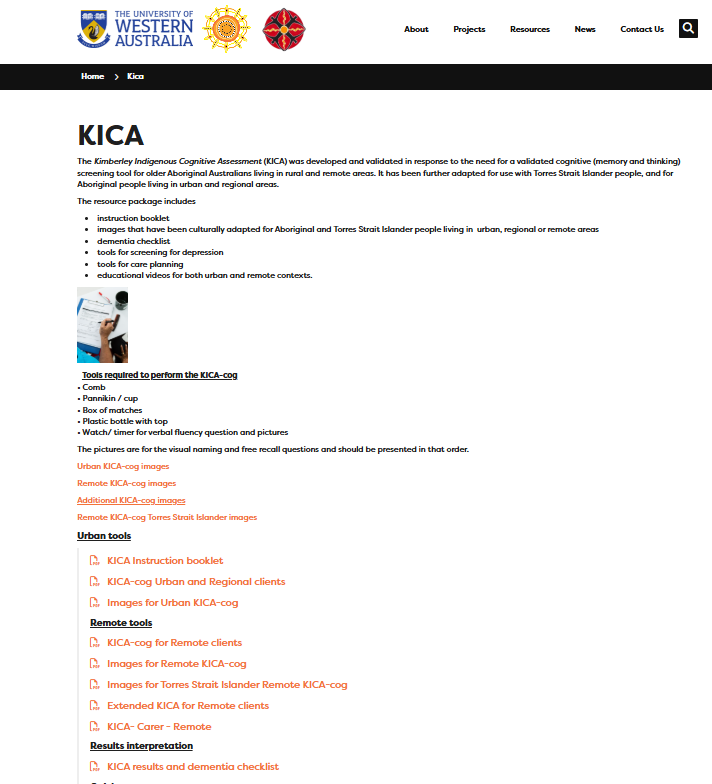
Kimberley Indigenous Cognitive Assessment (KICA)
The Kimberley Indigenous Cognitive Assessment (KICA) is a cognitive screening tool for older Aboriginal Australians living in rural and remote areas. It has been adapted for use with Torres Strait Islander people, and for Aboriginal people living in urban and regional areas.
This resource was developed by a state/territory government or organisation and therefore its applicability and usefulness may be limited.
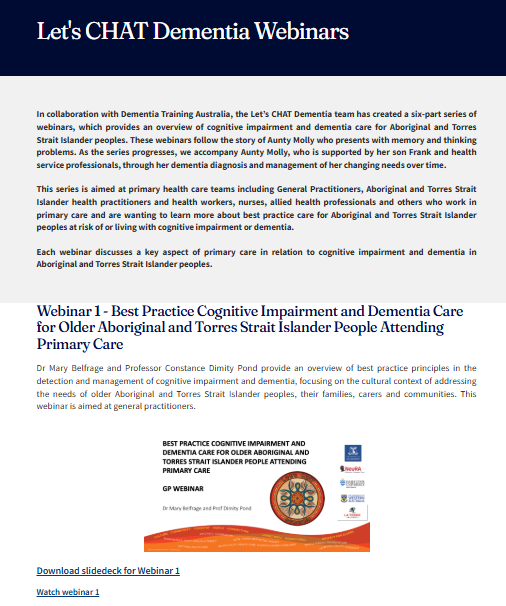
Let's CHAT Dementia Webinars - overview of cognitive impairment and dementia care for Aboriginal and Torres Strait Islander peoples
This resource offers a series of webinars on cognitive impairment and dementia care for Aboriginal and Torres Strait Islander peoples. It is designed for primary health care teams including General Practitioners, Aboriginal and Torres Strait Islander health practitioners and health workers, nurses, allied health professionals and others who work in primary care. The webinar series has been developed in collaboration with Dementia Training Australia.
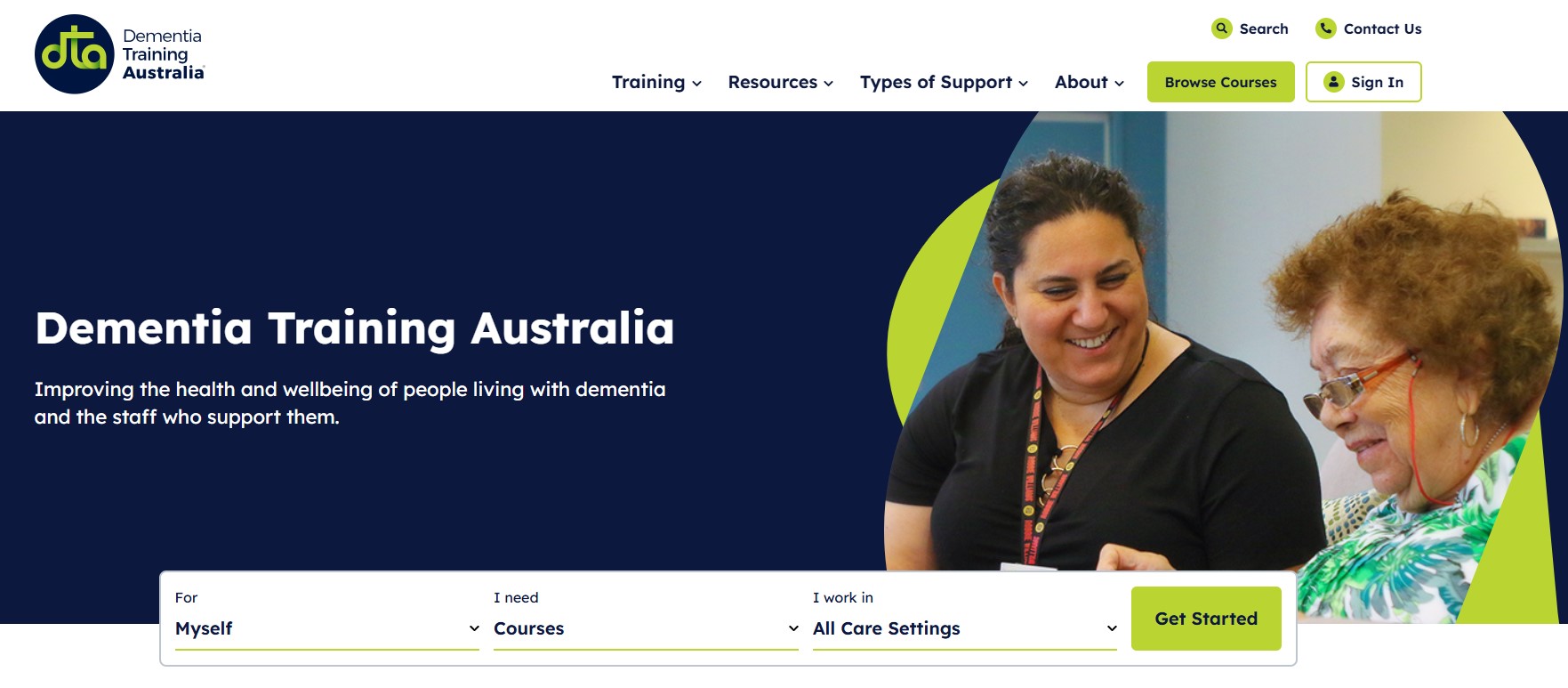
Dementia Training Australia
This resource is the Dementia Training Australia website. It contains training, practical tools and resources about caring for people living with dementia. Information on the website can be filtered by audience, resource type and care setting. Resources can also be accessed by focus areas such as changed behaviour, pain management, environments and medication management.
Dementia Australia
This resource is the Dementia Australia website. The website contains information about the types of dementia, testing, diagnosis, treatment and management of dementia. It includes information about living with dementia, such as behaviour changes, nutrition, staying connected and care options. It also contains information for professionals supporting people living with dementia, including research, tools and other resources.
Dementia Support Australia - Resource Hub
This resource hub provides a variety of materials to support healthcare professionals and family members who are supporting a person living with dementia. It includes resources across many different topics, including behaviour, COVID-19, design, engagement and other general resources. Keywords can be used to refine search and resources can be filtered by topic and audience type.
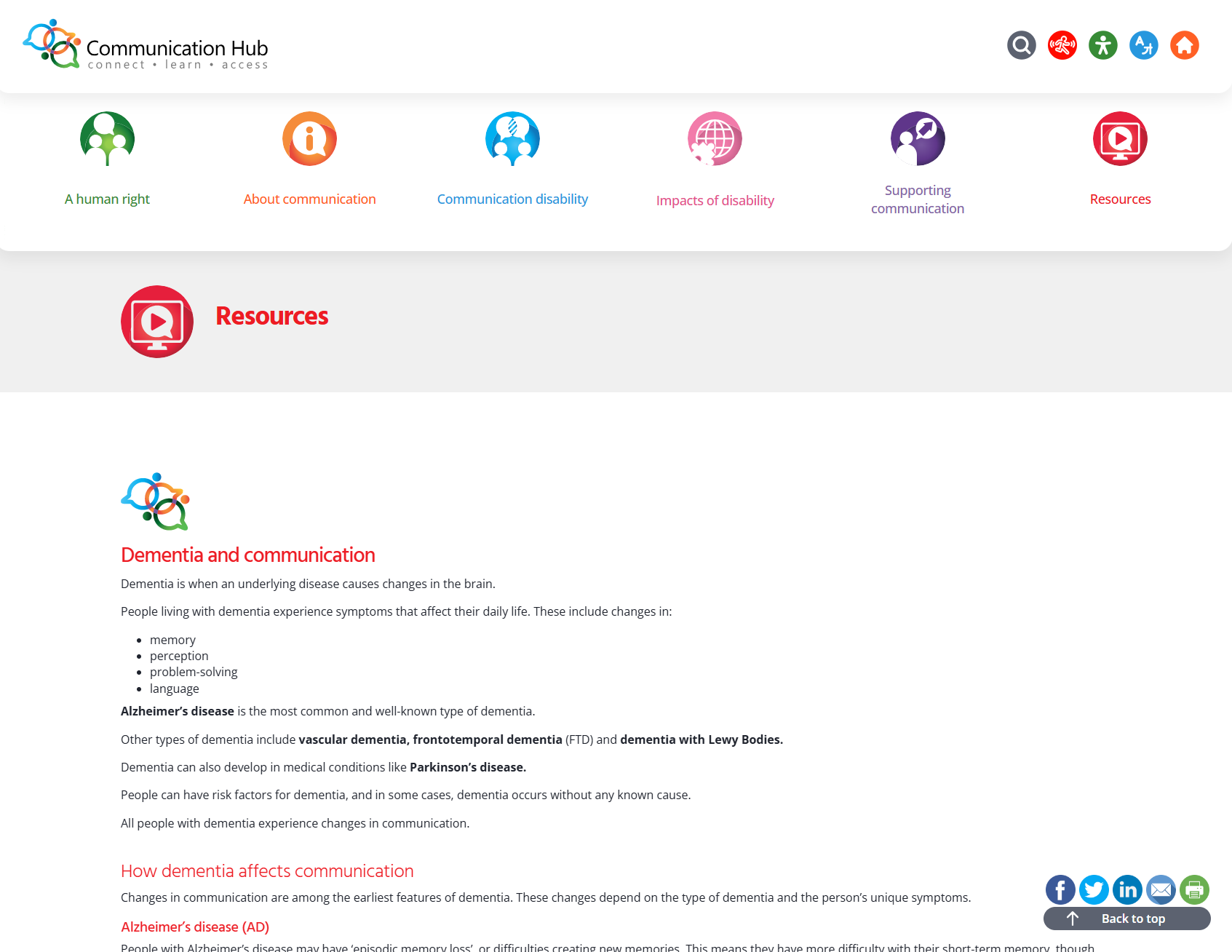
Dementia and communication - Resources
This resource discusses how dementia impacts communication abilities, including memory and language challenges. It offers practical strategies for enhancing conversations and maintaining connections, emphasising the role of speech pathologists in supporting communication. The resource provides guidance for family, friends, and caregivers to create dementia-friendly environments.
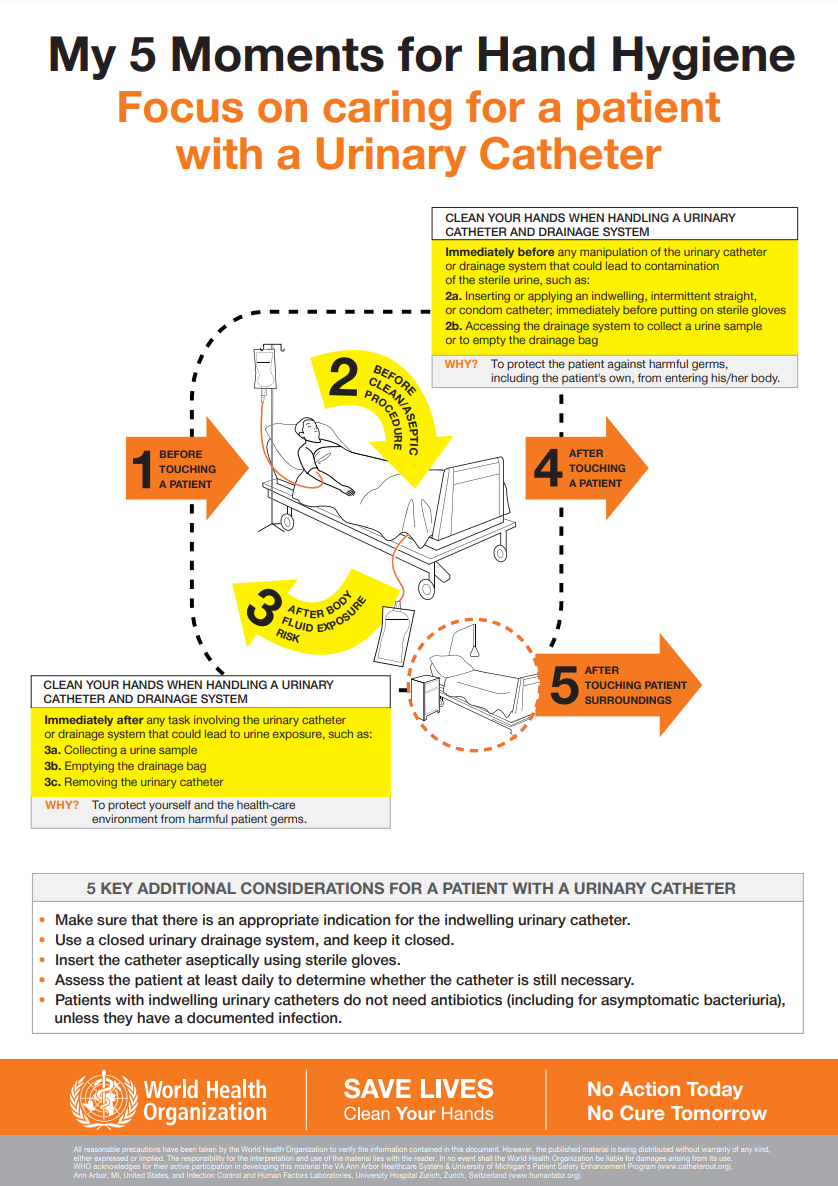
My 5 moments for hand hygiene: focus on caring for a patient with a urinary catheter
This resource outlines the ‘5 Moments for Hand Hygiene’ with specific considerations for patients with urinary catheters, aiming to minimise infection risks. It provides steps for appropriate hand hygiene before and after touching the patient, performing aseptic procedures, and handling catheter equipment.
This resource was developed internationally and therefore its applicability and usefulness may be limited.
Global strategy on infection prevention and control
This resource provides a global framework for infection prevention and control (IPC) in healthcare settings, aiming to reduce healthcare-associated infections and antimicrobial resistance. It offers strategic directions for achieving measurable improvements by 2030, supporting patient safety, healthcare worker protection, and sustainable health outcomes worldwide.
This resource was developed internationally and therefore its applicability and usefulness may be limited.
Dementia-friendly environments - Staff education and support
This resource offers guidance for staff support in dementia care, covering person-centred approaches, workplace culture change, training, and physical environment improvements. It includes strategies to enhance job satisfaction, staff wellbeing, and dementia-friendly care practices.
This resource was developed by a state/territory government or organisation and therefore its applicability and usefulness may be limited.
Dementia-friendly environments - Personal enjoyment
This resource provides guidance on fostering personal enjoyment for people with dementia, encouraging meaningful activities based on life history and familiar roles. It includes ideas for sensory engagement, physical activity, and social connection in home-like settings.
This resource was developed by a state/territory government or organisation and therefore its applicability and usefulness may be limited.
Dementia-friendly environments - Interior design
This resource provides guidance on interior design elements that create a familiar, practical, and dementia-friendly environment. It includes strategies for lighting, colour, furniture, and surfaces to enhance safety, wayfinding, and comfort in care settings.
This resource was developed by a state/territory government or organisation and therefore its applicability and usefulness may be limited.
Dementia-friendly environments - Designing for people with dementia
This resource provides design principles for creating dementia-friendly environments that support comfort, independence, and a sense of home. It includes guidance on optimising lighting, safety, social connection, and personalised spaces to enhance quality of life.
This resource was developed by a state/territory government or organisation and therefore its applicability and usefulness may be limited.
Infection Control Guidelines
This resource provides infection control guidelines for managing infectious diseases in care settings, covering protocols for exposure to blood and body fluids, managing respiratory and gastrointestinal illnesses, and handling high-risk infections. It includes standard precautions, waste disposal, and cleaning procedures to maintain safety and reduce transmission.
This resource was developed by a state/territory government or organisation and therefore its applicability and usefulness may be limited.
Standardised care processes
This resource offers evidence-based standardised care processes for aged care providers, covering high-risk clinical areas such as falls, pain, incontinence, and dehydration. It provides structured guidelines to support best practices, ensuring consistent and safe care for older people in residential settings.
This resource was developed by a state/territory government or organisation and therefore its applicability and usefulness may be limited.
Participating with consumers
This resource provides information sheets for residents, families, and carers to support decision-making in residential aged care. Covering topics such as pain management, falls, and medicines, it promotes health literacy, enabling consumers to engage in discussions and report care issues effectively.
This resource was developed by a state/territory government or organisation and therefore its applicability and usefulness may be limited.
Maintaining personal identity
This resource offers guidance on maintaining personal identity for people with dementia by fostering respect, independence, and communication. It suggests environmental and social modifications to enhance dignity, such as personalising spaces, supporting mobility, and addressing unmet needs.
This resource was developed by a state/territory government or organisation, and therefore its applicability and usefulness may be limited.
Clinical guidelines for dementia
This resource provides clinical practice guidelines and care principles for dementia, offering evidence-based recommendations for healthcare and aged care professionals. It includes a consumer companion guide and resources for training and implementation to improve dementia care across settings.
This resource was developed by a state/territory government or organisation and therefore its applicability and usefulness may be limited.
My healthy home: home health factsheet series
This resource offers accessible health information for Aboriginal and Torres Strait Islander people on preventing illness in the home. It includes room-based fact sheets with actions to improve environmental health, available as individual sheets or a workbook. This resource includes state-specific information and therefore its applicability and usefulness may be limited.
Management of Peripheral Intravenous Catheters Clinical Care Standard
This resource is the Australian Commission on Safety and Quality in Health Care's Clinical Care Standard for the management of Peripheral Intravenous Catheters (PIVCs), aiming to reduce complications and improve care quality. It includes quality statements on PIVC assessment, insertion, maintenance, and removal, supporting best practices in all healthcare settings. The standard applies to all contexts where PIVCs are used, with the term ‘patients’ encompassing people across various healthcare settings, including hospitals, emergency services, and community care.
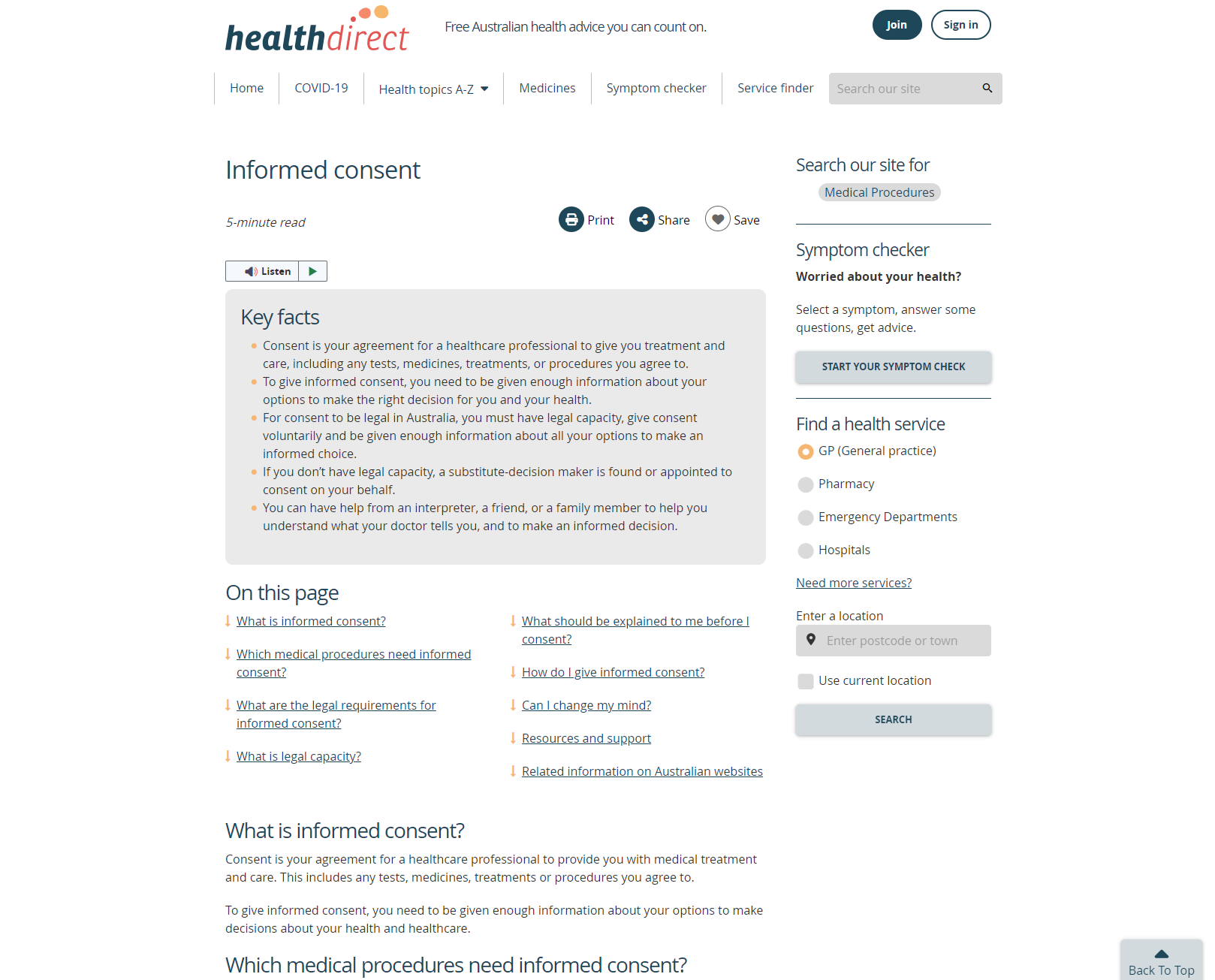
Informed consent - Health Direct
This resource explains the legal requirements and processes for obtaining informed consent for medical treatments, procedures, and care. It is relevant to aged care by ensuring that people understand their healthcare options, risks, and benefits, supporting their ability to make informed decisions about their health and wellbeing.