The Quality Standards Resource Centre helps extend understanding of the strengthened Aged Care Quality Standards, which took effect from 1 November 2025. You can search for resources by using keywords, or filtering by standard, outcome and audience. Before using the Resource Centre, please read the terms of use.
To Dip or Not to Dip - Implementation Guide for Nurse and Pharmacist Champions
To Dip or Not to Dip (TDONTD) is a quality improvement intervention successfully implemented in UK and Australian aged care homes to improve UTI assessment and antibiotic prescribing appropriateness.
This implementation guide has been drawn from the experiences of homes and champions who have implemented TDONTD, along with feedback from aged care nurses and personal care assistants who have used TDONTD resources.

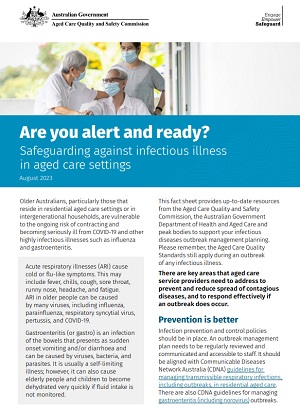
Are you alert and ready? Safeguarding against infectious illness in aged care settings
Older Australians, particularly those that reside in residential aged care settings or in multigenerational households, are vulnerable to the ongoing risk of contracting and becoming seriously ill from COVID-19 and other highly infectious illnesses such as influenza and gastroenteritis.
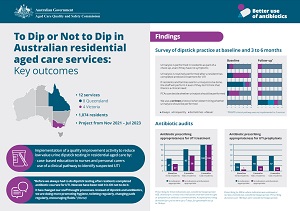
To Dip or Not to Dip in Australian residential aged care services - project findings
This visual abstract presents outcomes from a quality improvement project aimed at reducing low-value urine dipstick testing in aged care services. It included nurse education, implementing clinical pathways for UTI identification, and evaluating urinalysis practices and antibiotic prescribing. The findings demonstrate improved antibiotic prescribing appropriateness for UTIs over a 6-month follow-up period.
This resource may refer to information that will be updated from 1 November 2025 to align with the new Aged Care Act and Quality Standards.
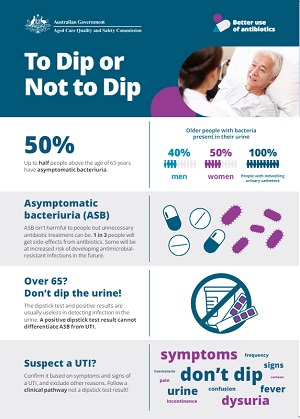
To Dip or Not to Dip - huddle tool A3 poster
This huddle tool poster provides guidance on appropriate use of urine dipstick tests in older adults. It explains that asymptomatic bacteriuria (ASB) is common and not harmful, but that unnecessary antibiotic treatment can be. It suggests confirming urinary tract infections (UTIs) through clinical symptoms rather than dipstick results.
This resource may refer to information that will be updated from 1 November 2025 to align with the new Aged Care Act and Quality Standards.
 To Dip or Not to Dip - huddle tool A3 poster (PDF 393.96 KB)
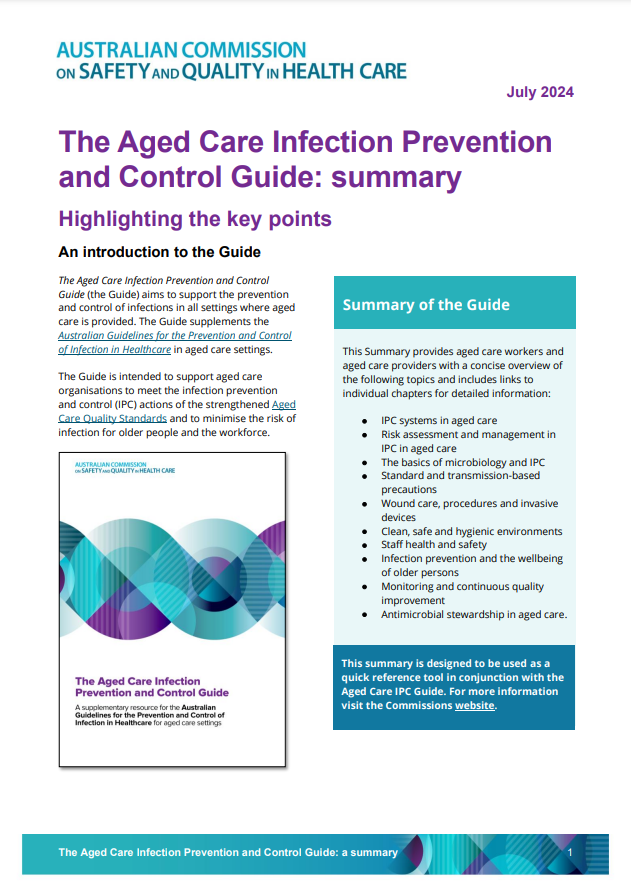
The Aged Care Infection Prevention and Control Guide: summary resource
This summary provides an overview of the Aged Care Infection Prevention and Control (IPC) Guide. It includes key topics such as IPC systems, risk assessment, standard and transmission-based precautions, staff health and safety, antimicrobial stewardship, and continuous quality improvement. It supports aged care providers in maintaining infection control standards.
This resource may refer to information that will be updated from 1 November 2025 to align with the new Aged Care Act and Quality Standards.
The Australian Immunisation Handbook
This resource provides clinical advice for health professionals on the safe and effective use of vaccines. It includes guidelines for vaccine administration, special risk groups, and updates on vaccine-preventable diseases. The handbook is a comprehensive reference for ensuring the best immunisation practices, particularly important in protecting vulnerable populations, including those in aged care.
This resource may refer to information that will be updated from 1 November 2025 to align with the new Aged Care Act and Quality Standards.
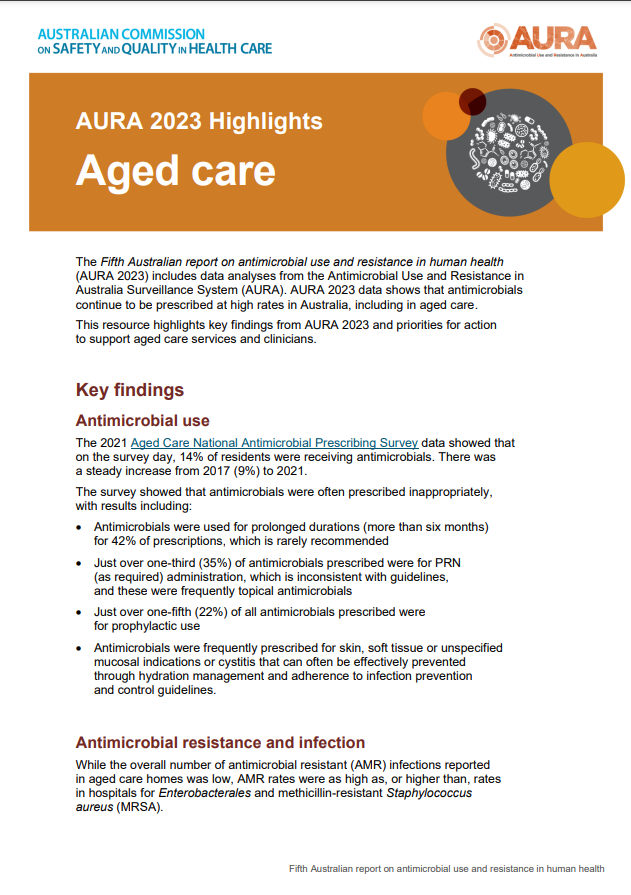
AURA 2023 Highlights for Aged care
This resource summarises key findings from the AURA 2023 report, focusing on antimicrobial use and resistance in aged care. It provides priorities for action to reduce inappropriate prescriptions, promote antimicrobial stewardship, and improve infection prevention and control in aged care settings, aligning with quality standards to enhance care for older people.
This resource may refer to information that will be updated from 1 November 2025 to align with the new Aged Care Act and Quality Standards.
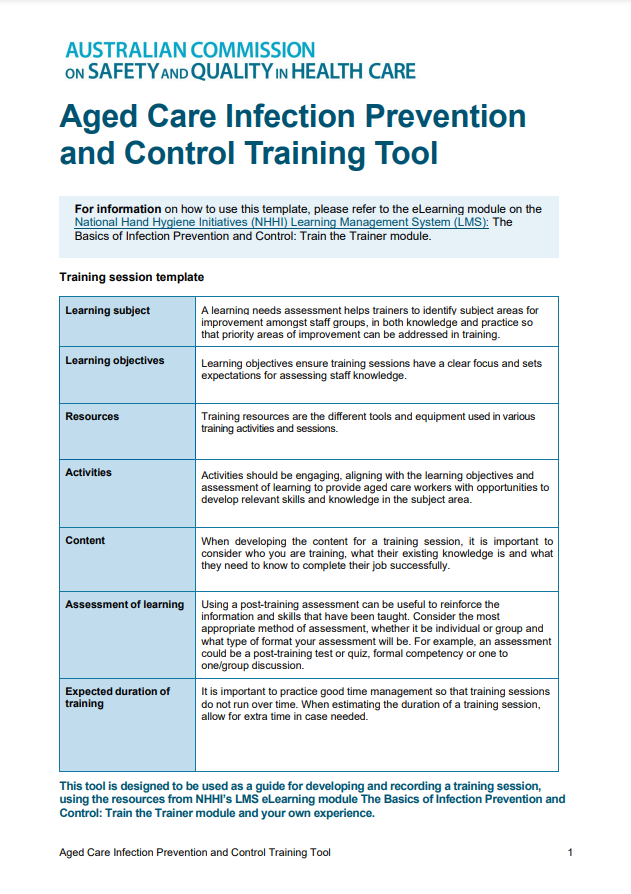
Aged Care Infection Prevention and Control Training Tool
This resource is a training tool designed to help develop and record infection prevention and control training sessions in aged care. It includes templates for learning objectives, content development, and assessment methods, ensuring effective delivery of key infection control practices using structured guidance and eLearning resources.
This resource may refer to information that will be updated from 1 November 2025 to align with the new Aged Care Act and Quality Standards.
The Aged Care Infection Prevention and Control Guide
This resource outlines the basic principles of infection prevention and control and explains how to apply these principles using a risk-based approach. The guide supports implementation of the strengthened Aged Care Quality Standards. It is a supplementary resource for the Australian Guidelines for the Prevention and Control of Infection in Healthcare for aged care settings.
This resource may refer to information that will be updated from 1 November 2025.
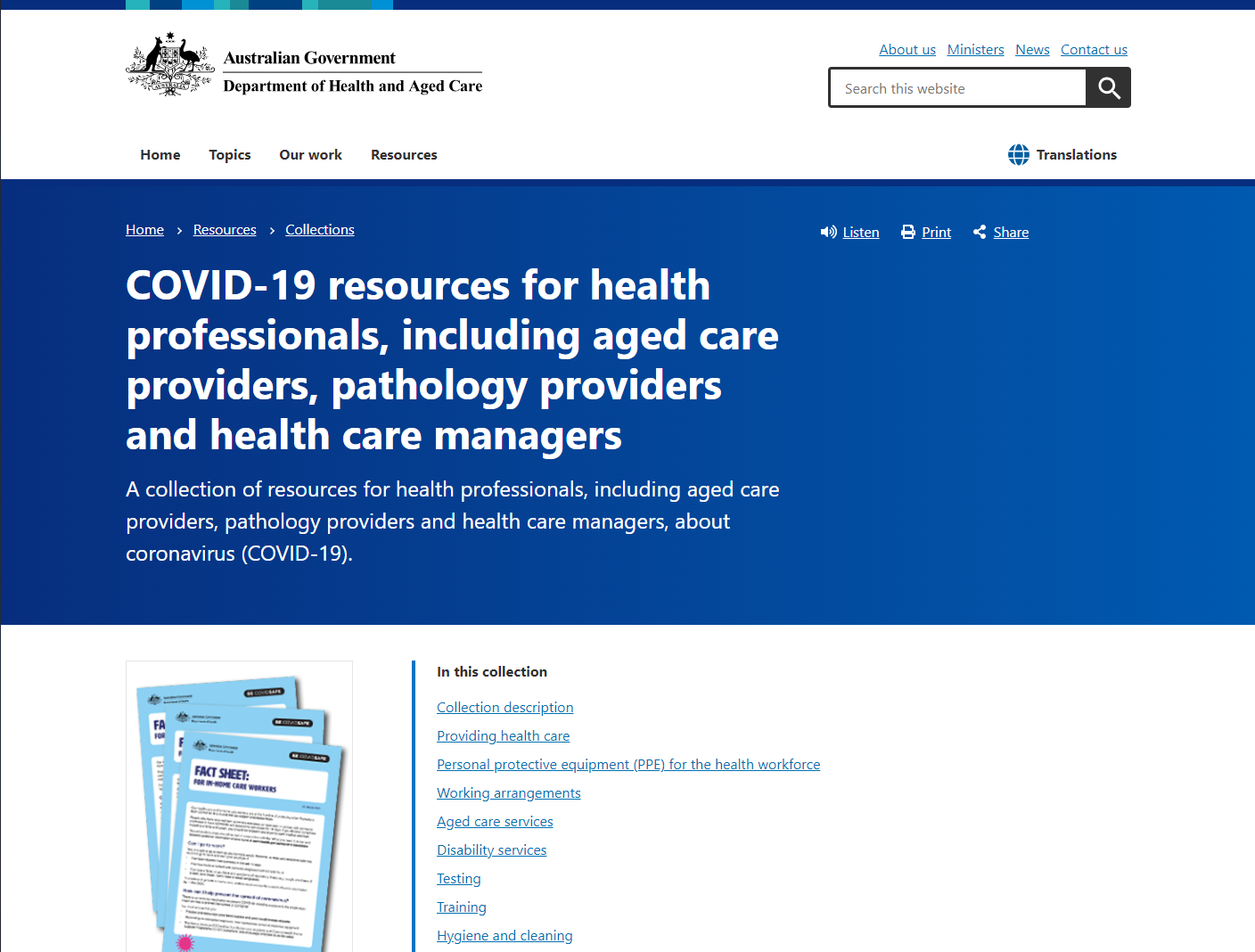
COVID-19 resources for health professionals, including aged care providers, pathology providers and health care managers
This resource offers COVID-19 guidance for health professionals and aged care providers. It includes information on managing outbreaks, infection control, PPE use, and telehealth services. These resources support safe and effective care delivery while ensuring compliance with guidelines during the pandemic in aged care settings.
This resource may refer to information that will be updated from 1 November 2025 to align with the new Aged Care Act and Quality Standards.
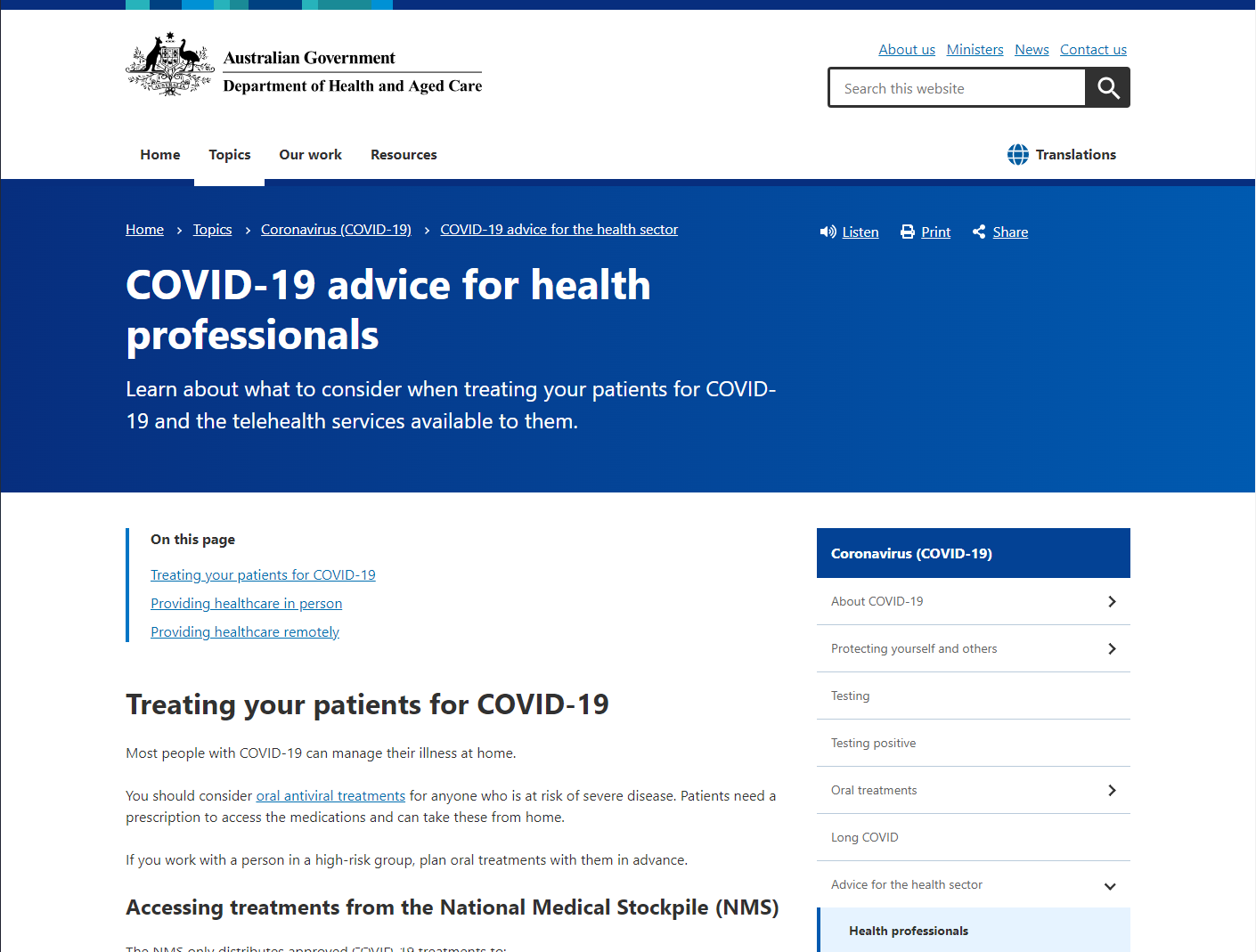
COVID-19 advice for health professionals
This resource offers COVID-19 guidance for health professionals, including infection prevention, antiviral treatments, and telehealth services. It advises on managing high-risk patients, accessing personal protective equipment (PPE), and maintaining hygiene standards. It is essential for ensuring safe healthcare delivery, particularly in aged care settings during the pandemic.
This resource may refer to information that will be updated from 1 November 2025 to align with the new Aged Care Act and Quality Standards.
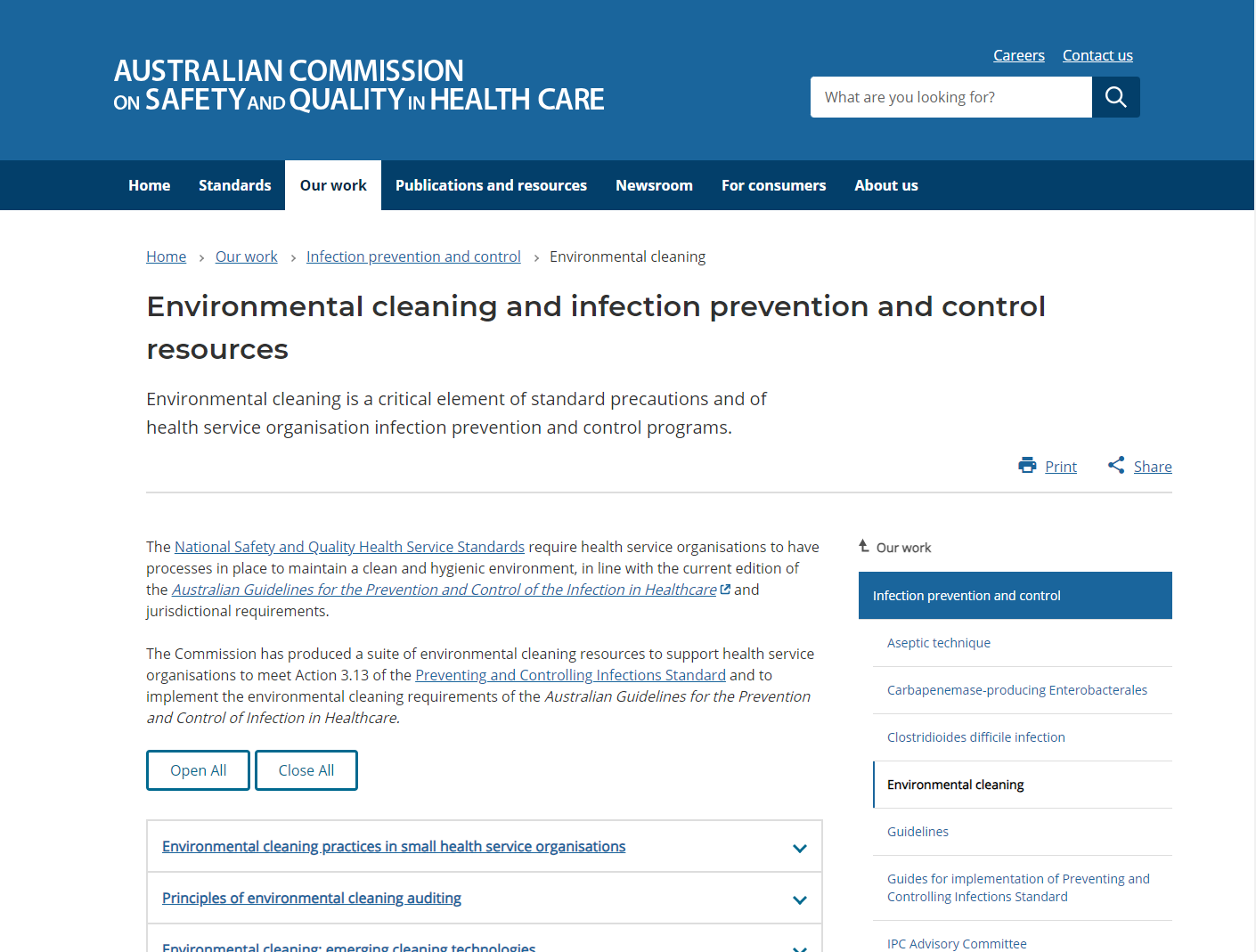
Environmental cleaning and infection prevention and control resources
This resource offers a range of environmental cleaning and infection prevention tools for healthcare settings, including guidelines for small organisations, cleaning audits, product selection, and emerging cleaning technologies. It supports aged care providers in maintaining clean, hygienic environments, helping them comply with infection control standards and ensure safety.
This resource may refer to information that will be updated from 1 November 2025 to align with the new Aged Care Act and Quality Standards.
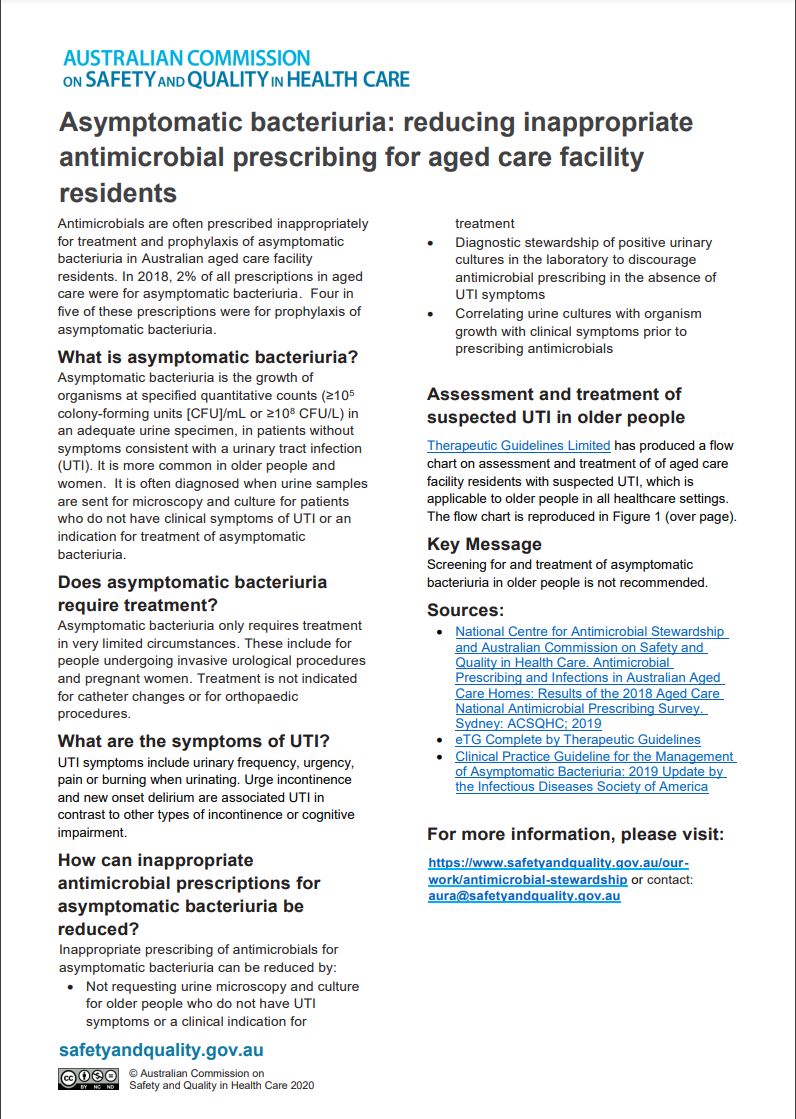
Fact sheet - Asymptomatic bacteriuria
This fact sheet offers guidance on managing asymptomatic bacteriuria and reducing inappropriate antimicrobial prescribing for residents of aged care facilities. It details symptoms, strategies to decrease unwarranted antimicrobial prescriptions for asymptomatic bacteriuria, and an assessment and treatment framework for residents suspected of urinary tract infections.
This resource may refer to information that will be updated from 1 November 2025 to align with the new Aged Care Act and Quality Standards.
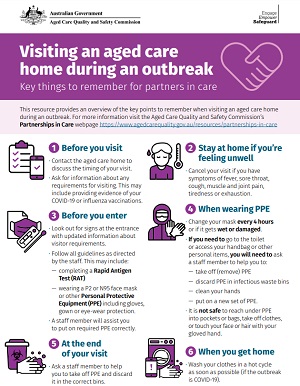
Visiting an aged care home during an outbreak - A3 poster
This A3 poster can be used by aged care facilities during an outbreak. It explains the key things for partners in care to remember when visiting an aged care home during an outbreak.
This resource may refer to information that will be updated from 1 November 2025 to align with the new Aged Care Act and Quality Standards.
Visiting an aged care home during an outbreak poster (PDF 323.5 KB)
What is hand hygiene?
This resource provides guidance on proper hand hygiene practices in healthcare settings. It covers key topics such as the correct use of alcohol-based hand rubs, when to wash hands with soap and water, and appropriate glove use. It also addresses common hand care issues and strategies for preventing dermatitis in healthcare workers.
This resource may refer to information that will be updated from 1 November 2025 to align with the new Aged Care Act and Quality Standards.
Hand Hygiene presentation
This presentation is designed for healthcare workers to introduce the basics of hand hygiene, its significance in preventing infections, and ensuring both patient and healthcare worker safety. It outlines when and how to perform hand hygiene, its role in infection control, and the importance of compliance monitoring in healthcare settings.
This resource may refer to information that will be updated from 1 November 2025 to align with the new Aged Care Act and Quality Standards.
Visitor restrictions
This resource provides guidelines on visitor restrictions for aged care services during infectious outbreaks, such as COVID-19. It includes information on managing the impact of restrictions, ensuring the safety and wellbeing of care recipients, and balancing health risks with the need for social connection to prevent negative physical and psychological effects.
This resource may refer to information that will be updated from 1 November 2025 to align with the new Aged Care Act and Quality Standards.
Infection Prevention and Control Leads: Updates for providers
This fact sheet provides updated information for providers of aged care on effective infection prevention and control capability. This is critical to the safe, effective delivery of personal and clinical care in aged care. This is particularly the case during the coronavirus COVID-19 pandemic.
Outbreak Management Plan - stress testing outline
Having a comprehensive and organisation-specific outbreak management plan (OMP) helps your organisation to be prepared for the management of infections and outbreaks within your service. A key part of this readiness is ensuring that your OMP is fit-for-purpose and that everyone across the organisation can implement it if required. One way to maintain readiness and support continuous improvement of your OMP is to run regular drills, or stress tests, of your plan.
Outbreak Management Plan - stress testing outline (PDF 424.34 KB)
Your questions answered - Influenza
This resource answers common questions about influenza vaccination. It explains the importance of annual flu vaccines, who should get vaccinated, and how the vaccine works. It highlights the vaccine's role in preventing serious complications, particularly for older adults, children, pregnant people, and those with chronic health conditions.
This resource may refer to information that will be updated from 1 November 2025 to align with the new Aged Care Act and Quality Standards.