The Quality Standards Resource Centre helps extend understanding of the strengthened Aged Care Quality Standards, which took effect from 1 November 2025. You can search for resources by using keywords, or filtering by standard, outcome and audience. Before using the Resource Centre, please read the terms of use.
Supported decision-making
This resource explains supported decision-making, a process that helps people retain control over choices in their lives, even with cognitive challenges. It outlines how aged care providers can support people’s decisions, providing information in accessible formats and respecting autonomy, as endorsed by national and international rights frameworks.
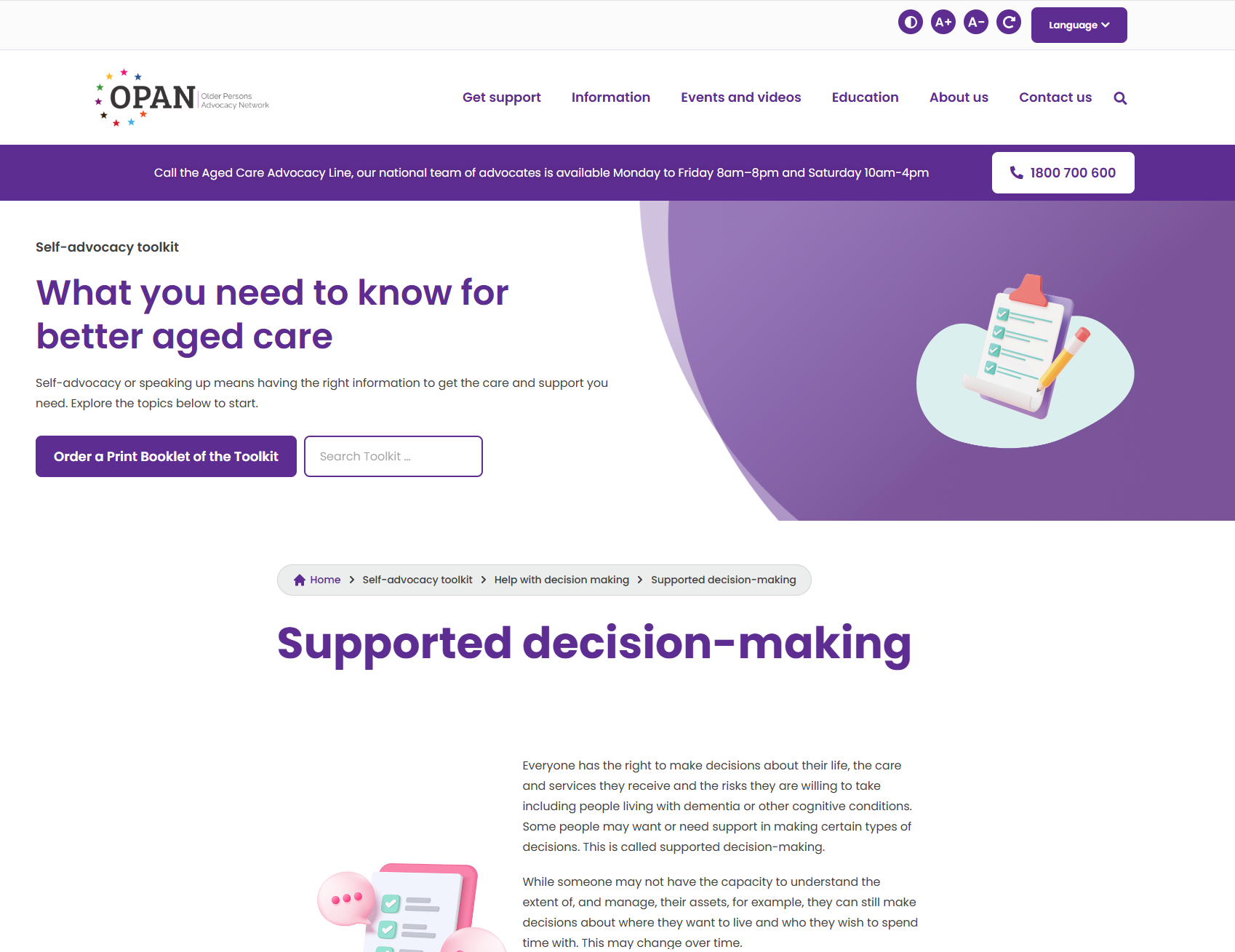
What is dignity of risk? consumer resources
The Commission has developed a number of resources to help aged care consumers understand what dignity of risk is and what actions you should expect from your provider. The dignity of risk is another way of saying you have the right to live the life you choose.
 A3 poster — What is dignity of risk? (PDF 351.01 KB)
A4 guide — What is dignity of risk? (PDF 404.72 KB)
A3 poster — What is dignity of risk? (PDF 351.01 KB)
A4 guide — What is dignity of risk? (PDF 404.72 KB)
The Aged Care Infection Prevention and Control Guide
This resource outlines the basic principles of infection prevention and control and explains how to apply these principles using a risk-based approach. The guide supports implementation of the strengthened Aged Care Quality Standards. It is a supplementary resource for the Australian Guidelines for the Prevention and Control of Infection in Healthcare for aged care settings.
This resource may refer to information that will be updated from 1 November 2025.
Dignity of Risk
This resource provides guidance on the concept of dignity of risk. It includes information about how to reframe thinking and ways you can support dignity of risk. The resource highlights the importance of choice and independence, and supporting someone to do what they want safely.
This resource may refer to information that will be updated from 1 November 2025 to align with the new Aged Care Act and Quality Standards.
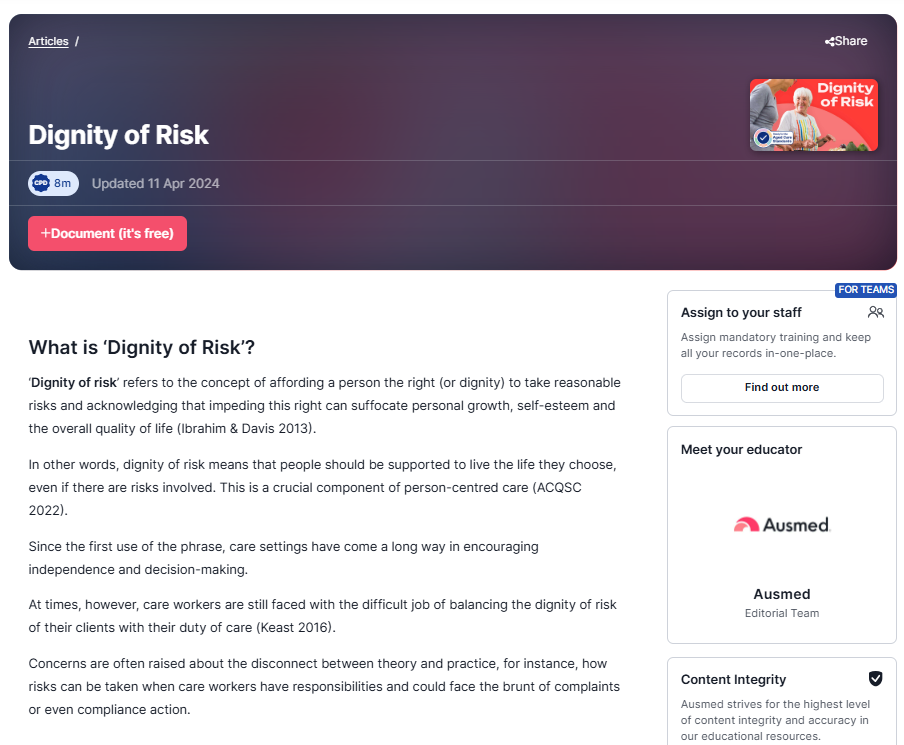
Essential element 2: Identifying goals of care
This resource guides providers in identifying and setting goals of care with patients through shared decision-making. It fosters collaboration between patients, family, and healthcare teams to clarify expectations and establish personalised clinical and personal care objectives.
This resource may apply to healthcare contexts outside of aged care. Please consider the applicability of this resource to your care setting. This resource may refer to information that will be updated from 1 November 2025 to align with the new Aged Care Act and Quality Standards.
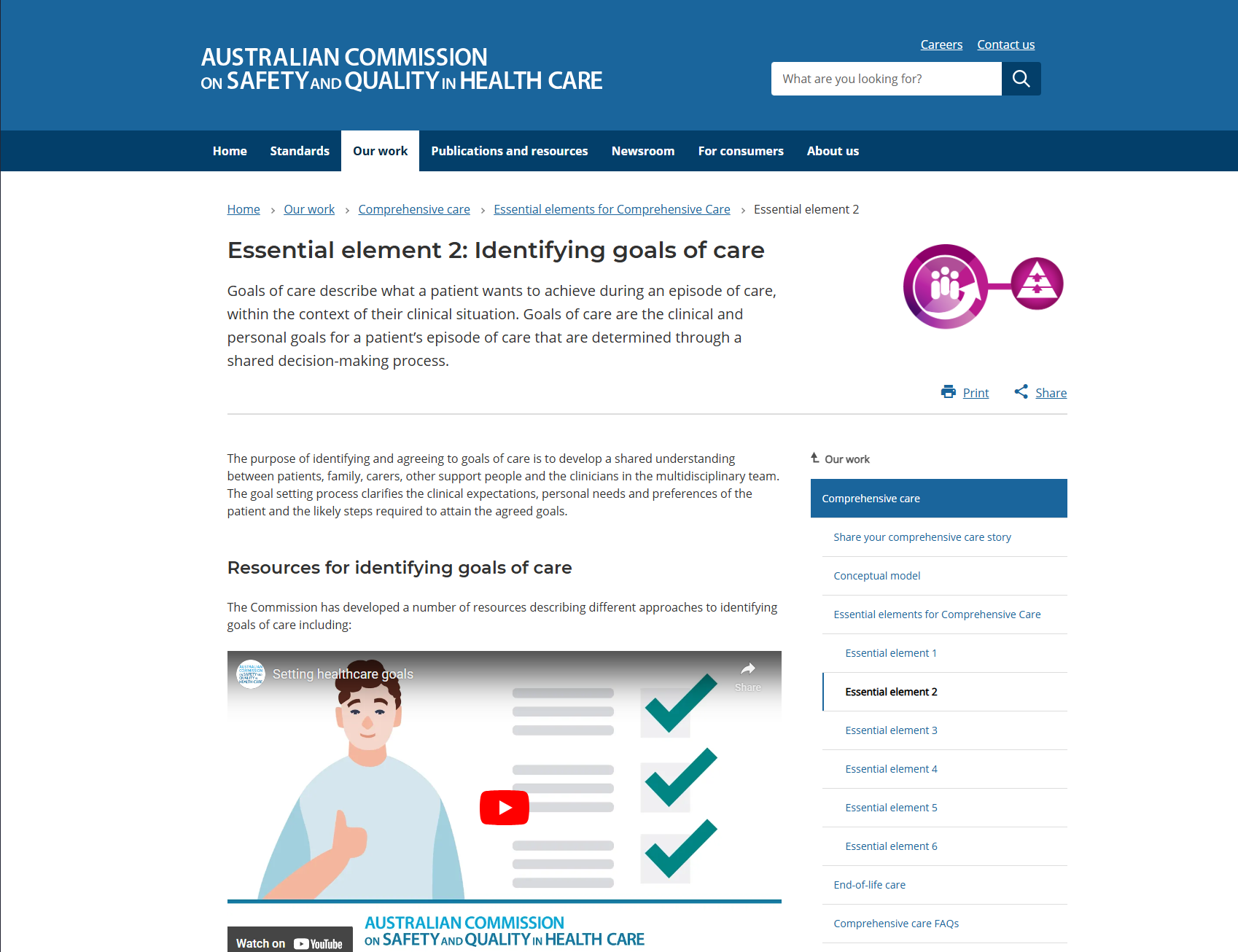
Environmental cleaning and infection prevention and control resources
This resource offers a range of environmental cleaning and infection prevention tools for healthcare settings, including guidelines for small organisations, cleaning audits, product selection, and emerging cleaning technologies. It supports aged care providers in maintaining clean, hygienic environments, helping them comply with infection control standards and ensure safety.
This resource may refer to information that will be updated from 1 November 2025 to align with the new Aged Care Act and Quality Standards.
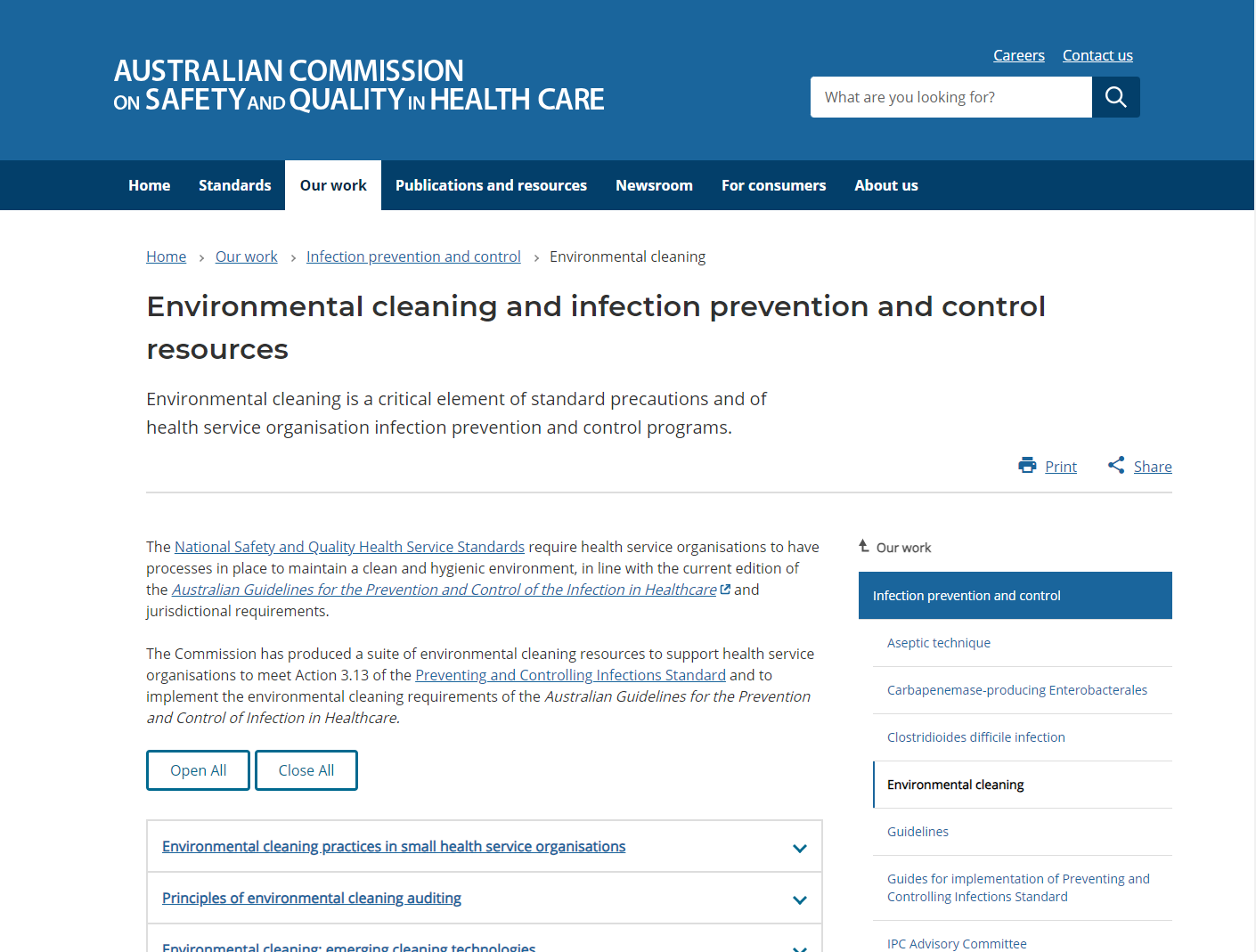
Environmental design resources handbook
This resource supports improvements to environments for people living with dementia. The resource includes information and background on the key design principles and environmental assessment tools. It also includes the Indigenous Aged Care Design Guide. The handbook can be accessed in full, or individually as 7 separate resources.
This resource may refer to information that will be updated from 1 November 2025 to align with the new Aged Care Act and Quality Standards.
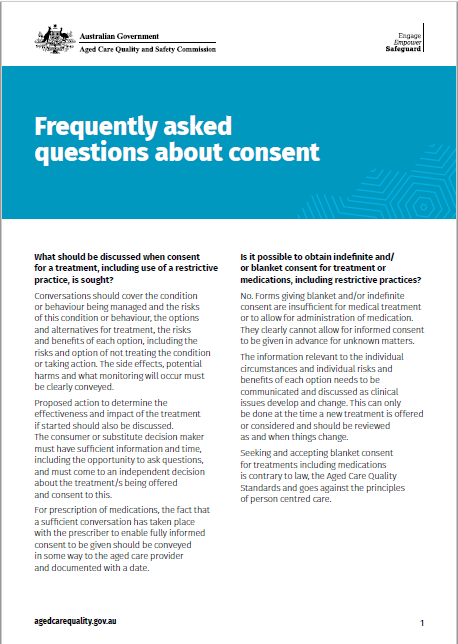
Frequently asked questions about consent
This fact sheet covers the frequently asked questions about consent in aged care.
Frequently asked questions about consent (PDF 433.26 KB)
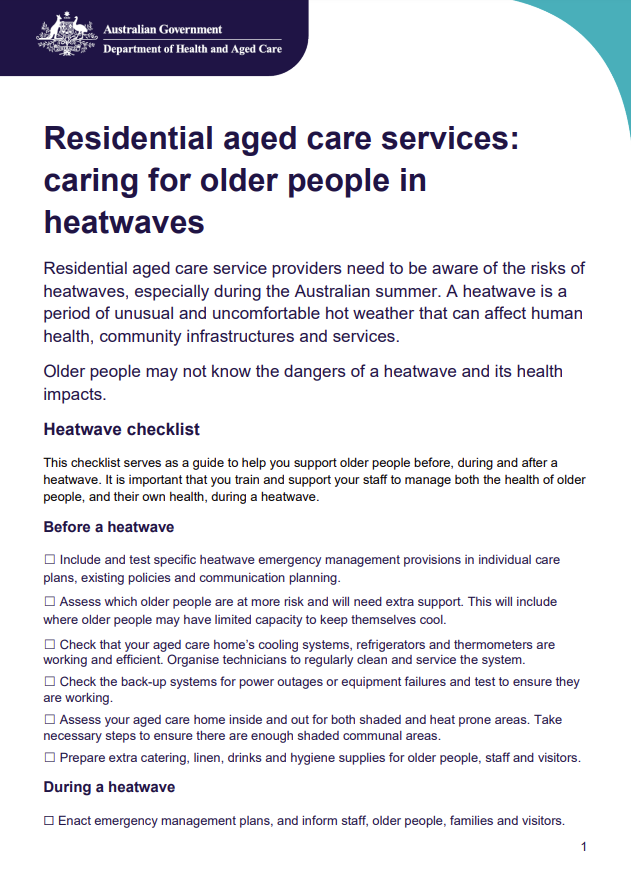
Caring for Older People in heatwaves – Residential Aged Care
This resource provides guidance to care for older people living in residential aged care services during a heatwave. The resource includes checklists to guide providers to support older people before, during and after a heatwave. It includes clinical assessment guidance and where to find more information about heatwaves.
This resource may refer to information that will be updated from 1 November 2025 to align with the new Aged Care Act and Quality Standards.
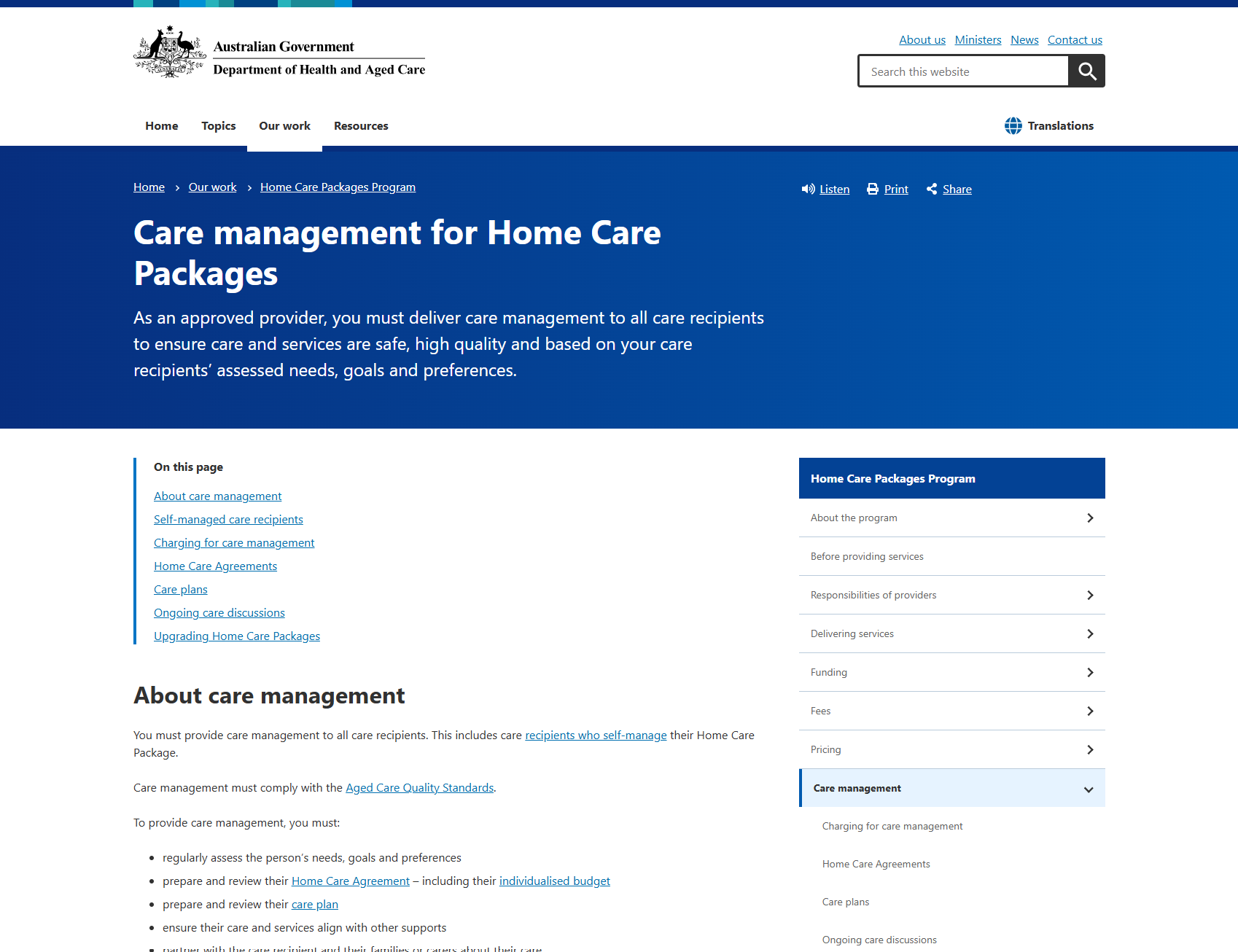
Care management for Home Care Packages
This resource details requirements for managing Home Care Packages, including creating care plans, maintaining Home Care Agreements, and conducting ongoing care discussions. Providers must align services with the person’s needs, goals, and preferences, ensuring high-quality care that is culturally safe and compliant with quality standards.
This resource may refer to information that will be updated from 1 November 2025 to align with the new Aged Care Act and Quality Standards.
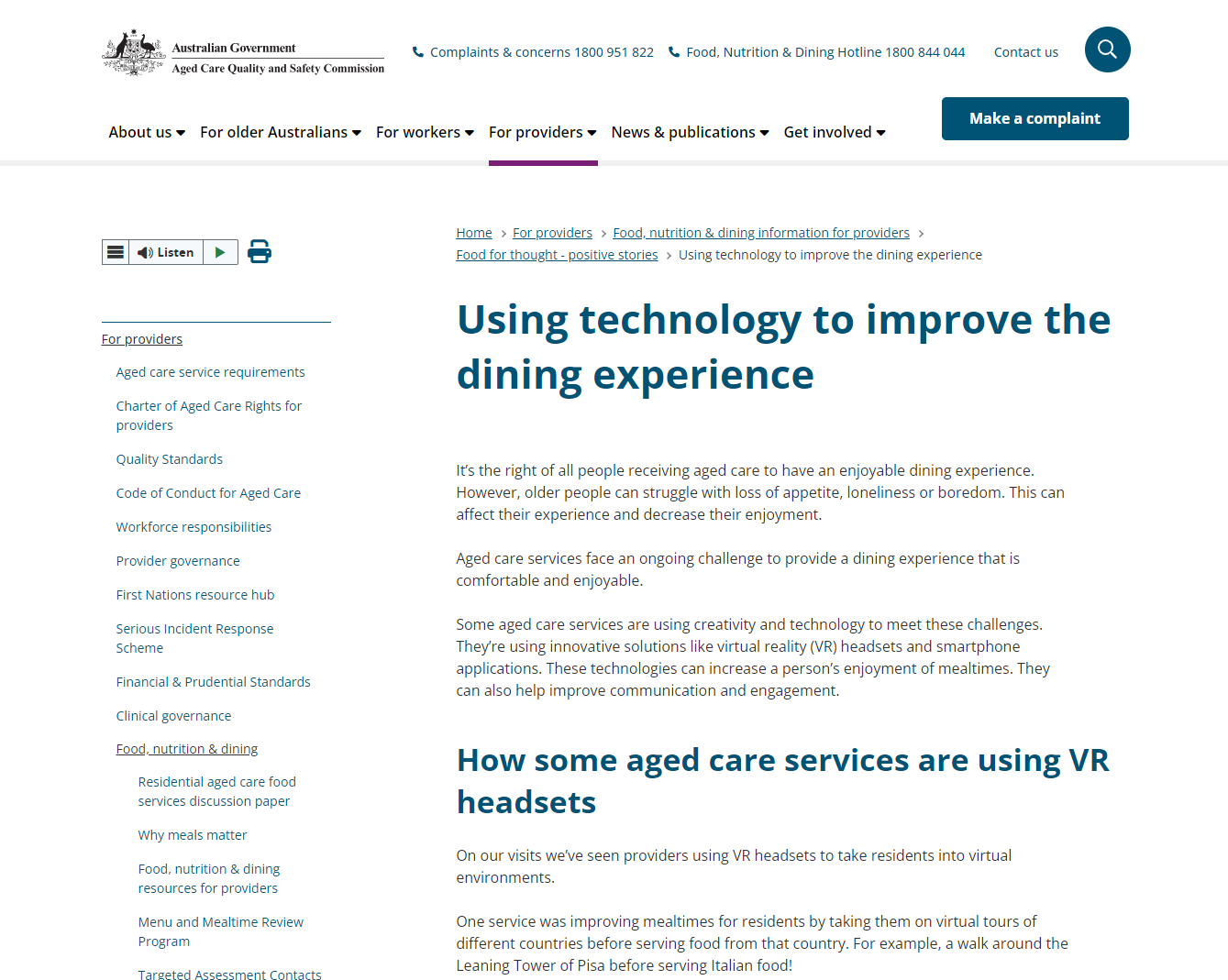
Using technology to improve the dining experience
This resource provides guidance on how technology, such as virtual reality (VR) and mobile applications, can enhance the dining experience in aged care settings. These tools are designed to increase engagement, support meal choices, improve communication with families, and contribute to overall wellbeing by making mealtimes more enjoyable.
This resource may refer to information that will be updated from 1 November 2025 to align with the new Aged Care Act and Quality Standards.
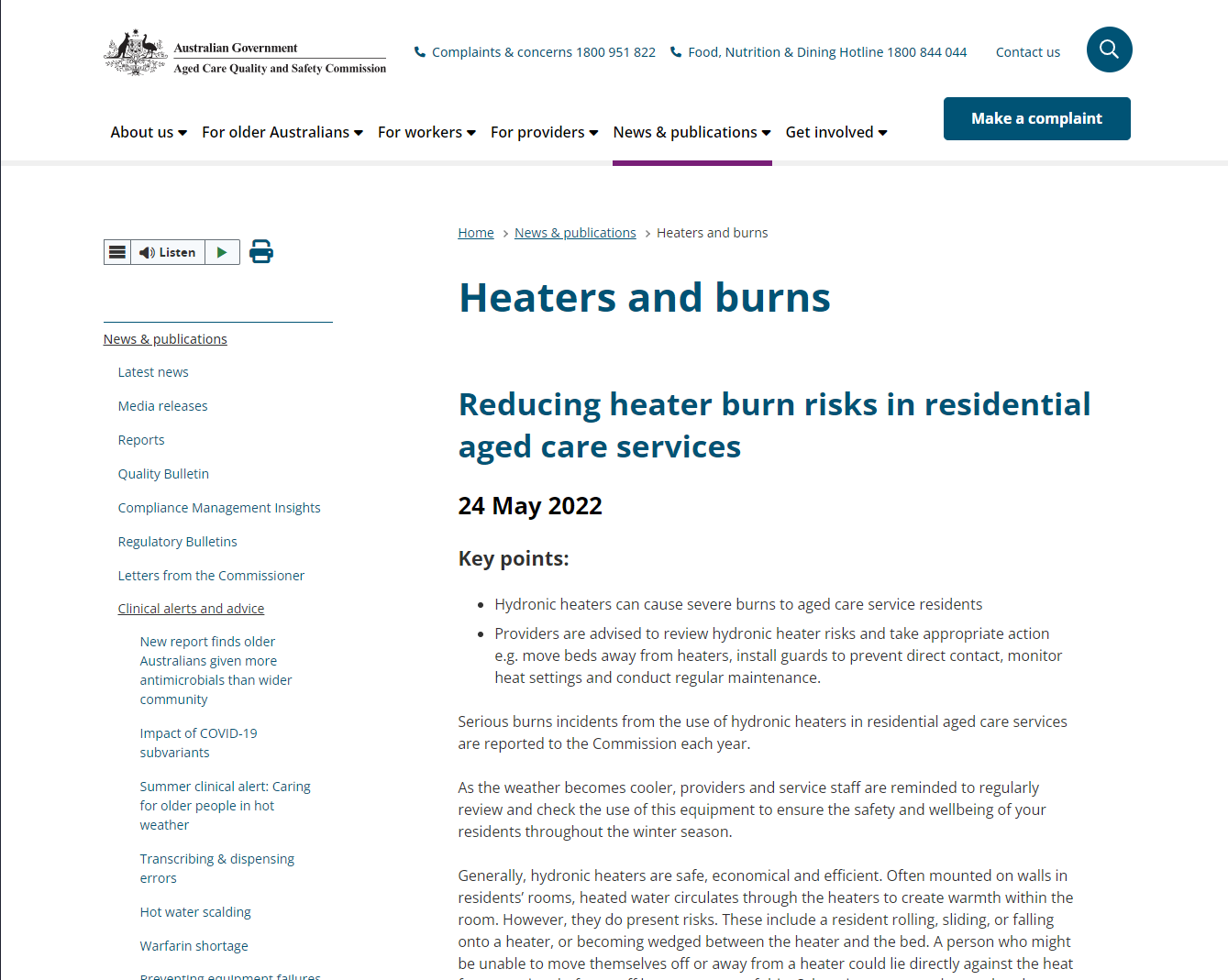
Heaters and burns - Reducing heater burn risks in residential aged care services
This resource provides guidance for aged care providers on managing risks related to hydronic heaters. It advises regular maintenance, accurate temperature checks, and positioning of beds away from heaters. Installing guards and monitoring heat settings are also recommended to prevent burns and ensure the safety of older people in cooler months.
This resource may refer to information that will be updated from 1 November 2025 to align with the new Aged Care Act and Quality Standards.
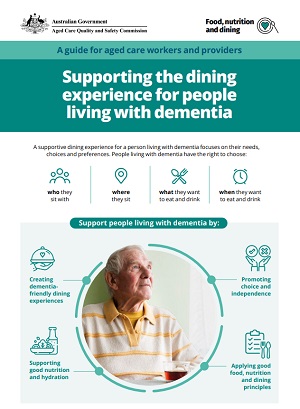
Supporting the dining experience for people living with dementia – Providers and workers guide
This guide is about how to support people living with dementia to maintain good nutrition and enjoy positive dining experiences.
This resource may refer to information that will be updated from 1 November 2025 to align with the new Aged Care Act and Quality Standards.
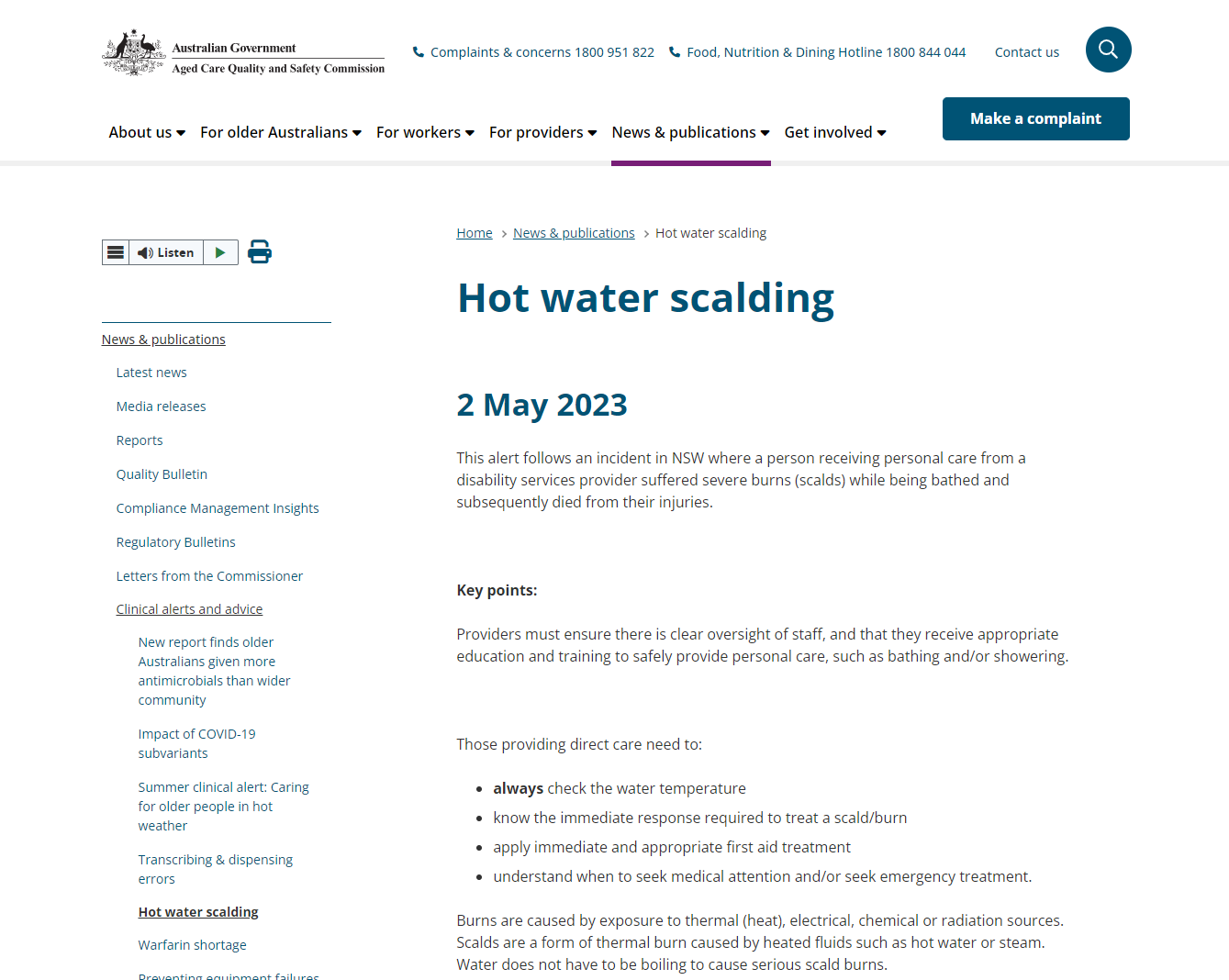
Hot water scalding
This page provides guidance for aged care providers on preventing and responding to hot water scalding incidents. It highlights the importance of staff oversight, proper training, and temperature checks when providing care. It also includes immediate first aid steps for burns, helping to reduce risks for vulnerable people, especially older people.
This resource may refer to information that will be updated from 1 November 2025 to align with the new Aged Care Act and Quality Standards.
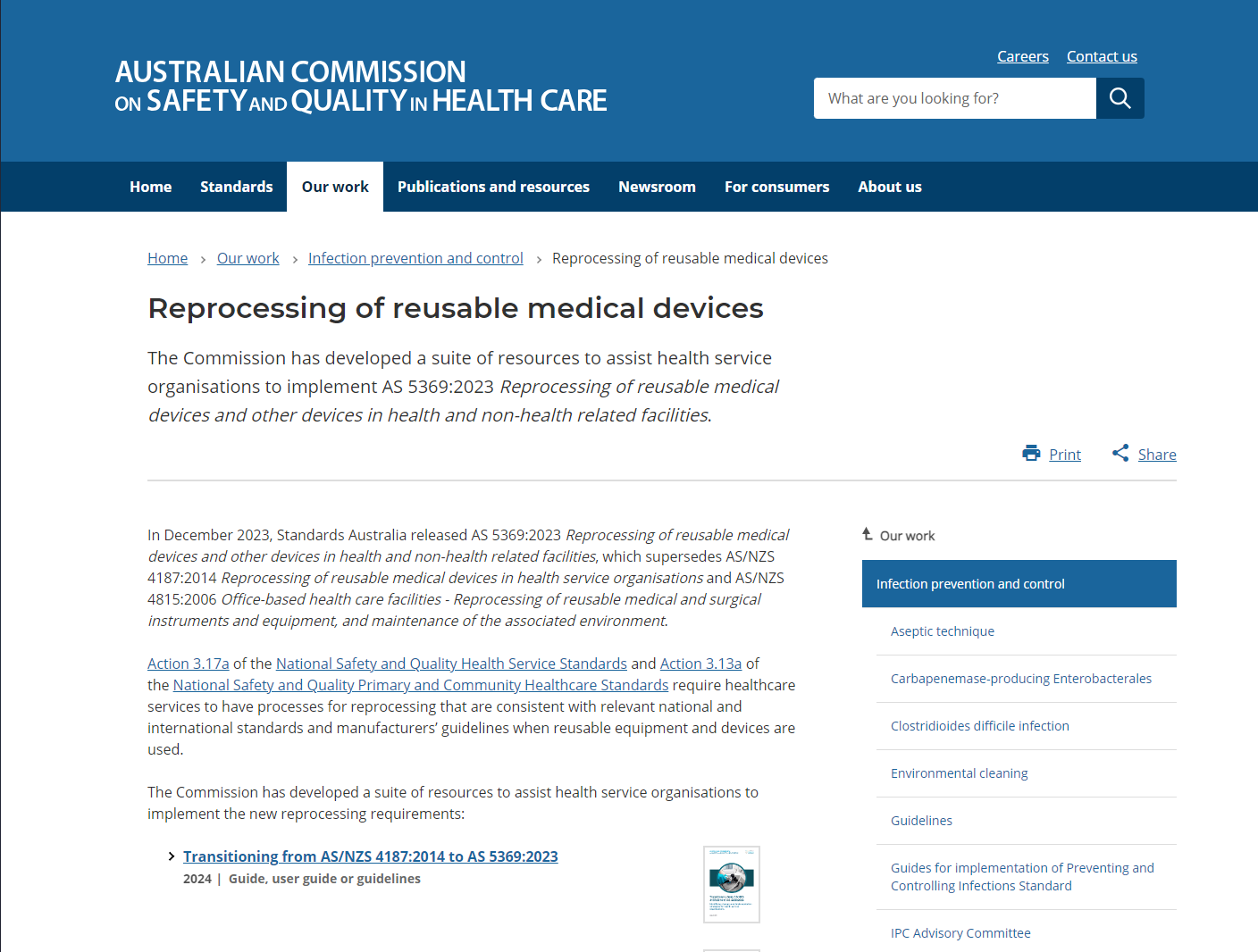
Reprocessing of reusable medical devices
This resource provides guidance on implementing updated standards for reprocessing reusable medical devices in health and non-health facilities. It supports compliance with AS 5369:2023, ensuring healthcare organisations follow national and international standards for safe equipment reprocessing to minimise infection risks and promote patient safety.
This resource may refer to information that will be updated from 1 November 2025 to align with the new Aged Care Act and Quality Standards.
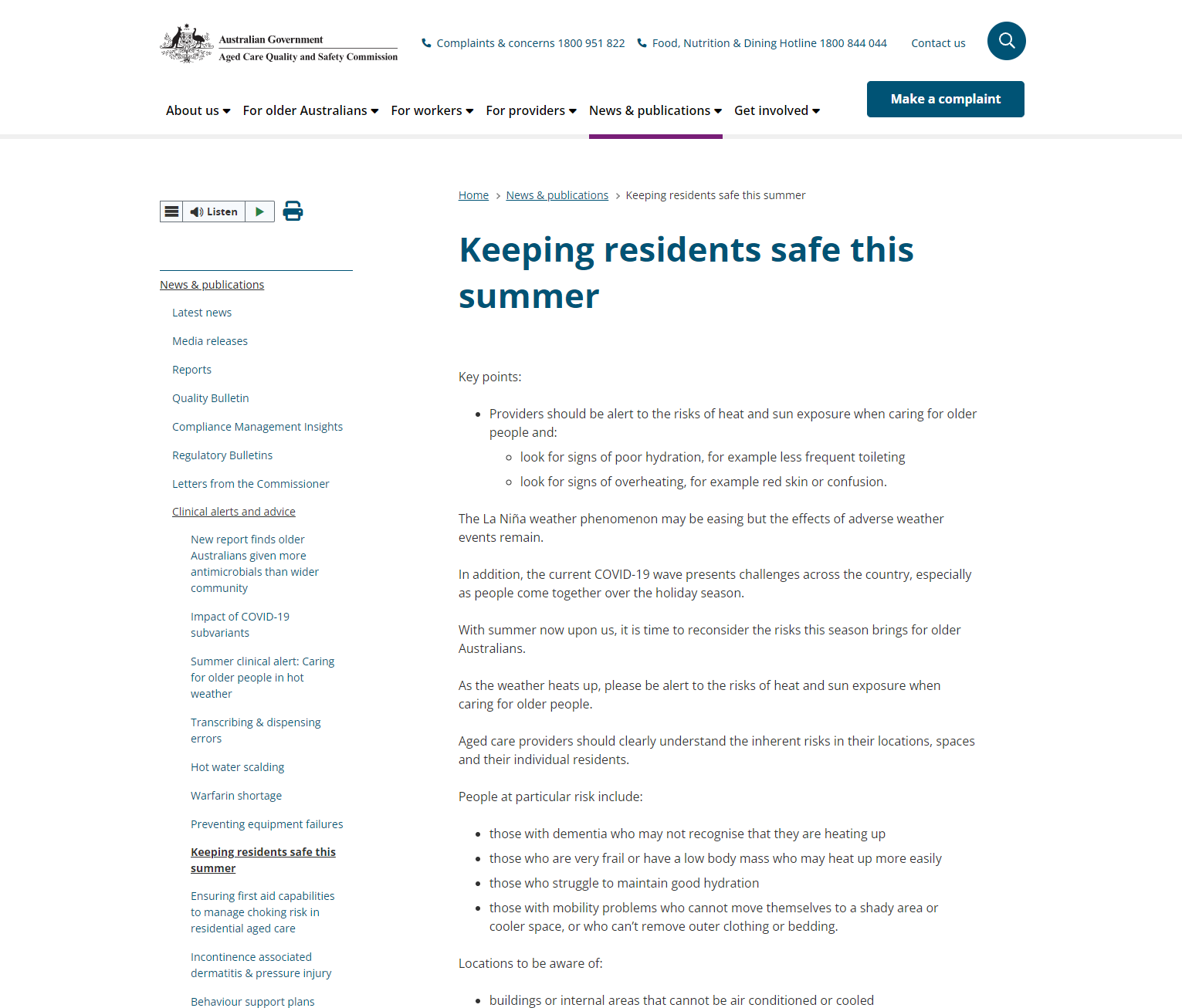
Keeping residents safe this summer
This resource offers guidance to aged care providers on keeping older people safe during summer. It includes strategies for managing heat exposure, hydration, and sun protection. It helps providers monitor vulnerable people, recognise signs of overheating, and implement preventative measures to ensure safety during hot weather.
This resource may refer to information that will be updated from 1 November 2025 to align with the new Aged Care Act and Quality Standards.
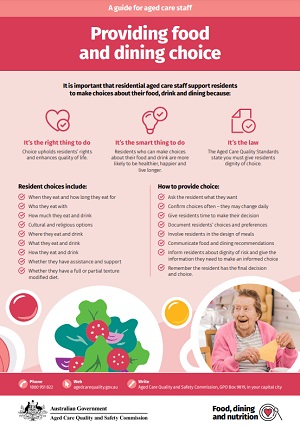
Providing food and dining choice - aged care staff poster
This guide supports aged care staff in providing food and dining choices for residents. It outlines the importance of upholding residents' rights to choose, enhancing their health and quality of life. The guide recommends confirming preferences regularly, involving residents in meal planning, and respecting individual choices regarding when, where, and what they eat or drink. This resource may refer to information that will be updated from 1 November 2025 to align with the new Aged Care Act and Quality Standards.
Providing food and dining choice - aged care staff poster (PDF 445.57 KB)
Measurement tools for assessing quality of life, consumer satisfaction and consumer experience across residential and in-home aged care: Summary Report
This report reviews validated tools for measuring quality of life, consumer satisfaction, and experience in aged care, assessing their suitability for residential and home care. It provides an evidence-based ranking of tools to support aged care providers in quality improvement, accountability, and aligning with the National Aged Care Quality Indicator Program.
This resource may refer to information that will be updated from 1 November 2025 to align with the new Aged Care Act and Quality Standards.
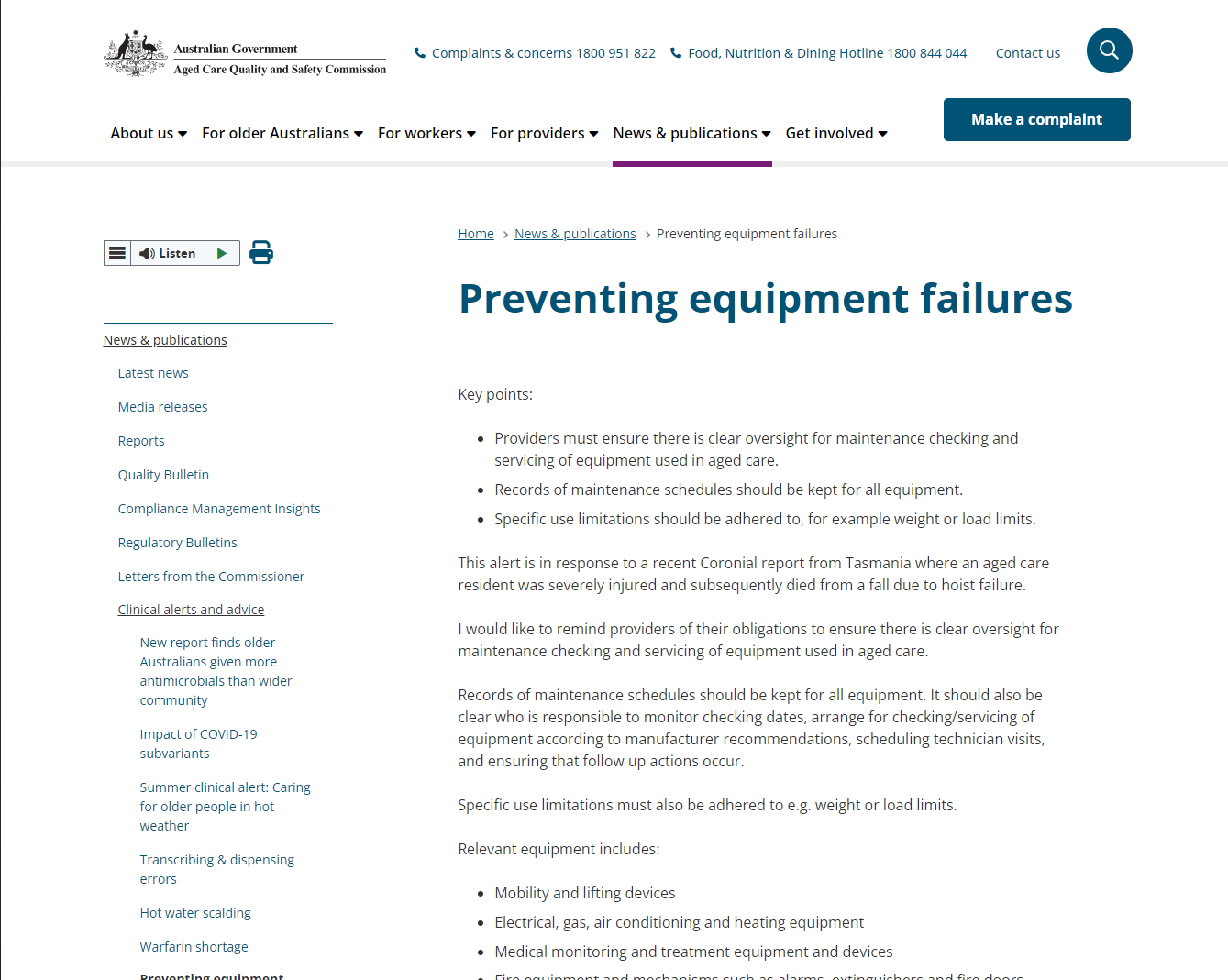
Preventing equipment failures
This resource highlights the importance of preventing equipment failures in aged care settings. It outlines the need for regular maintenance checks, adherence to manufacturer guidelines, and proper record-keeping to ensure safety. The document also provides recommendations for improving the safety and reliability of critical devices, such as mobility hoists and medical equipment.
This resource may refer to information that will be updated from 1 November 2025 to align with the new Aged Care Act and Quality Standards.
Nutrition - Informed choice
This resource discusses the importance of informed choice in aged care dining, emphasising a person-centred approach. It highlights the benefits of offering choice in meals and mealtimes, outlines how to manage decisions that involve risk, and provides tools for aged care workers to support resident autonomy while ensuring safety and satisfaction.
This resource may refer to information that will be updated from 1 November 2025 to align with the new Aged Care Act and Quality Standards.