The Quality Standards Resource Centre helps extend understanding of the strengthened Aged Care Quality Standards, which took effect from 1 November 2025. You can search for resources by using keywords, or filtering by standard, outcome and audience. Before using the Resource Centre, please read the terms of use.
Clinical governance
This page provides information about clinical governance. It includes links to topics including infection and prevention control, dealing with infectious outbreaks, medication management, wound care and restrictive practices. This resource may refer to information that will be updated from 1 November 2025 to align with the new Aged Care Act and Quality Standards.
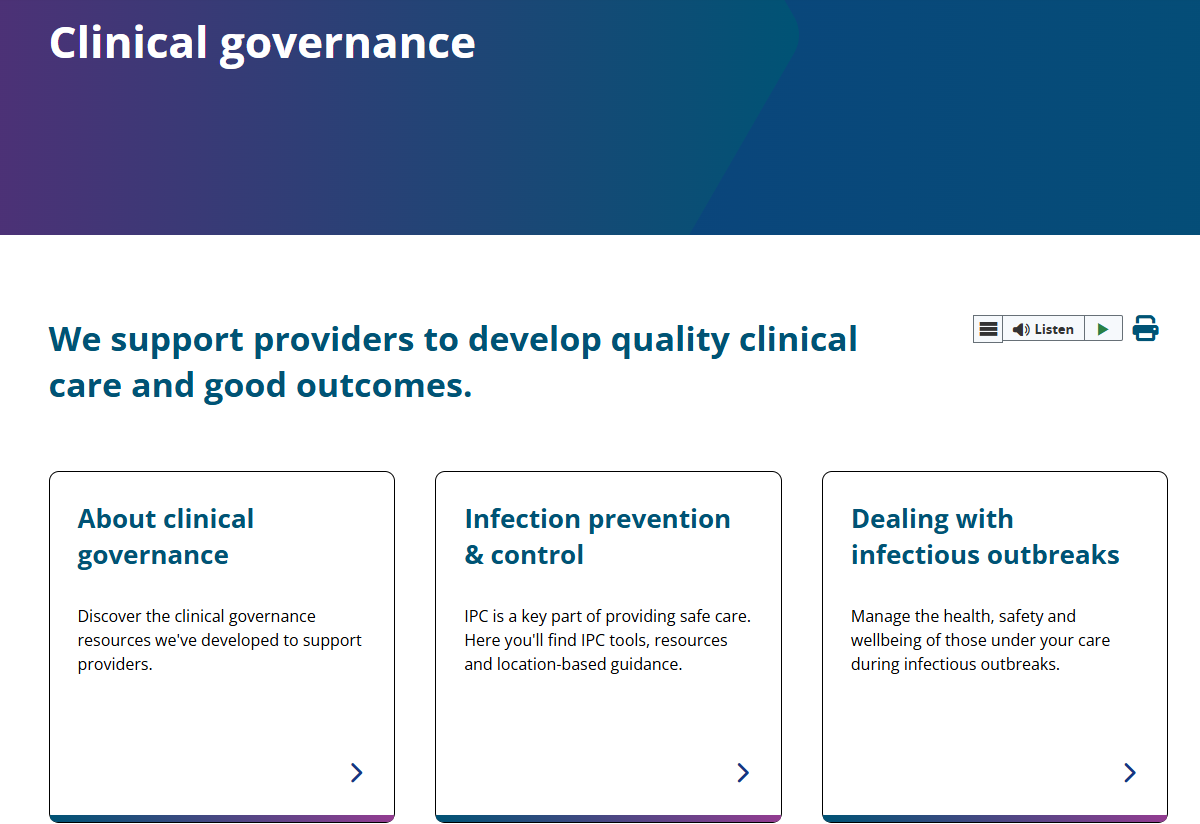
National Aged Care Mandatory Quality Indicator Program (QI Program)
This resource provides information on the National Aged Care Mandatory Quality Indicator Program (QI Program). The program gathers data on 11 quality indicators from residential aged care services to enhance care standards and outcomes for residents. It includes resources, quick guides, consultation papers, and surveys for improving quality indicators in both residential and in-home aged care services.
This resource may refer to information that will be updated from 1 November 2025 to align with the new Aged Care Act and Quality Standards.
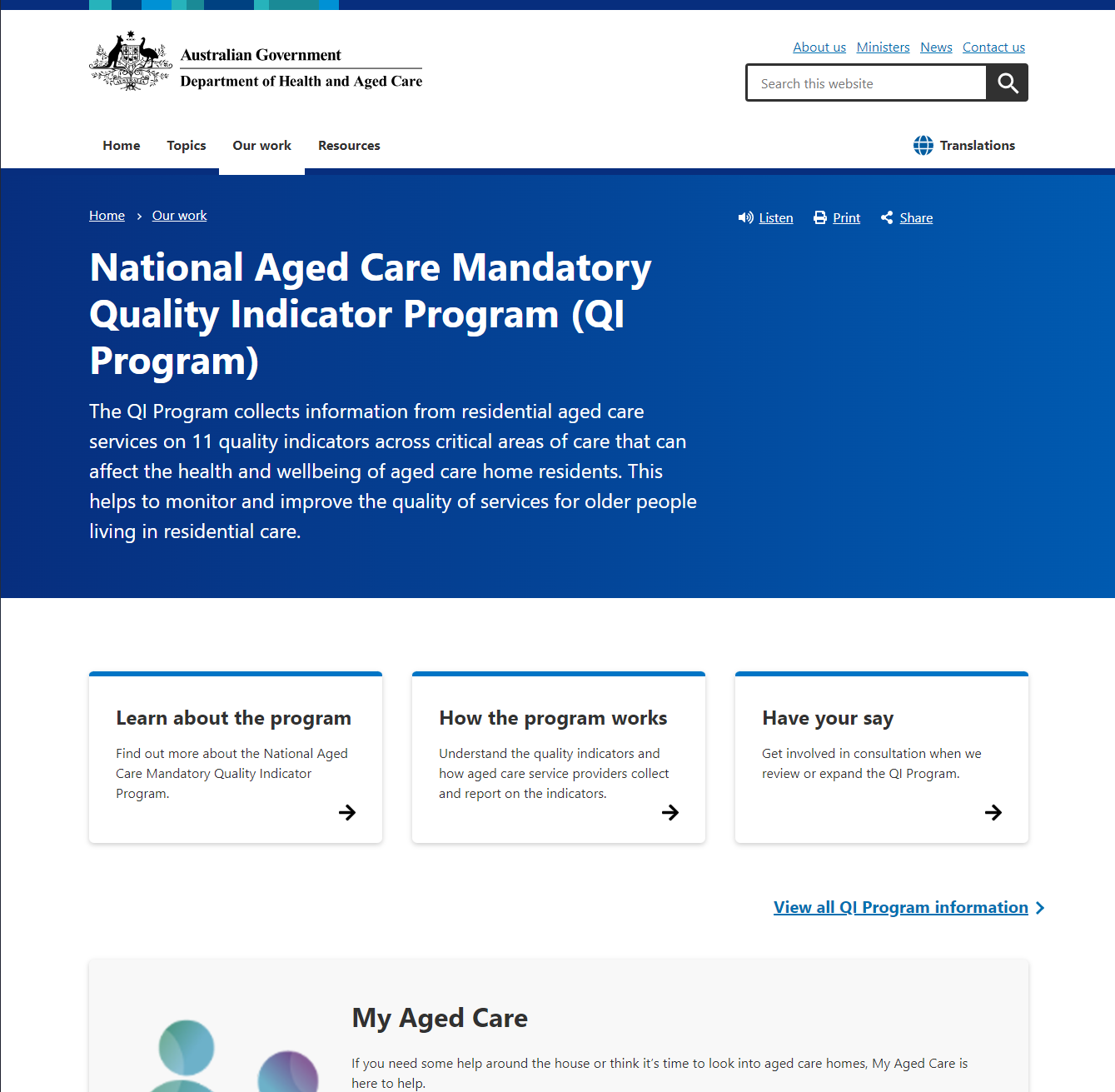
Knowledge and Implementation Hub - Clinical governance
This resource discusses clinical governance in aged care, highlighting its importance in delivering safe, high-quality care. It includes evidence-based resources, themes on governance like leadership, culture, consumer partnerships, and workforce strategies, and provides access to research projects, reviews, and practical guidance to support care quality improvements.
Clinical governance for allied health practitioners
This fact sheet identifies the clinical governance and roles and responsibilities of allied health practitioners. It provides information on the National Model Clinical Governance Framework and lists the roles and responsibilities across Governance, leadership and culture, patient safety and quality systems, clinical performance and effectiveness and safe environment for the delivery of care.
This resource may refer to information that will be updated from 1 November 2025 to align with the new Aged Care Act and Quality Standards.
RACGP aged care clinical guide (Silver Book) - Part B - Medical records at residential aged care facilities
This guide covers managing medical records in residential aged care facilities (RACFs). It describes different practitioner models (solo, practice-based, aged care-specific) and provides standards for record-keeping, sharing notes, and maintaining clinical governance. The guide suggests methods for transferring medical information to RACF staff, including printing, electronic sharing, and handover notes.
RACGP aged care clinical guide (Silver Book) - Part B - Palliative care approach
This guide outlines a palliative care approach for patients with life-limiting conditions, focusing on improving quality of life through early assessment, pain relief, and addressing psychosocial and spiritual needs. It describes the role of general practitioners in delivering person-centred care, engaging families, and ensuring collaborative, holistic support in both residential aged care and community settings.
RACGP aged care clinical guide (Silver Book) - Part B - Advance care planning
This guide covers advance care planning for older adults, detailing the process of discussing patients' values, appointing a decision-maker, and documenting preferences for future care. It outlines the general practitioner’s role, steps for initiating discussions, assessing decision-making capacity, storing care plans, and ensuring patients' wishes are respected during their illness trajectory.
RACGP aged care clinical guide (Silver Book) - Part A - Palliative and end-of-life care
This guide focuses on palliative and end-of-life care, detailing general principles, illness trajectories, the role of general practitioners, and practical recommendations for patient-cantered care. It provides consensus-based guidelines for initiating advance care planning, symptom management, team-based end-of-life care, medication use, and supporting both patients and their families. It includes information on the transition from chronic disease treatment to a palliative approach and includes tools for clinical decision-making.
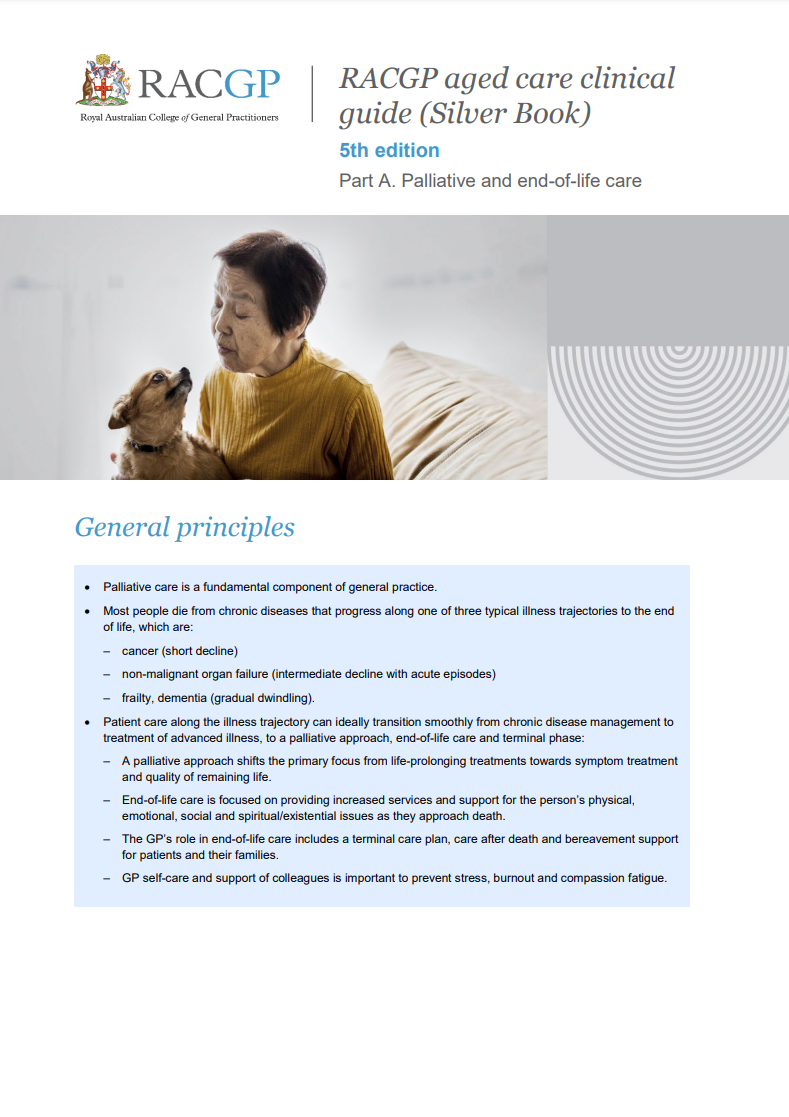
What we’re doing about palliative care
This resource outlines the Australian Government’s strategies, initiatives, and research for improving palliative care. It details the National Palliative Care Strategy, workforce training, and key programs such as at-home and aged care measures. It also highlights the National Framework for Advance Care Planning, ensuring access to quality palliative care across Australia.
This resource may refer to information that will be updated from 1 November 2025 to align with the new Aged Care Act and Quality Standards.
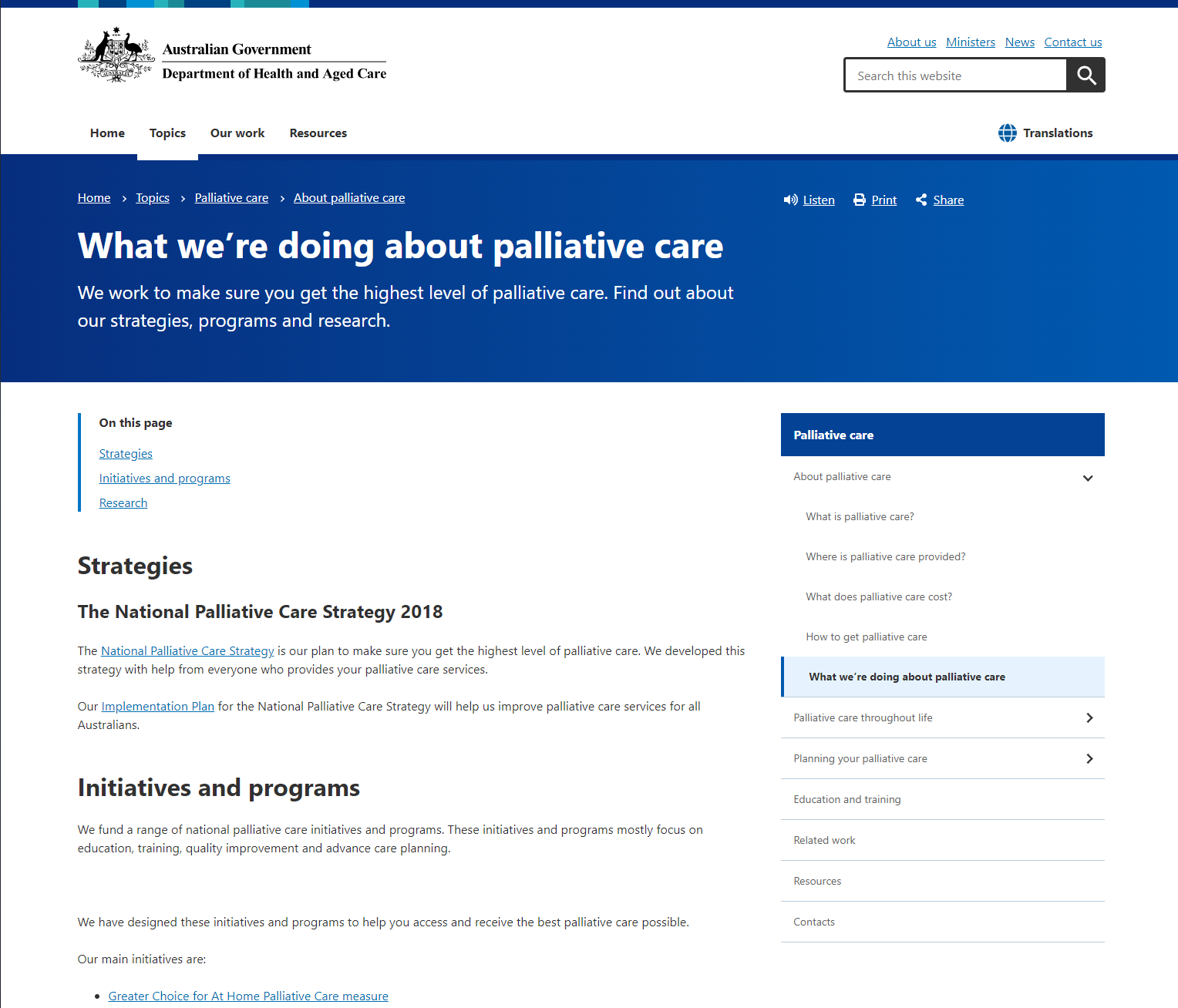
Digital transformation for the aged care sector resources
This resource provides access to various materials related to digital transformation in the aged care sector, including videos, presentations, and meeting summaries. It offers insights into building a modern, connected aged care IT network and shares updates from sector partner meetings on digital transformation initiatives.
This resource may refer to information that will be updated from 1 November 2025 to align with the new Aged Care Act and Quality Standards.
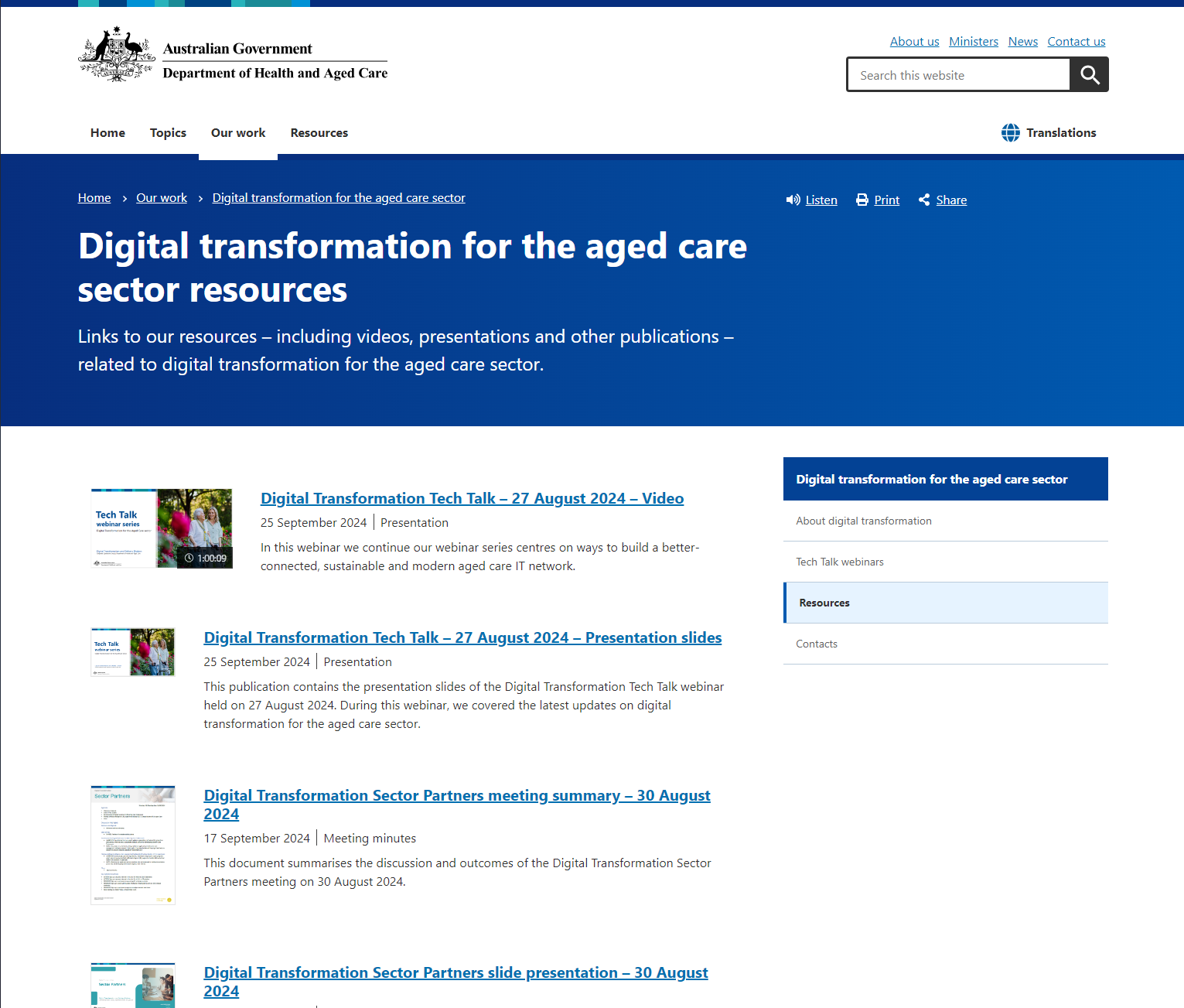
Digital transformation for the aged care sector
This resource outlines the digital transformation agenda for the aged care sector in Australia, focusing on creating a consolidated, sustainable, and modern IT network. It includes strategies for improving connections between clients, providers, and the government, offering webinars and resources to support this transition.
This resource may refer to information that will be updated from 1 November 2025 to align with the new Aged Care Act and Quality Standards.
Introduction to Aged Care – Videos and facilitator guides
This resource provides videos and facilitator guides to support the training and induction of aged care workers. It covers various key concepts, including duty of care, infection control, wellness, reablement, and safe practices. The aim is to enhance the understanding and quality of aged care services.
This resource may refer to information that will be updated from 1 November 2025 to align with the new Aged Care Act and Quality Standards.
Digital health - For healthcare providers
This resource provides guidance for aged care assessors and service providers on accessing and using the My Aged Care portals. It outlines steps for setting up secure access through authentication methods, managing organisation information, and creating staff accounts, supporting efficient service delivery and assessment processes.
This resource may refer to information that will be updated from 1 July 2025 to align with the new Aged Care Act and Quality Standards.
Set up access to My Aged Care
This resource provides guidance for aged care assessors and service providers on accessing and using the My Aged Care portals. It outlines steps for setting up secure access through authentication methods, managing organisation information, and creating staff accounts, supporting efficient service delivery and assessment processes.
This resource may refer to information that will be updated from 1 November 2025 to align with the new Aged Care Act and Quality Standards.
National Clinical Terminology Service
This resource provides information for healthcare providers on digital health tools and initiatives. It covers services such as My Health Record, secure messaging, electronic prescriptions, and telehealth. It supports providers in using digital technologies to enhance healthcare delivery and improve patient outcomes.
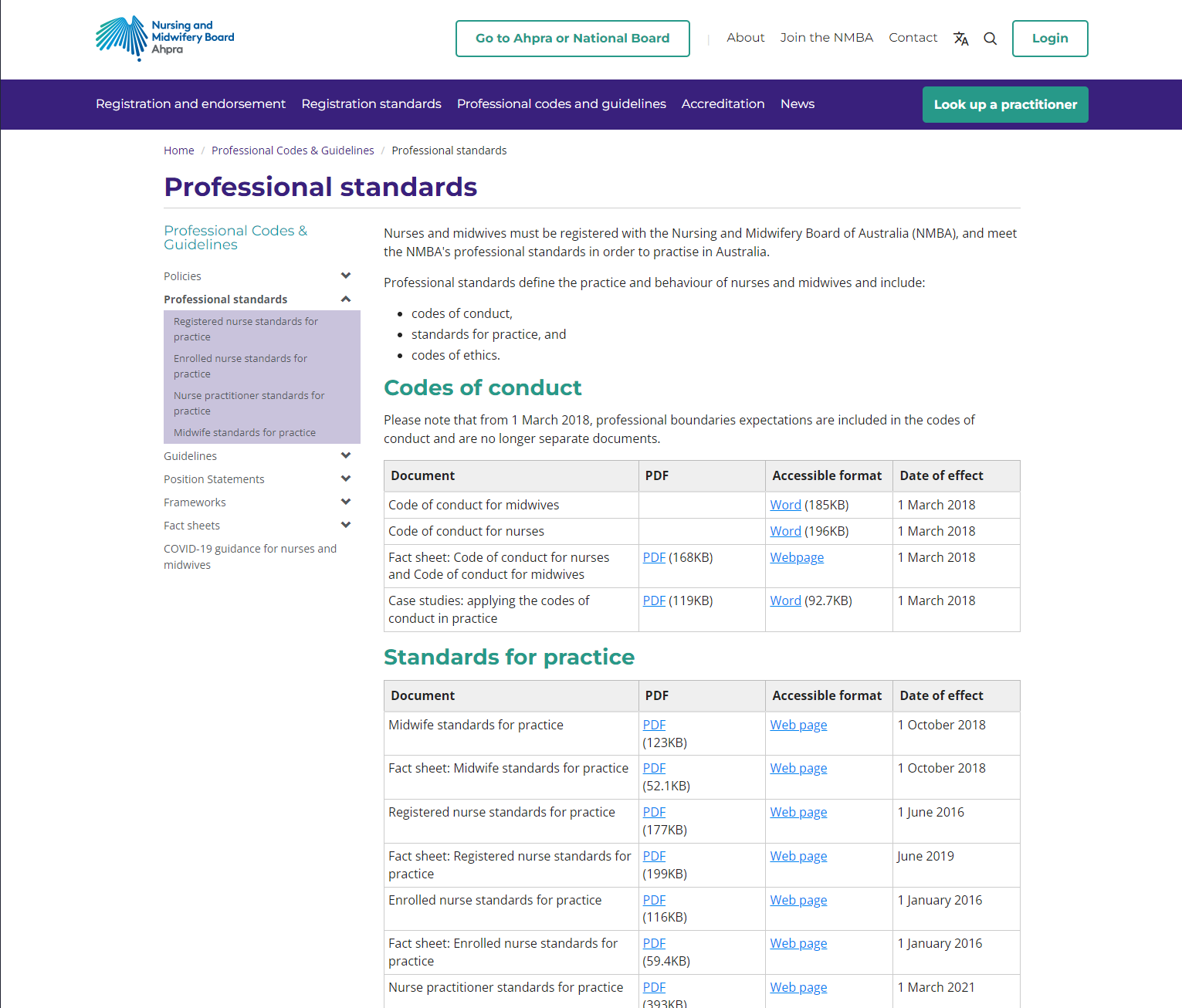
Nursing and Midwifery Board - Professional standards
This resource outlines the professional standards required for nurses and midwives to practise in Australia, including codes of conduct, standards for practice, and codes of ethics. It provides access to various documents, fact sheets, and guidelines that define the expected practice and behaviour for different nursing roles.
Security and access policies - Rule 42 guidance
This resource provides guidance for healthcare provider organisations to meet Rule 42 of the My Health Records Rule 2016. It covers creating, communicating, and enforcing a written Security and Access policy to access the My Health Record system, addressing authorisation, training, security measures, and risk mitigation.
National Consensus Statement: Essential elements for safe and high-quality end-of-life care
This resource outlines the National Consensus Statement on essential elements for safe and high-quality end-of-life care in Australia. It provides guiding principles, care processes, and organisational processes, focusing on person-centred communication, multidisciplinary collaboration, and culturally appropriate care. The statement is designed for healthcare workers, service executives, and policy makers to enhance end-of-life care delivery.
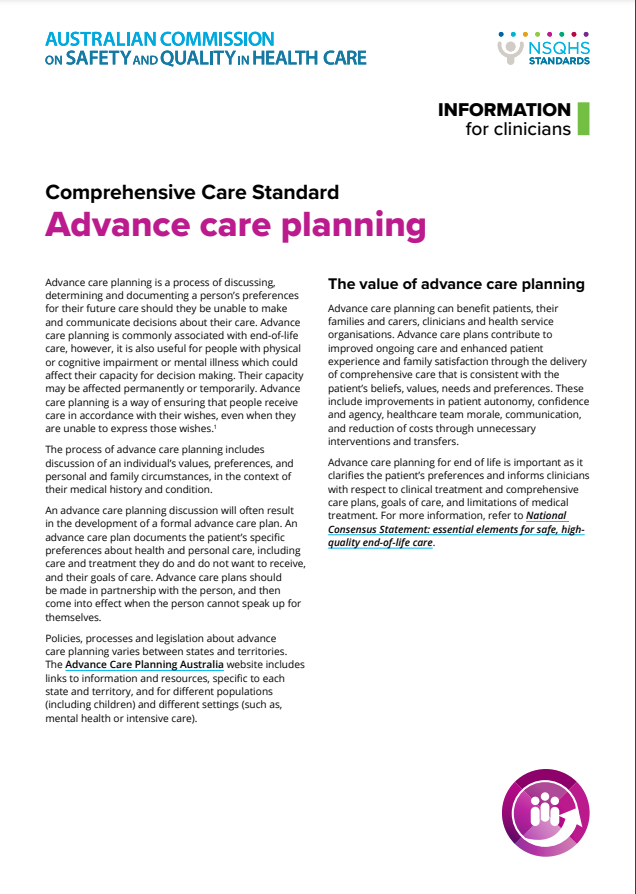
Advance care planning - Information for clinicians
This resource guides clinicians on the importance of advance care planning, particularly for those with life-limiting illnesses, chronic conditions, or cognitive impairment. It outlines the need for early conversations about patient preferences and comprehensive care, ensuring decisions are documented, shared, and align with clinical handover processes to respect patient autonomy and improve care outcomes.
This resource may refer to information that will be updated from 1 November 2025 to align with the new Aged Care Act and Quality Standards.
Delivering and supporting comprehensive end-of-life care user guide
This guide provides practical strategies for health service organisations and clinicians to deliver comprehensive end-of-life care. It aligns with the National Safety and Quality Health Service Standards, focusing on patient-centred communication, care components, triggers for recognising end-of-life, and organisational support through leadership, education, and evaluation.
This resource may refer to information that will be updated from 1 November 2025 to align with the new Aged Care Act and Quality Standards.