The Quality Standards Resource Centre helps extend understanding of the strengthened Aged Care Quality Standards, which took effect from 1 November 2025. You can search for resources by using keywords, or filtering by standard, outcome and audience. Before using the Resource Centre, please read the terms of use.
Food, nutrition & dining - information for providers
This resource provides information and support for aged care providers to improve food, nutrition, and dining services. It includes guidance on meeting nutritional standards, promoting resident choice, and ensuring a positive dining experience. The resource also offers tools for monitoring food quality, addressing dietary needs, and enhancing overall meal service delivery. This resource may refer to information that will be updated from 1 July 2025 to align with the new Aged Care Act and Quality Standards.
Food, nutrition & dining - information for workers
This resource provides guidance for aged care workers on improving food, nutrition, and dining experiences for residents. It covers meal preparation, resident engagement in food choices, safe food handling, and the importance of nutrition in promoting wellbeing. The resource offers practical tips for ensuring meals meet individual dietary needs and preferences. This resource may refer to information that will be updated from 1 November 2025 to align with the new Aged Care Act and Quality Standards.
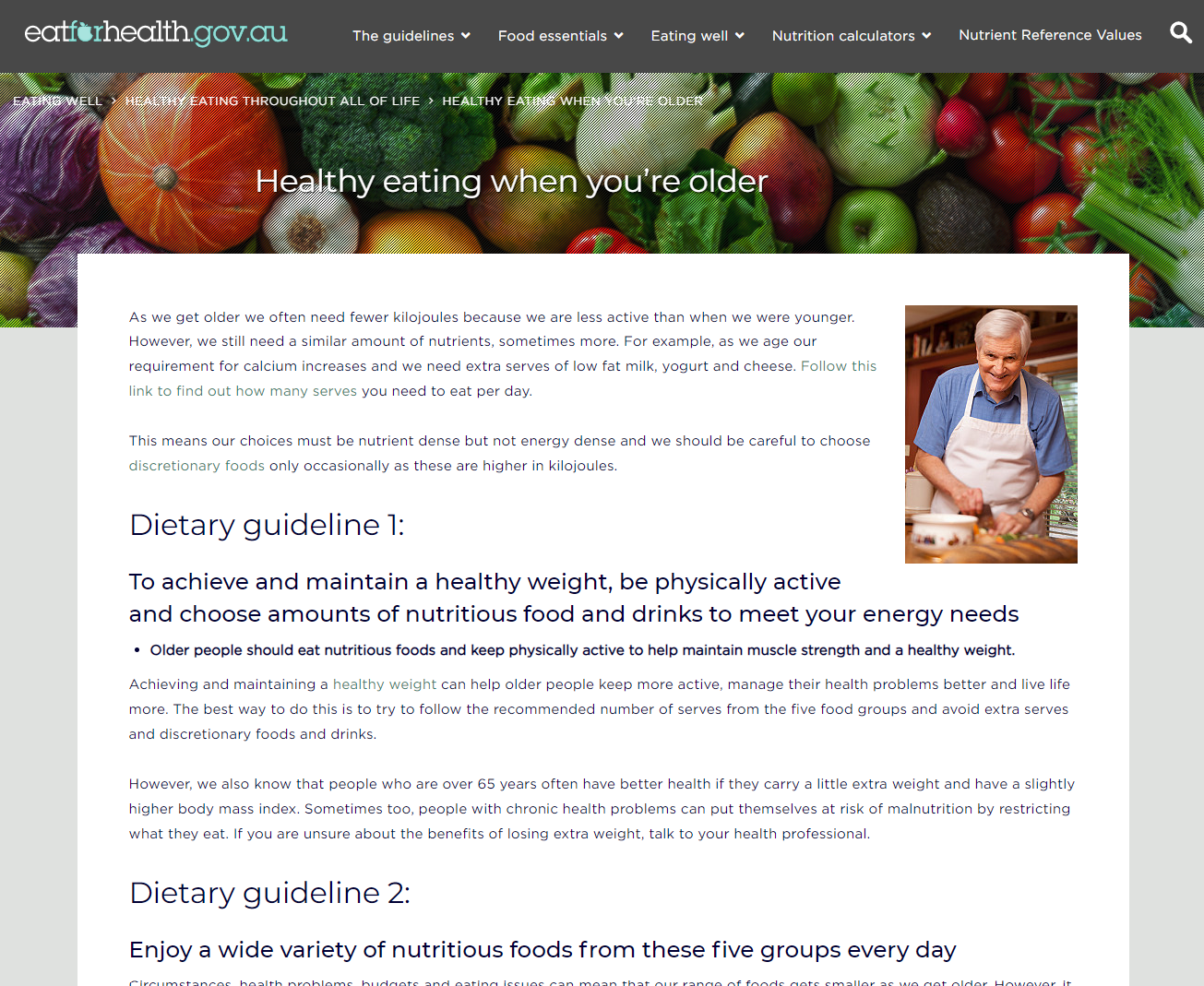
Eat for health: Healthy eating when you're older
This resource provides guidance on healthy eating for older adults, emphasising nutrient-dense foods while limiting energy-dense options. It highlights the importance of consuming a variety of foods from the 5 food groups, maintaining a healthy weight, staying physically active, and managing dietary needs for chronic conditions. It also includes tips for food safety and preventing malnutrition.
Aged care centre food safety requirements
This resource details food safety requirements for aged care centres, highlighting guidelines for managing risks with potentially hazardous foods. It includes standards for food safety programs, compliance templates, and regulatory guidance to protect vulnerable people.
This resource was developed by a state/territory government or organisation and therefore its applicability and usefulness may be limited.
Diet and nutrition health advice
This resource provides evidence-based diet and nutrition advice to support healthy communities. It includes articles on various diets, managing health conditions, and guidelines for healthy eating across different life stages. The resource also offers guidance on when to consult a dietitian for personalised nutrition planning and support.