The Quality Standards Resource Centre helps extend understanding of the strengthened Aged Care Quality Standards, which took effect from 1 November 2025. You can search for resources by using keywords, or filtering by standard, outcome and audience. Before using the Resource Centre, please read the terms of use.
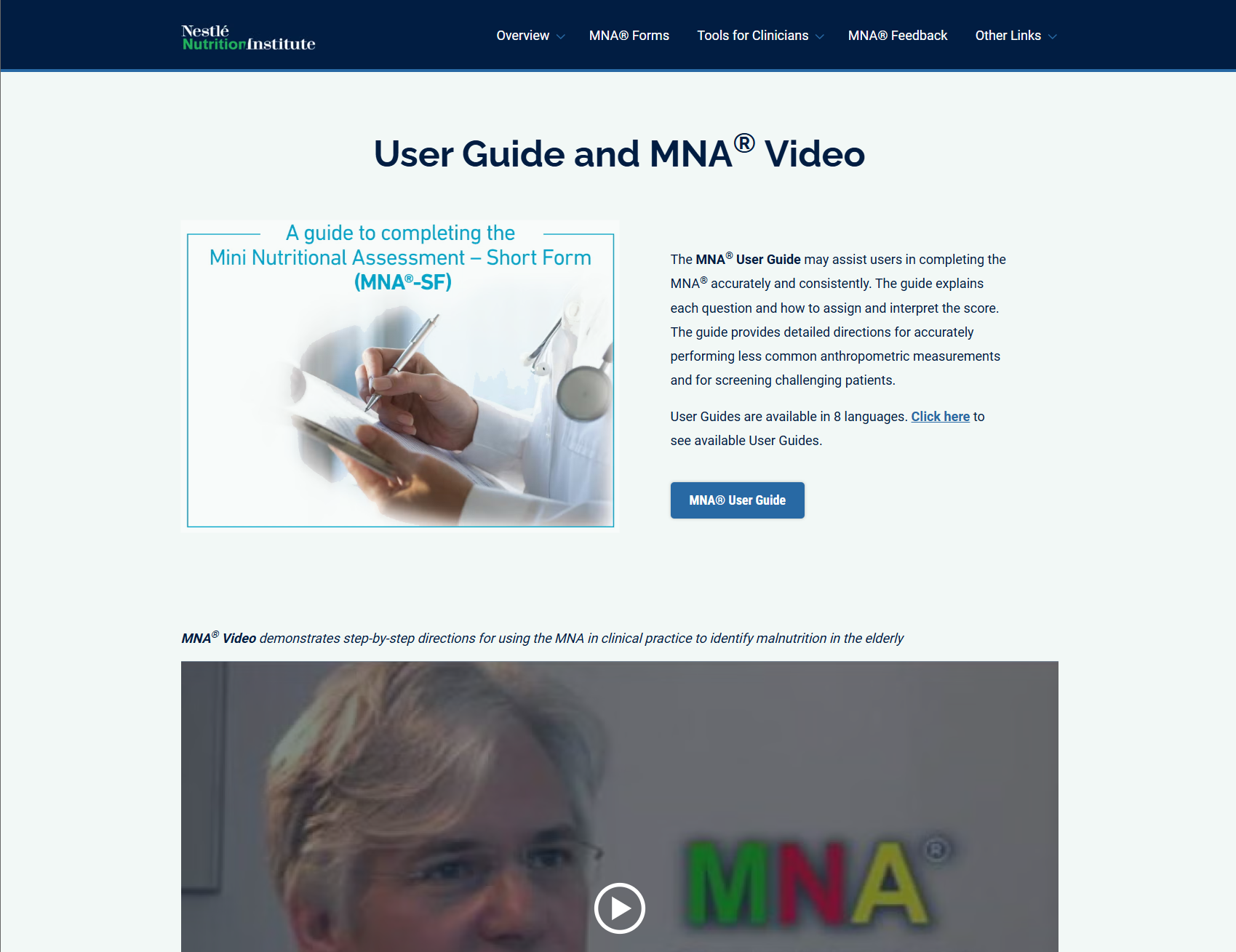
A guide to completing the Mini Nutritional Assessment – Short Form
This resource is a guide and video for using the Mini Nutritional Assessment (MNA) to identify malnutrition in older people. It explains question scoring, interpretation, and measurement procedures, with a video demonstration.
This resource was developed internationally and therefore its applicability and usefulness may be limited.
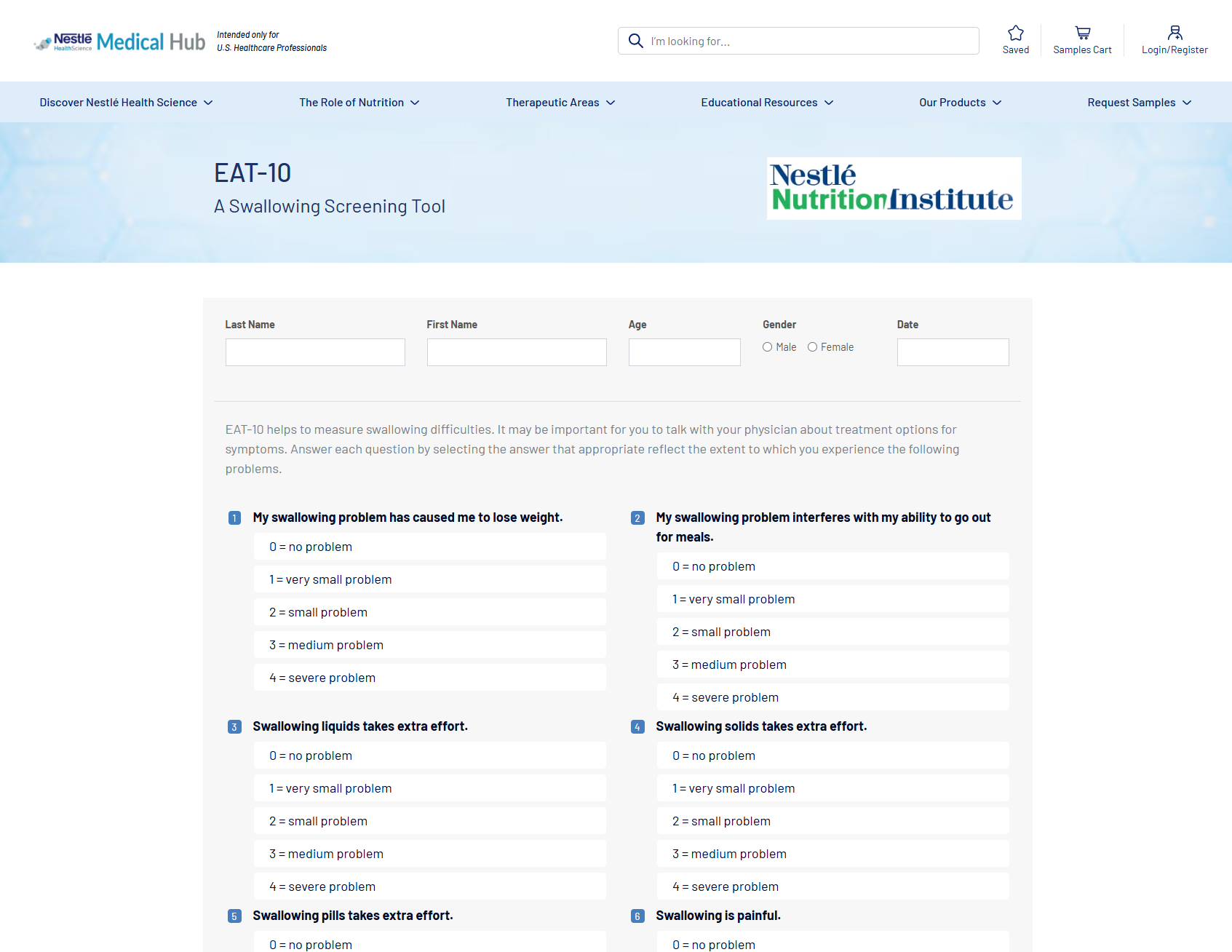
EAT-10: A Swallowing Screening Tool
This resource offers a self-assessment tool to screen for swallowing difficulties by rating various aspects of swallowing function. A score of 3 or higher suggests potential issues that may require discussion with a healthcare provider.
This resource was developed internationally and therefore its applicability and usefulness may be limited.
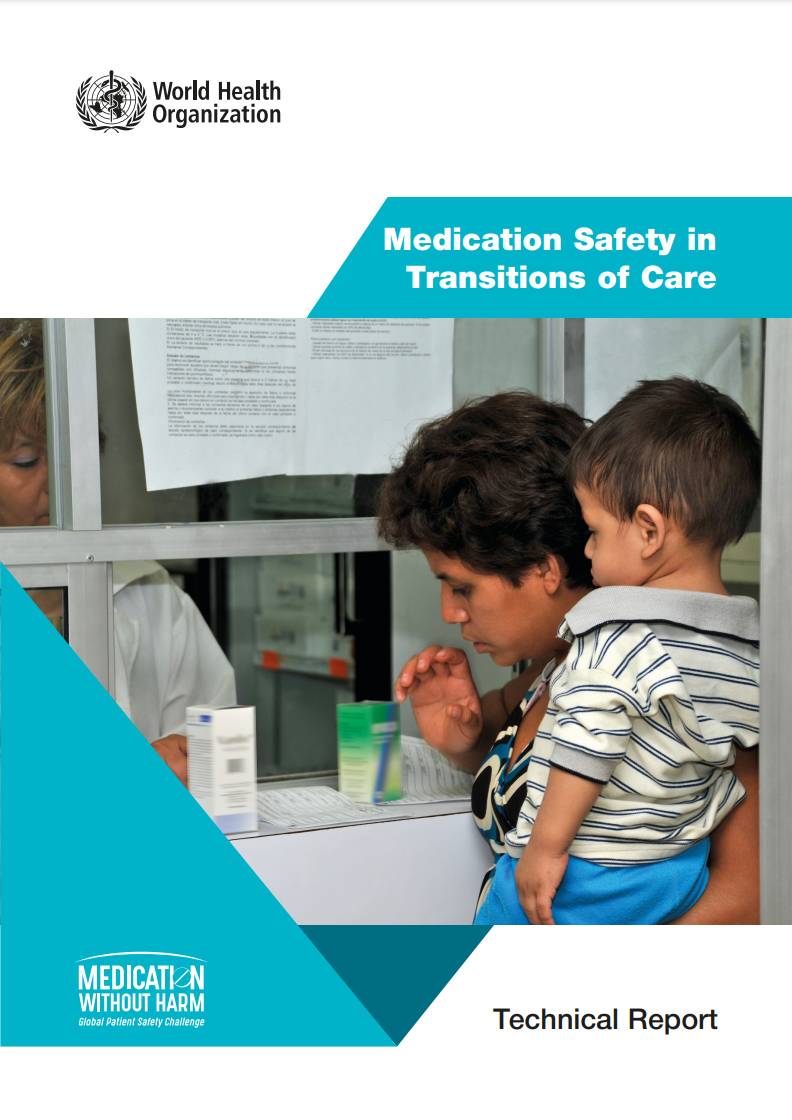
Medication safety in transitions of care: technical report
This resource outlines key actions to improve medication safety during transitions of care, focusing on reducing medication discrepancies and patient harm. It emphasises structured reconciliation, workforce training, patient engagement, and enhanced information systems.
This resource was developed internationally and therefore its applicability and usefulness may be limited.
Medication safety in polypharmacy: technical report
This resource provides guidance on safe medication management in polypharmacy, focusing on patient-centred approaches, team collaboration, and systematic reviews for people with long-term conditions. It includes tools and case studies to support health professionals.
This resource was developed internationally and therefore its applicability and usefulness may be limited.
5 moments for medication safety
This tool helps patients, caregivers, and health professionals manage medication safety by focusing on 5 critical moments to reduce harm: starting, taking, adding, reviewing, and stopping medications. It aims to empower patients in safe medication practices through engagement and collaboration with health professionals.
This resource was developed internationally and therefore its applicability and usefulness may be limited.
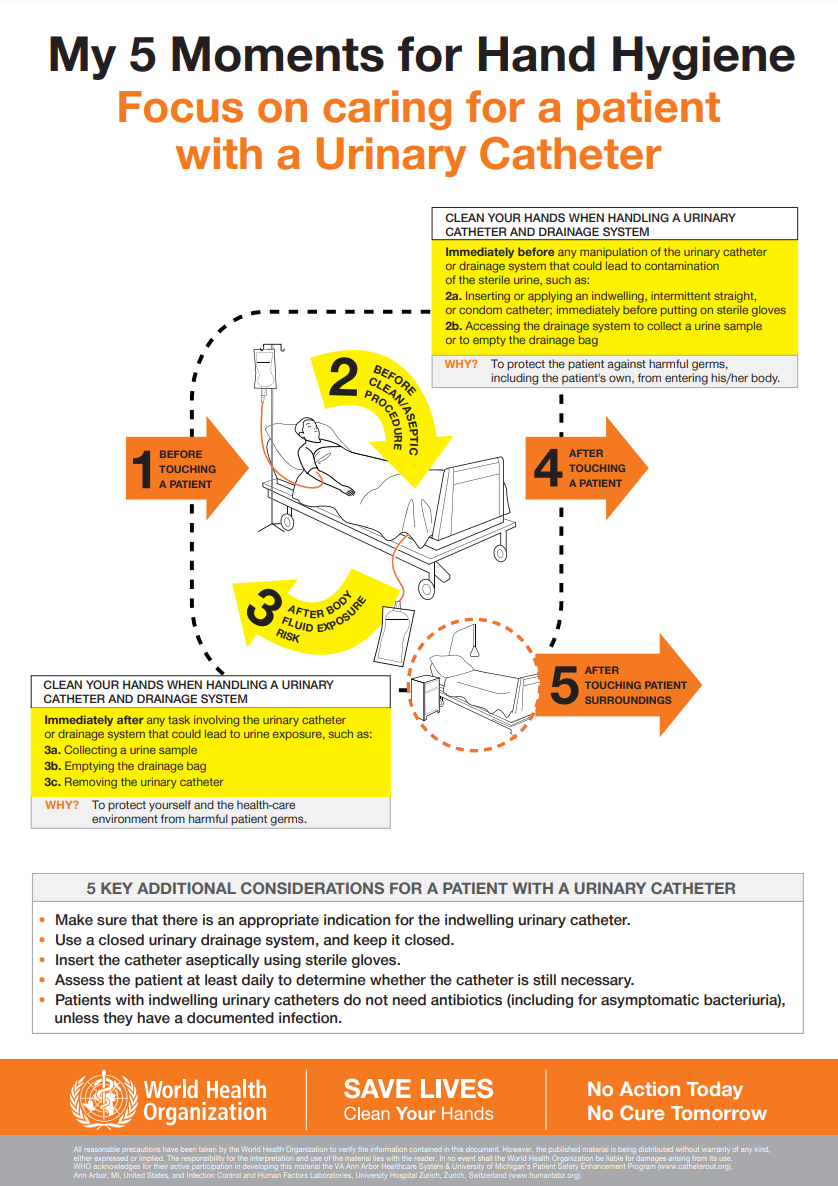
My 5 moments for hand hygiene: focus on caring for a patient with a urinary catheter
This resource outlines the ‘5 Moments for Hand Hygiene’ with specific considerations for patients with urinary catheters, aiming to minimise infection risks. It provides steps for appropriate hand hygiene before and after touching the patient, performing aseptic procedures, and handling catheter equipment.
This resource was developed internationally and therefore its applicability and usefulness may be limited.
Global strategy on infection prevention and control
This resource provides a global framework for infection prevention and control (IPC) in healthcare settings, aiming to reduce healthcare-associated infections and antimicrobial resistance. It offers strategic directions for achieving measurable improvements by 2030, supporting patient safety, healthcare worker protection, and sustainable health outcomes worldwide.
This resource was developed internationally and therefore its applicability and usefulness may be limited.
Tailored model of palliative care for people with intellectual disability
This model provides a framework for delivering tailored palliative care for people with intellectual disabilities, aiming for equitable access across various care settings. Supporting toolkits offer resources for health professionals and families to enhance communication and collaborative care.
This resource was developed by a state/territory government or organisation and therefore its applicability and usefulness may be limited.
Improving palliative care - Toolkit for health professionals
This toolkit supports health professionals in delivering palliative care for people with intellectual disabilities by providing resources, guidance on communication, and tailored care strategies. It aims to enhance service quality through understanding specific needs and collaborative care planning.
This resource was developed by a state/territory government or organisation and therefore its applicability and usefulness may be limited.
Palliative Aged Care Outcomes Program - Resources
This resource offers tools and guidelines for palliative care outcome measurement, including assessment scales for symptom severity, frailty, and daily living activities. It supports clinicians and managers in implementing standardised data collection to improve care quality in aged care settings.
This resource was developed by a state/territory government or organisation and therefore its applicability and usefulness may be limited.
ISBAR - Identify, Situation, Background, Assessment and Recommendation
This resource describes the ISBAR communication tool—Identify, Situation, Background, Assessment, Recommendation—used to improve safety during handovers in clinical settings. It includes adaptable resources like fact sheets and lanyard cards to support consistent, structured information transfer.
This resource was developed by a state/territory government or organisation and therefore its applicability and usefulness may be limited.
Better Oral Health - Home Care
This resource provides practical guidance for maintaining oral health in home care settings, outlining key processes such as assessment, care planning, daily care, and referral to dental professionals. It includes preventative strategies to support older people’s oral health. This resource is state-specific. Please consider the applicability of this resource to your care setting.
This resource was developed by a state/territory government or organisation and therefore its applicability and usefulness may be limited.
Better Oral Health - Residential Care
This resource provides a structured approach to oral health care in residential aged care, including assessment, care planning, daily oral care, and referral pathways. It includes training, guidelines, and tools to support staff in promoting oral health for older people with complex needs.
This resource was developed by a state/territory government or organisation and therefore its applicability and usefulness may be limited.
NSW Fall Prevention and Healthy Ageing Network - Resources
This resource provides a comprehensive library of best-practice resources for falls prevention and healthy ageing across various care settings. It offers materials tailored to hospital, residential, community, and dementia care environments, supporting safe and active ageing
This resource was developed by a state/territory government or organisation and therefore its applicability and usefulness may be limited.
Food and Nutrition Manual for Aged Care Homes - Swallowing and food textures
This resource provides guidelines on managing swallowing difficulties in aged care by using texture-modified diets and thickened fluids. It explains various food texture levels and fluid consistencies for safe swallowing, offers practical meal preparation tips, and highlights the importance of regular reassessment by a speech pathologist
This resource was developed by a state/territory government or organisation and therefore its applicability and usefulness may be limited.
Best Practice Food and Nutrition Manual for Aged Care
This manual offers practical guidelines on food and nutrition best practices in aged care homes, covering menu planning, meal enjoyment, hydration, and malnutrition prevention. It includes checklists, screening tools, and dietary considerations tailored to the needs of older people.
This resource was developed by a state/territory government or organisation and therefore its applicability and usefulness may be limited.
Dementia-friendly environments - Staff education and support
This resource offers guidance for staff support in dementia care, covering person-centred approaches, workplace culture change, training, and physical environment improvements. It includes strategies to enhance job satisfaction, staff wellbeing, and dementia-friendly care practices.
This resource was developed by a state/territory government or organisation and therefore its applicability and usefulness may be limited.
Dementia-friendly environments - Personal enjoyment
This resource provides guidance on fostering personal enjoyment for people with dementia, encouraging meaningful activities based on life history and familiar roles. It includes ideas for sensory engagement, physical activity, and social connection in home-like settings.
This resource was developed by a state/territory government or organisation and therefore its applicability and usefulness may be limited.
Dementia-friendly environments - Interior design
This resource provides guidance on interior design elements that create a familiar, practical, and dementia-friendly environment. It includes strategies for lighting, colour, furniture, and surfaces to enhance safety, wayfinding, and comfort in care settings.
This resource was developed by a state/territory government or organisation and therefore its applicability and usefulness may be limited.
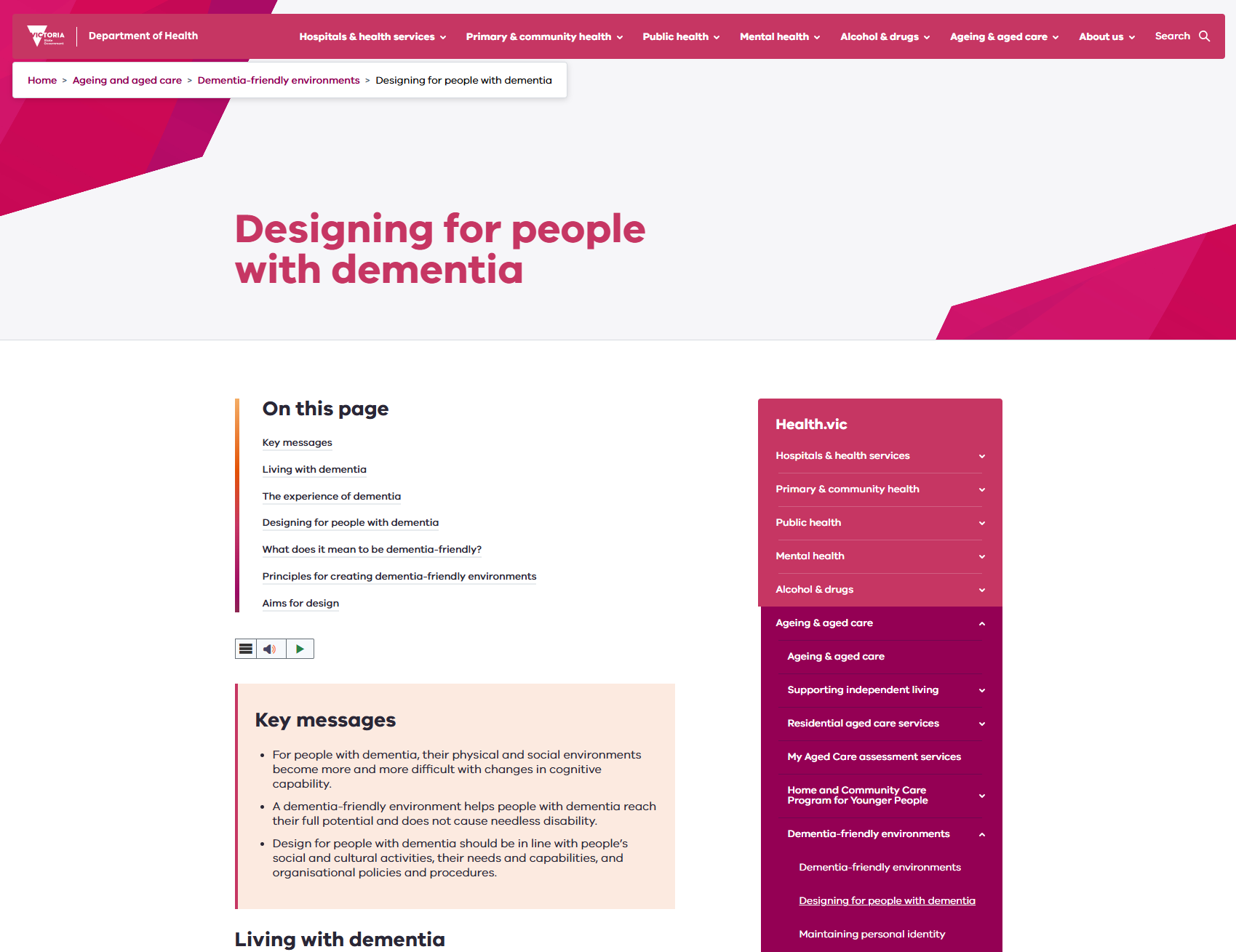
Dementia-friendly environments - Designing for people with dementia
This resource provides design principles for creating dementia-friendly environments that support comfort, independence, and a sense of home. It includes guidance on optimising lighting, safety, social connection, and personalised spaces to enhance quality of life.
This resource was developed by a state/territory government or organisation and therefore its applicability and usefulness may be limited.