The Quality Standards Resource Centre helps extend understanding of the strengthened Aged Care Quality Standards, which took effect from 1 November 2025. You can search for resources by using keywords, or filtering by standard, outcome and audience. Before using the Resource Centre, please read the terms of use.
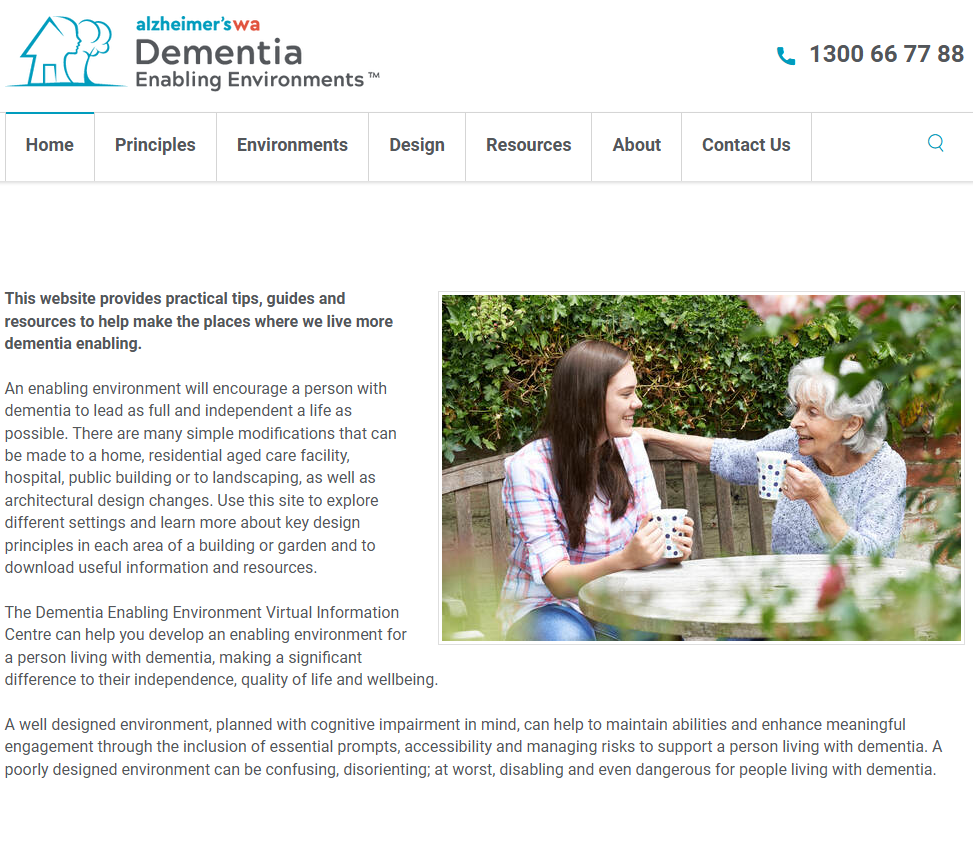
Dementia enabling environments
The Dementia Enabling Environments website, developed by Alzheimer's WA, provides guidance and resources to help create enabling environments for a person living with dementia. It includes design principles for different environment types, include home and residential aged care facilities.
This resource was developed by a state/territory government or organisation and therefore its applicability and usefulness may be limited.
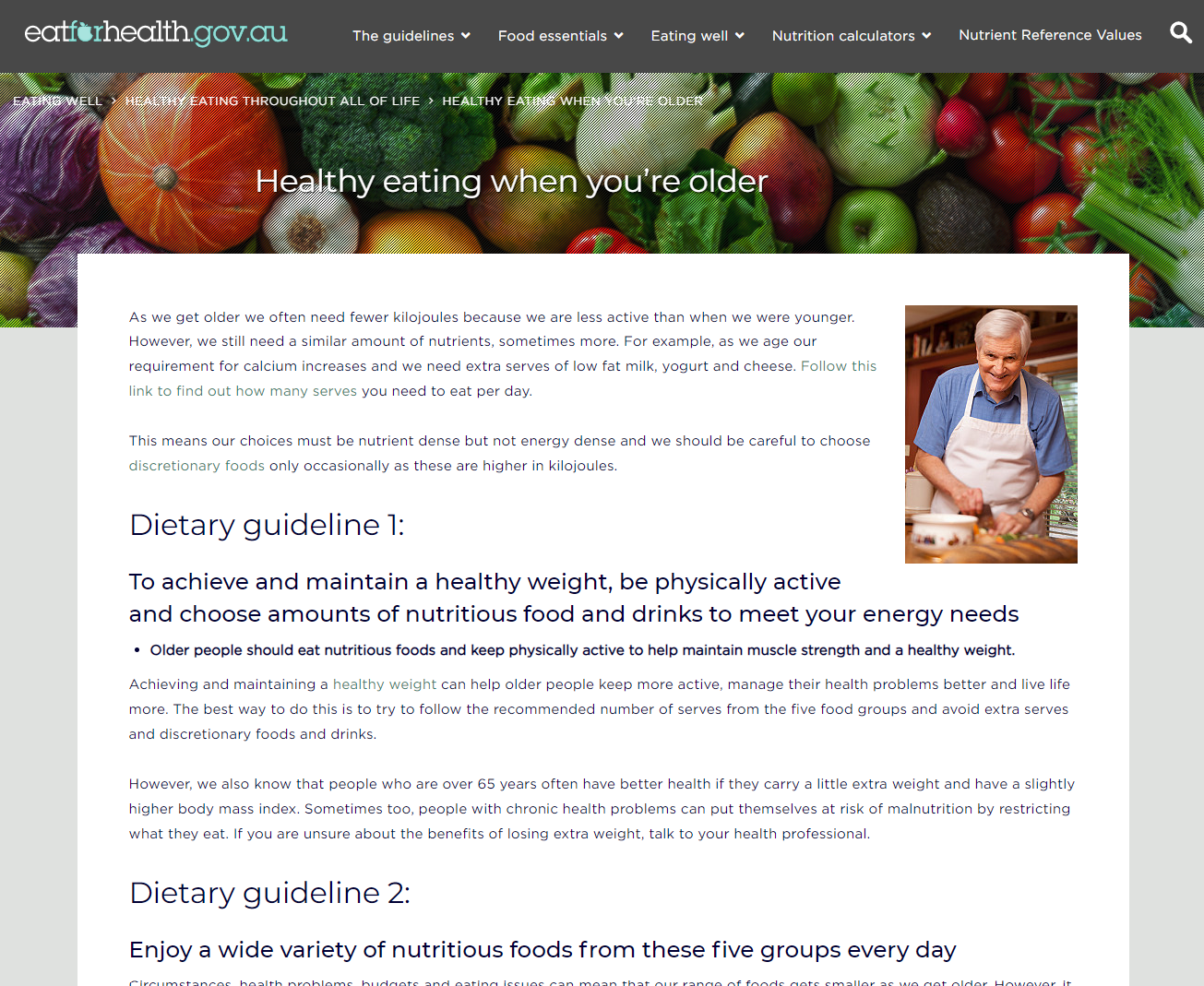
Eat for health: Healthy eating when you're older
This resource provides guidance on healthy eating for older adults, emphasising nutrient-dense foods while limiting energy-dense options. It highlights the importance of consuming a variety of foods from the 5 food groups, maintaining a healthy weight, staying physically active, and managing dietary needs for chronic conditions. It also includes tips for food safety and preventing malnutrition.
Better Practice Complaint Handling Guide
This resource provides best practice guidance for handling complaints within public service agencies and private providers. It outlines the principles for creating an effective, customer-focused complaint system, including steps for logging, resolving, and communicating complaints. The guide also provides insights on staff training, performance benchmarks, and systemic improvement to enhance service quality and public trust, with relevance for aged care providers ensuring fair and transparent complaint resolution processes.
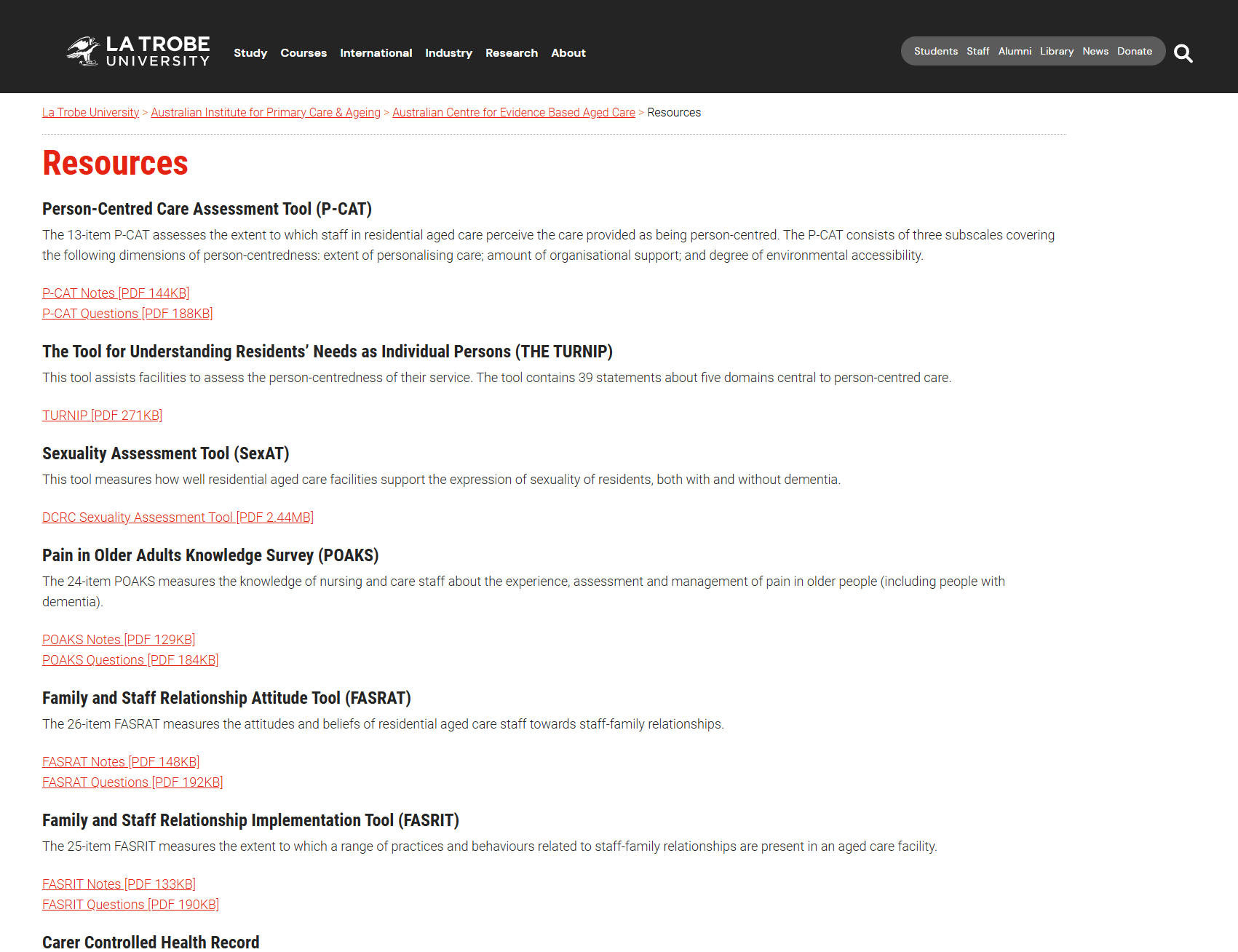
Australian Centre for Evidence Based Aged Care - Resources
This resource provides a collection of tools and guidelines for improving person-centred care in aged care settings. It includes assessments on care personalisation, pain management, staff-family relationships, and support for sexuality and decision-making for people with dementia.
This resource was developed by a state/territory government or organisation and therefore its applicability and usefulness may be limited.
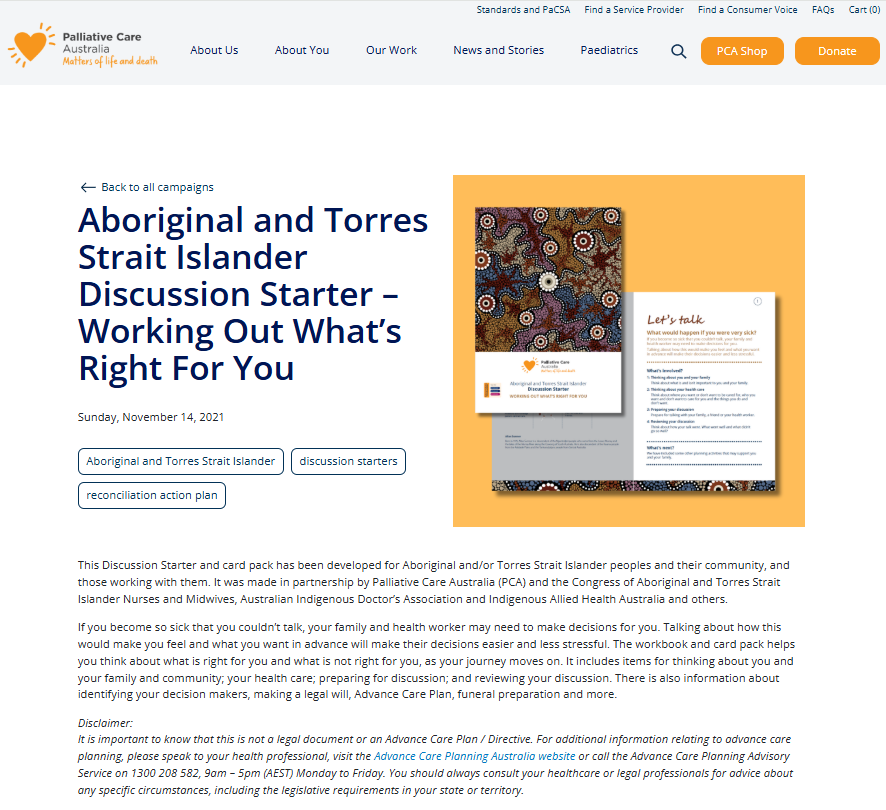
Aboriginal and Torres Strait Islander Discussion Starter – Working Out What’s Right For You
This resource includes information and tools to support thinking and talking about wishes and preferences for care at the end of life. This resource has been developed for Aboriginal and/or Torres Strait Islander peoples, their community, and those working with them. The resource also includes information about identifying decision makers and advance care planning.
Guidelines for pharmacists supporting Aboriginal and Torres Strait Islander peoples with medicines management
This resource describes the professional obligations of pharmacists when supporting Aboriginal and Torres Strait Islander peoples with culturally safe and responsive care and medicines management. It includes information about appropriate and effective processes, desired behaviour or minimum standards of good practice and information about duties and responsibilities.
This resource may refer to information that will be updated from 1 November 2025 to align with the new Aged Care Act and Quality Standards.
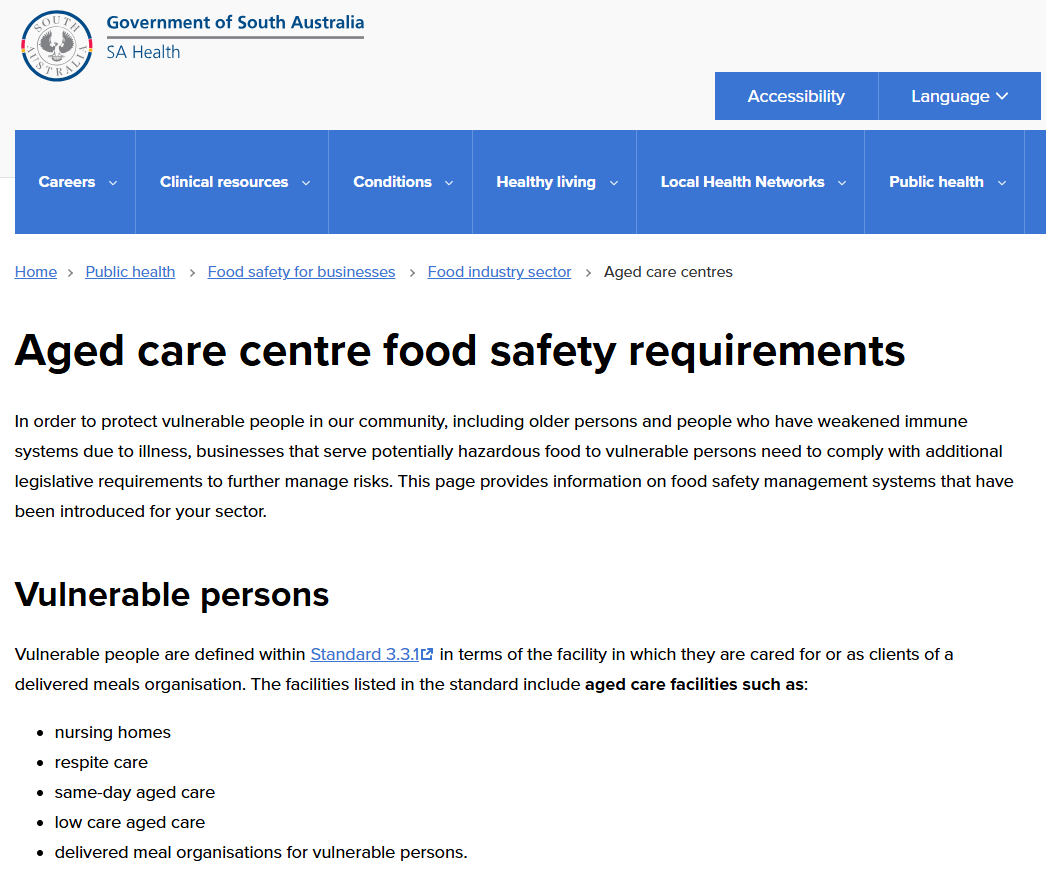
Aged care centre food safety requirements
This resource details food safety requirements for aged care centres, highlighting guidelines for managing risks with potentially hazardous foods. It includes standards for food safety programs, compliance templates, and regulatory guidance to protect vulnerable people.
This resource was developed by a state/territory government or organisation and therefore its applicability and usefulness may be limited.
Dementia enabling environments - Adapt a home: Kitchen
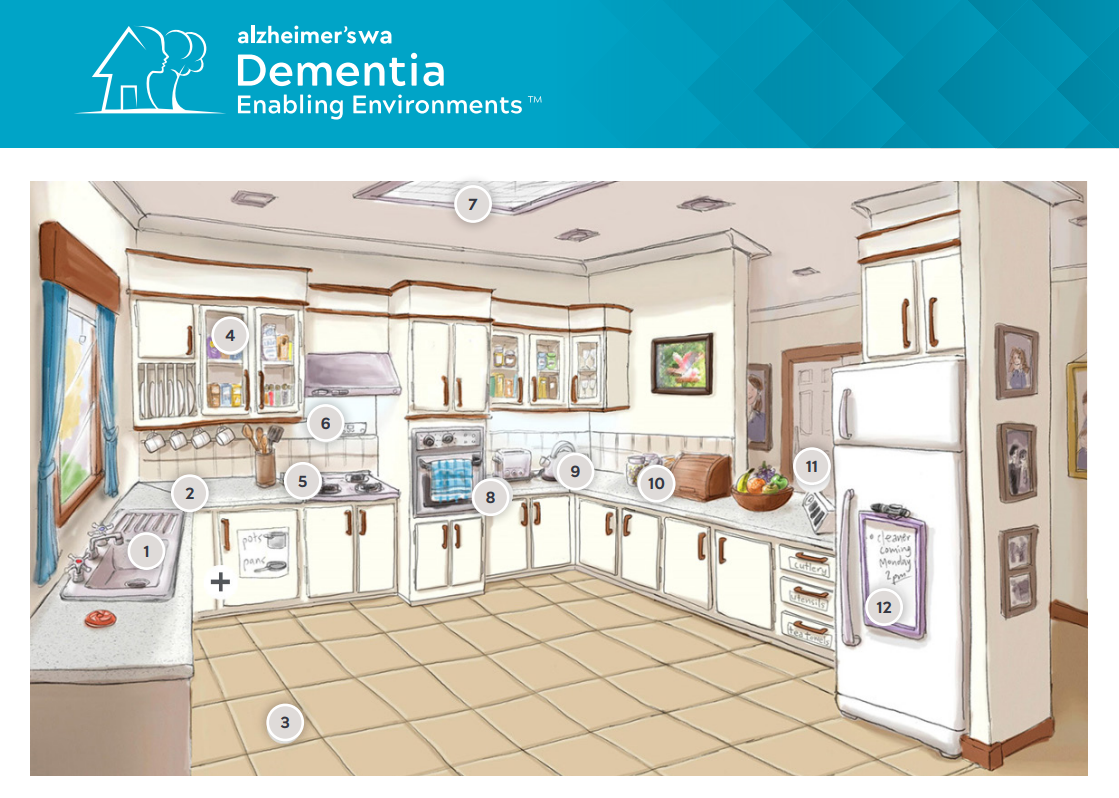
This resource, developed by Alzheimer's WA, is a Dementia Enabling Environments illustration information sheet about adapting a home, focusing on the kitchen. It includes principles to integrate enabling design and make changes within the physical environment to maximise enablement and wellbeing for people living with dementia.
This resource was developed by a state/territory government or organisation and therefore its applicability and usefulness may be limited.
Dignity and Respect
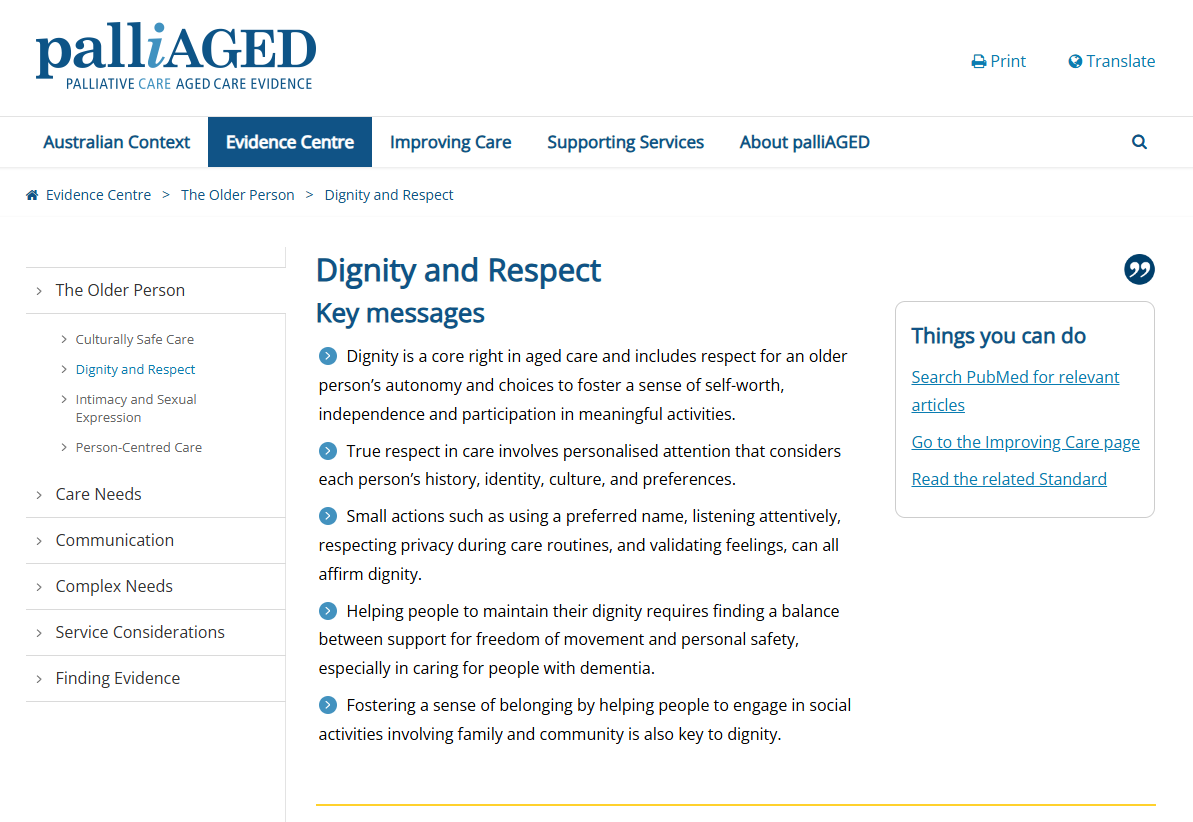
This resource provides information about dignity and respect in aged care, including information about what it means and why it is important. It provides evidence-informed information about dignity and respect in the context of care policies, social inclusion and meaningful engagement, autonomy and dignity of risk, privacy and personal space, and more.
Creating safe and inclusive care for Forgotten Australians and Care Leavers
This resource provides guidance for creating safe, inclusive aged care for Forgotten Australians and Care Leavers, focusing on trauma-informed practices. It supports providers in recognising unique needs, avoiding re-traumatisation, and promoting respect and sensitivity in care environments.
Allied health regulation
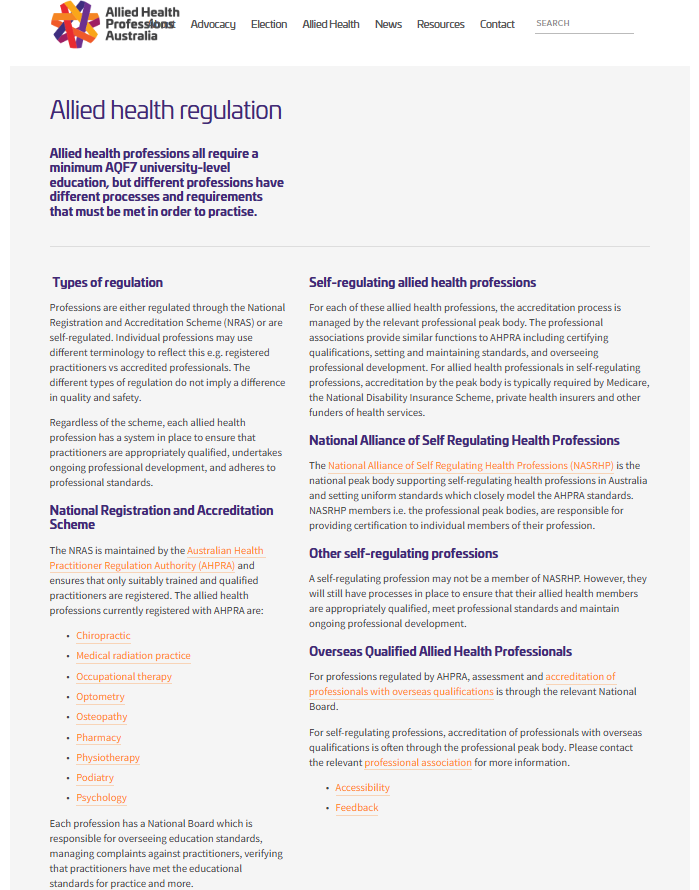
This resource provides information about the regulation of allied health professions in Australia. It includes those registered under the National Registration and Accreditation Scheme (NRAS) and self-regulating professions managed by professional peak bodies. It also provides links to further information about allied health professions currently registered with AHPRA and information for overseas-qualified practitioners.
Residential Medication Management Review and Quality Use of Medicines
This page provides information on the intent of the Residential Medication Management Review and Quality Use of Medicines (RMMR) Program. It outlines its purpose, participation requirements, claiming and payment processes, frequently asked questions, program rules, and extra available downloads.
Social and emotional wellbeing resources for Aboriginal and Torres Strait Islander Peoples
This page provides resources for Aboriginal and Torres Strait Islander people on social and emotional wellbeing. It contains information on support services, scholarships, lived experience centres, stories and other resources for mental health.
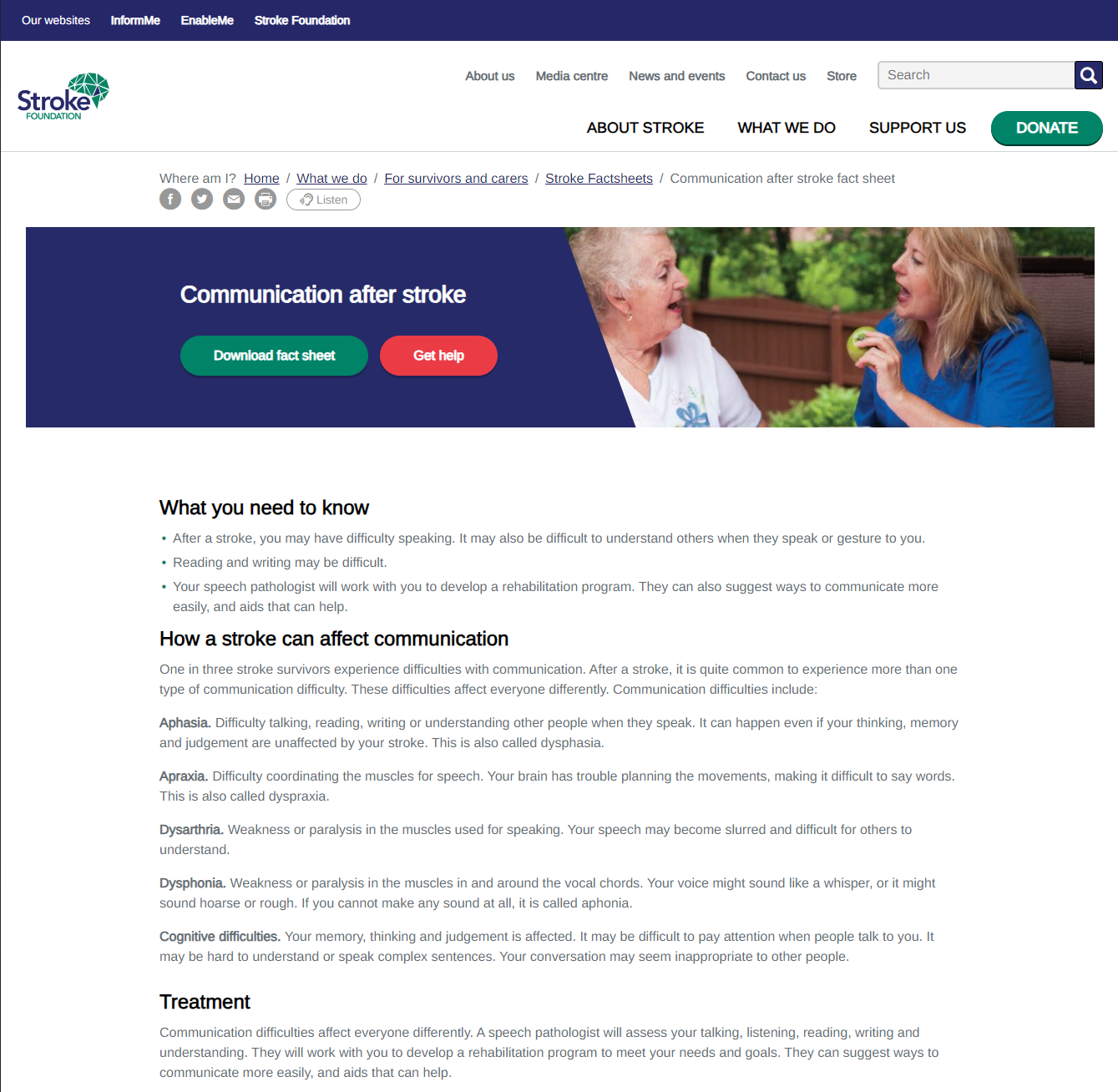
Communication after stroke
This resource provides information on communication difficulties an person may encounter after experiencing a stroke. It discusses how strokes can affect communication, treatment to assist with communication, information on recovery, communication tips for family and friends and help resources for individuals.
Teeth.org.au
Teeth.org.au is a website designed to provide oral health information to maintain a healthy mouth. It provides educational resources, information on accessing dental care, finding a dentist tool, and articles on oral health.

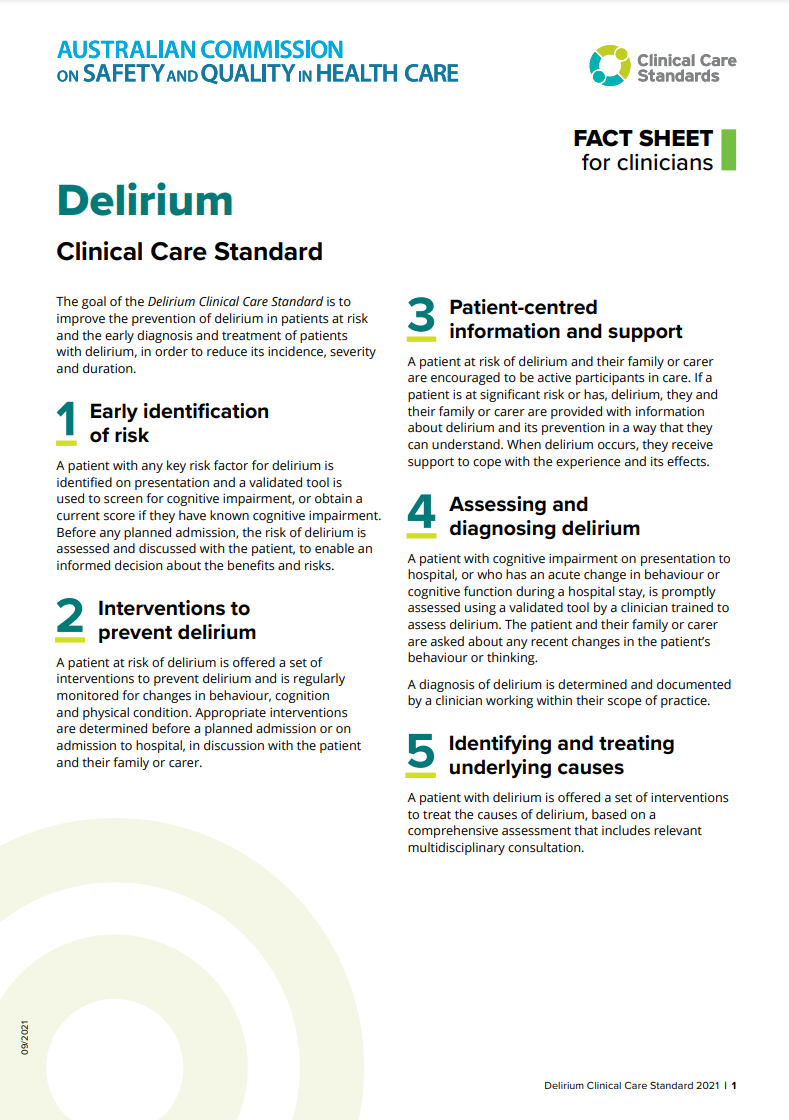
Delirium Clinical Care Standard
This resource outlines the Australian Commission on Safety and Quality in Health Care's Delirium Clinical Care Standard, which aims to improve the prevention, early diagnosis, and treatment of delirium. It includes 8 evidence-based quality statements and indicators for safe care. The standard helps clinicians and healthcare organisations manage cognitive impairment, with relevance to both hospital and aged care settings.
This resource may refer to information that will be updated from 1 November 2025 to align with the new Aged Care Act and Quality Standards.
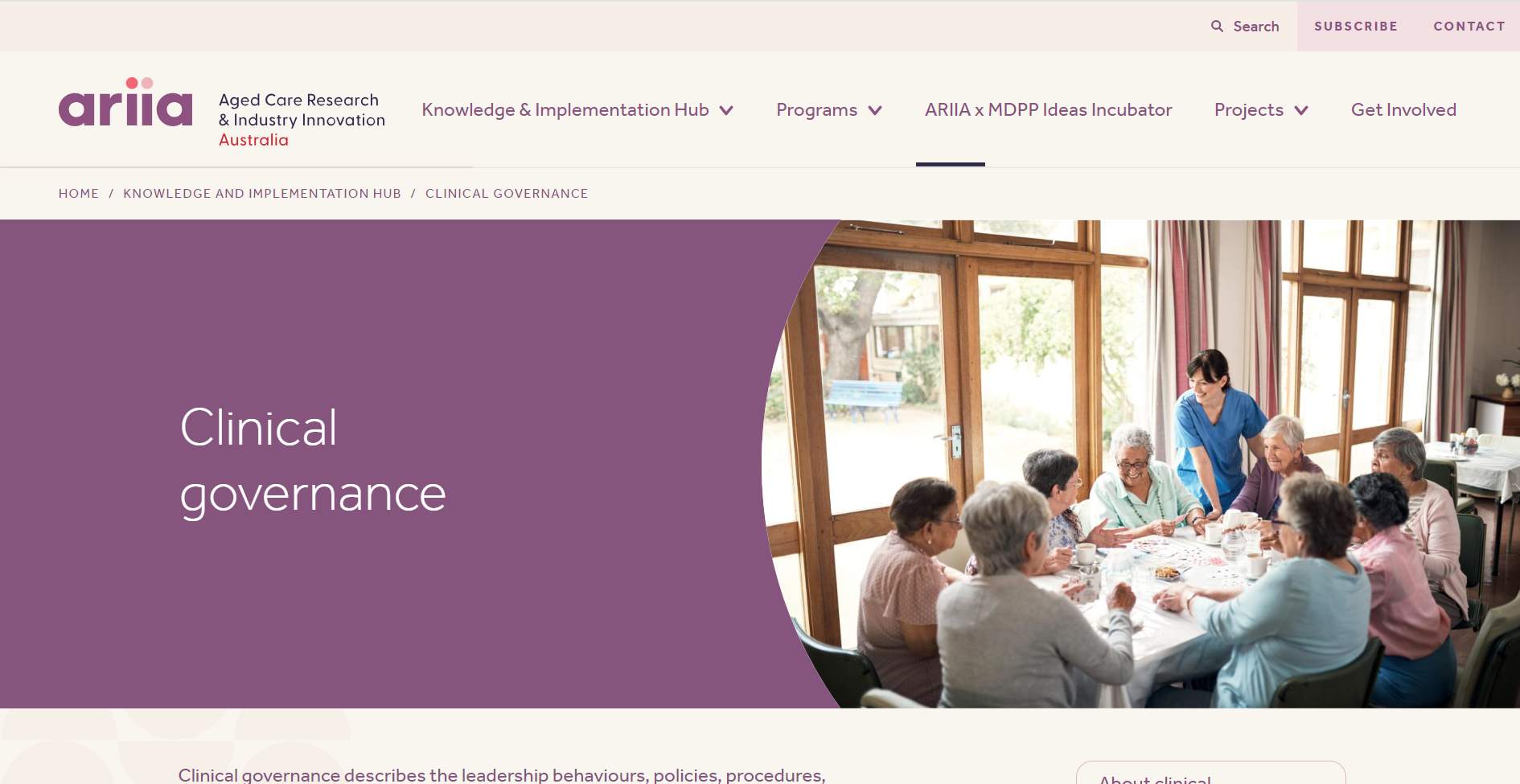
Knowledge and Implementation Hub - Clinical governance
This resource discusses clinical governance in aged care, highlighting its importance in delivering safe, high-quality care. It includes evidence-based resources, themes on governance like leadership, culture, consumer partnerships, and workforce strategies, and provides access to research projects, reviews, and practical guidance to support care quality improvements.
National Aboriginal Community Controlled Health Organisation - Medicines & Pharmacy
This resources provides information for Aboriginal Community Controlled Health Organisations (ACCHOs) and other communities related to medicine use and management. It includes a collection of resources for health workers involved in prescribing and supplying medicines in these settings.
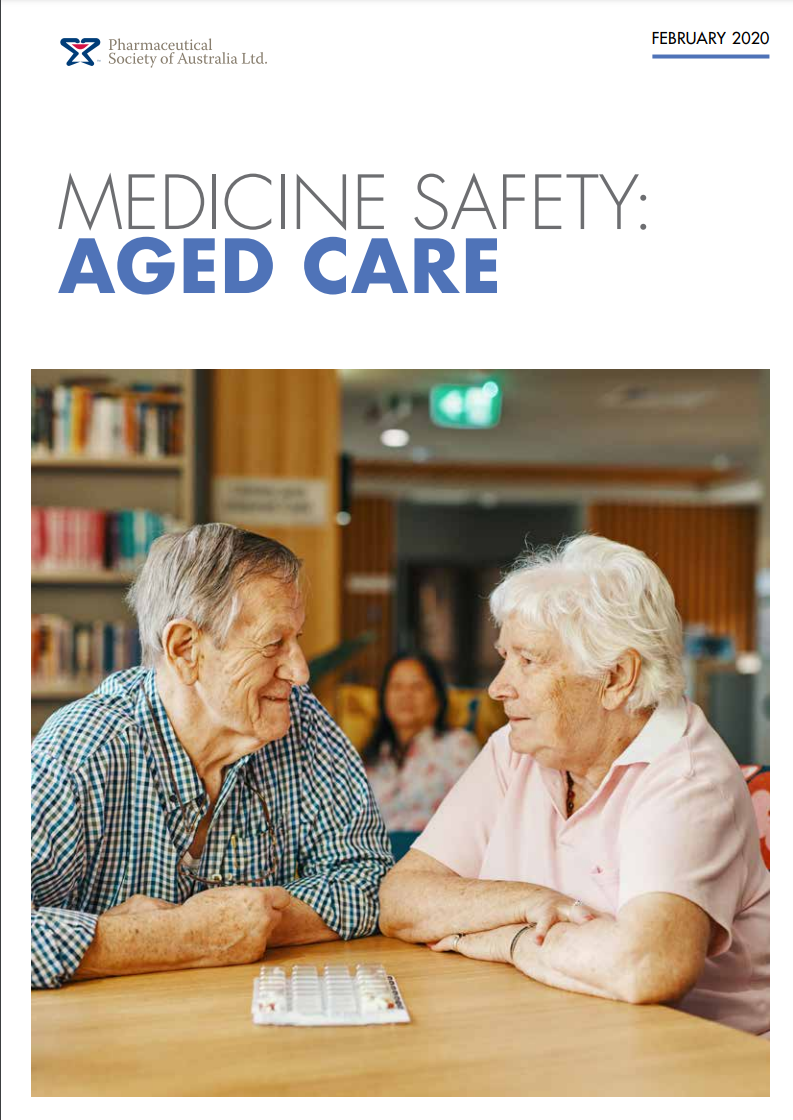
Medicine safety: Aged care
This report highlights medicine safety issues in aged care settings, detailing the prevalence of medicine-related problems, inappropriate prescribing, underuse of medicines, medicine regimen complexities, administration errors, and challenges during transitions of care. It provides opportunities for improvements and emphasises the need for safer medication practices, improved pharmacist involvement, and better regulatory frameworks to protect older people from medication harm.
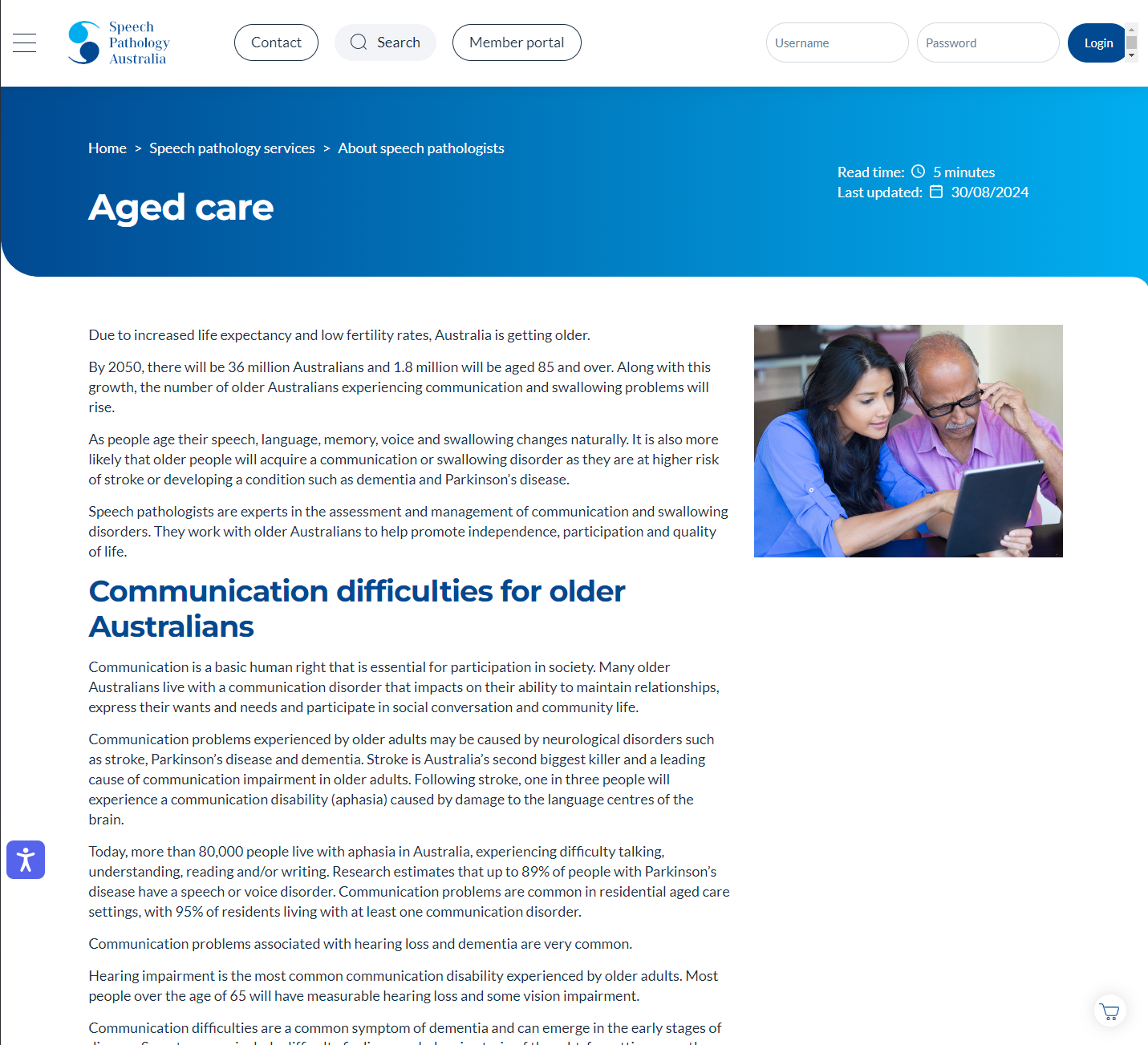
About speech pathologists - Aged care
This resource discusses the role of speech pathologists in supporting older people with communication and swallowing disorders caused by ageing, neurological conditions, and other health factors. It highlights the prevalence of communication and swallowing difficulties in aged care, their impacts, and how speech pathology services promote independence, participation, and quality of life through assessment, therapy, and tailored interventions.