The Quality Standards Resource Centre helps extend understanding of the strengthened Aged Care Quality Standards, which took effect from 1 November 2025. You can search for resources by using keywords, or filtering by standard, outcome and audience. Before using the Resource Centre, please read the terms of use.
Mental health and wellbeing - Dementia and mental health
This resource examines mental health challenges in people living with dementia, covering complexities in diagnosing conditions like depression and anxiety. It provides evidence-based insights on therapeutic approaches, including music and cognitive therapies, and offers tools to aid aged care providers in supporting mental health in dementia care.
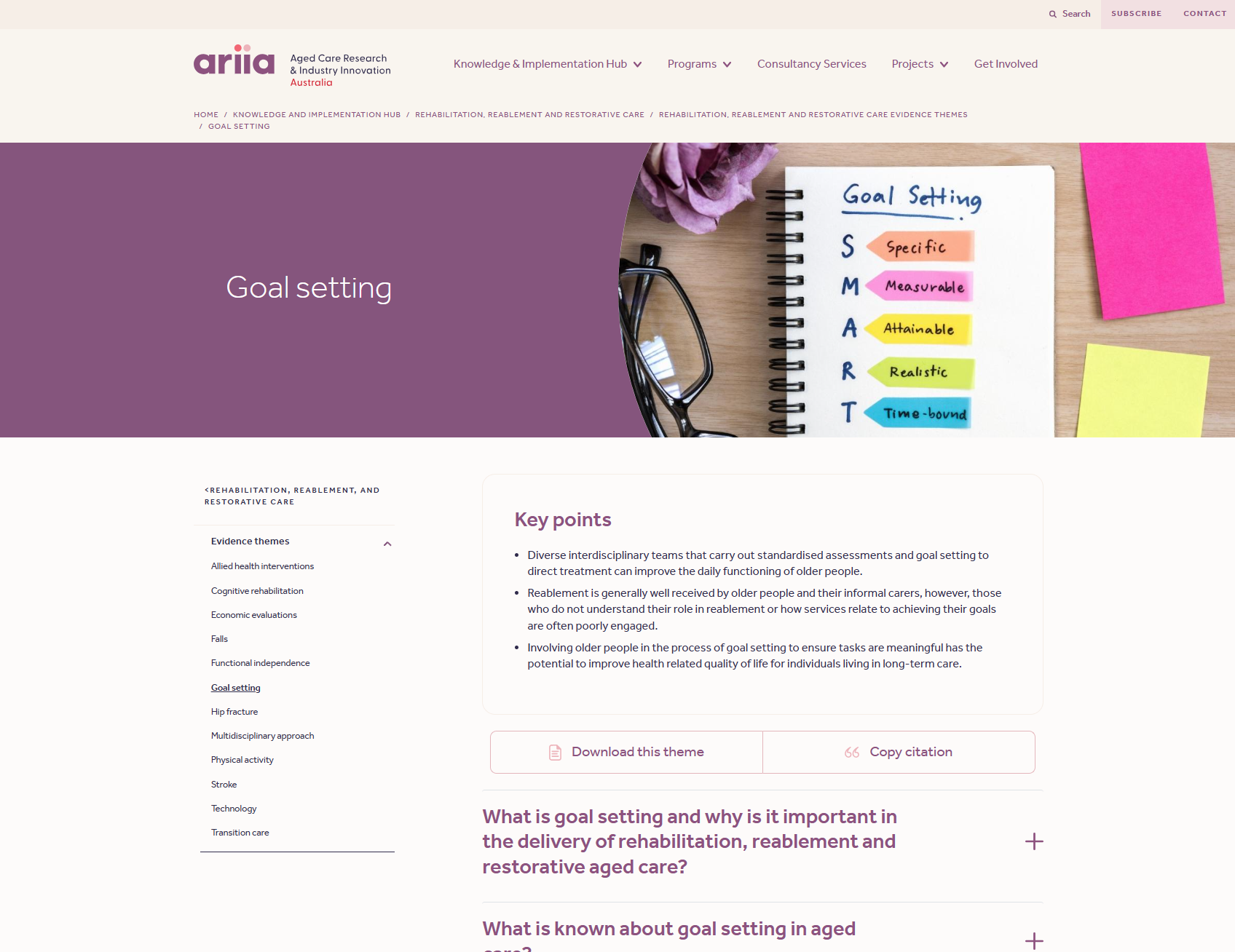
Goal setting
This resource discusses the role of goal setting in enhancing rehabilitation, reablement, and restorative care for older people. It highlights the value of involving older people in defining goals and the positive impact of goal setting on engagement, daily function, and quality of life.
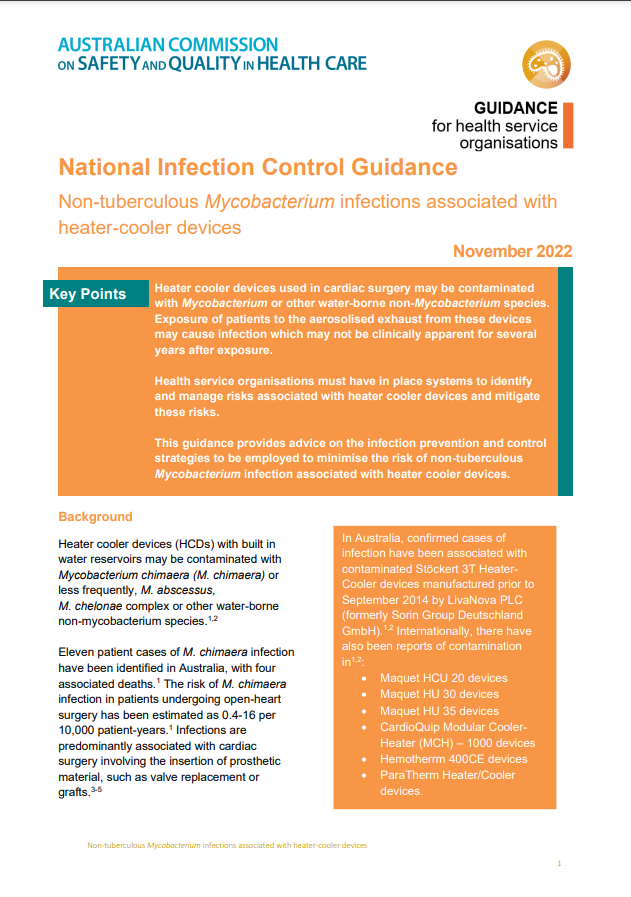
National Infection Control Guidance Non-tuberculous Mycobacterium infections associated with heater-cooler devices
This guidance addresses the infection risks associated with heater-cooler devices, particularly Non-tuberculous Mycobacterium infections. It provides recommendations for Australian healthcare organisations on managing these risks, including using safety notices and infection control guidelines. It should be used alongside state and territory health advice. This resource may apply to healthcare contexts outside of aged care and please consider the applicability of this resource to your care setting.
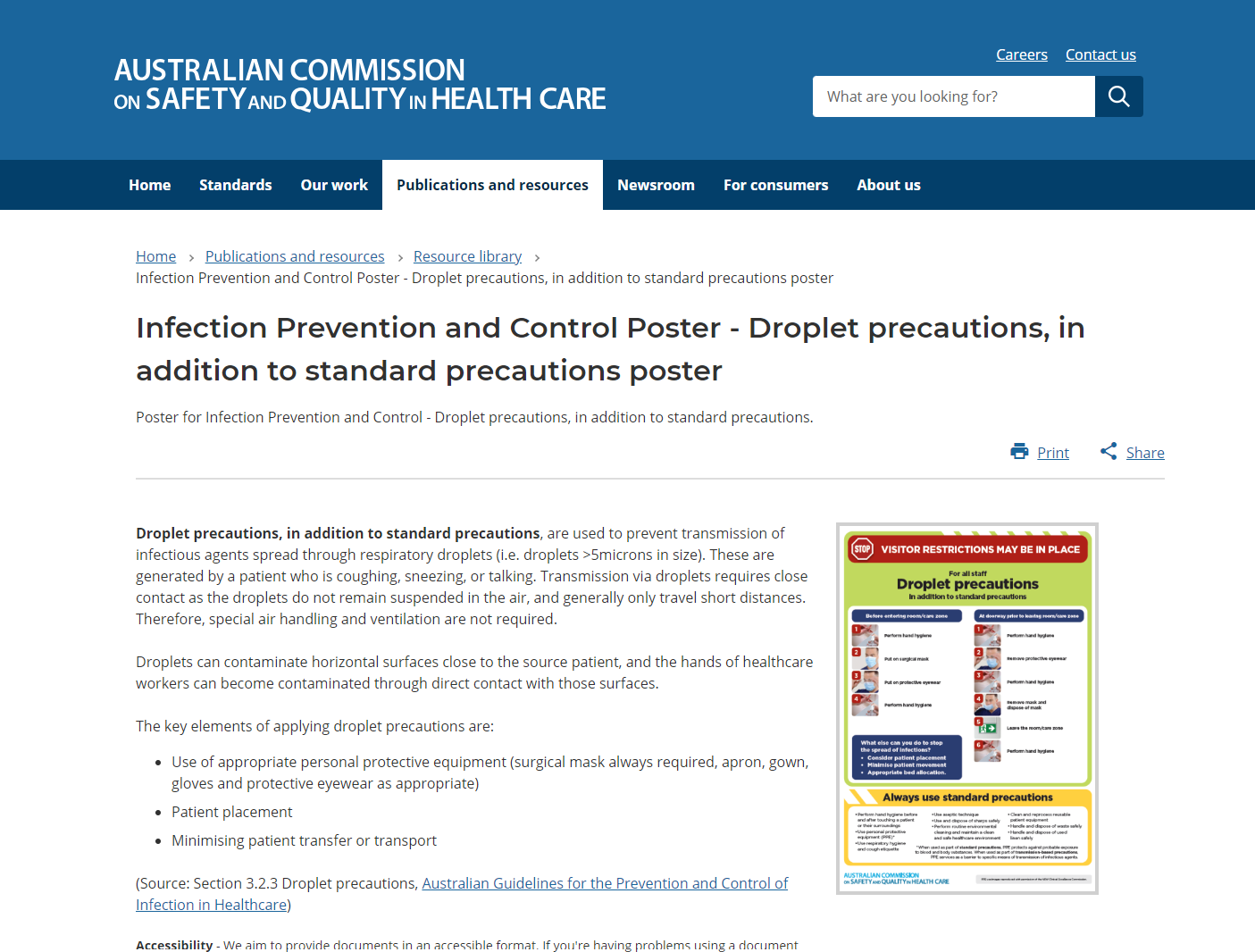
Infection Prevention and Control Poster - Droplet precautions, in addition to standard precautions poster
This resource is a poster on droplet precautions, in addition to standard precautions, for infection prevention. It outlines measures to prevent the transmission of infectious agents spread through respiratory droplets, such as using appropriate personal protective equipment (PPE), patient placement, and minimising patient transport. This resource may apply to healthcare contexts outside of aged care. Please consider the applicability of this resource to your care setting.
Preventing and Controlling Infections Standard
The Preventing and Controlling Infections Standard (National Safety and Quality Health Service Standards) outlines infection prevention and control strategies, antimicrobial stewardship, the safe use of resources, and evidence-based practices. It aims to minimise infection risks and ensure the safety of people receiving care and workforce members. It also supports compliance with infection control standards in healthcare and aged care settings. This resource may apply to healthcare contexts outside of aged care and please consider the applicability of this resource to your care setting.
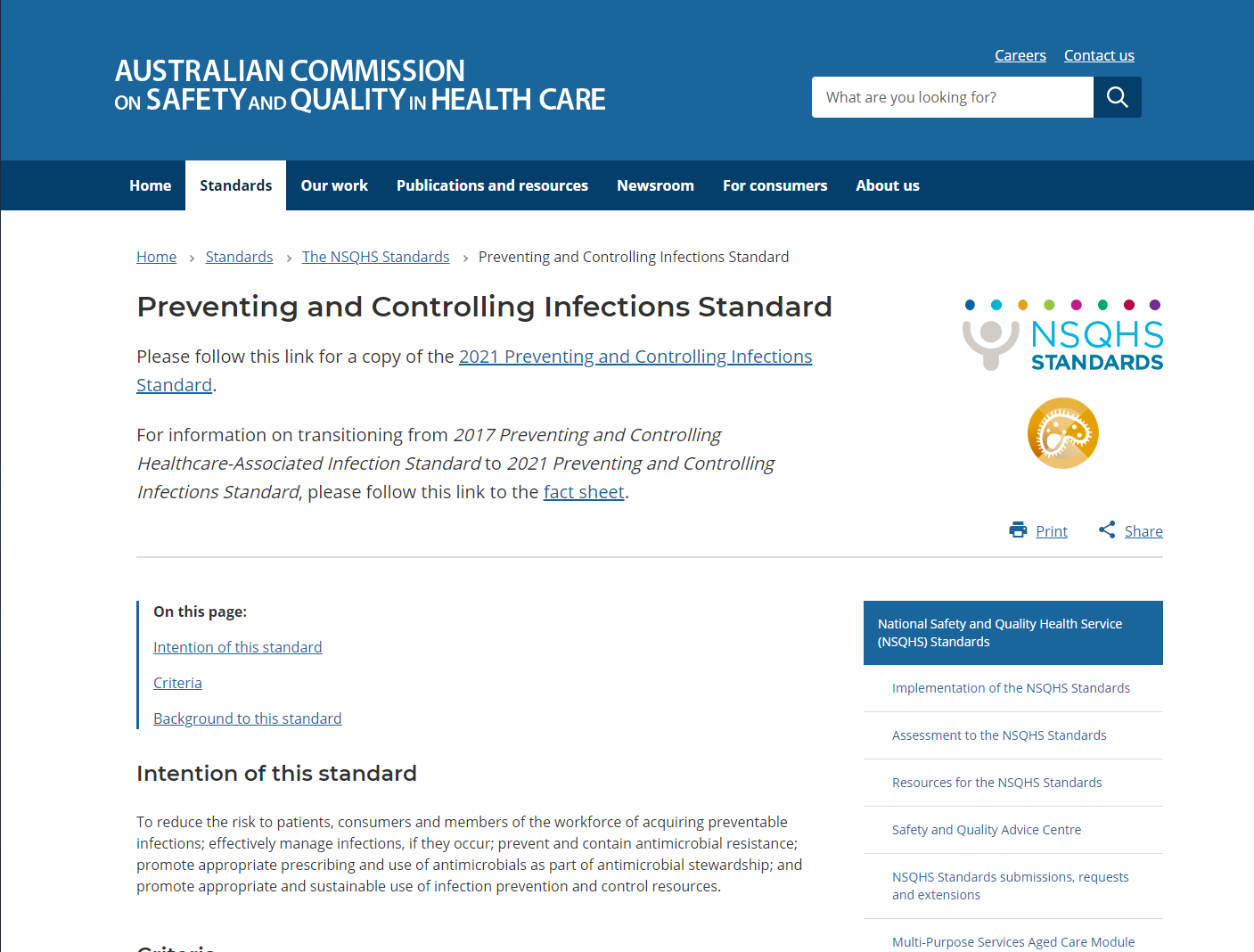
Infection Prevention and Control Poster – Combined contact and droplet precautions
This poster outlines combined contact and droplet precautions for infection prevention and control, in addition to standard precautions. It provides guidance on the use of personal protective equipment (PPE) and other measures to reduce the transmission of infectious agents through direct contact and respiratory droplets.
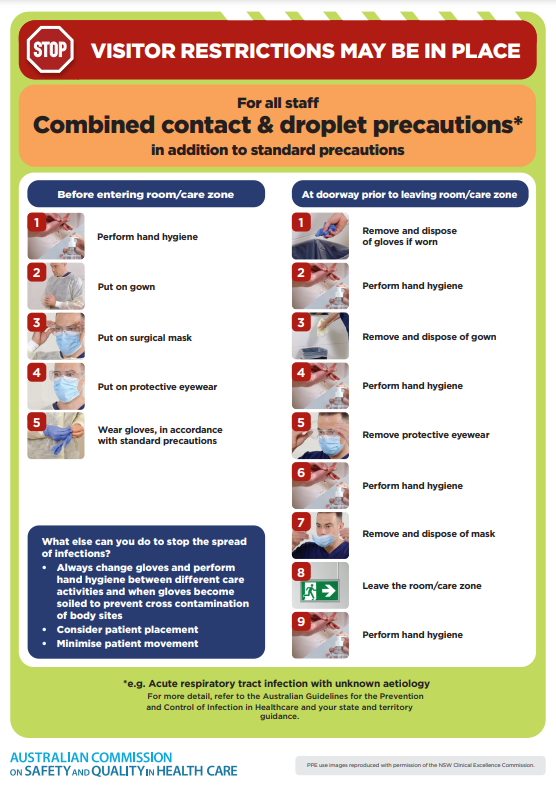
Infection Prevention and Control Poster - Contact precautions poster
This poster outlines contact precautions for infection prevention and control, in addition to standard precautions. It provides guidance on preventing the transmission of infectious agents through direct or indirect contact. Key elements include using personal protective equipment, proper patient placement, and minimising patient movement. This resource may apply to healthcare contexts outside of aged care. Please consider the applicability of this resource to your care setting.
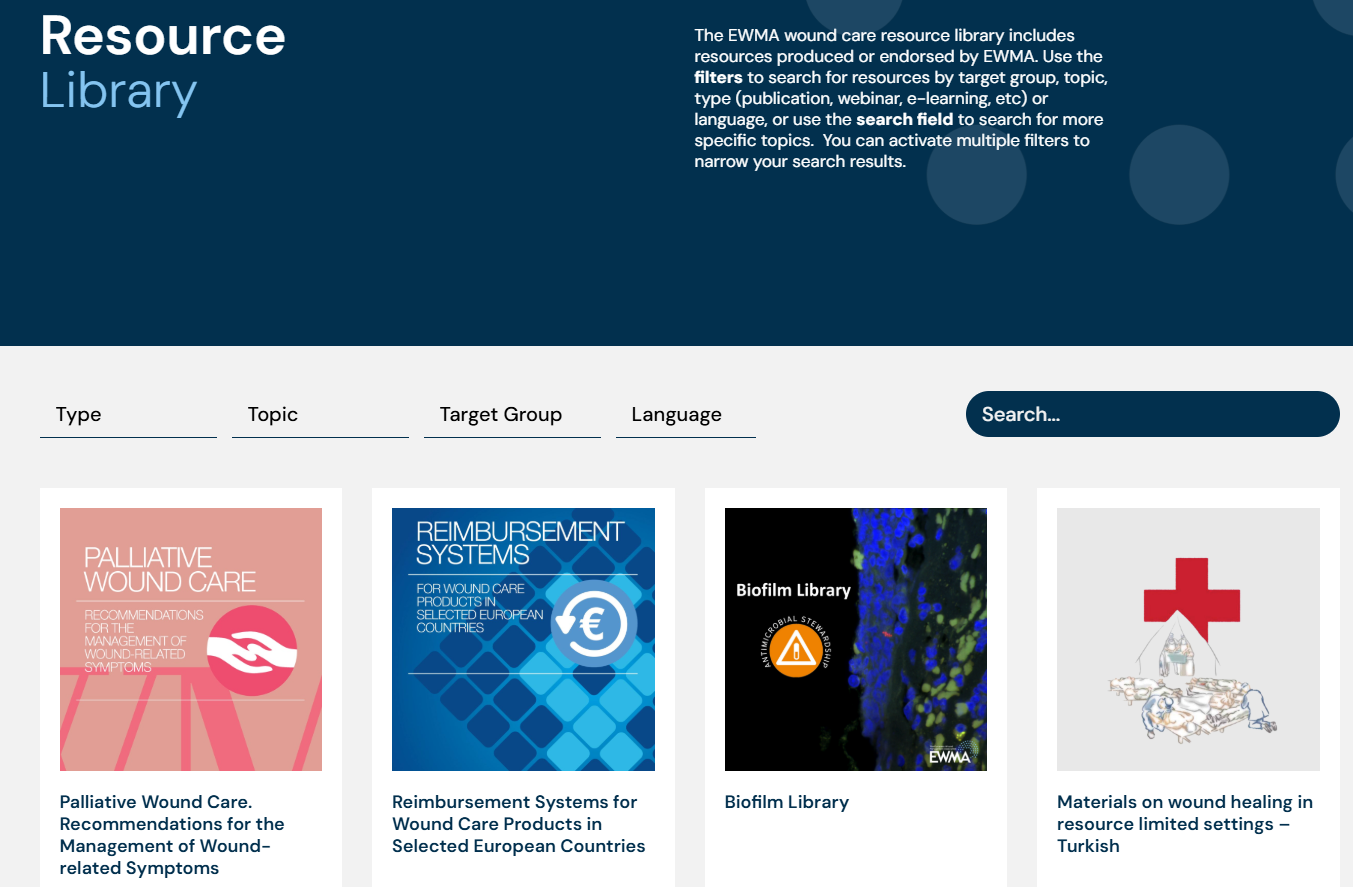
Infection Prevention and Control Poster - Standard precautions poster
This resource is a poster on standard precautions for infection prevention and control in healthcare. It outlines essential practices such as hand hygiene, personal protective equipment use, environmental cleaning, and waste management. The poster helps healthcare workers minimise infection risks and maintain safe care environments. This resource may apply to healthcare contexts outside of aged care. Please consider the applicability of this resource to your care setting.
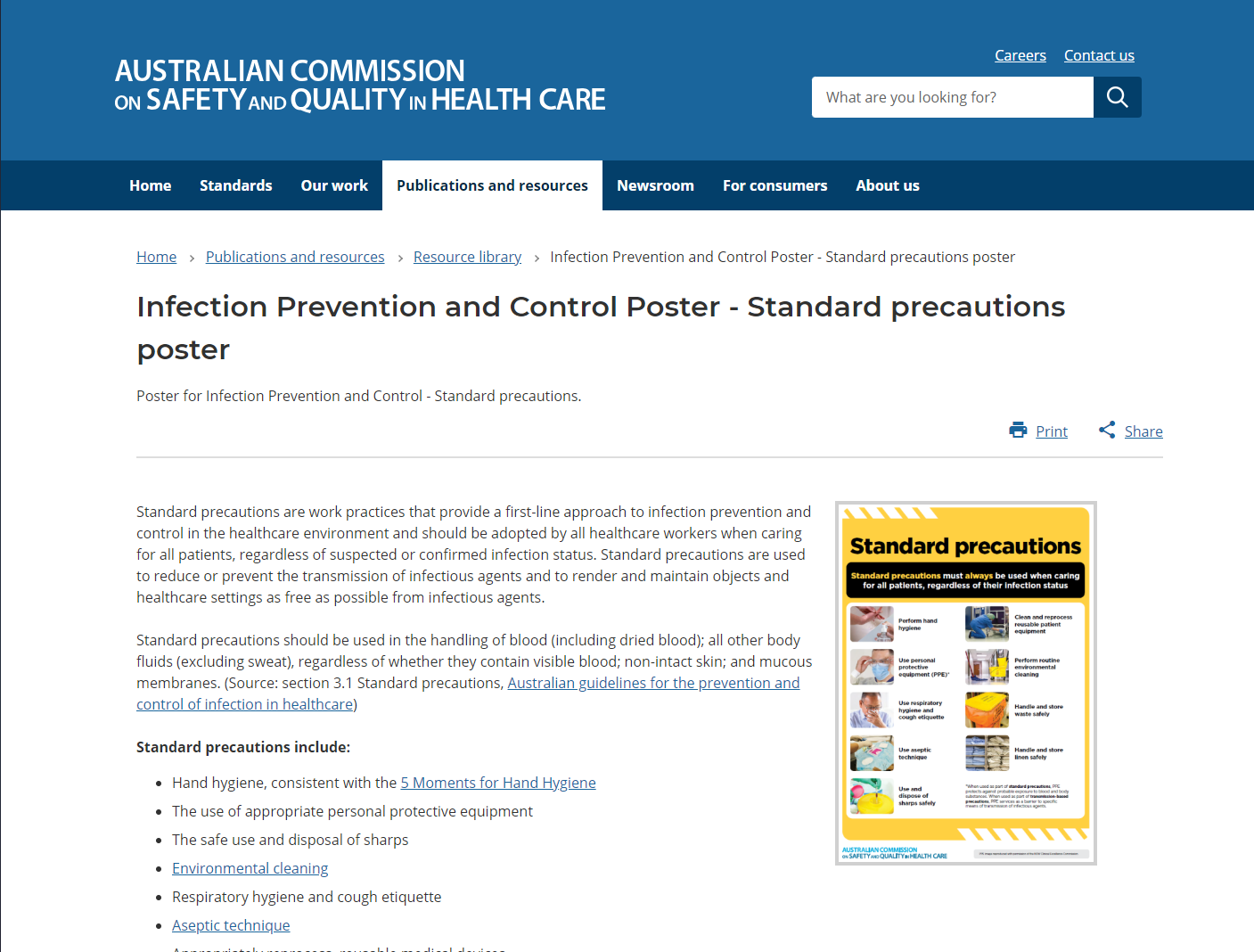
Recommendations for the control of carbapenemase-producing Enterobacterales
This resource provides guidance on preventing and managing carbapenemase-producing Enterobacterales (CPE) in healthcare. It covers screening, outbreak control, and environmental cleaning, helping to reduce antimicrobial resistance. The resource supports infection control policies and aims to enhance safety in aged care and health service organisations.
This resource may refer to information that will be updated from 1 November 2025 to align with the new Aged Care Act and Quality Standards.
In our care into your hands: Aboriginal stories about approaching the end of life
This 2015 resource shares Aboriginal and Torres Strait Islander stories about approaching end of life, emphasising cultural practices and the role of storytelling in palliative care. It offers insight into supporting culturally sensitive care for people nearing the end of life.
This resource was developed by a state/territory government or organisation and therefore its applicability and usefulness may be limited.
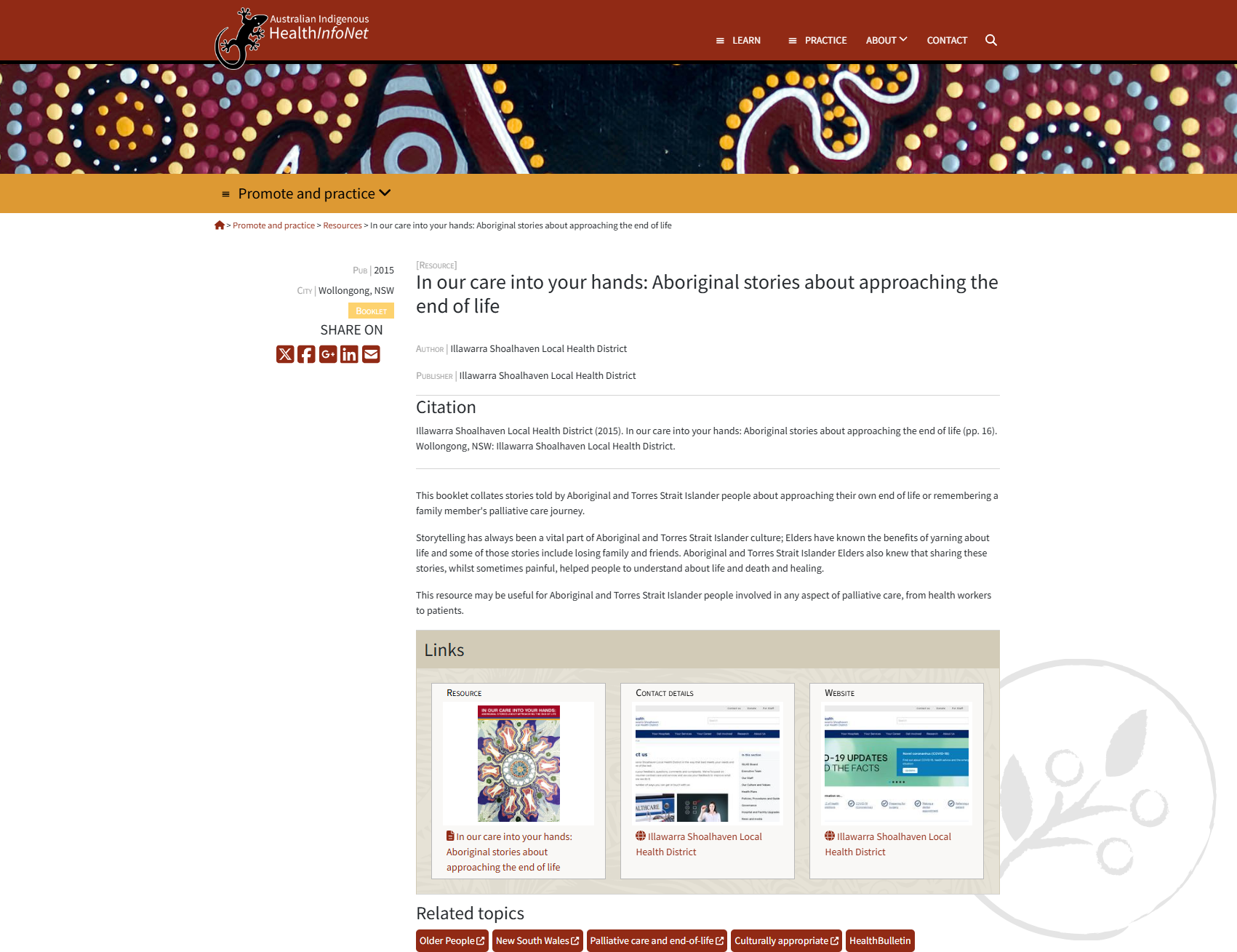
European Wound Management Association - Resource Library
This resource library offers a collection of wound care materials, including publications, webinars, and e-learning modules, covering topics like wound healing, infection management, compression therapy, and advanced treatments. It provides resources for various target groups and is available in multiple languages.
This resource was developed internationally and therefore its applicability and usefulness may be limited.
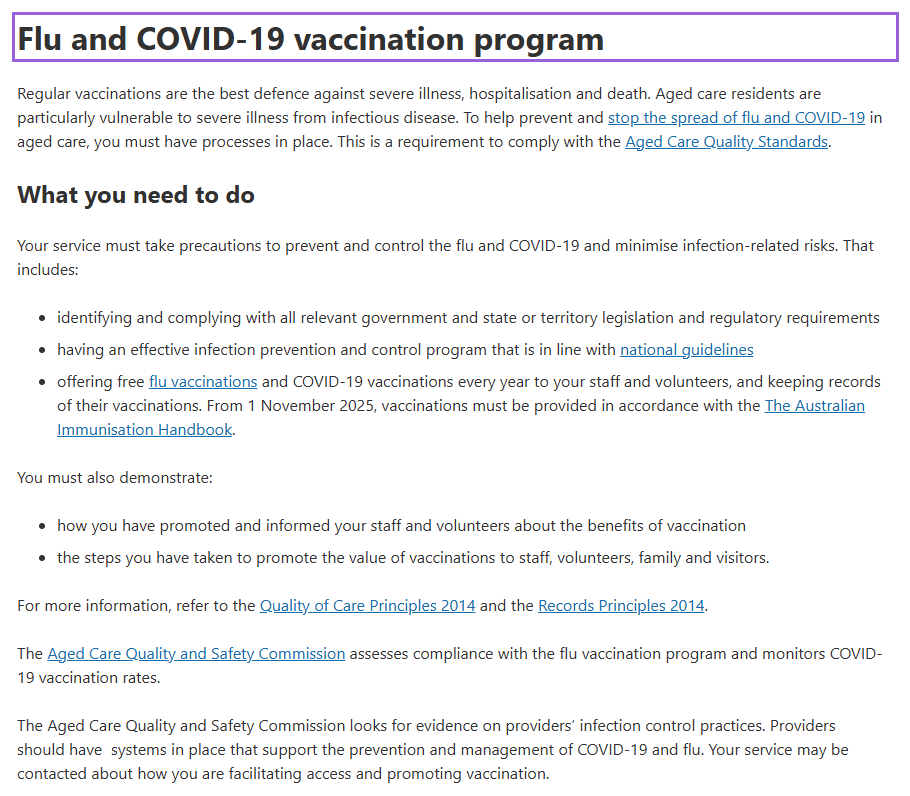
Flu and COVID-19 vaccination program
This resource outlines the flu and COVID-19 vaccination program for residential aged care providers. It includes information about what services must do to take precautions to prevent and control the flu and COVID-19 and minimise infection-related risks. This resource may refer to information that will be updated from 1 November 2025 to align with the new Aged Care Act and Quality Standards.
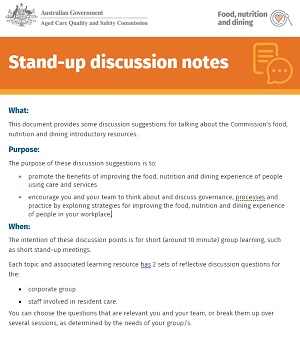
Food, nutrition and dining stand-up discussion notes
This resource provides discussion notes to improve the food, nutrition, and dining experience in aged care settings. It includes reflective questions for corporate teams and care staff, focusing on governance, resident choice, oral health, and support for those with swallowing difficulties. The resource promotes continuous improvement and quality care through group discussions. This resource may refer to information that will be updated from 1 November 2025 to align with the new Aged Care Act and Quality Standards.
 Stand-up discussion notes (DOCX 6.68 MB)
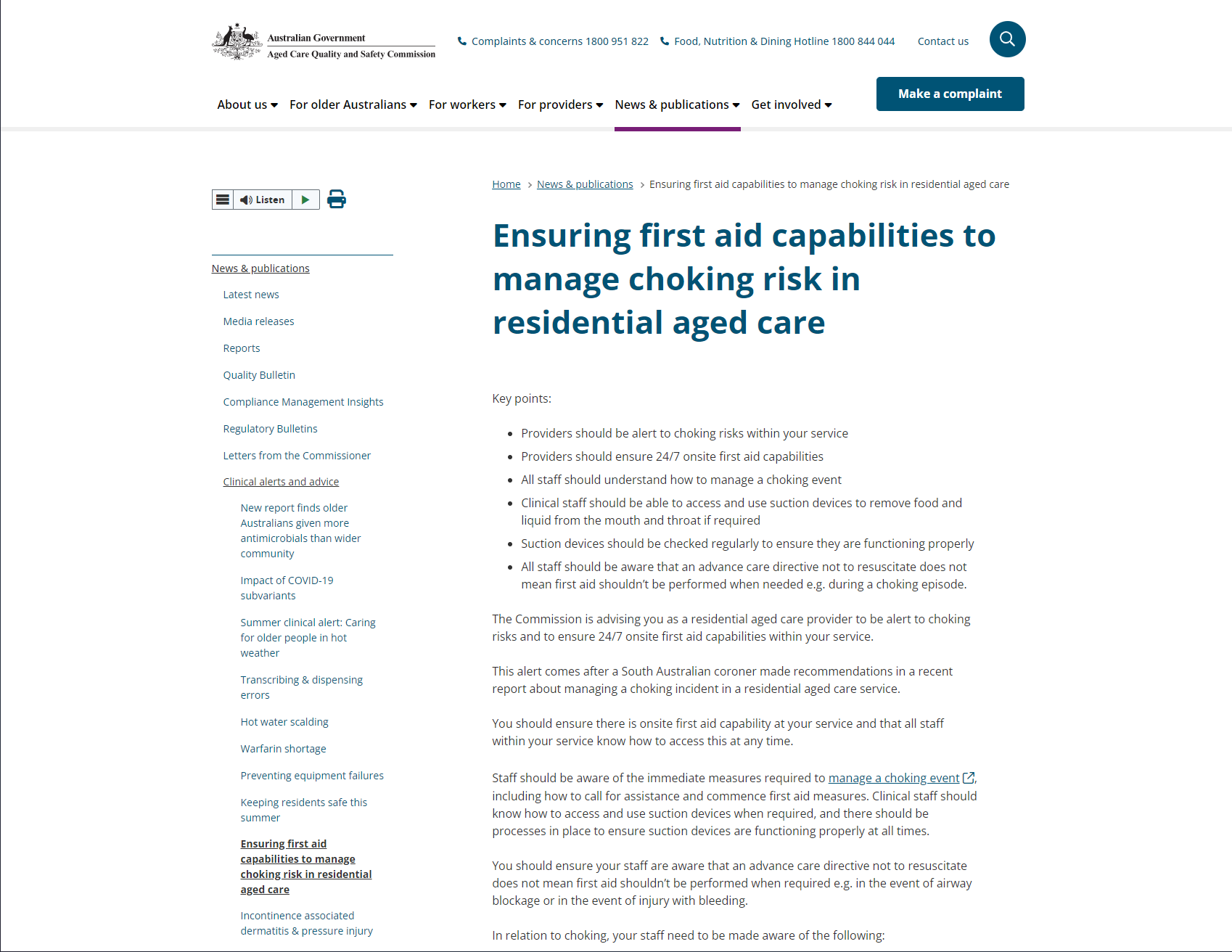
Ensuring first aid capabilities to manage choking risk in residential aged care
This page provides guidance for residential aged care services on managing choking risks. It advises 24/7 first aid capabilities, staff training on choking incidents, the use of suction devices, and understanding that advance care directives do not prevent the administering of first aid. The alert also recommends collaborating with speech pathologists, documenting discussions, and managing choking events through incident review and support.
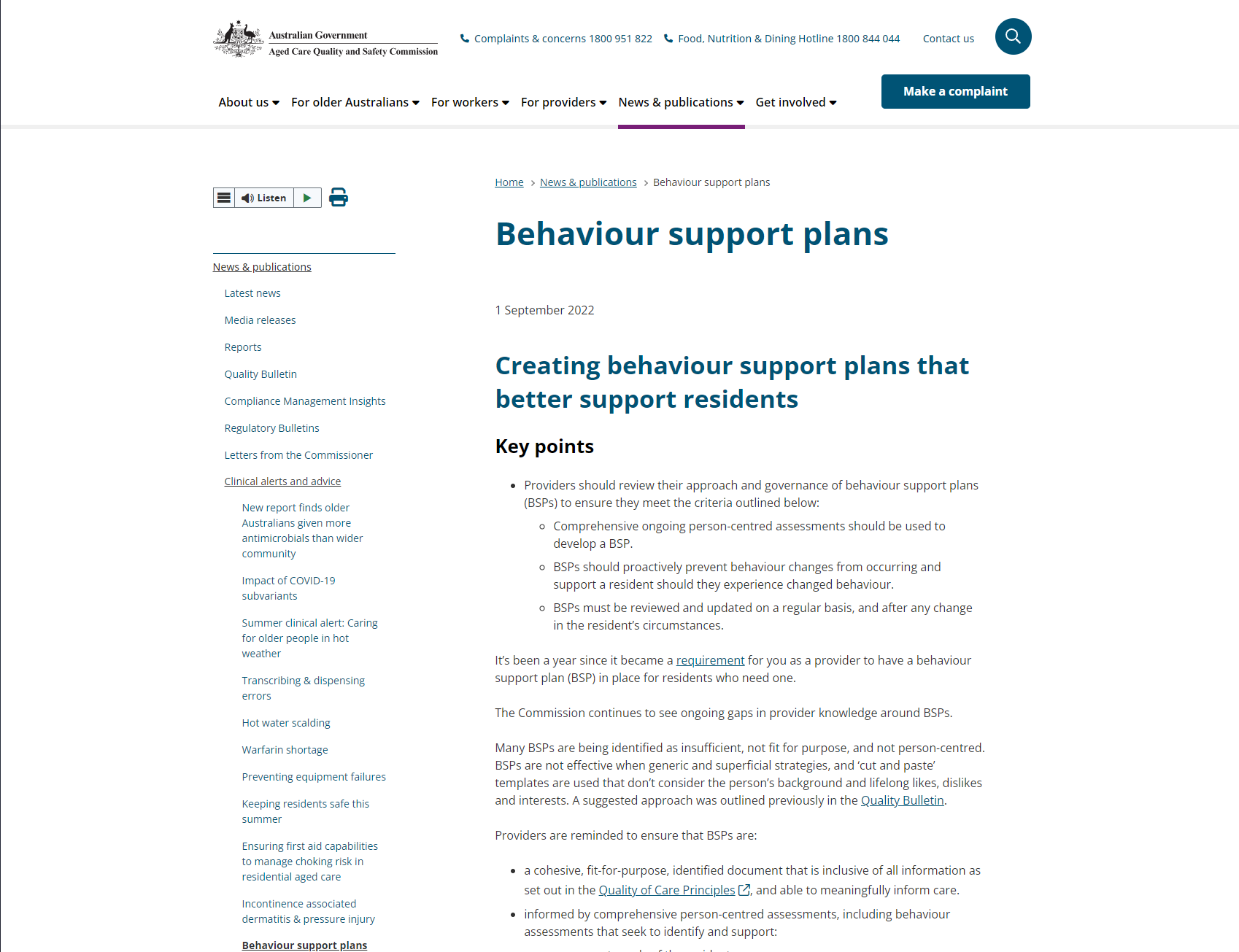
Creating behaviour support plans that better support residents
This document outlines the development of behaviour support plans (BSPs) in aged care, focusing on person-centred assessments, identification of triggers, tailored strategies, and regular reviews. It highlights the involvement of healthcare professionals and adherence to care principles to effectively manage residents’ behavioural changes and improve their quality of life.
This resource may refer to information that will be updated from 1 November 2025 to align with the new Aged Care Act and Quality Standards.
Restrictive practices provider resources
This resource offers guidance and tools for aged care providers on managing restrictive practices. It emphasises using restrictive practices as a last resort, obtaining informed consent, and developing behaviour support plans. The materials include fact sheets, regulatory updates, webinars, and decision-making tools to ensure compliance with legislation and promote person-centred care.
This resource may refer to information that will be updated from 1 November 2025 to align with the new Aged Care Act and Quality Standards.
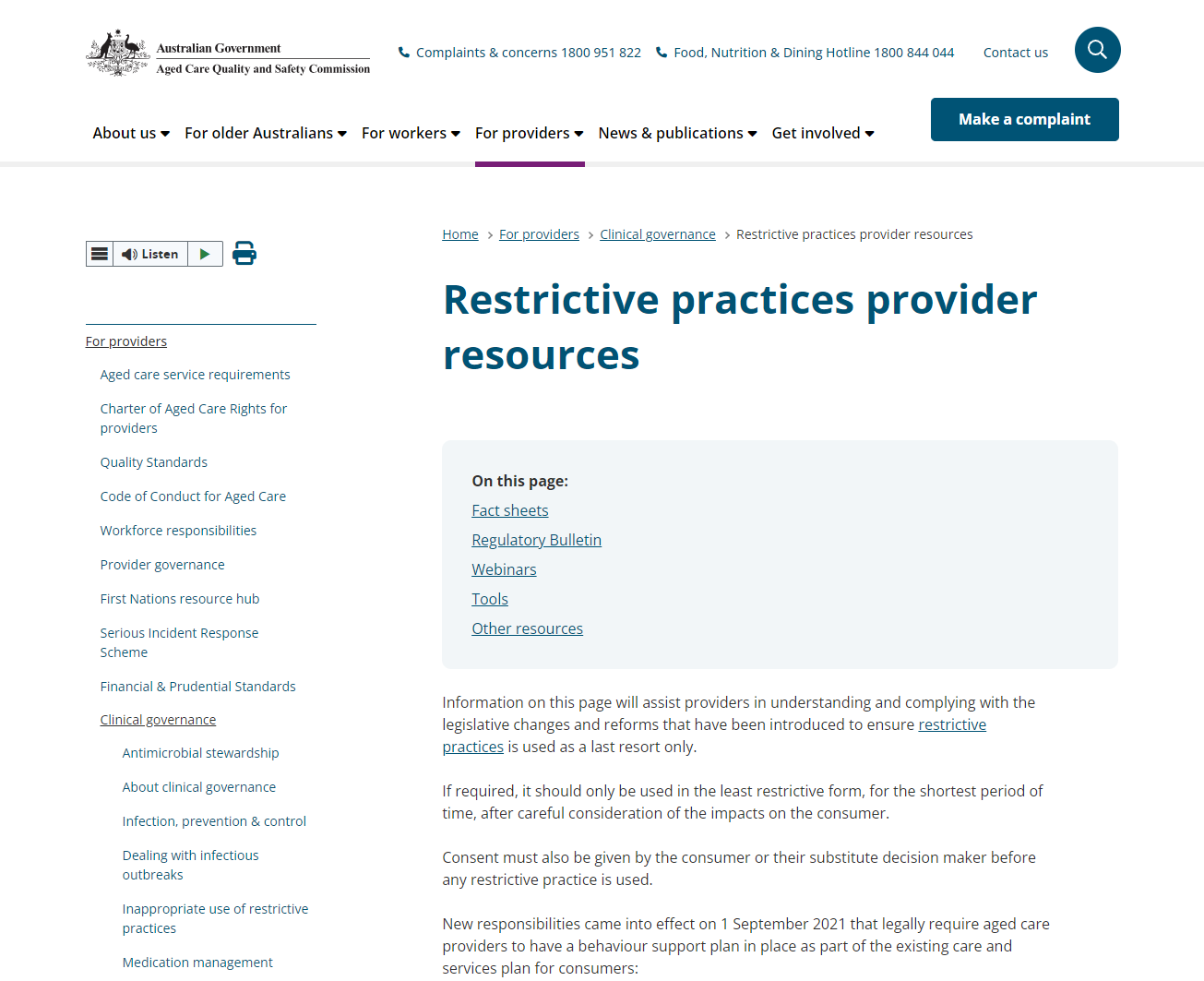
Antimicrobial Stewardship Self-Assessment Tool and User Guide
This tool and user guide supports residential aged care services in self-assessing their antimicrobial stewardship (AMS) practices. It covers AMS governance, policies, education, monitoring, and feedback, aiming to improve antibiotic use and reduce risks associated with antimicrobial resistance. The resources helps identify gaps and develop action plans to enhance AMS activities and patient care. This resource may refer to information that will be updated from 1 July 2025 to align with the new Aged Care Act and Quality Standards.

Dementia-friendly environments - Dining areas, kitchens and eating
This resource provides guidelines for creating dementia-friendly dining and kitchen spaces, emphasising sensory engagement, personalised meal experiences, and a home-like environment. It includes practical adjustments for lighting, noise, seating, and social interaction to enhance dining enjoyment.
This resource was developed by a state/territory government or organisation and therefore its applicability and usefulness may be limited.
Dementia enabling environments
The Dementia Enabling Environments website, developed by Alzheimer's WA, provides guidance and resources to help create enabling environments for a person living with dementia. It includes design principles for different environment types, include home and residential aged care facilities.
This resource was developed by a state/territory government or organisation and therefore its applicability and usefulness may be limited.
National Roadmap for Improving the Health of People with Intellectual Disability
This resource outlines the National Roadmap for Improving the Health of People with Intellectual Disability, aiming to address health inequities. It focuses on enhancing care support, developing better models of care, improving oral health, and supporting health professionals. The roadmap includes projects on primary care, health assessments, curriculum development, and more.