The Quality Standards Resource Centre helps extend understanding of the strengthened Aged Care Quality Standards, which took effect from 1 November 2025. You can search for resources by using keywords, or filtering by standard, outcome and audience. Before using the Resource Centre, please read the terms of use.
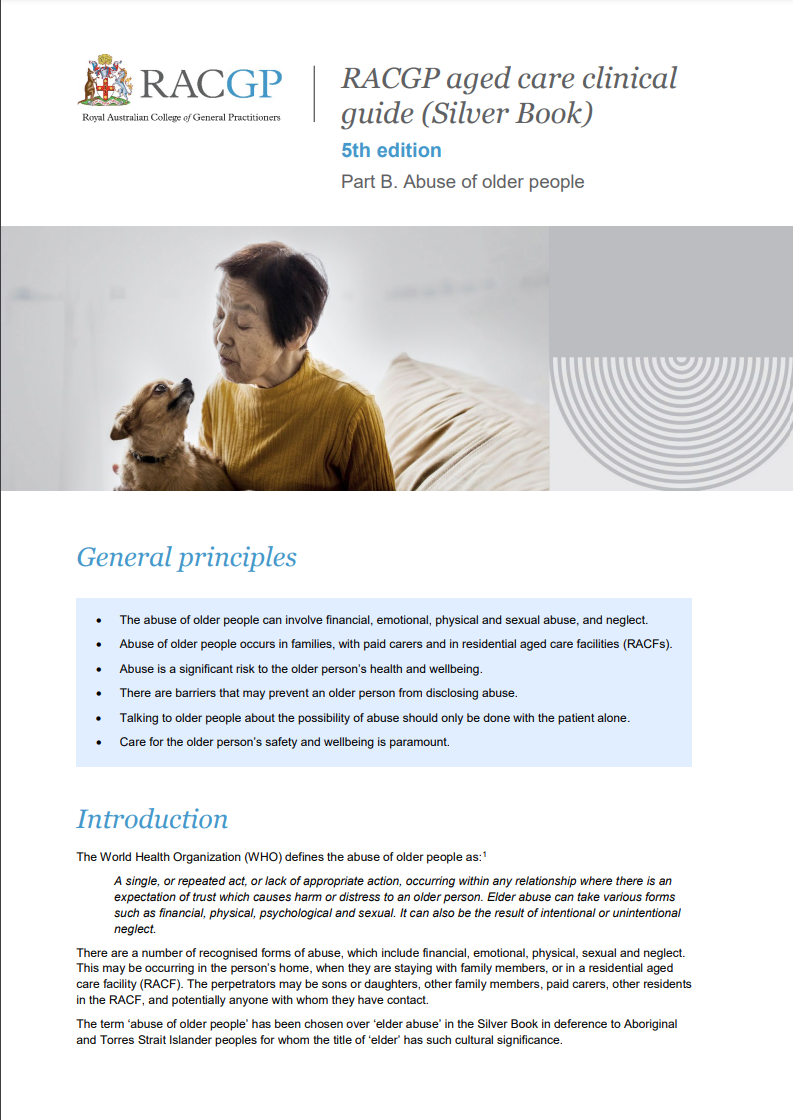
RACGP aged care clinical guide (Silver Book) - Part B - Abuse of older people
This resource provides guidance on recognising, assessing, and managing abuse of older people in various settings, including residential aged care. It covers types of abuse (financial, emotional, physical, sexual, neglect), risk factors, barriers to disclosure, and steps for prevention. The document also includes recommendations for safety planning, intervention strategies, and resources for support across Australian states and territories.
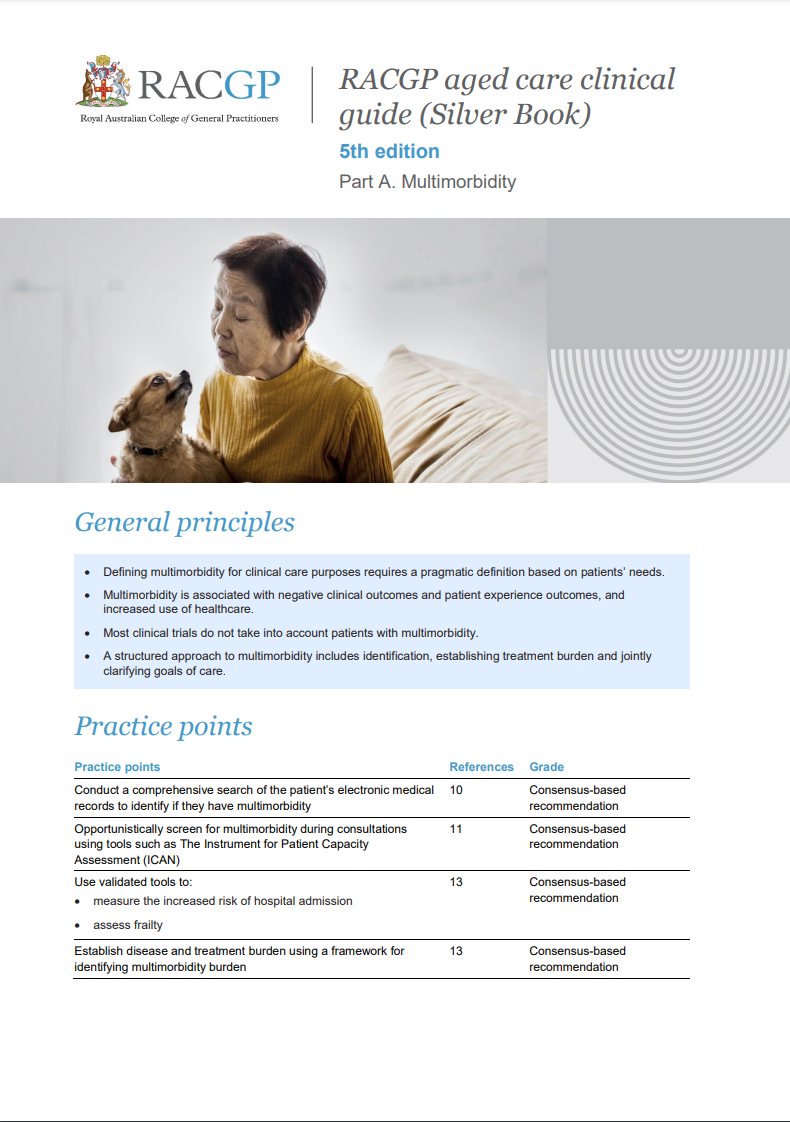
RACGP aged care clinical guide (Silver Book) - Part A - Multimorbidity
This resource provides guidelines for managing patients with multimorbidity in aged care settings. It includes frameworks for assessing treatment burden, identifying patients at risk, and developing individualised care plans. It recommends validated tools for screening, a focus on quality of life, and strategies for medication review and care coordination.
RACGP aged care clinical guide (Silver Book) - Part A - Deprescribing
This guide focuses on deprescribing in aged care, aiming to reduce unnecessary or potentially harmful medications. It provides a framework for reviewing medication, assessing risks and benefits, developing tapering plans, and involving multidisciplinary teams. It provides recommendations including; patient-cantered communication, establishing written plans for medication withdrawal, and monitoring outcomes to improve quality of life.
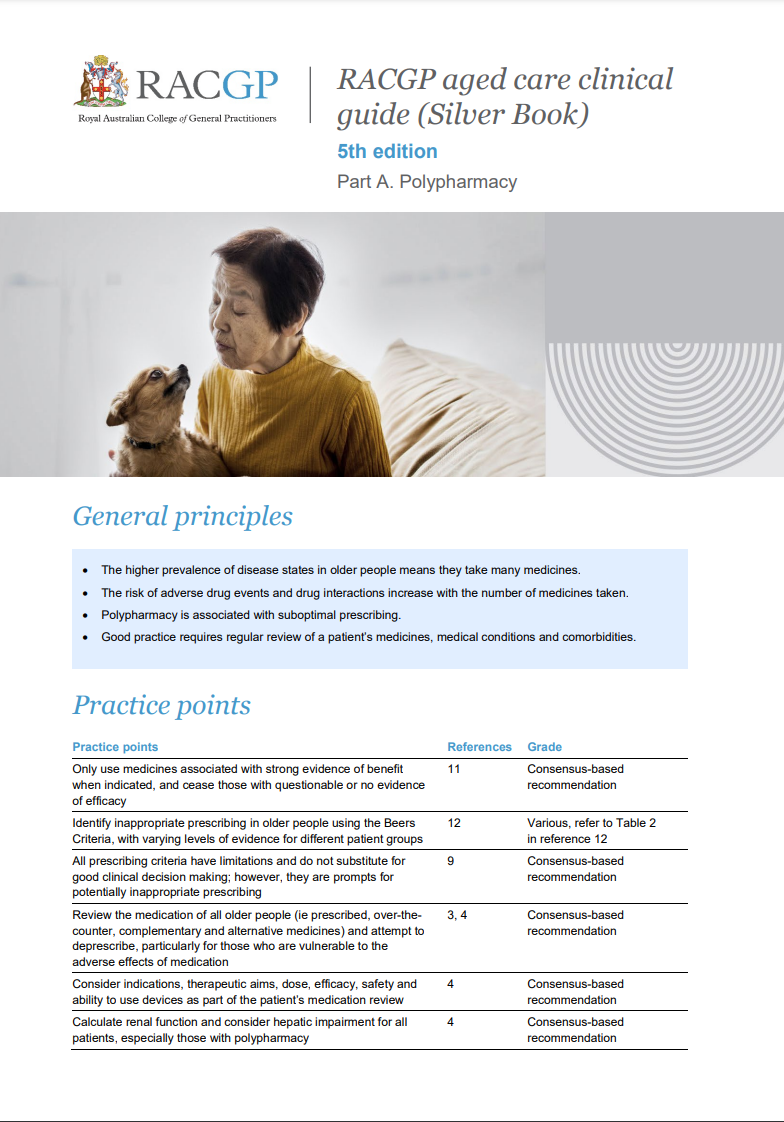
RACGP aged care clinical guide (Silver Book) - Part A - Polypharmacy
This guide addresses polypharmacy in aged care, focusing on identifying inappropriate prescribing and reviewing all medications, including prescription, over-the-counter and complementary and alternative medicines. It includes recommendations for reducing medication use through deprescribing, ensuring medication safety, and regular review of renal and hepatic functions. Tools such as Beers Criteria and other screening frameworks are provided to support optimal medication management in older adults.
RACGP aged care clinical guide (Silver Book) - Part A - Dementia
This resource offers guidance on diagnosing and managing dementia, covering its impact on cognitive and physical functions, screening methods, and differential diagnoses. It discusses appropriate use of medications, non-pharmacological approaches, and ongoing care plans for supporting those with dementia. It includes practical recommendations on cognitive assessments, functional reviews, and medication management.
RACGP aged care clinical guide (Silver Book) - Part A - Behavioural and psychological symptoms of dementia
This guide offers principles and practice points for assessing and managing behavioural and psychological symptoms of dementia (BPSD) in aged care. It includes frameworks for comprehensive patient assessment, non-pharmacological and pharmacological interventions, medication review, and personalised care plans to improve care outcomes for dementia patients.
RACGP aged care clinical guide (Silver Book) - Part A - Pain
This guide provides strategies for managing pain in older adults in aged care, focusing on assessment, non-pharmacological treatments, and pharmacological interventions. It includes practice points on appropriate medication use, considerations for pain assessment tools, and recommendations for safe management, including tailored care and treatment monitoring to improve quality of life.
RACGP aged care clinical guide (Silver Book) - Part A - Dermatology
This guide provides recommendations for dermatological care in older adults, addressing skin integrity, sun damage, bruising, and wound management. It highlights factors affecting skin health, like systemic disease, medication, and environmental exposure. It recommends regular skin assessments, non-pharmacological interventions, moisturisation, and tailored approaches for managing conditions like ulcers, pruritus, and skin cancer in aged care settings.
RACGP aged care clinical guide (Silver Book) - Part A - Mental health
This guide addresses mental health in older adults, including social isolation, depression, anxiety, suicide risk, bipolar disorder, and schizophrenia. It provides consensus-based recommendations for tailored interventions, diagnosis through validated assessments, and management strategies that combine clinical and non-clinical approaches.
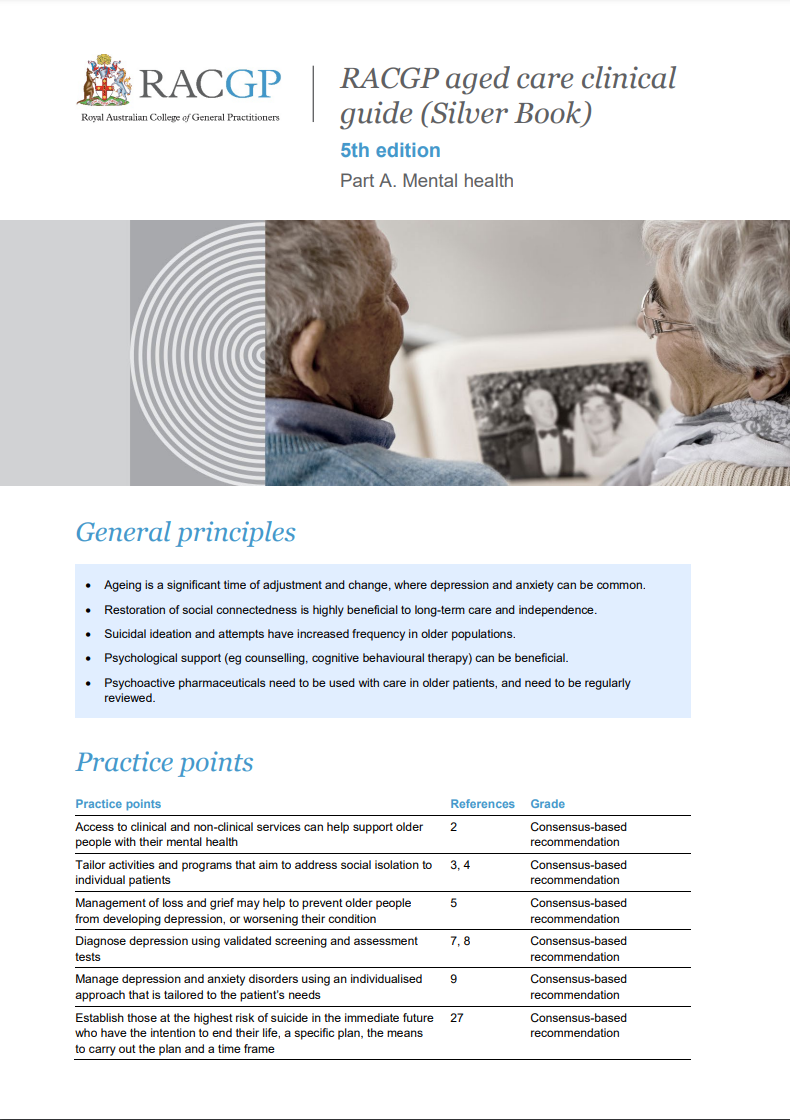
RACGP aged care clinical guide (Silver Book) - Part A - Falls
This guide covers fall prevention and management in older adults, focusing on assessing fall risks, involving multidisciplinary teams (e.g. physiotherapists, occupational therapists), and recommending both non-pharmacological and pharmacological interventions. It includes steps for post-fall assessments, medication review, and strategies for preventing injuries, with a comprehensive approach to improving outcomes in aged care.
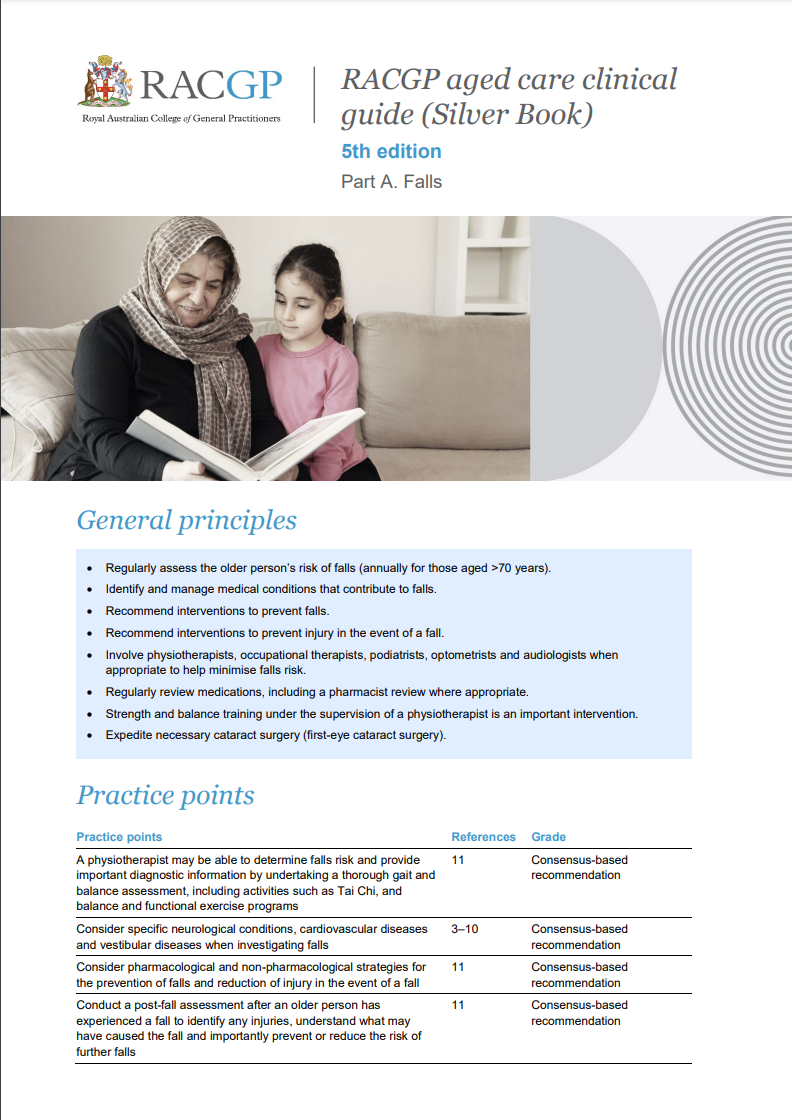
RACGP aged care clinical guide (Silver Book) - Part A - Urinary incontinence
This guide addresses the assessment and management of urinary incontinence in older adults. It outlines a stepwise approach to evaluation, including identifying transient causes, detailed history-taking, medication review, and focused examination. It provides information on management including lifestyle measures, medications, bladder drainage options, and potential referral to specialists based on individual needs and the type of incontinence.
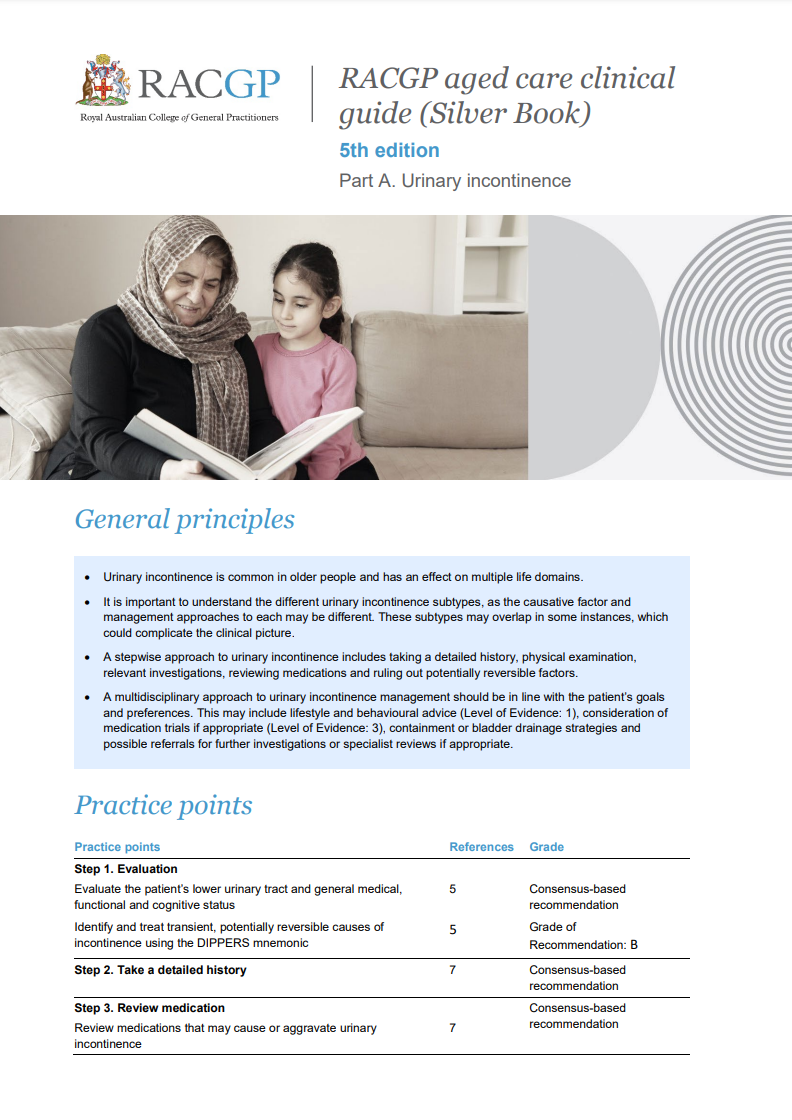
RACGP aged care clinical guide (Silver Book) - Part A - Faecal incontinence
This guide addresses the assessment and management of urinary incontinence in older adults. It outlines a stepwise approach to evaluation, including identifying transient causes, detailed history-taking, medication review, and focused examination. It provides information on management including lifestyle measures, medications, bladder drainage options, and potential referral to specialists based on individual needs and the type of incontinence.
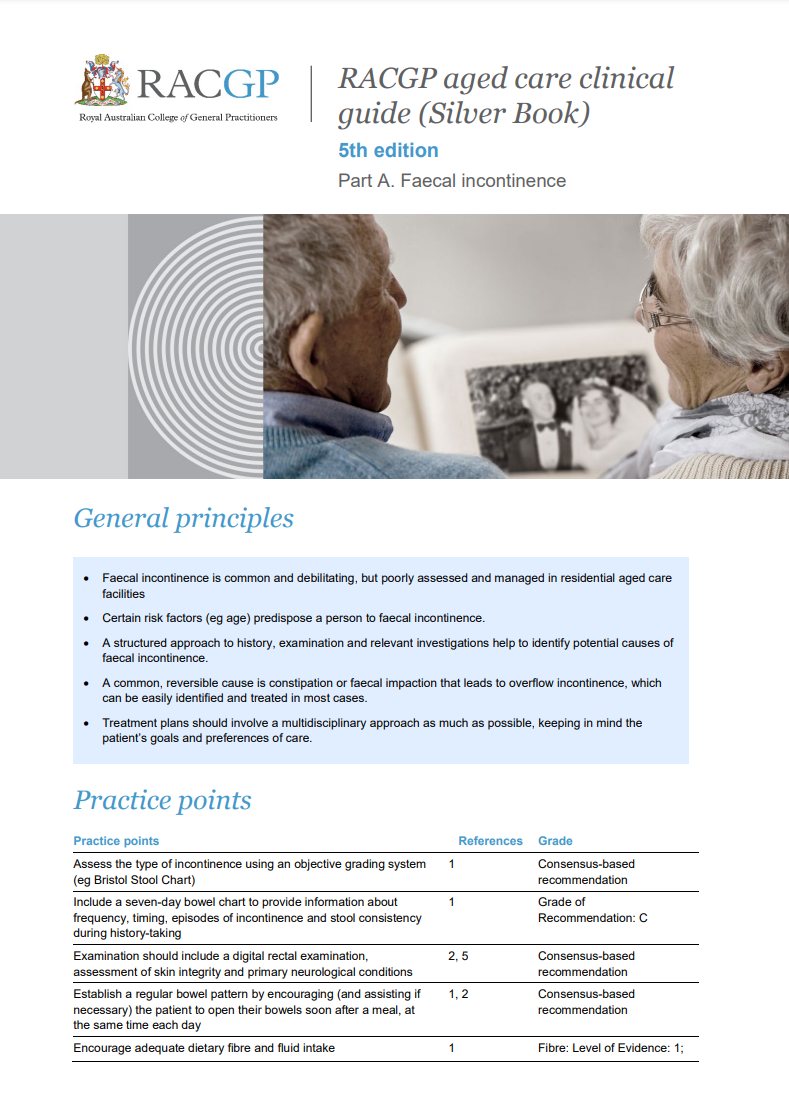
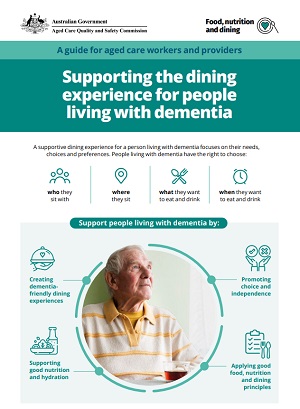
Supporting the dining experience for people living with dementia – Providers and workers guide
This guide is about how to support people living with dementia to maintain good nutrition and enjoy positive dining experiences.
This resource may refer to information that will be updated from 1 November 2025 to align with the new Aged Care Act and Quality Standards.

What is hand hygiene?
This resource provides guidance on proper hand hygiene practices in healthcare settings. It covers key topics such as the correct use of alcohol-based hand rubs, when to wash hands with soap and water, and appropriate glove use. It also addresses common hand care issues and strategies for preventing dermatitis in healthcare workers.
This resource may refer to information that will be updated from 1 November 2025 to align with the new Aged Care Act and Quality Standards.
Communicable Diseases Network Australia (CDNA)
This resource provides an overview of the Communicable Diseases Network Australia (CDNA), which coordinates national surveillance and prevention of communicable diseases. It outlines CDNA’s role in managing outbreaks, developing policy, and strengthening disease control. The document supports collaboration with national and international partners to prevent and manage disease outbreaks effectively.
This resource may refer to information that will be updated from 1 November 2025 to align with the new Aged Care Act and Quality Standards.
COVID-19 advice for health professionals
This resource offers COVID-19 guidance for health professionals, including infection prevention, antiviral treatments, and telehealth services. It advises on managing high-risk patients, accessing personal protective equipment (PPE), and maintaining hygiene standards. It is essential for ensuring safe healthcare delivery, particularly in aged care settings during the pandemic.
This resource may refer to information that will be updated from 1 November 2025 to align with the new Aged Care Act and Quality Standards.
COVID-19 resources for health professionals, including aged care providers, pathology providers and health care managers
This resource offers COVID-19 guidance for health professionals and aged care providers. It includes information on managing outbreaks, infection control, PPE use, and telehealth services. These resources support safe and effective care delivery while ensuring compliance with guidelines during the pandemic in aged care settings.
This resource may refer to information that will be updated from 1 November 2025 to align with the new Aged Care Act and Quality Standards.
COVID-19 vaccine advice and recommendations for 2024
This resource provides the latest COVID-19 vaccine advice for 2024. It covers primary vaccination doses, booster eligibility, general facts about vaccines and the latest data for case numbers and vaccinations. It also includes vaccine information for specific groups of people including Aboriginal and Torres Strait Islander people, people in aged care and people with disability.
This resource may refer to information that will be updated from 1 November 2025 to align with the new Aged Care Act and Quality Standards.
Give flu the boot
This resource promotes the free influenza vaccine for Aboriginal and Torres Strait Islander people aged 6 months and older. It explains the benefits of flu vaccination, including reducing the risk of severe illness and hospitalisation, and provides guidance on when and where to receive the vaccine to protect communities from influenza.
This resource may refer to information that will be updated from 1 November 2025 to align with the new Aged Care Act and Quality Standards.
Government support for providers and workers
This resource outlines government support for aged care providers managing COVID-19 outbreaks. It covers information on infection prevention measures, vaccination assistance, and mental health resources to help providers maintain care quality and safety during outbreaks.
This resource may refer to information that will be updated from 1 November 2025 to align with the new Aged Care Act and Quality Standards.