The Quality Standards Resource Centre helps extend understanding of the strengthened Aged Care Quality Standards, which took effect from 1 November 2025. You can search for resources by using keywords, or filtering by standard, outcome and audience. Before using the Resource Centre, please read the terms of use.
Food, Nutrition and Dining Hotline - Stakeholder Communications Kit
This resource provides a communications kit to help promote the Food, Nutrition, and Dining Hotline. It includes social media posts, fact sheets, and videos to support providers in raising awareness of the hotline, which offers advice, information, and assistance on food, nutrition, and dining-related matters in aged care.
This resource may refer to information that will be updated from 1 November 2025 to align with the new Aged Care Act and Quality Standards.
Food, nutrition & dining - information for providers
This resource provides information and support for aged care providers to improve food, nutrition, and dining services. It includes guidance on meeting nutritional standards, promoting resident choice, and ensuring a positive dining experience. The resource also offers tools for monitoring food quality, addressing dietary needs, and enhancing overall meal service delivery. This resource may refer to information that will be updated from 1 July 2025 to align with the new Aged Care Act and Quality Standards.
Food, nutrition & dining - information for workers
This resource provides guidance for aged care workers on improving food, nutrition, and dining experiences for residents. It covers meal preparation, resident engagement in food choices, safe food handling, and the importance of nutrition in promoting wellbeing. The resource offers practical tips for ensuring meals meet individual dietary needs and preferences. This resource may refer to information that will be updated from 1 November 2025 to align with the new Aged Care Act and Quality Standards.
Food, nutrition and dining: a reflection on practice
This training PowerPoint is a presentation that trainers/managers can download, customise and use to promote discussion and educate their staff to support and improve the food, nutrition and dining experience of consumers in their care.
The resource is designed to support reflective discussions about what ‘best practice’ looks like and a reflection on how it applies in practice. This resource may refer to information that will be updated from 1 November 2025 to align with the new Aged Care Act and Quality Standards.

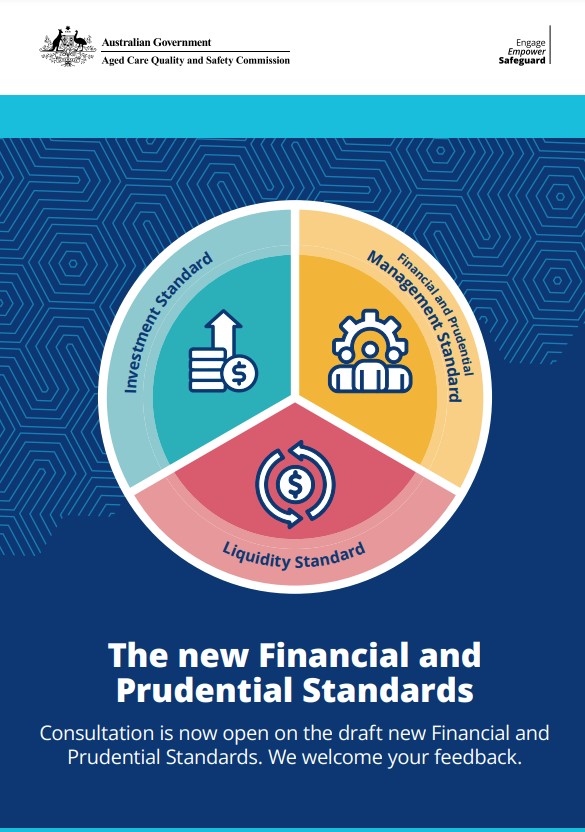
The new Financial and Prudential Standards
The new Financial and Prudential Standards will be introduced with the commencement of the new Aged Care Act. The new Standards set out the minimum requirements for good financial and prudential management of registered aged care providers. Registered providers must comply with the Financial and Prudential Standards that apply to them as a condition of their registration.
 The new Financial and Prudential Standards (PDF 1.59 MB)
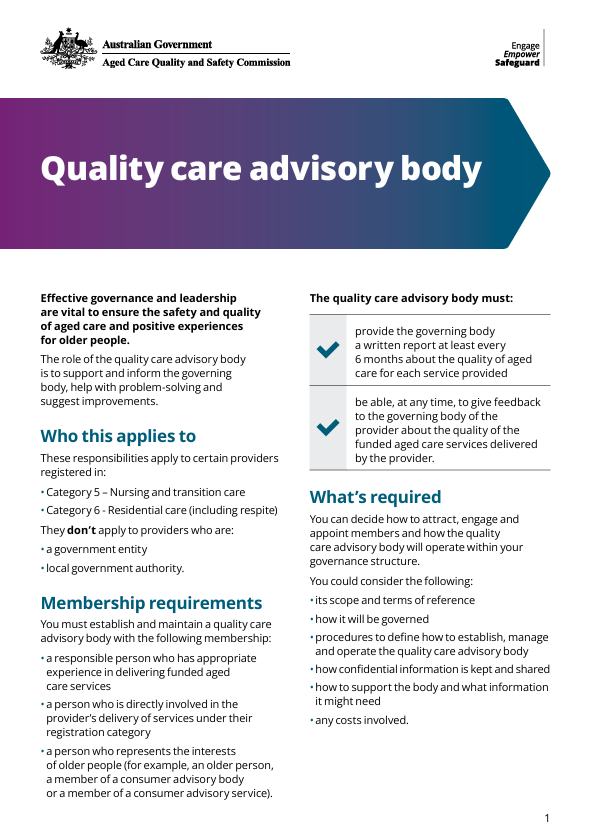
Quality care advisory body fact sheet
Explains the quality care advisory body obligations, including who must be on the advisory body and what actions, reports and feedback are required.
Quality care advisory body fact sheet (PDF 196.24 KB)
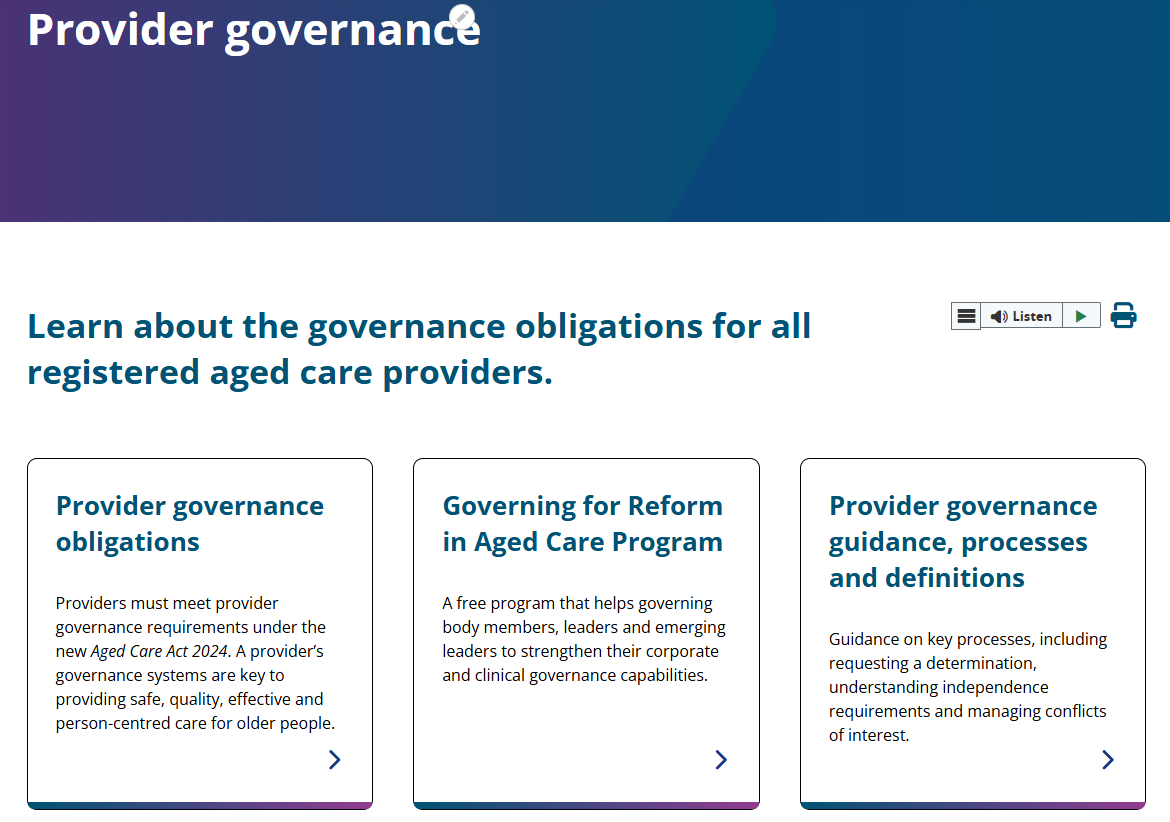
Provider governance
This page outlines governance requirements for registered aged care providers. It includes governance obligations, information about the Governing for Reform in Aged Care Program and guidance on key processes and definitions.
This resource may refer to information that will be updated from 1 November 2025 to align with the new Aged Care Act and Quality Standards.
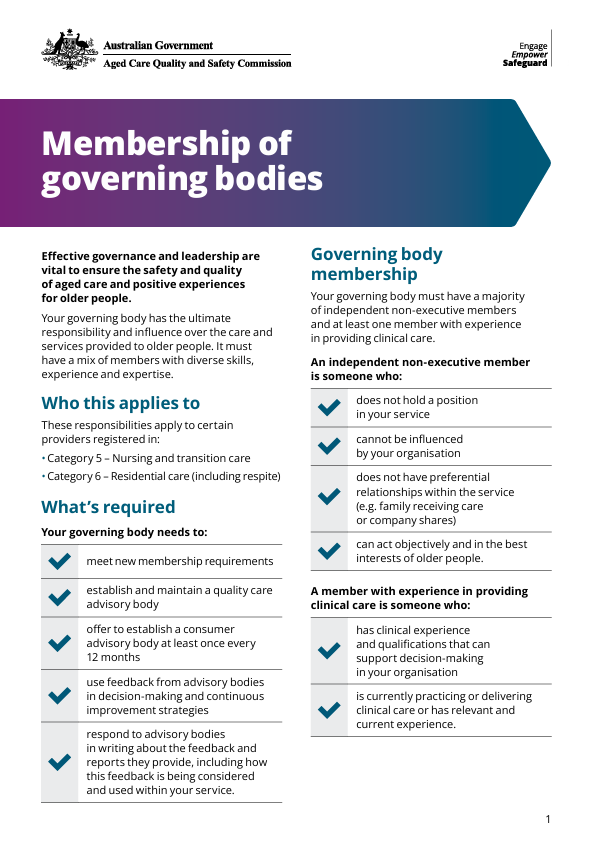
Membership of governing bodies fact sheet
Explains the governing body membership requirements, including what ‘independent non-executive’ and ‘clinical care experience’ mean, and how to apply for a determination if you can’t meet one or both requirements.
Membership of governing bodies fact sheet (PDF 214.43 KB)
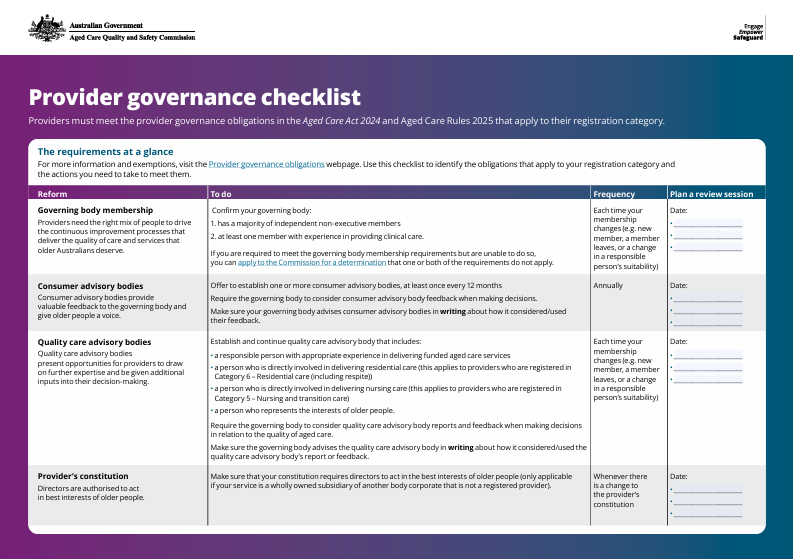
Provider governance checklist
Provides a way for you to identify which governance obligations apply to your registration category, and to plan and record the actions and review dates you need to meet them.
Provider governance checklist (PDF 370.5 KB)
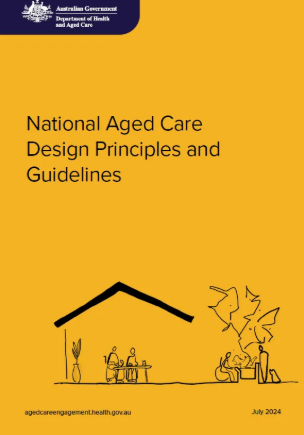
National Aged Care Design Principles and Guidelines
This guide provides guidance on different systems and tools that can be used in residential aged care and community settings. It includes topics such as clinical handover and continuity of care (medication management), information technology systems, My Aged Care, quality improvement, and more. This resource complements Part A: Common clinical conditions in aged care and Part B: General approaches to aged care of the RACGP aged care clinical guide (Silver Book).
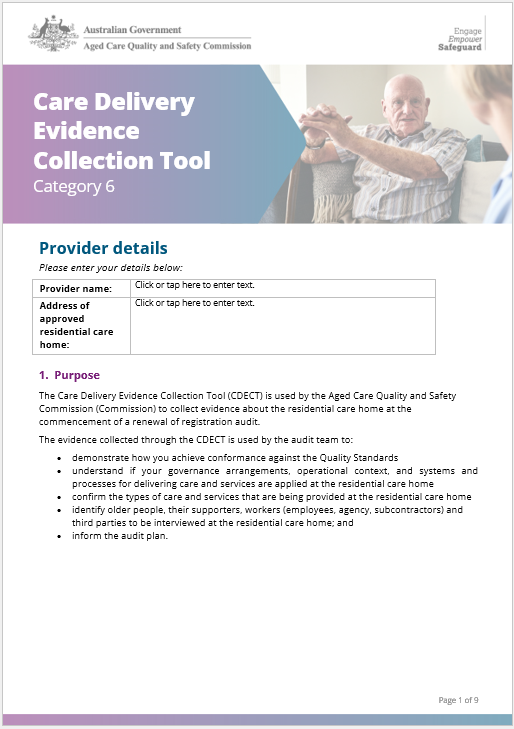
Care Delivery Evidence Collection Tool (CDECT) – Residential (Category 6)
Providers must complete this tool as part of a renewal audit in registration category 6.
The CDECT – Residential must be completed once for each category 6 service.
We use this tool to collect evidence about the residential care home.

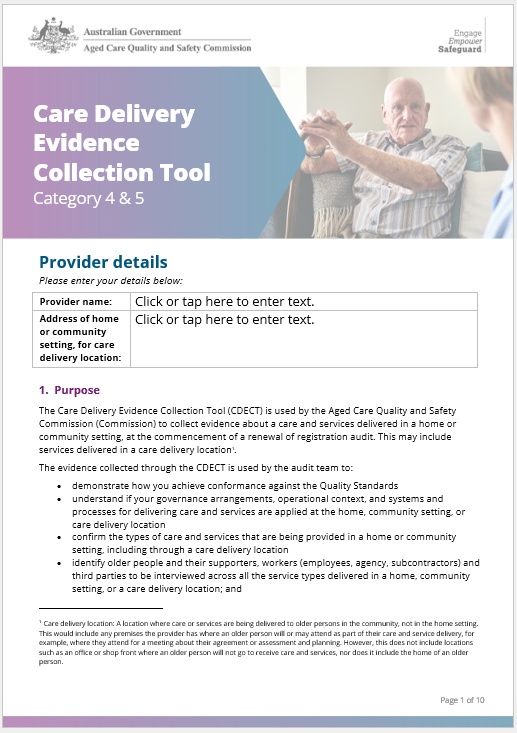
Care Delivery Evidence Collection Tool (CDECT) – Care delivery location (Category 4 & 5)
Providers must complete this tool as part of a renewal audit in registration categories 4 and 5.
We will identify a targeted sample of care delivery locations (Category 4 & 5). You will be notified of this sample and the CDECT – Care delivery location must only be completed for these targeted sample locations.
We use this tool to collect evidence about care and services delivered in a home or community setting.
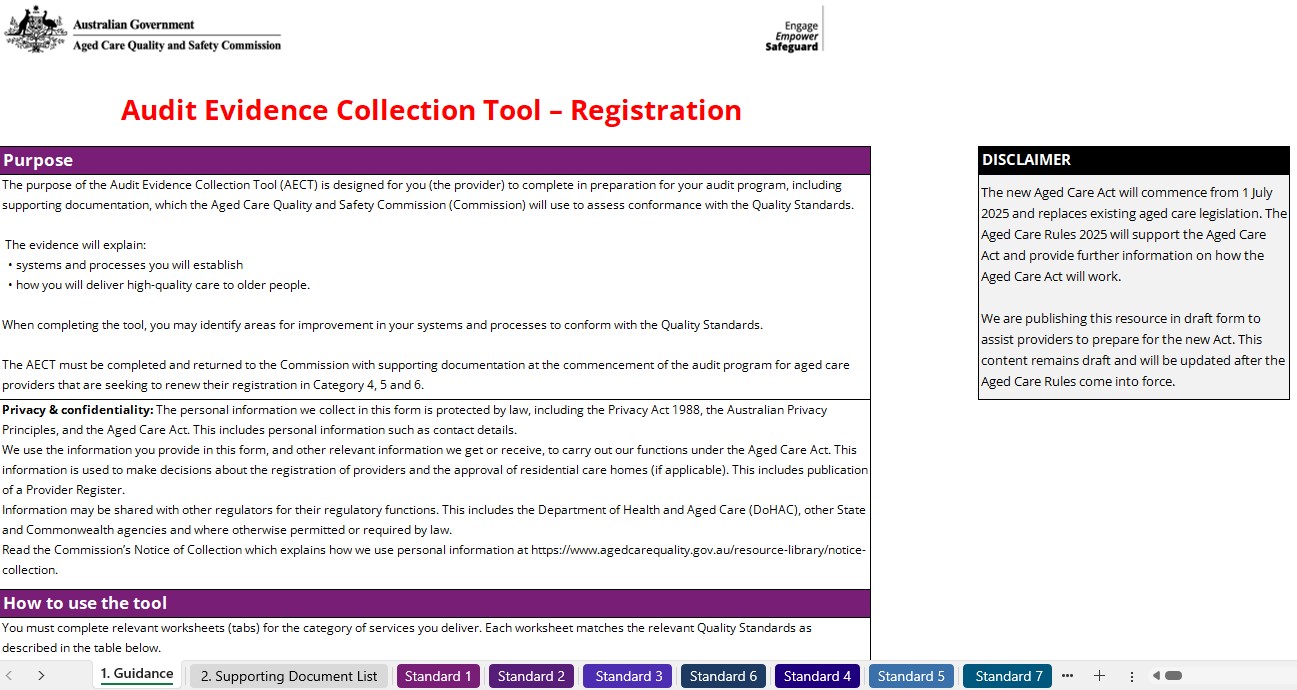
Audit Evidence Collection Tool (AECT) – Registration
Organisations or persons must complete the Audit Evidence Collection Tool (AECT) – Registration as part of the initial registration audit. This is compulsory for organisations or persons applying for registration in categories 4, 5 and 6 from 1 November 2025.
The registration audit helps us to understand if the organisation or person can conform with the related strengthened Aged Care Quality Standards.
We use this tool to collect evidence about:
 Audit Evidence Collection Tool (AECT) – Registration (XLSX 444.19 KB)
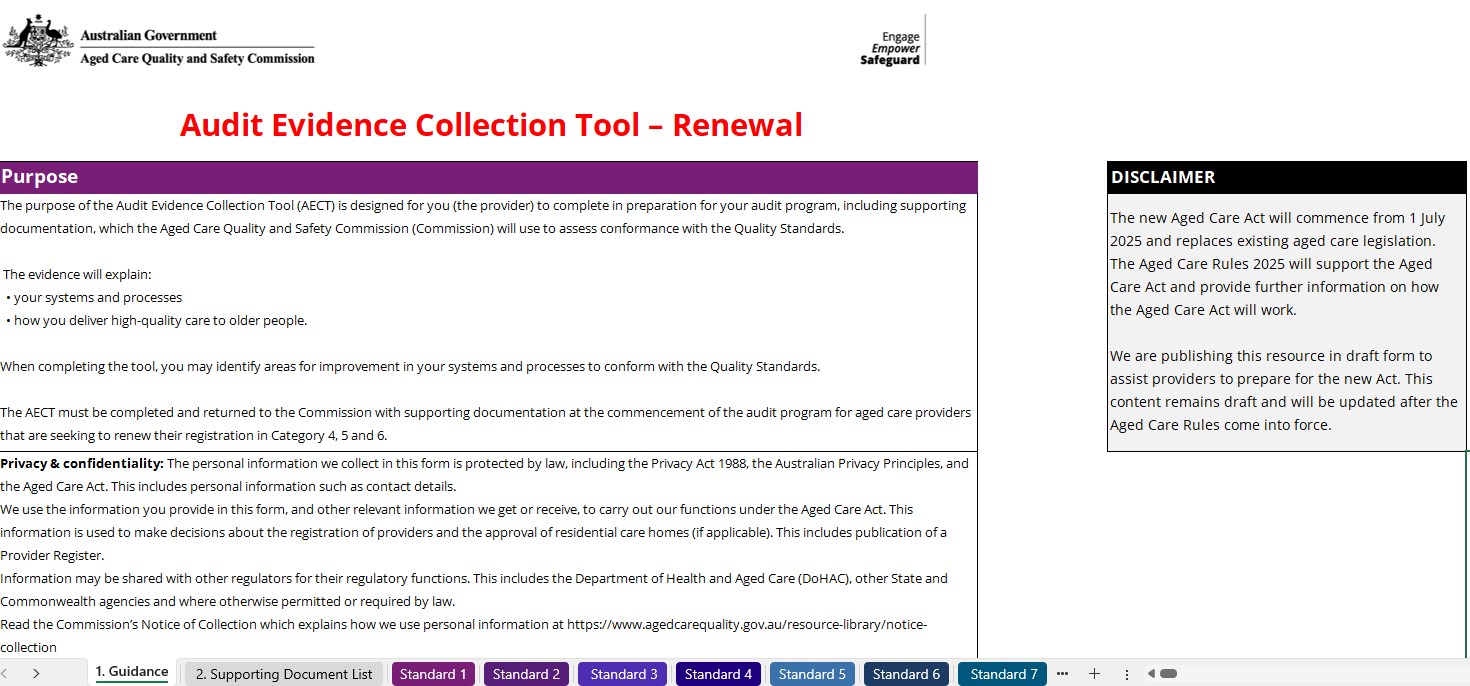
Audit Evidence Collection Tool (AECT) – Renewal
Providers must complete the Audit Evidence Collection Tool (AECT) – Renewal as part of a renewal audit in registration categories 4, 5 and 6. This is compulsory for providers from 1 November 2025.
Providers only need to complete this tool once as part of the audit program.
The renewal audit helps us to understand if the provider can conform with the related strengthened Aged Care Quality Standards.
We use this tool to collect evidence about:
- your systems and processes
- how you deliver safe and quality care to older people.
Audit Evidence Collection Tool (AECT) – Renewal (XLSX 405.09 KB)
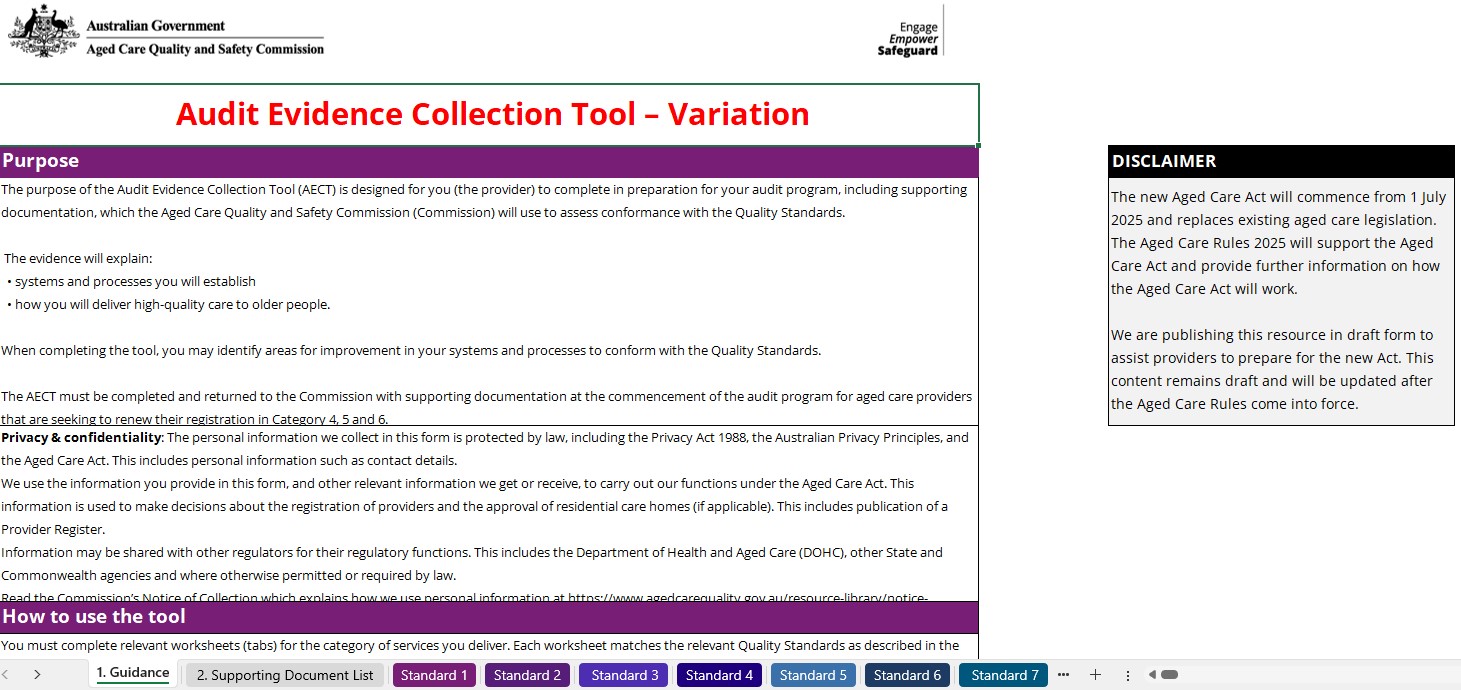
Audit Evidence Collection Tool (AECT) – Variation
Providers must complete the Audit Evidence Collection Tool (AECT) – Variation as part of a variation audit, where they are asking to add categories 4, 5 or 6 to their registration. This is compulsory for providers from 1 November 2025.
The variation audit helps us to understand if the provider can conform with the related strengthened Aged Care Quality Standards.
We use this tool to collect evidence about:
- the systems and processes you will establish
- how you will deliver safe and quality care to older people.
Audit Evidence Collection Tool (AECT) – Variation (XLSX 438.55 KB)
Renewal of registration audit guide
This guide helps you prepare for and take part in a renewal of registration audit.
It describes:
- the purpose of audits and how they inform (help us make) registration decisions
- the 3 stages of the audit process (initiation, delivery, reporting)
- what to expect and what to do at each stage
- the types of evidence we consider during audits
- how we define our audit ratings
- the audit tools we use
- other relevant resources.
Renewal of registration audit guide (PDF 471.26 KB)
Variation of registration audit
This guide helps you prepare for and take part in a variation of registration audit.
It describes:
- the purpose of audits and how they inform (help us make) registration decisions
- the 3 stages of the audit process (initiation, delivery, reporting)
- what to expect and what to do at each stage
- the types of evidence we consider during audits
- how we define our audit ratings
- the audit tools we use
- other relevant resources.
Variation of registration audit (PDF 434.06 KB)

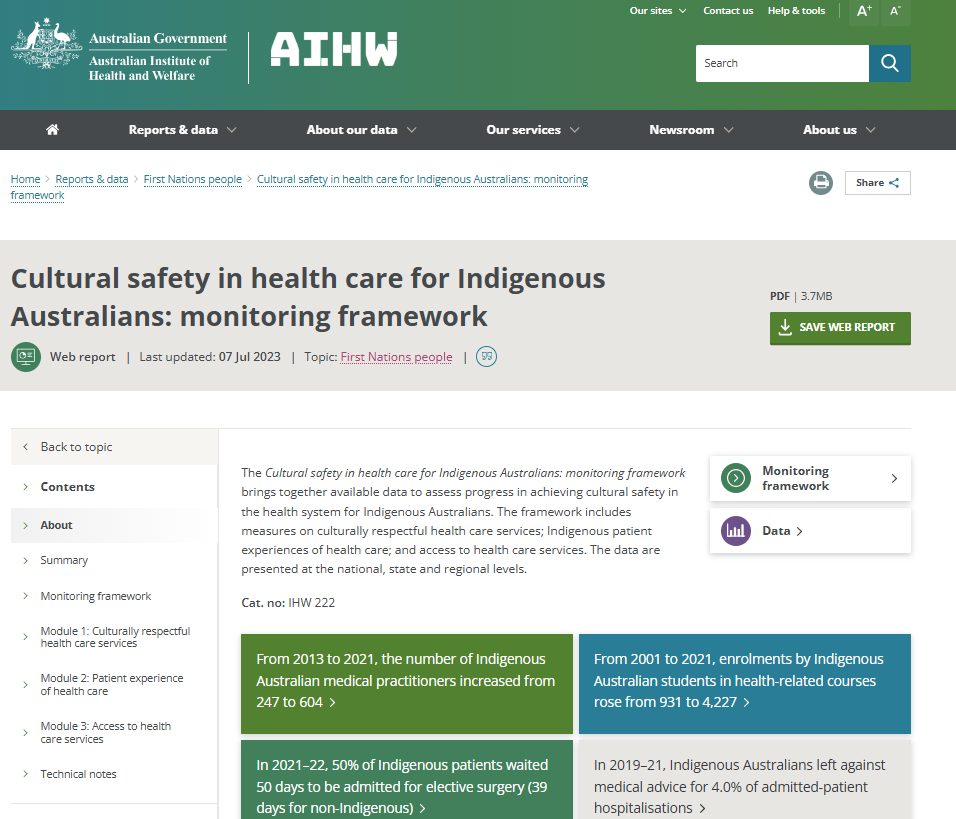
Cultural safety in health care for Indigenous Australians: monitoring framework
This resource uses available data to measure progress in achieving cultural safety in the health system for Aboriginal and Torres Strait Islander people. The monitoring framework covers 3 modules: Module 1 – Culturally respectful health care services; Module 2 – Patient experience of health care; and Module 3 – Access to health care services.
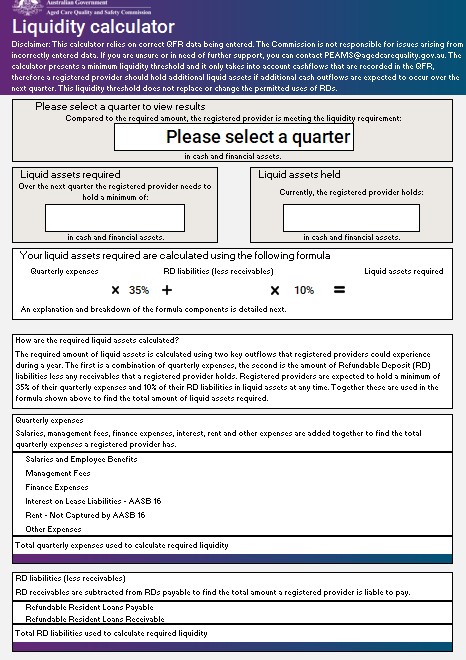
Liquidity calculator for registered providers in the aged care sector
This calculator informs registered providers of the minimum level of liquid assets they are required to hold calculated based on Quarterly Financial Report (QFR) financial statements.
Liquidity calculator instructions (PDF 1.26 MB)
National Aged Care Mandatory Quality Indicator Program (QI Program)
This resource provides information on the National Aged Care Mandatory Quality Indicator Program (QI Program). The program gathers data on 11 quality indicators from residential aged care services to enhance care standards and outcomes for residents. It includes resources, quick guides, consultation papers, and surveys for improving quality indicators in both residential and in-home aged care services.
This resource may refer to information that will be updated from 1 November 2025 to align with the new Aged Care Act and Quality Standards.