The Quality Standards Resource Centre helps extend understanding of the strengthened Aged Care Quality Standards, which took effect from 1 November 2025. You can search for resources by using keywords, or filtering by standard, outcome and audience. Before using the Resource Centre, please read the terms of use.
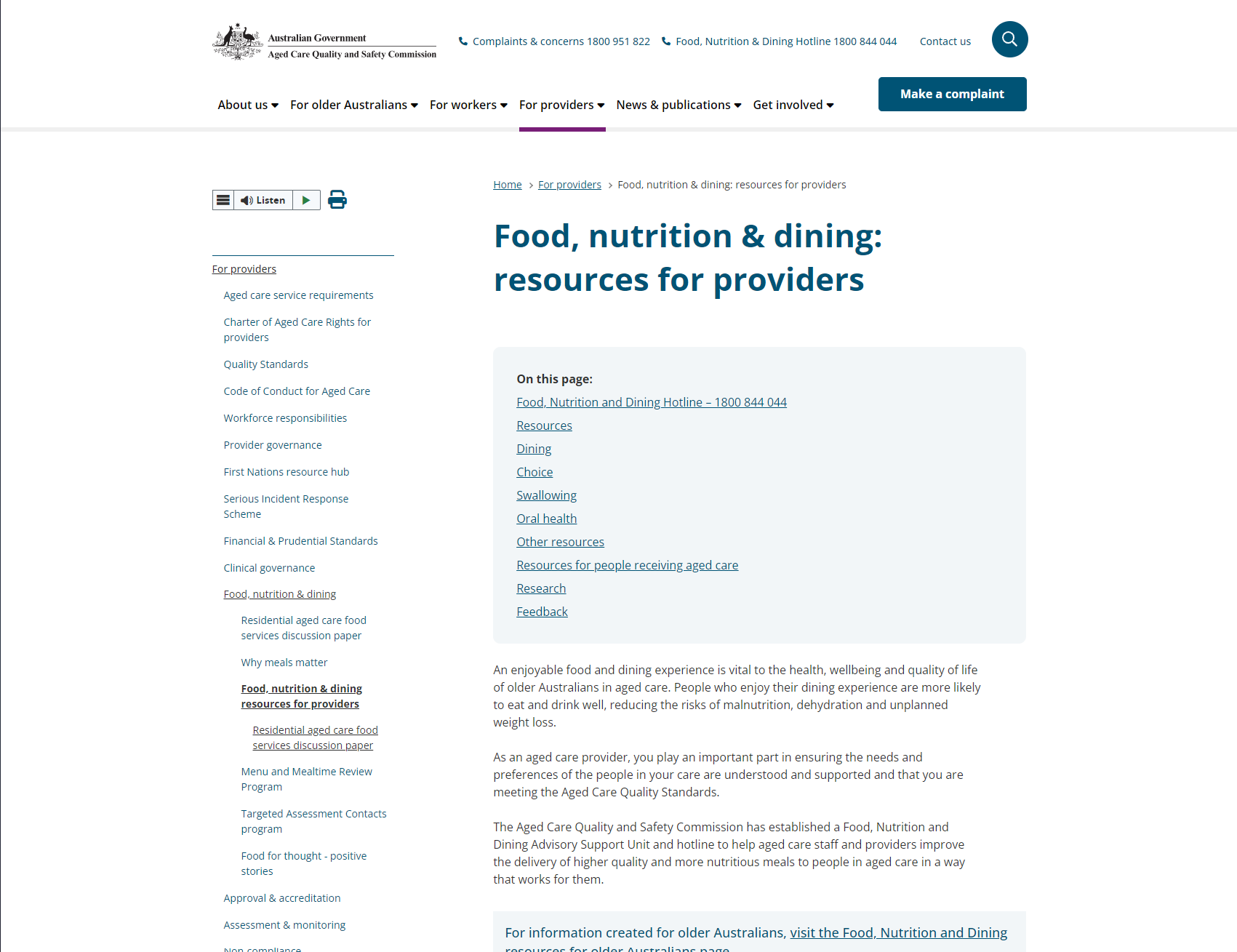
Food, nutrition & dining: resources for providers
This resource provides tools and guidance for aged care providers to ensure quality food, nutrition, and dining experiences. It includes hotlines, resources for dining, choice, swallowing, and oral health, as well as webinars, research findings, and practical tips to support older adults' wellbeing and meet care standards.
This resource may refer to information that will be updated from 1 November 2025 to align with the new Aged Care Act and Quality Standards.
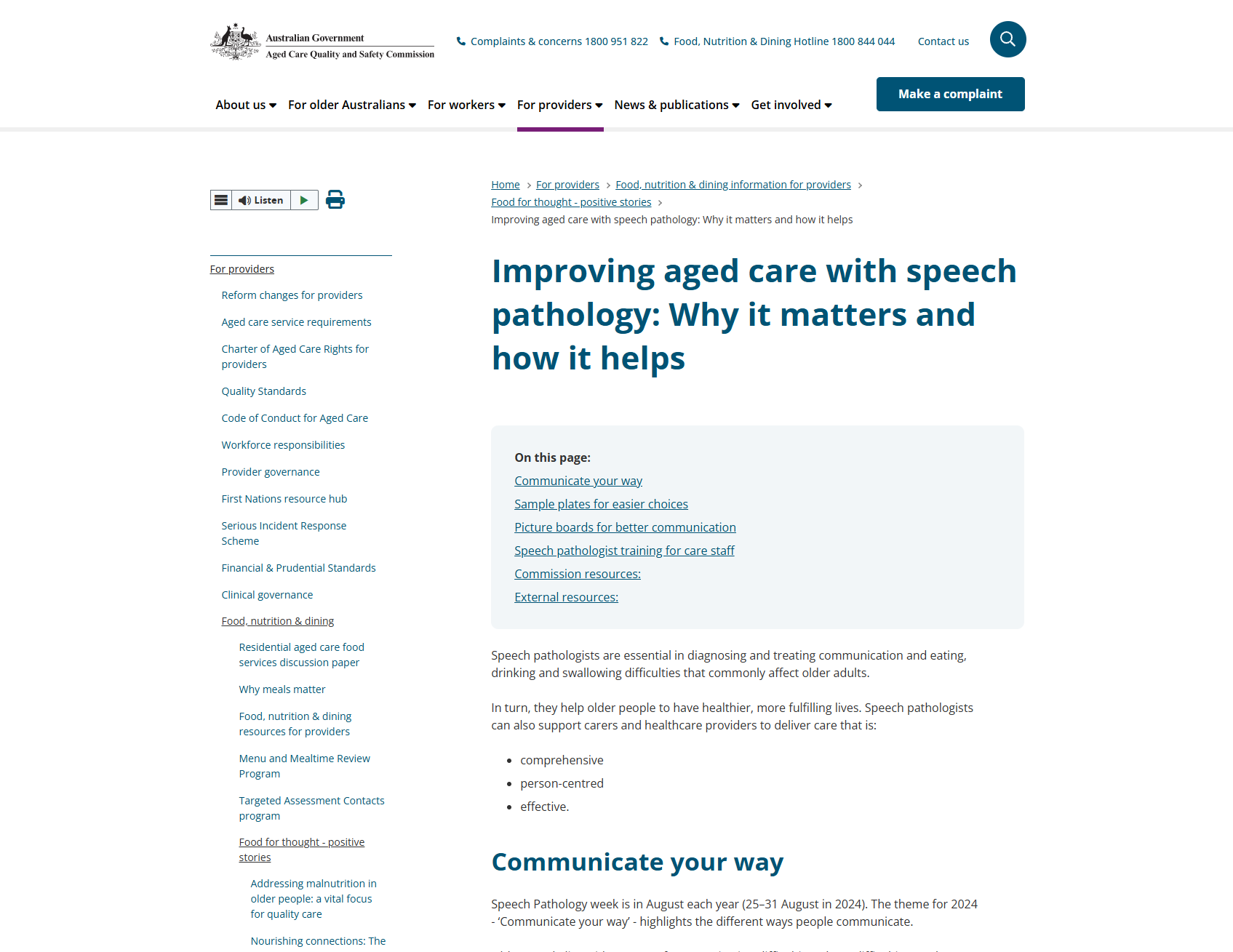
Improving aged care with speech pathology: Why it matters and how it helps
This page highlights the role of speech pathologists in supporting older people with communication, eating, drinking, and swallowing difficulties. It provides resources for aged care providers on how to improve care quality through effective communication tools and tailored strategies. This resource includes practical examples, like sample plates and picture boards, for enhancing dining experiences and supporting individual choice.
This resource may refer to information that will be updated from 1 November 2025 to align with the new Aged Care Act and Quality Standards.
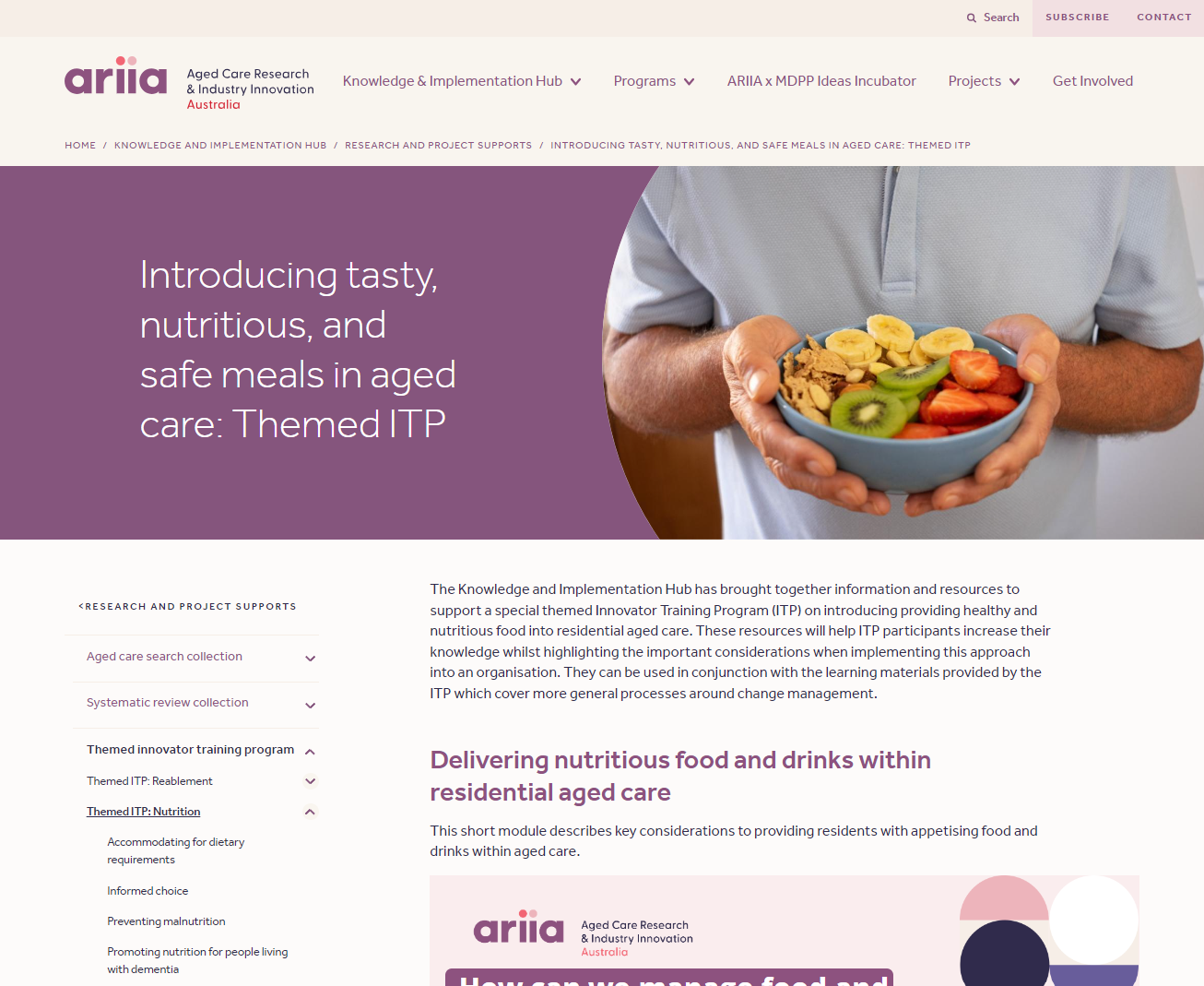
Introducing tasty, nutritious, and safe meals in aged care - Themed Innovator Training Program
This resource provides guidance on implementing safe, nutritious, and appealing meals in aged care. It emphasises informed choice, accommodating dietary needs, and preventing malnutrition. It highlights the importance of culturally appropriate meal planning, supporting residents' autonomy, and ensuring that nutritious food enhances social interaction, mental health, and overall quality of life.
This resource may refer to information that will be updated from 1 November 2025 to align with the new Aged Care Act and Quality Standards.
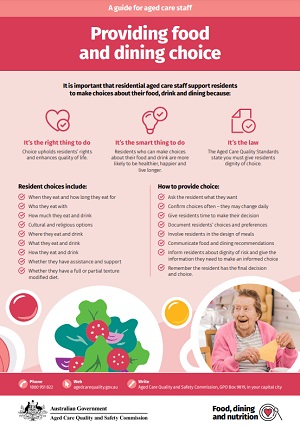
Providing food and dining choice - aged care staff poster
This guide supports aged care staff in providing food and dining choices for residents. It outlines the importance of upholding residents' rights to choose, enhancing their health and quality of life. The guide recommends confirming preferences regularly, involving residents in meal planning, and respecting individual choices regarding when, where, and what they eat or drink. This resource may refer to information that will be updated from 1 November 2025 to align with the new Aged Care Act and Quality Standards.
 Providing food and dining choice - aged care staff poster (PDF 445.57 KB)
National framework for advance care planning documents
This resource provides a nationally consistent framework for advance care planning documents in Australia. It outlines principles, ethical considerations, and best practices for creating, implementing, and accessing advance care plans, including Advance Care Directives. It aims to guide policymakers, administrators, and healthcare providers in recognising people’s values, preferences, and rights regarding future care.
This resource may refer to information that will be updated from 1 November 2025 to align with the new Aged Care Act and Quality Standards.
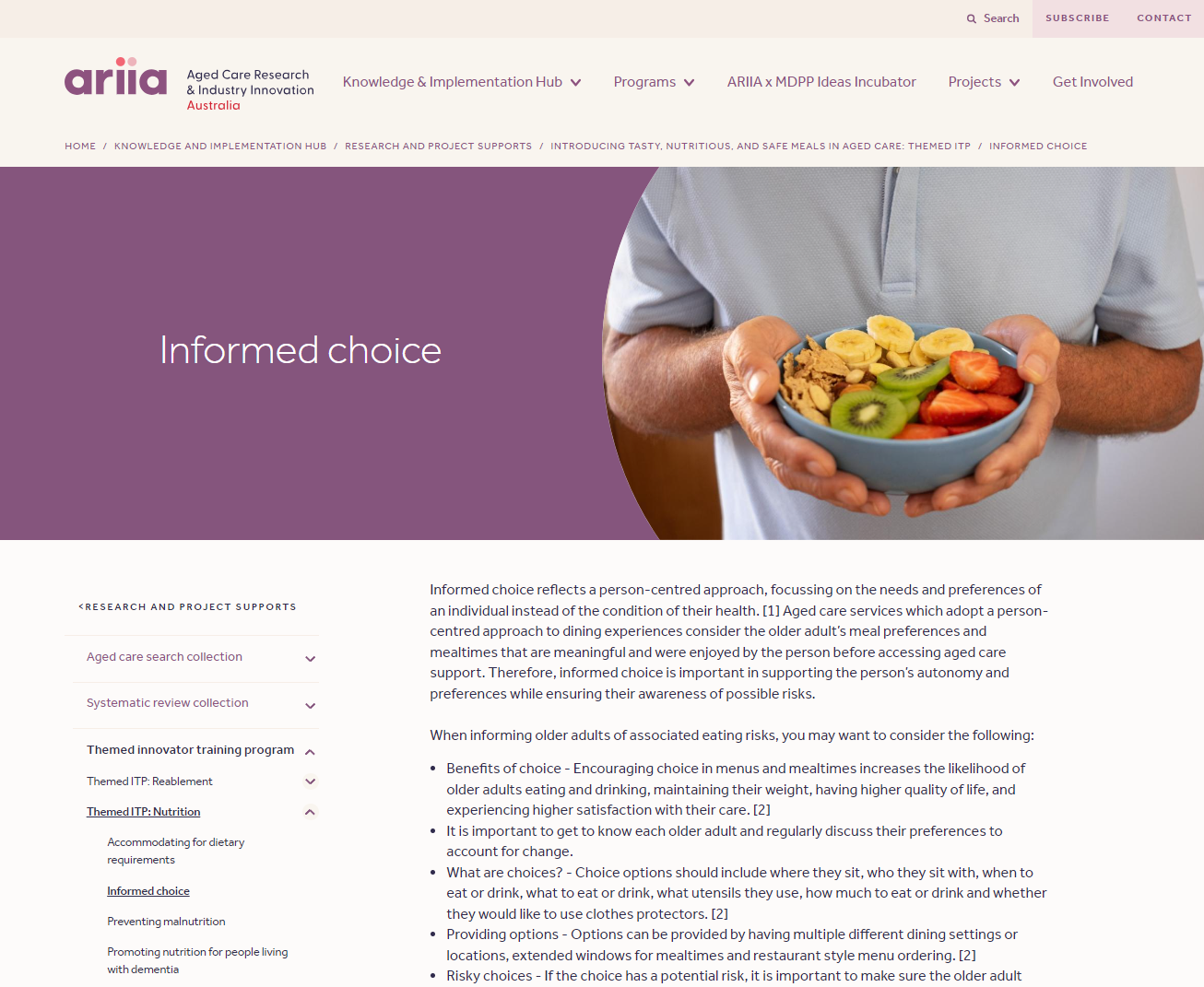
Nutrition - Informed choice
This resource discusses the importance of informed choice in aged care dining, emphasising a person-centred approach. It highlights the benefits of offering choice in meals and mealtimes, outlines how to manage decisions that involve risk, and provides tools for aged care workers to support resident autonomy while ensuring safety and satisfaction.
This resource may refer to information that will be updated from 1 November 2025 to align with the new Aged Care Act and Quality Standards.
Healthy Ageing
This resource is a collection of resources on the Tasmanian Government Department of Health webpage about healthy ageing. It includes resources about malnutrition screening, being physically active, and eating well.
This resource was developed by a state/territory government or organisation and therefore its applicability and usefulness may be limited.
RACGP aged care clinical guide (Silver Book) - Part B - Advance care planning
This guide covers advance care planning for older adults, detailing the process of discussing patients' values, appointing a decision-maker, and documenting preferences for future care. It outlines the general practitioner’s role, steps for initiating discussions, assessing decision-making capacity, storing care plans, and ensuring patients' wishes are respected during their illness trajectory.
Resources for Aboriginal and Torres Strait Islander Mental Health and Wellbeing
This resource provides a variety of documents and resources to support the mental health and wellbeing of Aboriginal and Torres Strait Islander peoples. It covers topics including leadership in mental health, culturally safe practices, social and emotional wellbeing, suicide prevention, and strategic policy frameworks, offering tools for health professionals and communities.
RACGP Guidelines for preventive activities in general practice - Miscellaneous
This resource provides guidelines for preventive activities in general practice, covering frailty, hearing, sleep disorders, oral health, urinary incontinence, and vision.
Half the story: A guide to meaningful consultation with people living with dementia, families and carers
This resource is a guide for meaningful consultation with people living with dementia, their families, and carers. It covers planning, ethical considerations, communication methods, and ways to improve accessibility. The guide offers strategies to ensure the voices of those living with dementia are respected, valued, and effectively integrated into decision-making processes.
Eat for health: Australian dietary guidelines
This resource provides up-to-date advice on the types and amounts of food needed for health and wellbeing, based on the Australian dietary guidelines. It includes recommendations for balanced eating patterns, addressing chronic disease risk, and offers resources such as brochures, posters, and guides for different population groups, including children and Aboriginal and Torres Strait Islander peoples.
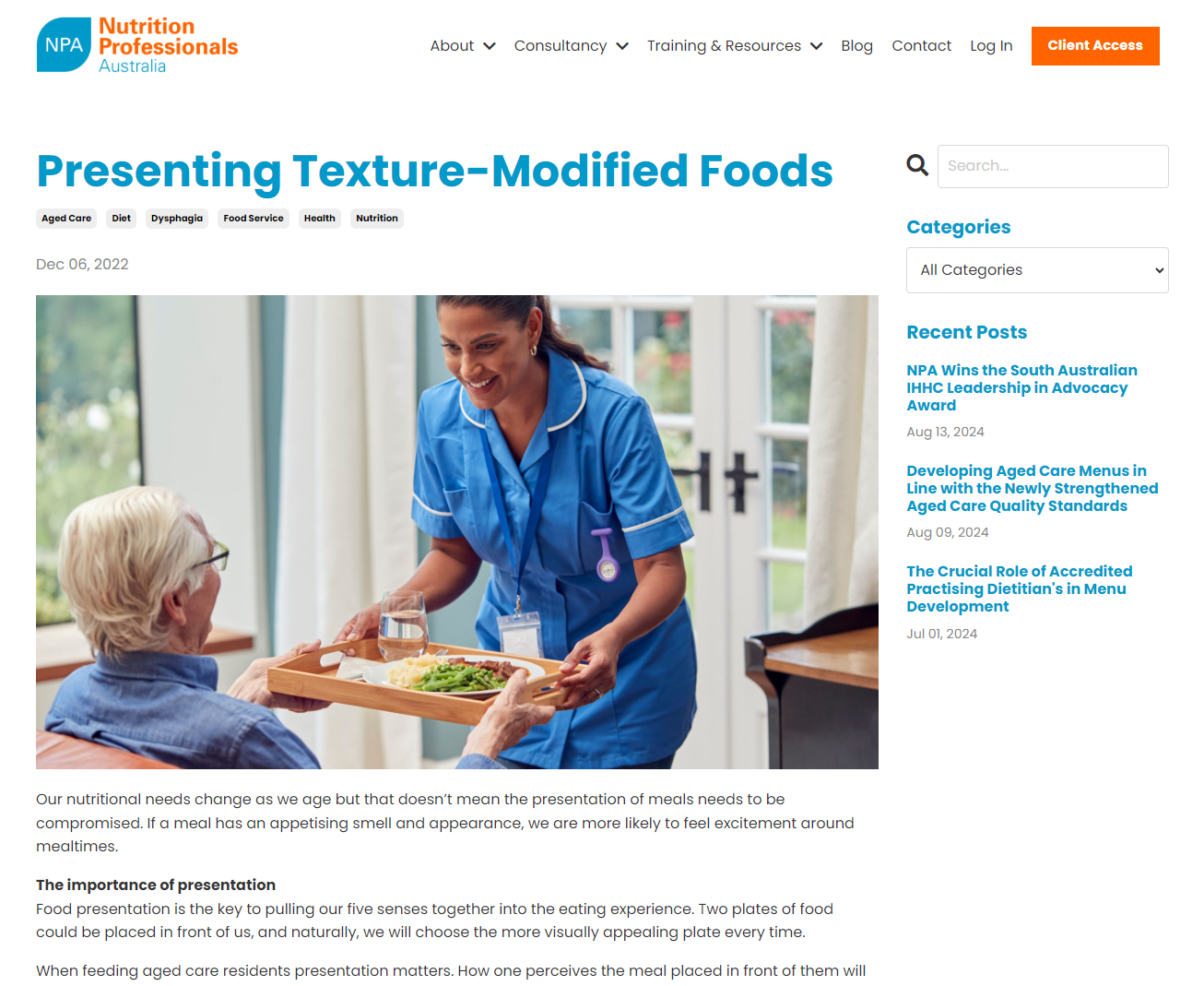
Presenting Texture-Modified Foods
This resource provides strategies for presenting texture-modified foods to aged care residents in an appealing way. It emphasises the importance of food presentation in enhancing meal satisfaction and nutritional intake. Techniques include using contrasting colours, layering foods, adding height, and shaping dishes to improve recognition and visual appeal, particularly for those on texture-modified diets.
Draft National Consumer Engagement Strategy for Health and Wellbeing
This resource presents the Draft National Consumer Engagement Strategy for Health and Wellbeing, which aims to foster partnerships between health policymakers and communities. It is designed to involve people and communities in the development and implementation of preventive health policies. The strategy supports policymakers and program developers in engaging effectively with consumers to achieve improved health outcomes across Australia.
Consumer and carer engagement: A practical guide
This resource provides a guide for engaging consumers and carers in mental health services. It outlines steps for involving people in decision-making, service design, and evaluation. The guide emphasises co-design, leadership, and dedicated resources to create a person-centred approach that improves care and service outcomes.
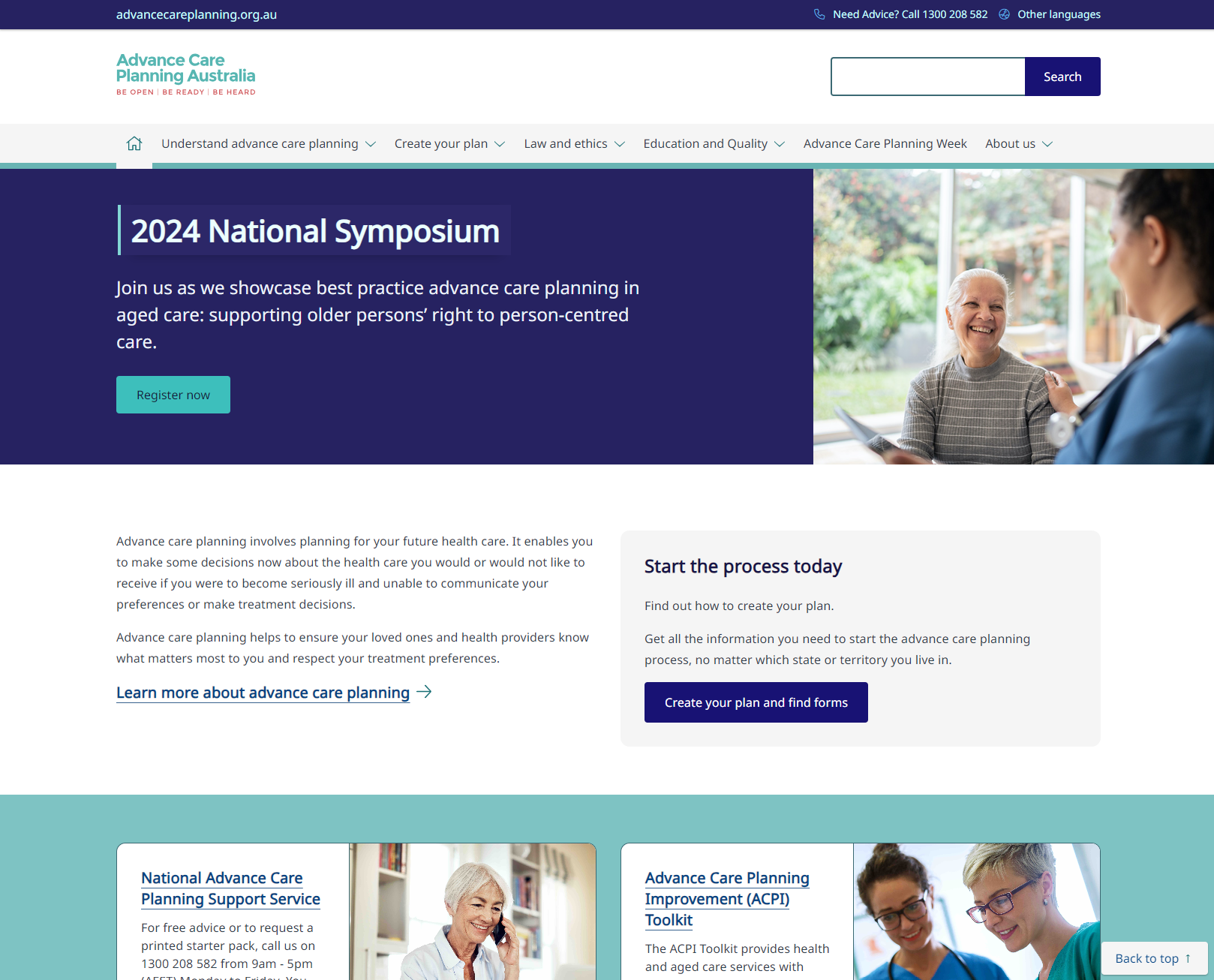
Advance Care Planning Australia
This resource provides information on advance care planning, which enables people to make decisions about their future health care in case they are unable to communicate their preferences. It helps ensure that healthcare providers and loved ones understand and respect their treatment choices. The resource includes tools, forms, and advice for creating an advance care plan.
Maggie Beer Foundation - Online Training Modules
This resource offers free online training modules designed to improve food experiences for older people in aged care. The modules cover topics such as creating appetising meals, food presentation, and supporting nutrition and hydration. The program is intended for cooks, chefs, and aged care providers to enhance the quality of food service in care settings.
Implementing the Comprehensive Care Standard - Clinical assessment and diagnosis
This document provides guidance on implementing the clinical assessment and diagnosis element of the Comprehensive Care Standard (National Safety and Quality Health Service Standards). It helps clinicians identify a person’s conditions or needs through examination and investigation. The resource supports safe, patient-centred care, improving diagnostic accuracy and promoting teamwork in healthcare settings, including aged care.
This resource may refer to information that will be updated from 1 November 2025 to align with the new Aged Care Act and Quality Standards.
NSQMHCMO Standards Guide for Service Providers
This guide helps service providers implement the National Safety and Quality Mental Health Standards for Community Managed Organisations. It covers governance, care models, and quality systems. While focused on mental health services, elements like governance and quality may be relevant to aged care. This resource may refer to information that will be updated from 1 November 2025 to align with the new Aged Care Act and Quality Standards.
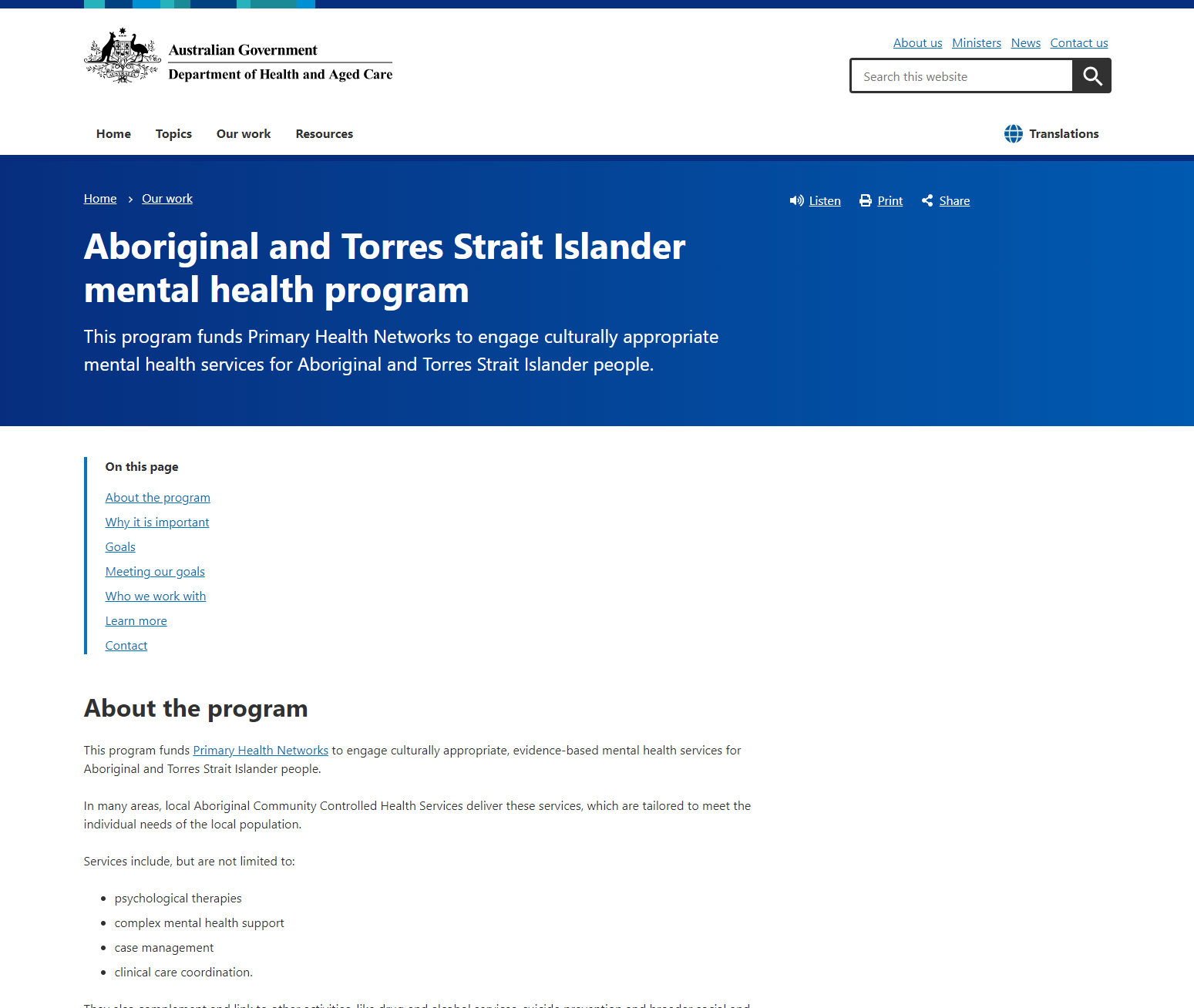
Aboriginal and Torres Strait Islander mental health program
This resource provides information on a mental health program for Aboriginal and Torres Strait Islander people. It includes funding for culturally appropriate mental health services, offering psychological therapies, complex care, and clinical coordination. The program integrates with other services such as drug and alcohol support and suicide prevention initiatives.
This resource may refer to information that will be updated from 1 July 2025 to align with the new Aged Care Act and Quality Standards.