The Quality Standards Resource Centre helps extend understanding of the strengthened Aged Care Quality Standards, which took effect from 1 November 2025. You can search for resources by using keywords, or filtering by standard, outcome and audience. Before using the Resource Centre, please read the terms of use.
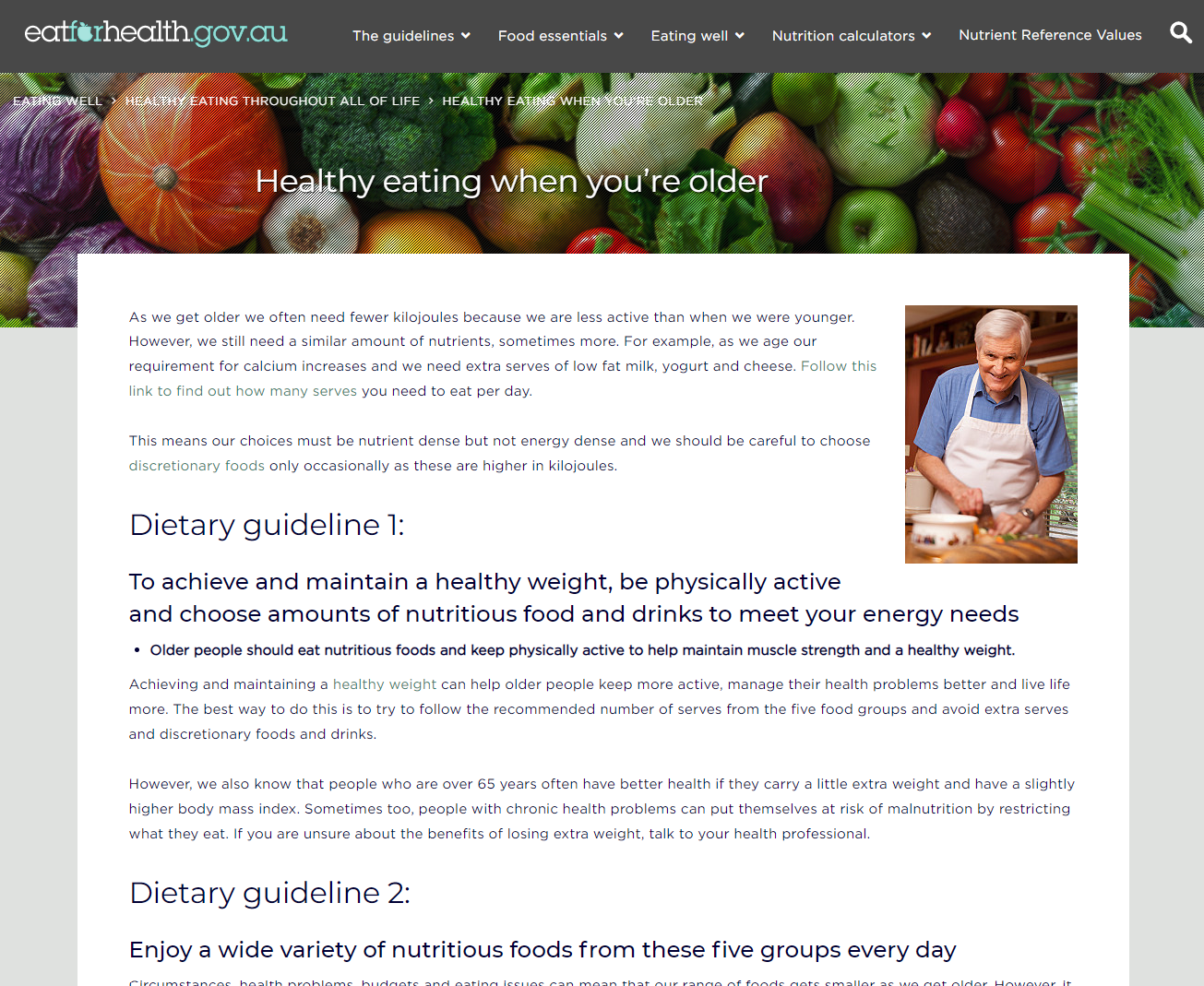
Eat for health: Healthy eating when you're older
This resource provides guidance on healthy eating for older adults, emphasising nutrient-dense foods while limiting energy-dense options. It highlights the importance of consuming a variety of foods from the 5 food groups, maintaining a healthy weight, staying physically active, and managing dietary needs for chronic conditions. It also includes tips for food safety and preventing malnutrition.
Food, nutrition and dining: a reflection on practice
This training PowerPoint is a presentation that trainers/managers can download, customise and use to promote discussion and educate their staff to support and improve the food, nutrition and dining experience of consumers in their care.
The resource is designed to support reflective discussions about what ‘best practice’ looks like and a reflection on how it applies in practice. This resource may refer to information that will be updated from 1 November 2025 to align with the new Aged Care Act and Quality Standards.
National Aged Care Design Principles and Guidelines
This guide provides guidance on different systems and tools that can be used in residential aged care and community settings. It includes topics such as clinical handover and continuity of care (medication management), information technology systems, My Aged Care, quality improvement, and more. This resource complements Part A: Common clinical conditions in aged care and Part B: General approaches to aged care of the RACGP aged care clinical guide (Silver Book).
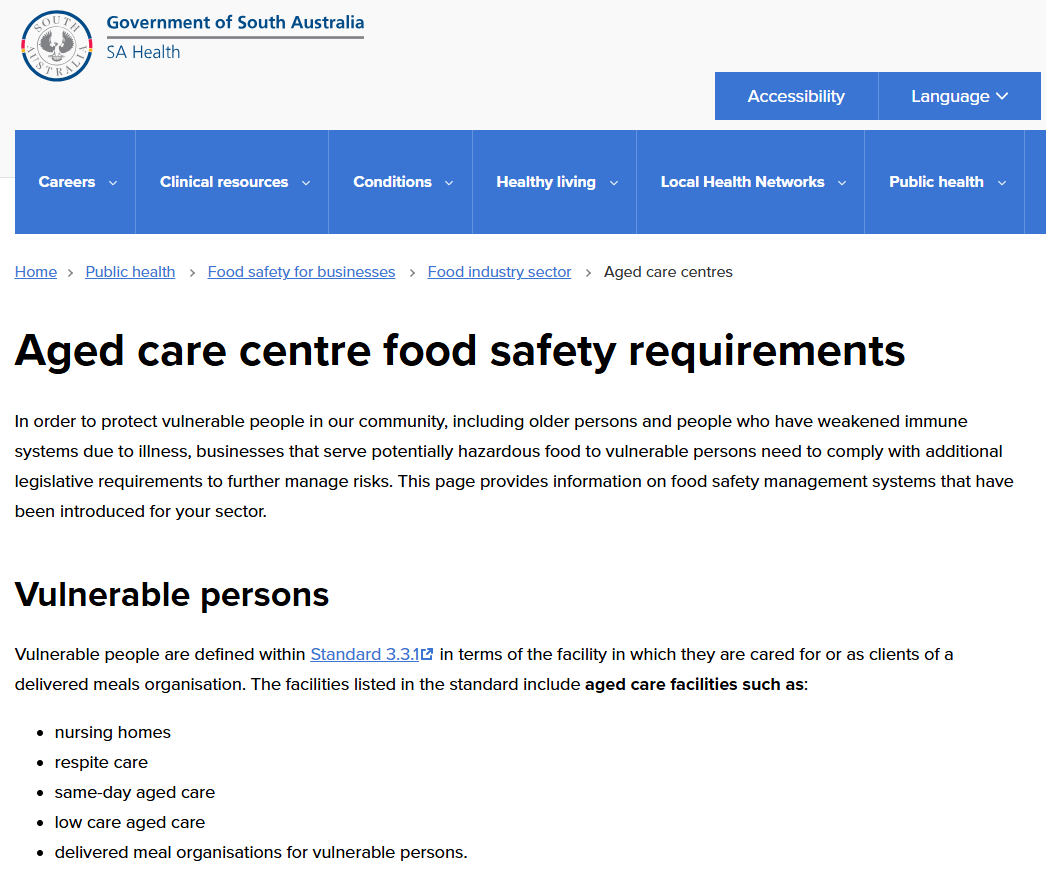
Aged care centre food safety requirements
This resource details food safety requirements for aged care centres, highlighting guidelines for managing risks with potentially hazardous foods. It includes standards for food safety programs, compliance templates, and regulatory guidance to protect vulnerable people.
This resource was developed by a state/territory government or organisation and therefore its applicability and usefulness may be limited.
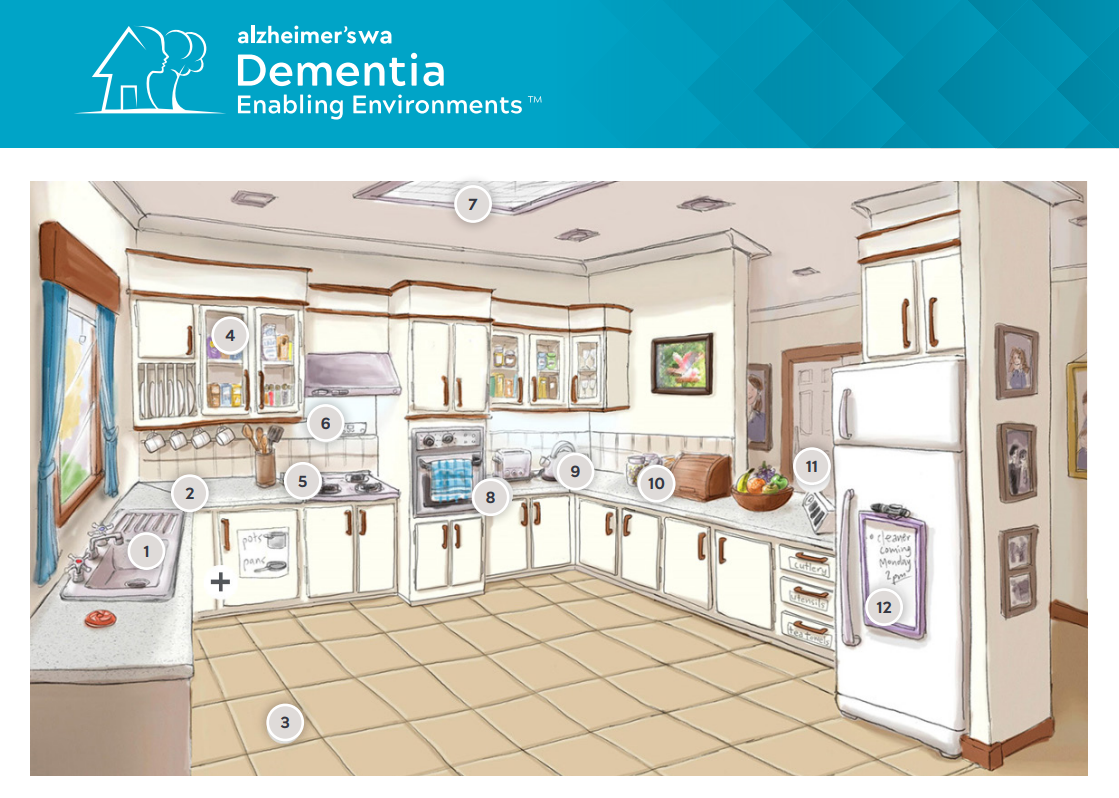
Dementia enabling environments - Adapt a home: Kitchen
This resource, developed by Alzheimer's WA, is a Dementia Enabling Environments illustration information sheet about adapting a home, focusing on the kitchen. It includes principles to integrate enabling design and make changes within the physical environment to maximise enablement and wellbeing for people living with dementia.
This resource was developed by a state/territory government or organisation and therefore its applicability and usefulness may be limited.
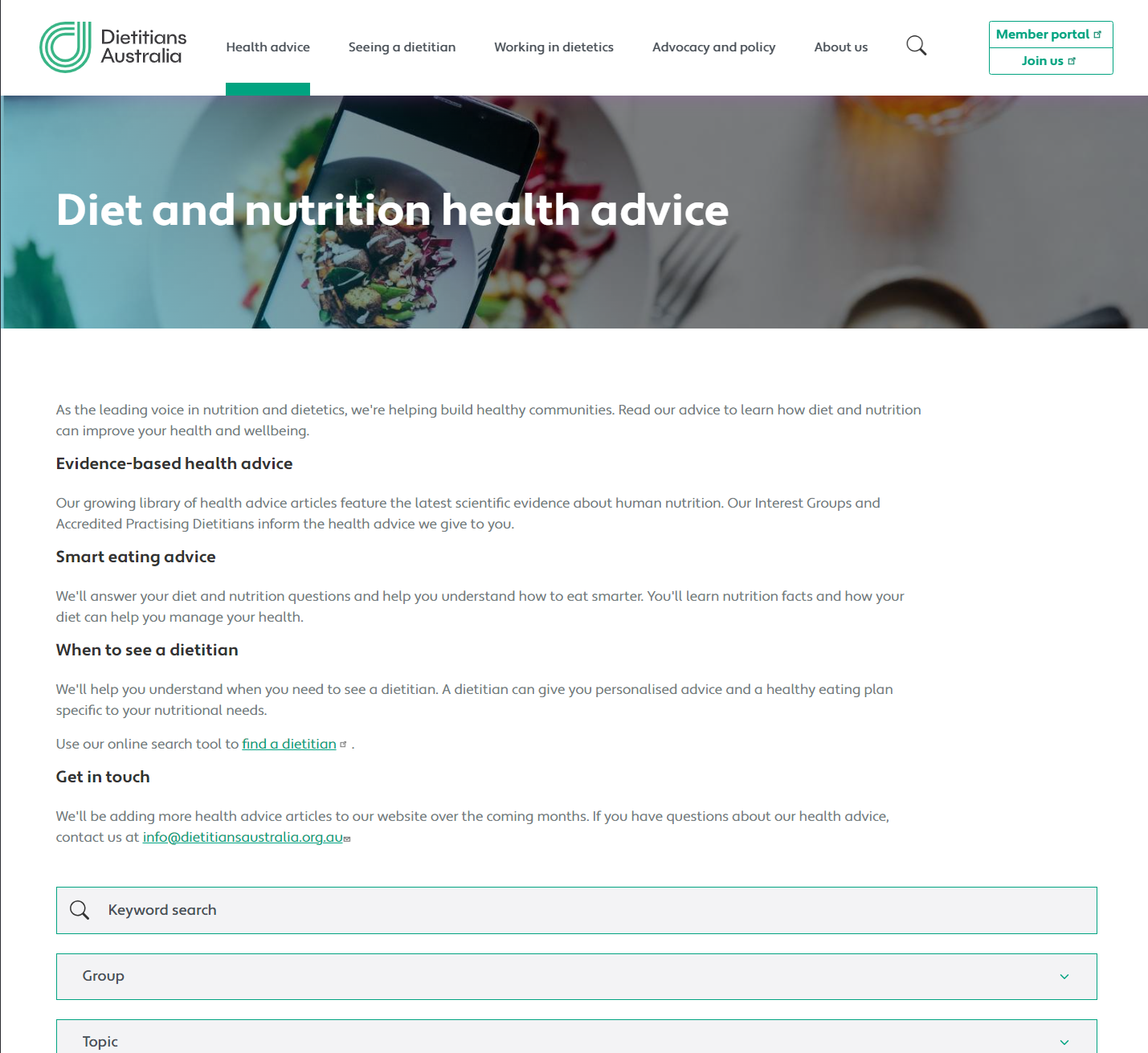
Diet and nutrition health advice
This resource provides evidence-based diet and nutrition advice to support healthy communities. It includes articles on various diets, managing health conditions, and guidelines for healthy eating across different life stages. The resource also offers guidance on when to consult a dietitian for personalised nutrition planning and support.