The Quality Standards Resource Centre helps extend understanding of the strengthened Aged Care Quality Standards, which took effect from 1 November 2025. You can search for resources by using keywords, or filtering by standard, outcome and audience. Before using the Resource Centre, please read the terms of use.
National Nursing Workforce Strategy
The resource provides information on the National Nursing Workforce Strategy, which outlines long-term plans for workforce sustainability, diversity, and development. It supports collaboration among stakeholders, promotes evidence-based care, and addresses challenges in regional and remote areas to ensure quality nursing care across the healthcare system.
This resource may refer to information that will be updated from 1 November 2025 to align with the new Aged Care Act and Quality Standards.
Our work related to the rural health workforce
This resource provides an overview of various initiatives and programs supporting the rural health workforce in Australia. It includes training programs, scholarships, and recruitment schemes aimed at addressing workforce shortages in rural and remote areas. The resource outlines efforts to improve healthcare access and quality through targeted support for medical and nursing professionals. This resource may refer to information that will be updated from 1 November 2025 to align with the new Aged Care Act and Quality Standards.
Rural health workforce
This resource provides an overview of the rural health workforce in Australia, including policies and programs designed to encourage health professionals to train and practise in rural and remote areas. It highlights strategies for improving healthcare access and quality in these regions, supporting both professionals and communities. This resource may refer to information that will be updated from 1 November 2025 to align with the new Aged Care Act and Quality Standards.
Australian College of Care Workers - Code of Conduct for Care Workers
This resource outlines the Code of Conduct for members of the Australian College of Care Workers. It includes 7 key principles that ensure care workers provide safe, ethical, and respectful care. The Code sets minimum standards for professionalism, accountability, and respect for people receiving care, promoting integrity and competency within the profession.
Managing emergency situations
This resource outlines strategies for managing emergency situations, focusing on risk mitigation, preparedness, response, and recovery. It includes guidelines on emergency planning, crisis leadership, and community engagement, emphasising coordinated efforts across various sectors to handle natural or human-caused disasters.
Guidance and requirements may differ across states and territories. Users are responsible for considering their individual circumstances and specific state-based regulations and legislation.
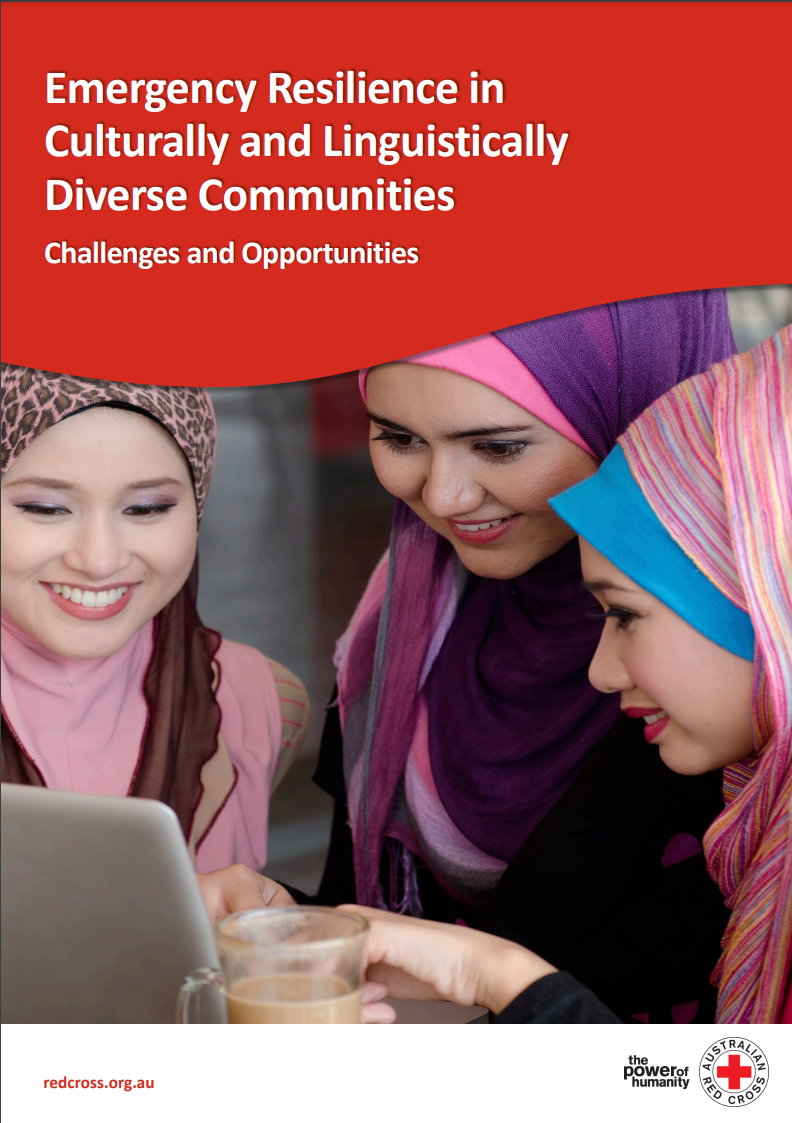
Emergency Resilience in Culturally and Linguistically Diverse Communities
This resource provides insight into the resilience of culturally and linguistically diverse (CALD) communities in the face of emergencies and disasters. It explores key challenges and opportunities for enhancing resilience, such as the impact of migration, social capital, and communication barriers. It aims to equip stakeholders with actionable strategies to support resilience within these communities during crises.
Emergency plans and procedures
This resource outlines the requirement for all workplaces, including aged care facilities, to have an emergency plan under the model WHS laws. The plan must inform workers and visitors about what to do in emergencies, be easily accessible, and be regularly reviewed and updated to ensure effectiveness.
Guidance and requirements may differ across states and territories. Users are responsible for considering their individual circumstances and specific state-based regulations and legislation.
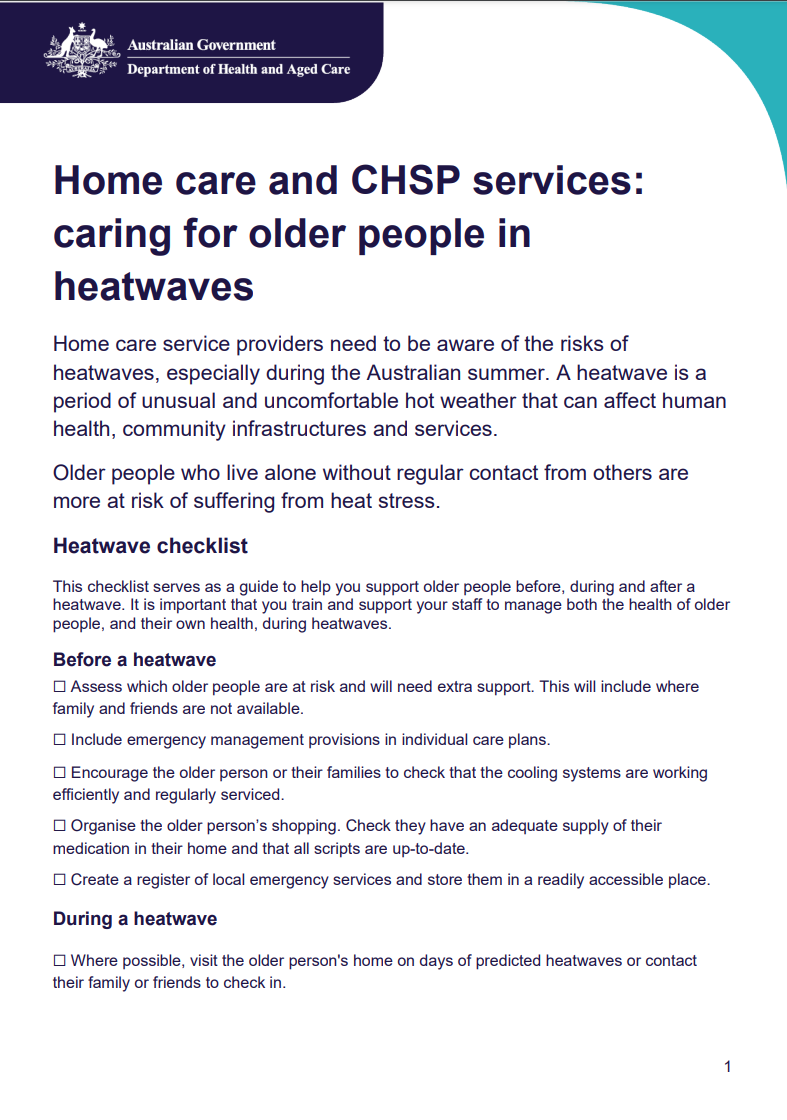
Caring for older people in heatwaves – Home Care and CHSP
This resource provides a checklist for home care and Commonwealth Home Support Programme (CHSP) providers to help them prepare for and manage the care of older people during heatwaves. It outlines steps to take before, during, and after heatwaves, ensuring the health and safety of those under their care.
This resource may refer to information that will be updated from 1 November 2025 to align with the new Aged Care Act and Quality Standards.
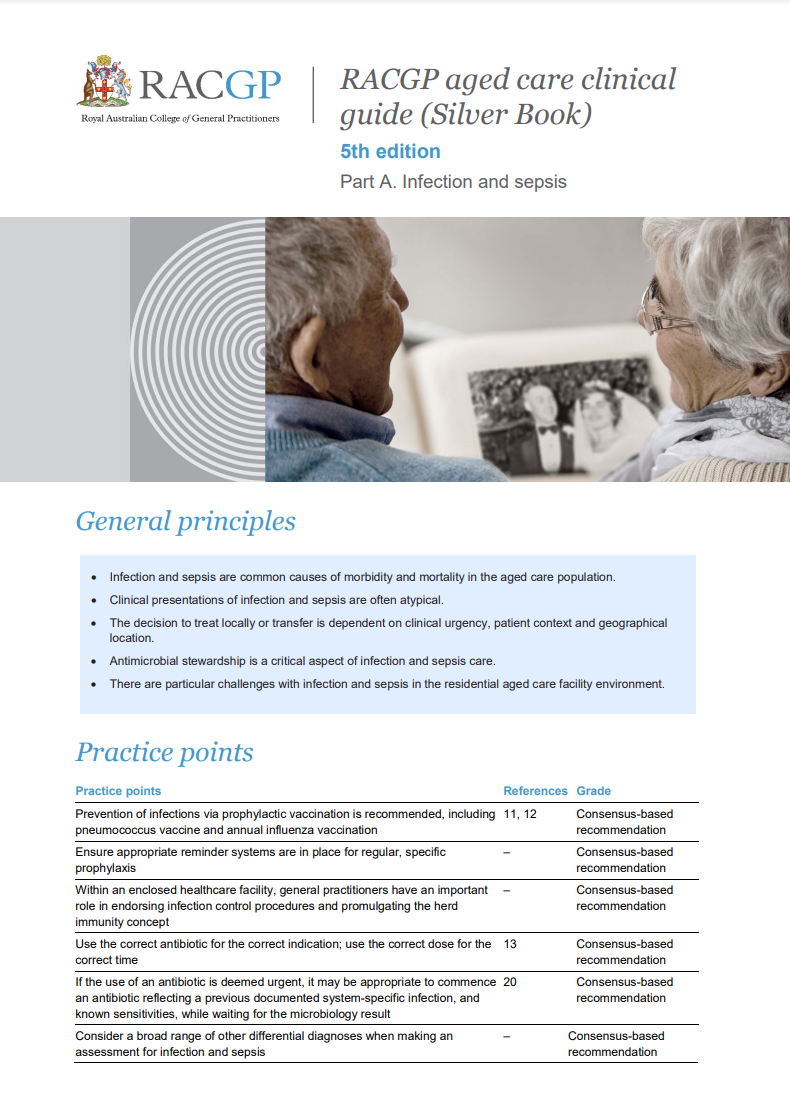
RACGP aged care clinical guide (Silver Book) - Part A - Infection and sepsis
This guide provides information on preventing and managing infections and sepsis in aged care settings. It includes recommendations on vaccination, antibiotic stewardship, recognising symptoms, and managing conditions such as respiratory, urinary tract, skin, and gastrointestinal infections. It also covers risk assessment, treatment considerations, and the role of general practitioners in infection control.
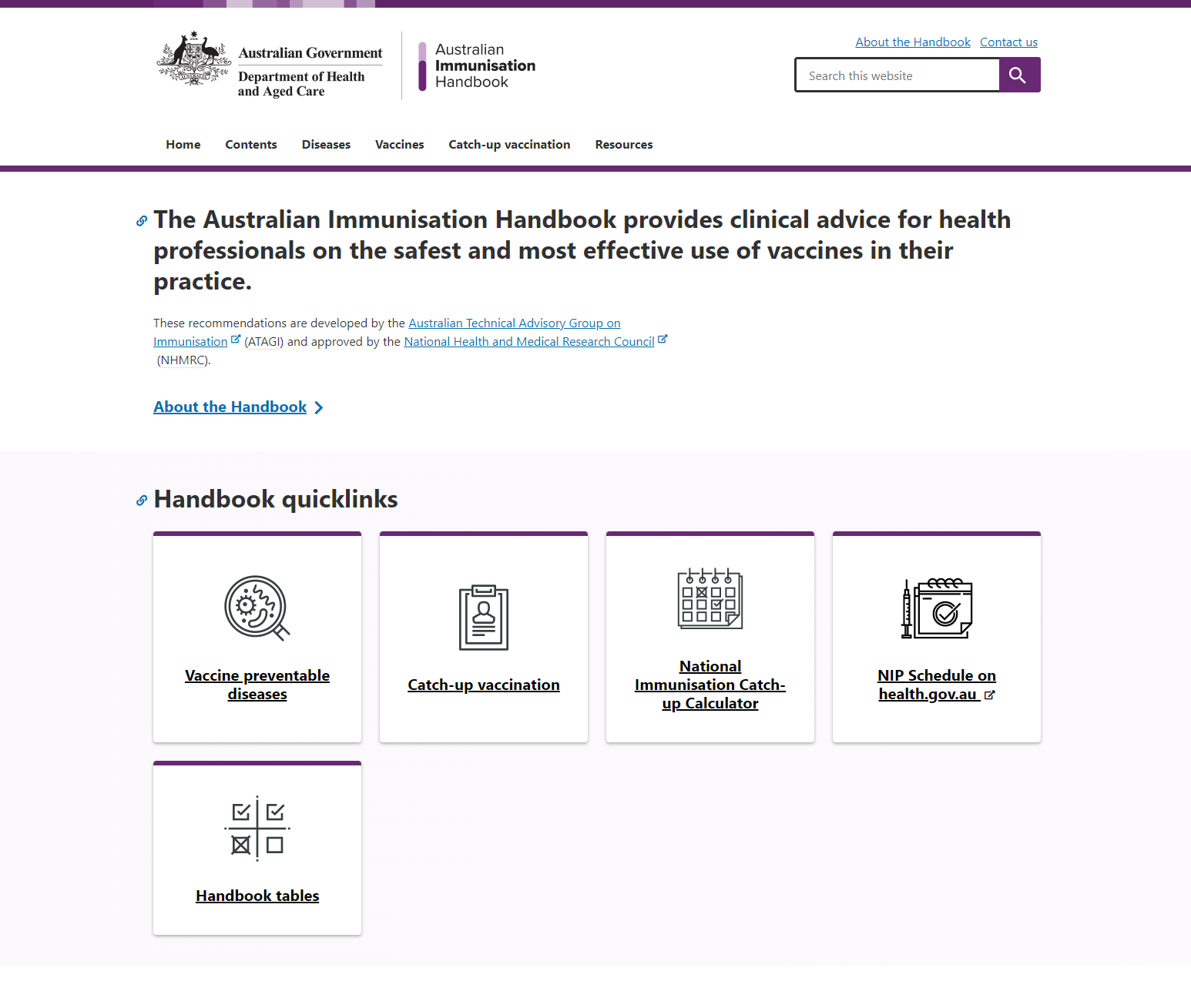
The Australian Immunisation Handbook
This resource provides clinical advice for health professionals on the safe and effective use of vaccines. It includes guidelines for vaccine administration, special risk groups, and updates on vaccine-preventable diseases. The handbook is a comprehensive reference for ensuring the best immunisation practices, particularly important in protecting vulnerable populations, including those in aged care.
This resource may refer to information that will be updated from 1 November 2025 to align with the new Aged Care Act and Quality Standards.
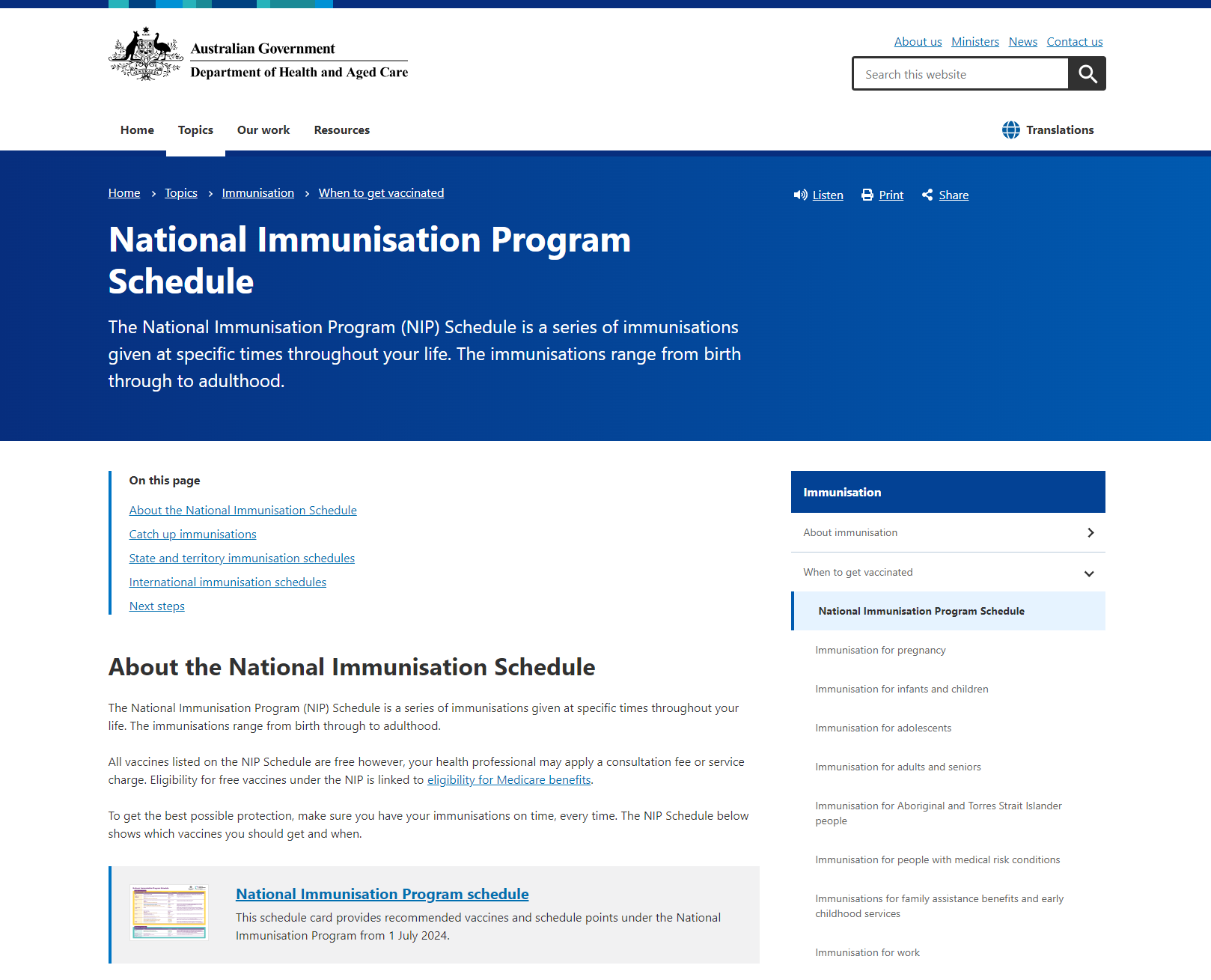
National Immunisation Program Schedule
This resource provides the National Immunisation Program (NIP) Schedule, outlining the recommended immunisations for people at specific stages of life, from birth through to adulthood. It includes information about free vaccines under the NIP and guidance for catch-up immunisations, ensuring the best possible protection through timely vaccinations.
This resource may refer to information that will be updated from 1 November 2025 to align with the new Aged Care Act and Quality Standards.
Australian Immunisation Handbook - Updates to Handbook
This resource provides a summary of recent updates made to the Australian Immunisation Handbook. It details changes to vaccine recommendations, including the removal of discontinued vaccines, new vaccines for diseases, and revised guidance for specific populations such as pregnant women and immunocompromised people.
This resource may refer to information that will be updated from 1 November 2025 to align with the new Aged Care Act and Quality Standards.
Improving accommodation in residential aged care
This resource provides information on improving accommodation in residential aged care through the National Aged Care Design Principles and Guidelines, effective from July 2024. It covers areas such as creating dementia-friendly environments, improving access to outdoor spaces, fostering community connections, and ensuring privacy. The guidelines aim to promote independence and a home-like atmosphere.
This resource may refer to information that will be updated from 1 November 2025 to align with the new Aged Care Act and Quality Standards.
Reporting for residential aged care
This resource outlines the reporting requirements for approved residential aged care providers. It includes instructions for submitting the Aged Care Financial Report (ACFR), General Purpose Financial Statement (GPFS), and Annual Prudential Compliance Statement (APCS). It also covers quality reporting under the National Aged Care Mandatory Quality Indicator Program, ensuring transparency and compliance with regulatory standards.
This resource may refer to information that will be updated from 1 November 2025 to align with the new Aged Care Act and Quality Standards.
ARIIA Knowledge and Implementation Hub - Resources
The ARIIA Resources Hub is an evidence-based guide that supports innovation across the aged care sector. It provides a comprehensive collection of tools, guidelines, and frameworks for aged care providers, focusing on technology adoption, clinical standards, and care improvement strategies. The hub offers resources to enhance service quality and support the digital transformation of aged care.
This resource may refer to information that will be updated from 1 November 2025 to align with the new Aged Care Act and Quality Standards.
Management of Peripheral Intravenous Catheters Clinical Care Standard
This resource is the Australian Commission on Safety and Quality in Health Care's Clinical Care Standard for the management of Peripheral Intravenous Catheters (PIVCs), aiming to reduce complications and improve care quality. It includes quality statements on PIVC assessment, insertion, maintenance, and removal, supporting best practices in all healthcare settings. The standard applies to all contexts where PIVCs are used, with the term ‘patients’ encompassing people across various healthcare settings, including hospitals, emergency services, and community care.
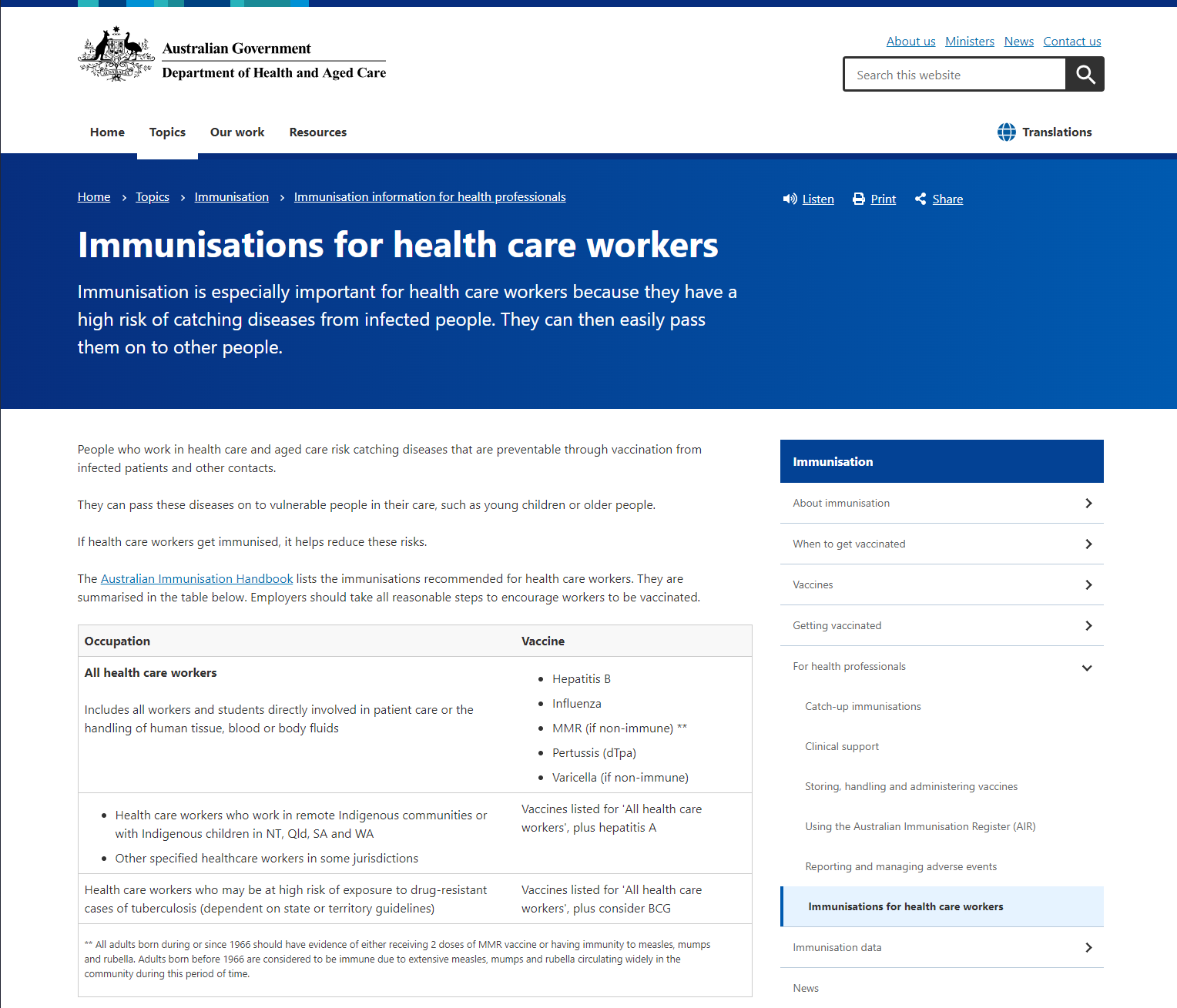
Immunisations for health care workers
This resource outlines recommended immunisations for healthcare workers, emphasising the importance of vaccination to prevent disease transmission to vulnerable populations. It lists vaccines such as Hepatitis B, Influenza, MMR, Pertussis, and Varicella, and highlights more requirements for workers in specific settings or with higher risks of exposure.
This resource may refer to information that will be updated from 1 November 2025 to align with the new Aged Care Act and Quality Standards.
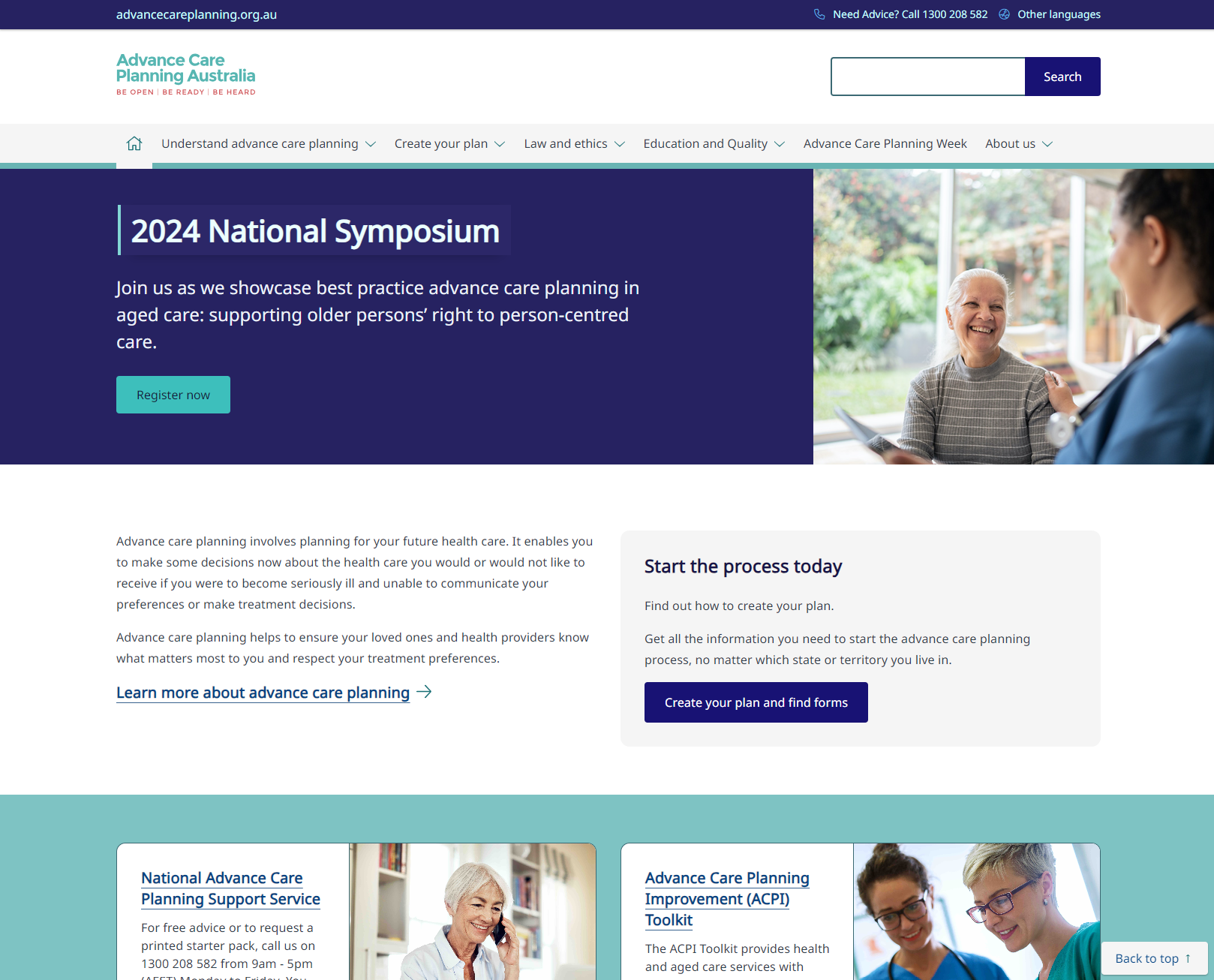
Advance Care Planning Australia
This resource provides information on advance care planning, which enables people to make decisions about their future health care in case they are unable to communicate their preferences. It helps ensure that healthcare providers and loved ones understand and respect their treatment choices. The resource includes tools, forms, and advice for creating an advance care plan.
Safe Food Australia - A guide to the Food Safety Standards
This resource provides guidance on the food safety standards in Australia, specifically Chapter 3 of the Australia New Zealand Food Standards Code. It outlines requirements for food businesses, focusing on safe food handling practices, hygiene, and equipment standards. The resource helps aged care providers comply with regulatory standards to ensure safe and suitable food for vulnerable populations.
National Agreement on Closing the Gap
This resource outlines the National Agreement on Closing the Gap, focusing on improving life outcomes for Aboriginal and Torres Strait Islander peoples. It includes key areas for joint national action, prioritising cultural safety and addressing inequalities. The agreement encourages collaboration with communities to monitor progress and ensure accountability.