Aged care laws in Australia have now changed. The new Aged Care Act 2024 and Aged Care Rules 2025 now apply. While we complete updating of our website, including draft guidance and other materials, to align with the new laws, providers are advised to refer to the new Act and Rules for any required clarification of their obligations and legal responsibilities. Thank you for your patience.

Quality Standards Resource Centre

The Quality Standards Resource Centre helps extend understanding of the strengthened Aged Care Quality Standards, which take effect from 1 November 2025. The Resource Centre will be updated to reflect key changes made to the draft strengthened Standards. You can search for resources by using keywords, or filtering by standard, outcome, audience and theme. Before using the Resource Centre, please read the terms of use.

Displaying 461 to 480 of 484 result(s)
/quality-standards/european-wound-management-association-quality-standards

European Wound Management Association - Resource Library

Guidance

This resource library offers a collection of wound care materials, including publications, webinars, and e-learning modules, covering topics like wound healing, infection management, compression therapy, and advanced treatments. It provides resources for various target groups and is available in multiple languages.

This resource was developed internationally and therefore its applicability and usefulness may be limited.

Author
External resource
Key Theme
Clinical safety
Standard
5: Clinical Care
Outcomes
5.5: Safety of clinical care services
European Wound Management Association - Resource Library
/quality-standards/flu-and-covid-19-vaccination-program

Flu and COVID-19 vaccination program

Guidance
Last Updated

This resource outlines the flu and COVID-19 vaccination program for residential aged care providers. It includes information about what services must do to take precautions to prevent and control the flu and COVID-19 and minimise infection-related risks. This resource may refer to information that will be updated from 1 November 2025 to align with the new Aged Care Act and Quality Standards.
Author
Department of Health, Disability and Ageing
Key Theme
Infection prevention and control, Workforce and human resources management
Standard
5: Clinical Care, 2: The Organisation, 4: The Environment
Outcomes
5.2: Preventing and controlling infections in delivering clinical care services, 2.9: Human resource management, 4.2: Infection prevention and control
Flu and COVID-19 vaccination program
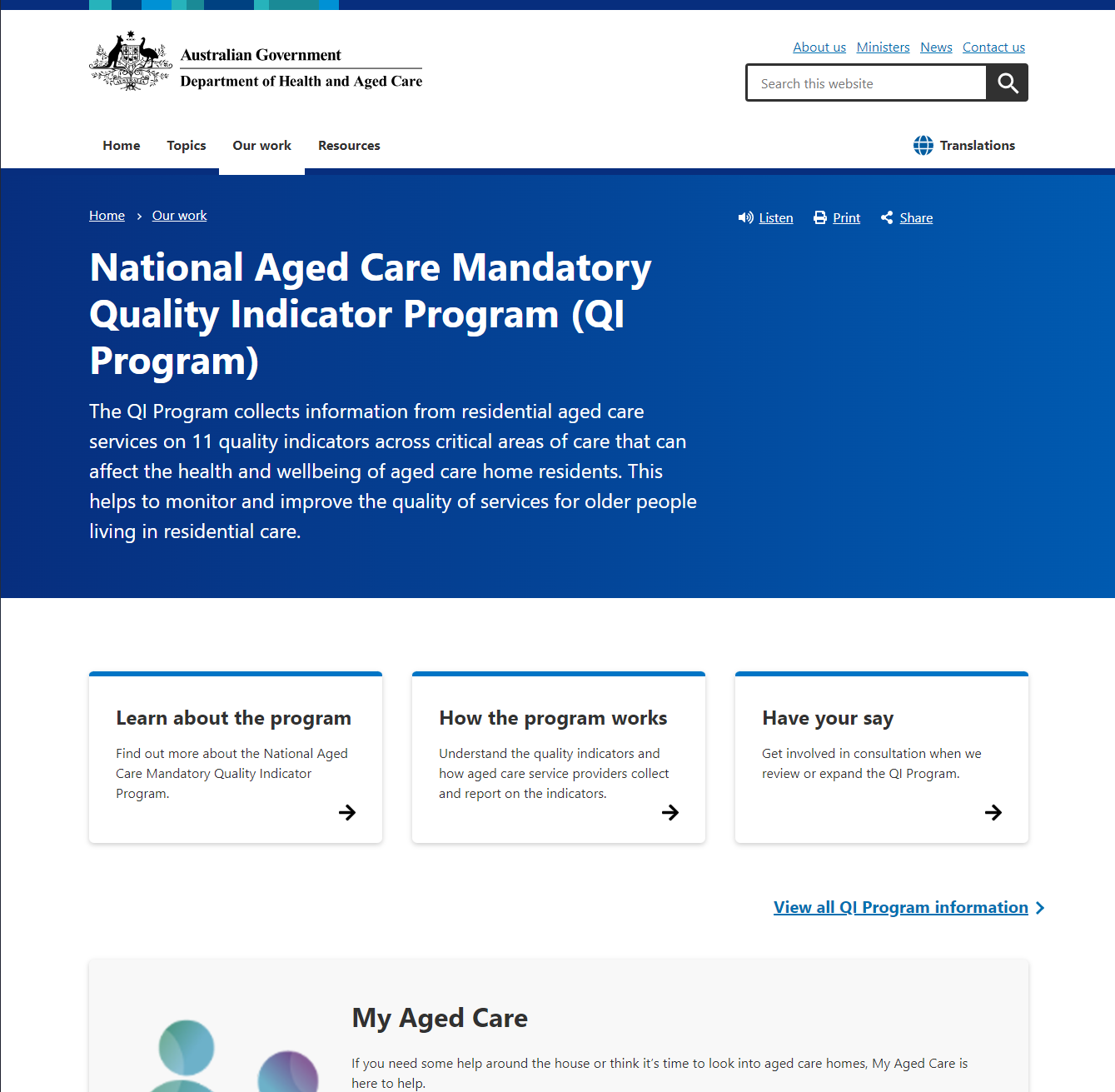
/quality-standards/national-aged-care-mandatory-quality-indicator-program-qi-program

National Aged Care Mandatory Quality Indicator Program (QI Program)

Guidance
Published date

This resource provides information on the National Aged Care Mandatory Quality Indicator Program (QI Program). The program gathers data on 11 quality indicators from residential aged care services to enhance care standards and outcomes for residents. It includes resources, quick guides, consultation papers, and surveys for improving quality indicators in both residential and in-home aged care services. 

This resource may refer to information that will be updated from 1 November 2025 to align with the new Aged Care Act and Quality Standards.
Author
Department of Health, Disability and Ageing
Key Theme
Accountability and quality system, Corporate and clinical governance, Information management system, Workforce and human resources management
Standard
5: Clinical Care, 2: The Organisation
Outcomes
2.2a: Quality, safety and inclusion culture to support aged care workers to deliver quality care, 2.2b: Quality, safety and inclusion culture to support individuals, 2.3: Accountability, quality system and policies and procedures, 5.1: Clinical governance, 5.5: Safety of clinical care services
National Aged Care Mandatory Quality Indicator Program (QI Program)
/quality-standards/about-food-nutrition-and-dining-hotline-provider-and-worker-fact-sheet

About the Food, Nutrition and Dining Hotline – provider and worker fact sheet

Fact sheet
Published date
Last Updated

This resource provides information about the Food, Nutrition, and Dining Hotline, which offers advice and addresses concerns regarding food and dining in aged care. It allows aged care providers, staff, residents, families, and carers to raise issues about nutrition, menu planning, and dining experiences to improve quality and care outcomes. This resource may refer to information that will be updated from 1 November 2025 to align with the new Aged Care Act and Quality Standards. 

Author
Aged Care Quality & Safety Commission
Key Theme
Feedback and complaints management system, Food and nutrition
Standard
6: Food and Nutrition, 2: The Organisation
Outcomes
2.6a: Complaints and feedback management for aged care workers, 2.6b: Complaints and feedback management for individuals, 6.1: Partnering with individuals on food and drinks
First page of About the Food, Nutrition and Dining Hotline provider fact sheet.
/quality-standards/ensuring-first-aid-capabilities-manage-choking-risk-residential-aged-care

Ensuring first aid capabilities to manage choking risk in residential aged care

Guidance

This page provides guidance for residential aged care services on managing choking risks. It advises 24/7 first aid capabilities, staff training on choking incidents, the use of suction devices, and understanding that advance care directives do not prevent the administering of first aid. The alert also recommends collaborating with speech pathologists, documenting discussions, and managing choking events through incident review and support. 

Author
Aged Care Quality & Safety Commission
Key Theme
Food and nutrition, Clinical safety
Standard
6: Food and Nutrition, 5: Clinical Care
Outcomes
6.2: Assessment of nutritional needs and preferences, 5.5: Safety of clinical care services
Ensuring first aid capabilities to manage choking risk in residential aged care
/quality-standards/creating-behaviour-support-plans-better-support-residents

Creating behaviour support plans that better support residents 

Guidance
Published date

This document outlines the development of behaviour support plans (BSPs) in aged care, focusing on person-centred assessments, identification of triggers, tailored strategies, and regular reviews. It highlights the involvement of healthcare professionals and adherence to care principles to effectively manage residents’ behavioural changes and improve their quality of life. 

This resource may refer to information that will be updated from 1 November 2025 to align with the new Aged Care Act and Quality Standards. 

Author
Aged Care Quality & Safety Commission
Key Theme
Assessment and planning, Delivering comprehensive care and services, Care coordination and transitions
Standard
5: Clinical Care, 3: The Care and Services
Outcomes
5.6 Cognitive impairment  , 3.1 Assessment and planning, 3.2: Delivery of funded aged care services
Creating behaviour support plans that better support residents 
/quality-standards/restrictive-practices-provider-resources

Restrictive practices provider resources

Guidance
Published date

This resource offers guidance and tools for aged care providers on managing restrictive practices. It emphasises using restrictive practices as a last resort, obtaining informed consent, and developing behaviour support plans. The materials include fact sheets, regulatory updates, webinars, and decision-making tools to ensure compliance with legislation and promote person-centred care.

This resource may refer to information that will be updated from 1 November 2025 to align with the new Aged Care Act and Quality Standards. 

Author
Aged Care Quality & Safety Commission
Key Theme
Delivering comprehensive care and services
Standard
5: Clinical Care, 3: The Care and Services
Outcomes
5.6 Cognitive impairment  , 3.2: Delivery of funded aged care services
Restrictive practices provider resources
/quality-standards/dementia-friendly-environments-dining-areas-kitchens-and-eating

Dementia-friendly environments - Dining areas, kitchens and eating

Guidance
Last Updated

This resource provides guidelines for creating dementia-friendly dining and kitchen spaces, emphasising sensory engagement, personalised meal experiences, and a home-like environment. It includes practical adjustments for lighting, noise, seating, and social interaction to enhance dining enjoyment.

This resource was developed by a state/territory government or organisation and therefore its applicability and usefulness may be limited.

Author
External resource
Key Theme
Delivering comprehensive care and services, Environment, Food and nutrition
Standard
4: The Environment, 5: Clinical Care, 6: Food and Nutrition
Outcomes
4.1b: Environment – services delivered other than in the individual’s home, 5.6 Cognitive impairment  , 6.4: Dining experience
Dementia-friendly environments - Dining areas, kitchens and eating
/quality-standards/dementia-enabling-environments

Dementia enabling environments

Guidance

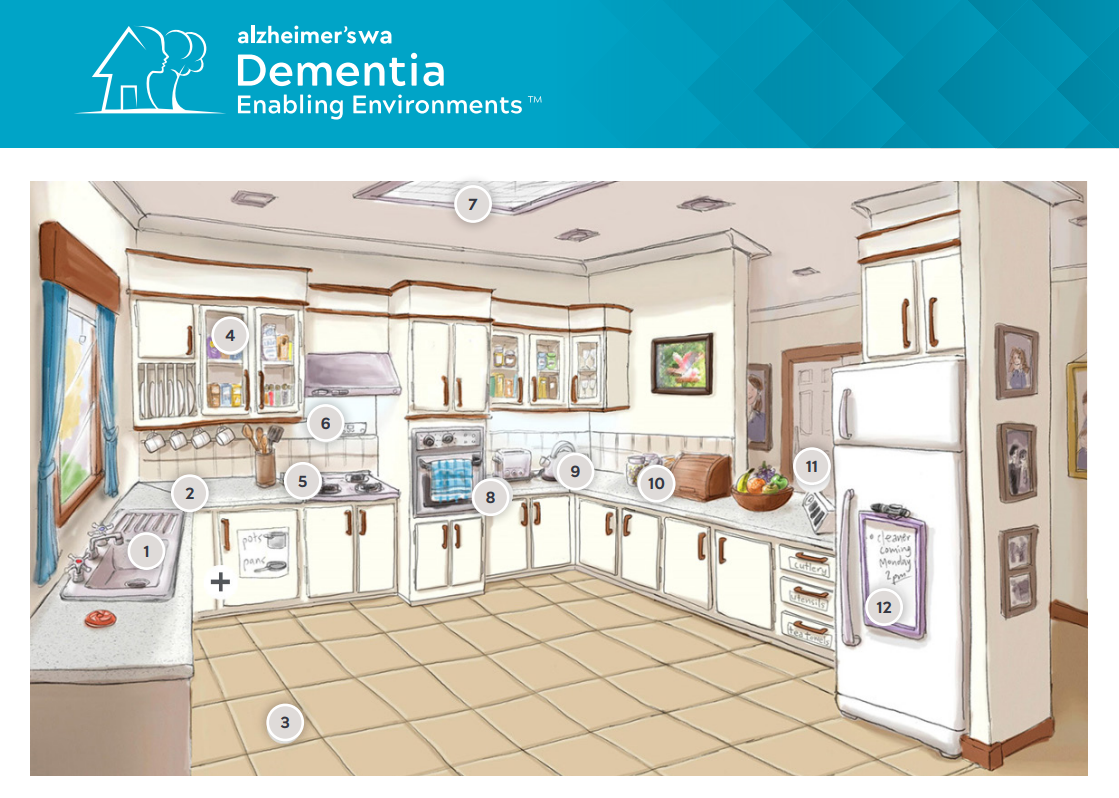
The Dementia Enabling Environments website, developed by Alzheimer's WA, provides guidance and resources to help create enabling environments for a person living with dementia. It includes design principles for different environment types, include home and residential aged care facilities.

This resource was developed by a state/territory government or organisation and therefore its applicability and usefulness may be limited.

Author
External resource
Key Theme
Delivering comprehensive care and services, Environment
Standard
4: The Environment, 5: Clinical Care
Outcomes
4.1a: Environment – services delivered in the individual’s home, 4.1b: Environment – services delivered other than in the individual’s home, 5.6 Cognitive impairment  
Dementia Enabling Environments
/quality-standards/food-nutrition-dining-information-providers

Food, nutrition & dining - information for providers

Guidance

This resource provides information and support for aged care providers to improve food, nutrition, and dining services. It includes guidance on meeting nutritional standards, promoting resident choice, and ensuring a positive dining experience. The resource also offers tools for monitoring food quality, addressing dietary needs, and enhancing overall meal service delivery. This resource may refer to information that will be updated from 1 July 2025 to align with the new Aged Care Act and Quality Standards. 

Author
Aged Care Quality & Safety Commission
Key Theme
Food and nutrition
Standard
6: Food and Nutrition
Outcomes
6.1: Partnering with individuals on food and drinks, 6.2: Assessment of nutritional needs and preferences, 6.3: Provision of food and drinks, 6.4: Dining experience
Food, nutrition & dining - information for providers
/quality-standards/food-nutrition-dining-information-workers

Food, nutrition & dining - information for workers

Guidance

This resource provides guidance for aged care workers on improving food, nutrition, and dining experiences for residents. It covers meal preparation, resident engagement in food choices, safe food handling, and the importance of nutrition in promoting wellbeing. The resource offers practical tips for ensuring meals meet individual dietary needs and preferences. This resource may refer to information that will be updated from 1 November 2025 to align with the new Aged Care Act and Quality Standards. 

Author
Aged Care Quality & Safety Commission
Key Theme
Food and nutrition
Standard
6: Food and Nutrition
Outcomes
6.1: Partnering with individuals on food and drinks, 6.2: Assessment of nutritional needs and preferences, 6.3: Provision of food and drinks, 6.4: Dining experience
Food, nutrition & dining - information for workers
/quality-standards/eat-health-healthy-eating-when-youre-older

Eat for health: Healthy eating when you're older

Guidance

This resource provides guidance on healthy eating for older adults, emphasising nutrient-dense foods while limiting energy-dense options. It highlights the importance of consuming a variety of foods from the 5 food groups, maintaining a healthy weight, staying physically active, and managing dietary needs for chronic conditions. It also includes tips for food safety and preventing malnutrition.

Author
External resource
Key Theme
Food and nutrition
Standard
6: Food and Nutrition
Outcomes
6.3: Provision of food and drinks
Eat for health: Healthy eating when you're older
/quality-standards/partnering-care-caring-together

Partnering in care - Caring together

Fact sheet
Published date

This resource outlines the Partnerships in Care (PiC) programme, which encourages family and friends to support companionship and care for people in aged care, even during outbreak situations. It provides guidance on infection control, visitation protocols, and formal engagement with care activities to enhance resident well-being in a safe, structured manner. 

This resource may refer to information that will be updated from 1 November 2025 to align with the new Aged Care Act and Quality Standards.
Author
Aged Care Quality & Safety Commission
Key Theme
Person-centred care, Dignity, respect and privacy
Standard
1: The Individual
Outcomes
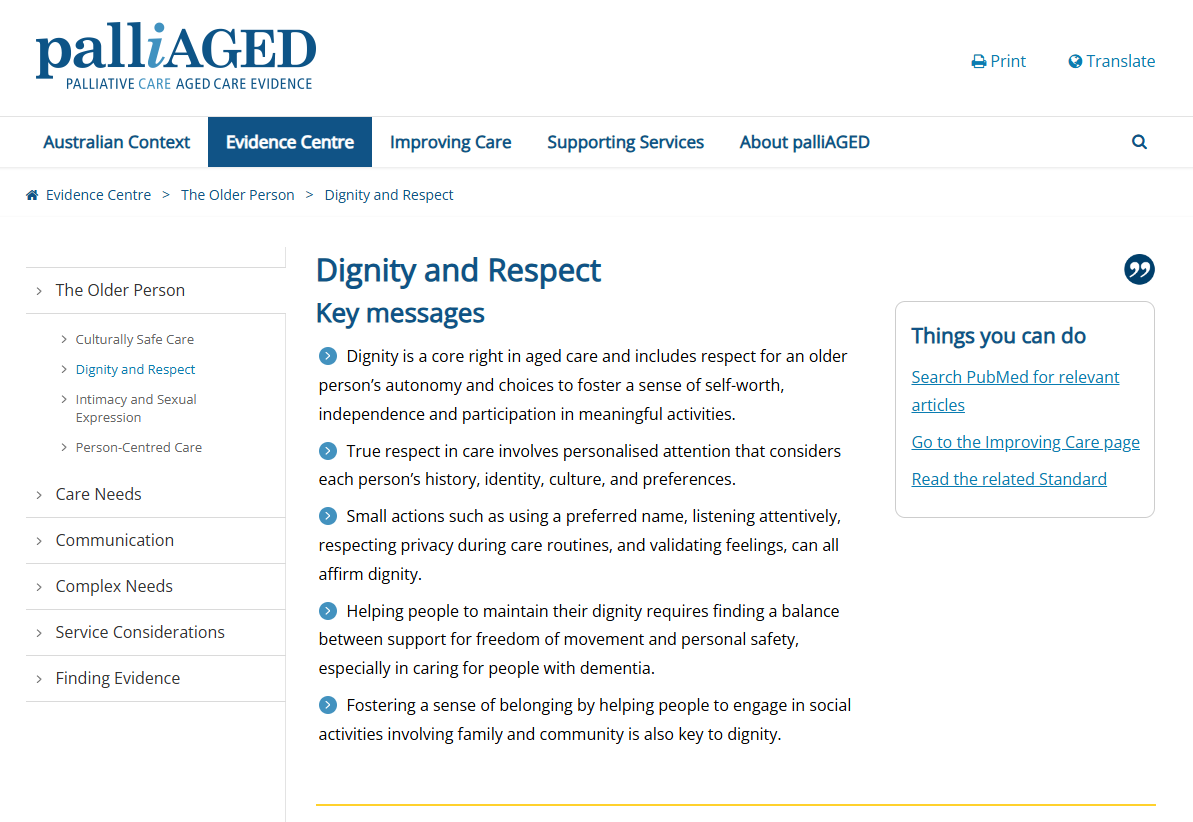
1.1: Person-centred care, 1.2: Dignity, respect and privacy
Partnering in care - Caring together
/quality-standards/national-roadmap-improving-health-people-intellectual-disability

National Roadmap for Improving the Health of People with Intellectual Disability

Guidance
Last Updated

This resource outlines the National Roadmap for Improving the Health of People with Intellectual Disability, aiming to address health inequities. It focuses on enhancing care support, developing better models of care, improving oral health, and supporting health professionals. The roadmap includes projects on primary care, health assessments, curriculum development, and more.

Author
Department of Health, Disability and Ageing
Key Theme
Delivering comprehensive care and services
Standard
5: Clinical Care
Outcomes
5.6 Cognitive impairment  
National Roadmap for Improving the Health of People with Intellectual Disability
/quality-standards/renewal-registration-audit-guide

Renewal of registration audit guide

Guidance
Published date
Last Updated

This guide helps you prepare for and take part in a renewal of registration audit.

It describes:

  • the purpose of audits and how they inform (help us make) registration decisions
  • the 3 stages of the audit process (initiation, delivery, reporting)
  • what to expect and what to do at each stage
  • the types of evidence we consider during audits
  • how we define our audit ratings
  • the audit tools we use
  • other relevant resources.
Author
Aged Care Quality & Safety Commission
Key Theme
Accountability and quality system
Standard
2: The Organisation
Outcomes
2.3: Accountability, quality system and policies and procedures
Renewal of  registration  audit guide
/quality-standards/variation-registration-audit

Variation of registration audit

Guidance
Published date
Last Updated

This guide helps you prepare for and take part in a variation of registration audit.

It describes:

  • the purpose of audits and how they inform (help us make) registration decisions
  • the 3 stages of the audit process (initiation, delivery, reporting)
  • what to expect and what to do at each stage
  • the types of evidence we consider during audits
  • how we define our audit ratings
  • the audit tools we use
  • other relevant resources.
Variation of registration audit  (PDF  434.03 KB)
Author
Aged Care Quality & Safety Commission
Key Theme
Accountability and quality system
Standard
2: The Organisation
Outcomes
2.3: Accountability, quality system and policies and procedures
Variation of registration audit
/quality-standards/how-aged-care-advocate-can-help-you

How an aged care advocate can help you

Fact sheet
Published date
Last Updated

If you are concerned about the quality of the aged care service you or the person you represent is receiving, an advocacy service may be able to help.

Author
Aged Care Quality & Safety Commission
Key Theme
Feedback and complaints management system, Choice, independence and quality of life
Standard
2: The Organisation, 1: The Individual
Outcomes
2.6b: Complaints and feedback management for individuals, 1.3: Choice, independence and quality of life
How an aged care advocate can help you
/quality-standards/infection-prevention-and-control-acsqh

Infection prevention and control - ACSQH

Guidance
Published date

This resource provides guidelines to reduce infection transmission risks in healthcare settings. It provides information on standard and transmission-based precautions, specific diseases or conditions, other infection prevention and control strategies and promotional resources practices such as hand hygiene, use of personal protective equipment, and environmental cleaning. 

This resource may refer to information that will be updated from 1 November 2025 to align with the new Aged Care Act and Quality Standards.

Author
Australian Commission On Safety And Quality In Health Care
Key Theme
Infection prevention and control
Standard
5: Clinical Care, 4: The Environment
Outcomes
5.2: Preventing and controlling infections in delivering clinical care services, 4.2: Infection prevention and control
Infection prevention and control
/quality-standards/first-nations-stakeholder-communications-toolkit

First Nations - Stakeholder Communications Toolkit

Guidance, Tool
Published date
Last Updated

This Toolkit is designed for First Nations stakeholders including providers, workers and others involved in providing aged care services for First Nations people. We’ve developed it to make it easy for you to share relevant resources with your networks and members

Author
Aged Care Quality & Safety Commission
Key Theme
Person-centred care, Corporate and clinical governance, Delivering comprehensive care and services
Standard
1: The Individual, 2: The Organisation, 3: The Care and Services
Outcomes
1.1: Person-centred care, 2.1: Partnering with individuals, 3.2: Delivery of funded aged care services
First Nations Resources – Communications Toolkit
/quality-standards/coronavirus-covid-19-cleaning-and-disinfection-health-and-residential-aged-care-homes

Coronavirus (COVID-19) cleaning and disinfection for health and residential aged care homes

Fact sheet
Published date

This resource provides cleaning and disinfection guidance for health and residential aged care homes to reduce the transmission of COVID-19. It outlines cleaning protocols, frequency, and the use of appropriate disinfectants, ensuring safety for staff and residents. The document also covers procedures for cleaning after suspected or confirmed COVID-19 cases. 

This resource may refer to information that will be updated from 1 November 2025 to align with the new Aged Care Act and Quality Standards.

Author
Department of Health, Disability and Ageing
Key Theme
Delivering comprehensive care and services, Environment, Infection prevention and control
Standard
4: The Environment
Outcomes
4.1b: Environment – services delivered other than in the individual’s home, 4.2: Infection prevention and control
Coronavirus (COVID-19) cleaning and disinfection for health and residential aged care homes