The Quality Standards Resource Centre helps extend understanding of the strengthened Aged Care Quality Standards, which took effect from 1 November 2025. You can search for resources by using keywords, or filtering by standard, outcome and audience. Before using the Resource Centre, please read the terms of use.
Palliative care education and training
This resource provides information on free palliative care education programs available for health and aged care workers. It includes details about various training opportunities, such as online courses and in-person sessions, designed to enhance skills in delivering high-quality palliative care. The programs cover key topics like symptom management, communication, and multidisciplinary care. This resource may refer to information that will be updated from 1 November 2025 to align with the new Aged Care Act and Quality Standards.

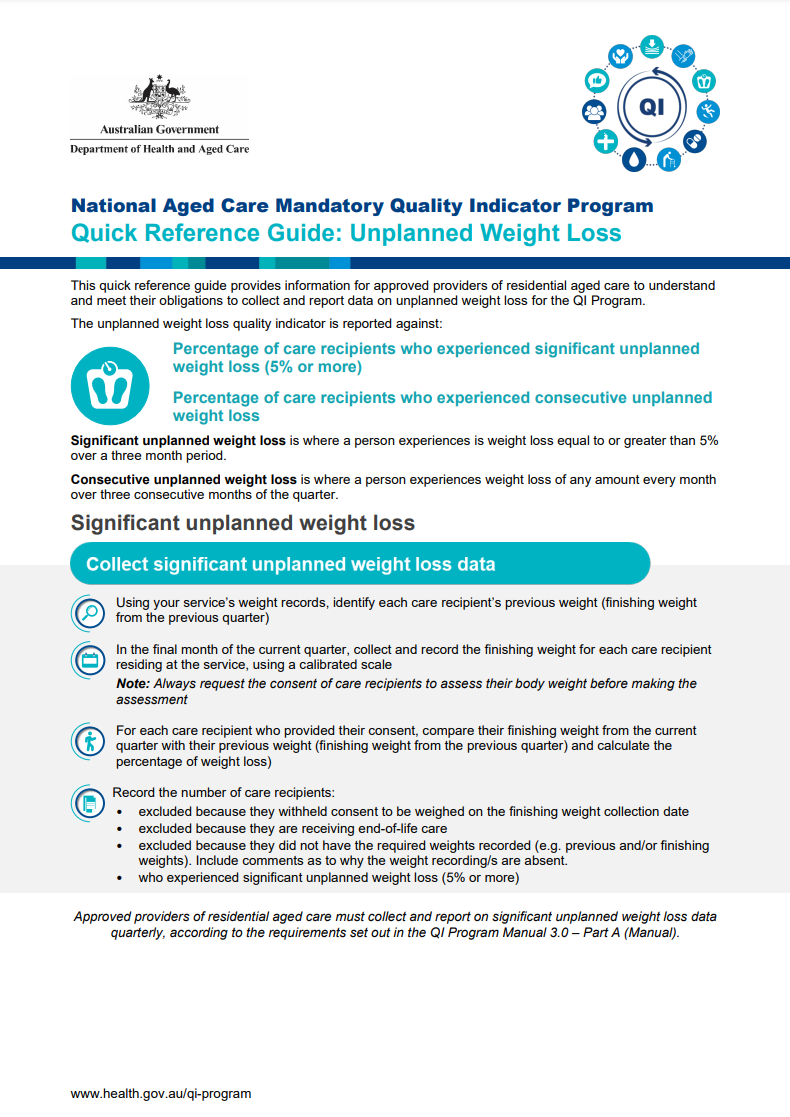
QI Program quick reference guide – Unplanned weight loss
This resource provides a quick reference guide for approved aged care providers on collecting and reporting data related to unplanned weight loss as part of the National Aged Care Mandatory Quality Indicator Program. It outlines reporting requirements for significant and consecutive unplanned weight loss and offers guidance on how to track and submit data quarterly. This resource may refer to information that will be updated from 1 November 2025 to align with the new Aged Care Act and Quality Standards.
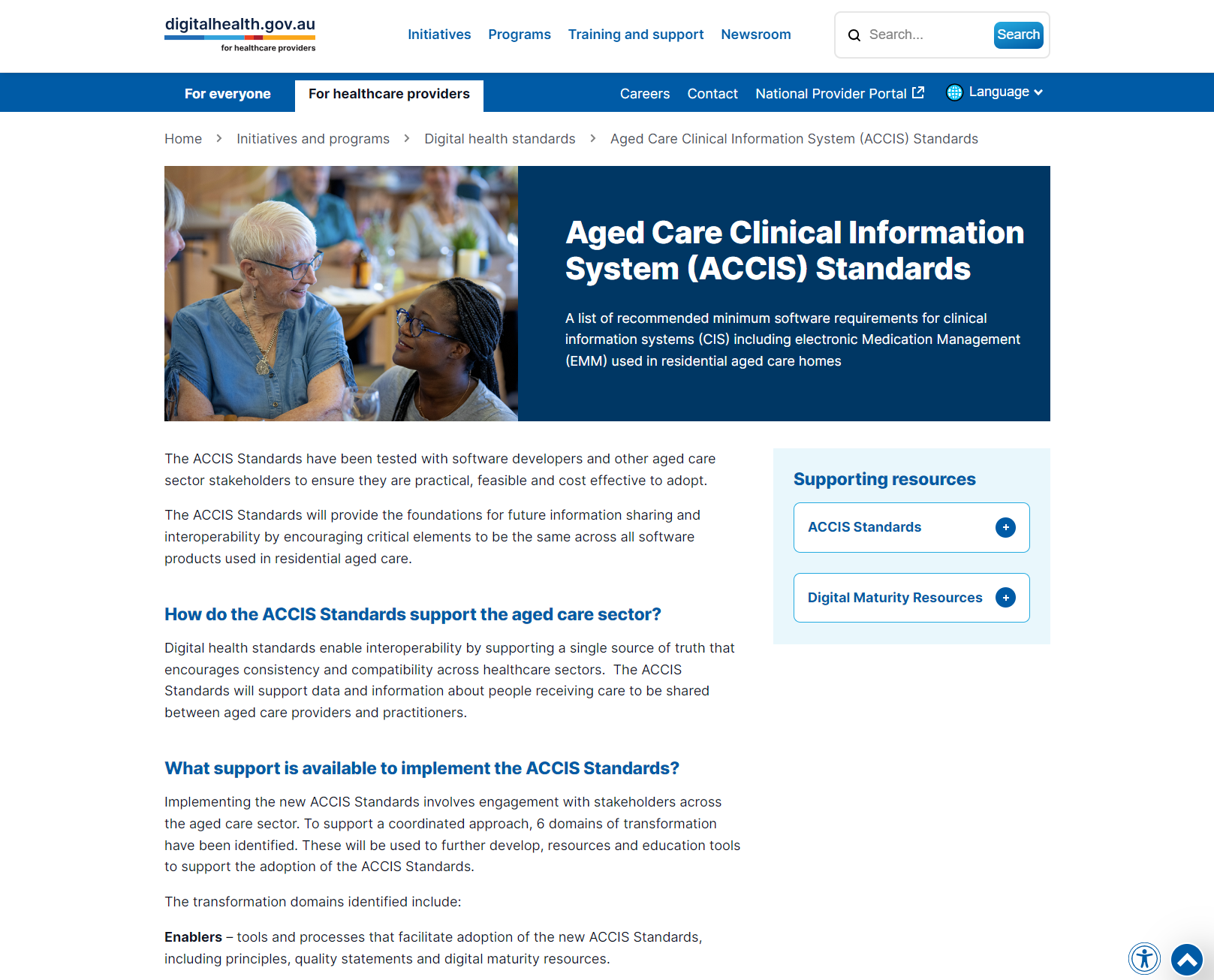
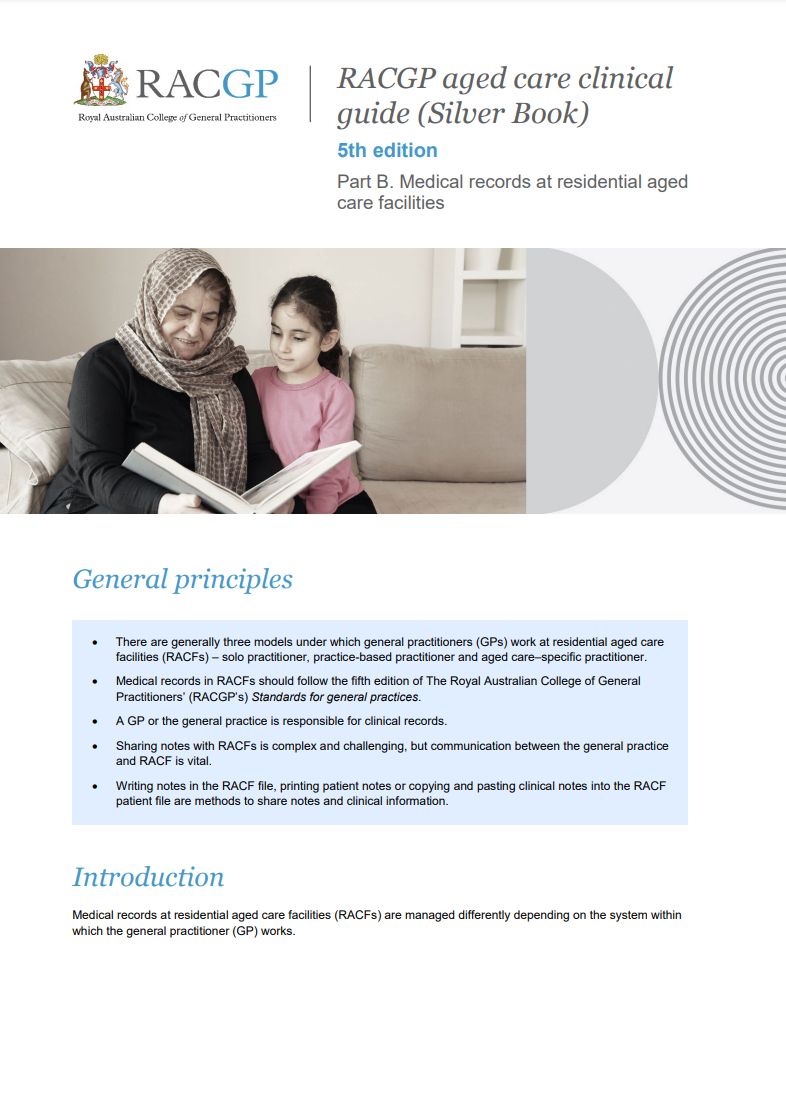
Aged Care Clinical Information System (ACCIS) Standards
This resource outlines the Aged Care Clinical Information System (ACCIS) Standards, providing minimum software requirements for clinical information systems used in aged care. It supports interoperability, data sharing, and safe clinical decision-making. The standards aim to enhance care coordination, improve data accuracy, and ensure compliance with privacy and security protocols within residential aged care settings.
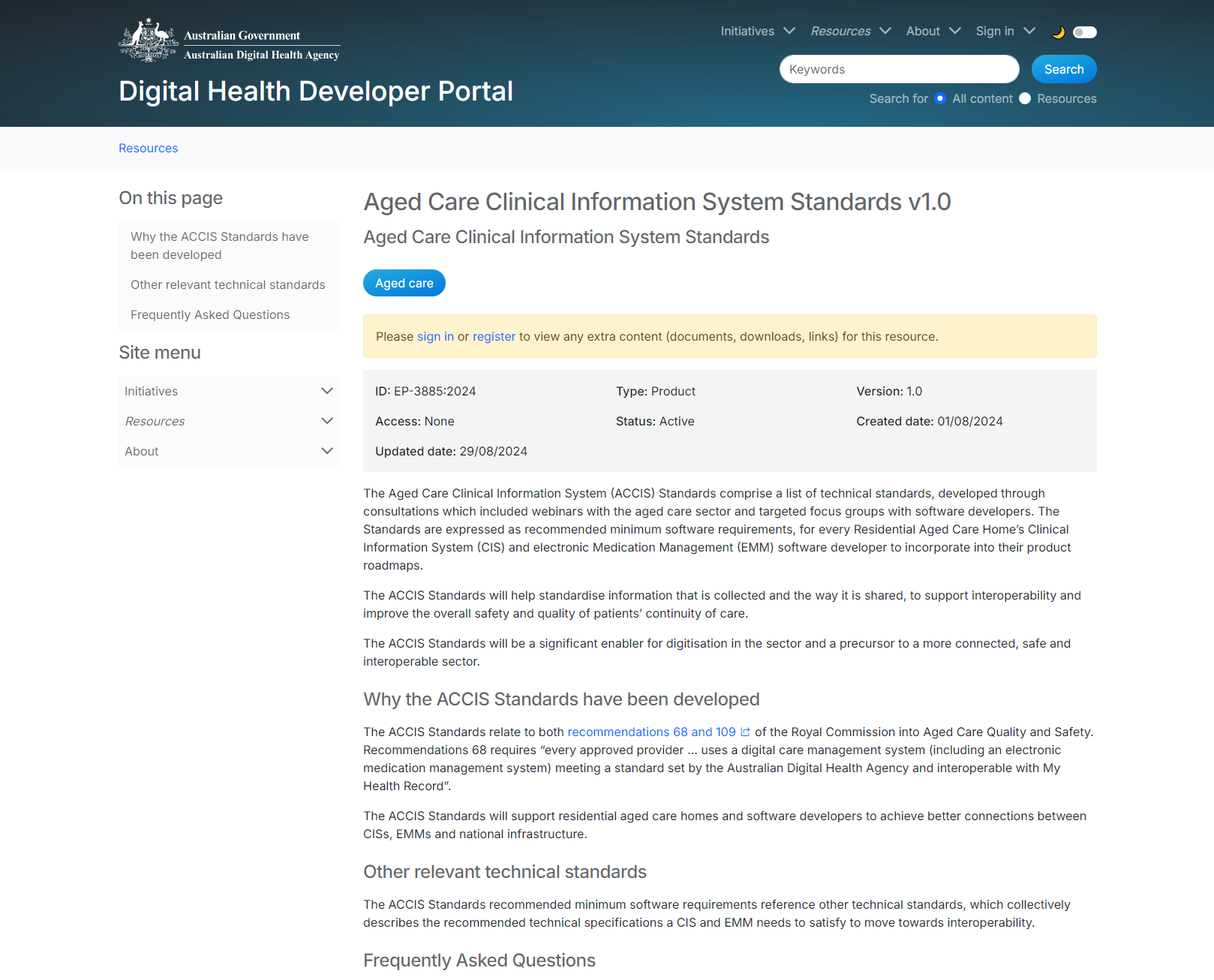
Digital Health Developer Portal - Aged Care Clinical Information System Standards v1.0
This resource outlines the Aged Care Clinical Information System (ACCIS) Standards version 1.0, which sets minimum software requirements for clinical information and electronic medication management systems in aged care. The standards support interoperability, data sharing, and improved care quality by enabling safe and efficient clinical decision-making and information exchange between care providers.
Disability, Ageing and Carers, Australia: Summary of Findings
This resource provides key statistics and findings on disability, ageing, and carers in Australia. It offers insights into the prevalence of disability, living arrangements, health conditions, and the needs for assistance among older adults. It also includes data on informal and formal care providers, highlighting the importance of support services for those aged 65 years and over in aged care settings.
Working with diverse groups in aged care - Resources
This resource provides guidance for aged care providers on working with people from diverse backgrounds. It includes information on caring for people from culturally and linguistically diverse (CALD) backgrounds, LGBTI elders, care leavers, and Aboriginal and Torres Strait Islander Elders. Training programs and resources are available to support culturally appropriate care.
This resource may refer to information that will be updated from 1 November 2025 to align with the new Aged Care Act and Quality Standards.
National Mental Health Workforce Strategy 2022–2032
This resource outlines the National Mental Health Workforce Strategy 2022–2032, providing a roadmap to build a sustainable, skilled mental health workforce. It focuses on attracting, training, and retaining professionals to meet future demands, including those in aged care. The strategy supports coordinated mental health services across various sectors, ensuring a person-centred approach and promoting mental health careers.
This resource may refer to information that will be updated from 1 November 2025 to align with the new Aged Care Act and Quality Standards.
Quality improvement guidance for aged care providers
This resource offers guidance for aged care providers on implementing continuous quality improvement processes. It explains the ‘Plan, Do, Check, Act’ model to monitor and enhance care quality, using data and feedback to address issues. It also provides practical examples and tools to support providers in improving care and meeting regulatory requirements. This resource may refer to information that will be updated from 1 November 2025 to align with the new Aged Care Act and Quality Standards.

Mental health tips for aged care workers and managers
This resource provides mental health tips for aged care workers and managers during the COVID-19 pandemic. It includes strategies to manage stress, anxiety, and overall mental wellbeing. The resource offers evidence-based advice on recognising when extra support is needed and how to maintain mental health, helping aged care staff navigate challenging times effectively.
Self-Care Matters Aged Care
This resource supports aged care workers in managing stress and maintaining mental and physical wellbeing. It includes videos and tools focused on self-care strategies, such as mindfulness, relaxation, and personalised self-care planning. The resource is designed to help prevent burnout and promote resilience in delivering high-quality care in aged care settings.
Open Disclosure resources for consumers
This resource provides information on open disclosure in healthcare, explaining what people should expect if harm occurs during care. It includes fact sheets in various languages and outlines how to prepare for open disclosure discussions. The resource aims to support transparent communication and improve care safety across healthcare settings, including aged care. This resource may refer to information that will be updated from 1 November 2025 to align with the new Aged Care Act and Quality Standards.
Not-for-Profit Governance Principles
This resource outlines the Not-for-Profit Governance Principles, a framework designed to help not-for-profit organisations, including aged care providers, achieve good governance. It covers key areas such as board roles, stakeholder engagement, risk management, and organisational culture. The principles provide practical guidance to improve governance practices, ensuring accountability and sustainability in the sector.
Aged Care Financial Report
This resource outlines the mandatory Aged Care Financial Report (ACFR) for approved aged care providers. It details reporting requirements for residential care, home care, multi-purpose services, and short-term restorative care. Providers must submit financial data on income, expenses, and compliance statements to receive government funding. This resource may refer to information that will be updated from 1 November 2025 to align with the new Aged Care Act and Quality Standards.
Financial and Prudential Monitoring, Compliance and Intervention Framework
This resource outlines the Financial and Prudential Monitoring, Compliance and Intervention Framework for aged care providers. It aims to enhance financial transparency, requiring stricter reporting, oversight, and adherence to prudential standards. The framework helps ensure financial stability, protects refundable accommodation deposits, and supports the continuity of care in residential aged care. It includes phased implementation and future regulatory changes.

Government Provider Management System resources
This resource provides user guides, quick reference materials, and videos to support aged care providers in using the Government Provider Management System (GPMS). It covers essential tasks such as managing user details, financial reporting, and service information. The GPMS ensures accurate and efficient data management for regulatory compliance and operational oversight in aged care services.
This resource may refer to information that will be updated from 1 November 2025 to align with the new Aged Care Act and Quality Standards.
Government Provider Management System (GPMS)
This resource provides an overview of the Government Provider Management System (GPMS), designed to simplify access to and reporting of information by aged care providers to the government. It includes user guides, fact sheets, and troubleshooting support for managing organisational details, notifications, and financial reporting in compliance with aged care requirements.
This resource may refer to information that will be updated from 1 November 2025 to align with the new Aged Care Act and Quality Standards.
Quarterly Financial Report resources
This resource provides information and templates for the Quarterly Financial Report (QFR), required for approved aged care providers. It includes data definitions, templates, frequently asked questions, and guidance for reporting on finances, labour costs, and other operational data. This resource may refer to information that will be updated from 1 November 2025 to align with the new Aged Care Act and Quality Standards.
Serious Incident Response Scheme (SIRS)
This resource outlines the Serious Incident Response Scheme (SIRS), which helps reduce abuse and neglect of older people in aged care services. It mandates that Commonwealth-subsidised aged care providers implement systems to manage and prevent serious incidents. Providers must report incidents such as abuse, neglect, and unlawful contact, ensuring older people’s safety and wellbeing. This resource may refer to information that will be updated from 1 November 2025 to align with the new Aged Care Act and Quality Standards.
Serious incidents
This resource provides information on how aged care providers should respond to serious incidents, ensuring the safety, health, and wellbeing of people in care. It outlines mandatory reporting requirements for incidents such as abuse, neglect, or financial coercion under the Serious Incident Response Scheme (SIRS), aiming to promote transparency and accountability in aged care settings. This resource may refer to information that will be updated from 1 November 2025 to align with the new Aged Care Act and Quality Standards.
Better Practice Complaint Handling Guide
This resource provides best practice guidance for handling complaints within public service agencies and private providers. It outlines the principles for creating an effective, customer-focused complaint system, including steps for logging, resolving, and communicating complaints. The guide also provides insights on staff training, performance benchmarks, and systemic improvement to enhance service quality and public trust, with relevance for aged care providers ensuring fair and transparent complaint resolution processes.