The Quality Standards Resource Centre helps extend understanding of the strengthened Aged Care Quality Standards, which took effect from 1 November 2025. You can search for resources by using keywords, or filtering by standard, outcome and audience. Before using the Resource Centre, please read the terms of use.
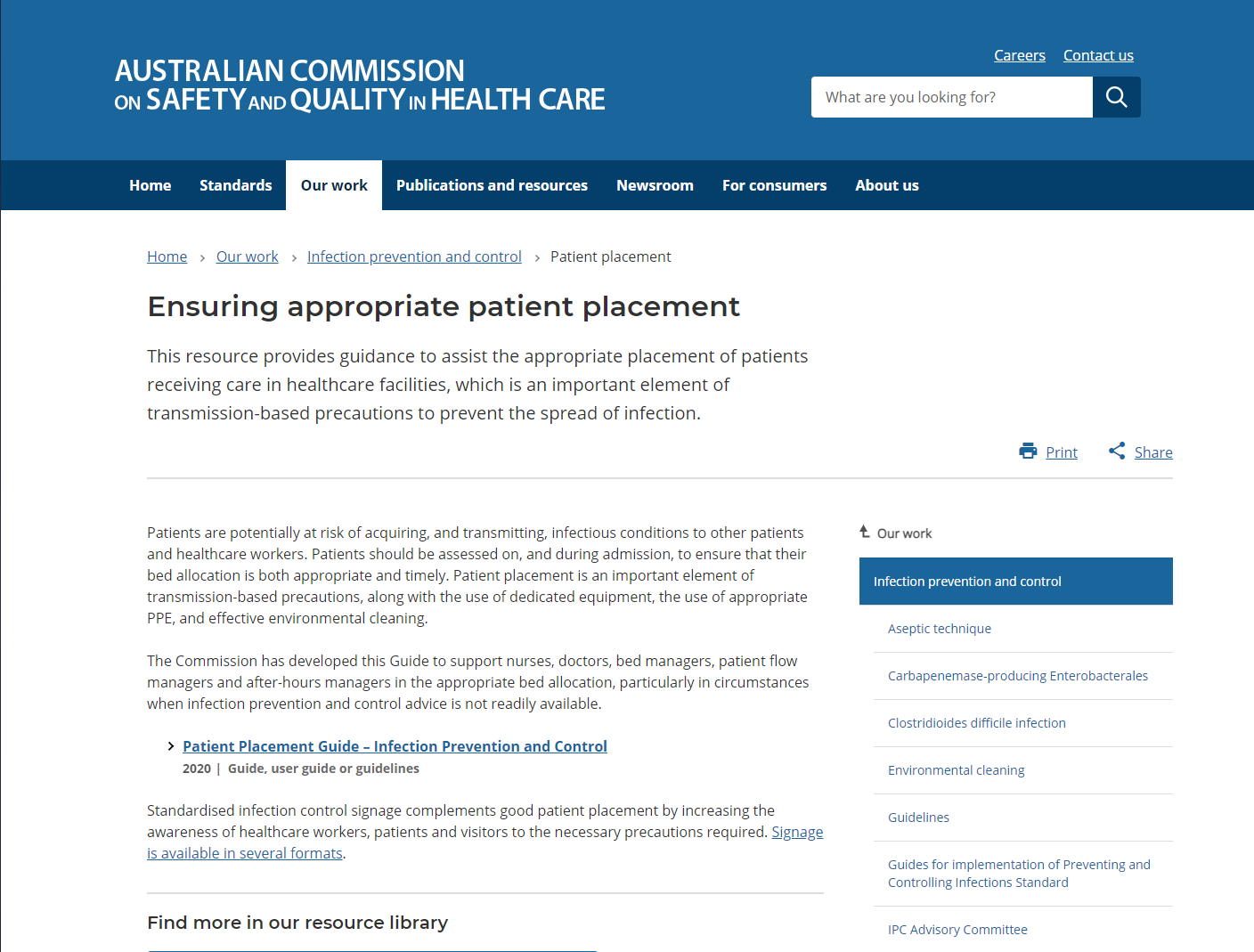
Ensuring appropriate patient placement
This resource provides guidance on ensuring appropriate patient placement in healthcare settings to prevent the spread of infections. It supports healthcare workers in assessing and allocating beds based on infection risks, promoting effective use of PPE, dedicated equipment, and environmental cleaning as part of transmission-based precautions.
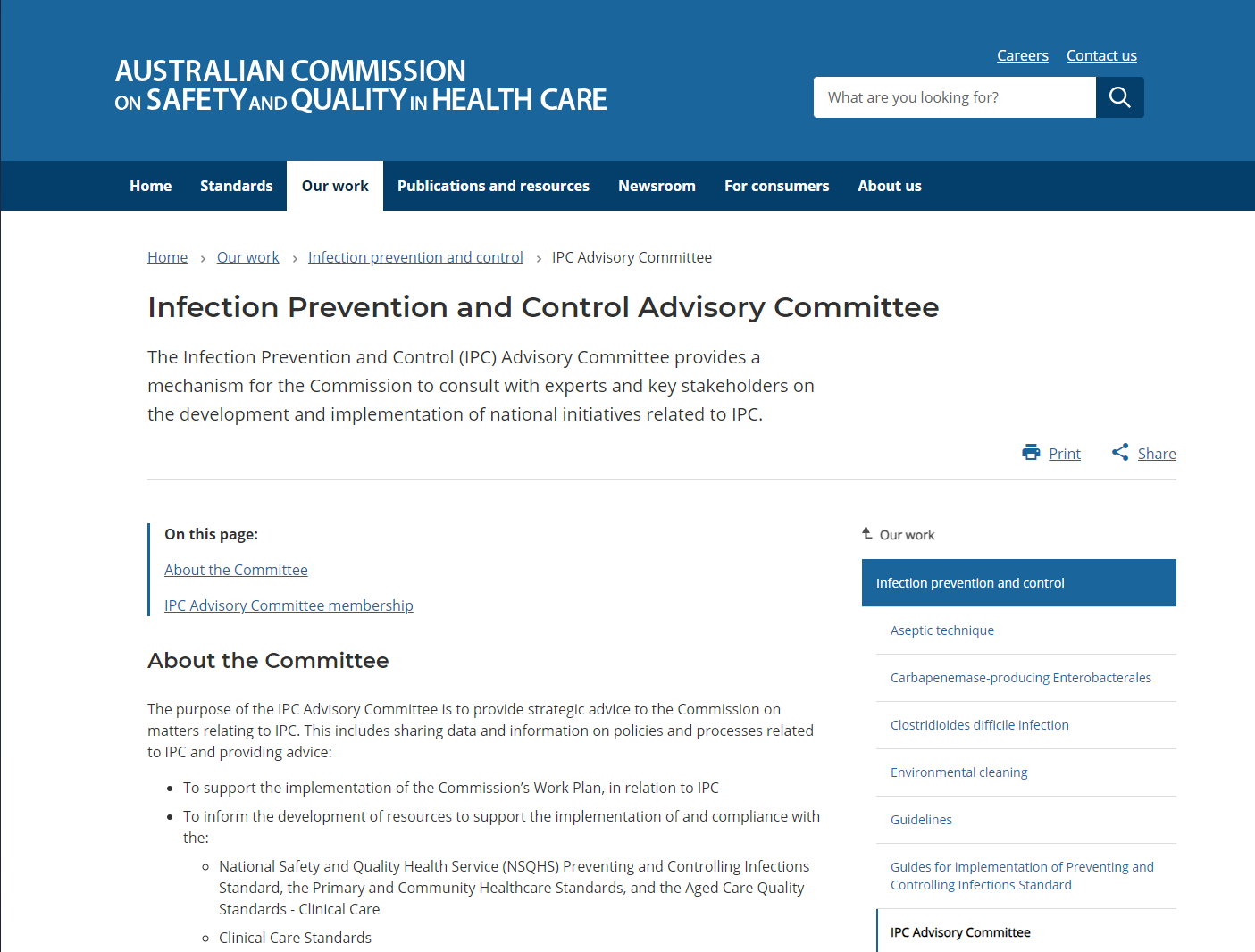
Infection Prevention and Control Advisory Committee
This resource outlines the role of the Infection Prevention and Control (IPC) Advisory Committee. The committee provides strategic advice to support national initiatives related to infection prevention and control, focusing on compliance with safety standards, infection surveillance, and improving engagement with clinicians and consumers to enhance IPC practices.
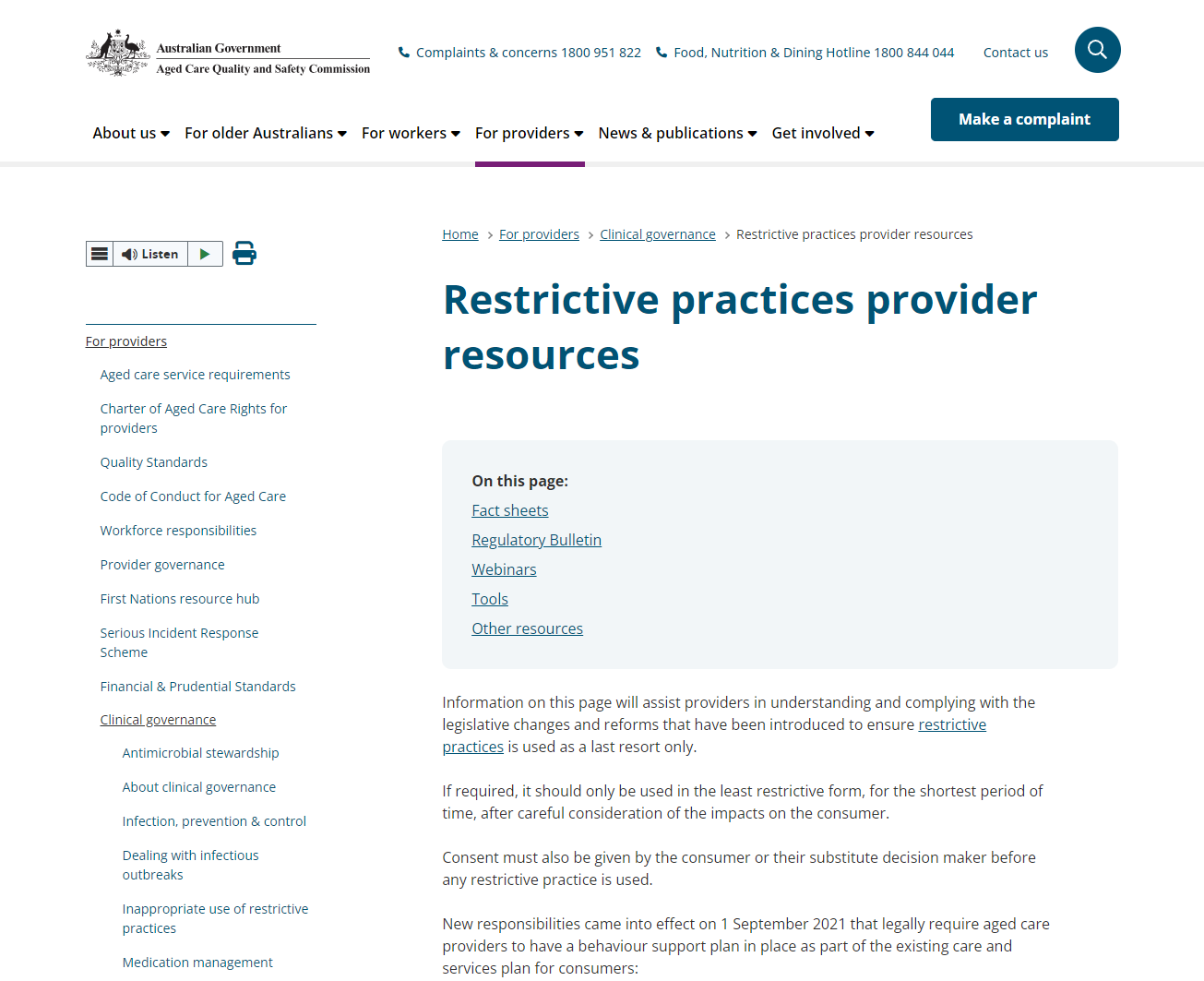
Restrictive practices provider resources
This resource offers guidance and tools for aged care providers on managing restrictive practices. It emphasises using restrictive practices as a last resort, obtaining informed consent, and developing behaviour support plans. The materials include fact sheets, regulatory updates, webinars, and decision-making tools to ensure compliance with legislation and promote person-centred care.
This resource may refer to information that will be updated from 1 November 2025 to align with the new Aged Care Act and Quality Standards.
Food for thought - positive stories
This resource shares positive stories about food, nutrition, and dining improvements in aged care facilities. It highlights initiatives that enhance the dining experience, including resident involvement in meal planning, use of fresh and seasonal ingredients, and creating more social and enjoyable mealtime environments. These stories demonstrate best practices and innovative approaches to improve resident satisfaction and wellbeing.
Food, nutrition & dining - information for providers
This resource provides information and support for aged care providers to improve food, nutrition, and dining services. It includes guidance on meeting nutritional standards, promoting resident choice, and ensuring a positive dining experience. The resource also offers tools for monitoring food quality, addressing dietary needs, and enhancing overall meal service delivery. This resource may refer to information that will be updated from 1 July 2025 to align with the new Aged Care Act and Quality Standards.
Food, nutrition & dining - information for workers
This resource provides guidance for aged care workers on improving food, nutrition, and dining experiences for residents. It covers meal preparation, resident engagement in food choices, safe food handling, and the importance of nutrition in promoting wellbeing. The resource offers practical tips for ensuring meals meet individual dietary needs and preferences. This resource may refer to information that will be updated from 1 November 2025 to align with the new Aged Care Act and Quality Standards.
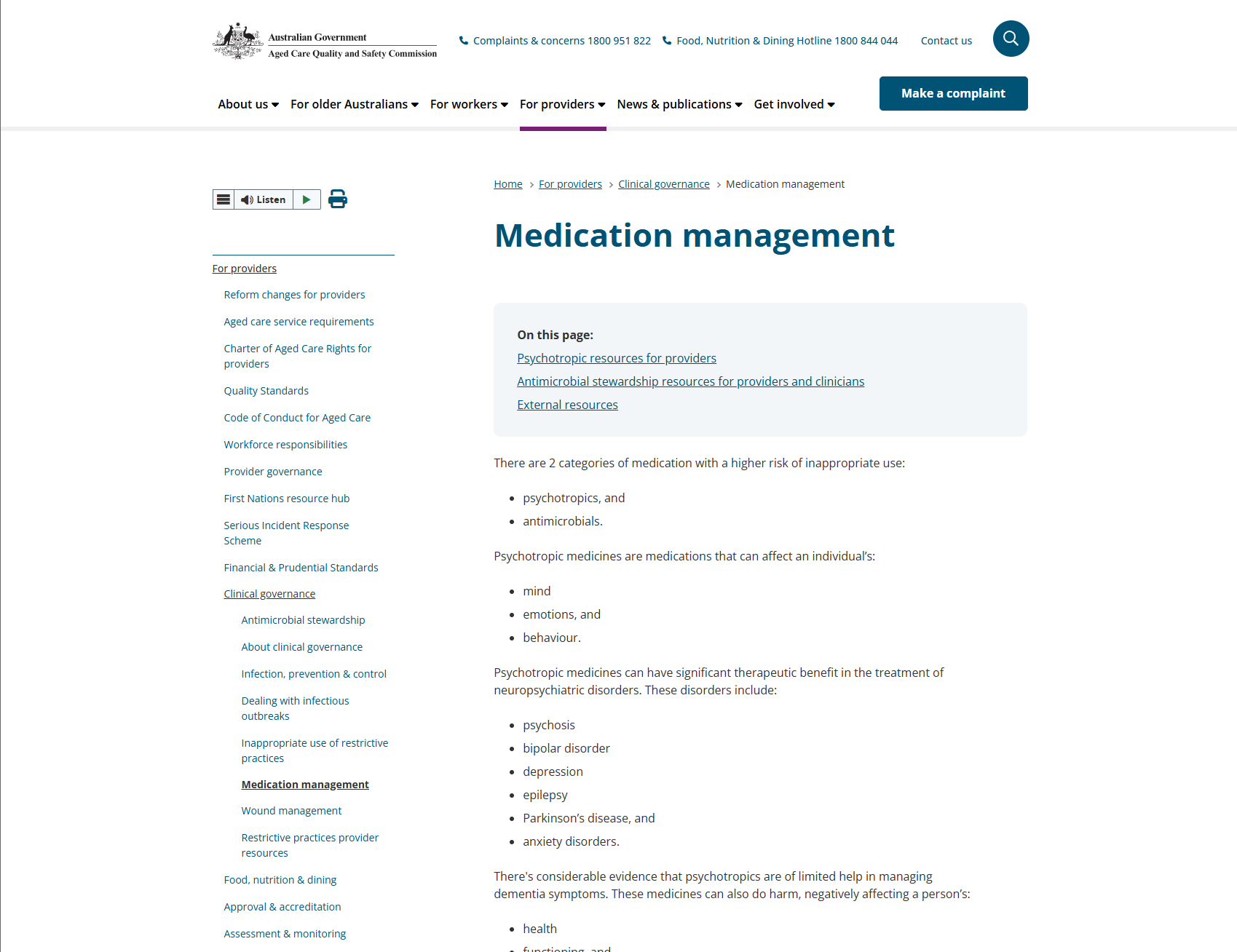
Medication management
This resource provides information on medication management in aged care, focusing on psychotropics and antimicrobials. It includes tools for reducing inappropriate use, antimicrobial stewardship guidance, self-assessment resources, and quality bulletins. It aims to improve medication safety, prevent inappropriate prescribing, and support care providers in ensuring safe clinical practices.
This resource may refer to information that will be updated from 1 November 2025 to align with the new Aged Care Act and Quality Standards.
Principles for safe and high-quality transitions of care
This resource outlines essential principles to support safe and high-quality transitions of care for people across healthcare settings, including aged care. It emphasises person-centred approaches, multidisciplinary collaboration, secure record systems, and continuity of care, aiming to minimise risks during care transitions for vulnerable populations.
This resource may refer to information that will be updated from 1 November 2025 to align with the new Aged Care Act and Quality Standards.
Tools and aids to help at home
This resource outlines tools, aids, and technology to help people with dementia live safely and independently at home. It includes medication reminders, safety devices, communication tools, and sensory aids. The document provides guidance on selecting appropriate tools to support daily tasks, reduce stress, and maintain quality of life at home.
Aids, equipment and modifications through the Rehabilitation Appliances Program (RAP)
This resource provides information about the Rehabilitation Appliances Program (RAP), which offers aids, equipment, and home or vehicle modifications to help veterans stay independent. It explains the types of items available, such as mobility devices, personal care aids, and home accessibility modifications, and outlines the process for accessing these services through clinical assessments.
Mobility aids
This resource provides an overview of mobility aids, including walkers, wheelchairs, lifting aids, and electric beds, to help people move safely and independently. It explains how these devices can help with daily tasks, manage pain, and reduce injury risks. The document also includes information on accessing aids through government programs or health professionals.
Older people and falls
This resource provides information on the causes, treatments, and prevention of falls in older people. It outlines risk factors, such as home hazards and health conditions, and offers practical tips for reducing falls, including lifestyle changes, home modifications, and medical assessments. The document emphasises the importance of fall prevention in aged care settings.
Aids to stay independent
This resource provides information on aids to help people stay safe and independent at home. It includes equipment such as walking aids, bed rails, and pressure-relieving mattresses. These services are available through the Commonwealth Home Support Programme or Home Care Packages, depending on eligibility, following an assessment.
Action 1.33: Welcoming environments
This resource provides guidance on creating welcoming environments in healthcare services, including aged care, to make sure Aboriginal and Torres Strait Islander people feel safe, respected, and supported. It outlines strategies for cultural safety, collaboration with communities, and improving access to care through inclusive design, training, and environmental changes.
Action 3.17 - Reprocessing of reusable equipment and devices
This resource outlines procedures for reprocessing reusable medical equipment and devices to minimise infection risks. It covers processes for ensuring compliance with national and international standards, maintaining traceability, and managing reprocessing for novel infections. It also highlights the importance of proper storage, transport, and workforce training to support safe reprocessing. This resource may apply to healthcare contexts outside of aged care.
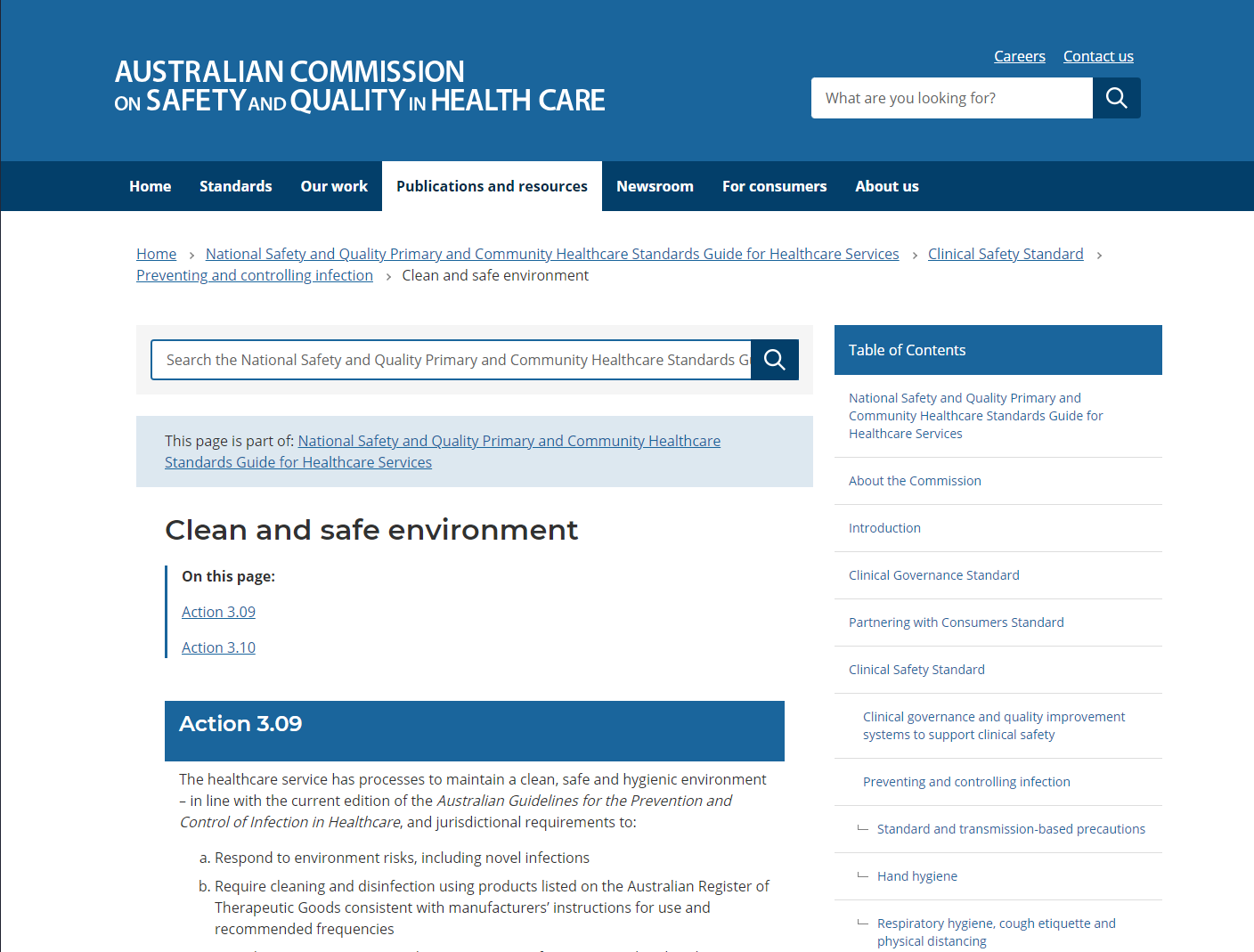
Clean and safe environment
This resource outlines processes to maintain a clean, safe, and hygienic environment in healthcare, including aged care. It provides guidance on infection control, environmental cleaning, and staff training to reduce risks and make sure high-quality care. The document also covers responding to environmental risks, maintaining equipment, and infection prevention practices.
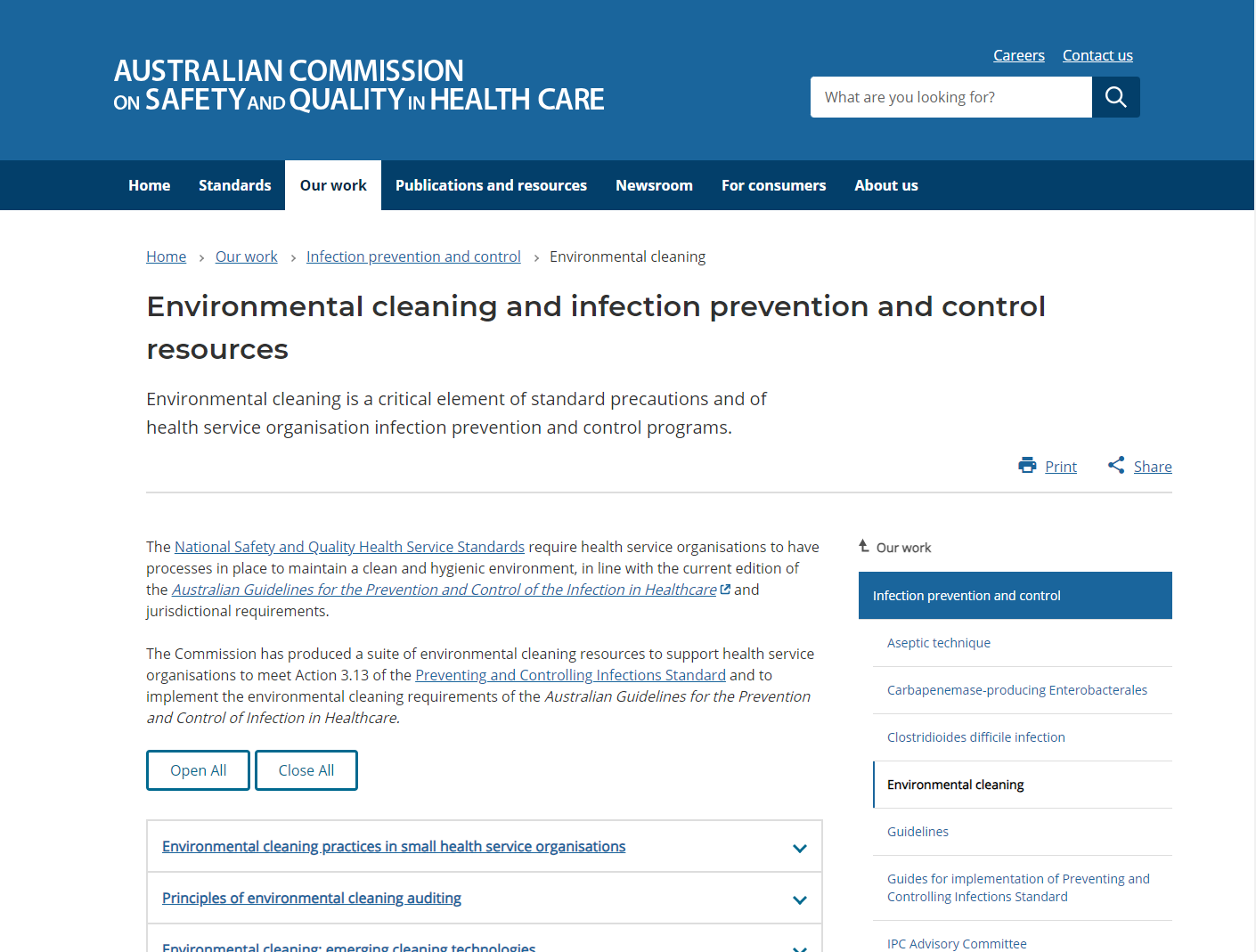
Environmental cleaning and infection prevention and control resources
This resource offers a range of environmental cleaning and infection prevention tools for healthcare settings, including guidelines for small organisations, cleaning audits, product selection, and emerging cleaning technologies. It supports aged care providers in maintaining clean, hygienic environments, helping them comply with infection control standards and ensure safety.
This resource may refer to information that will be updated from 1 November 2025 to align with the new Aged Care Act and Quality Standards.
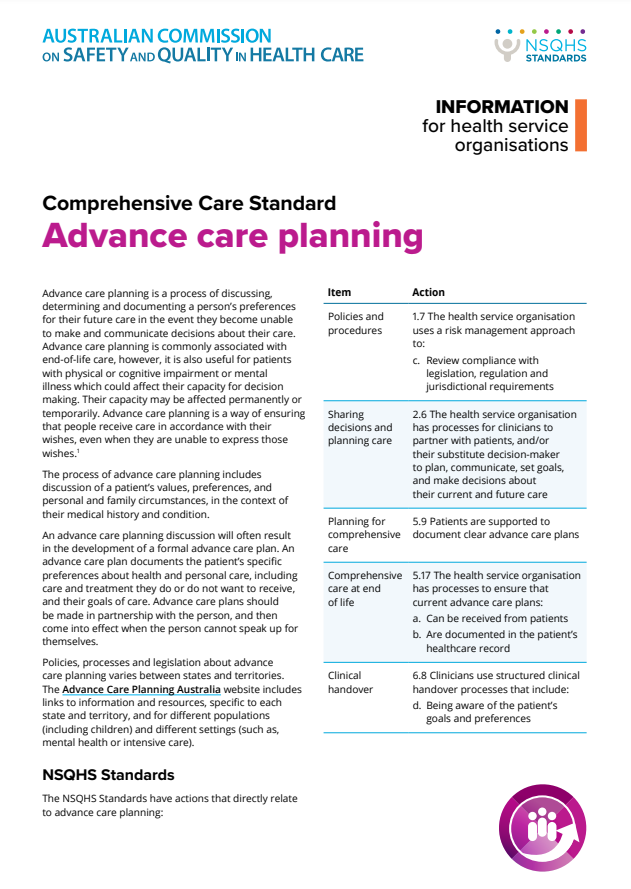
Advance care planning - Information for health service organisations
This resource outlines how health service organisations can support advance care planning within the Comprehensive Care Standard (National Safety and Quality Health Service Standards). It highlights the importance of documenting a patient’s preferences for future care and ensuring systems are in place to act on these plans. It also provides actions related to policies, sharing decisions, comprehensive care, and clinical handover.
Oral health care for adult patients - Recommendations
This resource provides recommendations for oral health care in adult inpatients, focusing on preventing issues like aspiration pneumonia, infections, and malnutrition. It emphasises regular oral assessments and evidence-based care practices. Its principles are applicable in aged care settings to enhance overall care.
Please consider the applicability of this resource to your care setting. This resource may refer to information that will be updated from 1 November 2025 to align with the new Aged Care Act and Quality Standards.
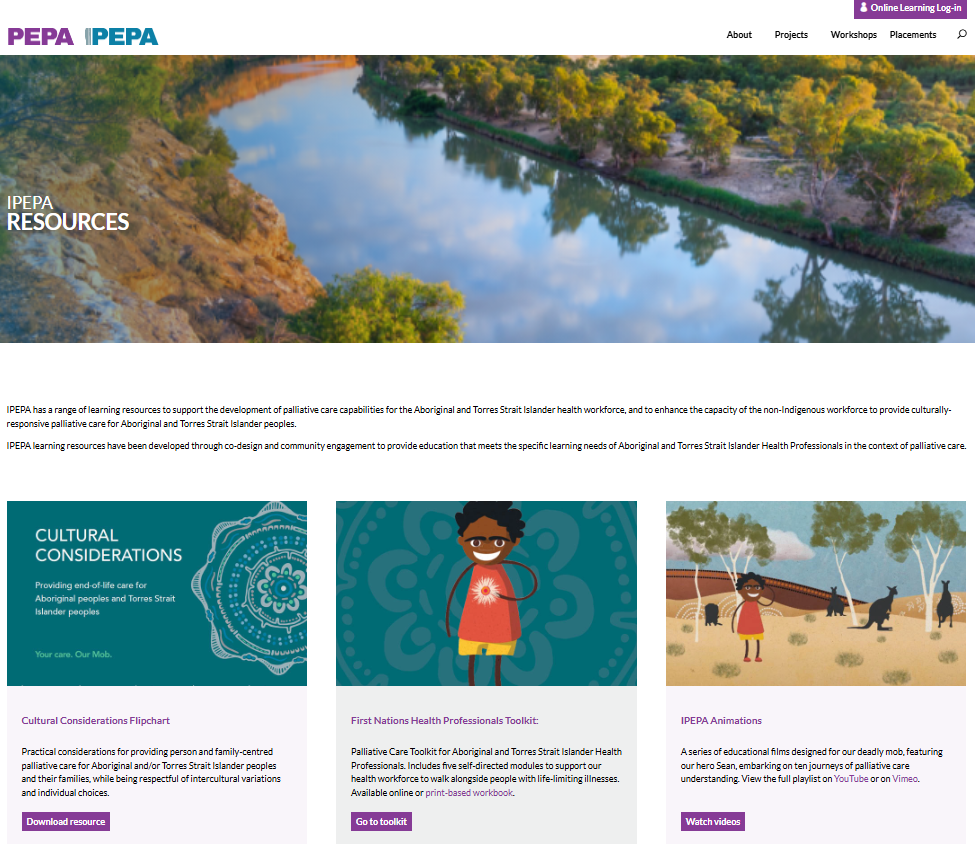
Indigenous Program of Experience in the Palliative Approach
This page provides resources about palliative care for Aboriginal and Torres Strait Islander health workers, and resources to support the non-Indigenous workforce provide culturally-responsive palliative care for Aboriginal and Torres Strait Islander peoples.