Quality Standards Resource Centre

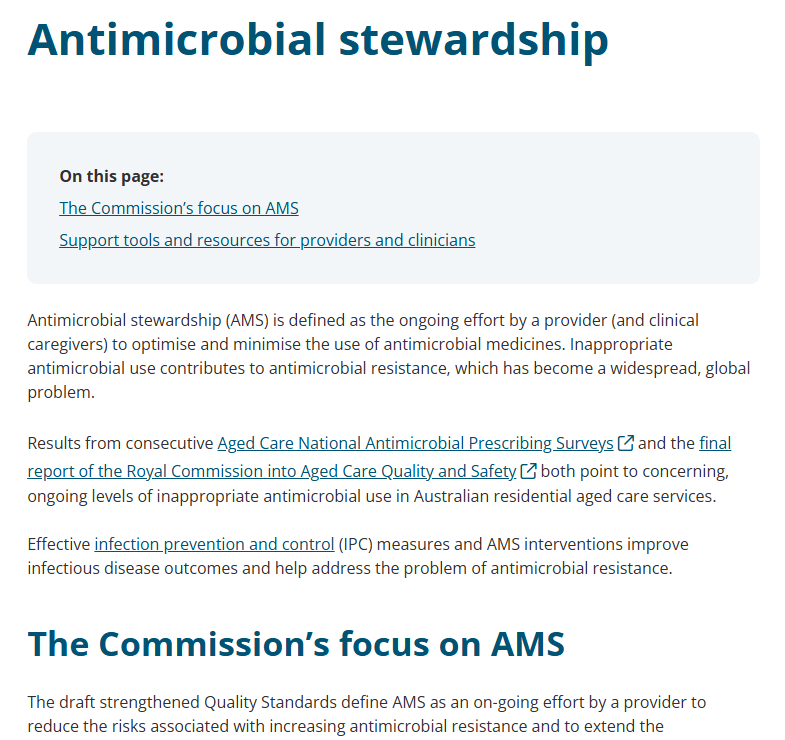
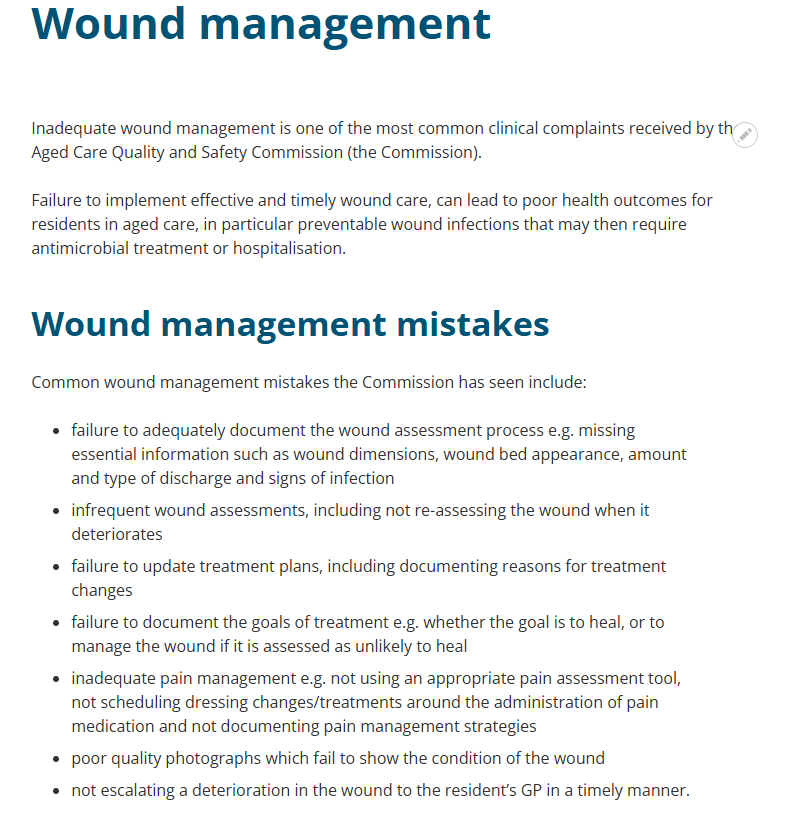
The Quality Standards Resource Centre helps extend understanding of the strengthened Aged Care Quality Standards, which took effect from 1 November 2025. You can search for resources by using keywords, or filtering by standard, outcome and audience. Before using the Resource Centre, please read the terms of use.

Displaying 121 to 136 of 136 result(s)
/quality-standards/statement-rights-workers

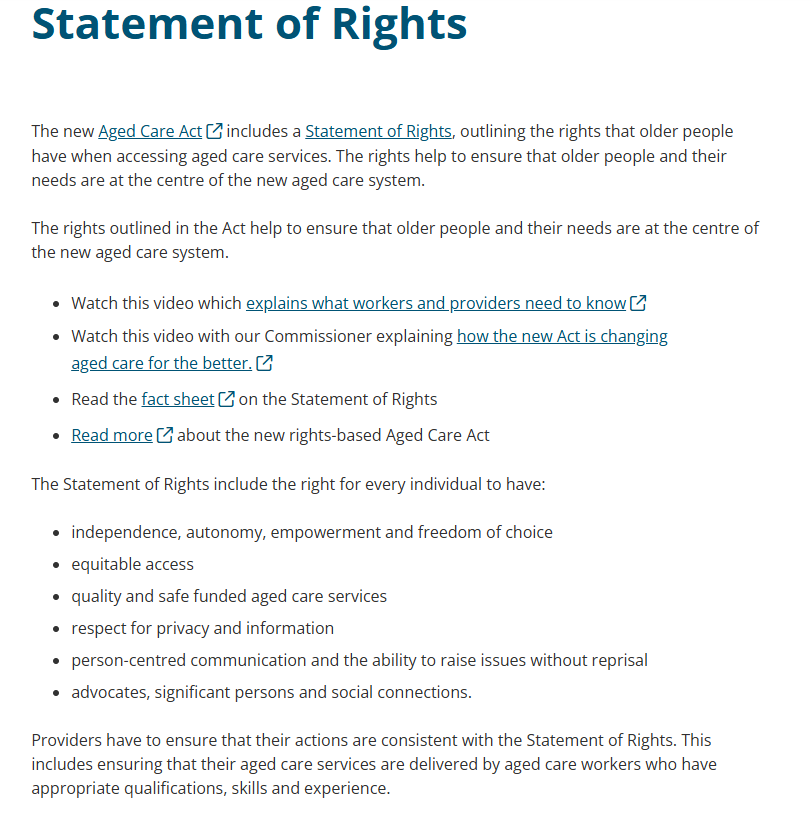
Statement of Rights - Workers

Guidance

This resource provides information for providers about the Statement of Rights. The Statement of Rights promote quality and safe care for older persons accessing, or seeking to access, funded aged care services. The rights help to ensure that older people and their needs are at the centre of the new aged care system. 

This page includes information about what the Statement of Rights means for providers, and has links to additional resources about the rights, including videos and fact sheets.

Author
Aged Care Quality & Safety Commission
Standard
1: The Individual, 2: The Organisation, 7: The Residential Community
Outcomes
1.1: Person-centred care, 1.2: Dignity, respect and privacy, 1.3: Choice, independence and quality of life, 2.6b: Complaints and feedback management for individuals, 7.1: Daily living
Statement of rights - workers
/quality-standards/better-practice-guide-complaints-handling-aged-care-services

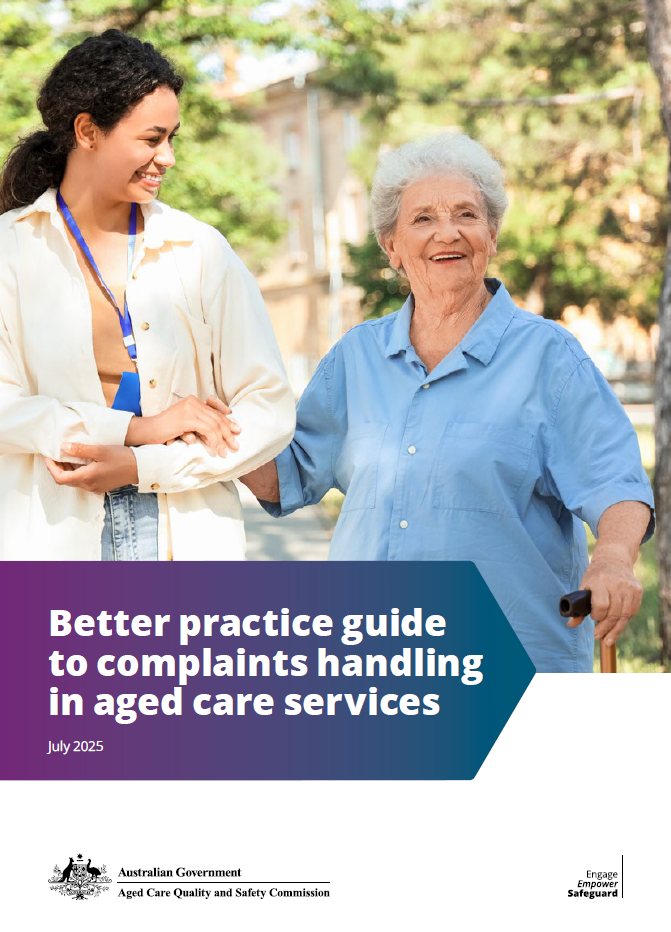
Better practice guide to complaints handling in aged care services

Guides
Published date
Last Updated

This booklet aims to give guidance on how to:

Author
Aged Care Quality & Safety Commission
Standard
2: The Organisation
Outcomes
2.6a: Complaints and feedback management for aged care workers, 2.6b: Complaints and feedback management for individuals
Better practice guide to complaints handling in aged care services
/quality-standards/quality-care-advisory-body-fact-sheet-0

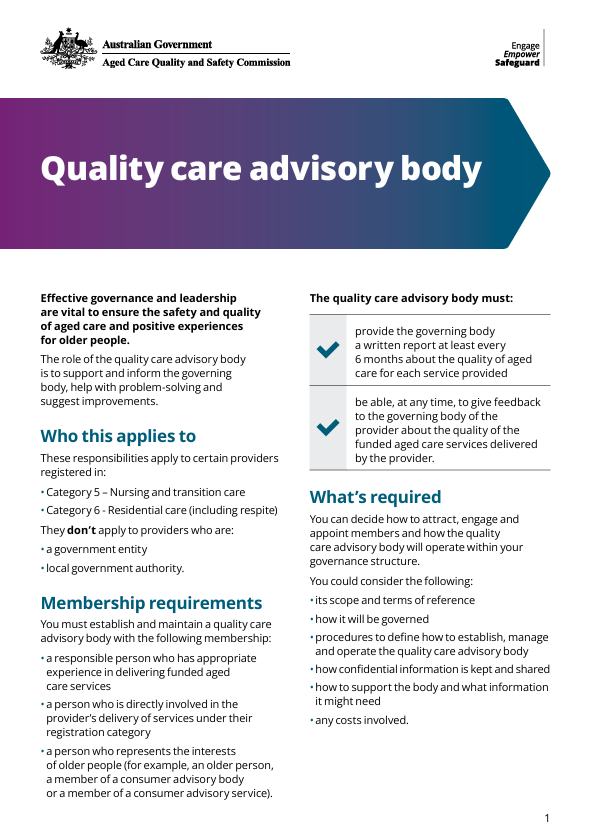
Quality care advisory body fact sheet

Fact sheet
Published date

Explains the quality care advisory body obligations, including who must be on the advisory body and what actions, reports and feedback are required.

Author
Aged Care Quality & Safety Commission
Standard
2: The Organisation
Outcomes
2.1: Partnering with individuals, 2.2a: Quality, safety and inclusion culture to support aged care workers to deliver quality care, 2.2b: Quality, safety and inclusion culture to support individuals, 2.3: Accountability, quality system and policies and procedures
quality care advisory body thumbnail
/quality-standards/statement-rights-providers

Statement of Rights - Providers

Guidance

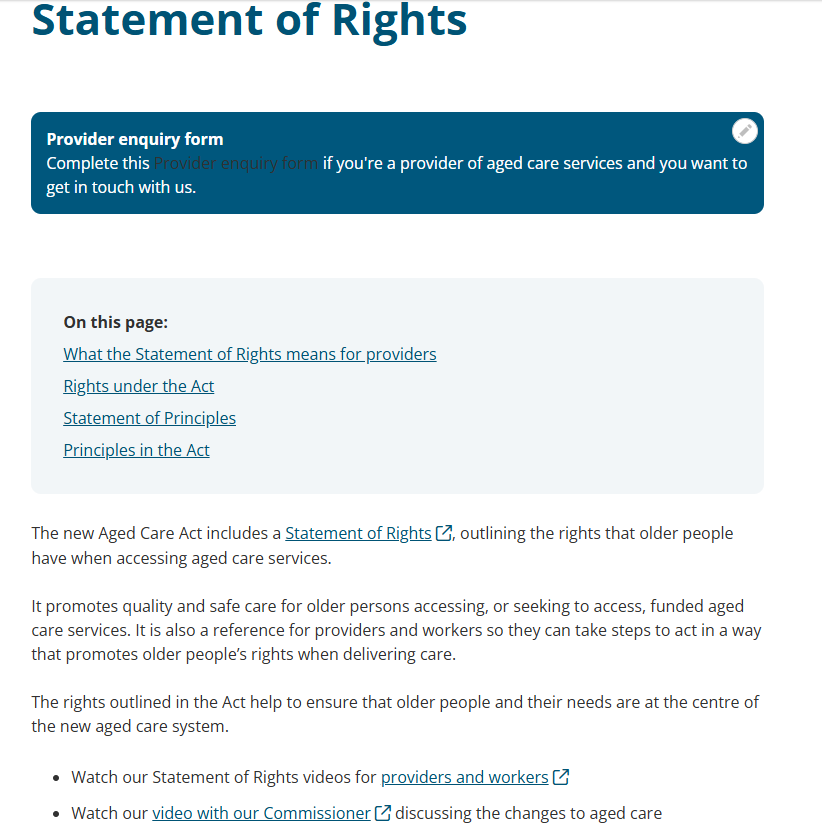
This resource provides information for providers about the Statement of Rights. The Statement of Rights promote quality and safe care for older persons accessing, or seeking to access, funded aged care services. The rights help to ensure that older people and their needs are at the centre of the new aged care system. 

This page includes information about what the Statement of Rights means for providers, and has links to additional resources about the rights, including videos and fact sheets.

Author
Aged Care Quality & Safety Commission
Standard
1: The Individual, 2: The Organisation, 7: The Residential Community
Outcomes
1.1: Person-centred care, 1.2: Dignity, respect and privacy, 1.3: Choice, independence and quality of life, 2.6b: Complaints and feedback management for individuals, 7.1: Daily living
Statement of Rights - Providers
/quality-standards/provider-governance

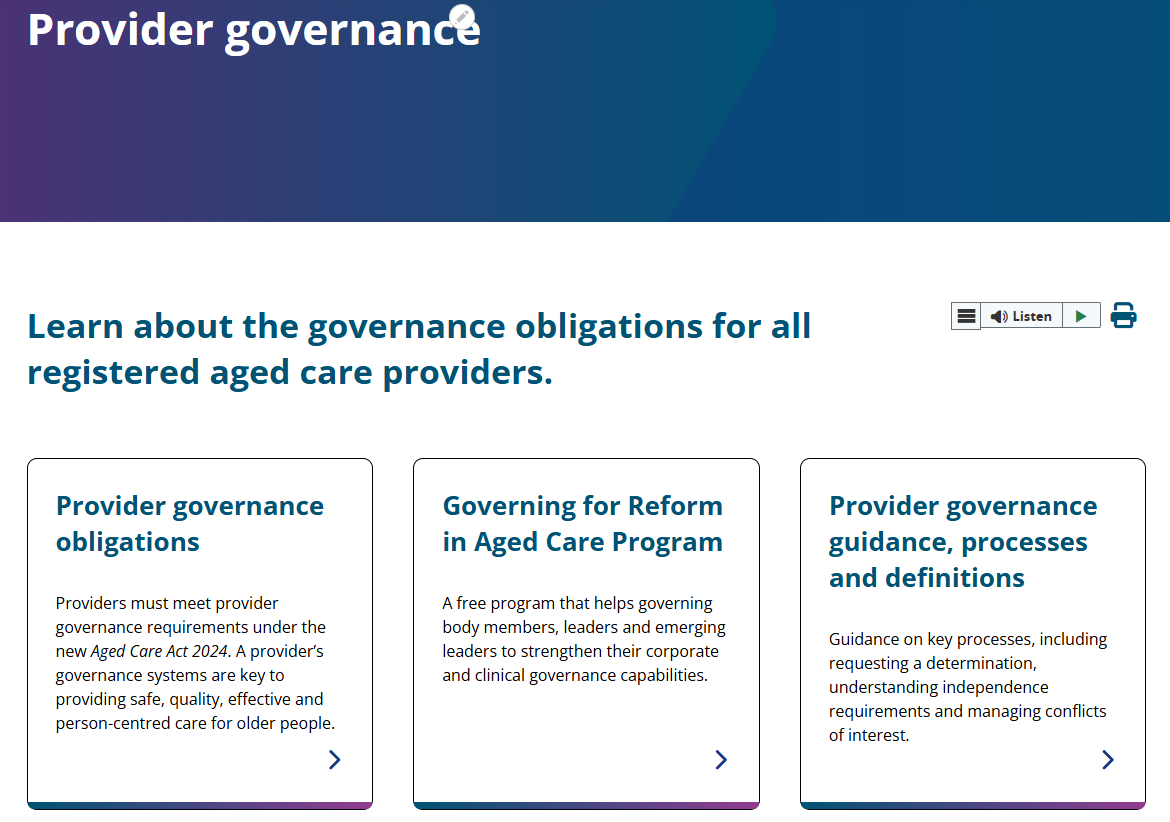
Provider governance

Guidance

This page outlines governance requirements for registered aged care providers. It includes governance obligations, information about the Governing for Reform in Aged Care Program and guidance on key processes and definitions. 

This resource may refer to information that will be updated from 1 November 2025 to align with the new Aged Care Act and Quality Standards.

Author
Aged Care Quality & Safety Commission
Standard
2: The Organisation
Outcomes
2.2a: Quality, safety and inclusion culture to support aged care workers to deliver quality care, 2.2b: Quality, safety and inclusion culture to support individuals, 2.3: Accountability, quality system and policies and procedures
Provider governance page thumbnail
/quality-standards/membership-governing-bodies-fact-sheet

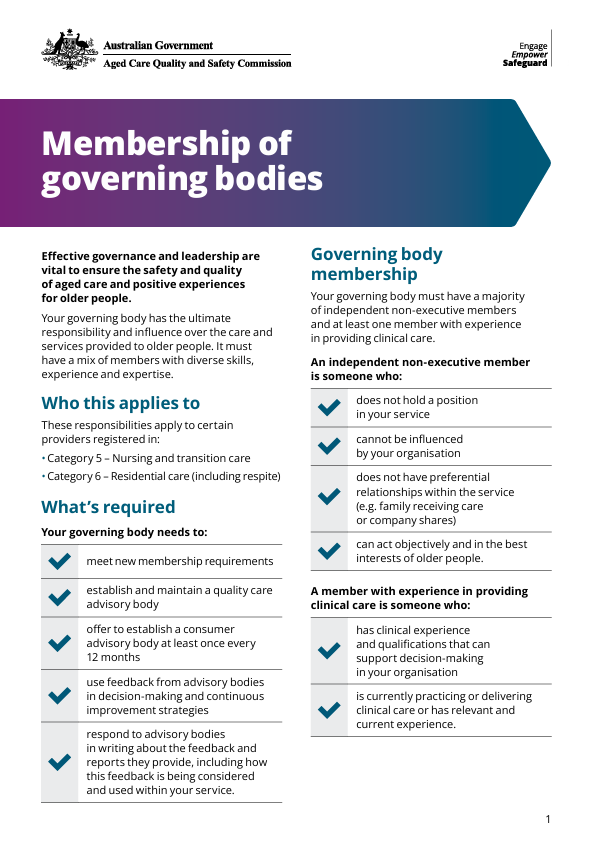
Membership of governing bodies fact sheet

Fact sheet
Published date

Explains the governing body membership requirements, including what ‘independent non-executive’ and ‘clinical care experience’ mean, and how to apply for a determination if you can’t meet one or both requirements. 

Author
Aged Care Quality & Safety Commission
Standard
2: The Organisation
Outcomes
2.2a: Quality, safety and inclusion culture to support aged care workers to deliver quality care, 2.2b: Quality, safety and inclusion culture to support individuals, 2.3: Accountability, quality system and policies and procedures
Membership of governing bodies thumbnail
/quality-standards/provider-governance-checklist-0

Provider governance checklist

Fact sheet
Published date

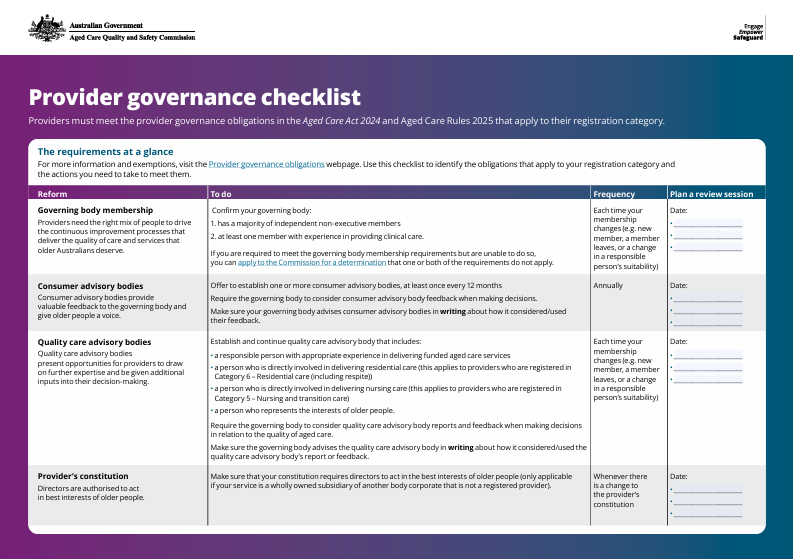
Provides a way for you to identify which governance obligations apply to your registration category, and to plan and record the actions and review dates you need to meet them.

Provider governance checklist  (PDF  370.5 KB)
Author
Aged Care Quality & Safety Commission
Standard
2: The Organisation
Outcomes
2.2a: Quality, safety and inclusion culture to support aged care workers to deliver quality care, 2.2b: Quality, safety and inclusion culture to support individuals, 2.3: Accountability, quality system and policies and procedures
Provider governance checklist thumbnail
/quality-standards/care-delivery-evidence-collection-tool-cdect-residential-category-6

Care Delivery Evidence Collection Tool (CDECT) – Residential (Category 6)

Tool
Published date
Last Updated

Providers must complete this tool as part of a renewal audit in registration category 6. 

The CDECT – Residential must be completed once for each category 6 service. 

We use this tool to collect evidence about the residential care home.

Author
Aged Care Quality & Safety Commission
Standard
2: The Organisation
Outcomes
2.3: Accountability, quality system and policies and procedures
CDECT – Residential (Category 6) thumbnail
/quality-standards/care-delivery-evidence-collection-tool-cdect-care-delivery-location-category-4-5

Care Delivery Evidence Collection Tool (CDECT) – Care delivery location (Category 4 & 5)

Tool
Published date
Last Updated

Providers must complete this tool as part of a renewal audit in registration categories 4 and 5. 

We will identify a targeted sample of care delivery locations (Category 4 & 5). You will be notified of this sample and the CDECT – Care delivery location must only be completed for these targeted sample locations. 

We use this tool to collect evidence about care and services delivered in a home or community setting.

Author
Aged Care Quality & Safety Commission
Standard
2: The Organisation
Outcomes
2.3: Accountability, quality system and policies and procedures
CDECT – Care delivery location (Category 4 & 5) thumbnail
/quality-standards/audit-evidence-collection-tool-aect-registration

Audit Evidence Collection Tool (AECT) – Registration

Tool
Published date
Last Updated

Organisations or persons must complete the Audit Evidence Collection Tool (AECT) – Registration as part of the initial registration audit. This is compulsory for organisations or persons applying for registration in categories 4, 5 and 6 from 1 November 2025.

The registration audit helps us to understand if the organisation or person can conform with the related strengthened Aged Care Quality Standards. 

We use this tool to collect evidence about:

Author
Aged Care Quality & Safety Commission
Standard
2: The Organisation
Outcomes
2.3: Accountability, quality system and policies and procedures
Audit evidence collection tool
/quality-standards/audit-evidence-collection-tool-aect-renewal

Audit Evidence Collection Tool (AECT) – Renewal

Tool
Published date
Last Updated

Providers must complete the Audit Evidence Collection Tool (AECT) – Renewal as part of a renewal audit in registration categories 4, 5 and 6. This is compulsory for providers from 1 November 2025.

Providers only need to complete this tool once as part of the audit program.

The renewal audit helps us to understand if the provider can conform with the related strengthened Aged Care Quality Standards.

We use this tool to collect evidence about:

  • your systems and processes
  • how you deliver safe and quality care to older people.
Author
Aged Care Quality & Safety Commission
Standard
2: The Organisation
Outcomes
2.3: Accountability, quality system and policies and procedures
Draft audit evidence tool - renewal
/quality-standards/audit-evidence-collection-tool-aect-variation

Audit Evidence Collection Tool (AECT) – Variation

Tool
Published date
Last Updated

Providers must complete the Audit Evidence Collection Tool (AECT) – Variation as part of a variation audit, where they are asking to add categories 4, 5 or 6 to their registration. This is compulsory for providers from 1 November 2025.

The variation audit helps us to understand if the provider can conform with the related strengthened Aged Care Quality Standards. 

We use this tool to collect evidence about:

  • the systems and processes you will establish
  • how you will deliver safe and quality care to older people.
Author
Aged Care Quality & Safety Commission
Standard
2: The Organisation
Outcomes
2.3: Accountability, quality system and policies and procedures
Draft audit evidence tool - variation
/quality-standards/renewal-registration-audit-guide

Renewal of registration audit guide

Guidance
Published date
Last Updated

This guide helps you prepare for and take part in a renewal of registration audit.

It describes:

  • the purpose of audits and how they inform (help us make) registration decisions
  • the 3 stages of the audit process (initiation, delivery, reporting)
  • what to expect and what to do at each stage
  • the types of evidence we consider during audits
  • how we define our audit ratings
  • the audit tools we use
  • other relevant resources.
Author
Aged Care Quality & Safety Commission
Standard
2: The Organisation
Outcomes
2.3: Accountability, quality system and policies and procedures
Renewal of  registration  audit guide
/quality-standards/variation-registration-audit

Variation of registration audit

Guidance
Published date
Last Updated

This guide helps you prepare for and take part in a variation of registration audit.

It describes:

  • the purpose of audits and how they inform (help us make) registration decisions
  • the 3 stages of the audit process (initiation, delivery, reporting)
  • what to expect and what to do at each stage
  • the types of evidence we consider during audits
  • how we define our audit ratings
  • the audit tools we use
  • other relevant resources.
Variation of registration audit  (PDF  434.06 KB)
Author
Aged Care Quality & Safety Commission
Standard
2: The Organisation
Outcomes
2.3: Accountability, quality system and policies and procedures
Variation of registration audit
/quality-standards/making-sure-your-workers-can-work-aged-care

Making sure your workers can work in aged care

Fact sheet
Published date
Last Updated

Registered providers need to have governance systems and processes to make sure their aged care workers can work in aged care. This fact sheet explains providers’ obligations to:

  • screen aged care workers
  • make sure aged care workers don’t have banning orders against them that restrict or ban them from being involved in aged care.
     
Author
Aged Care Quality & Safety Commission
Standard
2: The Organisation
Outcomes
2.8: Workforce planning, 2.9: Human resource management
Making sure your workers can work in aged care
/quality-standards/right-based-and-person-centred-care-what-it-means-older-people-video

Right-based and person-centred care - what it means for older people video

Video
Published date
Last Updated

This video explains what right-based and person-centred care means and how you can work with your provider to achieve it. 

Author
Aged Care Quality & Safety Commission
Standard
1: The Individual
Outcomes
1.1: Person-centred care
Right-based and person-centred care - what it means for older people video screenshot