The Quality Standards Resource Centre helps extend understanding of the strengthened Aged Care Quality Standards, which took effect from 1 November 2025. You can search for resources by using keywords, or filtering by standard, outcome and audience. Before using the Resource Centre, please read the terms of use.
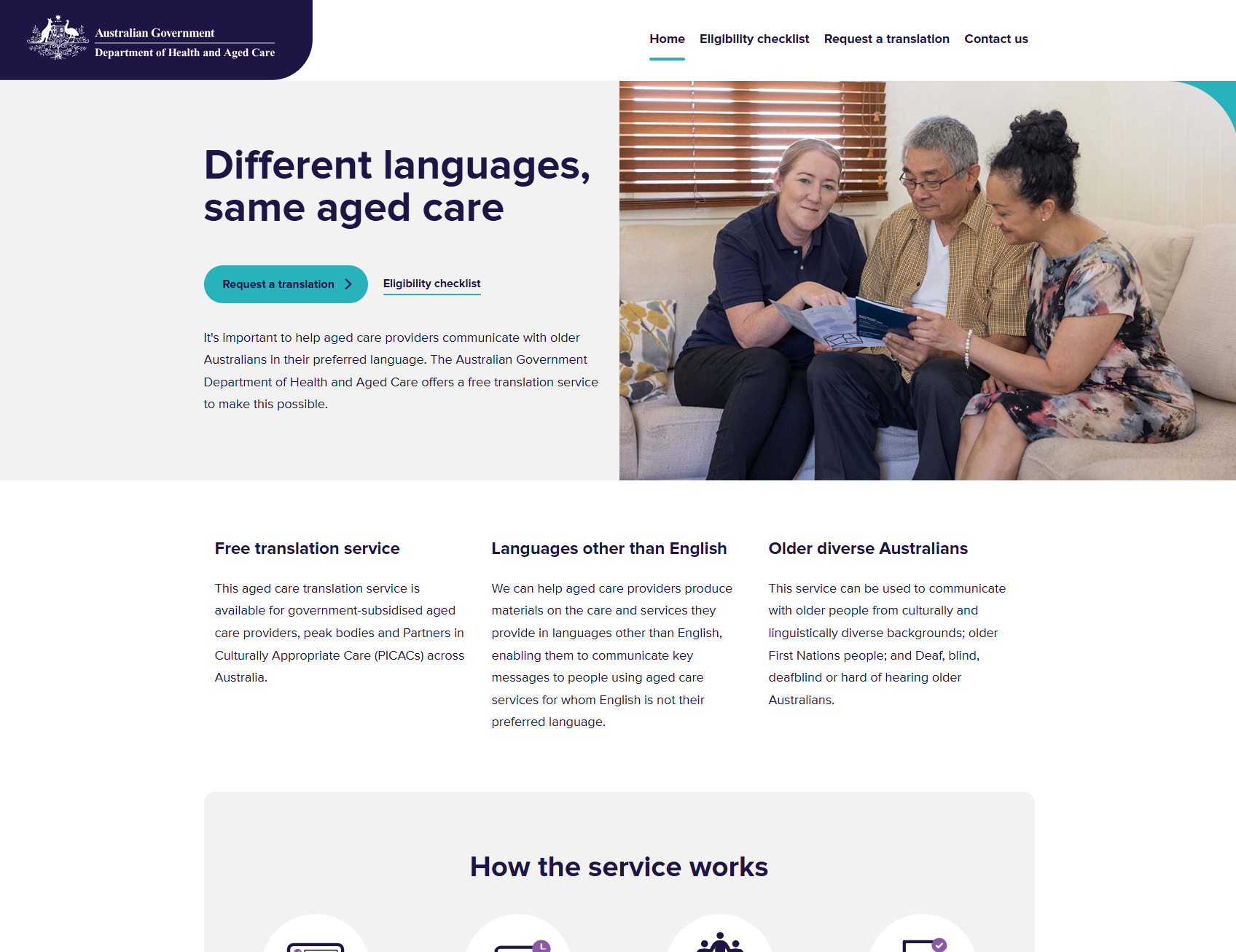
Different languages, same aged care
This resource provides information on a free translation service for government-subsidised aged care providers, enabling communication in languages other than English. It helps aged care providers reach diverse communities, including culturally and linguistically diverse individuals, First Nations people, and those who are Deaf or hard of hearing, supporting culturally inclusive care.
This resource may refer to information that will be updated from 1 November 2025 to align with the new Aged Care Act and Quality Standards.
National Dementia Action Plan
This action plan outlines practical steps to improve the experiences of people living with dementia, their carers, and families in Australia. It aims to guide government policies, improve care services, raise awareness, and integrate support systems over the next 10 years, incorporating feedback from public consultations and stakeholders.
This resource may refer to information that will be updated from 1 November 2025 to align with the new Aged Care Act and Quality Standards.
National Roadmap for Improving the Health of People with Intellectual Disability
This resource outlines the National Roadmap for Improving the Health of People with Intellectual Disability, aiming to address health inequities. It focuses on enhancing care support, developing better models of care, improving oral health, and supporting health professionals. The roadmap includes projects on primary care, health assessments, curriculum development, and more.
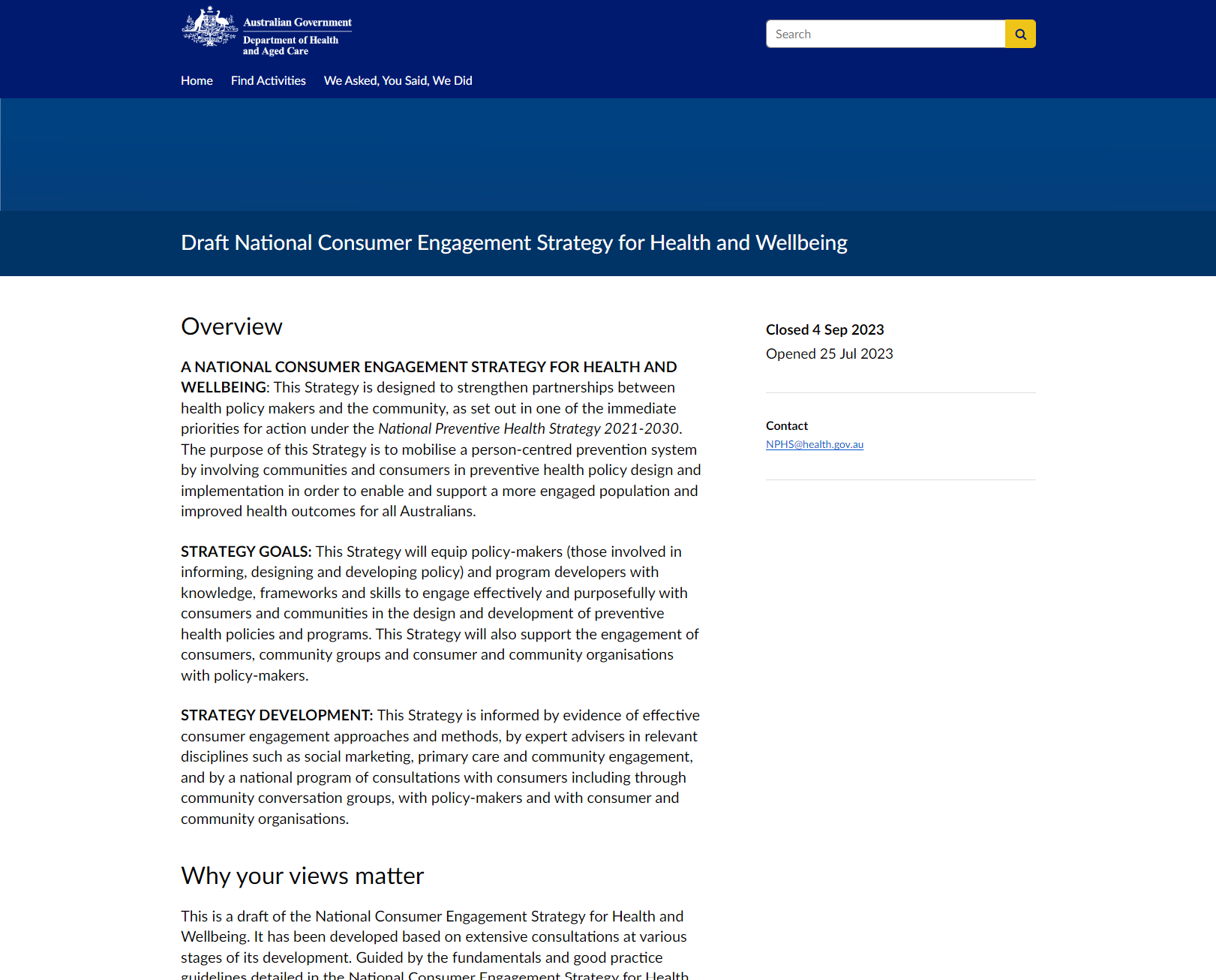
Draft National Consumer Engagement Strategy for Health and Wellbeing
This resource presents the Draft National Consumer Engagement Strategy for Health and Wellbeing, which aims to foster partnerships between health policymakers and communities. It is designed to involve people and communities in the development and implementation of preventive health policies. The strategy supports policymakers and program developers in engaging effectively with consumers to achieve improved health outcomes across Australia.
Consumer and carer engagement: A practical guide
This resource provides a guide for engaging consumers and carers in mental health services. It outlines steps for involving people in decision-making, service design, and evaluation. The guide emphasises co-design, leadership, and dedicated resources to create a person-centred approach that improves care and service outcomes.