The Quality Standards Resource Centre helps extend understanding of the strengthened Aged Care Quality Standards, which took effect from 1 November 2025. You can search for resources by using keywords, or filtering by standard, outcome and audience. Before using the Resource Centre, please read the terms of use.
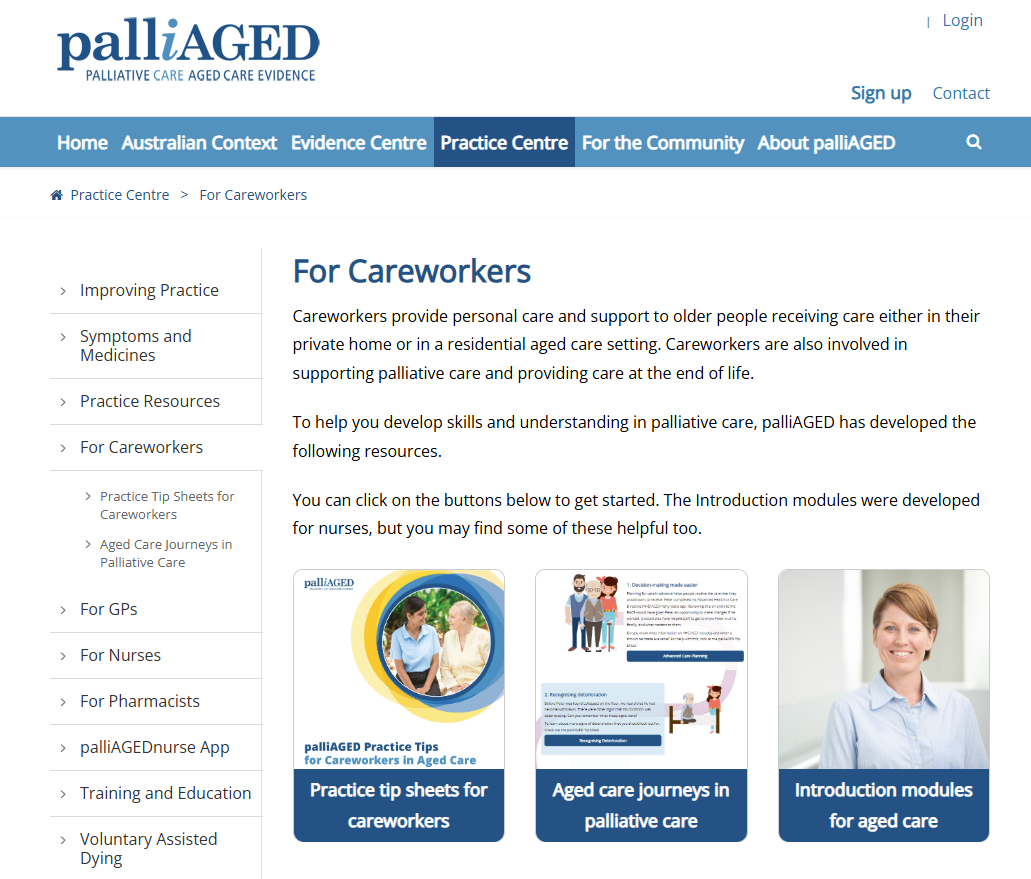
palliAGED - Practice Centre
This resource provides information for care workers about palliative care. The Practice Centre provides links to, and information about, tools and resources to use in practice and improve care and outcomes in palliative care. It includes sections on improving practice, symptoms, medicines and tipsheets.
palliAGED - Evidence Centre
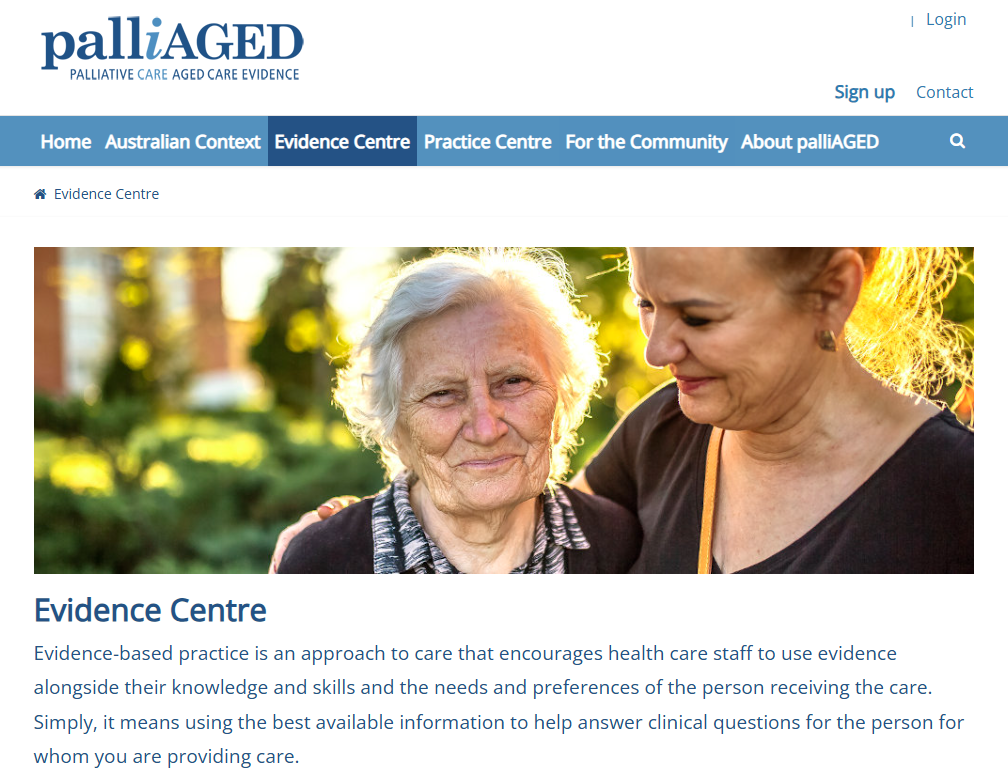
This resource provides evidence-based information for the healthcare sector about palliative care. It includes evidence summaries on topics related to palliative care, such as advance care planning, advocacy, care coordination, goals of care, nutrition and needs assessment.
Malnutrition Universal Screening Tool
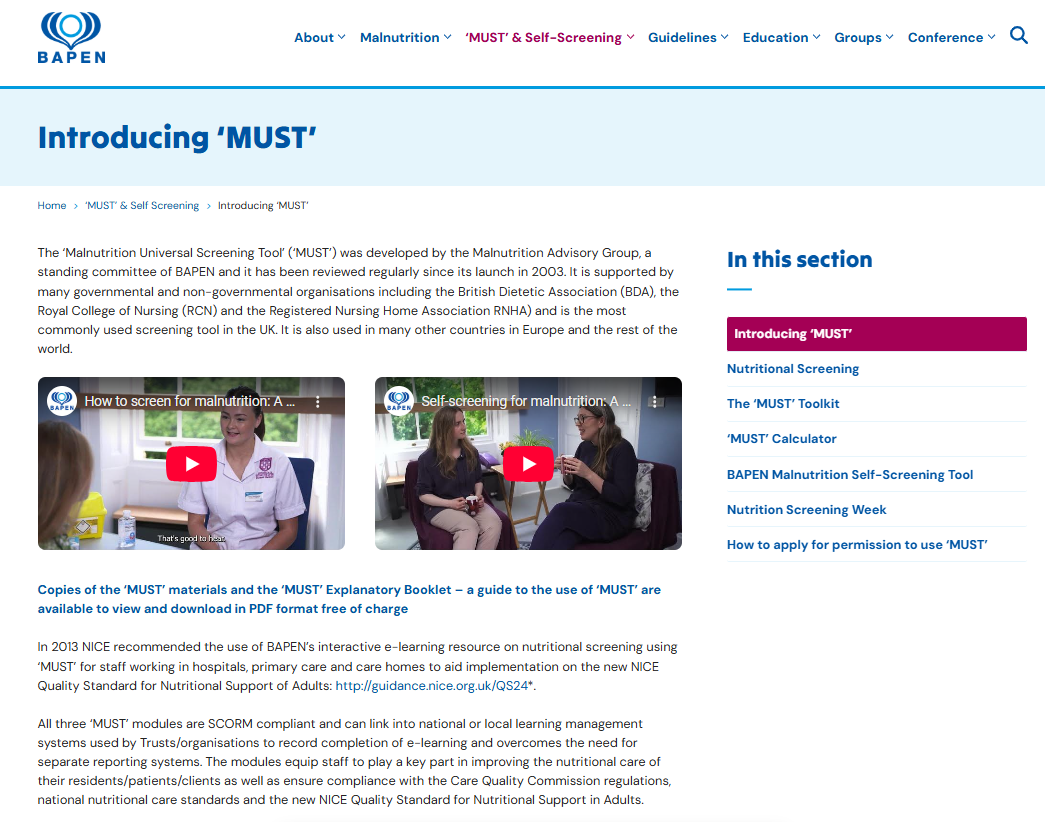
The ‘Malnutrition Universal Screening Tool’ (‘MUST’) is a widely used tool for identifying malnutrition risk in adults across various settings. It includes interactive e-learning modules with case studies and assessments, helping staff improve nutritional care and meet quality standards.
This resource was developed internationally and therefore its applicability and usefulness may be limited.
Best Practice Food and Nutrition Manual for Aged Care
This manual offers practical guidelines on food and nutrition best practices in aged care homes, covering menu planning, meal enjoyment, hydration, and malnutrition prevention. It includes checklists, screening tools, and dietary considerations tailored to the needs of older people.
This resource was developed by a state/territory government or organisation and therefore its applicability and usefulness may be limited.
Standardised care processes
This resource offers evidence-based standardised care processes for aged care providers, covering high-risk clinical areas such as falls, pain, incontinence, and dehydration. It provides structured guidelines to support best practices, ensuring consistent and safe care for older people in residential settings.
This resource was developed by a state/territory government or organisation and therefore its applicability and usefulness may be limited.
RACGP aged care clinical guide (Silver Book) - Part B - Abuse of older people
This resource provides guidance on recognising, assessing, and managing abuse of older people in various settings, including residential aged care. It covers types of abuse (financial, emotional, physical, sexual, neglect), risk factors, barriers to disclosure, and steps for prevention. The document also includes recommendations for safety planning, intervention strategies, and resources for support across Australian states and territories.
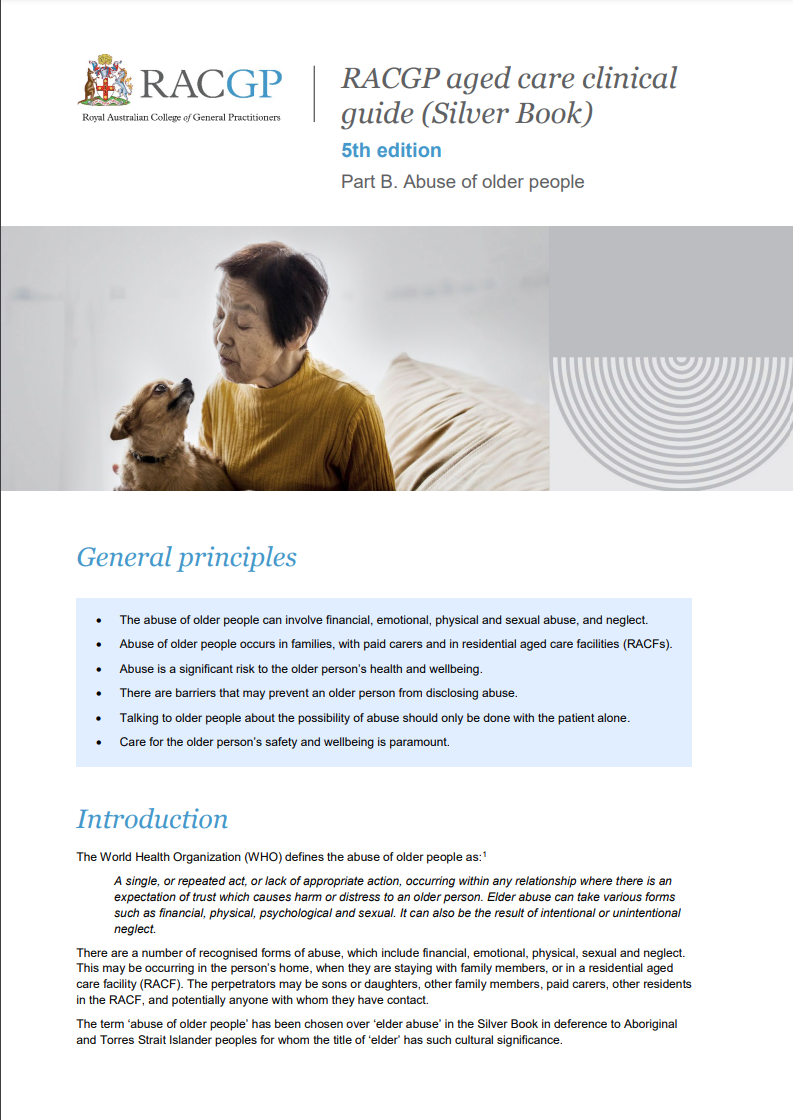
Residential aged care food services discussion paper
This paper presents a high-level overview of contemporary evidence regarding food services in residential aged care settings.
 Residential aged care food services discussion paper (PDF 536.47 KB)
Benefits of effective incident management video
In this short video, we provide an overview of the benefits of effective incident management in residential aged care settings under the Serious Incident Response Scheme (SIRS), which commenced on 1 April 2021.
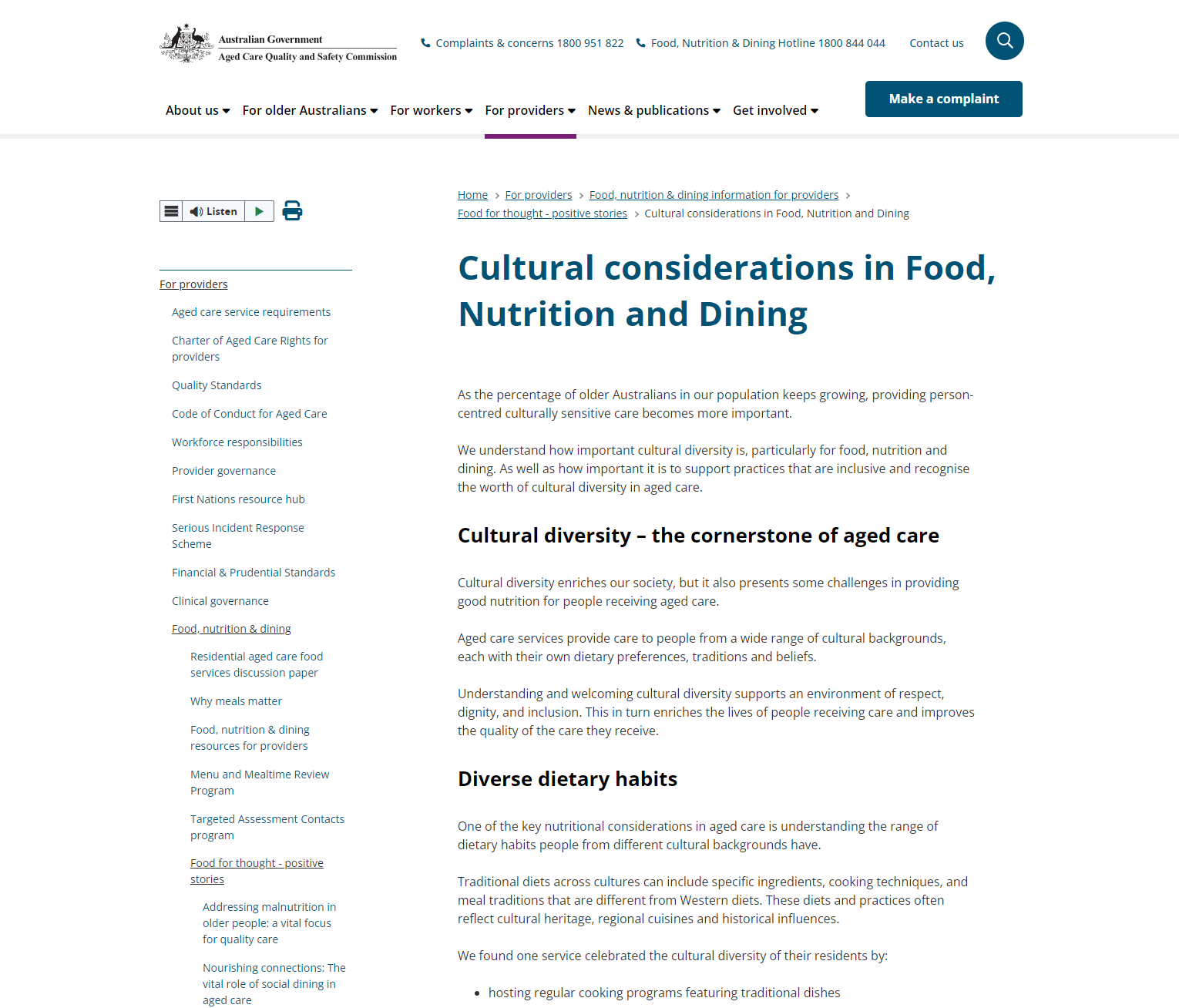
Cultural considerations in Food, Nutrition and Dining
This resource provides guidance on incorporating cultural considerations into food, nutrition, and dining in aged care settings. It highlights the importance of understanding diverse dietary preferences, religious practices, and family dynamics to support person-centred care, improve wellbeing, and promote inclusivity within the aged care environment.
This resource may refer to information that will be updated from 1 November 2025 to align with the new Aged Care Act and Quality Standards.
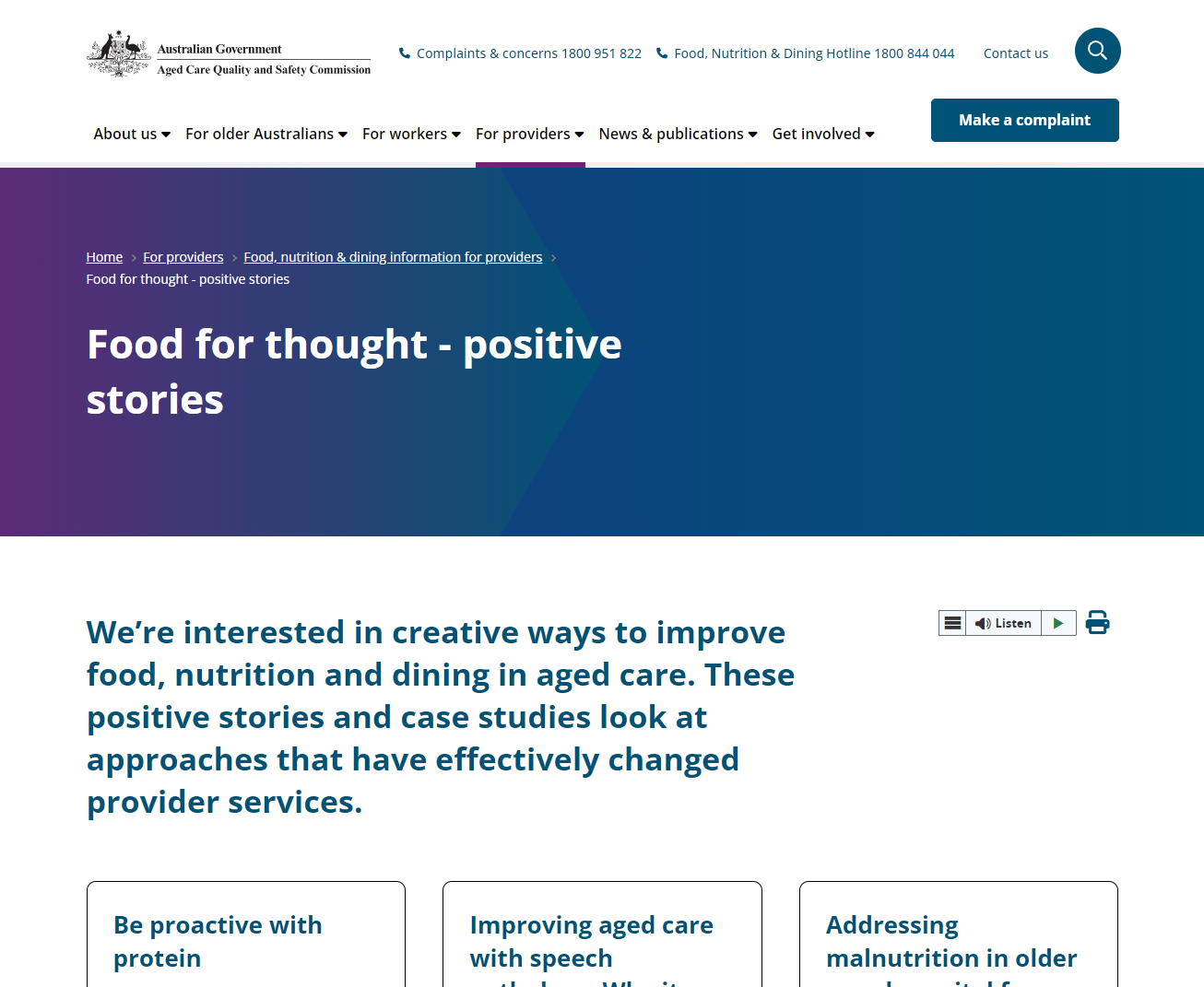
Food for thought - positive stories
This resource shares positive stories about food, nutrition, and dining improvements in aged care facilities. It highlights initiatives that enhance the dining experience, including resident involvement in meal planning, use of fresh and seasonal ingredients, and creating more social and enjoyable mealtime environments. These stories demonstrate best practices and innovative approaches to improve resident satisfaction and wellbeing.
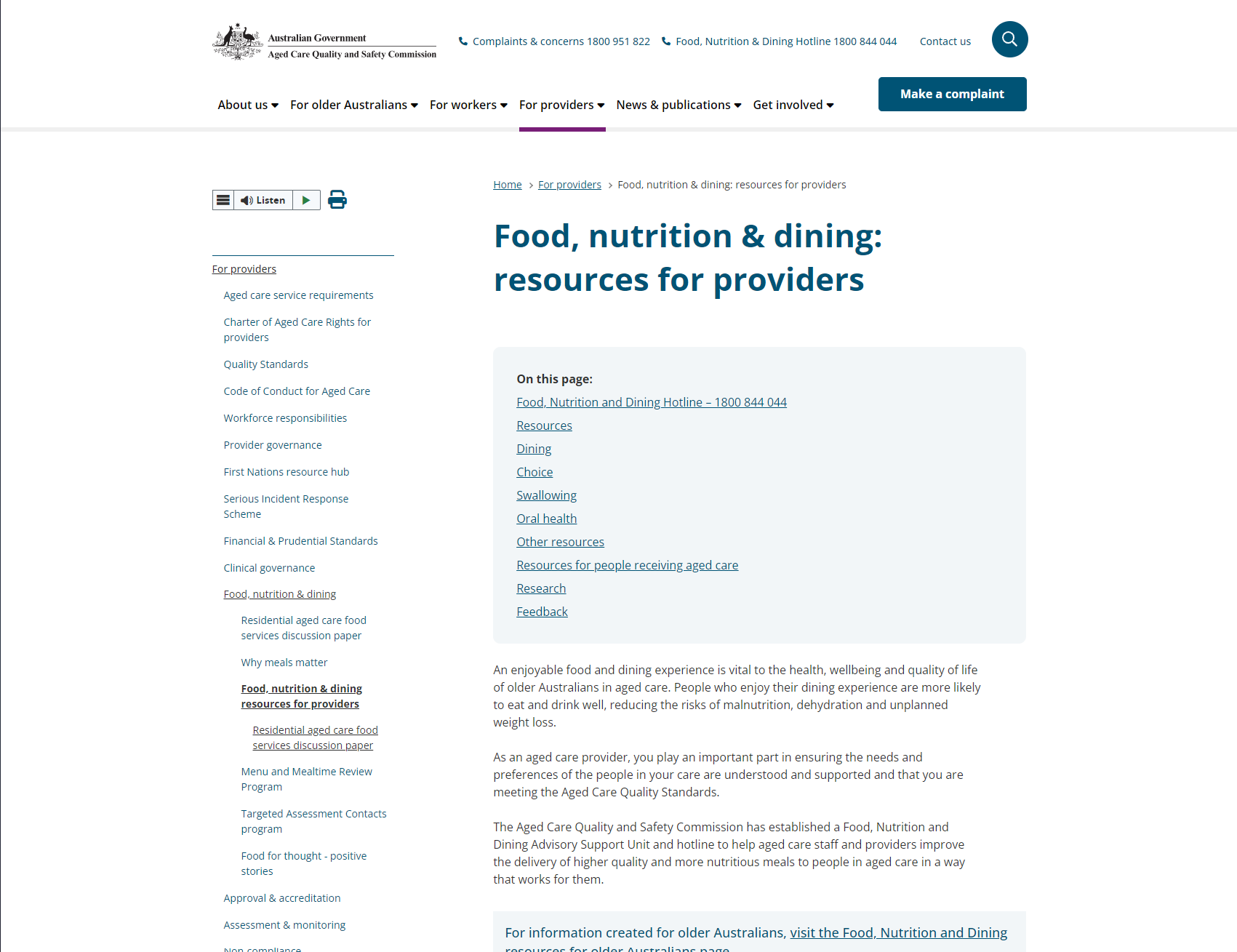
Food, nutrition & dining: resources for providers
This resource provides tools and guidance for aged care providers to ensure quality food, nutrition, and dining experiences. It includes hotlines, resources for dining, choice, swallowing, and oral health, as well as webinars, research findings, and practical tips to support older adults' wellbeing and meet care standards.
This resource may refer to information that will be updated from 1 November 2025 to align with the new Aged Care Act and Quality Standards.
Improving aged care with speech pathology: Why it matters and how it helps
This page highlights the role of speech pathologists in supporting older people with communication, eating, drinking, and swallowing difficulties. It provides resources for aged care providers on how to improve care quality through effective communication tools and tailored strategies. This resource includes practical examples, like sample plates and picture boards, for enhancing dining experiences and supporting individual choice.
This resource may refer to information that will be updated from 1 November 2025 to align with the new Aged Care Act and Quality Standards.
SIRS insights reports
This resource provides Serious Incident Response Scheme (SIRS) insights reports, offering case study examples and data to help aged care providers improve incident management practices. The reports feature learnings from incidents such as unexplained absences and unreasonable use of force, helping providers assess their own practices and enhance care quality.
This resource may refer to information that will be updated from 1 November 2025 to align with the new Aged Care Act and Quality Standards.
Incident Management Systems
This resource explains Incident Management Systems (IMS) used in aged care to record, manage, and respond to incidents. It provides guidance on building a safety culture, recording and analysing incidents, and implementing steps to prevent reoccurrences, supporting continuous improvement in care delivery.
This resource may refer to information that will be updated from 1 November 2025 to align with the new Aged Care Act and Quality Standards.
Serious Incident Response Scheme (SIRS)
This resource outlines the Serious Incident Response Scheme (SIRS), which helps reduce abuse and neglect of older people in aged care services. It mandates that Commonwealth-subsidised aged care providers implement systems to manage and prevent serious incidents. Providers must report incidents such as abuse, neglect, and unlawful contact, ensuring older people’s safety and wellbeing. This resource may refer to information that will be updated from 1 November 2025 to align with the new Aged Care Act and Quality Standards.
The Serious Incident Response Scheme
This resource provides an introduction to the Serious Incident Response Scheme (SIRS), outlining its role in managing and reporting serious incidents in aged care. It includes guidance on incident management systems, the responsibilities of managers and workers, and reporting requirements for residential and home services.
This resource may refer to information that will be updated from 1 November 2025 to align with the new Aged Care Act and Quality Standards.
Reportable incidents
This resource outlines reportable incidents within aged care, including Priority 1 and Priority 2 incidents. It provides information on the 8 types of incidents that must be reported, such as psychological abuse, neglect, and the inappropriate use of restrictive practices, helping providers meet their obligations.
This resource may refer to information that will be updated from 1 November 2025 to align with the new Aged Care Act and Quality Standards.
Governing for Reform in Aged Care Program
This resource outlines the Governing for Reform in Aged Care Program, designed to strengthen corporate and clinical governance capabilities for aged care leaders. It provides tools, online learning modules, webinars, and podcasts to support governance improvement and help leaders engage in reform efforts.
This resource may refer to information that will be updated from 1 November 2025 to align with the new Aged Care Act and Quality Standards.
Effective incident management education pack
The Effective incident management education pack is designed for providers to deliver to their own staff. It can be delivered in full or delivered as a series of shorter sessions where you can focus on the sections that are most relevant to your setting or the time you have available.
This pack will support your staff to understand the role they play in effectively managing incidents at your aged care service and help them understand what an incident management system is and its key elements.
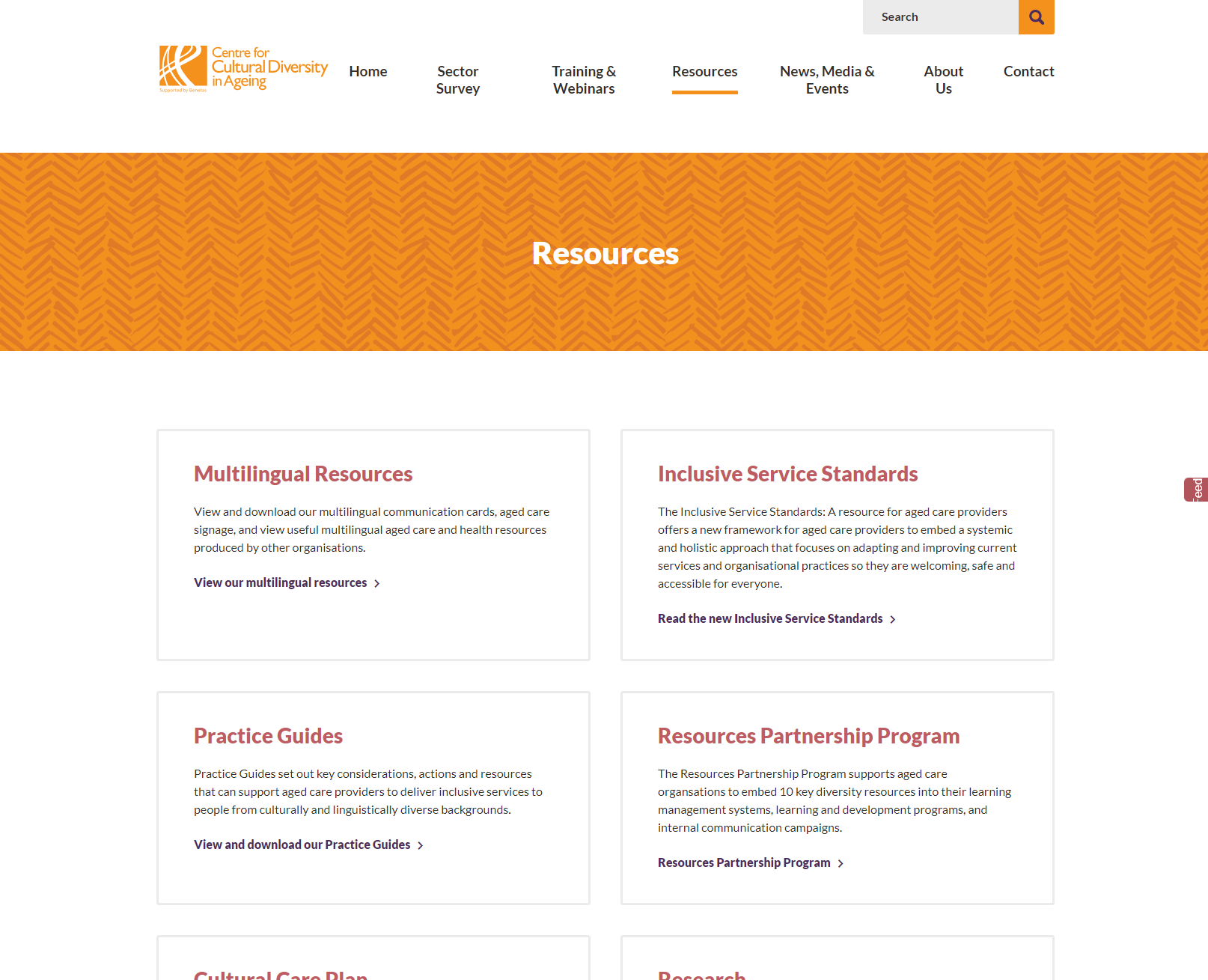
Centre for Cultural Diversity in Ageing - Resources
This page offers a wide range of resources aimed at helping aged care providers deliver culturally inclusive services. It includes multilingual communication cards, cultural care plans, and practice guides that help address the cultural, linguistic, and spiritual needs of people in care. The resources make sure aged care services are accessible, safe, and appropriate for culturally and linguistically diverse populations.