The Quality Standards Resource Centre helps extend understanding of the strengthened Aged Care Quality Standards, which took effect from 1 November 2025. You can search for resources by using keywords, or filtering by standard, outcome and audience. Before using the Resource Centre, please read the terms of use.
Australian College of Care Workers - Code of Conduct for Care Workers
This resource outlines the Code of Conduct for members of the Australian College of Care Workers. It includes 7 key principles that ensure care workers provide safe, ethical, and respectful care. The Code sets minimum standards for professionalism, accountability, and respect for people receiving care, promoting integrity and competency within the profession.
Mental health tips for aged care workers and managers
This resource provides mental health tips for aged care workers and managers during the COVID-19 pandemic. It includes strategies to manage stress, anxiety, and overall mental wellbeing. The resource offers evidence-based advice on recognising when extra support is needed and how to maintain mental health, helping aged care staff navigate challenging times effectively.
Education & training
This resource provides information on the educational content offered to aged care providers and workers. It includes online learning modules, workshops, and access to a resource library, aimed at promoting high-quality care and compliance with legislative changes. The content supports continuous learning and professional development.
This resource may refer to information that will be updated from 1 November 2025 to align with the new Aged Care Act and Quality Standards.
Workforce responsibilities
This resource outlines the workforce responsibilities of aged care providers, including the legal obligation to provide skilled staff and support their workforce. It details mandatory requirements such as 24/7 registered nurse coverage and care minutes for residential aged care services.
This resource may refer to information that will be updated from 1 November 2025 to align with the new Aged Care Act and Quality Standards.
Code of Conduct for Aged Care
This resource outlines the Code of Conduct for Aged Care, which sets expectations for the behaviour of providers, governing persons, and workers. It promotes respect, safety, and quality in aged care services, ensuring people’s rights are protected. The Code includes guidance on handling concerns and preventing abuse or neglect.
This resource may refer to information that will be updated from 1 November 2025 to align with the new Aged Care Act and Quality Standards.
Code of Conduct for workers
This resource outlines the Code of Conduct for Aged Care workers, detailing expected behaviours such as respect, honesty, and integrity. It ensures people receiving care are treated with dignity, kept safe from harm, and supported. The Code applies to all aged care workers, including volunteers.
This resource may refer to information that will be updated from 1 November 2025 to align with the new Aged Care Act and Quality Standards.
Vaccination for people at occupational risk
This resource provides vaccination guidelines for people in occupations with increased risk of exposure to vaccine-preventable diseases. It outlines recommended vaccinations for healthcare workers, carers, emergency services, and others in high-risk environments. The document supports the development of vaccination policies and programs to protect workers and the people they serve.
This resource may refer to information that will be updated from 1 November 2025 to align with the new Aged Care Act and Quality Standards.
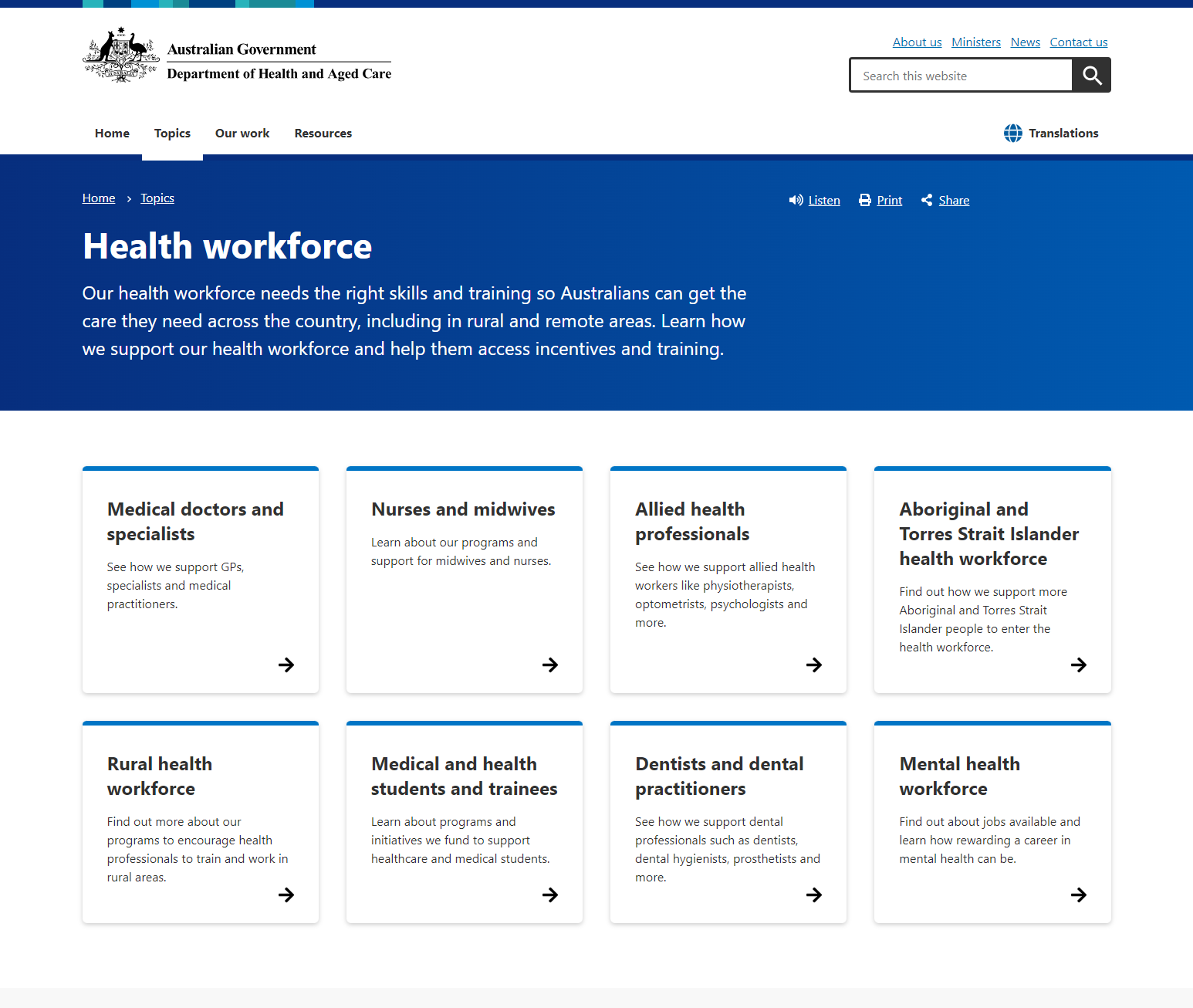
Health workforce
This resource provides an overview of the support and programs available for Australia's health workforce, including doctors, nurses, allied health professionals, and mental health workers. It highlights incentives, training, and initiatives to address workforce shortages, particularly in rural and remote areas, ensuring Australians receive the care they need across the country.
This resource may refer to information that will be updated from 1 November 2025 to align with the new Aged Care Act and Quality Standards.
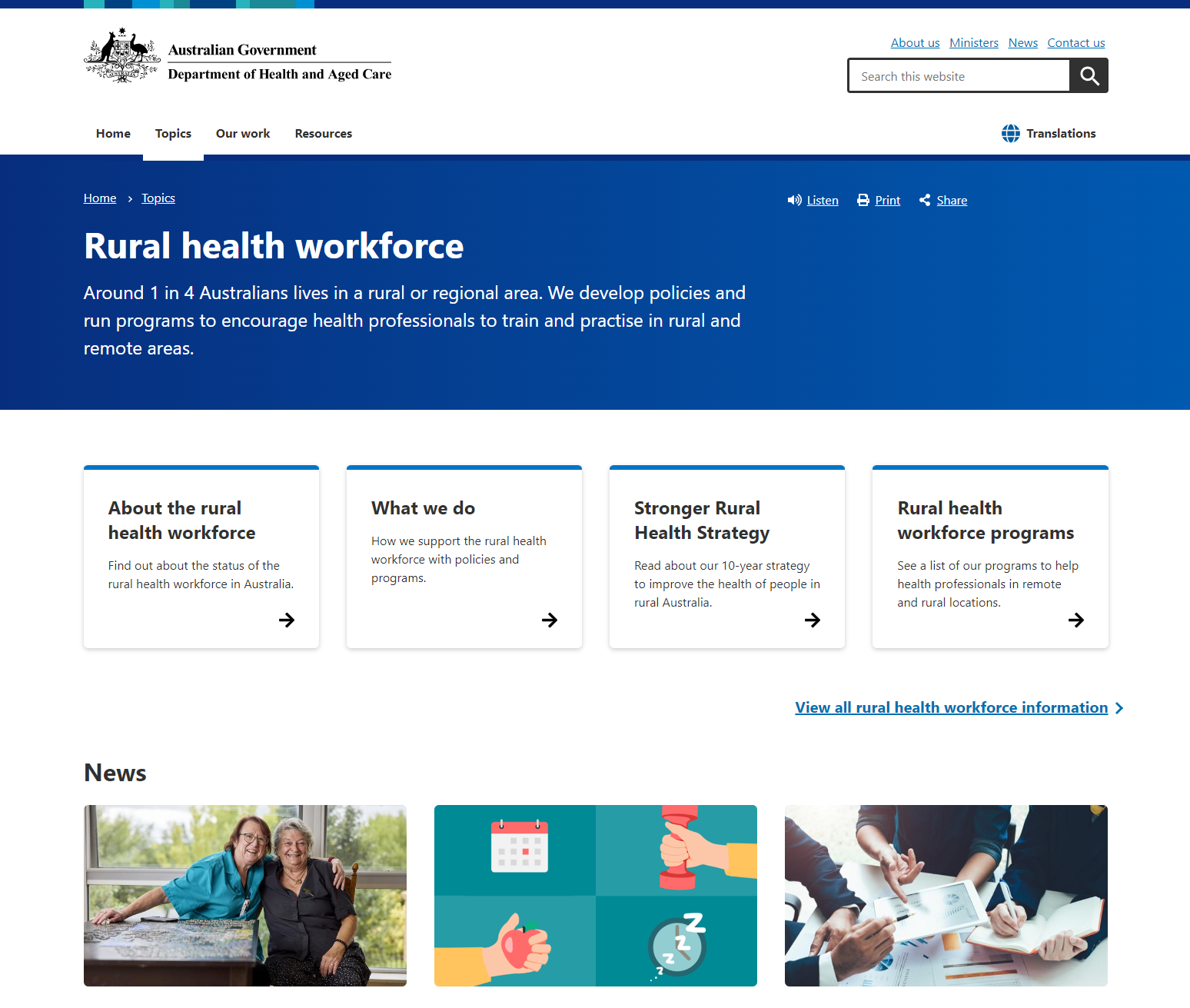
Rural health workforce
This resource provides an overview of the rural health workforce in Australia, including policies and programs designed to encourage health professionals to train and practise in rural and remote areas. It highlights strategies for improving healthcare access and quality in these regions, supporting both professionals and communities. This resource may refer to information that will be updated from 1 November 2025 to align with the new Aged Care Act and Quality Standards.
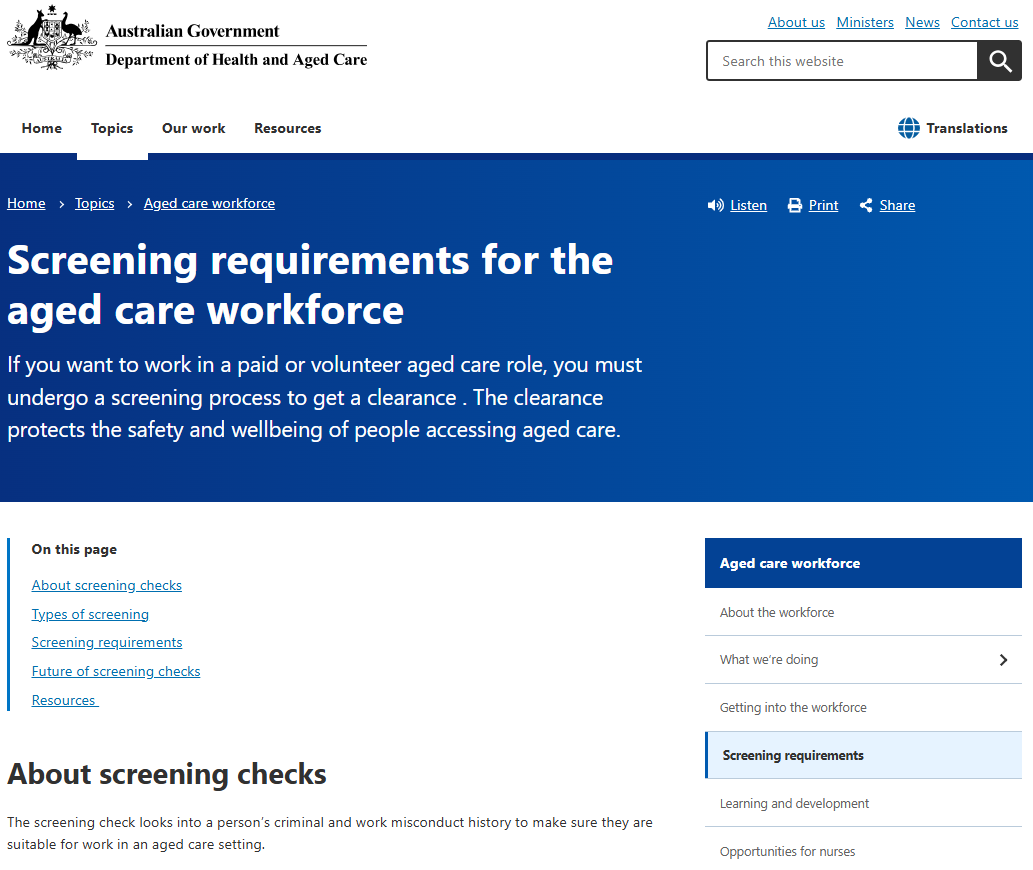
Screening requirements for the aged care workforce
This resource provides information about screening requirements for the aged care workforce. It contains information about screening checks, types of screening and screening requirements. It also includes links to relevant resources for more information.
This resource may refer to information that will be updated from 1 November 2025 to align with the new Aged Care Act and Quality Standards.
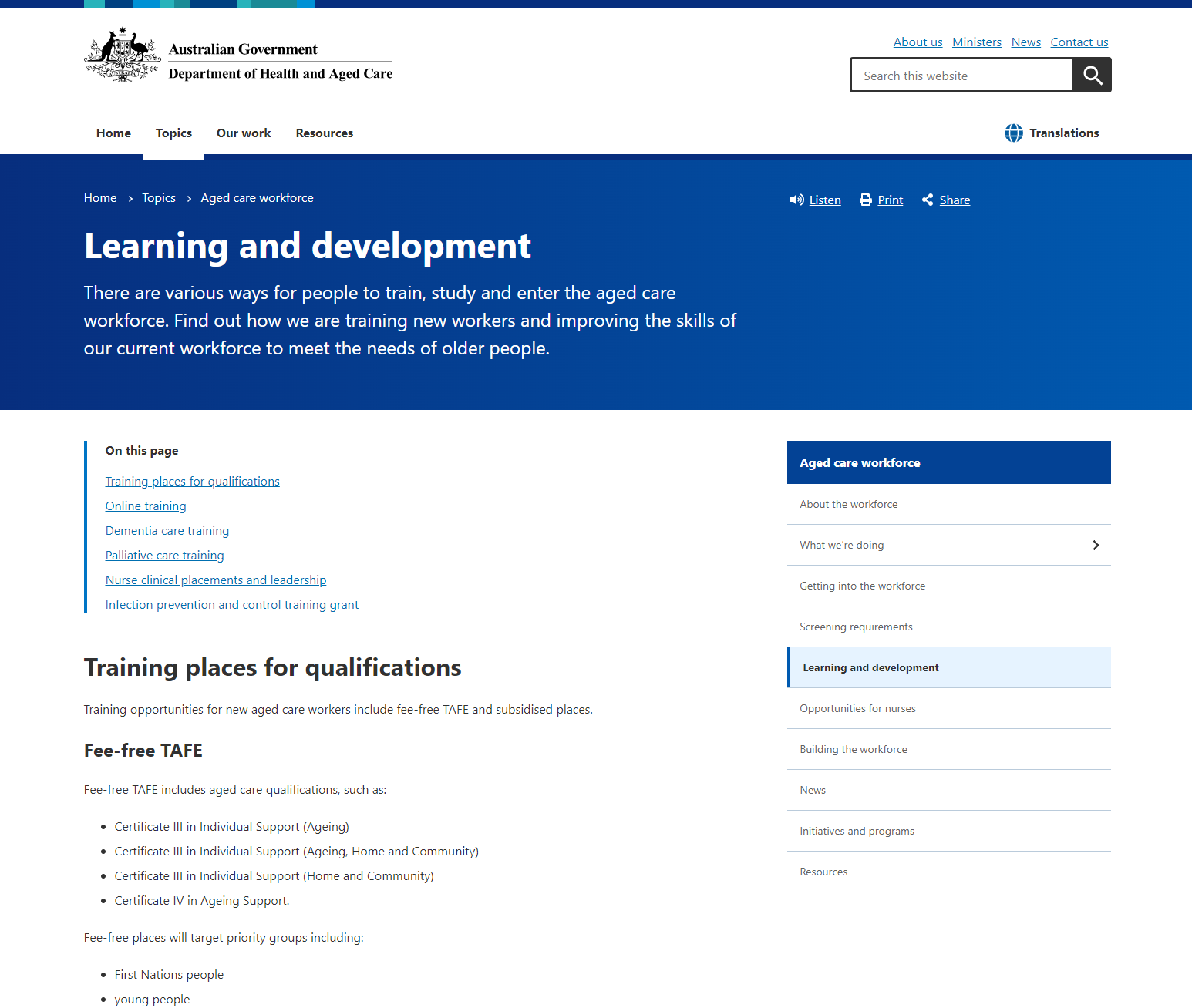
Learning and development
This resource outlines learning and development opportunities for the aged care workforce, including fee-free TAFE courses, online training modules, and clinical placements. It covers topics such as dementia care, palliative care, infection control, and leadership development. These programs aim to upskill current workers and attract new staff to meet the growing needs of older adults in care.
This resource may refer to information that will be updated from 1 November 2025 to align with the new Aged Care Act and Quality Standards.
National Aboriginal and Torres Strait Islander Health Workforce Strategic Framework and Implementation Plan 2021–2031
This resource is separated into 2 parts: the vision, objectives and target; and the strategic framework and implementation plan. This plan has 6 overarching strategic directions. These directions support the ongoing development of the size, capability and capacity of the Aboriginal and Torres Strait Islander health workforce.
This resource may refer to information that will be updated from 1 November 2025 to align with the new Aged Care Act and Quality Standards.

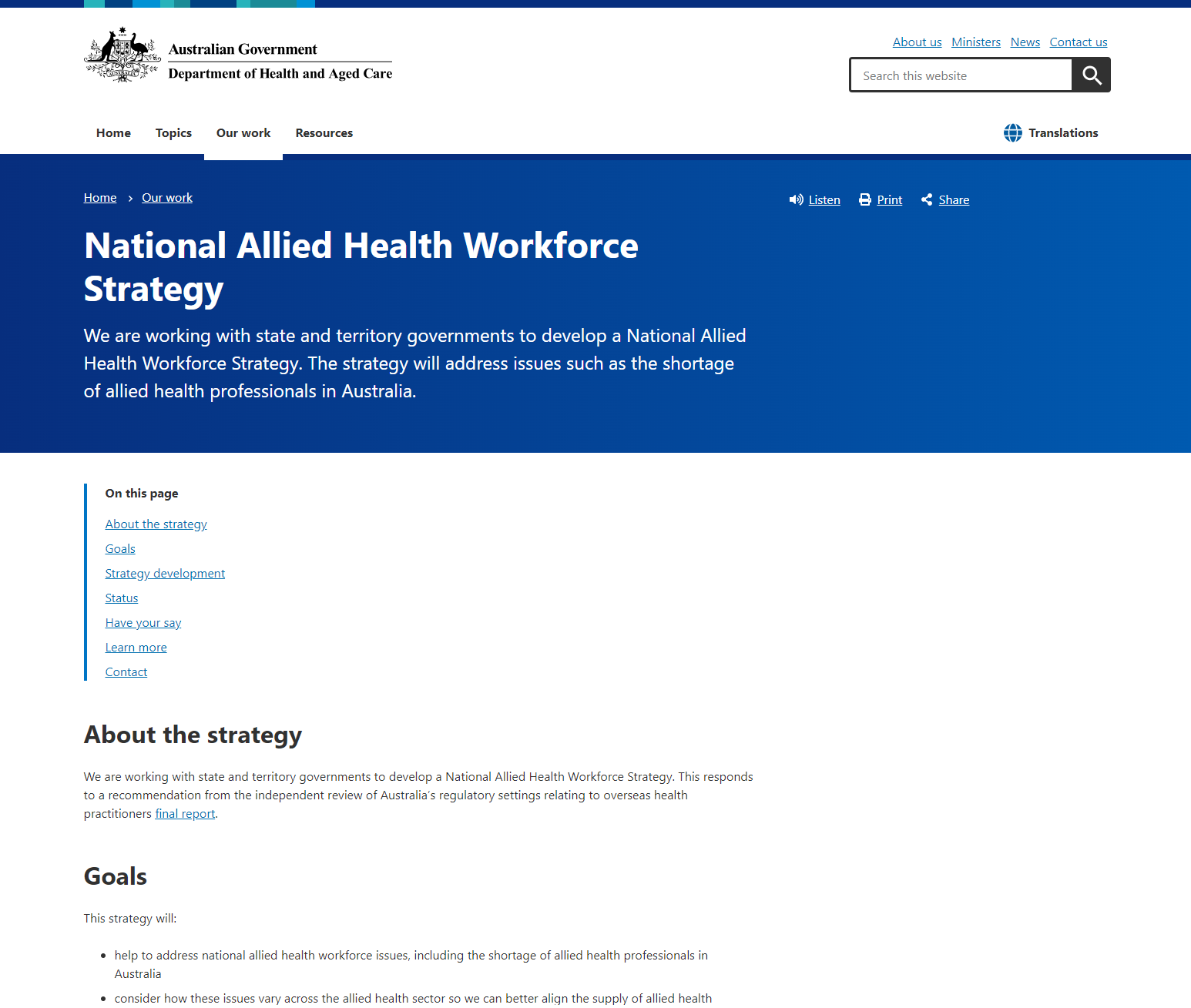
National Allied Health Workforce Strategy
The National Allied Health Workforce Strategy outlines a plan to address workforce challenges, including the shortage of allied health professionals in Australia. It focuses on aligning the supply of professionals with current and future needs, ensuring workforce safety and quality, and enhancing sector-specific data collection. The strategy aims to support workforce planning and development.
This resource may refer to information that will be updated from 1 November 2025 to align with the new Aged Care Act and Quality Standards.
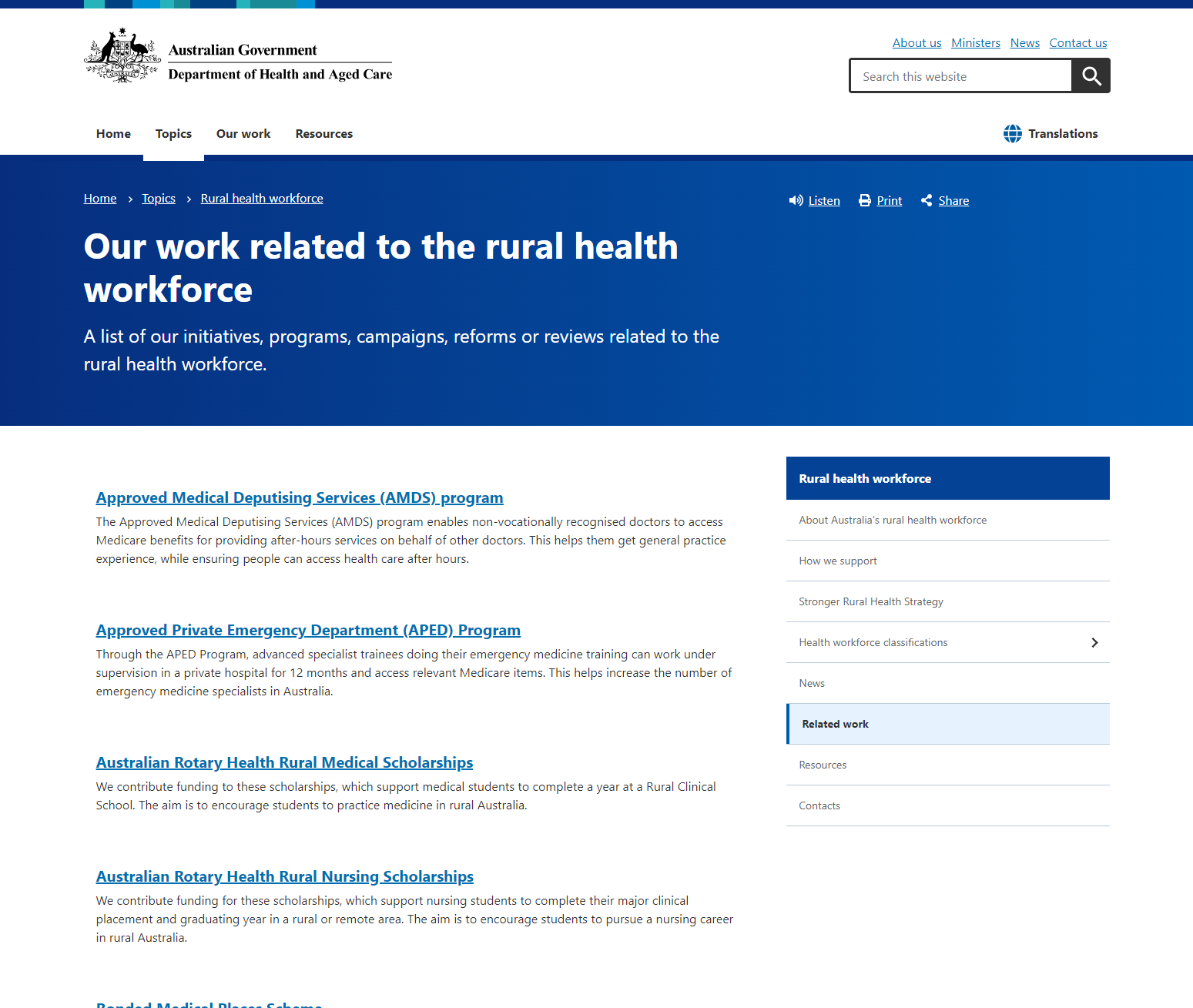
Our work related to the rural health workforce
This resource provides an overview of various initiatives and programs supporting the rural health workforce in Australia. It includes training programs, scholarships, and recruitment schemes aimed at addressing workforce shortages in rural and remote areas. The resource outlines efforts to improve healthcare access and quality through targeted support for medical and nursing professionals. This resource may refer to information that will be updated from 1 November 2025 to align with the new Aged Care Act and Quality Standards.
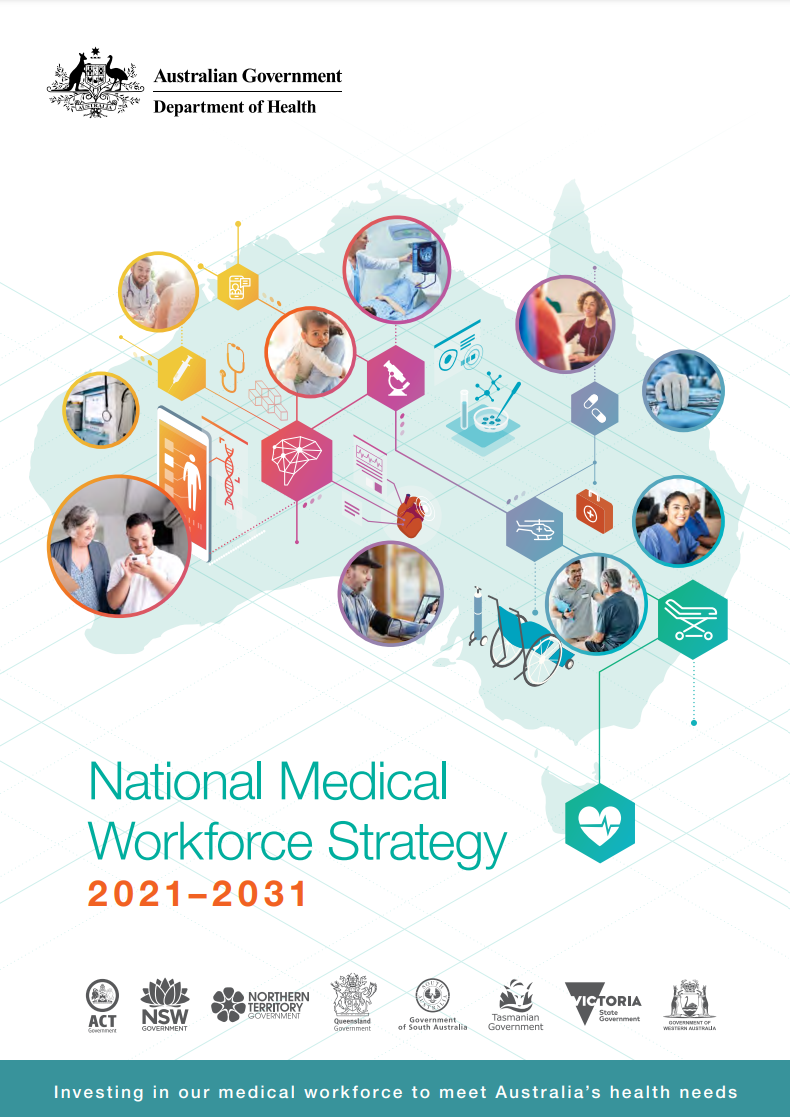
National Medical Workforce Strategy 2021–2031
This resource outlines the National Medical Workforce Strategy 2021–2031, developed to guide long-term medical planning across Australia. It provides a structured approach to creating a sustainable, well-trained medical workforce. The strategy includes 25 actions under 5 priority areas: collaboration, rebalancing supply, reforming training, building generalist capabilities, and ensuring workforce flexibility.
This resource may refer to information that will be updated from 1 November 2025 to align with the new Aged Care Act and Quality Standards.
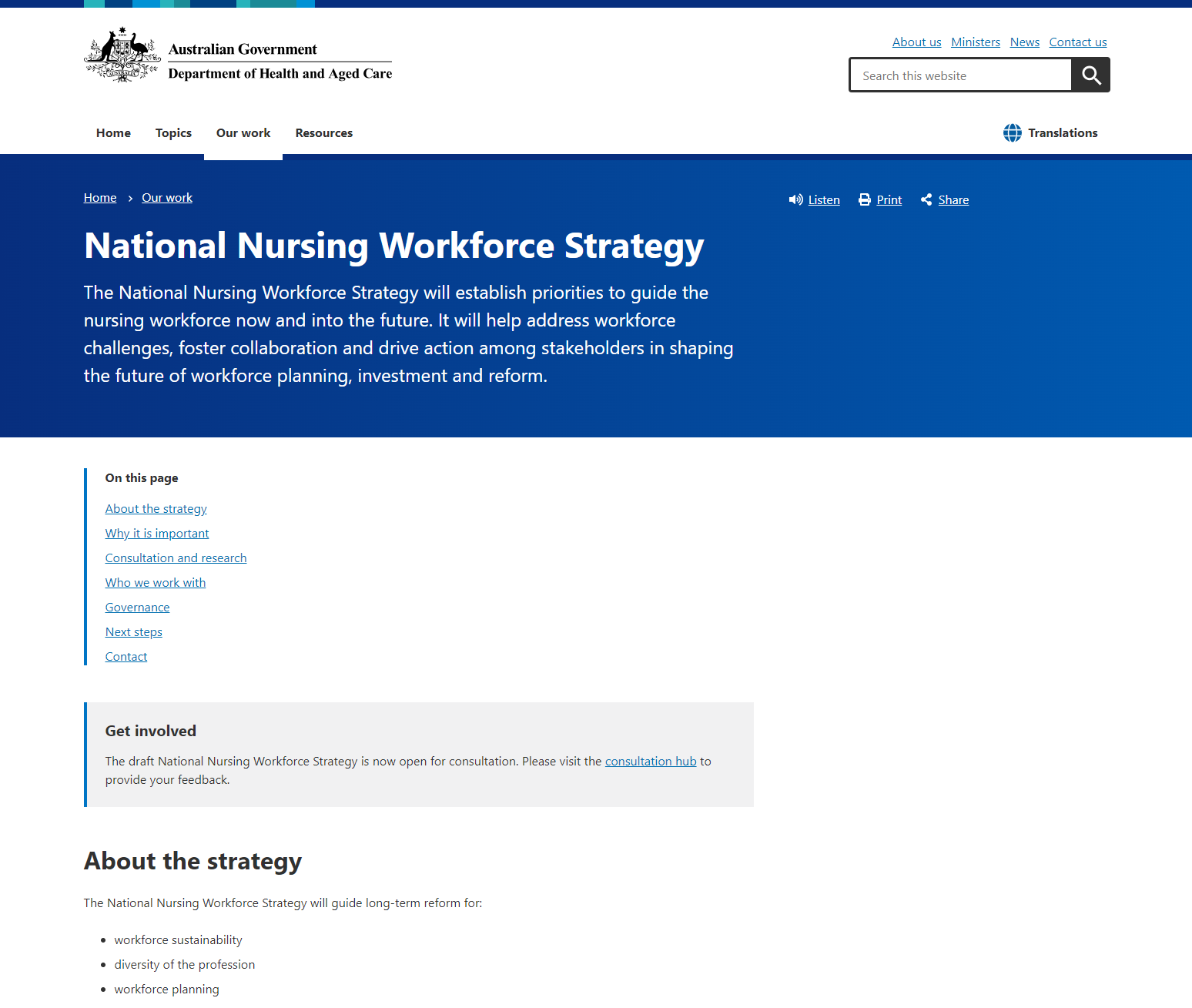
National Nursing Workforce Strategy
The resource provides information on the National Nursing Workforce Strategy, which outlines long-term plans for workforce sustainability, diversity, and development. It supports collaboration among stakeholders, promotes evidence-based care, and addresses challenges in regional and remote areas to ensure quality nursing care across the healthcare system.
This resource may refer to information that will be updated from 1 November 2025 to align with the new Aged Care Act and Quality Standards.
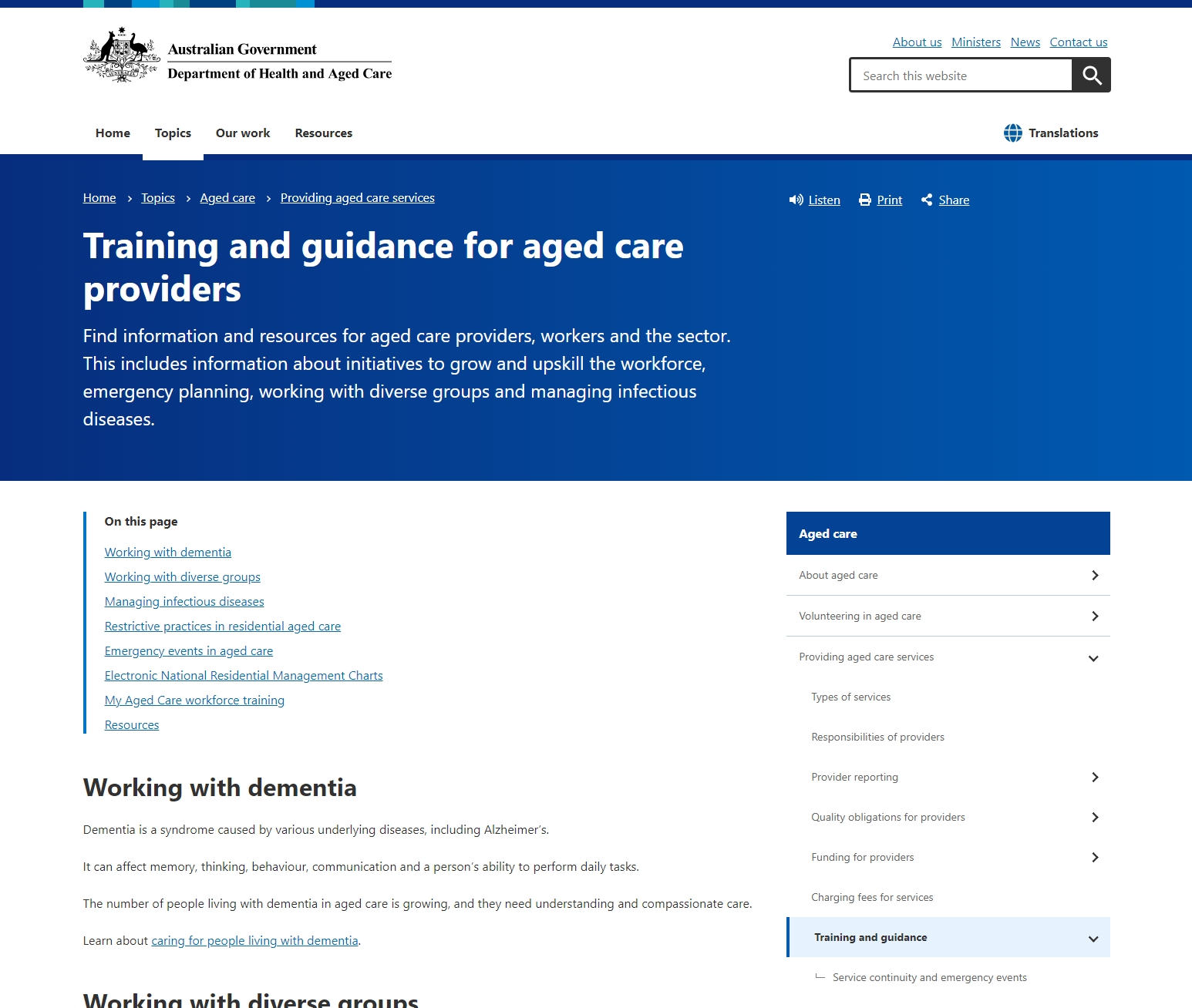
Training and guidance for aged care providers
This resource provides training and guidance for aged care providers on essential topics such as dementia care, managing infectious diseases, emergency planning, and restrictive practices. It also includes information on upskilling the workforce and using electronic medication charts. The resource is designed to help providers maintain high-quality care and meet regulatory requirements in aged care settings. This resource may refer to information that will be updated from 1 November 2025 to align with the new Aged Care Act and Quality Standards.
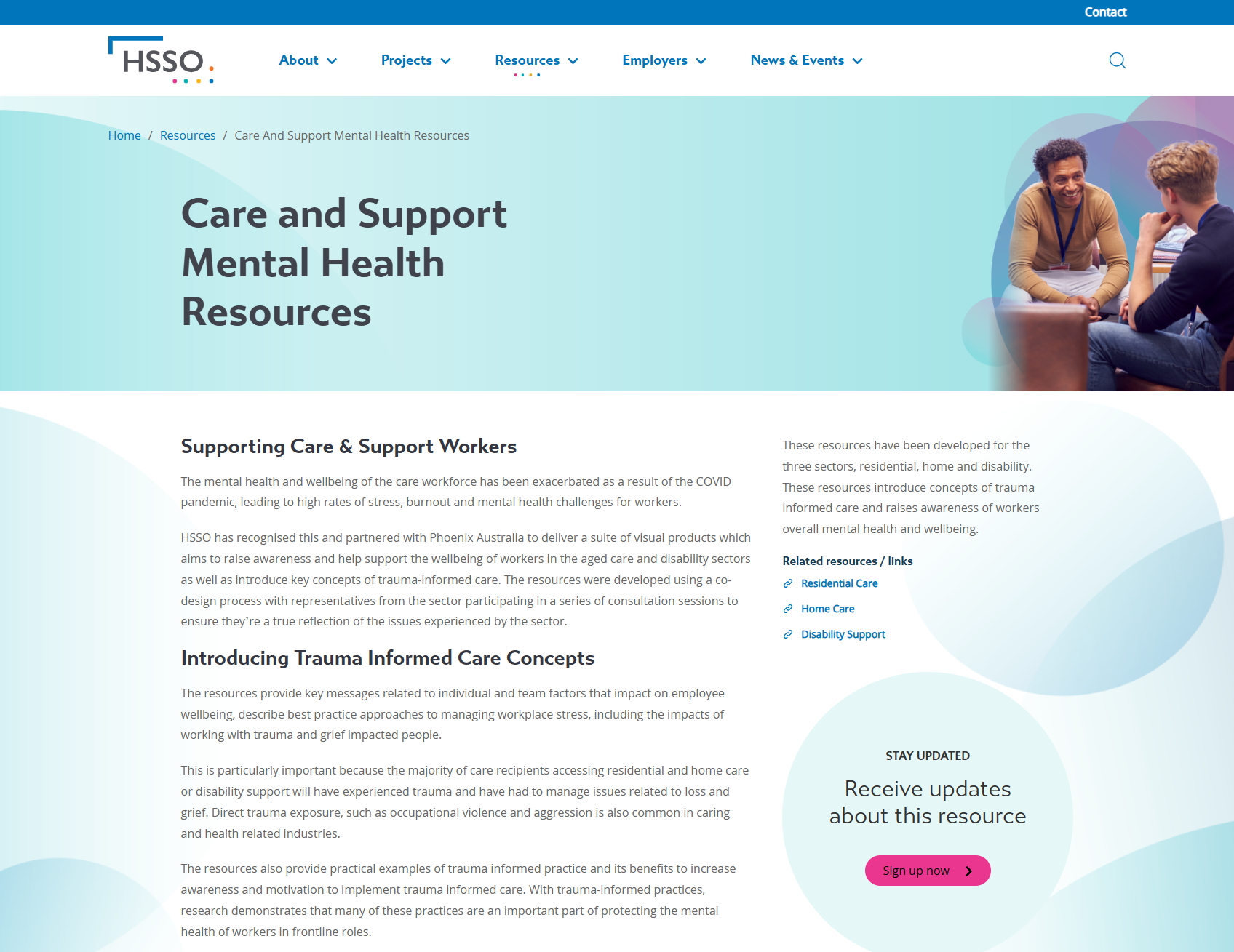
Care and Support Mental Health Resources
This resource offers mental health and trauma-informed care materials to support aged care, home care, and disability support workers. Developed with industry consultation, it provides strategies to improve worker wellbeing, manage workplace stress, and integrate trauma-informed practices, addressing common challenges like burnout and occupational stress.
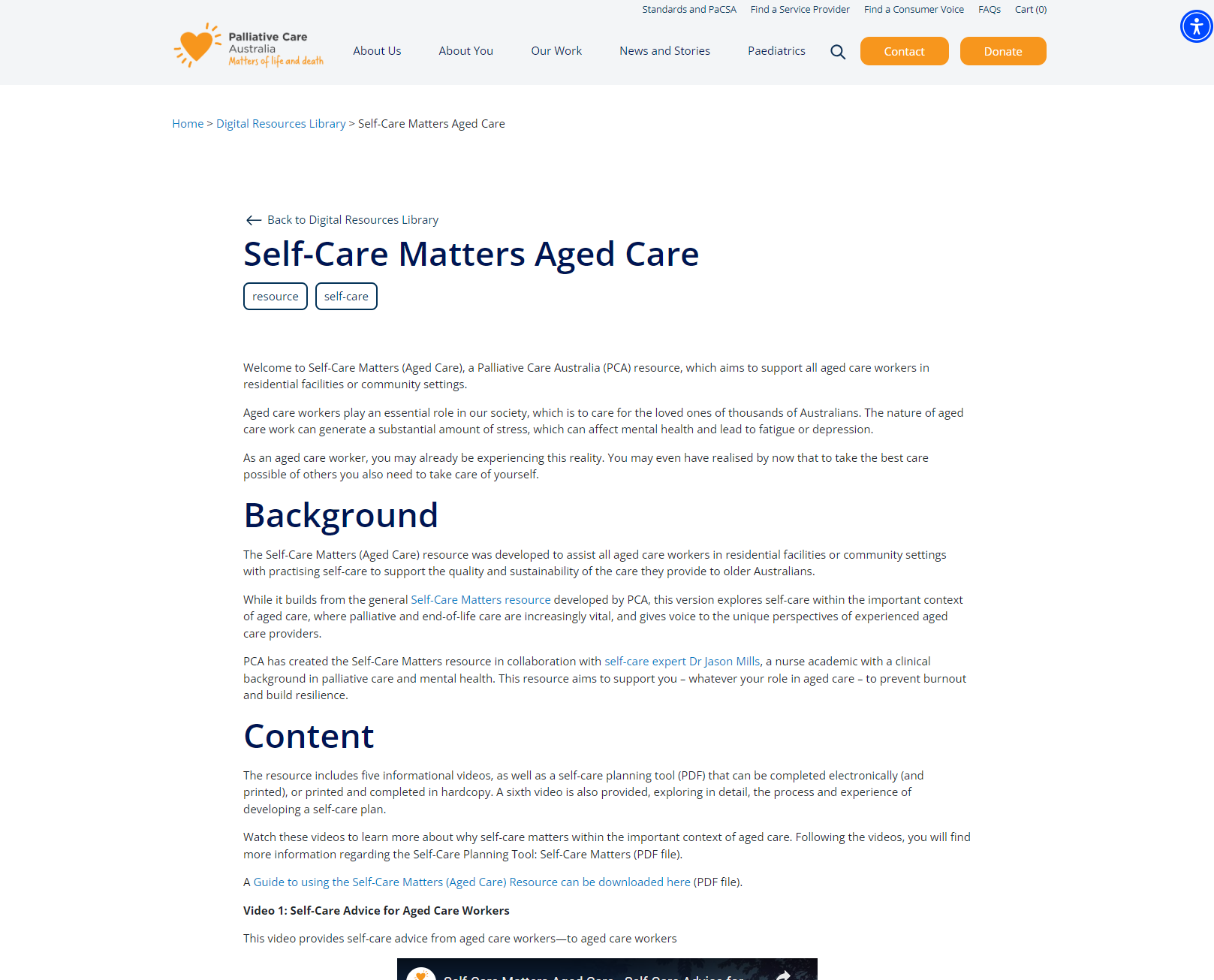
Self-Care Matters Aged Care
This resource supports aged care workers in managing stress and maintaining mental and physical wellbeing. It includes videos and tools focused on self-care strategies, such as mindfulness, relaxation, and personalised self-care planning. The resource is designed to help prevent burnout and promote resilience in delivering high-quality care in aged care settings.
Aged care workforce
This resource provides information about the aged care workforce, highlighting opportunities for those interested in joining the sector. It details available programs such as scholarships, training, and clinical placements for nurses and aged care workers. It also includes initiatives to support the growth, training, and development of the aged care workforce to ensure quality care for older adults.
This resource may refer to information that will be updated from 1 July 2025 to align with the new Aged Care Act and Quality Standards.