The Quality Standards Resource Centre helps extend understanding of the strengthened Aged Care Quality Standards, which took effect from 1 November 2025. You can search for resources by using keywords, or filtering by standard, outcome and audience. Before using the Resource Centre, please read the terms of use.
Essential element 2: Identifying goals of care
This resource guides providers in identifying and setting goals of care with patients through shared decision-making. It fosters collaboration between patients, family, and healthcare teams to clarify expectations and establish personalised clinical and personal care objectives.
This resource may apply to healthcare contexts outside of aged care. Please consider the applicability of this resource to your care setting. This resource may refer to information that will be updated from 1 November 2025 to align with the new Aged Care Act and Quality Standards.
Goal setting
This resource discusses the role of goal setting in enhancing rehabilitation, reablement, and restorative care for older people. It highlights the value of involving older people in defining goals and the positive impact of goal setting on engagement, daily function, and quality of life.
Goals of care document
This resource explains the purpose of a goals of care document, which outlines a person’s medical treatment goals and end of life care preferences. It describes how healthcare providers create and upload these documents to health records, supporting informed decision-making and access to care preferences.
Care Coordination
This resource offers practical guidance on effective care coordination, focusing on communication within multidisciplinary teams, continuity of care, and transition management. It provides tools for involving families in care planning and supports strategies for optimising palliative care and improving outcomes for people in aged care settings.
Mental health and wellbeing - Dementia and mental health
This resource examines mental health challenges in people living with dementia, covering complexities in diagnosing conditions like depression and anxiety. It provides evidence-based insights on therapeutic approaches, including music and cognitive therapies, and offers tools to aid aged care providers in supporting mental health in dementia care.
Partners in Culturally Appropriate Care (PICAC)
This resource supports aged care providers in delivering culturally appropriate care for people from culturally and linguistically diverse (CALD) backgrounds. It offers free training, workshops, and resources, helping providers understand and respect diverse needs, ensuring safe, inclusive, and culturally responsive care across all settings.
This resource may refer to information that will be updated from 1 November 2025 to align with the new Aged Care Act and Quality Standards.
RACGP aged care clinical guide (Silver Book) - Part B - Older people in rural and remote communities
This guide discusses providing aged care in rural and remote communities, focusing on the unique needs of older residents, the role of GPs in care coordination, and overcoming challenges like limited services and workforce shortages. It covers building telehealth connections, establishing collaborative care models, and offers a checklist for newly arrived GPs to support quality care for older adults.
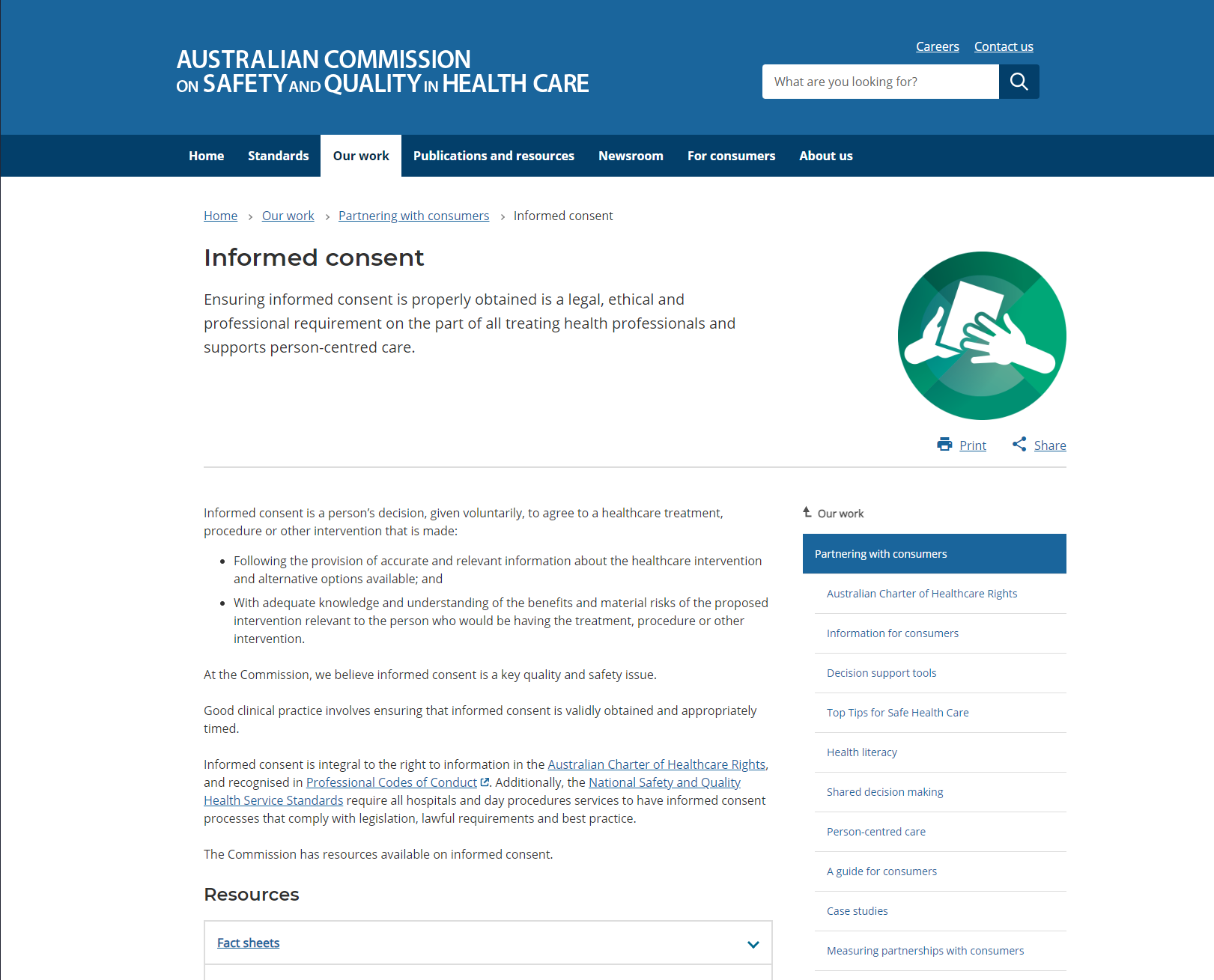
Informed consent
This resource provides guidance on ensuring informed consent in healthcare settings. It outlines legal, ethical, and professional requirements for obtaining consent, supports person-centred care, and ensures compliance with Australian healthcare standards. It highlights the importance of providing accurate information about interventions and alternatives, ensuring people have sufficient knowledge of potential risks and benefits.
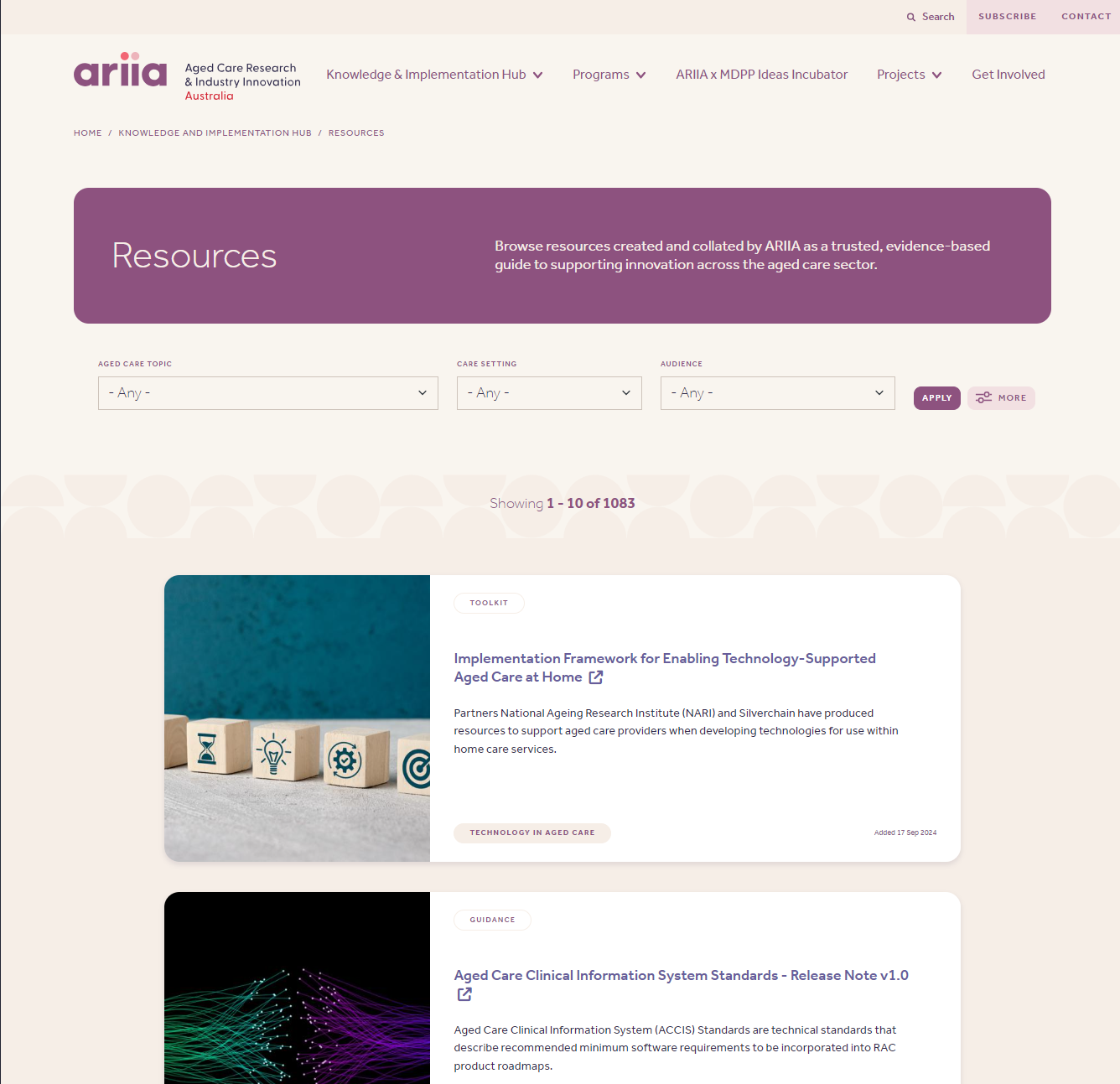
ARIIA Knowledge and Implementation Hub - Resources
The ARIIA Resources Hub is an evidence-based guide that supports innovation across the aged care sector. It provides a comprehensive collection of tools, guidelines, and frameworks for aged care providers, focusing on technology adoption, clinical standards, and care improvement strategies. The hub offers resources to enhance service quality and support the digital transformation of aged care.
This resource may refer to information that will be updated from 1 November 2025 to align with the new Aged Care Act and Quality Standards.
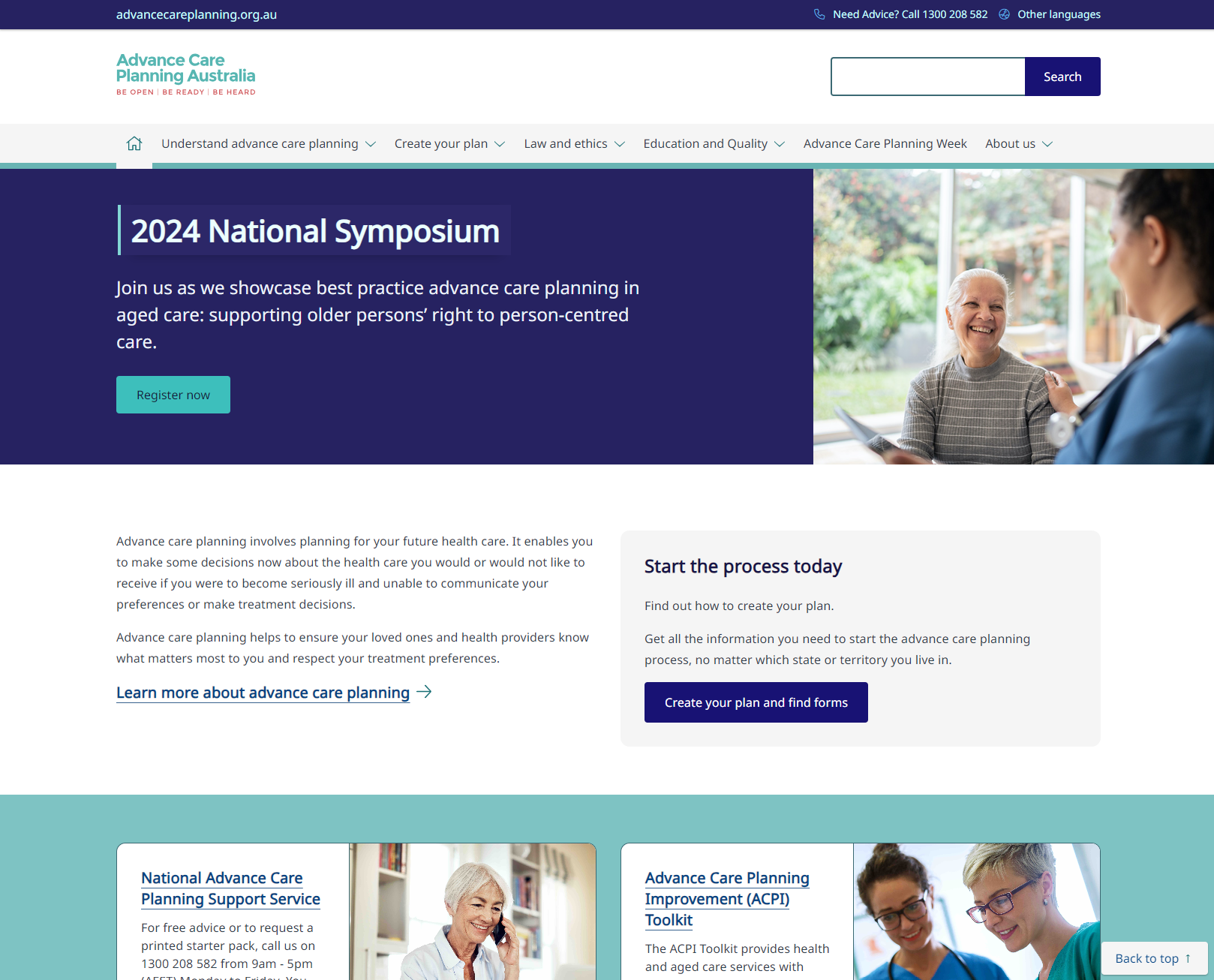
Advance Care Planning Australia
This resource provides information on advance care planning, which enables people to make decisions about their future health care in case they are unable to communicate their preferences. It helps ensure that healthcare providers and loved ones understand and respect their treatment choices. The resource includes tools, forms, and advice for creating an advance care plan.
Implementing the Comprehensive Care Standard - Clinical assessment and diagnosis
This document provides guidance on implementing the clinical assessment and diagnosis element of the Comprehensive Care Standard (National Safety and Quality Health Service Standards). It helps clinicians identify a person’s conditions or needs through examination and investigation. The resource supports safe, patient-centred care, improving diagnostic accuracy and promoting teamwork in healthcare settings, including aged care.
This resource may refer to information that will be updated from 1 November 2025 to align with the new Aged Care Act and Quality Standards.
Implementing the Comprehensive Care Standard - Review and improve comprehensive care delivery
This resource provides guidance for reviewing and improving comprehensive care delivery. It outlines how to assess if care meets clinical and personal needs, mitigates risks, and achieves intended outcomes. Relevant to aged care, it helps clinicians and managers implement continuous quality improvement in care delivery processes.
This resource may refer to information that will be updated from 1 November 2025 to align with the new Aged Care Act and Quality Standards.
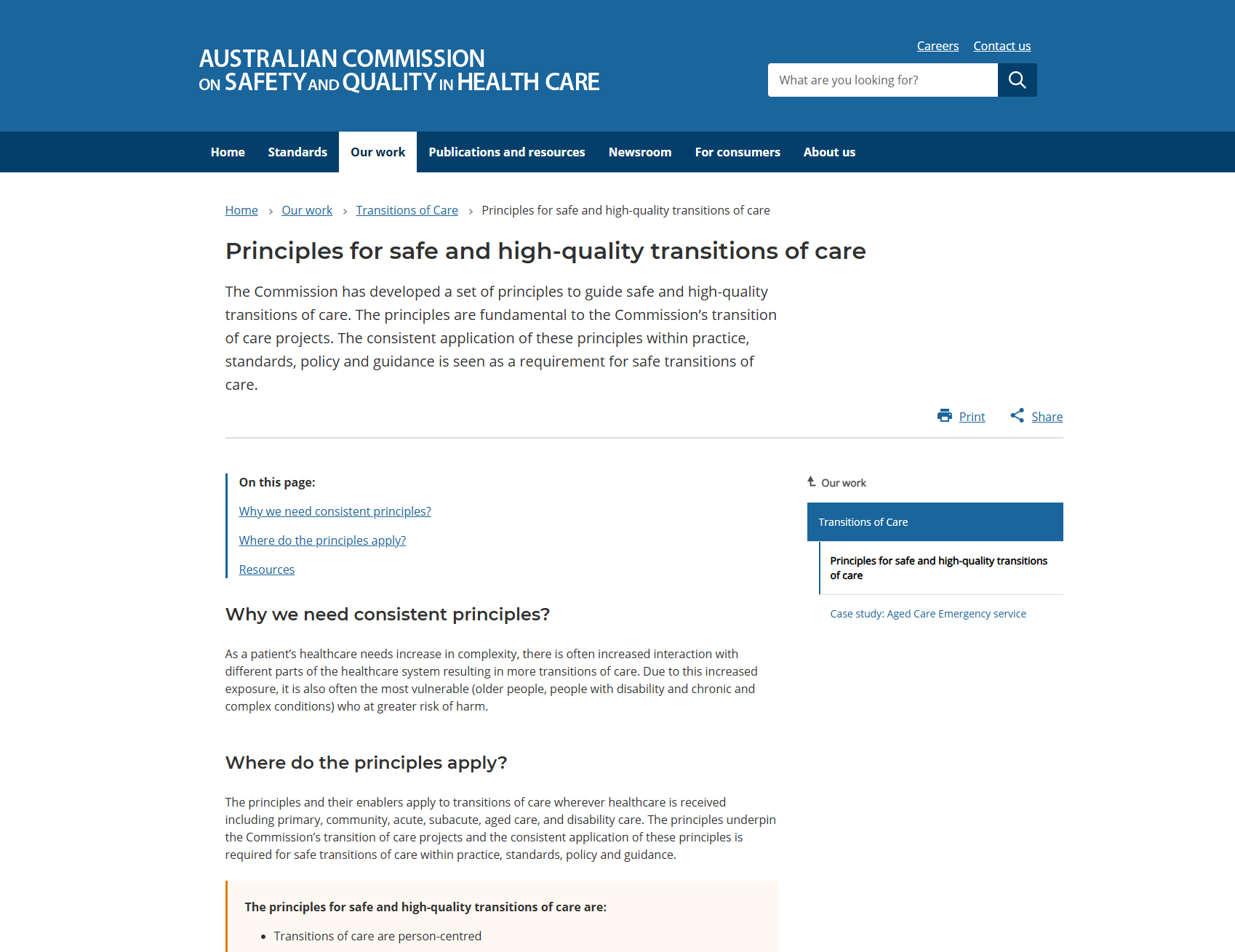
Principles for safe and high-quality transitions of care
This resource outlines essential principles to support safe and high-quality transitions of care for people across healthcare settings, including aged care. It emphasises person-centred approaches, multidisciplinary collaboration, secure record systems, and continuity of care, aiming to minimise risks during care transitions for vulnerable populations.
This resource may refer to information that will be updated from 1 November 2025 to align with the new Aged Care Act and Quality Standards.
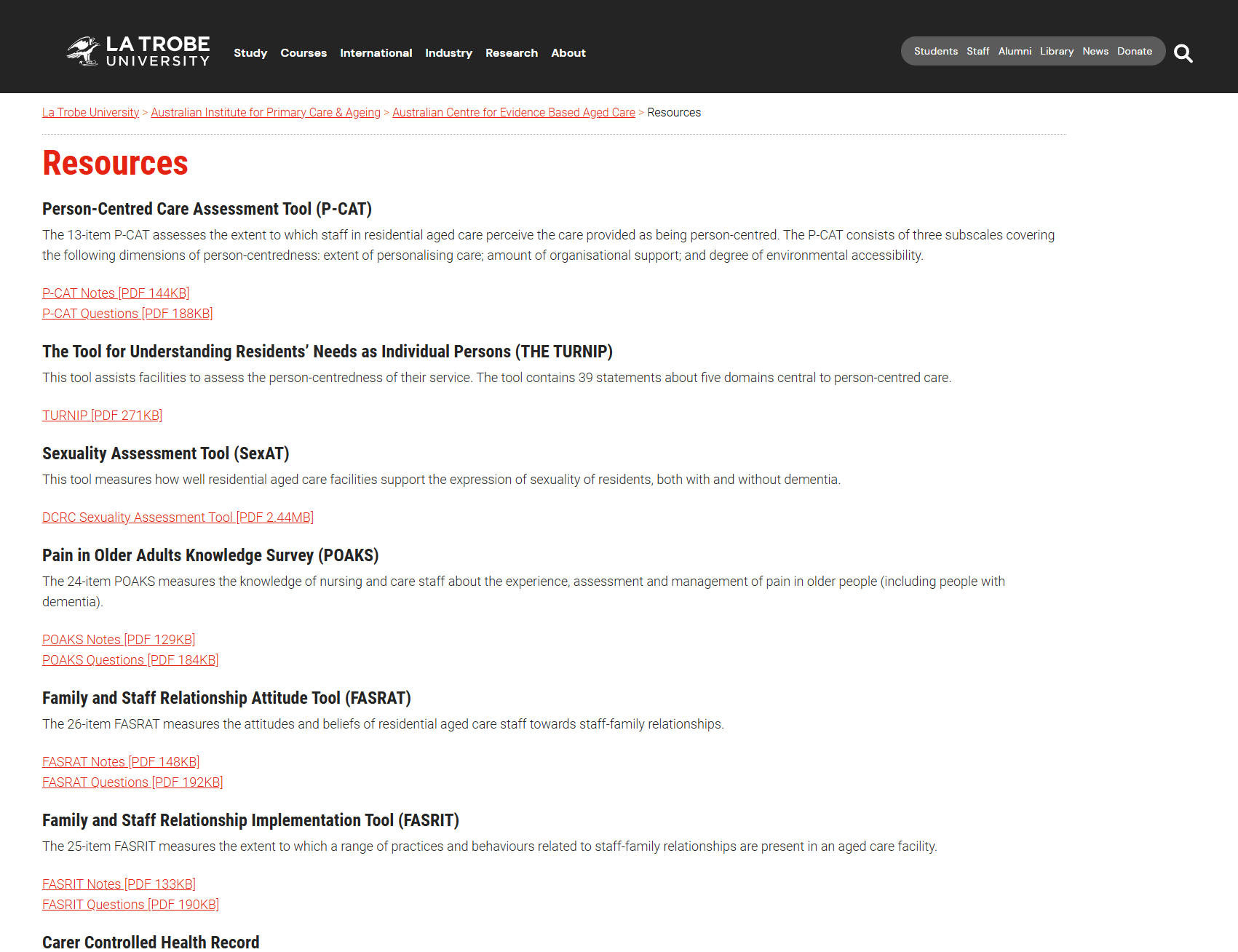
Australian Centre for Evidence Based Aged Care - Resources
This resource provides a collection of tools and guidelines for improving person-centred care in aged care settings. It includes assessments on care personalisation, pain management, staff-family relationships, and support for sexuality and decision-making for people with dementia.
This resource was developed by a state/territory government or organisation and therefore its applicability and usefulness may be limited.
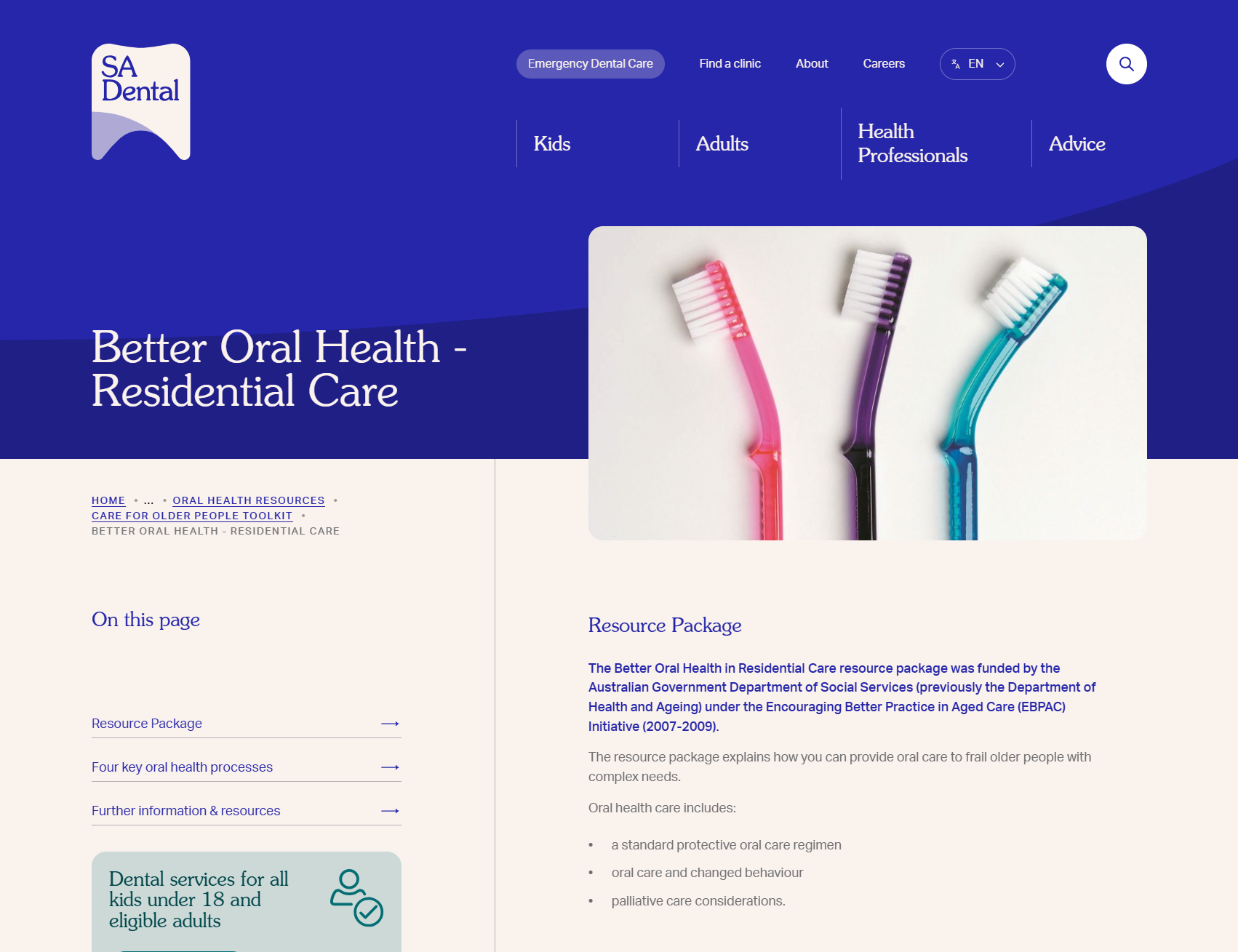
Better Oral Health - Residential Care
This resource provides a structured approach to oral health care in residential aged care, including assessment, care planning, daily oral care, and referral pathways. It includes training, guidelines, and tools to support staff in promoting oral health for older people with complex needs.
This resource was developed by a state/territory government or organisation and therefore its applicability and usefulness may be limited.
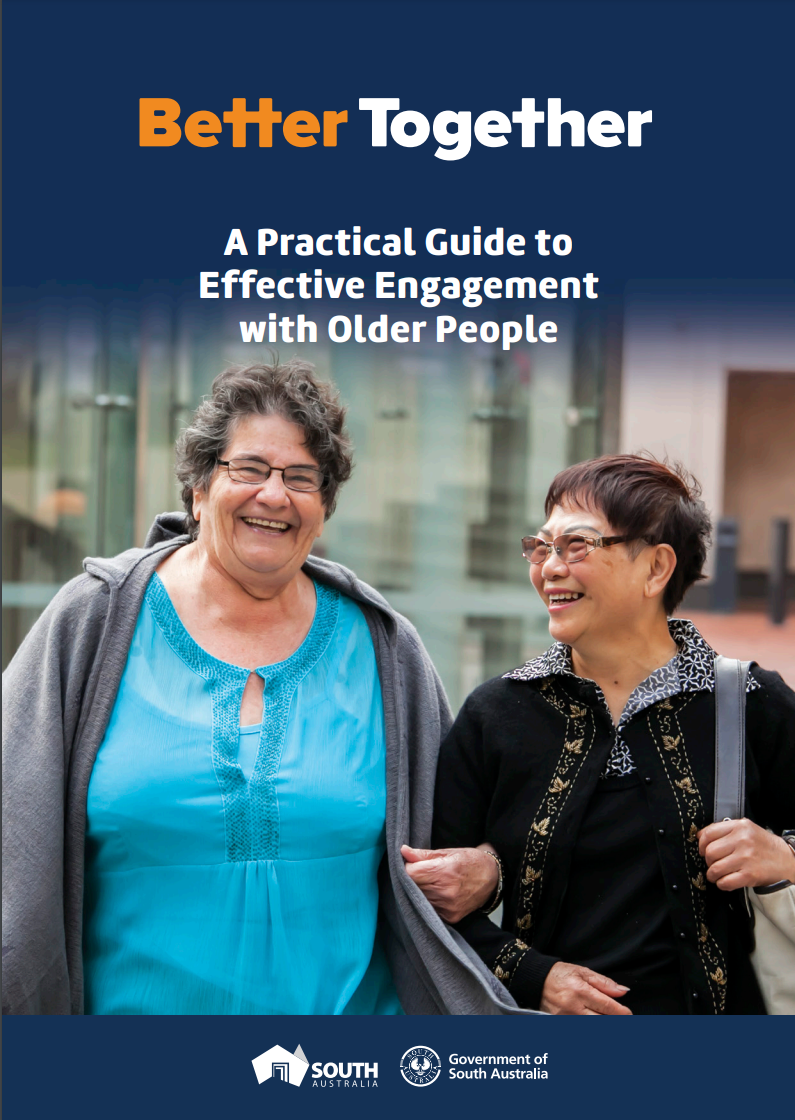
Better Together: A practical guide to effective engagement with older people
This resource offers practical guidance on effective engagement with older people, highlighting diverse communication methods, cultural sensitivity, and inclusive strategies to capture meaningful input. It supports collaborative relationships and respectful dialogue with older people in decision-making processes.
This resource was developed by a state/territory government or organisation and therefore its applicability and usefulness may be limited.
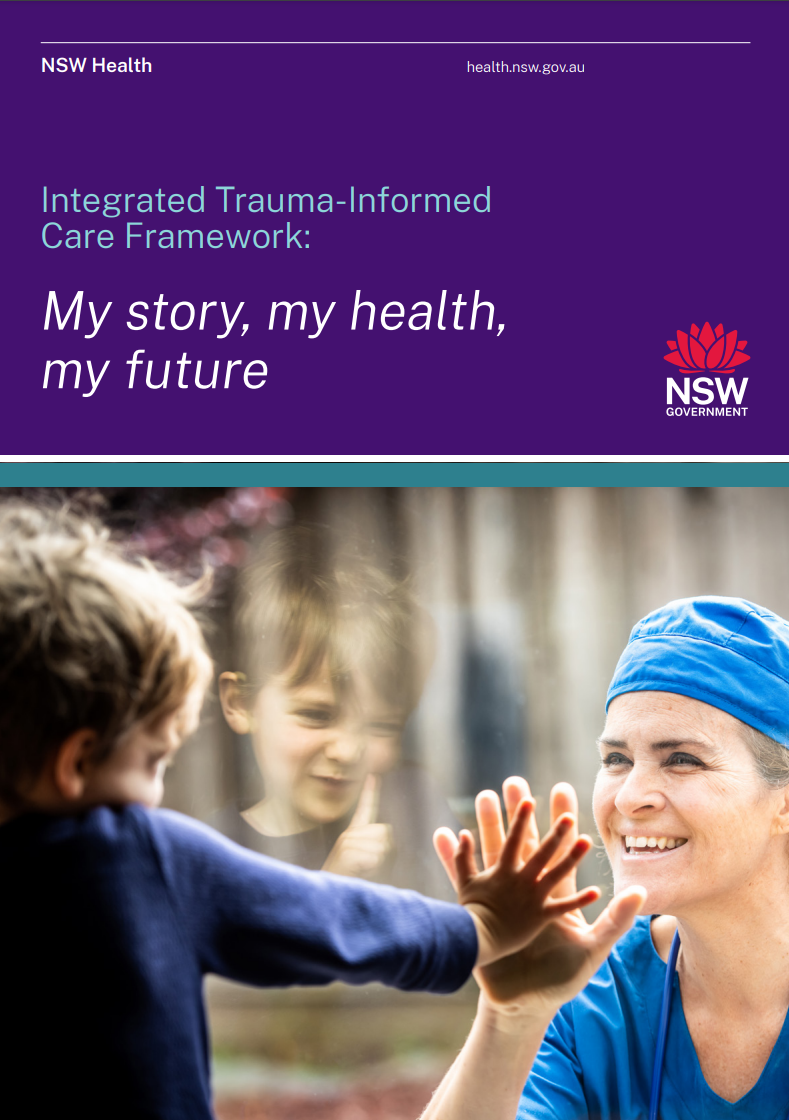
Integrated Trauma-Informed Care Framework: My story, my health, my future
This framework integrates trauma-informed care across NSW Health services, enhancing support for clients, families, and carers by guiding staff in trauma-sensitive practices and systemic change. It focuses on preventing re-traumatisation and fostering healing, especially for vulnerable populations.
This resource was developed by a state/territory government or organisation and therefore its applicability and usefulness may be limited.
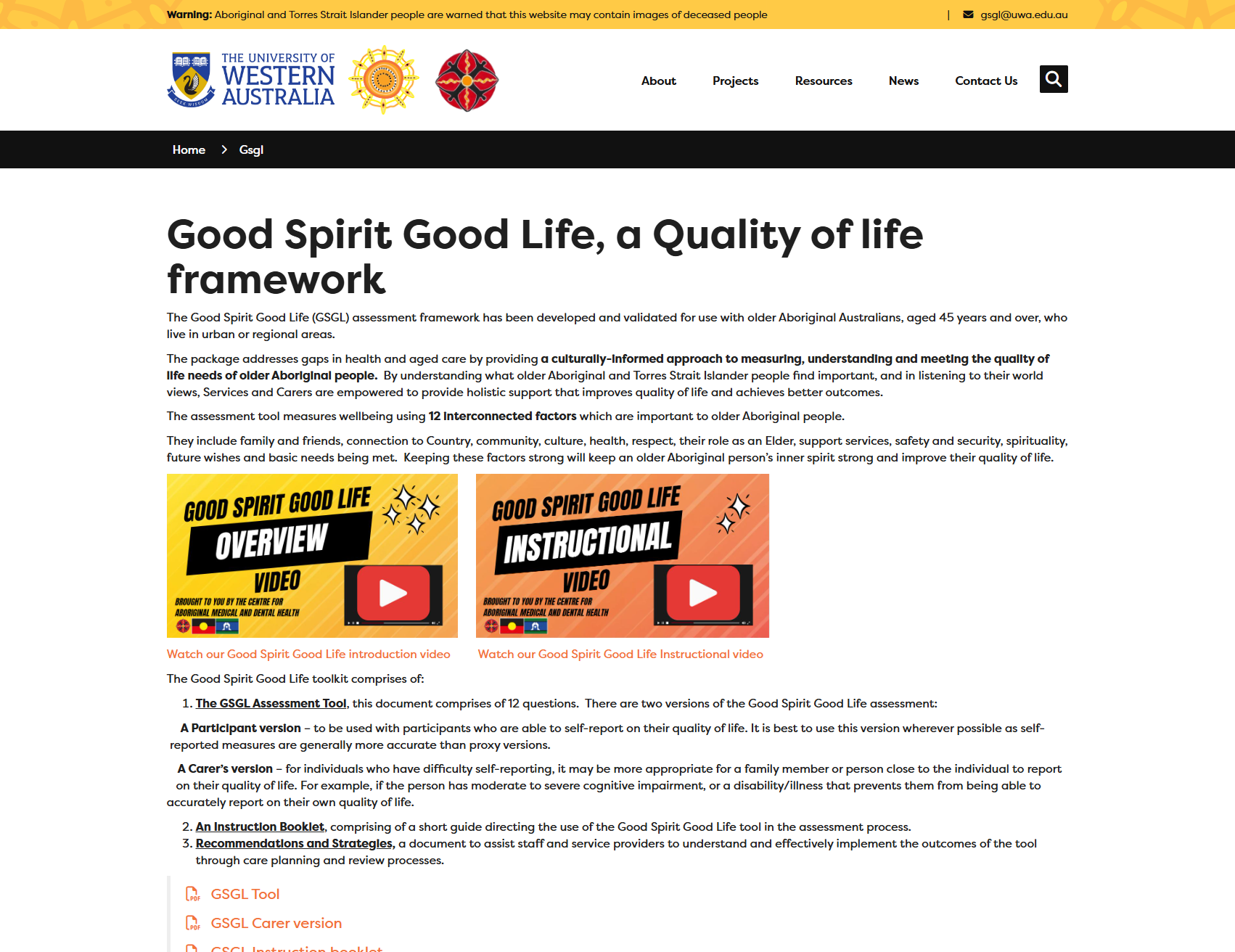
Good Spirit Good Life - a Quality of life framework
This resource describes the Good Spirit Good Life (GSGL) framework for assessing the quality of life of older Aboriginal people, focusing on culturally important factors such as connection to Country, family, and spirituality. It includes tools for both self-reporting and carer-assisted reporting.
This resource was developed by a state/territory government or organisation and therefore its applicability and usefulness may be limited.
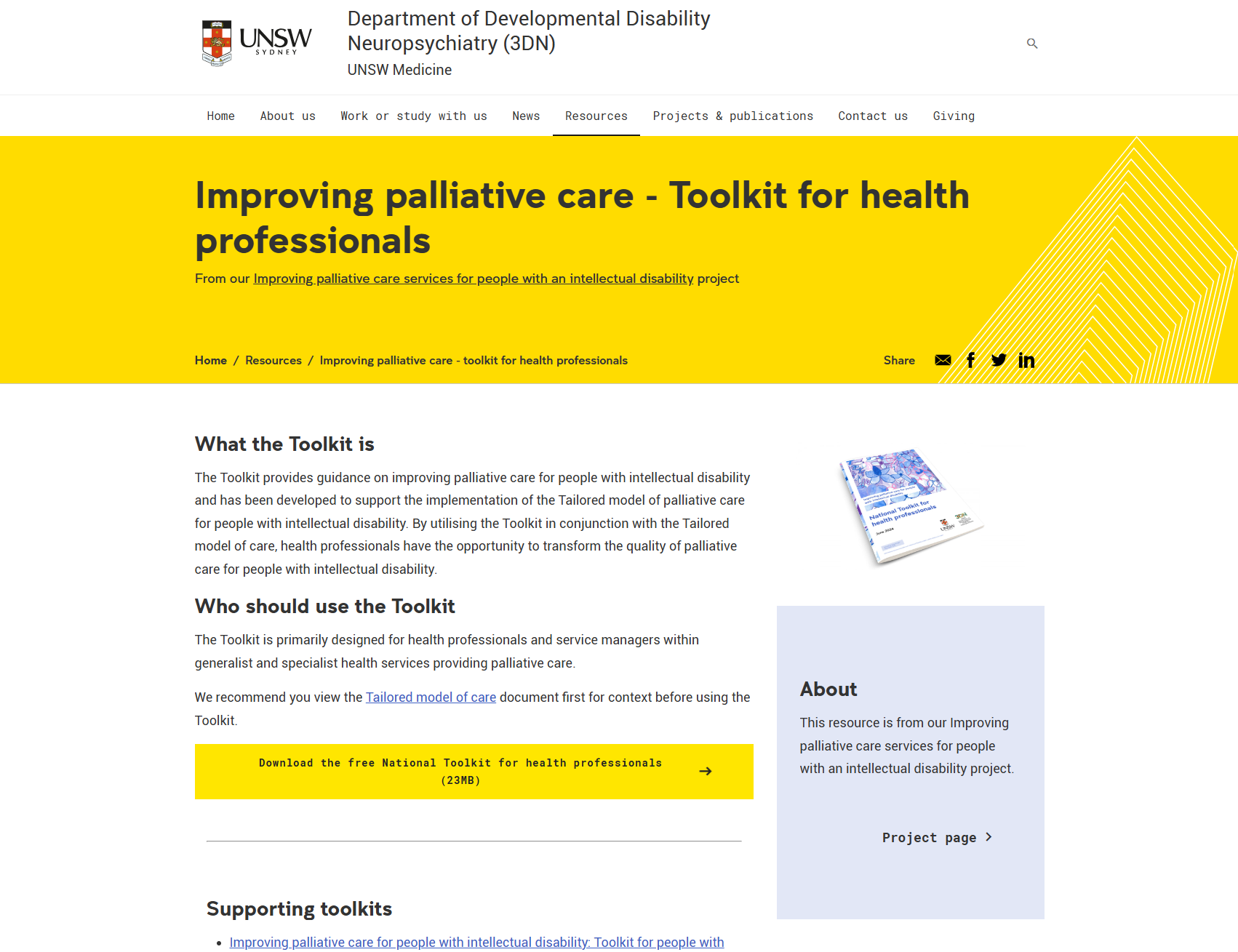
Improving palliative care - Toolkit for health professionals
This toolkit supports health professionals in delivering palliative care for people with intellectual disabilities by providing resources, guidance on communication, and tailored care strategies. It aims to enhance service quality through understanding specific needs and collaborative care planning.
This resource was developed by a state/territory government or organisation and therefore its applicability and usefulness may be limited.
Tailored model of palliative care for people with intellectual disability
This model provides a framework for delivering tailored palliative care for people with intellectual disabilities, aiming for equitable access across various care settings. Supporting toolkits offer resources for health professionals and families to enhance communication and collaborative care.
This resource was developed by a state/territory government or organisation and therefore its applicability and usefulness may be limited.