
Aged care laws in Australia have now changed. The new Aged Care Act 2024 and Aged Care Rules 2025 now apply. While we complete updating of our website, including draft guidance and other materials, to align with the new laws, providers are advised to refer to the new Act and Rules for any required clarification of their obligations and legal responsibilities. Thank you for your patience.

Quality Standards Resource Centre

The Quality Standards Resource Centre helps extend understanding of the strengthened Aged Care Quality Standards, which take effect from 1 November 2025. The Resource Centre will be updated to reflect key changes made to the draft strengthened Standards. You can search for resources by using keywords, or filtering by standard, outcome, audience and theme. Before using the Resource Centre, please read the terms of use.

Displaying 1 to 7 of 7 result(s)
/quality-standards/informed-consent-health-direct

Informed consent - Health Direct

Guidance
Last Updated

This resource explains the legal requirements and processes for obtaining informed consent for medical treatments, procedures, and care. It is relevant to aged care by ensuring that people understand their healthcare options, risks, and benefits, supporting their ability to make informed decisions about their health and wellbeing.

Author
External resource
Key Theme
Choice, independence and quality of life, Assessment and planning, Care coordination and transitions
Standard
1: The Individual, 3: The Care and Services, 7: The Residential Community
Outcomes
1.3: Choice, independence and quality of life, 3.1 Assessment and planning, 7.2: Transitions
Informed consent
/quality-standards/supported-decision-making

Supported decision-making

Tool

This resource explains supported decision-making, a process that helps people retain control over choices in their lives, even with cognitive challenges. It outlines how aged care providers can support people’s decisions, providing information in accessible formats and respecting autonomy, as endorsed by national and international rights frameworks.
Author
External resource
Key Theme
Choice, independence and quality of life, Assessment and planning
Standard
1: The Individual, 3: The Care and Services
Outcomes
1.3: Choice, independence and quality of life, 3.1 Assessment and planning
Supported decision-making
/quality-standards/how-support-everyday-decision-making-people-living-dementia-residential-aged-care-guide-care-workers

How to support everyday decision-making for people living with dementia in residential aged care: A guide for care workers

Guidance
Published date

This guide offers practical strategies for care workers to support people with dementia in making everyday decisions within residential aged care settings. It covers communication techniques, promoting choice in personal care and daily activities, understanding body language, and emphasises person-centred care while respecting residents' preferences, dignity, and rights.

Author
External resource
Key Theme
Assessment and planning, Delivering comprehensive care and services, Choice, independence and quality of life
Standard
3: The Care and Services, 5: Clinical Care, 1: The Individual
Outcomes
1.1: Person-centred care, 5.6 Cognitive impairment  , 1.3: Choice, independence and quality of life
How to support everyday decision-making for people living with dementia in residential aged care: A guide for care workers
/quality-standards/tips-careworkers-culturally-responsive-care-communication

Tips for Careworkers: Culturally Responsive Care - Communication

Guidance
Last Updated

This resource provides practice tip sheets for care workers, focusing on culturally responsive care for people from culturally and linguistically diverse backgrounds. It outlines communication strategies, emphasising person-centred care, cultural sensitivity, and effective interaction with patients and families, especially at the end of life.

Author
External resource
Key Theme
Choice, independence and quality of life, Delivering comprehensive care and services, Person-centred care
Standard
3: The Care and Services, 1: The Individual
Outcomes
1.3: Choice, independence and quality of life, 3.2: Delivery of funded aged care services, 3.3: Communicating for safety and quality, 1.1: Person-centred care
Tips for Careworkers: Culturally Responsive Care - Communication
/quality-standards/half-story-guide-meaningful-consultation-people-living-dementia-families-and-carers

Half the story: A guide to meaningful consultation with people living with dementia, families and carers

Guidance
Published date

This resource is a guide for meaningful consultation with people living with dementia, their families, and carers. It covers planning, ethical considerations, communication methods, and ways to improve accessibility. The guide offers strategies to ensure the voices of those living with dementia are respected, valued, and effectively integrated into decision-making processes.

Author
External resource
Key Theme
Choice, independence and quality of life, Corporate and clinical governance, Assessment and planning
Standard
1: The Individual, 2: The Organisation, 3: The Care and Services
Outcomes
1.3: Choice, independence and quality of life, 2.1: Partnering with individuals, 3.1 Assessment and planning
Half the story: A guide to meaningful consultation with people living with dementia, families and carers
/quality-standards/tips-careworkers-first-australians-communication

Tips for Careworkers: First Australians – Communication

Guidance
Last Updated

This resource offers guidance on culturally appropriate communication with Aboriginal and Torres Strait Islander people in aged care. It highlights the importance of respecting cultural identity, involving family, and providing person-centred care. The resource provides practical tips for careworkers to ensure culturally sensitive and respectful communication.

Author
External resource
Key Theme
Choice, independence and quality of life, Delivering comprehensive care and services, Person-centred care
Standard
1: The Individual, 3: The Care and Services
Outcomes
1.3: Choice, independence and quality of life, 3.2: Delivery of funded aged care services, 3.3: Communicating for safety and quality, 1.1: Person-centred care
Tips for Careworkers: First Australians – Communication
/quality-standards/goal-setting

Goal setting

Guidance
Last Updated

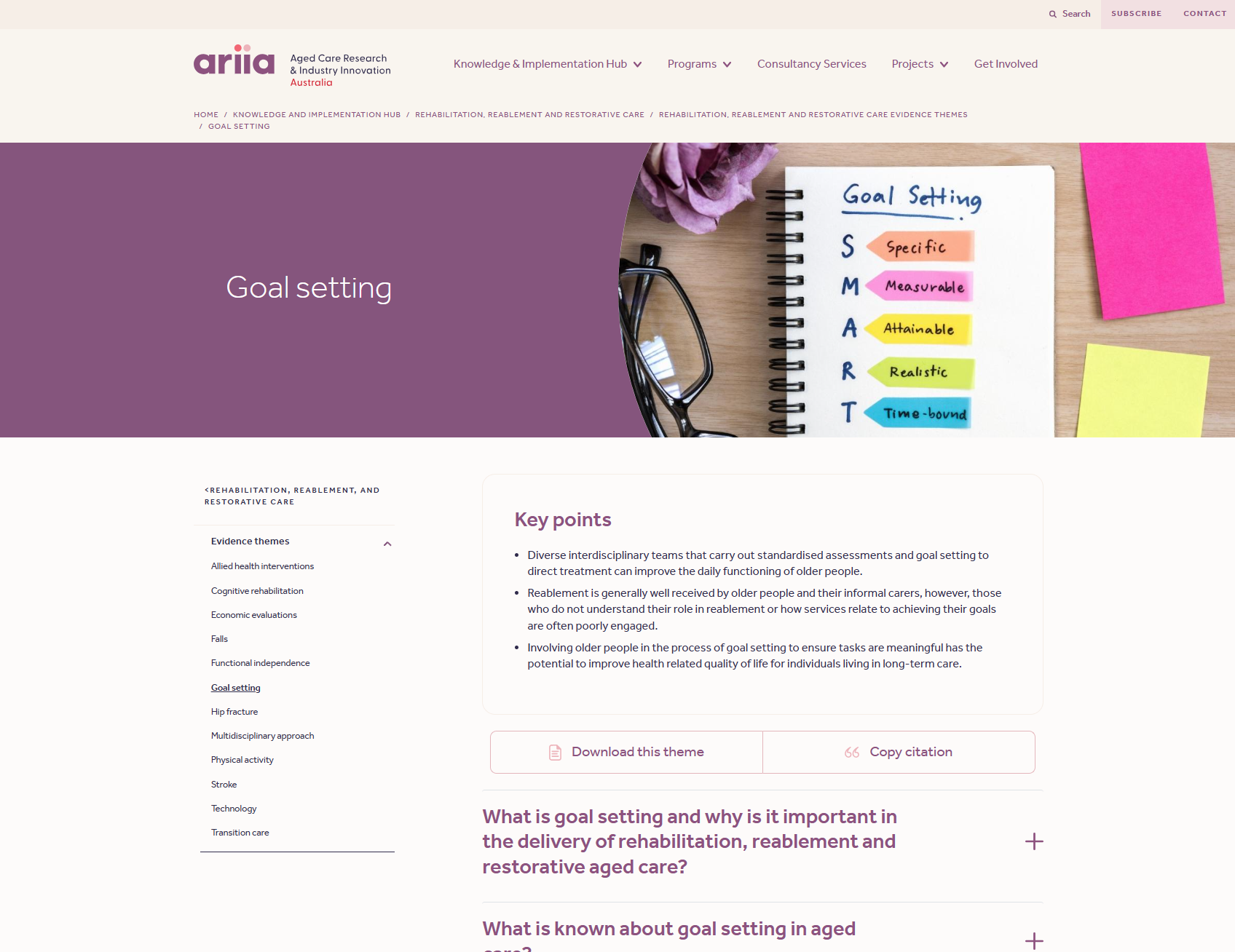
This resource discusses the role of goal setting in enhancing rehabilitation, reablement, and restorative care for older people. It highlights the value of involving older people in defining goals and the positive impact of goal setting on engagement, daily function, and quality of life.

Author
External resource
Key Theme
Choice, independence and quality of life, Delivering comprehensive care and services, Assessment and planning, Care coordination and transitions
Standard
1: The Individual, 3: The Care and Services, 5: Clinical Care
Outcomes
1.3: Choice, independence and quality of life, 3.2: Delivery of funded aged care services, 5.4: Comprehensive care
Goal setting



