The Quality Standards Resource Centre helps extend understanding of the strengthened Aged Care Quality Standards, which took effect from 1 November 2025. You can search for resources by using keywords, or filtering by standard, outcome and audience. Before using the Resource Centre, please read the terms of use.
Meaningful lifestyle activities
This resource discusses the importance of engagement in meaningful lifestyle activities for people living in aged care. It includes information about understanding meaningful lifestyle activities and links to a collection of resources collated by ARIIA that are relevant to this theme.
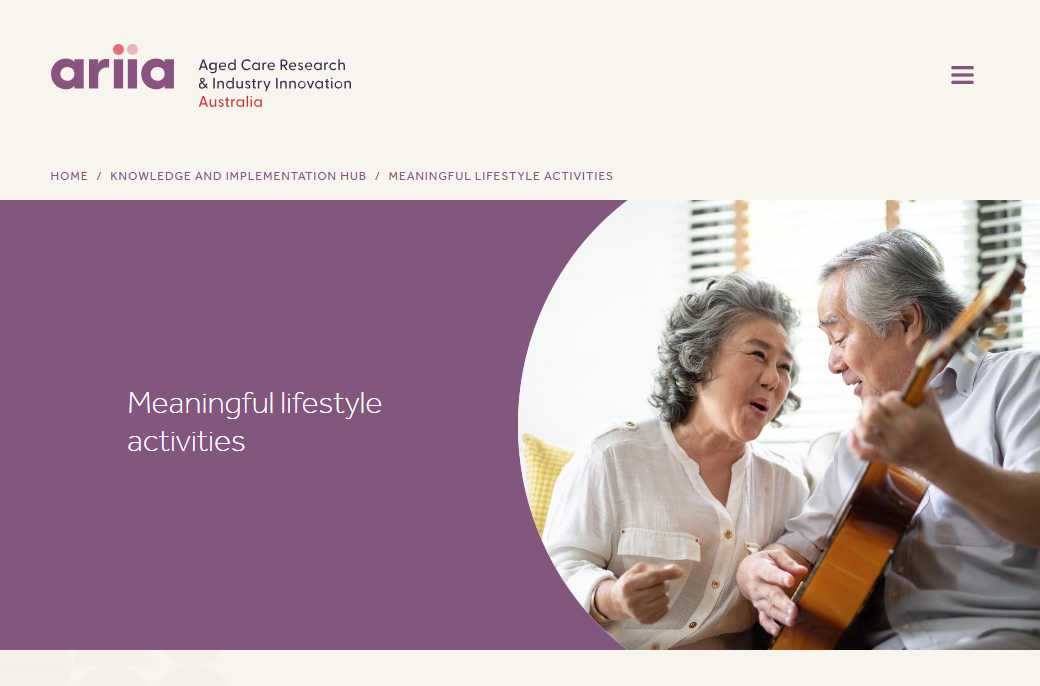
Bedrooms and privacy
This resource offers guidance on maintaining personal identity for people with dementia by fostering respect, independence, and communication. It suggests environmental and social modifications to enhance dignity, such as personalising spaces, supporting mobility, and addressing unmet needs.
This resource was developed by a state/territory government or organisation, and therefore its applicability and usefulness may be limited.
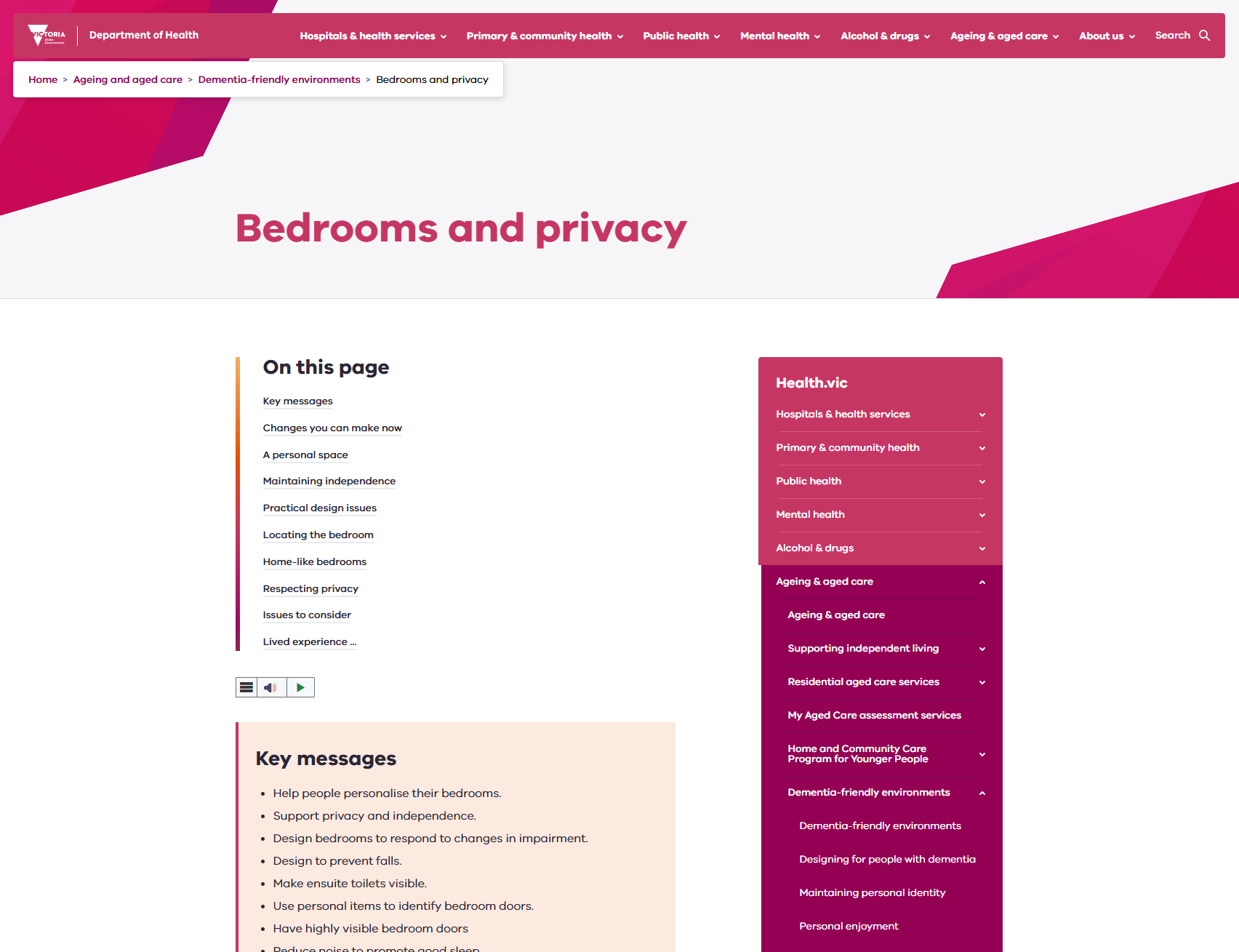
Physical activity guidelines for older people
This resource provides physical activity guidelines for older people, highlighting the benefits of staying active. It recommends 30 minutes of moderate-intensity activity daily, including strength, flexibility, balance, and cardiovascular exercises. The document also provides tips for safely starting and maintaining an exercise routine to support healthy ageing.
Work-related psychological health and safety: A systematic approach to meeting your duties
This guide offers a systematic approach to managing work-related psychological health and safety, particularly under work health and safety (WHS) and workers’ compensation laws. It provides businesses with a structured methodology for preventing psychological harm, intervening early when signs of stress appear, and supporting workers' recovery and return to work. Though the guide is an archived document, it can still offer useful background on managing psychosocial hazards but does not reflect recent changes in regulations.
Mental health tips for aged care workers and managers
This resource provides mental health tips for aged care workers and managers during the COVID-19 pandemic. It includes strategies to manage stress, anxiety, and overall mental wellbeing. The resource offers evidence-based advice on recognising when extra support is needed and how to maintain mental health, helping aged care staff navigate challenging times effectively.
Dignity of Risk
This resource provides guidance on the concept of dignity of risk. It includes information about how to reframe thinking and ways you can support dignity of risk. The resource highlights the importance of choice and independence, and supporting someone to do what they want safely.
This resource may refer to information that will be updated from 1 November 2025 to align with the new Aged Care Act and Quality Standards.
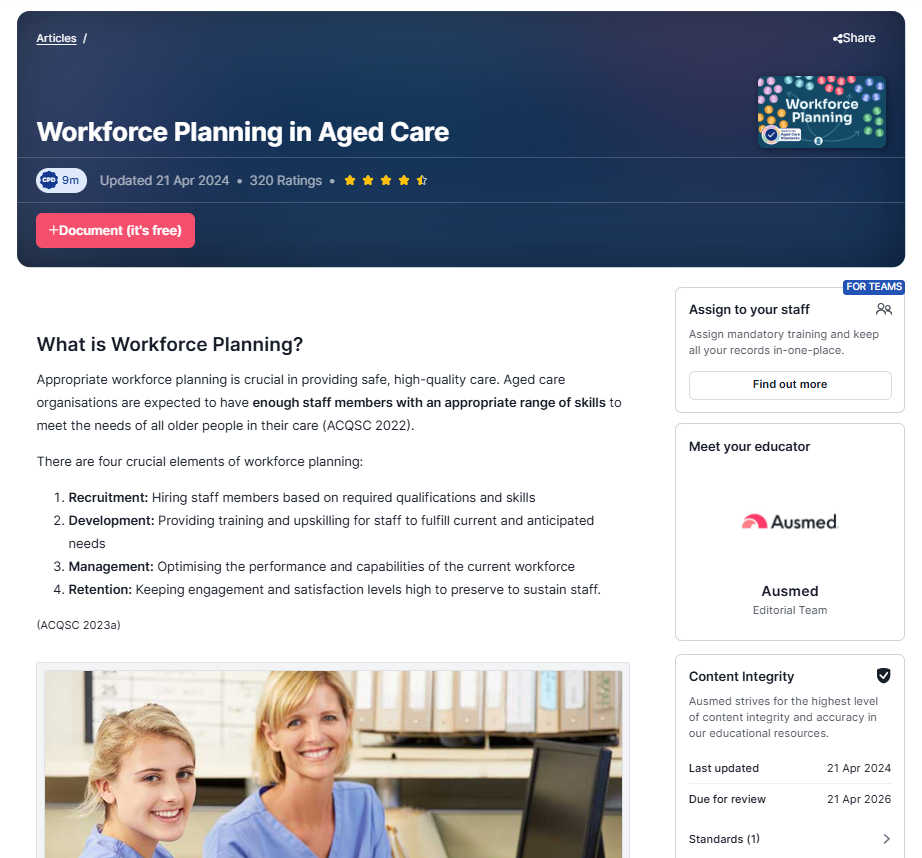
Workforce planning in aged care
This resource provides guidance about workforce planning in aged care. It includes information about workforce composition, current requirements and why it's important. It highlights the importance of the care experience, including continuity of care. This resource may refer to information that will be updated from 1 November 2025 to align with the new Aged Care Act and Quality Standards.
An Introduction to Activities of Daily Living (ADLs)
This resource explains Activities of Daily Living (ADLs), which are essential tasks that people must perform to care for themselves. It covers basic ADLs like mobility, dressing, and feeding, as well as instrumental ADLs such as managing finances and medication. The document highlights the clinical importance of assessing and supporting ADLs in aged care.
This resource may refer to information that will be updated from 1 November 2025 to align with the new Aged Care Act and Quality Standards.
Respecting the privacy and dignity of clients
This resource provides guidance about respecting the privacy and dignity of clients. It includes information about personal privacy, the Privacy Act, what classifies as health information, consent and privacy of information. It also includes information about person-centred care and client dignity.
This resource may refer to information that will be updated from 1 November 2025 to align with the new Aged Care Act and Quality Standards.
Nutrition - Informed choice
This resource discusses the importance of informed choice in aged care dining, emphasising a person-centred approach. It highlights the benefits of offering choice in meals and mealtimes, outlines how to manage decisions that involve risk, and provides tools for aged care workers to support resident autonomy while ensuring safety and satisfaction.
This resource may refer to information that will be updated from 1 November 2025 to align with the new Aged Care Act and Quality Standards.
Care and Support Mental Health Resources
This resource offers mental health and trauma-informed care materials to support aged care, home care, and disability support workers. Developed with industry consultation, it provides strategies to improve worker wellbeing, manage workplace stress, and integrate trauma-informed practices, addressing common challenges like burnout and occupational stress.
Self-Care Matters Aged Care
This resource supports aged care workers in managing stress and maintaining mental and physical wellbeing. It includes videos and tools focused on self-care strategies, such as mindfulness, relaxation, and personalised self-care planning. The resource is designed to help prevent burnout and promote resilience in delivering high-quality care in aged care settings.
Code of conduct
This resource provides the National Boards' Code of Conduct, outlining the expected professional behaviour and ethical standards for registered health practitioners. It serves as a regulatory framework to ensure safe, ethical care, helping practitioners understand their responsibilities. The document is important for all registered practitioners to ensure they comply with these standards across healthcare settings.
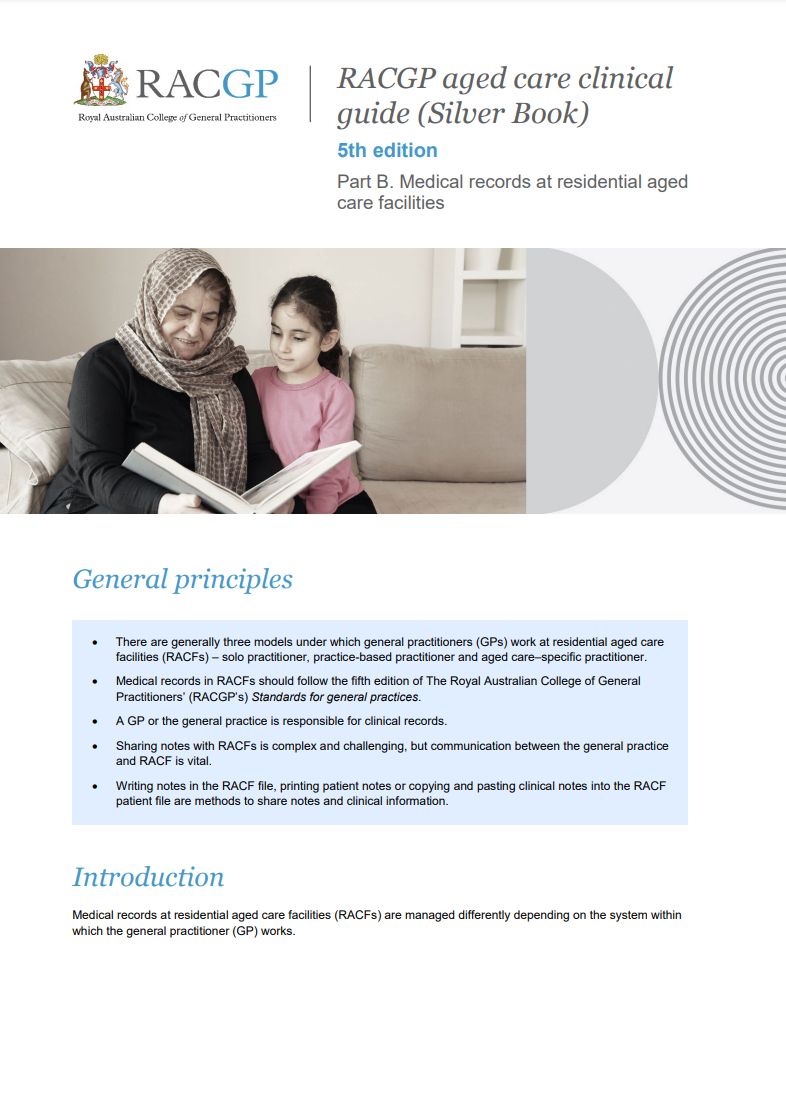
RACGP aged care clinical guide (Silver Book) - Part B - Older people in rural and remote communities
This guide discusses providing aged care in rural and remote communities, focusing on the unique needs of older residents, the role of GPs in care coordination, and overcoming challenges like limited services and workforce shortages. It covers building telehealth connections, establishing collaborative care models, and offers a checklist for newly arrived GPs to support quality care for older adults.
Silver Rainbow: Ageing and Aged Care
This resource is about the Silver Rainbow project to improve the experiences of LGBTI people as they age and enter aged care. The resource offers resources and training information to support the health and wellbeing of LGBTIQ+ older people. It also includes relevant reports and papers, such as government submissions.
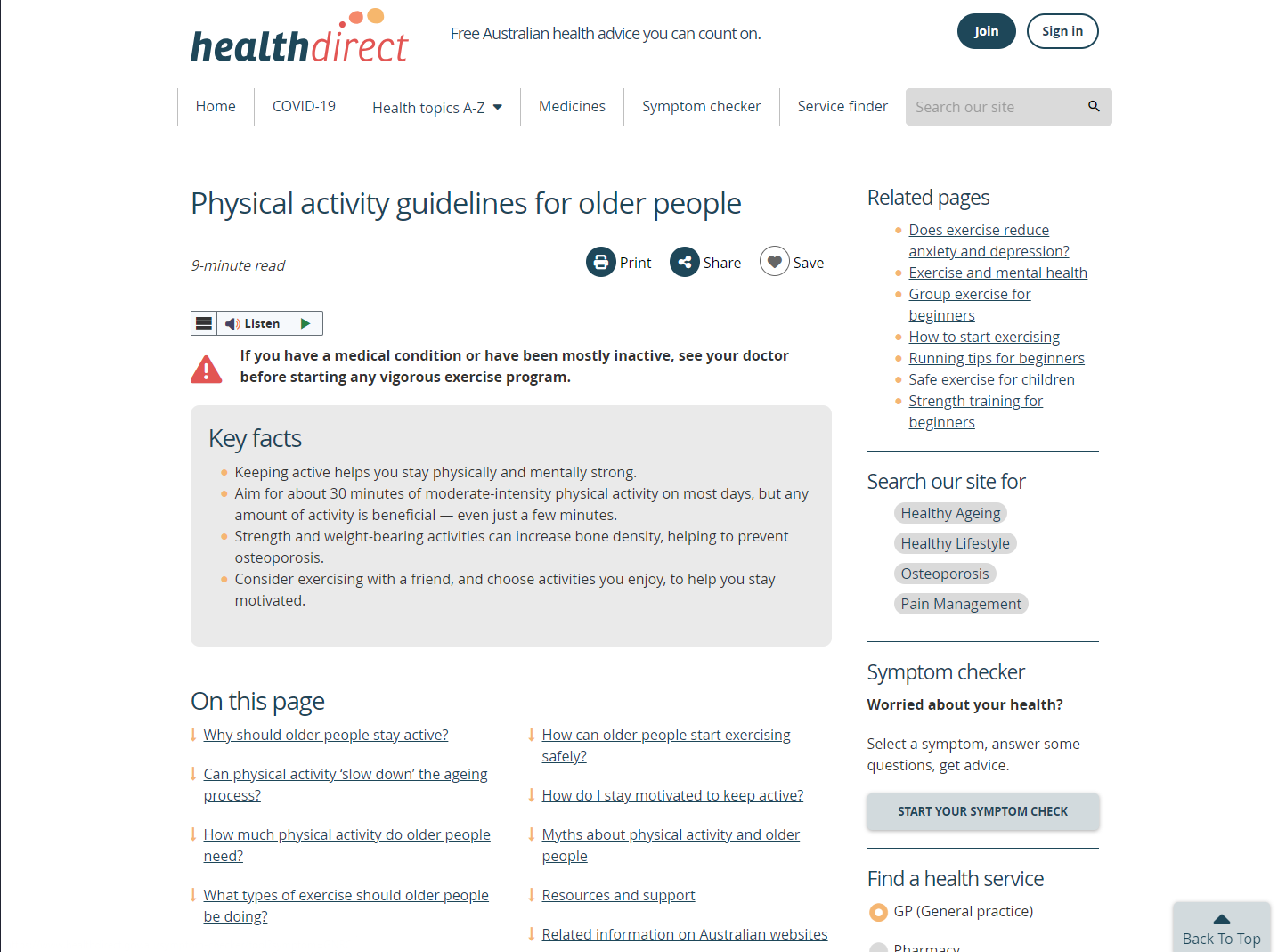
Allied health regulation
This resource provides information about the regulation of allied health professions in Australia. It includes those registered under the National Registration and Accreditation Scheme (NRAS) and self-regulating professions managed by professional peak bodies. It also provides links to further information about allied health professions currently registered with AHPRA and information for overseas-qualified practitioners.