The Quality Standards Resource Centre helps extend understanding of the strengthened Aged Care Quality Standards, which took effect from 1 November 2025. You can search for resources by using keywords, or filtering by standard, outcome and audience. Before using the Resource Centre, please read the terms of use.
Familiar Places Webinar 2 – Bedrooms and Dining Areas
This webpage provides a video webinar focused on familiar places, such as bedrooms and dining areas, for dementia care environments. It offers insights into how these spaces can be designed to support the wellbeing of people living with dementia, with a particular emphasis on creating comfortable and familiar settings.
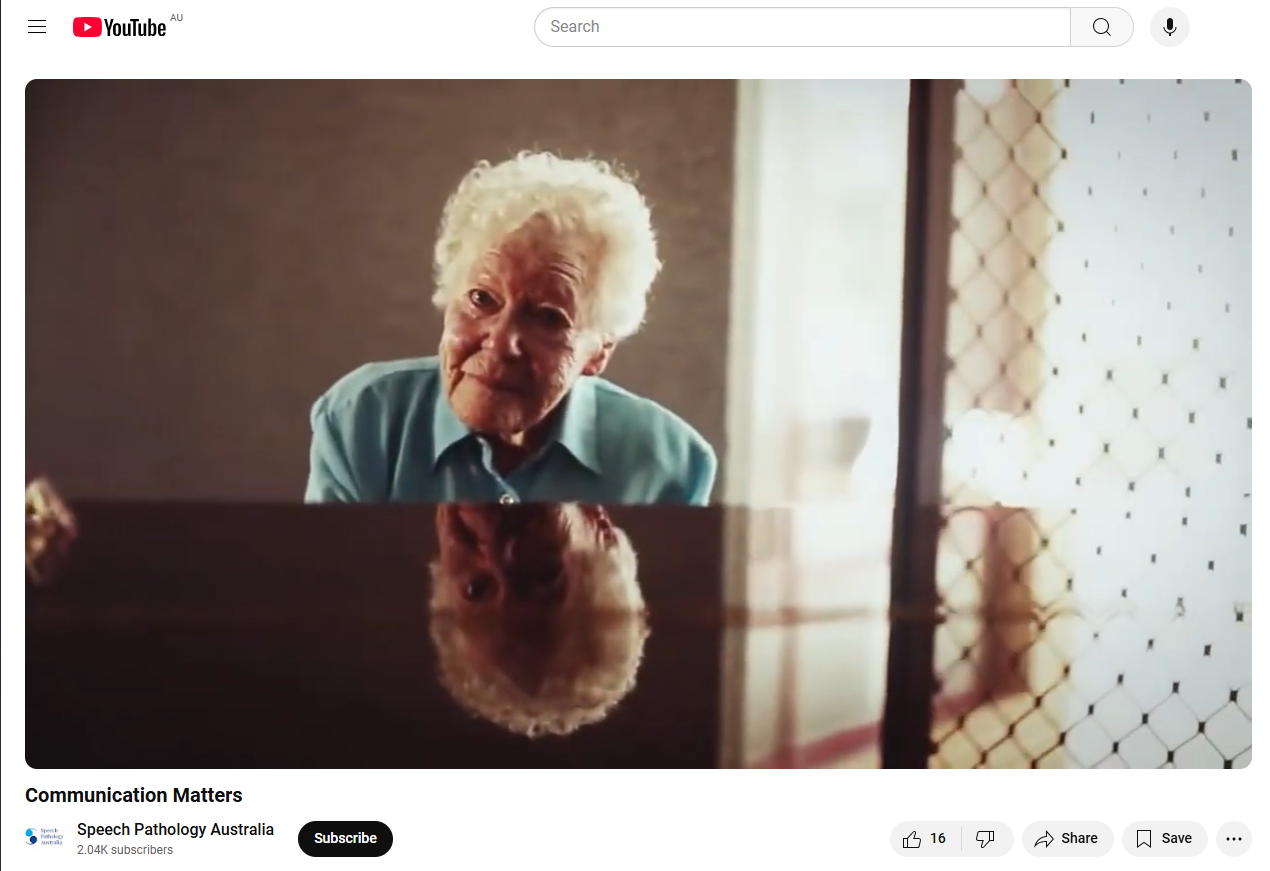
Communication Matters
This You Tube video emphasises the importance of communication for people in aged care, especially those with impairments. It advocates using varied methods, such as gestures and expressions, to make sure everyone can connect meaningfully, supporting dignity and autonomy.
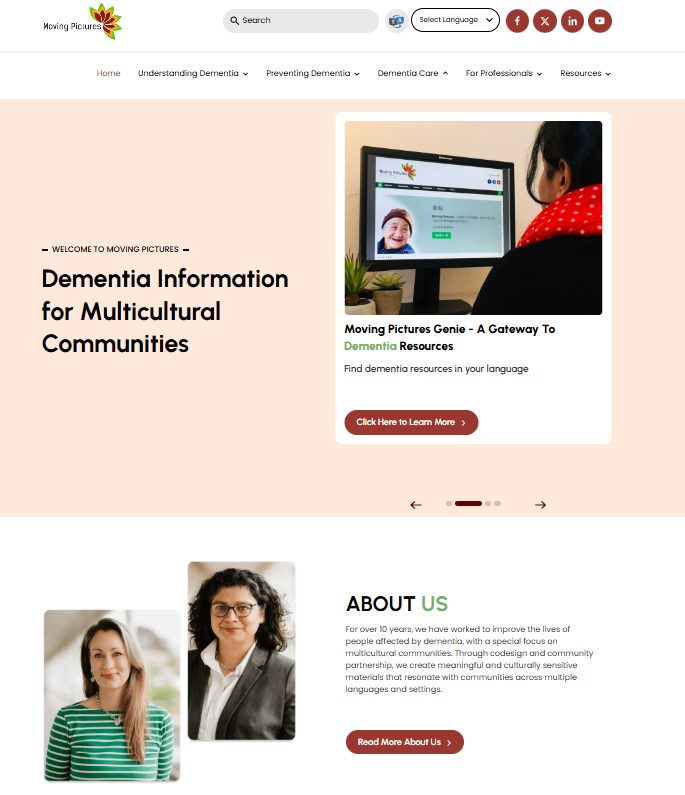
Dementia information for multicultural communities
This resource provides dementia information and resources for multicultural communities, offering animations, videos, and materials in multiple languages. It aims to improve understanding of dementia and its prevention in diverse cultural groups, supporting awareness and early intervention.
This resource may apply to healthcare contexts outside of aged care. Please consider the applicability of this resource to your care setting.
How to navigate transitions in care
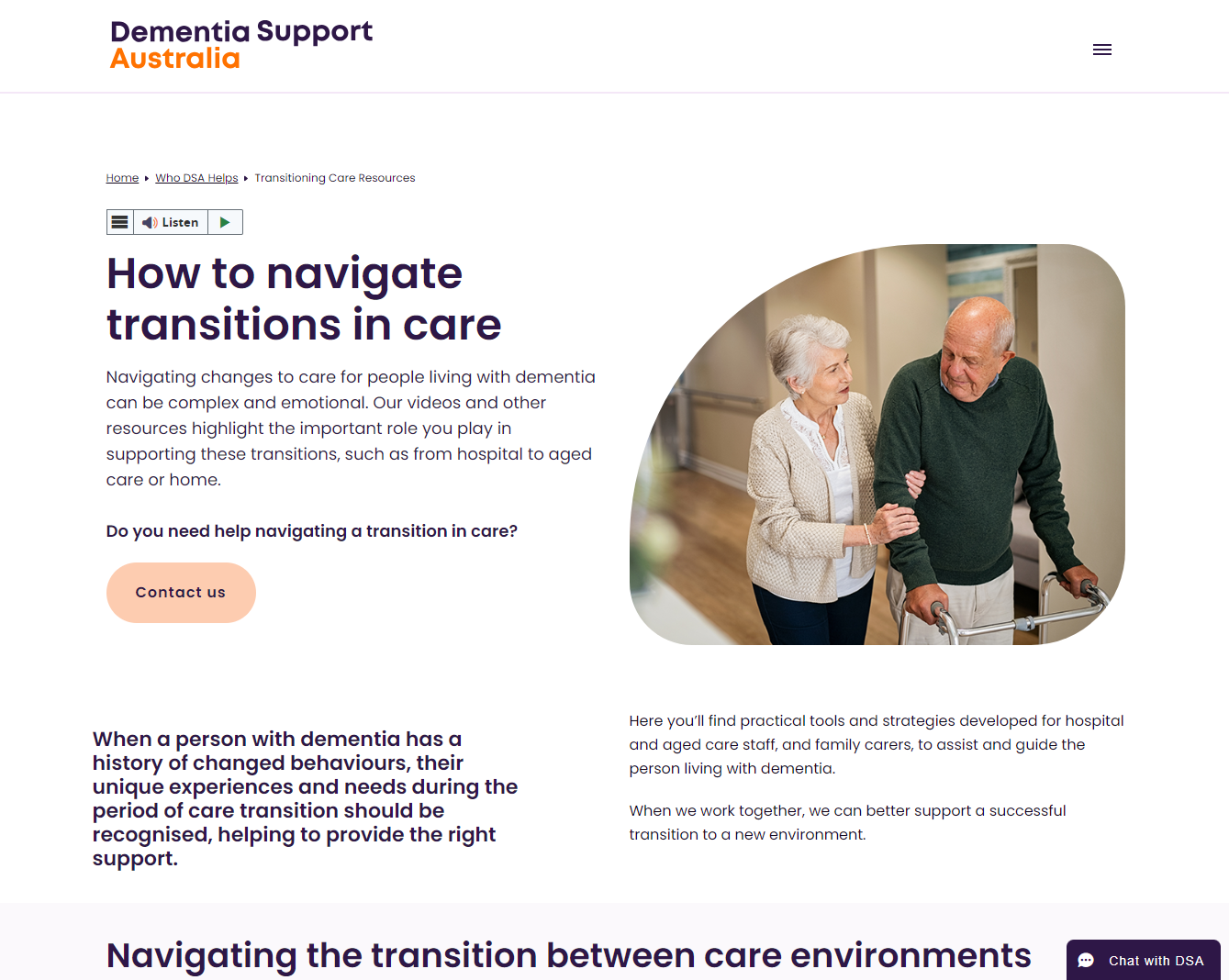
This resource offers tools and strategies for navigating care transitions for people living with dementia. It provides support to hospital, aged care staff, and family carers, ensuring that the unique needs of those with dementia are met during transitions, such as moving from hospital to aged care or home.
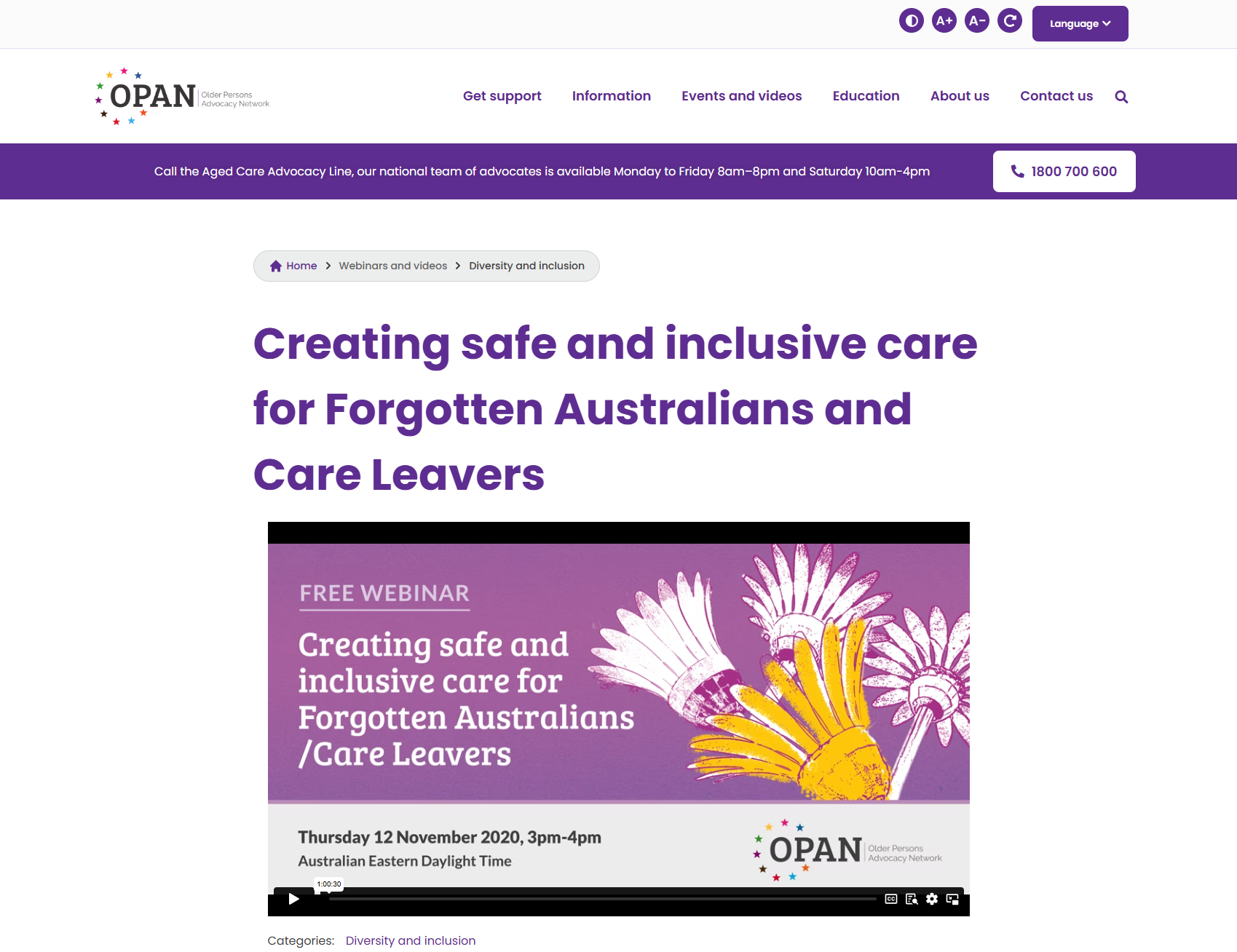
Creating safe and inclusive care for Forgotten Australians and Care Leavers
This resource provides guidance for creating safe, inclusive aged care for Forgotten Australians and Care Leavers, focusing on trauma-informed practices. It supports providers in recognising unique needs, avoiding re-traumatisation, and promoting respect and sensitivity in care environments.