The Quality Standards Resource Centre helps extend understanding of the strengthened Aged Care Quality Standards, which took effect from 1 November 2025. You can search for resources by using keywords, or filtering by standard, outcome and audience. Before using the Resource Centre, please read the terms of use.
Standardised care processes
This resource offers evidence-based standardised care processes for aged care providers, covering high-risk clinical areas such as falls, pain, incontinence, and dehydration. It provides structured guidelines to support best practices, ensuring consistent and safe care for older people in residential settings.
This resource was developed by a state/territory government or organisation and therefore its applicability and usefulness may be limited.
Participating with consumers
This resource provides information sheets for residents, families, and carers to support decision-making in residential aged care. Covering topics such as pain management, falls, and medicines, it promotes health literacy, enabling consumers to engage in discussions and report care issues effectively.
This resource was developed by a state/territory government or organisation and therefore its applicability and usefulness may be limited.
Communication at clinical handover
This resource focuses on structured clinical handover processes to improve communication during patient care transitions. It highlights the importance of standardising handover procedures to make sure relevant information is effectively communicated, reducing errors and enhancing patient safety, especially during care transfers in healthcare settings, including aged care.
This resource may refer to information that will be updated from 1 November 2025 to align with the new Aged Care Act and Quality Standards.
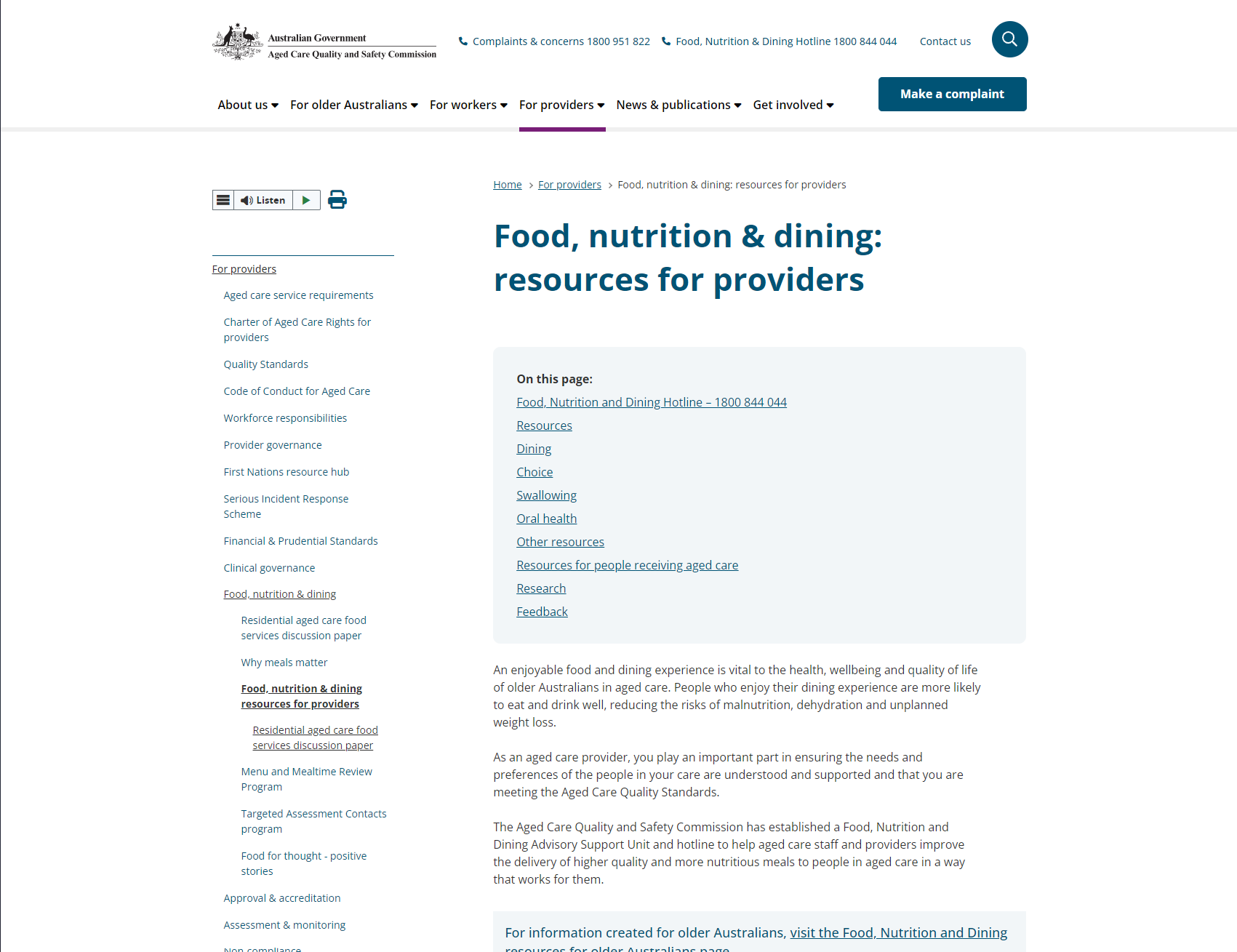
Communicating for Safety
This resource provides tools and guidance on improving clinical communication to enhance patient safety. It focuses on key communication touchpoints, such as handovers, decision-making, and care transitions. Designed to support healthcare providers, it offers practical strategies to reduce errors and improve outcomes in aged care and other healthcare settings.
This resource may refer to information that will be updated from 1 November 2025 to align with the new Aged Care Act and Quality Standards.
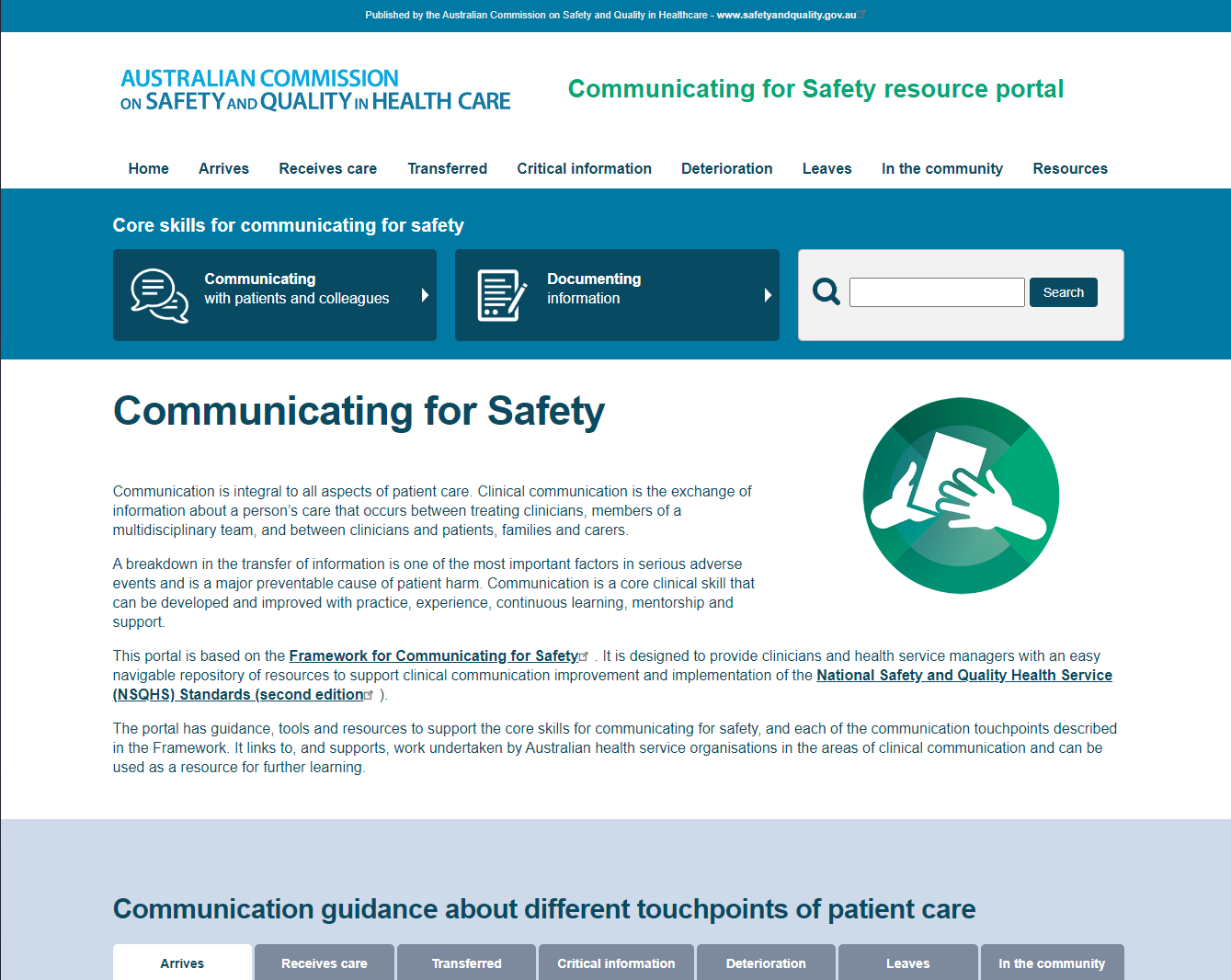
Cultural considerations in Food, Nutrition and Dining
This resource provides guidance on incorporating cultural considerations into food, nutrition, and dining in aged care settings. It highlights the importance of understanding diverse dietary preferences, religious practices, and family dynamics to support person-centred care, improve wellbeing, and promote inclusivity within the aged care environment.
This resource may refer to information that will be updated from 1 November 2025 to align with the new Aged Care Act and Quality Standards.
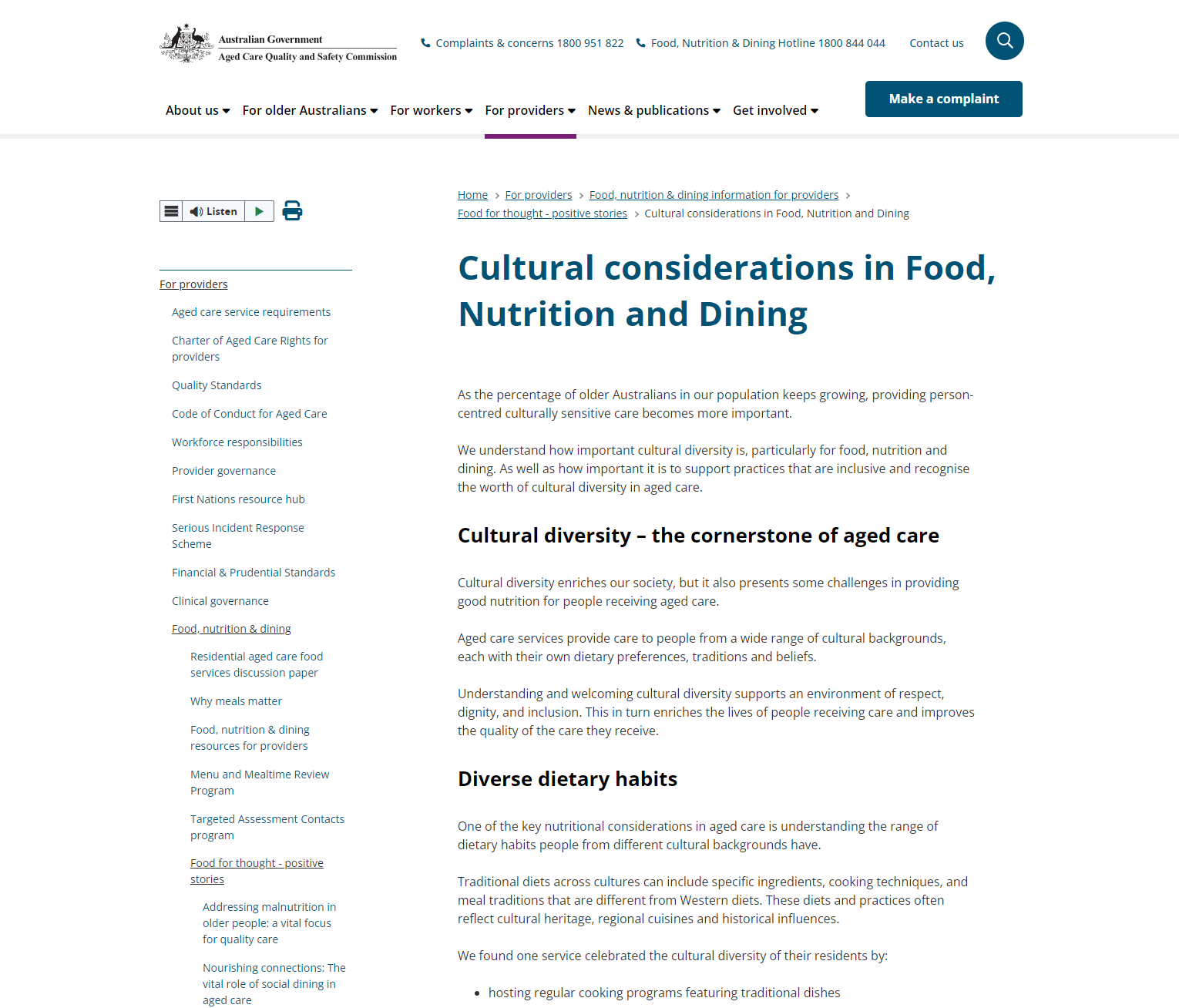
Food, nutrition & dining: resources for workers
This resource provides aged care workers with tools to enhance food, nutrition, and dining experiences for people in their care. It includes practical guides on offering choice, managing swallowing difficulties, promoting oral health, and creating an enjoyable dining environment, all while ensuring adherence to aged care standards.
This resource may refer to information that will be updated from 1 November 2025 to align with the new Aged Care Act and Quality Standards.
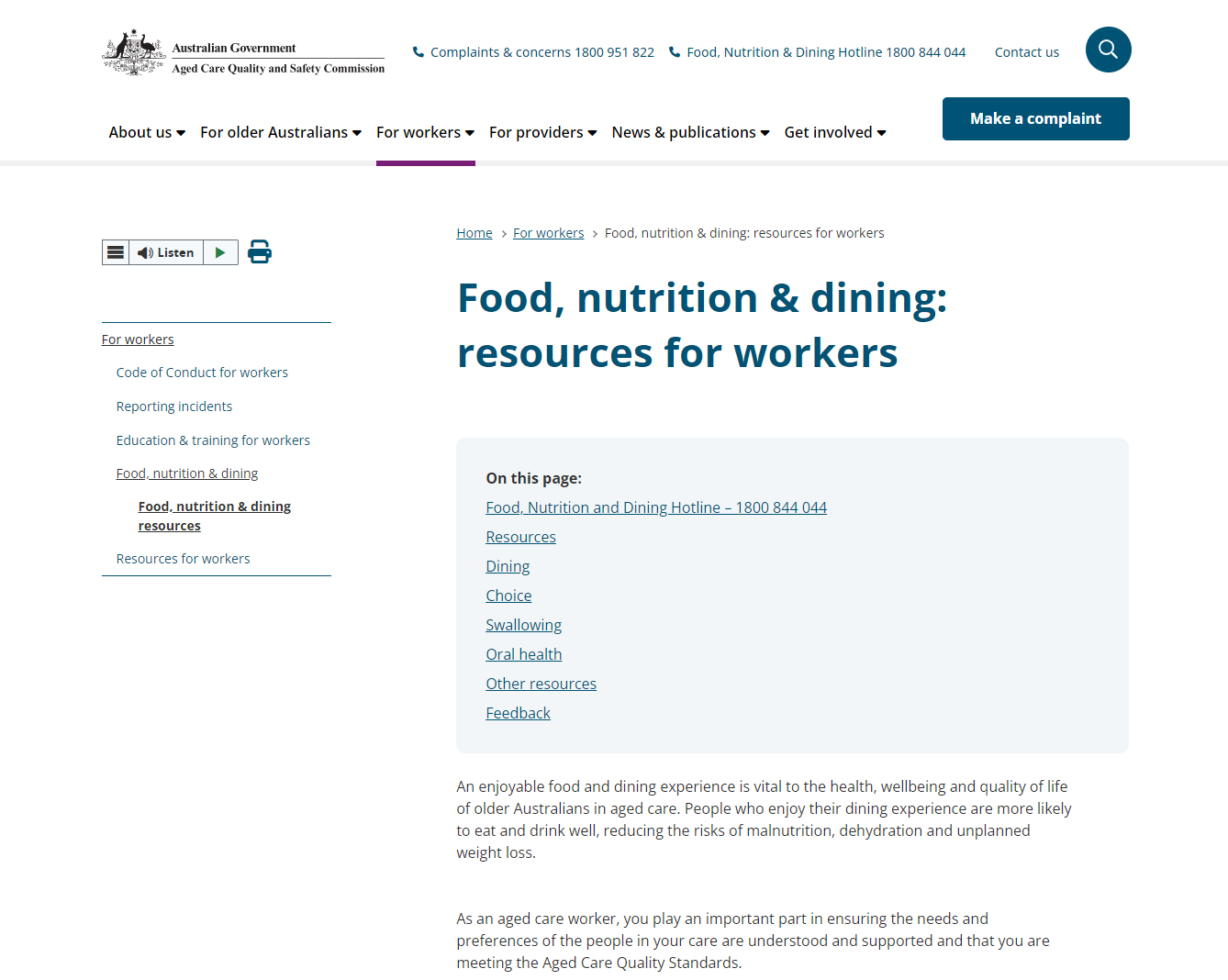
Food, nutrition & dining: resources for providers
This resource provides tools and guidance for aged care providers to ensure quality food, nutrition, and dining experiences. It includes hotlines, resources for dining, choice, swallowing, and oral health, as well as webinars, research findings, and practical tips to support older adults' wellbeing and meet care standards.
This resource may refer to information that will be updated from 1 November 2025 to align with the new Aged Care Act and Quality Standards.
Improving aged care with speech pathology: Why it matters and how it helps
This page highlights the role of speech pathologists in supporting older people with communication, eating, drinking, and swallowing difficulties. It provides resources for aged care providers on how to improve care quality through effective communication tools and tailored strategies. This resource includes practical examples, like sample plates and picture boards, for enhancing dining experiences and supporting individual choice.
This resource may refer to information that will be updated from 1 November 2025 to align with the new Aged Care Act and Quality Standards.