The Quality Standards Resource Centre helps extend understanding of the strengthened Aged Care Quality Standards, which took effect from 1 November 2025. You can search for resources by using keywords, or filtering by standard, outcome and audience. Before using the Resource Centre, please read the terms of use.
Informed consent
This resource provides guidance on ensuring informed consent in healthcare settings. It outlines legal, ethical, and professional requirements for obtaining consent, supports person-centred care, and ensures compliance with Australian healthcare standards. It highlights the importance of providing accurate information about interventions and alternatives, ensuring people have sufficient knowledge of potential risks and benefits.
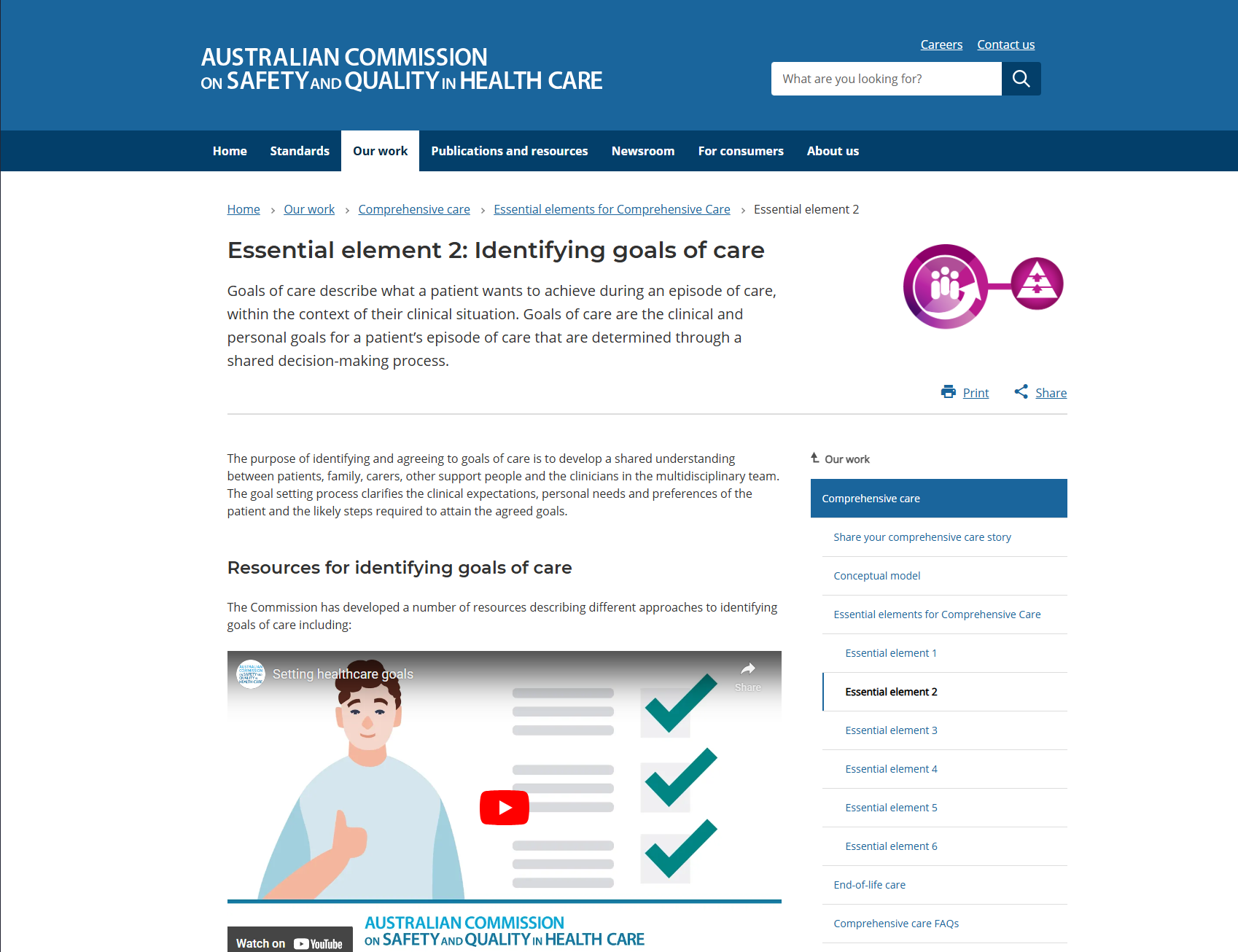
Essential element 2: Identifying goals of care
This resource guides providers in identifying and setting goals of care with patients through shared decision-making. It fosters collaboration between patients, family, and healthcare teams to clarify expectations and establish personalised clinical and personal care objectives.
This resource may apply to healthcare contexts outside of aged care. Please consider the applicability of this resource to your care setting. This resource may refer to information that will be updated from 1 November 2025 to align with the new Aged Care Act and Quality Standards.
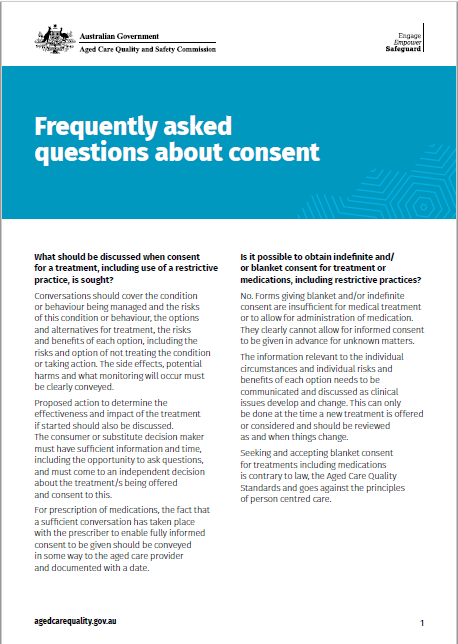
Frequently asked questions about consent
This fact sheet covers the frequently asked questions about consent in aged care.
 Frequently asked questions about consent (PDF 433.26 KB)
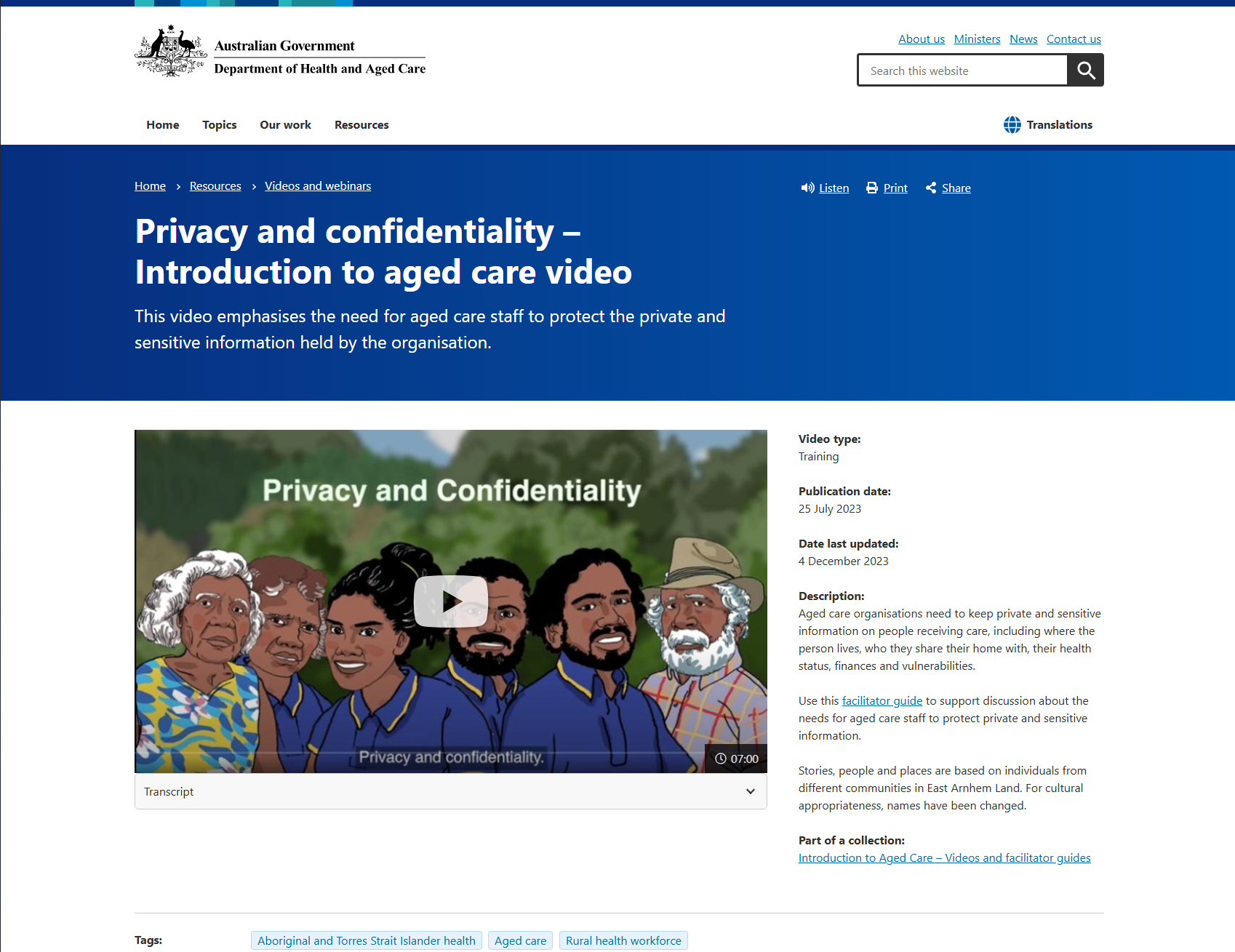
Privacy and confidentiality – Introduction to aged care video
This resource is a training video guiding aged care staff on the importance of maintaining privacy and confidentiality for people receiving care. It covers protecting personal information, proper handling of sensitive data, and safe sharing practices, aiming to make sure clients feel secure in sharing information.
This resource may refer to information that will be updated from 1 November 2025 to align with the new Aged Care Act and Quality Standards.
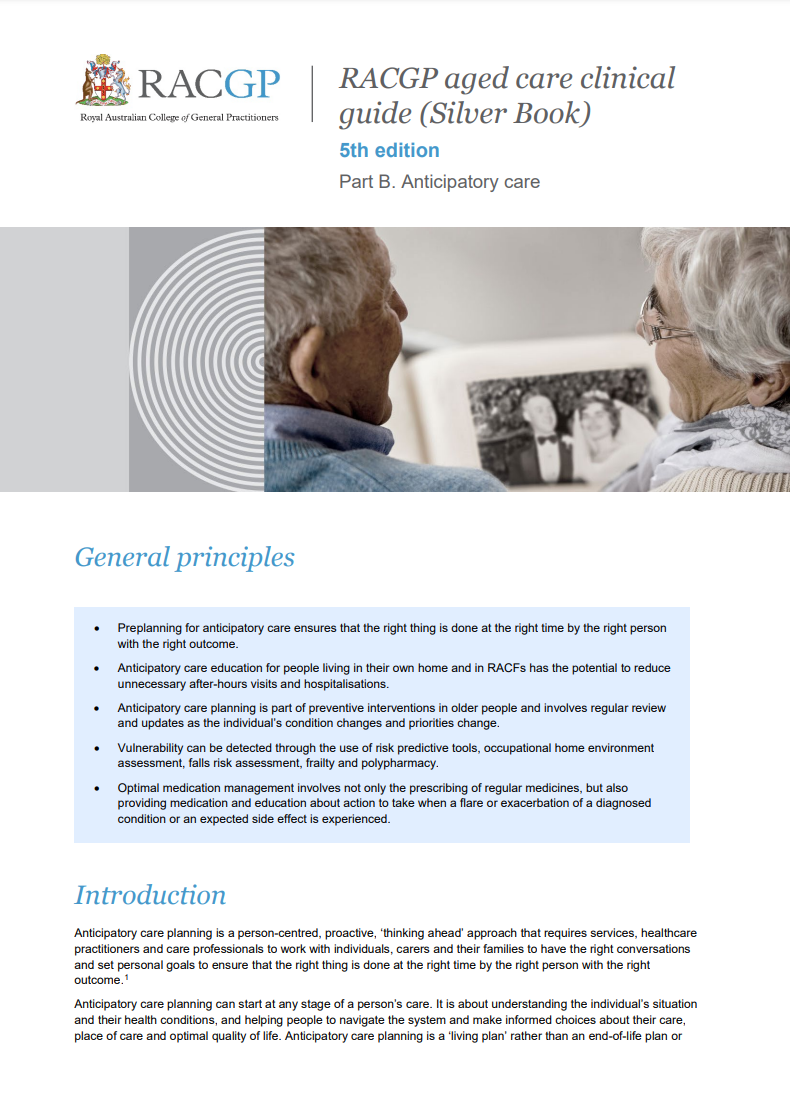
RACGP aged care clinical guide (Silver Book) - Part B - Anticipatory care
This guide outlines anticipatory care planning for older adults, focusing on proactive and person-centred approaches. It details triggers for care planning, identifying vulnerability, medication management, and the use of 'as needed' (PRN) medicines for various conditions like allergic reactions, asthma, diabetes, falls, and palliative care. It includes specific recommendations for developing individualised care plans and appropriate interventions for maintaining health and quality of life.
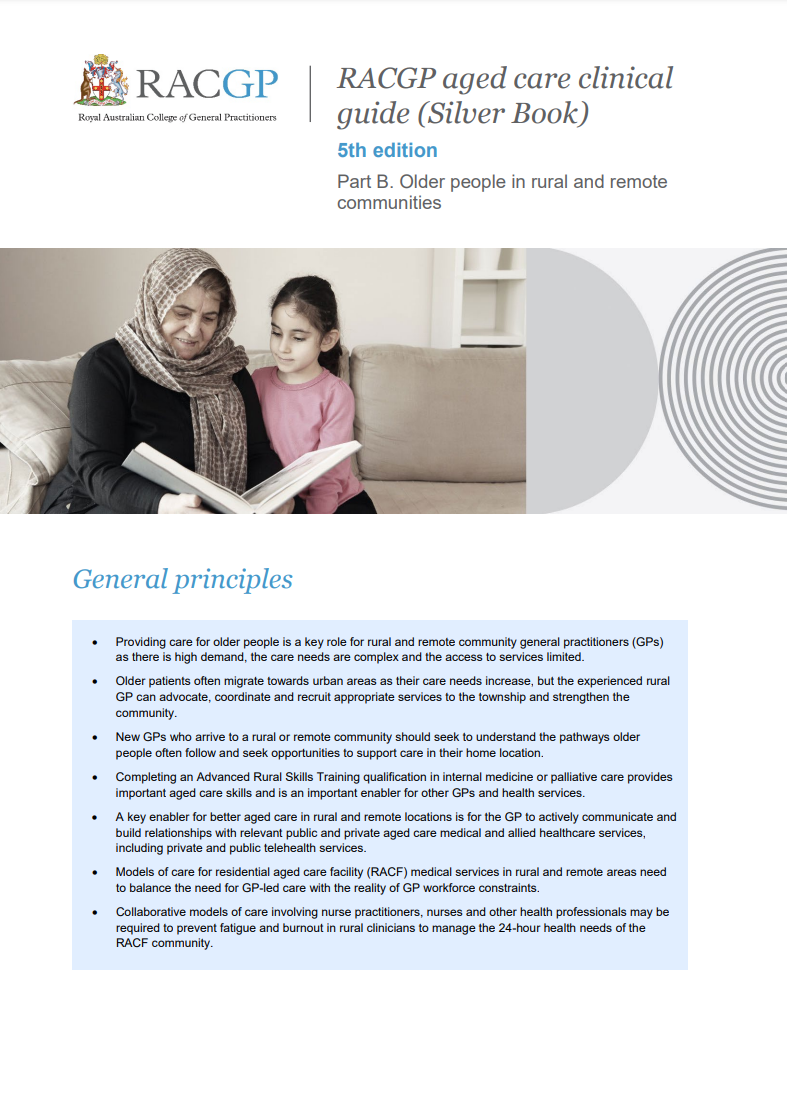
RACGP aged care clinical guide (Silver Book) - Part B - Older people in rural and remote communities
This guide discusses providing aged care in rural and remote communities, focusing on the unique needs of older residents, the role of GPs in care coordination, and overcoming challenges like limited services and workforce shortages. It covers building telehealth connections, establishing collaborative care models, and offers a checklist for newly arrived GPs to support quality care for older adults.
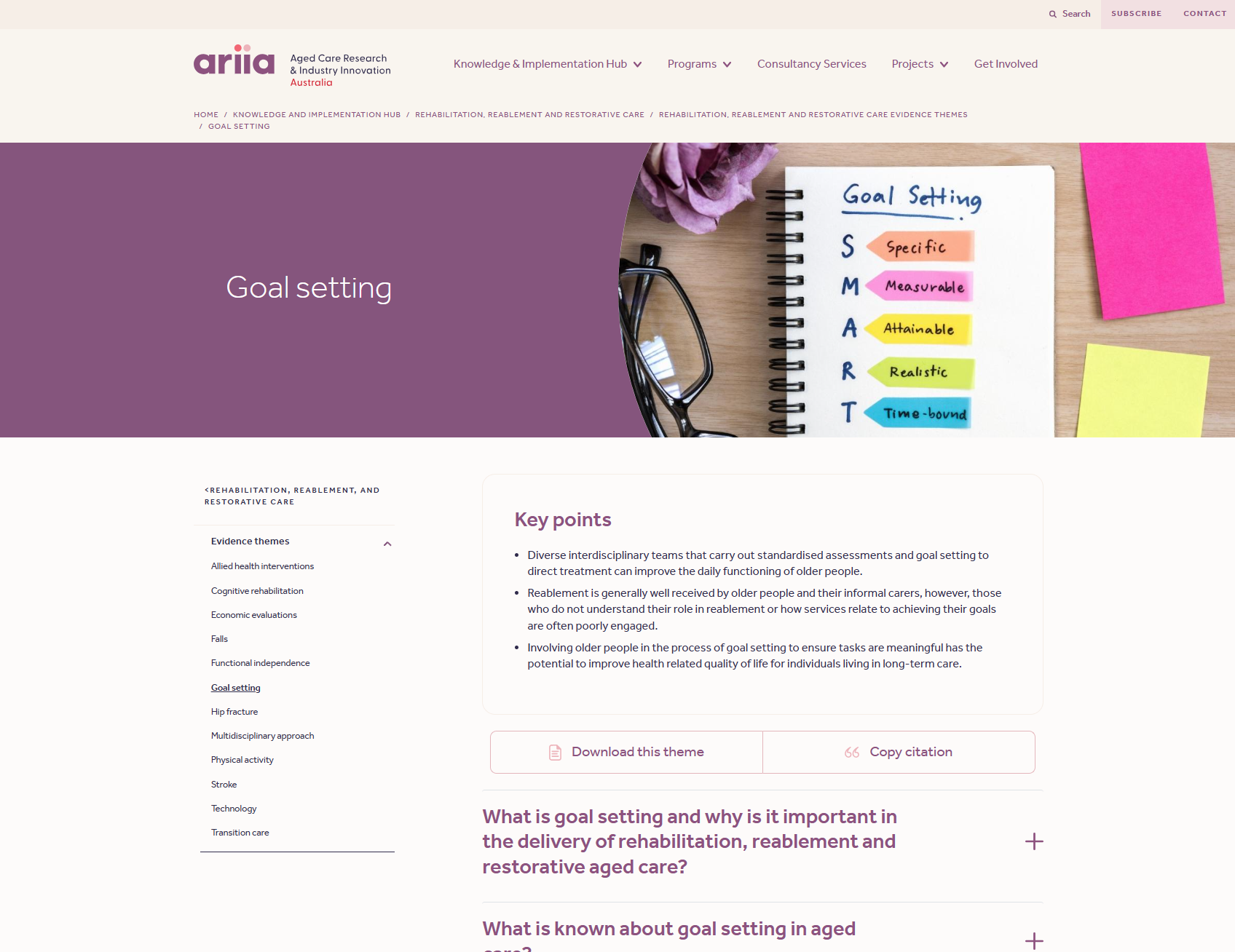
Goal setting
This resource discusses the role of goal setting in enhancing rehabilitation, reablement, and restorative care for older people. It highlights the value of involving older people in defining goals and the positive impact of goal setting on engagement, daily function, and quality of life.