
Aged care laws in Australia have now changed. The new Aged Care Act 2024 and Aged Care Rules 2025 now apply. While we complete updating of our website, including draft guidance and other materials, to align with the new laws, providers are advised to refer to the new Act and Rules for any required clarification of their obligations and legal responsibilities. Thank you for your patience.

Quality Standards Resource Centre

The Quality Standards Resource Centre helps extend understanding of the strengthened Aged Care Quality Standards, which take effect from 1 November 2025. The Resource Centre will be updated to reflect key changes made to the draft strengthened Standards. You can search for resources by using keywords, or filtering by standard, outcome, audience and theme. Before using the Resource Centre, please read the terms of use.

Displaying 1 to 6 of 6 result(s)
/quality-standards/palliaged-practice-centre

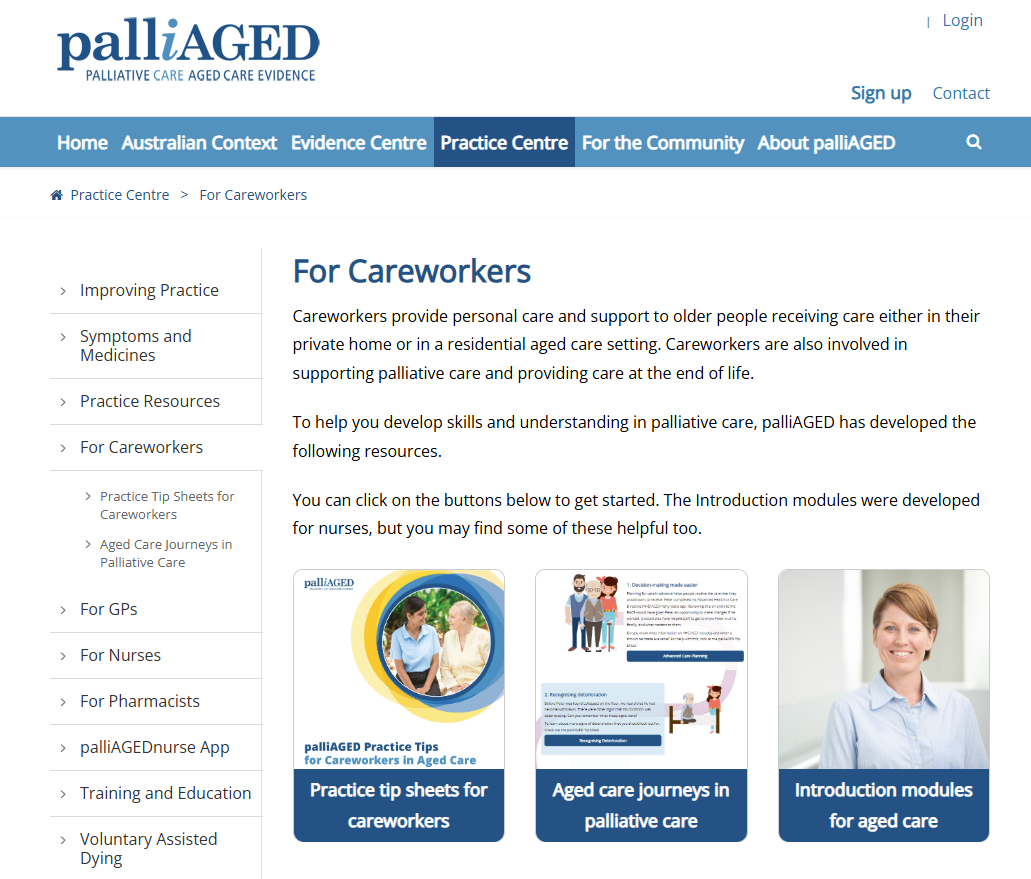
palliAGED - Practice Centre

Guidance

This resource provides information for care workers about palliative care. The Practice Centre provides links to, and information about, tools and resources to use in practice and improve care and outcomes in palliative care. It includes sections on improving practice, symptoms, medicines and tipsheets.
Author
External resource
Key Theme
Assessment and planning, Palliative and end of life care, Food and nutrition
Standard
3: The Care and Services, 5: Clinical Care, 6: Food and Nutrition
Outcomes
3.1 Assessment and planning, 5.7: Palliative care and end-of-life care, 6.2: Assessment of nutritional needs and preferences
palliAGED - Practice Centre
/quality-standards/palliaged-evidence-centre

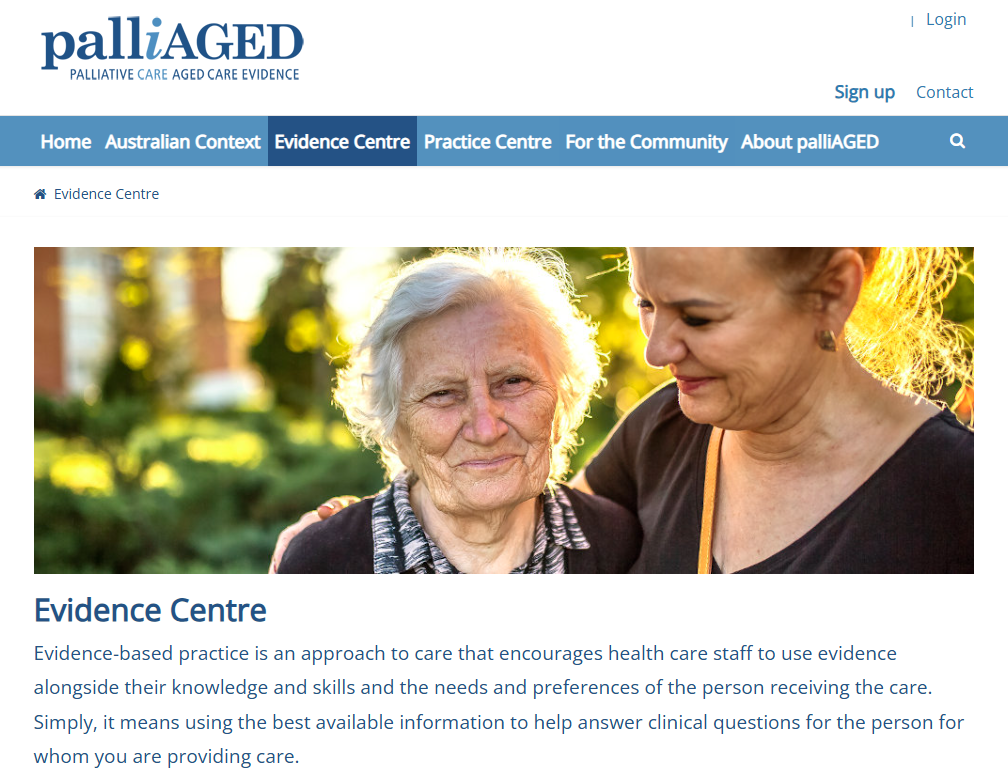
palliAGED - Evidence Centre

Guidance

This resource provides evidence-based information for the healthcare sector about palliative care. It includes evidence summaries on topics related to palliative care, such as advance care planning, advocacy, care coordination, goals of care, nutrition and needs assessment.
Author
External resource
Key Theme
Assessment and planning, Palliative and end of life care, Food and nutrition
Standard
3: The Care and Services, 5: Clinical Care, 6: Food and Nutrition
Outcomes
3.1 Assessment and planning, 5.7: Palliative care and end-of-life care, 6.2: Assessment of nutritional needs and preferences
palliAGED - Evidence Centre
/quality-standards/dementia-australia

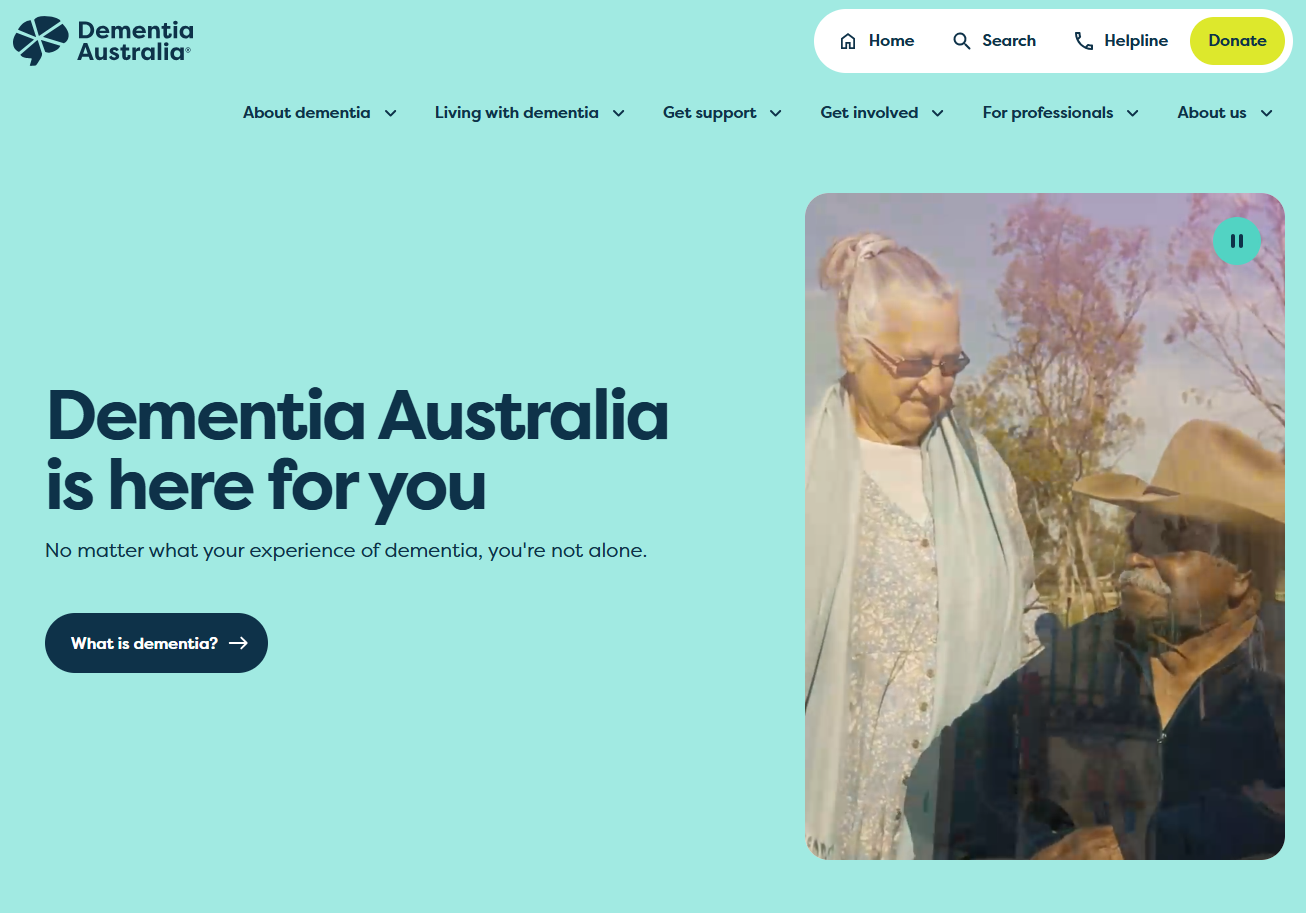
Dementia Australia

Guidance

This resource is the Dementia Australia website. The website contains information about the types of dementia, testing, diagnosis, treatment and management of dementia. It includes information about living with dementia, such as behaviour changes, nutrition, staying connected and care options. It also contains information for professionals supporting people living with dementia, including research, tools and other resources. 
Author
External resource
Key Theme
Delivering comprehensive care and services, Assessment and planning, Food and nutrition
Standard
3: The Care and Services, 5: Clinical Care, 6: Food and Nutrition
Outcomes
3.1 Assessment and planning, 3.2: Delivery of funded aged care services, 5.6 Cognitive impairment  , 6.3: Provision of food and drinks
Dementia Australia
/quality-standards/standardised-care-processes

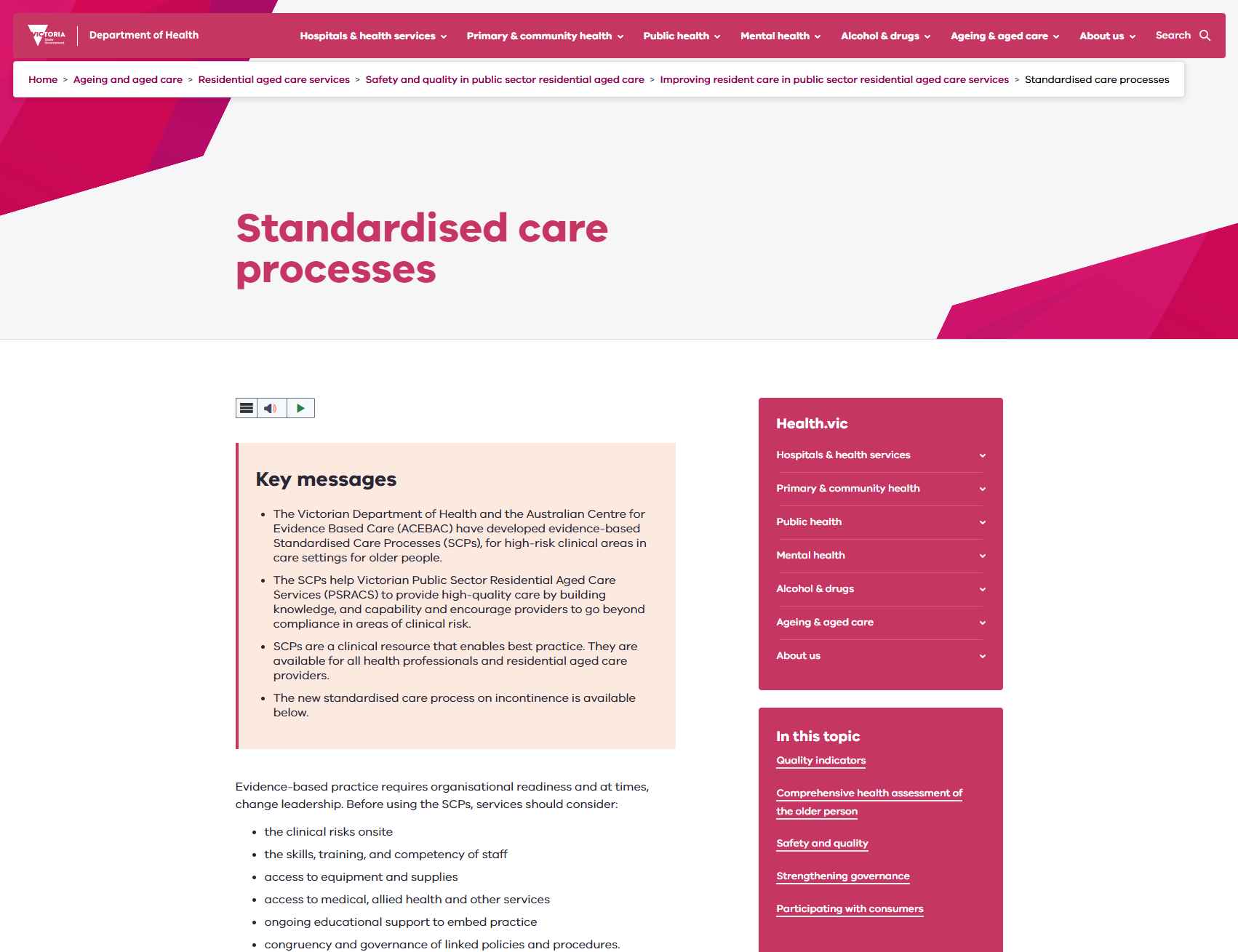
Standardised care processes

Guidance
Last Updated

This resource offers evidence-based standardised care processes for aged care providers, covering high-risk clinical areas such as falls, pain, incontinence, and dehydration. It provides structured guidelines to support best practices, ensuring consistent and safe care for older people in residential settings.

This resource was developed by a state/territory government or organisation and therefore its applicability and usefulness may be limited.
Author
External resource
Key Theme
Medication management, Clinical safety, Delivering comprehensive care and services, Palliative and end of life care, Food and nutrition
Standard
5: Clinical Care, 6: Food and Nutrition
Outcomes
5.3: Safe and quality use of medicines, 5.5: Safety of clinical care services, 5.6 Cognitive impairment  , 5.7: Palliative care and end-of-life care, 6.2: Assessment of nutritional needs and preferences, 6.3: Provision of food and drinks
Standardised care processes
/quality-standards/supporting-people-living-dementia-eat-and-drink-well

Supporting people living with dementia to eat and drink well

Guidance

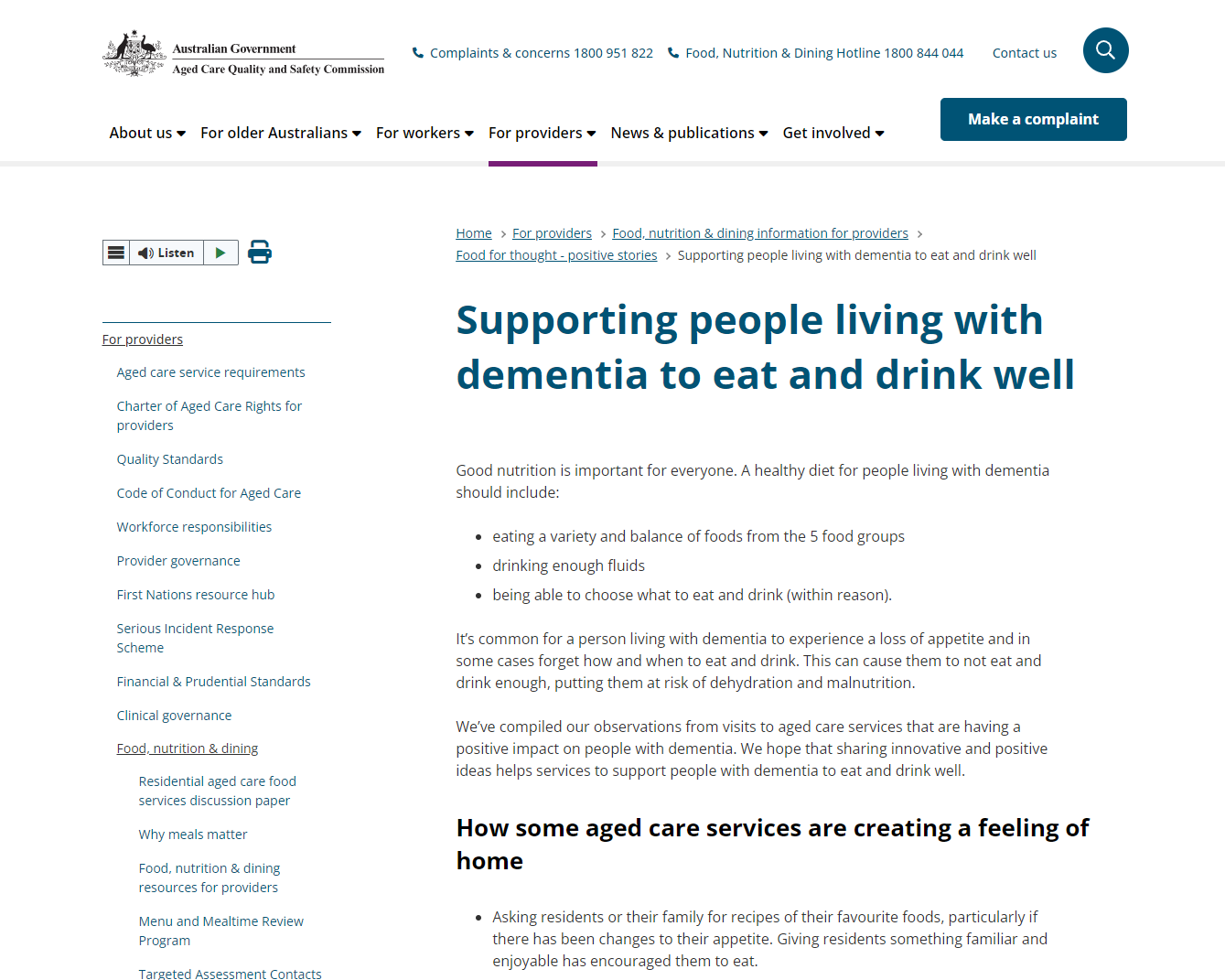
This resource provides guidance for aged care services on how to support people living with dementia to eat and drink well. It highlights innovative approaches such as creating familiar, enjoyable meals, reducing mealtime interruptions, and offering 24-hour access to nutritious foods. These strategies help address challenges like malnutrition and dehydration. 

This resource may refer to information that will be updated from 1 November 2025 to align with the new Aged Care Act and Quality Standards.
Author
Aged Care Quality & Safety Commission
Key Theme
Delivering comprehensive care and services, Food and nutrition
Standard
5: Clinical Care, 6: Food and Nutrition, 7: The Residential Community
Outcomes
5.6 Cognitive impairment  , 6.4: Dining experience, 7.1: Daily living
Supporting people living with dementia to eat and drink well
/quality-standards/dementia-friendly-environments-dining-areas-kitchens-and-eating

Dementia-friendly environments - Dining areas, kitchens and eating

Guidance
Last Updated

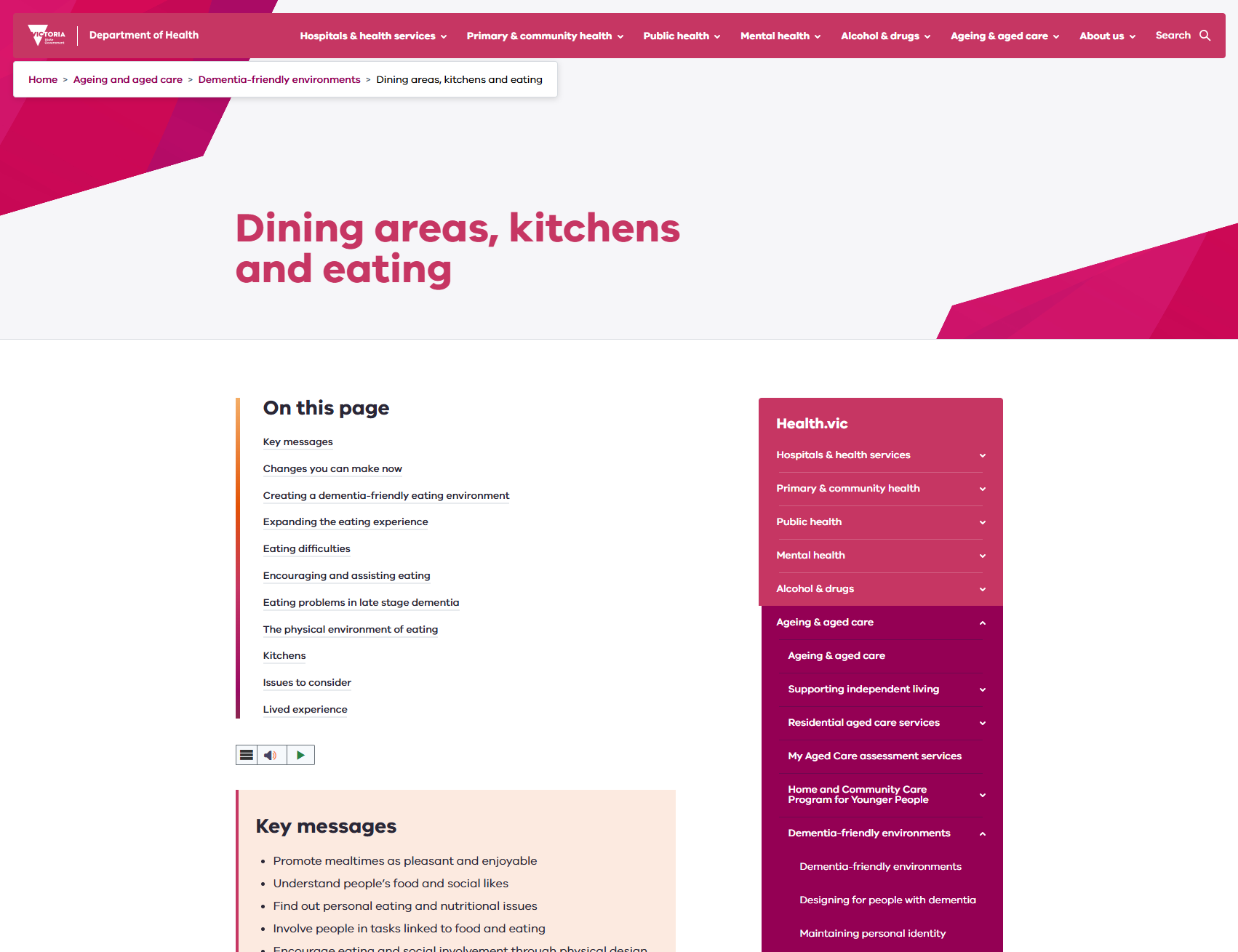
This resource provides guidelines for creating dementia-friendly dining and kitchen spaces, emphasising sensory engagement, personalised meal experiences, and a home-like environment. It includes practical adjustments for lighting, noise, seating, and social interaction to enhance dining enjoyment.

This resource was developed by a state/territory government or organisation and therefore its applicability and usefulness may be limited.

Author
External resource
Key Theme
Delivering comprehensive care and services, Environment, Food and nutrition
Standard
4: The Environment, 5: Clinical Care, 6: Food and Nutrition
Outcomes
4.1b: Environment – services delivered other than in the individual’s home, 5.6 Cognitive impairment  , 6.4: Dining experience
Dementia-friendly environments - Dining areas, kitchens and eating



