The Quality Standards Resource Centre helps extend understanding of the strengthened Aged Care Quality Standards, which took effect from 1 November 2025. You can search for resources by using keywords, or filtering by standard, outcome and audience. Before using the Resource Centre, please read the terms of use.
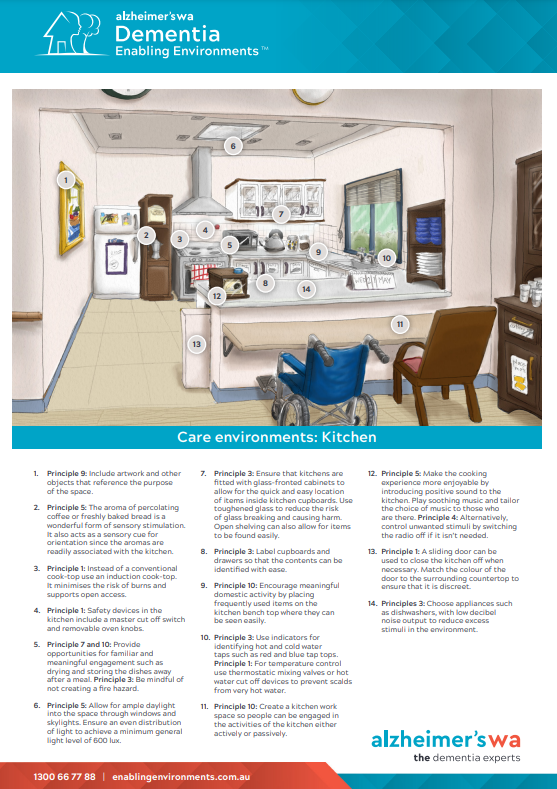
Dementia enabling environments - Care environments: Kitchen
This resource, developed by Alzheimer's WA, is a Dementia Enabling Environments illustration information sheet about kitchens in care environments. It includes principles to create enabling spaces and information about how to design the physical environment to maximise enablement and wellbeing for people living with dementia.
This resource was developed by a state/territory government or organisation and therefore its applicability and usefulness may be limited.
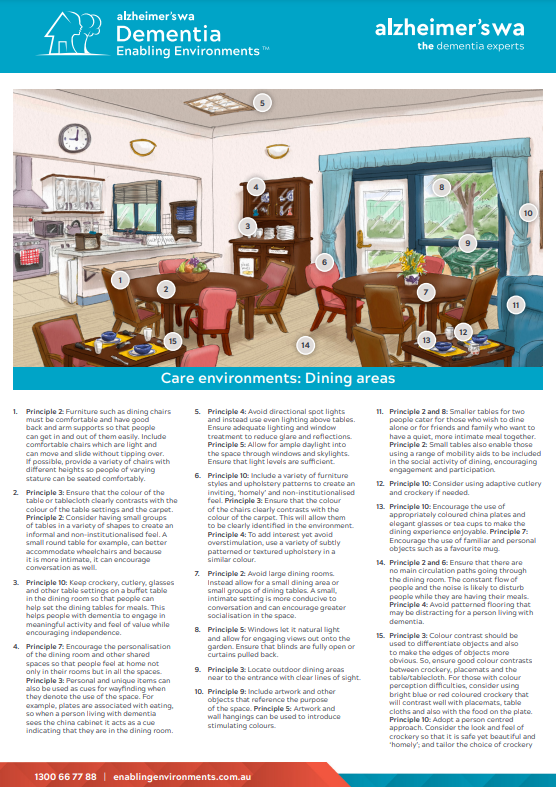
Dementia enabling environments - Care environments: Dining areas
This resource, developed by Alzheimer's WA, is a Dementia Enabling Environments illustration information sheet about dining areas in care environments. It includes principles to create enabling spaces and information about how to design the physical environment to maximise enablement and wellbeing for people living with dementia.
This resource was developed by a state/territory government or organisation and therefore its applicability and usefulness may be limited.
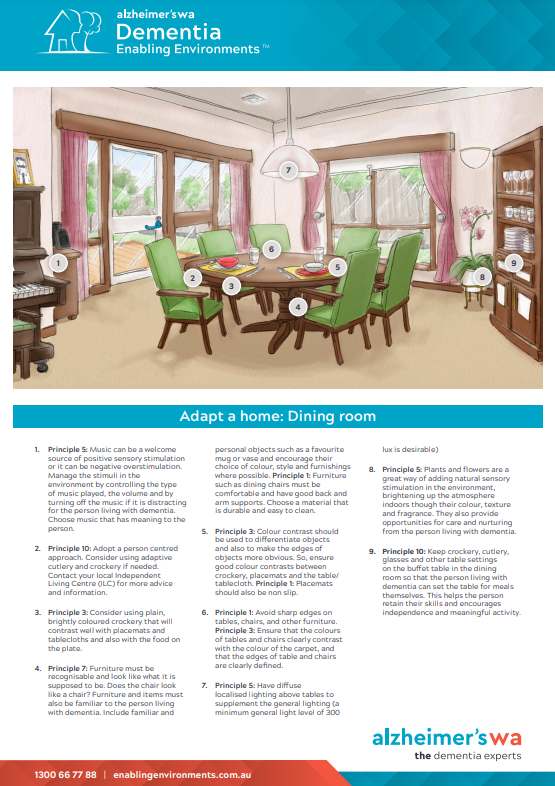
Dementia enabling environments - Adapt a home: Dining room
This resource, developed by Alzheimer's WA, is a Dementia Enabling Environments illustration information sheet about adapting a home, focusing on the dining room. It includes principles to integrate enabling design and make changes within the physical environment to maximise enablement and wellbeing for people living with dementia.
This resource was developed by a state/territory government or organisation and therefore its applicability and usefulness may be limited.
Familiar Places Webinar 2 – Bedrooms and Dining Areas
This webpage provides a video webinar focused on familiar places, such as bedrooms and dining areas, for dementia care environments. It offers insights into how these spaces can be designed to support the wellbeing of people living with dementia, with a particular emphasis on creating comfortable and familiar settings.
Best Practice Food and Nutrition Manual for Aged Care
This manual offers practical guidelines on food and nutrition best practices in aged care homes, covering menu planning, meal enjoyment, hydration, and malnutrition prevention. It includes checklists, screening tools, and dietary considerations tailored to the needs of older people.
This resource was developed by a state/territory government or organisation and therefore its applicability and usefulness may be limited.
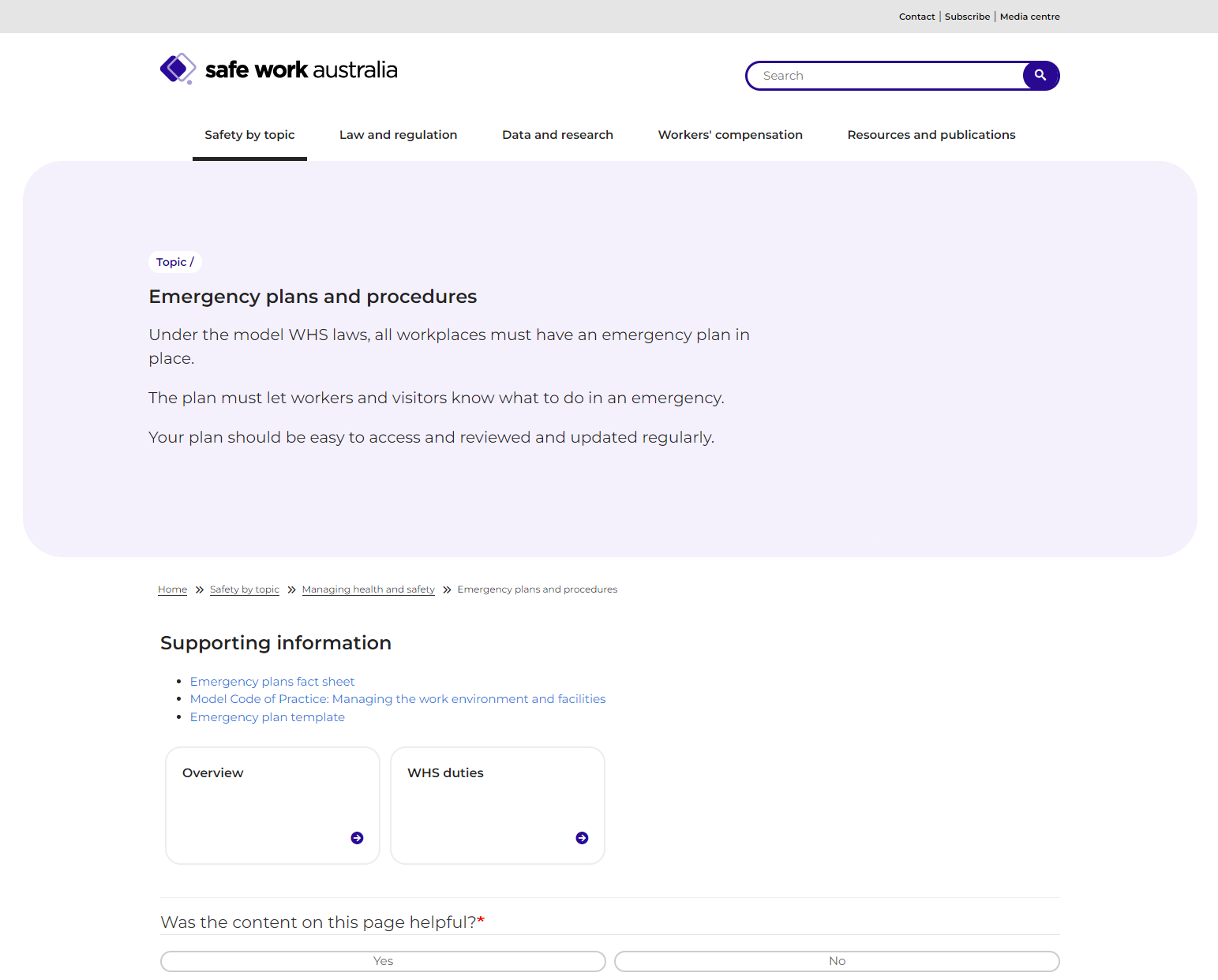
Emergency plans and procedures
This resource outlines the requirement for all workplaces, including aged care facilities, to have an emergency plan under the model WHS laws. The plan must inform workers and visitors about what to do in emergencies, be easily accessible, and be regularly reviewed and updated to ensure effectiveness.
Guidance and requirements may differ across states and territories. Users are responsible for considering their individual circumstances and specific state-based regulations and legislation.
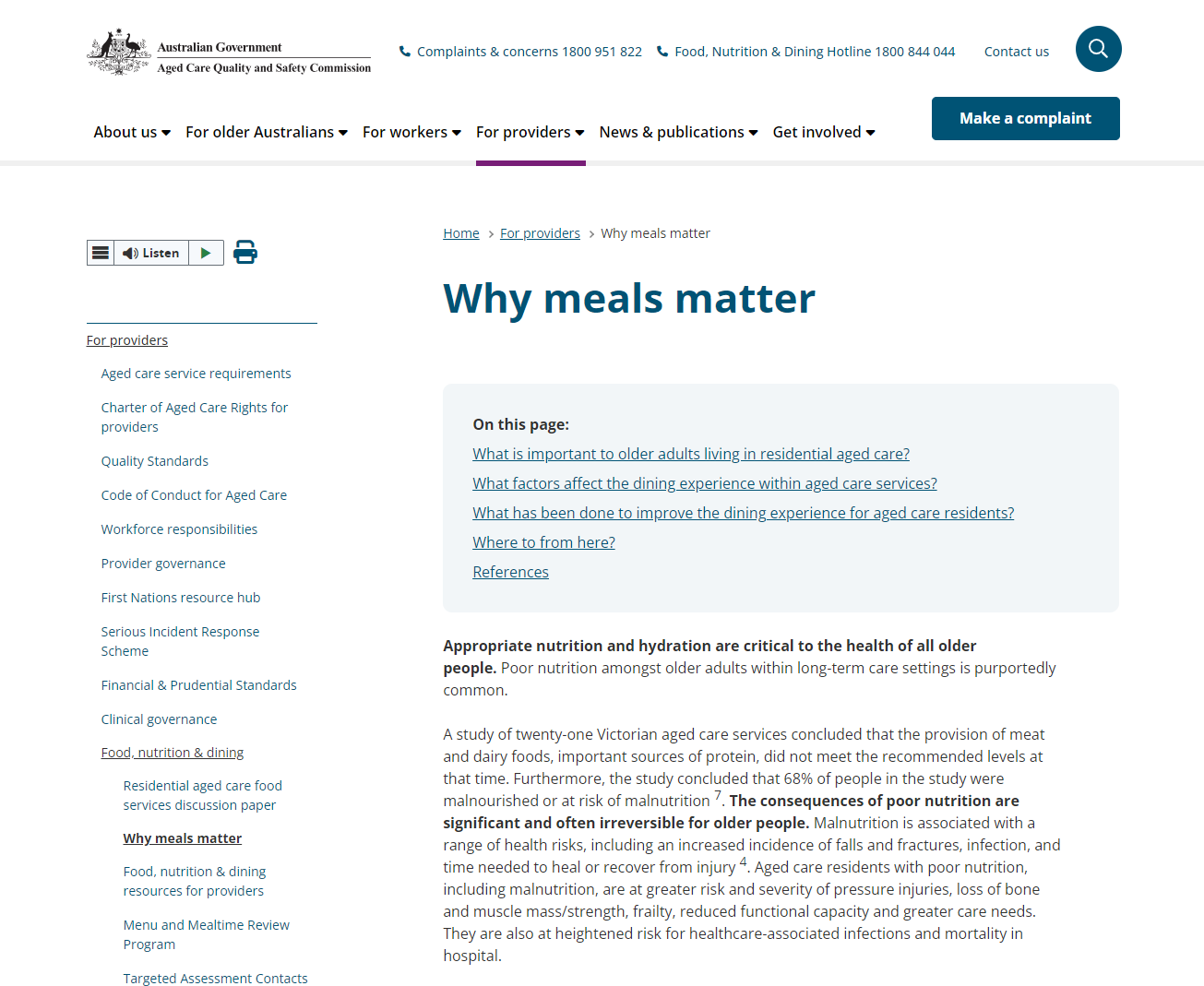
Why meals matter
This resource highlights the importance of meals in aged care settings, focusing on nutritional needs, dining experience, and personal preferences. It addresses issues like malnutrition, dehydration, and food choice, linking them to resident wellbeing, autonomy, and satisfaction. It also suggests strategies such as person-centred dining, meal service innovations, and improved environmental factors to enhance mealtime experiences in residential aged care.
Emergency Resilience in Culturally and Linguistically Diverse Communities
This resource provides insight into the resilience of culturally and linguistically diverse (CALD) communities in the face of emergencies and disasters. It explores key challenges and opportunities for enhancing resilience, such as the impact of migration, social capital, and communication barriers. It aims to equip stakeholders with actionable strategies to support resilience within these communities during crises.
ELDAC Managing Risk Toolkit
This resource provides the Managing Risk Toolkit designed for health professionals and care staff involved in palliative care and advance care planning for older people in residential care. It offers guidance on managing risks in areas such as nutrition, hydration, medication management, and care transitions at the end of life. The toolkit includes fact sheets, practical tips, and downloadable materials to support safe, effective care.
Are you alert and ready? Safeguarding against infectious illness in aged care settings
Older Australians, particularly those that reside in residential aged care settings or in multigenerational households, are vulnerable to the ongoing risk of contracting and becoming seriously ill from COVID-19 and other highly infectious illnesses such as influenza and gastroenteritis.
Analysis of a survey of food and dining experiences in residential aged care services - Final report
This resource provides insights into food, dining, and nutrition in residential aged care services. It is based on a survey conducted to understand residents’ dining experiences, preferences, and the quality of food and service provided. The findings highlight the importance of fresh, familiar meals, flexible mealtimes, and a homelike dining environment to enhance the quality of life for older people. This resource may refer to information that will be updated from 1 November 2025 to align with the new Aged Care Act and Quality Standards.
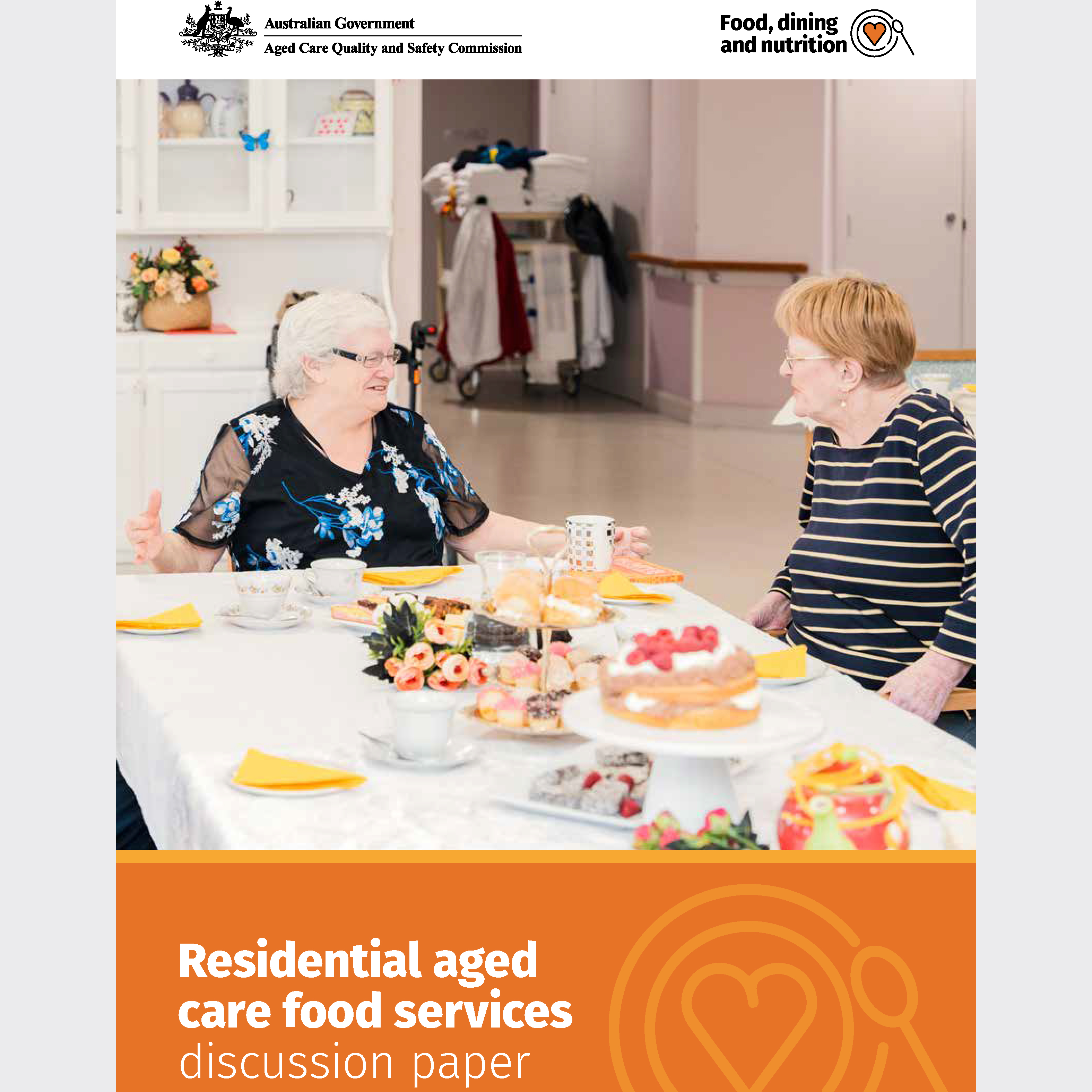
Residential aged care food services discussion paper
This paper presents a high-level overview of contemporary evidence regarding food services in residential aged care settings.
 Residential aged care food services discussion paper (PDF 536.47 KB)
Caring for older people in heatwaves – Home Care and CHSP
This resource provides a checklist for home care and Commonwealth Home Support Programme (CHSP) providers to help them prepare for and manage the care of older people during heatwaves. It outlines steps to take before, during, and after heatwaves, ensuring the health and safety of those under their care.
This resource may refer to information that will be updated from 1 November 2025 to align with the new Aged Care Act and Quality Standards.
Food for thought - positive stories
This resource shares positive stories about food, nutrition, and dining improvements in aged care facilities. It highlights initiatives that enhance the dining experience, including resident involvement in meal planning, use of fresh and seasonal ingredients, and creating more social and enjoyable mealtime environments. These stories demonstrate best practices and innovative approaches to improve resident satisfaction and wellbeing.
Food, nutrition & dining: resources for workers
This resource provides aged care workers with tools to enhance food, nutrition, and dining experiences for people in their care. It includes practical guides on offering choice, managing swallowing difficulties, promoting oral health, and creating an enjoyable dining environment, all while ensuring adherence to aged care standards.
This resource may refer to information that will be updated from 1 November 2025 to align with the new Aged Care Act and Quality Standards.
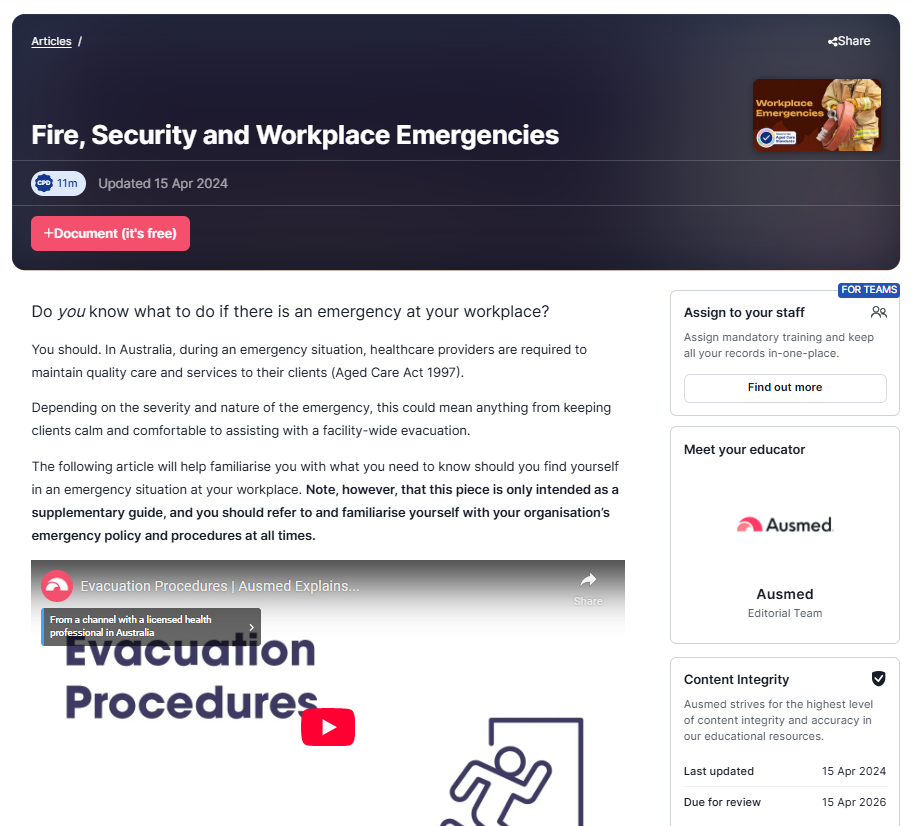
Fire, Security and Workplace Emergencies
This resource provides guidance on workplace emergencies. It includes information about what to do if there's an emergency at your workplace, types of emergencies, evacuation procedures and more. It highlights the importance of being aware of people's needs in an emergency situation and considering vulnerable people when developing an evacuation plan.
This resource may refer to information that will be updated from 1 November 2025 to align with the new Aged Care Act and Quality Standards.
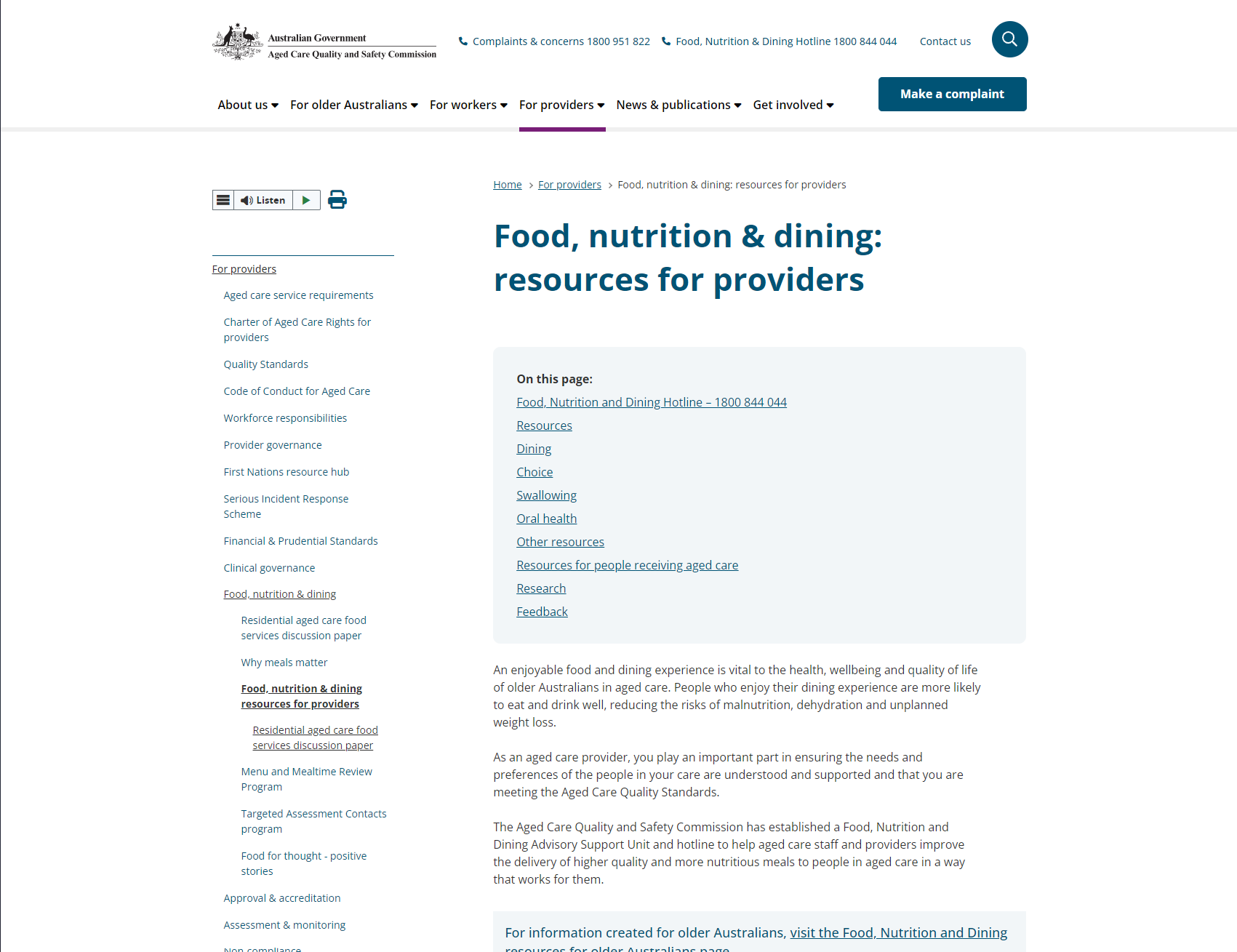
Food, nutrition & dining: resources for providers
This resource provides tools and guidance for aged care providers to ensure quality food, nutrition, and dining experiences. It includes hotlines, resources for dining, choice, swallowing, and oral health, as well as webinars, research findings, and practical tips to support older adults' wellbeing and meet care standards.
This resource may refer to information that will be updated from 1 November 2025 to align with the new Aged Care Act and Quality Standards.
Governing for Reform in Aged Care - Practical tools
This resource provides practical tools for aged care governing bodies and executives to support governance processes. It includes templates for audit planning, risk management, performance reporting, and compliance monitoring, helping providers ensure effective oversight and decision-making aligned with the Aged Care Quality Standards.
This resource may refer to information that will be updated from 1 November 2025 to align with the new Aged Care Act and Quality Standards.
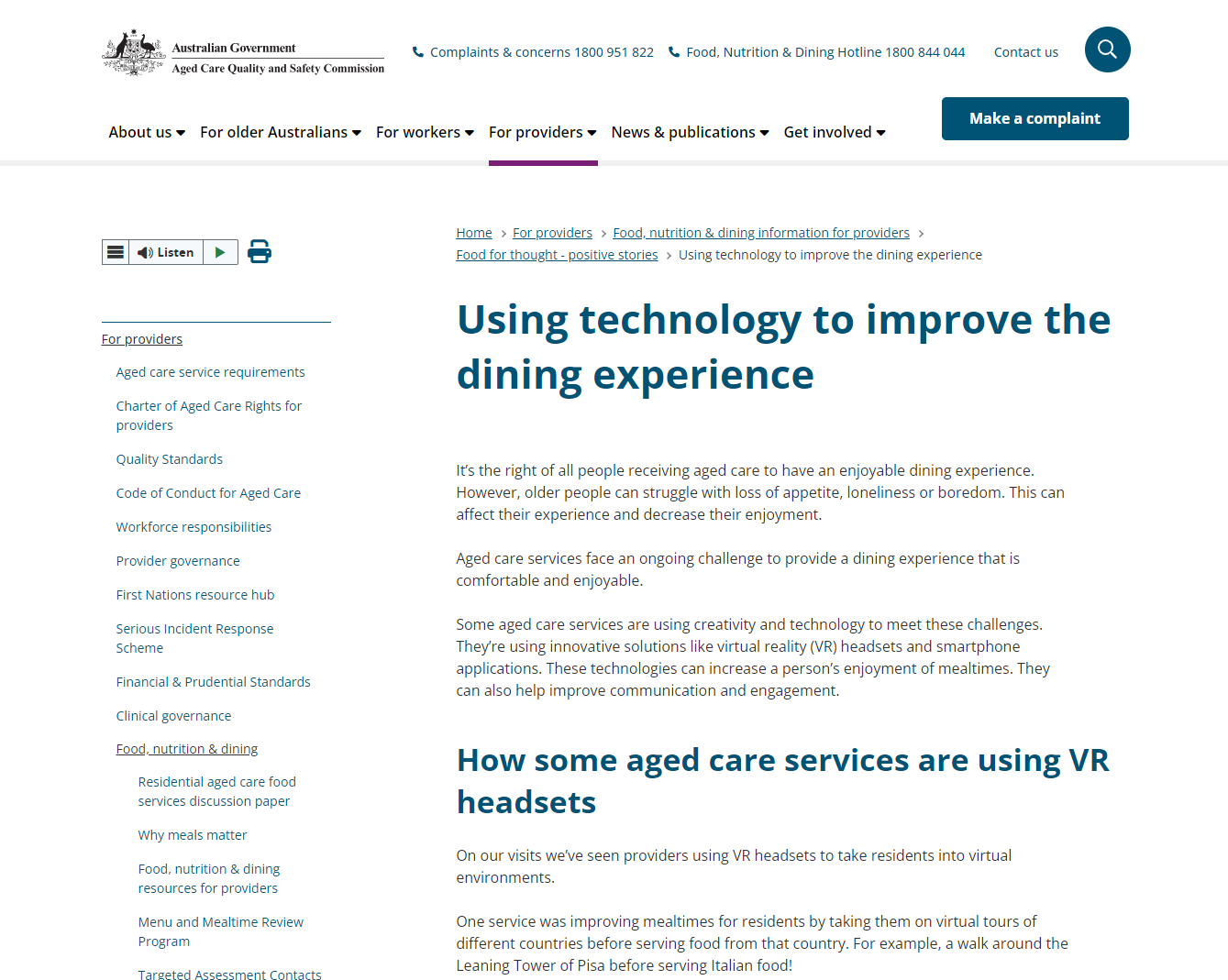
Using technology to improve the dining experience
This resource provides guidance on how technology, such as virtual reality (VR) and mobile applications, can enhance the dining experience in aged care settings. These tools are designed to increase engagement, support meal choices, improve communication with families, and contribute to overall wellbeing by making mealtimes more enjoyable.
This resource may refer to information that will be updated from 1 November 2025 to align with the new Aged Care Act and Quality Standards.
Health support for aged care in flood-affected regions
This resource outlines support available for aged care providers in flood-affected regions. It includes guidance on emergency management, workforce arrangements, access to medical supplies, and disaster relief funding. The document also provides state-specific emergency contacts and resources to help maintain service continuity during and after floods.
This resource may refer to information that will be updated from 1 November 2025 to align with the new Aged Care Act and Quality Standards.