
The Quality Standards Resource Centre helps extend understanding of the strengthened Aged Care Quality Standards, which took effect from 1 November 2025. You can search for resources by using keywords, or filtering by standard, outcome and audience. Before using the Resource Centre, please read the terms of use.
Dementia Australia
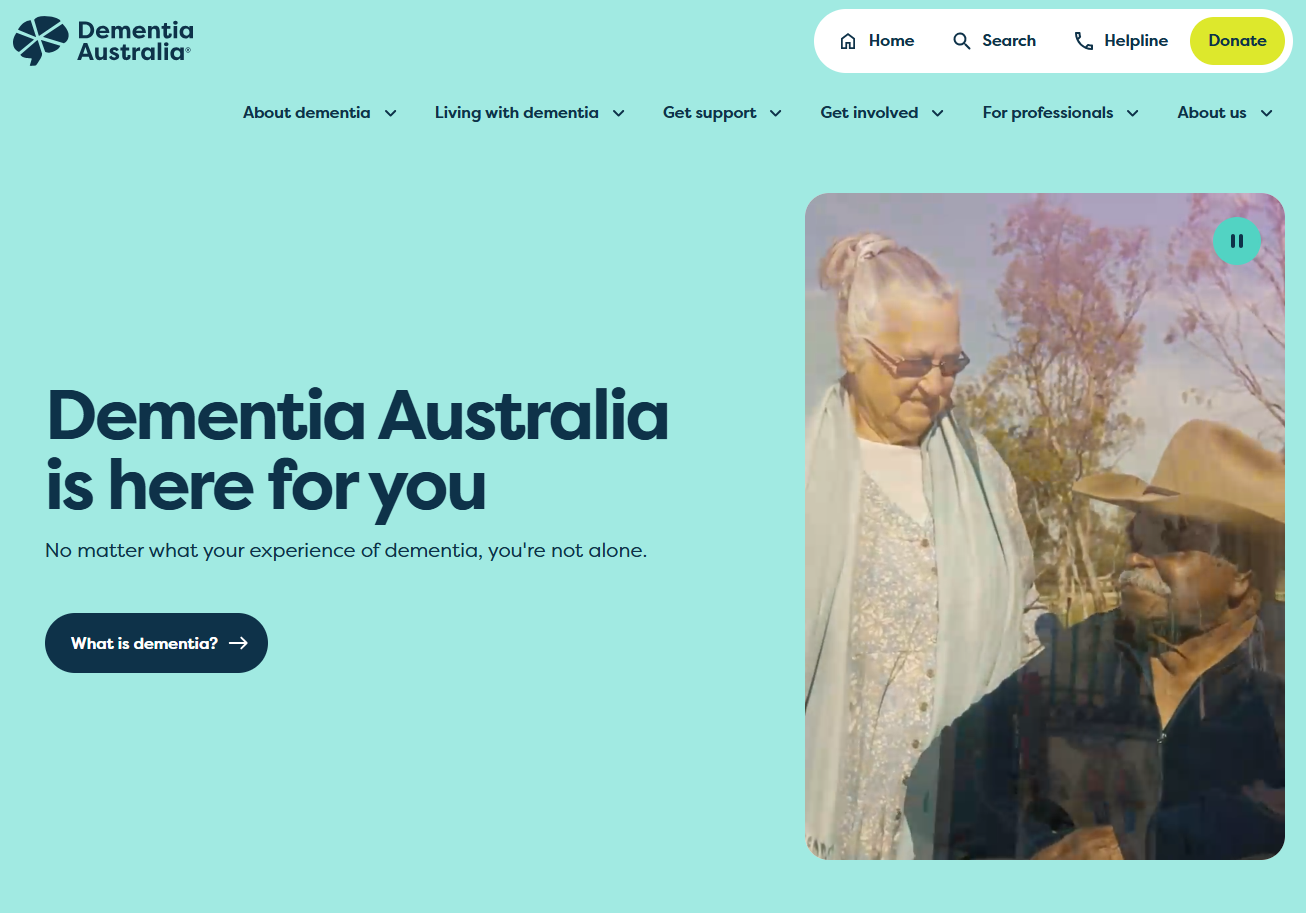
This resource is the Dementia Australia website. The website contains information about the types of dementia, testing, diagnosis, treatment and management of dementia. It includes information about living with dementia, such as behaviour changes, nutrition, staying connected and care options. It also contains information for professionals supporting people living with dementia, including research, tools and other resources.
Dementia and communication - Resources
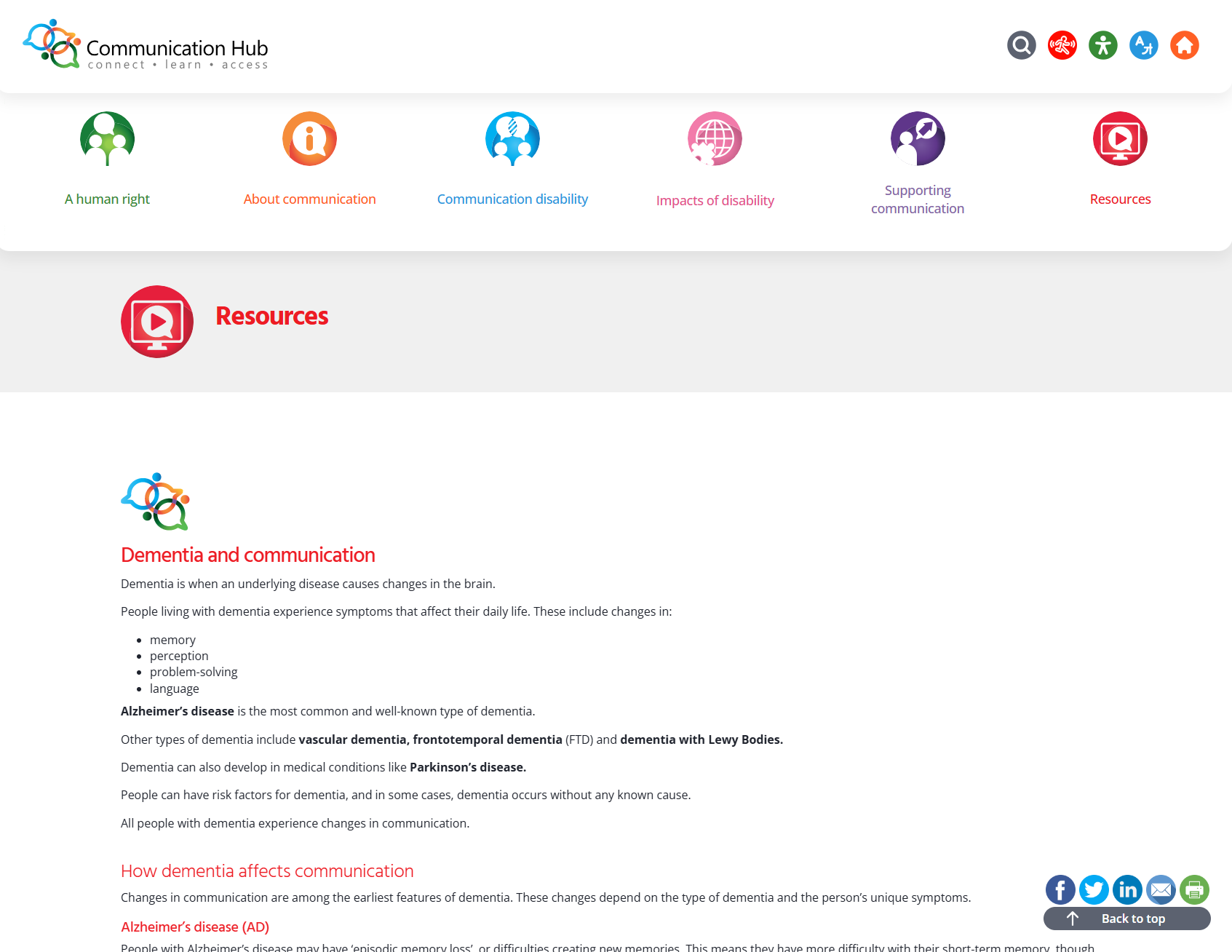
This resource discusses how dementia impacts communication abilities, including memory and language challenges. It offers practical strategies for enhancing conversations and maintaining connections, emphasising the role of speech pathologists in supporting communication. The resource provides guidance for family, friends, and caregivers to create dementia-friendly environments.
How to talk about dementia
This resource provides guidance on using accurate, respectful, and non-stigmatising language when discussing dementia. It emphasises avoiding negative terms, promoting dignity, and listening to individuals' preferences. It includes suggestions for talking about dementia symptoms, behaviour, and the impacts of dementia on individuals and their families, promoting understanding and reducing discrimination.




